Creative Journalling with the HRWE Group

Posted on

By Hilary Lowe and Chathushka Kiriella

Creative journalling is a reflective practice that combines writing, images, collage and other creative materials to help people explore ideas, experiences and emotions in a more open and personal way. In this blog post we, Chathushka Kiriella and Hilary Lowe from the Human Resources, Work and Employment research group (HRWE), examine how this approach can be used in educational and professional settings to support reflection, wellbeing, connection and conversation.

Creative journalling is becoming an increasingly important strand of our collaborative work. It develops out of our own personal journalling practices, and we have brought this into an educational space. Sitting within the Human Resource Management cluster, our interest lies in how creative, low-pressure activities can support self-efficacy and employability outcomes.

Creative journalling creates opportunities for reflection, wellbeing and meaningful conversation, particularly in academic and professional settings where people may not always feel comfortable expressing ideas through conventional discussion alone.

Recently, we presented our work at UWE’s Festival of Research, where our presentation was awarded the prize for best presentation. Following the positive response, we were keen to share the approach more widely, elicit some feedback on our ideas for further work but, most importantly, to give colleagues within the HRWE group an opportunity to experience creative journalling for themselves at the group’s away day.

Our HRWE Away Day took place in the beautiful Bristol City Hall in July 2026. During our session, colleagues had the opportunity to experiment with a range of materials to create a journal spread inspired by a personally meaningful theme. Papers, images, words, stickers and washi tape provided a route into reflection, with colleagues creating pages that were personal, thoughtful and often unexpectedly expressive. While some chose to reflect on the day itself, others focused on a significant life event or memorable moment.  One of the previous sessions had been an excellent overview of the UWE RISE beacons by Prof. Hugo Gaggioti and some of our colleagues even incorporated RISE into their spreads.

One of the most interesting aspects was watching colleagues engaging with the materials. Some approached the activity immediately, while others were initially more hesitant. However, as the session developed, many of those who had seemed reluctant gradually became absorbed in the process. This gradual shift from uncertainty to engagement is one of the things that makes creative journalling particularly interesting to us and, most certainly, the way in which the HRWE staff engaged in our awayday session mirrored our experience of how students engage with critical journalling.   

The activity does not require artistic skill, nor does it ask participants to produce a polished outcome. Instead, it creates space to pause, make choices, notice connections and represent ideas in ways that may be difficult to articulate verbally.

Nevertheless, for some participants, it can be difficult to overcome the initial nervousness about needing to create something perfect or special.

The activity encouraged everyone to pause and reflect and express their thoughts creatively, resulting in a collection of individual pieces that captured different experiences, memories, and perspectives. At the end of the session, we invited colleagues to share their experiences and reflections. The feedback was encouraging, with participants discussing both the enjoyment of the activity and its potential value as a reflective and developmental practice. We also shared our plans for taking the research further, and these ideas were met with a positive response from the group.

 The session provided valuable insight into how people respond to creative journalling in a workplace and academic context, particularly the ways in which initial reluctance can give way to curiosity and immersion. It also reinforced our interest in exploring how creative methods can support reflection, connection and wellbeing. We are now looking forward to developing this work further, building on what we learned from the HRWE away day and continuing to explore the possibilities offered by creative journalling as both a pedagogic and research practice.

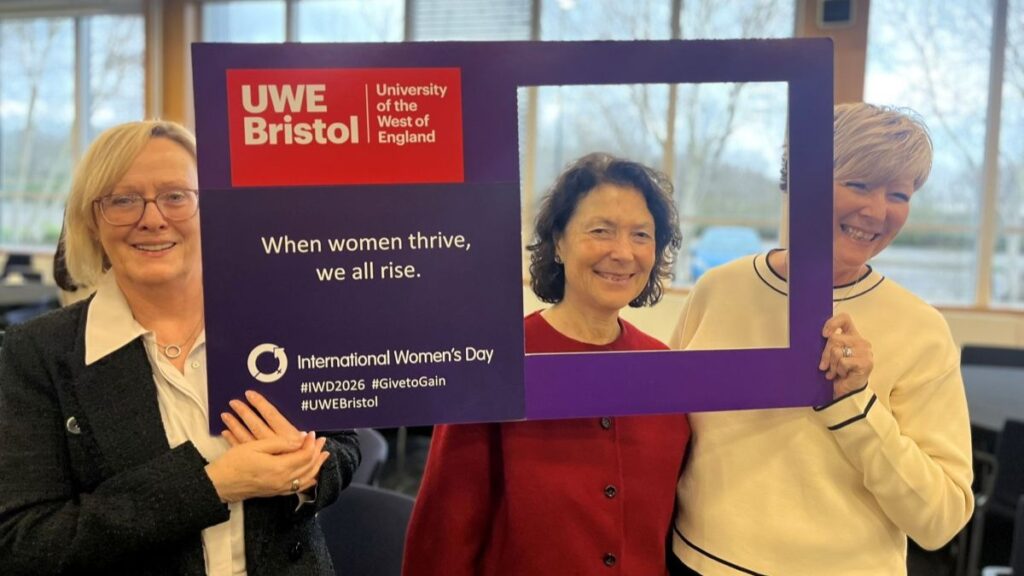
International Women’s Day 2026: Challenging Gender-Based Violence

Posted on

By Chathushka Kiriella 

This event, hosted by UWE Bristol, on 6 March 2026, brought together researchers, practitioners and students to explore an urgent theme: challenging gender-based violence. Almost two months on, it is important that these conversations do not lose momentum. The issues raised throughout the event remain pressing for both individuals and institutions, reminding us that International Women’s Day should not mark the end of the conversation, but rather encourage continued reflection, discussion and action.

The event combined a powerful keynote with a thought-provoking panel discussion and interactive stands, offering both critical insight and practical reflection on how change can happen.

Alternative strategies to halve violence against women and girls? 

Keynote by Professor Sylvia Walby – OBE FBA FAcSS, Royal Holloway, University of London 

The keynote from Professor Sylvia Walby set the tone for the day, highlighting the systemic causes of violence against women and girls and alternative strategies to reduce it.

A central message was the importance of specialised support services. Across Britain, hundreds of organisations support survivors of domestic and sexual violence but despite recognition in government strategies, these services receive only a fraction of the funding they need. Professor Walby also drew attention to the importance of gender inequality. While violence against women and girls is widely understood as both a cause and consequence of inequality, this connection is not always visible in official strategies.

Another key theme was how we understand violence itself. Rather than isolated incidents, Professor Walby framed violence as part of a broader social system, linked to institutions such as the economy, the state and civil society. She also highlighted challenges in measuring violence, noting that current data is fragmented and often under-reports the true scale of the problem and its gender dimension. This lack of clear data makes effective policy responses difficult.

Perhaps most striking was the imbalance in funding: while the economic cost of domestic abuse in the UK is estimated at £66 billion, only a tiny proportion is invested in specialised support services. Instead, the focus is on policing and criminal justice.

Panel discussion: insights from UWE researchers

The powerful keynote was followed by a panel discussion which brought together academics from UWE Bristol’s College of Business and Law including Duncan McPhee (Associate Professor), Sophie Marsh (Lecturer in Law) from the Bristol Law School, and Chloe Tarrabain (Senior Lecturer in Organisational Studies) and Stefano Gasparri (Senior Lecturer in HRM) from the Bristol Business School. Each highlighted their research expertise in different aspects of gender-based violence and contributed to discussion which brought to the fore the many shared challenges across policing, the justice system, workplaces and wider society.

A strong theme that emerged was the lack of progress, despite years of research and policy attention. Duncan McPhee reflected on over two decades of work in rape and domestic abuse investigations, noting how many of the same issues particularly around policing failures and limited support for victims remain unresolved. This was especially evident in research on sex workers, where deep mistrust of police continues to act as a barrier to reporting violence.

The discussion also highlighted the complex realities victims face when engaging with the criminal justice system. Sophie Marsh focusing on police interviews with rape survivors noted that, although efforts have been made to reduce trauma such as recording interviews for use in court many survivors still report negative experiences. It was suggested that a key issue is the lack of consistent support throughout the process. At the same time, police officers themselves face competing pressures, balancing the need for trauma-informed approaches with demands to gather evidence quickly and meet legal expectations.

Beyond formal systems, the panel explored how stigma shapes survivors’ everyday lives, particularly in professional environments. Chloe Tarrabain emphasised that victims are often navigating multiple identities as employees, colleagues and professionals while dealing with abuse. Fear of judgement or being perceived as less capable can prevent disclosure, leading individuals to adopt coping strategies such as avoidance or carefully managing how they present themselves at work. These insights highlighted the often invisible emotional labour involved in maintaining a sense of normality.

The conversation also turned to how gender-based violence is framed more broadly. Stefano Gasparri argued that the use of gender-neutral language in policy can obscure the reality that such violence is deeply connected to gendered power imbalances. Workplace sexual harassment, for example, is often treated as a procedural issue rather than recognised as a form of violence. The role of men in addressing these issues was also discussed, with emphasis on the importance and ongoing challenges of encouraging meaningful male allyship.

Taking action: interactive stands

Beyond these discussions, the event also highlighted practical ways to support gender equality.

One example was the presence of Smart Works, an organisation set up to help unemployed women back into work, including coaching, providing ‘ready for work’ clothing and building confidence. Donations of professional clothing were collected to help unemployed women prepare for interviews, an initiative that directly supports economic independence.

A stand organised by Vanda Papafilippou and Chathushka Kiriella invited participants to take part in a “Give to Gain” pledge aligned with the International Women’s Day 2026 theme. Attendees wrote personal commitments to advancing gender equality, contributing to a shared sense of responsibility and action.

These pledges ranged from professional commitments, such as “giving time to mentor others through every step of their journey” and “putting more effort into supporting women through flexible working practices”, to wider reflections on community and culture, including “passing empathy on to future generations” and simply encouraging women to “be kind to each other.”

Final reflections

The event made clear that gender-based violence is not an individual issue; rather, it is systemic, structural, and deeply embedded in society. From gaps in funding and policy to stigma and institutional barriers, the challenges are complex. But the research and discussions at this event also pointed toward solutions: better support services, stronger community engagement, more inclusive policies, better data, more research and a willingness to confront uncomfortable truths.

Most importantly, the event reinforced that meaningful change requires collective effort across researchers, institutions, communities and individuals.

Restoring control or reinforcing exclusion? UK immigration policy and international students

Posted on

By Chathushka Kiriella

“Is it still worth staying in the UK?”

That’s a question many international students are asking themselves now. Not about their coursework or career ambitions, but about whether the future they planned is still possible. For many, the answer is becoming increasingly uncertain.

In May 2025, the UK government released its white paper Restoring Control Over Immigration, outlining a series of reforms aimed at reducing net migration. While framed as necessary and pragmatic, the changes have had a profound effect on how international students experience studying and imagining a future in the UK.

But beyond the policy details lies a deeper shift. International students are no longer framed as global learners or future professionals but increasingly as a potential risk and ‘regulated, conditional migrants’.

A system that changed midway

For years, the UK presented a clear and structured pathway for international students: study, gain work experience, and potentially transition into long term employment and settlement. Students made life changing decisions based on that promise.

They paid significantly higher tuition fees than domestic students. They navigated complex visa processes, proved their English proficiency, and contributed financially through visa costs and healthcare surcharges. Many invested not just money, but years of planning and personal sacrifice. Now, that pathway is narrowing.

Recent reforms include:

  • Restricting dependants to PhD level students only
  • Reducing post study work visas from two years to 18 months
  • Raising the skilled worker salary threshold significantly
  • Extending settlement timelines

Individually, each change may seem technical. Together, they fundamentally reshape what is achievable.

Students who arrived under one set of expectations now find themselves navigating a very different reality.

The human impact behind the policy

What these changes look like on paper is one thing, what they feel like in practice is another. Many students I work with are experiencing growing anxiety, not because they lack ambition or ability, but because the goalposts have moved.

Carefully mapped plans are becoming unworkable. Career routes that once seemed realistic now feel out of reach. For some, the UK is no longer a place to build a future, but a temporary stop with an uncertain ending.

And yet, these are students who did everything “right.” They followed official guidance. They complied with every requirement. They invested in a system they believed was stable.

When that system shifts, the impact is not just logistical. It is deeply personal.

The power of language

Alongside these policy changes, there has been a noticeable shift in how migration and migrants are discussed. The white paper uses terms like “explosion,” “burden,” and “loopholes.” These are not neutral descriptions. They shape how people understand the issue.

When migration is framed as a crisis, those within it, regardless of their legal status, risk being seen through the same lens.

One of the most concerning aspects is the lack of distinction between different types of migrants. International students, who are legally sponsored, financially contributing, and closely monitored, are often folded into broader narratives about migration pressures. This blurring matters.

It creates a perception that all migrants are equally responsible for strain on public services or infrastructure, despite vast differences in their circumstances and contributions. Language does not just reflect policy. It reinforces it.

What is missing from the conversation

While the economic contribution of international students is often acknowledged, the conversation rarely goes further. Missing are the less measurable but equally important contributions: the diversity of perspectives in classrooms, the exchange of ideas across cultures and the role students play in shaping globally connected institutions.

International students are not just fee payers or future workers. They are participants in a shared academic space, contributing to knowledge, debate and innovation.

Reducing them to numbers or targets overlooks the very purpose of higher education as a global and collaborative endeavour.

When policy enters the classroom

As an academic, I have found my role changing in ways I did not expect. My work is no longer just about teaching and research. Increasingly, it involves helping students make sense of policies, navigate uncertainty and rethink their futures.

The questions I receive have shifted:

“Can I still stay after I graduate?” “Should I bring my family?” “Is there any point applying for jobs here?”

These are not questions I was trained to answer.

At the same time, while universities do have support systems in place for  international students including the Immigration Advice Service team, Careers services, and the Global Centre. There are limits to what these teams can do when wider policy decisions are beyond their control. In many ways, they become messengers navigating constantly shifting immigration and political landscapes. Although staff continue to support and guide students as best they can, universities themselves are also operating within constraints, creating a difficult position where institutional support can only go so far against broader political and policy changes.

On one hand, I am part of an institution that recruits international students and operates within government frameworks. On the other, I see firsthand the emotional and practical consequences of those frameworks. There is a constant tension between compliance and care.

For those of us who were once international students ourselves, that tension is even more pronounced. Students often see us as proof that the system works, a “success story.” That perception builds trust, but it also comes with responsibility.

We become advisors, advocates and sometimes simply listeners, absorbing the uncertainty students carry. This is rarely recognised as part of academic work, but it is becoming increasingly central to it.

A question of responsibility

The current narrative often places responsibility on students, suggesting misuse of the system or excessive burden but this overlooks a key point.

International students operate within a system designed and regulated by governments and institutions. If there are gaps, inconsistencies, or exploitation within that system, responsibility does not lie solely with those who entered it in good faith.

Holding institutions accountable for quality and oversight is necessary but broad restrictions that affect all students risk punishing those who have done nothing wrong.

What kind of system are we building?

The UK continues to position itself as a global destination for education. Universities actively recruit international students, highlighting opportunity, diversity and long term potential.

At the same time, immigration policies are becoming more restrictive, more conditional and more uncertain. This raises a fundamental question: can a system invite international students in while simultaneously limiting their ability to stay, contribute, and belong?

Conclusion

Policies aimed at restoring control may achieve certain political objectives. But they also reshape the experiences of those within the system, students and educators alike.

International students are not abstract figures in migration statistics. They are individuals who make significant investments, contribute meaningfully to academic communities and plan their futures based on the rules set before them. When those rules change, the consequences extend far beyond policy documents.

If the UK is to remain a genuinely global education hub, it must move beyond seeing international students as numbers to be reduced and recognise them as people to be supported. Because the question students are asking now, “Is it still worth it?”, is not just about their future.

It is about the kind of higher education system the UK wants to be.

Job sharing in the South West – meet, learn and connect

Posted on

By Chathushka Kiriella

On 21st January 2026 the Job Share South West (JSSW) inaugural event brought together leaders, managers and researchers to explore the potential of job sharing. Organised by Clare Freshwater-Turner and Annabelle Richards from Lloyds Banking Group and Sarah Houghton and Louise Cuthberston from BT Group, the event, held at the Lloyds Banking Group Harbourside Office, offered a combination of academic insight, real-world experience and practical discussions culminating in a networking breakout session that fostered connections and community building.

Opening with a warm welcome from Annabelle Richards and Clare Freshwater-Turner who introduced the keynote speaker Professor Susan Durbin from the College of Business and Law, University of the West of England (UWE). Drawing upon her specialisms in gender, employment and women’s careers in male-dominated industries Professor Durbin presented her findings on part-time work, flexible working and job share partnerships (JSPs).

This research conducted by Professor Durbin and Stella Warren (UWE) and Professor Jennifer Tomlinson, Leeds Business School, focused upon senior level men and women who job share (although male participation in job sharing remains low). It demonstrated that the outcomes of JSPs are similar for men and women. It also highlighted the significant benefits for those who engage in JSPs including improved work-life balance with alternating work patterns enabling flexibility without sacrificing productivity; high levels of job satisfaction compared with part-time working and a strong sense of achievement amongst participants in the study. Importantly career progression was found not to be negatively impacted by JSPs. Key to the success of JSPs was trust, partnership, collaboration and friendship between job sharers.

Notable challenges to JSPs were that employers appear reluctant to embrace this way of working due to JSPs often operating on slightly over full-time contract hours. However Professor Durbin argued that rather than seeing this as a cost employers should recognise the ‘value for money’ when two highly skilled and experienced senior managers come together to work in a JSP. She also argued for the significant benefits when those in JSPs are able to maintain a work-life balance and thus give their ‘whole selves’ when they are at work. Professor Durbin also reflected upon the need to conduct a larger study to include more men in order to identify any potential gender differences in the experiences and perceptions of JSPs and to consider the potential pitfalls of JSPs from both the employer and employee perspectives.

Presentations at the Jobshare Network inaugural event

The presentation by Professor Durbin concluded with a thoughtful Q&A session where the audience explored the practical realities of job sharing in more depth. Questions focused on how job share partners navigate change together particularly during periods of job share partner promotions and how alignment and communication can be maintained as a pair. Attendees also asked about the benefits and challenges of job sharing from an employer’s perspective including productivity, continuity and management perceptions. Another area of interest was whether generational differences between job sharers create challenges with discussion around how differing experiences, working styles and expectations can be addressed through trust, openness and clear ways of working.

The subsequent panel discussion hosted by Louise and Sarah featuring leaders with direct experience of JSPs and managing JSPs included Justin Jennings, Head of Finance at Lloyds Banking Group; Racheal Nash a job-sharing Business Support Manager at Lloyds Banking Group; Zak Mensah Co-Chief Executive of Birmingham Museum Trust; and Katherine Carr, Director of Strategy and Corporate Affairs at the National Armaments Director Group (Job Share) and Ministry of Defence (Job share).

The discussion explored how JSPs work in senior roles and highlighted recurring themes of the importance of trust, establishing a shared way of working and complementary skills in the JSP. The hardest part was believed to be at the start of a JSP, one panel member expressing ‘Once you can say, “We’ve done it, it worked, we proved it, you can overcome many barriers.”’ The panel also spoke of the initial scepticism towards JSPs from colleagues or members of the board and that this is ‘normal’. One panellist recalled how the board had initially questioned the JSP she was in regarding who from the JSP would attend board meetings but after two or three sessions the attendance by one or other of the JSP was fully accepted.

A key takeaway from the panel was that visibility of JSPs matters. Panellists encouraged those in JSPs to role-model the arrangement at all levels. As one panellist commented:

“Whatever level you’re at, if you’re in a job share, tell people, be visible, role model it.”

It was emphasised that educating colleagues about JSPs is essential to building organisational acceptance.

Work-life balance was another recurring theme for panellists who described how managing non-working days required adaptation but ultimately provided freedom and focus. One participant explained how job sharing had changed the ways she had previously worked on a part-time basis as she was always playing ‘catch up’ on her two non-workdays. She said ‘My time and energy were spent managing, not leading; job sharing changed that completely.’ Maintaining a consistent rhythm, clear handovers and shared communication channels were cited as key strategies for making JSPs seamless.

Another important insight was the power of complementary skills. Panellists explained that successful JSPs often thrive when partners bring different strengths: “One of us is more analytical, the other more creative. Together it’s stronger than either of us alone.” These dynamics allowed job sharers to cover each other’s blind spots, celebrate successes together and reduce managerial oversight.

The panel also challenged the common stereotype that job sharing is primarily for those with childcare responsibilities. Job sharing was framed instead as a leadership strategy enabling senior talent to thrive sustainably while bringing fresh perspectives to their organisations.

“People always assume a job share is because of childcare. There’s no reason why more people can’t do job shares at any stage of life.”

The event concluded with a ‘Chat & Connect’ breakout session led by Louise, Sarah, Clare and Annabelle where participants shared experiences, discussed tools and tips and explored ways to expand job share opportunities. The importance of community, mentoring and peer support was emphasised as central to making job sharing a sustainable mainstream approach: “Once people see it working, the questions stop,” noted one participant.

Key takeaways from the event included the importance of trust, role modelling, complementary skills, consistent rhythms and visibility. Work-life balance, career progression and job satisfaction were all achievable through job sharing while the challenges such as handovers, continuity and organisational culture could be mitigated through careful planning and communication.

The Job Share SW inaugural event highlighted the growing momentum behind job sharing as a sustainable and effective way of working. Through academic research, lived experience and open discussion the event reinforced that job sharing thrives when built on trust, visibility and strong collaboration and that it can support career progression, wellbeing and organisational resilience at all levels. The event received an average feedback score of 4.9 out of 5 reflecting the strong engagement and positive response from attendees. In particular participants highlighted the value of community and the opportunity to connect with others navigating similar experiences.

The Job Share SW inaugural event demonstrated that job sharing is far more than a flexible working arrangement. It is a powerful strategy for sustainable, inclusive and resilient leadership

By embracing collaboration, trust and complementary strengths senior roles can become accessible and effective for a wider range of people helping organisations thrive in an evolving workplace.

Looking ahead the collaboration between the Job Share Network South West and the University of the West of England marks an exciting next phase. We are delighted to announce that Professor Susan Durbin and Chathushka Kiriella (UWE) have been awarded Higher Education Innovation Funding to work with industry partners to develop this network. The aim is to reach further into the South West of England to enhance the knowledge exchange and impact activities currently centred in Bristol. This will involve setting up a regional workshop bringing together employers, academics, practitioners and policymakers to explore how to mainstream JSPs and identify key enablers and challenges (e.g. recruitment, workload balance, governance, dual site roles). It will also enable us to explore the feasibility of a regional job share register to expand access, improve sustainability and support long term impact.

Breaking barriers: what HR professionals need to know about disabled students and placements

Posted on

By Dr Hilary Lowe

Placements are a key part of employability in higher education. They give students real world experience and help employers spot future talent. However, for disabled students, placements can involve barriers that are not always visible.

In a recent systematic literature review co-authored with Dr Laura William from the University of Greenwich and published in Studies in Higher Education1, we explored these challenges in detail. In this blog post, we focus on what the findings mean for HR professionals and placement providers and why inclusive pathways into work matter.

Why building awareness of disability and placements matters for HR and workforce planning

Many employers use placements to build talent pipelines and assess potential recruits. Yet there remains a 27.9 percent employment gap between disabled and non disabled people, alongside widening pay gaps. These inequalities often begin long before formal recruitment.

Placements are frequently a student’s first interaction with an employer. This makes HR teams central to shaping experiences that can influence confidence, skills development and long term career outcomes. Inclusive placements are therefore not just beneficial for students, they are critical for fair workforce planning.

Four key barriers HR should address

Our review of the existing literature identified four connected themes that affect disabled students’ access to and experiences of placements.

1. Organisational processes and systems: The most significant barrier is the lack of timely and effective reasonable adjustments. While the Equality Act 2010 places a legal duty on employers to remove barriers, this duty is often reactive and poorly understood.

Students describe delays, inconsistent support and anxiety about disclosing a disability. For HR professionals, this points to the importance of proactive policies, clear communication and training for managers so adjustments are put in place quickly and confidently.

2. Low expectations: Disabled students often face assumptions about what they can or cannot do. These low expectations can damage confidence and limit opportunities to learn and progress.

Employers who underestimate students’ potential risk missing out on skilled and motivated talent. HR professionals can help by challenging bias, promoting inclusive recruitment practices and designing placements that focus on strengths rather than perceived limitations.

3. Bio-social factors: Many students manage health related needs alongside placement demands. Balancing work and impairment can be particularly difficult when placements are inflexible.

Rigid schedules and limited understanding from supervisors can make challenges worse. HR teams can reduce these pressures by supporting flexible working, enabling access to healthcare where possible and recognising that disability often intersects with factors such as gender, age or cultural background.

4. The nature of the placement: Some placements involve poorly defined tasks, pressure to over perform or feelings of isolation. These conditions can be especially challenging for disabled students.

Inclusive placement design can make a significant difference. This includes meaningful tasks, clear expectations and visible support networks. When placements are well structured, both students and employers benefit.

Implications for HR practice

These barriers reflect wider patterns of disablism in the labour market. For HR professionals, the message is clear. Inclusive placement practices are not only about legal compliance, they are a strategic priority.

By building accessibility and equity into early career programmes, organisations can reach a wider talent pool, improve diversity and strengthen their reputation as inclusive employers.

Our next steps: empirical research

Before starting the systematic review, we established an Advisory Group that brought together placement officers, academics and employer representatives. This helped ensure the research was grounded in practical experience and informed by different perspectives.

As we move into the next phase of our research, we will continue working with this group to gather lived experiences from disabled students and placement providers. This collaborative approach will allow future recommendations to reflect real world insights and support the development of HR policies, employer training and inclusive placement design.

  1. Read the full article here:
    William, L., & Lowe, H. (2025). Barriers and challenges for disabled students when engaging with non-compulsory placements: a systematic literature review. Studies in Higher Education, 1–16.
    ↩︎

Empowering Change Across Borders: The HR, Work and Employment (HRWE) Group’s  International Women’s Day Celebrations 

Posted on

By Chathushka Kiriella, Tinkuma Edafioghor, Vanda Papafilippou and Susan Durbin 

The last couple of weeks have been an incredibly busy and productive time for for HRWE group members as we celebrated International Women’s Day with a series of inspiring events. We wanted to share what we have been doing to Inspire Inclusion and Accelerate Action, the theme of this year’s International Women’s Day and one that resonates with us all as we continue to address gender inequalities and to celebrate women’s achievements and actions.  

The celebrations began within the University with a ‘pledge campaign’ where we asked staff and students to commit to how they would promote gender equality and to reaffirm their commitment to fostering gender inclusivity. Midweek, we hosted an international women’s day celebration event featuring powerful speeches from influential leaders, highlighting the importance of diversity in the workplace. Our activities then turned externally  to an event in London, hosted by the Royal Aeronautical Society’s Women in Aviation, Aerospace and Space Committee, highlighted and honouring the achievements of women in the industry; and a further event in Paris, France, hosted by the Royal Aeronautical Society’s Paris Branch, where we engaged with more incredible women from the aviation sector, sharing experiences and discussing ways to drive inclusive change. These events provided an excellent platform for networking, learning, and celebrating progress toward gender equality. In this blog, we will take a closer look at each event, sharing key moments and takeaways from this inspiring celebration. 


Vanda standing with Andrew Simpson ''Together we can forge Woman's Equality''

To celebrate International Women’s Day, Dr. Vanda Papafilippou and Ms. Chathushka Kiriella organised an interactive event aimed at promoting gender equality and inclusivity within the College of Business and Law (CBL) and wider University of the West of England (UWE Bristol) community. Staff and students participated by adding their personal pledges for gender equality to notice boards in the Atrium area. Organising such an event was crucial for several reasons: it made International Women’s Day more relevant by actively engaging staff and students, prompting them to reflect on their own experiences and the importance of gender equality in their personal and professional lives, and creating a space for open discussions about gender equality. By gathering pledges, the event provided tangible evidence of our community’s commitment to gender equality, which will inform future actions and initiatives, including our Athena SWAN application. 

Many pledges emphasised the importance of supporting gender equality in all areas: workplace, home, and community, highlighting that “the future is dependent on the continued development of gender equality” and that “women should not feel their gender is a barrier to work or education”. Staff and students expressed their commitment to empowering and supporting women and trans women in their personal and professional lives, saying “I pledge to support all women in work and home life,” “I pledge to continue to promote gender equality in my life and my teaching”.  Recognising and celebrating women’s achievements was also a key theme, highlighted by pledges such as “I pledge to make time to celebrate all women’s achievements”. Many pledges also called for active advocacy and taking action to promote gender equality with commitments like “I pledge to raise my voice,” “speak more about it encourage more open talks” and “I pledge to support our amazing UWE female students advocating for themselves and stand up when facing any sort of injustice or devaluing behaviour”. Finally, a great number of participants focused on the need for “equal pay, promotion, career opportunities for everyone” pledging to mentor colleagues and enabling them to reach their full potential. 


Midweek on March 5th, HRWE group members gathered to celebrate International Women’s Day (IWD) in their own unique style at Bristol Business School, UWE. A ‘grand potluck’ was organized, featuring a themed cake. The event began with a welcome speech by Chathushka Kiriella, who emphasized the importance of accelerating action—both in the workplace and in personal life. Whether big or small, committing to action was a key takeaway from her speech. The group lead, Professor Susan Durbin, then addressed the gathering, highlighting the significance of celebrating women and their contributions. 

The event featured three inspiring talks by Dr. Vanda Papafilippou, Dr. Tinkuma Edafioghor, and Dr. Stefano Gasparri. Dr. Papafilippou discussed UWE Bristol Business School’s application for the Athena Swan award and shared key insights into gender equality initiatives at UWE Bristol. Dr. Edafioghor shared her personal experience with the 100 Black Professors Scheme, highlighting the invaluable support she had received as a mentee. Her speech was deeply inspiring and underscored the importance of strong support networks for women. Dr. Gasparri spoke about the crucial role men must play in shifting from bystanders to “man-allies” in protecting women from sexual harassment, sharing key findings from his recent research. The event was filled with inspiration, empowerment, and a strong sense of community. 

The IWD celebrations then expanded to London, where Professor. Susan Durbin, Dr. Tinkuma Edafioghor, and Ms Chathushka Kiriella attended the International Women’s Day event organized by the women in Aviation, Aerospace and Space Committee, Royal Aeronautical Society, London. The event featured inspiring talks by women leaders, panel discussions, and networking sessions. The event was opened by Christine Matthews, WAASC Chair, with a welcome speech from Sameer Savani, GKN, who sponsored the event. Speakers included, Celia Pelaz, COO and Theresa Condor, CEO At Spire Global. There was also a panel event on ‘Voices of the Future” with Maleha Khan, UK Space Agency, Alice Goodwin, Virgin Atlantic and Janine Hornsby, CEO – Air League. The keynote speech was delivered by Former Boeing VP Pam Valdez, who shared the incredible journey of Hedy Lamarr as an inventor—an inspiring story to hear on International Women’s Day. The day rounded off with Professor Susan Durbin presenting on  ‘women’s safety at work’ with Kathleen Lowe, COO, Force Air Defence and Judith Milne, Little Blue Private Jets Limited. The importance of mentoring in this highly male-dominated sector was a theme throughout the day, the alta mentoring platform  being highlited and promoted by the UWE team.  

The final event, sponsored by the University of the West of England and run in parallel with the London event, was the Royal Aeronauticial Society’s Paris Branch IWD event, on 11th March, 2025. The event was base upon an expert panel of six women leaders from the aviation industry, with a focus on actions to improve gender diversity and inclusion and advice from panel members’ experiences of what does and does not work to achieve this. The panel, moderated by Carine Petitdemange, Logix Aero, comprised Yannick Assouad, Thales, Judith Milne, Eastwinds Resort, Anne-Segolene Abscheidt, IPSA, Ann-Marie Matheus Ochoa, Eutelsat and Space women Alliance, Claire Barcham, UK Space Agency and Professor Susan Durbin, UWE. The event was opened by the Branch Chair (David Cooke) and an introduction by Dr Susanne Svensdotter.  

The panel discussed key challenges, including the decline in STEM participation due to educational reforms in France and the importance of fostering interest in STEM from an early age, with parents playing a key role. Panellists emphasised the importance of creating supportive communities, promoting mentorship, and addressing barriers such as visa restrictions and language challenges for international female talents. They critiqued superficial diversity policies, advocating for meaningful cultural change, inclusive language, and environments where women succeed on merit, not quotas. Reverse mentorship was suggested to challenge traditional perspectives, and the importance of diverse career paths beyond engineering — such as HR and data analysis — was highlighted. Intersectionality and microaggressions were acknowledged as significant hurdles for women from diverse backgrounds, with advice to leverage networks and speak out against inappropriate behaviours. David Cooke closed the event with a powerful statement: “The future of humanity is in the hands of women,” leaving attendees inspired to drive lasting change in the industry. 

UWE Comets Cheerleading team posing ''Together we can forge Woman's equality''

The past few weeks of International Women’s Day celebrations have been a testament to the power of collective action in promoting gender equality and inclusivity. From pledge campaigns and interactive discussions to thought-provoking speeches and global networking events, the HRWE group has played a pivotal role in fostering dialogue and inspiring change. The celebrations in Bristol, London, and Paris have provided valuable platforms for sharing experiences, advocating for systemic progress, and emphasizing the importance of mentorship and community support. As we reflect on these impactful events, it is clear that the journey toward gender equality requires continuous effort, collaboration, and commitment. By championing these conversations and supporting one another, we can continue to break barriers and create a more inclusive future for all. 


Formidable Females in Future Flight: Inspiring women through my podcast series 

Posted on

Jo Moses, Founder of Berello

Jo is the founder of Berello, with over 20 years of experience in recruitment and executive search specialising in Aviation, and aerospace, life sciences and pharma, B2B Tech and service, retail and consumer and the public sector.

Known for her dedication to exceptional service, she believes in going above and beyond to serve both clients and candidates throughout the recruitment process. Her approach centres on deep understanding and clear communication, helping both parties connect more effectively

Berello work with companies making a positive impact in the world. They begin every search holistically as to find the best possible talent . They are meticulous in their research to uncover the person that will make the difference for the organisations they work with. 


Jo’s Story

Hiring within the space and aerospace sector, I have found a fabulous and sincere community of individuals. Professionals in this sector are often driven by curiosity and a desire to advance technology, pushing at the boundaries of what is possible, while maintaining an absolute “safety first” culture. They are often very loyal to the projects and companies they are working within and it is usual for individuals to work for the same company for many years. This is one of the reasons, I believe, that organisational cultures can seem to evolve quite slowly, particularly in larger companies.   

This sector boasts some of the largest corporations in the world, their incredible histories and technologies drawing many enquiring minds to join them. The size of these companies, their histories and lengthy individual tenures, seem to combine to create almost indelible organisational cultures. In my view this brings many great advantages, together with some limitations.

One limitation I have noticed is the very low level of gender diversity, particularly in technical leadership roles. It is still relatively uncommon to find a female Chief Engineer or Chief Technology Officer. This is changing and there are many spectacular examples of female leaders, just a lot fewer than men. 

Woman figure in recording studio. On air sign lit to signify recording.

I was inspired to launch my podcast series “Formidable Females in Future Flight” while delivering a search for a role where the talent pool was almost exclusively male. This was not at all to discredit any of these wonderful men, just to highlight more female role models. As we often say within the Royal Aeronautical Society Women in Aviation, Aerospace and Space Committee, “you can’t be what you can’t see”. 

Through my podcast series, I have been privileged to meet inspiring women from all around the world and from many different companies. I always like to ask the guest speaker about what drew them to this sector and their career choice. Interestingly, anyone who consciously chose engineering or other technical roles as their path, seems to have one thing in common, and that is the importance of early inspiration.

It is well documented that girls often self-select away from STEM subjects as soon as they have the chance. By the same token, many of the women I have met, through my podcast series, were inspired by a what they felt was a profound experience as a much younger child (primary/elementary or even pre-school age.) This has included visiting an airshow, living on a flight path or close to an air base, going in a flight simulator with Granddad, sitting with their uncle to watch aircraft, following in the footsteps of family members, etc. They can be relatively simple experiences, but they have changed the whole course of someone’s life. I was keen to capture some of these stories in order to further encourage and empower women to pursue and build their careers in these fabulous sectors. 

Please enjoy this snippet video that captures some of the exciting stories shared with me.


For more information on the work Jo Moses does you can find her Podcast, Formidable Females in Flight here or information on her work in Belrello here.

The 100 Black Women Professor Now Programme: the power of community and rediscovering my career path!

Posted on

Dr Tinkuma Edafioghor is a Senior Lecturer in Human Resource Management and a member of HRWE. She holds a PhD from the University of York, their research focuses on the intersection of HRM and organizational resilience, particularly in SMEs. Tinkuma brings valuable insights from both academia and industry to her teaching and her research. Her work explores critical areas such as talent management, employee engagement, and strategic HRM alignment, aimed at helping organizations thrive in today’s dynamic business environment.

Tinkuma has joined the WHEN 100 Black Women Professors Now (BWPN) programme and reflects on the importance of the support this programme has given her when navigating the world of academia.

The 100 Black Women Professor Now (100 BWPN) programme is an initiative committed to increasing the representation of Black women in academic leadership positions, particularly in professional roles. Its primary purpose is to address the systemic barriers that hinder the career advancement of Black female academics, creating pathways for professional growth and visibility within higher education. By providing mentorship, networking opportunities, and resources, the programme aims to empower participants to navigate the challenges they face and cultivate a supportive community that champions their success.

As I pause to reflect on my journey in academia, I can’t help but acknowledge the transformative role the 100 BWPN programme has played in shaping my experience. When I found myself at a crossroads, seriously contemplating a departure from academia, this programme became a lifeline that reignited my passion and provided the vital support I so desperately needed.

The Crossroads of Doubt

Upon entering the world of academia, my heart brimmed with enthusiasm and hope. I envisioned myself making a significant impact, contributing to the tapestry of knowledge, and nurturing the minds of future generations. Yet, as time passed, the reality of academia began to take a toll on my spirit. The demands of navigating institutional politics and the subtle challenges of belonging created an overwhelming sense of doubt. I often found myself wondering if I truly belonged in this space. I questioned whether I could carve out a fulfilling career in a field that sometimes felt unwelcoming, particularly for someone like me.

This internal struggle came to a head during moments of introspection when I contemplated leaving academia altogether. The idea of abandoning a path I had invested so much in was daunting. But just when I felt most adrift, the 100 BWPN programme emerged as a beacon of hope.

The Arrival of a Supportive Community

Upon joining the 100 BWPN programme, I was welcomed into a vibrant community that warmly embraced me. It was a stark contrast to the feelings of isolation I had experienced before. Here, I encountered a diverse cohort of Black women scholars, each with unique stories, aspirations, and challenges. Engaging with this community ignited a transformative shift in my perspective; I was no longer alone in my struggles. Instead, I found myself surrounded by sisters in spirit, all navigating similar pathways.

Through shared experiences and heartfelt conversations, I discovered that many of my peers had faced similar doubts and obstacles. Hearing their stories illuminated my own journey and made me to realise that I was part of a larger narrative – one that celebrated resilience, strength, and unity among Black women in academia. This newfound sense of belonging was both comforting and empowering.

The Transformative Workshop Experience

Among the moments that stood out for me in my journey with the programme was the two-day career planning workshop. This event was meticulously designed to provide participants with practical tools and strategies for navigating the academic landscape. From identifying career goals to planning actionable steps for achieving them, the workshop offered invaluable insights.

As I engaged in the various sessions, I was struck by the collective energy of the group. Women from different disciplines came together to share their aspirations and challenges in an atmosphere of collaboration and support. It was refreshing to witness such openness, where vulnerabilities were met with encouragement rather than judgement.

One particular exercise that resonated with me involved creating an empowerment network map. We were encouraged to identify the key individuals and connections that could support our career trajectories. This activity prompted me to reflect on my current relationships and consider how to expand my network with people who could help me achieve my goals. It pushed me to confront my aspirations and recognise the support systems I need to thrive.

As I left the workshop, I took with me not just a sense of direction but also a newfound clarity and purpose – an invigorating realisation that I no longer walk this path alone.

The Power of Affirmation

The encouragement I received from my colleagues, line manager, mentor, coach, and sponsor has been absolutely remarkable. Their unwavering support has helped me recognise my potential in an often-challenging environment. I remember instances where their words of affirmation lifted my spirit when I was doubting my capabilities.

One particularly impactful moment was when my mentor took the time to review my career action plan. His insights not only enhanced the clarity and direction of my goals but also instilled a sense of confidence that I had been lacking. Also, the feedback from my sponsor, line manager, and coach reinforced my sense of purpose and direction. This mentorship type is invaluable, underscoring the importance of cultivating supportive relationships within academia.

The Importance of Representation and Community

As we celebrate Black History Month, I am reminded of the critical importance of representation and support systems for Black women in academia. The 100 BWPN programme exemplifies how mentorship and community can transform individual lives and foster collective progress, especially for those of us navigating a landscape where most mentors and sponsors may not share our racial or cultural background.

Through this experience, I have come to appreciate the vital role of representation in shaping the academic landscape. When Black women occupy positions of influence and leadership, they open doors for future generations. The visibility of successful Black women in academia is a powerful reminder that we belong in these spaces. It challenges the prevailing narratives that often marginalise our contributions and inspires others to pursue their dreams fearlessly.

A Call to Action

Reflecting on my journey, I am motivated to act beyond my ambitions. The 100 BWPN programme has encouraged me to actively seek opportunities to support emerging scholars within our community. I recognise that the struggles we face are interconnected, and by lifting each other, we can create a more equitable academic environment.

In this spirit, I am excited to be launching the upcoming Safe Space Initiative alongside my colleague, Dr Ifeoma Dan-Ogosi, with the support of the EDI team. This initiative is designed to foster an environment where Black women academics can openly share their experiences, challenges, and aspirations without fear of judgement. It is a platform for open dialogue and collaboration, allowing us to strengthen our community ties and amplify our voices. By creating a safe space for Black women academics, we can empower one another to navigate the complexities of academia, share best practices, and celebrate our successes together. For more details, please read our blog post here.

Looking Ahead: A Renewed Sense of Purpose

I am incredibly grateful for the opportunity to participate in the 100 BWPN programme. It has revitalised my passion for academia and endowed me with a renewed sense of purpose. I have gained the currency to navigate my career and a profound understanding of the collective strength we possess as Black women scholars.

As I look to the future, I am excited about the possibilities. I envision a path where I can establish myself and contribute meaningfully to my field while fostering an inclusive environment for others. I am determined to carry the lessons learned from the 100 BWPN programme with me, embracing the potential for growth that lies ahead, ready to walk boldly into my rising!


You can find out more about the 100 BWPN Programme here.

Announcement: New Series in collaboration with BLCC

Posted on

HRWE are proud to announce that for academic year 2024/2025 we will be collaborating with the Bristol Leadership and Change Centre to give a year long series of seminars, talks and workshops open to all and completely free.

More information and registration links to the events are coming soon but in the mean time we’d love to hear what you’d like to see.

Get in touch with any suggestions or requests, and of course if you would like to present as a guest speaker we would love to hear from you!

Exploring Neurodiversity in Engineering: A Video Series by Vanda Papafilippou and Lucy Downes

Posted on

Vanda Papafilippou and Lucy Downes, have recently published a series of videos exploring their findings around their research on neurodiversity in engineering. They have made these videos so that the information from their research is free and accessible, publishing the information on YouTube for all to access. More information on each video can be found below as well as a brief bio of each author.


Introducing the study.

The first video in the series,  Introducing the study neurodiversity in engineering, introduces a study conducted by Dr. Vanda Papafilippou (Principal Investigator) and Miss Lucy Downes (co-Investigator). The study, carried out in 2023, focused on the experience of neurodivergent engineers in the workplace.


Getting in.

91% of survey respondents found that there were barriers in the recruitment process for neurodivergent people. The second video, Neurodiversity in Engineering: Getting in, addresses the topic of recruitment and selection. What parts of the recruitment process pose the biggest barriers – what works well? The video looks at what organisations can do to remove barriers from the selection process, and what Neurodivergent people look for when applying for a new role.


Moving on.

The third video, Neurodiversity in Engineering: Moving on, presents the main findings of the research on neurodiversity in engineering, focusing on the experience of neurodivergent engineers once in the workplace. What are challenges both physical and social that  they face and how HR processes and the questions of ‘’disclosure’’ can have an impact.


Moving up.

Part four of the series, Neurodiversity in Engineering: Moving up, explores the findings related to career development and progression, and how this interacts with neurodiversity in engineering. How lack or role models and certain role requirements not inline with the skill set such as people management created barriers to progression in the workplace.


Implications for practice.

Finally, the last video in the series, Neurodiversity in engineering: Implications for practice, discusses the implications of the research findings for smaller teams, line managers, senior managers, HR policies and practices, and organizational culture more broadly.


About the Authors

Dr. Vanda Papafilippou is a Senior Lecturer in Human Resources Management at the University of the West of England (UWE Bristol), specializing in Equality, Diversity, and Inclusion (EDI) in the workplace. Her research focuses on addressing gender inequality, improving diversity management practices, and promoting inclusive recruitment, as evidenced by her leadership on projects exploring women’s networks, the experiences of European expatriates, and neurodiversity in engineering. Combining her academic expertise in qualitative research methods with her active engagement with industry, Vanda has developed and delivered inclusive recruitment and selection training for organizations, created EDI training materials for social enterprises, and served as a judge for the Chartered Institute of Personnel and Development’s Applied Research Conference, making her a prolific researcher and practitioner dedicated to fostering more equitable and inclusive workplaces.

Lucy Downes, a Lecturer in Human Resource Management at UWE Bristol. She has achieved Fellow status with the Higher Education Academy and is close to completing the Post Graduate Certificate in Academic Practice. Lucy’s research interests centre on equality, diversity, and inclusion in the workplace. As part of her dissertation, she explored the social factors that support or hinder the professional identities of senior female aerospace engineers. Since joining UWE Bristol, she has worked on a research project investigating the experiences of international students during the COVID-19 pandemic.

She has also collaborated with an interdisciplinary team on a Higher Education Innovation Fund-supported project to develop a framework to help engineering organizations recruit and retain neurodiverse employees.

Back to top

Follow this blog

Get every new post delivered right to your inbox.