
Academic Spotlight: Professor Hugo Gaggiotti

Posted on

Meet Professor Hugo Gaggiotti, from the Faculty of Business and Law (FBL), whose research explores how people organise their lives and work, from communities in South America to manufacturing plants on the US-Mexico border and local authorities in the South West of England. Through immersive, ethnographic research, Hugo investigates how working conditions shape people’s lives and how organisations can better understand the communities they serve.

Here Hugo discusses his international research, his career in social anthropology and organisational studies, and a current project exploring reproductive health and employment benefits in the UK and Brazil.

How did you became interested in your research area?

I’ve always been interested in organisations and what happens when we people do things together. That could be anywhere, in a family, in the workplace, in the army or in a factory.

“I’m interested in how people organise themselves, how they make decisions and why they do things in particular ways.”

I started my career in Europe before moving to Spain and then South America. My first PhD was in social anthropology, studying communities in northern Patagonia. I looked at Italian, Spanish and Welsh workers, among others, who emigrated from Europe and established small towns in the region. I wanted to understand how these communities came together, how they organised themselves and where their ideas about urban community life came from.

My second PhD focused again on mobile workers, but now on engineers working internationally in the oil and gas industry. I explored how engineers from different countries organised themselves when they moved abroad for work, sometimes for several years at a time.

Although these projects looked at different groups of people, the underlying question was the same: how do people organise themselves around work and everyday life?

What are you working on at the moment?

My research is largely international, with around 70% focused in South America and the 30% remainder on the South West of England. In both cases I’m particularly interested in the relationship between working conditions, people’s private lives and the communities they live in.

One of my current projects brings together researchers in the UK and Brazil to investigate reproductive health and work. In the project, we work together with a team of UWE (UK) and USP (Brazil) researchers, exploring how organisations in the London-Bristol and São Paulo-Rio de Janeiro urban corridors, understand and respond to employees’ reproductive health needs, including the provision of fertility benefits.

In both regions, some companies, for example, offer financial support for egg freezing. But there are different ways to understand these benefits. For some women, they may offer greater choice and flexibility around when to start a family. Others may see them as a way for employers to encourage women to postpone motherhood to prioritise their careers.

“Both perspectives raise important questions about choice, working conditions and the responsibilities of employers.”

We’re interested in understanding how employers, employees, trade unions and managers view these issues. What policies do organisations have in place? How would they respond if an employee needed time away from work for fertility treatment? And how do people understand the benefits and potential pressures associated with these policies? The aim is to understand how reproductive health is experienced in the workplace and how organisations respond to it.

Your research involves spending time with the people and communities you study. Can you tell us more about your approach?

My work is very ethnographic. Rather than relying primarily on surveys and large datasets, I go to the places where people live and work, talk to them, observe what they do and try to understand their everyday organisational experiences.

“This approach is time-consuming. Sometimes you need to meet someone several times, have a coffee, return for another conversation and spend time observing what happens in their everyday organisational life. But it is extremely rich.”

You gain a deeper understanding of how people justify their practices and their decisions, including the reasons behind choices that might not emerge by other research methods, like surveys or interviews.

For my first PhD, I spent six years travelling to northern Patagonia to study the communities there. For my second, I spent almost five years visiting different parts of the world where engineers working in the oil and gas industry live and work, including Italy, Romania, Venezuela, Brazil, Mexico, Argentina and the United States.

I also spent almost four years working on a research project about women in manufacturing plants along the California-Mexico border. These factories employ large numbers of women, and I wanted to understand their working conditions and how their work affected their professional and private lives, as well as their communities.

How has your research made a difference beyond academia?

Still from documentary film Transforming Voices showing a cropped view of a woman's sandaled feet walking on a geometric tiled floor.
Still from documentary film Transforming Voices

One example comes from my research into women working and living in the Mexican-US borderlands. One of the outputs was a documentary film Transforming Voices exploring women’s vulnerability in the Californian twin cities. The film has received recognition at the BAFTSS Practice Research Awards and has been used in Mexico to support teaching on this subject.

“I see these kinds of outputs as an important complement to academic publications, books and conference papers. Research can reach people in different ways, and a documentary can help communicate findings to audiences beyond academia.”

My work in the South West of England with Professor Carol Jarvis and Dr Kay Galpin has also informed policy and practice within local authorities, particularly around how councils engage with citizens and communities.

For example, we have worked with the Royal Borough of Windsor and Maidenhead to evaluate approaches to public engagement. Traditionally, councils might use surveys or invite residents to take part in a discussion led by the council. Our research has informed an alternative approach through co-participatory events, where members of the community lead the discussion themselves.

This changes the dynamic. Rather than the council setting the agenda and directing the conversation, residents have more opportunity to shape the discussion around their own experiences and priorities.

I think this is an important form of research impact. It is about helping organisations approach things differently and improving the relationship between public services and the people they serve.

What do you find most rewarding about your research?

It is the opportunity to understand things in depth. When you spend time with people and observe their everyday lives, you begin to understand the details behind their decisions and experiences.

If you want to understand issues such as vulnerability at work and the experience of communitarian engagement, you cannot always get the answers you need by distributing a survey. You need to engage with people, understand their circumstances and explore why they make particular choices, constantly revisiting your assumptions and the literature produced.

That depth of understanding is valuable because it has the power of challenging pre-conceptions. It helps us see how people’s working lives and social engagement connect with their family lives, their communities and the wider circumstances in which they live.

I also value the opportunity to translate that understanding into something practical, whether that is a documentary, a recommendation for a local authority or research that informs discussions about workplace policies.

What does the future of your research look like?

I’m continuing to develop international collaborations alongside my work with local authorities in the South West.

The reproductive health and work project is one example of how these strands of my research connect. It brings together questions about organisations, employment, people’s personal lives and the policies that shape their choices.

I’m also interested in how local authorities can support people as they grow older and maintain healthy lives. This includes work with Prof. Jarvis and Dr Galpin on local authorities like the Wiltshire Council, the Royal Borough of Windsor and Maidenhead and others, exploring how local governments in the South West can support ageing populations.

Across these different projects, my central interest remains the same: understanding how people organise their lives and work, how their circumstances shape their experiences and how research can help communities and organisations respond more effectively.

Creative Journalling with the HRWE Group

Posted on

By Hilary Lowe and Chathushka Kiriella

Creative journalling is a reflective practice that combines writing, images, collage and other creative materials to help people explore ideas, experiences and emotions in a more open and personal way. In this blog post we, Chathushka Kiriella and Hilary Lowe from the Human Resources, Work and Employment research group (HRWE), examine how this approach can be used in educational and professional settings to support reflection, wellbeing, connection and conversation.

Creative journalling is becoming an increasingly important strand of our collaborative work. It develops out of our own personal journalling practices, and we have brought this into an educational space. Sitting within the Human Resource Management cluster, our interest lies in how creative, low-pressure activities can support self-efficacy and employability outcomes.

Creative journalling creates opportunities for reflection, wellbeing and meaningful conversation, particularly in academic and professional settings where people may not always feel comfortable expressing ideas through conventional discussion alone.

Recently, we presented our work at UWE’s Festival of Research, where our presentation was awarded the prize for best presentation. Following the positive response, we were keen to share the approach more widely, elicit some feedback on our ideas for further work but, most importantly, to give colleagues within the HRWE group an opportunity to experience creative journalling for themselves at the group’s away day.

Our HRWE Away Day took place in the beautiful Bristol City Hall in July 2026. During our session, colleagues had the opportunity to experiment with a range of materials to create a journal spread inspired by a personally meaningful theme. Papers, images, words, stickers and washi tape provided a route into reflection, with colleagues creating pages that were personal, thoughtful and often unexpectedly expressive. While some chose to reflect on the day itself, others focused on a significant life event or memorable moment.  One of the previous sessions had been an excellent overview of the UWE RISE beacons by Prof. Hugo Gaggioti and some of our colleagues even incorporated RISE into their spreads.

One of the most interesting aspects was watching colleagues engaging with the materials. Some approached the activity immediately, while others were initially more hesitant. However, as the session developed, many of those who had seemed reluctant gradually became absorbed in the process. This gradual shift from uncertainty to engagement is one of the things that makes creative journalling particularly interesting to us and, most certainly, the way in which the HRWE staff engaged in our awayday session mirrored our experience of how students engage with critical journalling.   

The activity does not require artistic skill, nor does it ask participants to produce a polished outcome. Instead, it creates space to pause, make choices, notice connections and represent ideas in ways that may be difficult to articulate verbally.

Nevertheless, for some participants, it can be difficult to overcome the initial nervousness about needing to create something perfect or special.

The activity encouraged everyone to pause and reflect and express their thoughts creatively, resulting in a collection of individual pieces that captured different experiences, memories, and perspectives. At the end of the session, we invited colleagues to share their experiences and reflections. The feedback was encouraging, with participants discussing both the enjoyment of the activity and its potential value as a reflective and developmental practice. We also shared our plans for taking the research further, and these ideas were met with a positive response from the group.

 The session provided valuable insight into how people respond to creative journalling in a workplace and academic context, particularly the ways in which initial reluctance can give way to curiosity and immersion. It also reinforced our interest in exploring how creative methods can support reflection, connection and wellbeing. We are now looking forward to developing this work further, building on what we learned from the HRWE away day and continuing to explore the possibilities offered by creative journalling as both a pedagogic and research practice.

International Women’s Day 2026: Challenging Gender-Based Violence

Posted on

By Chathushka Kiriella 

This event, hosted by UWE Bristol, on 6 March 2026, brought together researchers, practitioners and students to explore an urgent theme: challenging gender-based violence. Almost two months on, it is important that these conversations do not lose momentum. The issues raised throughout the event remain pressing for both individuals and institutions, reminding us that International Women’s Day should not mark the end of the conversation, but rather encourage continued reflection, discussion and action.

The event combined a powerful keynote with a thought-provoking panel discussion and interactive stands, offering both critical insight and practical reflection on how change can happen.

Alternative strategies to halve violence against women and girls? 

Keynote by Professor Sylvia Walby – OBE FBA FAcSS, Royal Holloway, University of London 

The keynote from Professor Sylvia Walby set the tone for the day, highlighting the systemic causes of violence against women and girls and alternative strategies to reduce it.

A central message was the importance of specialised support services. Across Britain, hundreds of organisations support survivors of domestic and sexual violence but despite recognition in government strategies, these services receive only a fraction of the funding they need. Professor Walby also drew attention to the importance of gender inequality. While violence against women and girls is widely understood as both a cause and consequence of inequality, this connection is not always visible in official strategies.

Another key theme was how we understand violence itself. Rather than isolated incidents, Professor Walby framed violence as part of a broader social system, linked to institutions such as the economy, the state and civil society. She also highlighted challenges in measuring violence, noting that current data is fragmented and often under-reports the true scale of the problem and its gender dimension. This lack of clear data makes effective policy responses difficult.

Perhaps most striking was the imbalance in funding: while the economic cost of domestic abuse in the UK is estimated at £66 billion, only a tiny proportion is invested in specialised support services. Instead, the focus is on policing and criminal justice.

Panel discussion: insights from UWE researchers

The powerful keynote was followed by a panel discussion which brought together academics from UWE Bristol’s College of Business and Law including Duncan McPhee (Associate Professor), Sophie Marsh (Lecturer in Law) from the Bristol Law School, and Chloe Tarrabain (Senior Lecturer in Organisational Studies) and Stefano Gasparri (Senior Lecturer in HRM) from the Bristol Business School. Each highlighted their research expertise in different aspects of gender-based violence and contributed to discussion which brought to the fore the many shared challenges across policing, the justice system, workplaces and wider society.

A strong theme that emerged was the lack of progress, despite years of research and policy attention. Duncan McPhee reflected on over two decades of work in rape and domestic abuse investigations, noting how many of the same issues particularly around policing failures and limited support for victims remain unresolved. This was especially evident in research on sex workers, where deep mistrust of police continues to act as a barrier to reporting violence.

The discussion also highlighted the complex realities victims face when engaging with the criminal justice system. Sophie Marsh focusing on police interviews with rape survivors noted that, although efforts have been made to reduce trauma such as recording interviews for use in court many survivors still report negative experiences. It was suggested that a key issue is the lack of consistent support throughout the process. At the same time, police officers themselves face competing pressures, balancing the need for trauma-informed approaches with demands to gather evidence quickly and meet legal expectations.

Beyond formal systems, the panel explored how stigma shapes survivors’ everyday lives, particularly in professional environments. Chloe Tarrabain emphasised that victims are often navigating multiple identities as employees, colleagues and professionals while dealing with abuse. Fear of judgement or being perceived as less capable can prevent disclosure, leading individuals to adopt coping strategies such as avoidance or carefully managing how they present themselves at work. These insights highlighted the often invisible emotional labour involved in maintaining a sense of normality.

The conversation also turned to how gender-based violence is framed more broadly. Stefano Gasparri argued that the use of gender-neutral language in policy can obscure the reality that such violence is deeply connected to gendered power imbalances. Workplace sexual harassment, for example, is often treated as a procedural issue rather than recognised as a form of violence. The role of men in addressing these issues was also discussed, with emphasis on the importance and ongoing challenges of encouraging meaningful male allyship.

Taking action: interactive stands

Beyond these discussions, the event also highlighted practical ways to support gender equality.

One example was the presence of Smart Works, an organisation set up to help unemployed women back into work, including coaching, providing ‘ready for work’ clothing and building confidence. Donations of professional clothing were collected to help unemployed women prepare for interviews, an initiative that directly supports economic independence.

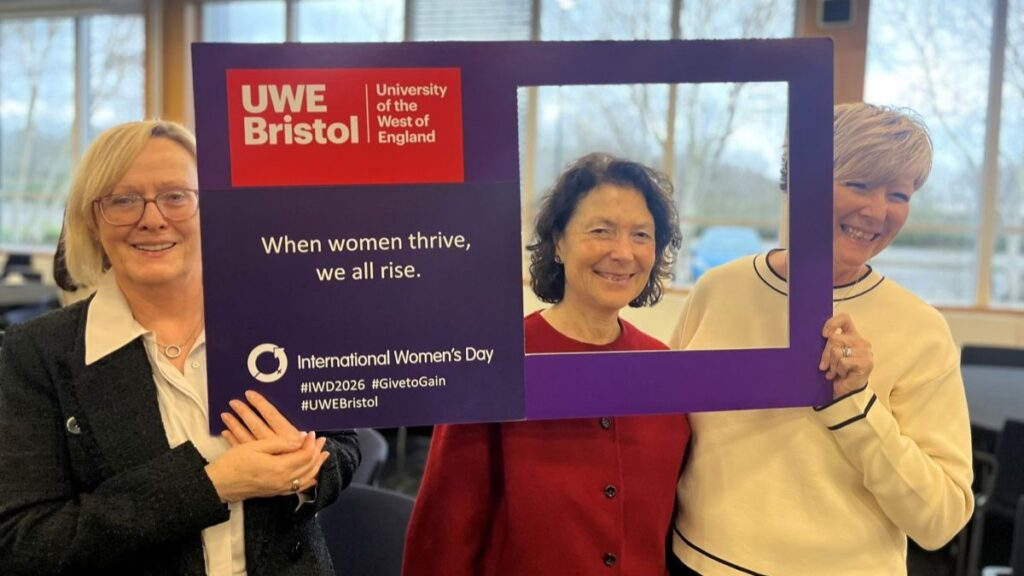
A stand organised by Vanda Papafilippou and Chathushka Kiriella invited participants to take part in a “Give to Gain” pledge aligned with the International Women’s Day 2026 theme. Attendees wrote personal commitments to advancing gender equality, contributing to a shared sense of responsibility and action.

These pledges ranged from professional commitments, such as “giving time to mentor others through every step of their journey” and “putting more effort into supporting women through flexible working practices”, to wider reflections on community and culture, including “passing empathy on to future generations” and simply encouraging women to “be kind to each other.”

Final reflections

The event made clear that gender-based violence is not an individual issue; rather, it is systemic, structural, and deeply embedded in society. From gaps in funding and policy to stigma and institutional barriers, the challenges are complex. But the research and discussions at this event also pointed toward solutions: better support services, stronger community engagement, more inclusive policies, better data, more research and a willingness to confront uncomfortable truths.

Most importantly, the event reinforced that meaningful change requires collective effort across researchers, institutions, communities and individuals.

Restoring control or reinforcing exclusion? UK immigration policy and international students

Posted on

By Chathushka Kiriella

“Is it still worth staying in the UK?”

That’s a question many international students are asking themselves now. Not about their coursework or career ambitions, but about whether the future they planned is still possible. For many, the answer is becoming increasingly uncertain.

In May 2025, the UK government released its white paper Restoring Control Over Immigration, outlining a series of reforms aimed at reducing net migration. While framed as necessary and pragmatic, the changes have had a profound effect on how international students experience studying and imagining a future in the UK.

But beyond the policy details lies a deeper shift. International students are no longer framed as global learners or future professionals but increasingly as a potential risk and ‘regulated, conditional migrants’.

A system that changed midway

For years, the UK presented a clear and structured pathway for international students: study, gain work experience, and potentially transition into long term employment and settlement. Students made life changing decisions based on that promise.

They paid significantly higher tuition fees than domestic students. They navigated complex visa processes, proved their English proficiency, and contributed financially through visa costs and healthcare surcharges. Many invested not just money, but years of planning and personal sacrifice. Now, that pathway is narrowing.

Recent reforms include:

  • Restricting dependants to PhD level students only
  • Reducing post study work visas from two years to 18 months
  • Raising the skilled worker salary threshold significantly
  • Extending settlement timelines

Individually, each change may seem technical. Together, they fundamentally reshape what is achievable.

Students who arrived under one set of expectations now find themselves navigating a very different reality.

The human impact behind the policy

What these changes look like on paper is one thing, what they feel like in practice is another. Many students I work with are experiencing growing anxiety, not because they lack ambition or ability, but because the goalposts have moved.

Carefully mapped plans are becoming unworkable. Career routes that once seemed realistic now feel out of reach. For some, the UK is no longer a place to build a future, but a temporary stop with an uncertain ending.

And yet, these are students who did everything “right.” They followed official guidance. They complied with every requirement. They invested in a system they believed was stable.

When that system shifts, the impact is not just logistical. It is deeply personal.

The power of language

Alongside these policy changes, there has been a noticeable shift in how migration and migrants are discussed. The white paper uses terms like “explosion,” “burden,” and “loopholes.” These are not neutral descriptions. They shape how people understand the issue.

When migration is framed as a crisis, those within it, regardless of their legal status, risk being seen through the same lens.

One of the most concerning aspects is the lack of distinction between different types of migrants. International students, who are legally sponsored, financially contributing, and closely monitored, are often folded into broader narratives about migration pressures. This blurring matters.

It creates a perception that all migrants are equally responsible for strain on public services or infrastructure, despite vast differences in their circumstances and contributions. Language does not just reflect policy. It reinforces it.

What is missing from the conversation

While the economic contribution of international students is often acknowledged, the conversation rarely goes further. Missing are the less measurable but equally important contributions: the diversity of perspectives in classrooms, the exchange of ideas across cultures and the role students play in shaping globally connected institutions.

International students are not just fee payers or future workers. They are participants in a shared academic space, contributing to knowledge, debate and innovation.

Reducing them to numbers or targets overlooks the very purpose of higher education as a global and collaborative endeavour.

When policy enters the classroom

As an academic, I have found my role changing in ways I did not expect. My work is no longer just about teaching and research. Increasingly, it involves helping students make sense of policies, navigate uncertainty and rethink their futures.

The questions I receive have shifted:

“Can I still stay after I graduate?” “Should I bring my family?” “Is there any point applying for jobs here?”

These are not questions I was trained to answer.

At the same time, while universities do have support systems in place for  international students including the Immigration Advice Service team, Careers services, and the Global Centre. There are limits to what these teams can do when wider policy decisions are beyond their control. In many ways, they become messengers navigating constantly shifting immigration and political landscapes. Although staff continue to support and guide students as best they can, universities themselves are also operating within constraints, creating a difficult position where institutional support can only go so far against broader political and policy changes.

On one hand, I am part of an institution that recruits international students and operates within government frameworks. On the other, I see firsthand the emotional and practical consequences of those frameworks. There is a constant tension between compliance and care.

For those of us who were once international students ourselves, that tension is even more pronounced. Students often see us as proof that the system works, a “success story.” That perception builds trust, but it also comes with responsibility.

We become advisors, advocates and sometimes simply listeners, absorbing the uncertainty students carry. This is rarely recognised as part of academic work, but it is becoming increasingly central to it.

A question of responsibility

The current narrative often places responsibility on students, suggesting misuse of the system or excessive burden but this overlooks a key point.

International students operate within a system designed and regulated by governments and institutions. If there are gaps, inconsistencies, or exploitation within that system, responsibility does not lie solely with those who entered it in good faith.

Holding institutions accountable for quality and oversight is necessary but broad restrictions that affect all students risk punishing those who have done nothing wrong.

What kind of system are we building?

The UK continues to position itself as a global destination for education. Universities actively recruit international students, highlighting opportunity, diversity and long term potential.

At the same time, immigration policies are becoming more restrictive, more conditional and more uncertain. This raises a fundamental question: can a system invite international students in while simultaneously limiting their ability to stay, contribute, and belong?

Conclusion

Policies aimed at restoring control may achieve certain political objectives. But they also reshape the experiences of those within the system, students and educators alike.

International students are not abstract figures in migration statistics. They are individuals who make significant investments, contribute meaningfully to academic communities and plan their futures based on the rules set before them. When those rules change, the consequences extend far beyond policy documents.

If the UK is to remain a genuinely global education hub, it must move beyond seeing international students as numbers to be reduced and recognise them as people to be supported. Because the question students are asking now, “Is it still worth it?”, is not just about their future.

It is about the kind of higher education system the UK wants to be.

Job sharing in the South West – meet, learn and connect

Posted on

By Chathushka Kiriella

On 21st January 2026 the Job Share South West (JSSW) inaugural event brought together leaders, managers and researchers to explore the potential of job sharing. Organised by Clare Freshwater-Turner and Annabelle Richards from Lloyds Banking Group and Sarah Houghton and Louise Cuthberston from BT Group, the event, held at the Lloyds Banking Group Harbourside Office, offered a combination of academic insight, real-world experience and practical discussions culminating in a networking breakout session that fostered connections and community building.

Opening with a warm welcome from Annabelle Richards and Clare Freshwater-Turner who introduced the keynote speaker Professor Susan Durbin from the College of Business and Law, University of the West of England (UWE). Drawing upon her specialisms in gender, employment and women’s careers in male-dominated industries Professor Durbin presented her findings on part-time work, flexible working and job share partnerships (JSPs).

This research conducted by Professor Durbin and Stella Warren (UWE) and Professor Jennifer Tomlinson, Leeds Business School, focused upon senior level men and women who job share (although male participation in job sharing remains low). It demonstrated that the outcomes of JSPs are similar for men and women. It also highlighted the significant benefits for those who engage in JSPs including improved work-life balance with alternating work patterns enabling flexibility without sacrificing productivity; high levels of job satisfaction compared with part-time working and a strong sense of achievement amongst participants in the study. Importantly career progression was found not to be negatively impacted by JSPs. Key to the success of JSPs was trust, partnership, collaboration and friendship between job sharers.

Notable challenges to JSPs were that employers appear reluctant to embrace this way of working due to JSPs often operating on slightly over full-time contract hours. However Professor Durbin argued that rather than seeing this as a cost employers should recognise the ‘value for money’ when two highly skilled and experienced senior managers come together to work in a JSP. She also argued for the significant benefits when those in JSPs are able to maintain a work-life balance and thus give their ‘whole selves’ when they are at work. Professor Durbin also reflected upon the need to conduct a larger study to include more men in order to identify any potential gender differences in the experiences and perceptions of JSPs and to consider the potential pitfalls of JSPs from both the employer and employee perspectives.

Presentations at the Jobshare Network inaugural event

The presentation by Professor Durbin concluded with a thoughtful Q&A session where the audience explored the practical realities of job sharing in more depth. Questions focused on how job share partners navigate change together particularly during periods of job share partner promotions and how alignment and communication can be maintained as a pair. Attendees also asked about the benefits and challenges of job sharing from an employer’s perspective including productivity, continuity and management perceptions. Another area of interest was whether generational differences between job sharers create challenges with discussion around how differing experiences, working styles and expectations can be addressed through trust, openness and clear ways of working.

The subsequent panel discussion hosted by Louise and Sarah featuring leaders with direct experience of JSPs and managing JSPs included Justin Jennings, Head of Finance at Lloyds Banking Group; Racheal Nash a job-sharing Business Support Manager at Lloyds Banking Group; Zak Mensah Co-Chief Executive of Birmingham Museum Trust; and Katherine Carr, Director of Strategy and Corporate Affairs at the National Armaments Director Group (Job Share) and Ministry of Defence (Job share).

The discussion explored how JSPs work in senior roles and highlighted recurring themes of the importance of trust, establishing a shared way of working and complementary skills in the JSP. The hardest part was believed to be at the start of a JSP, one panel member expressing ‘Once you can say, “We’ve done it, it worked, we proved it, you can overcome many barriers.”’ The panel also spoke of the initial scepticism towards JSPs from colleagues or members of the board and that this is ‘normal’. One panellist recalled how the board had initially questioned the JSP she was in regarding who from the JSP would attend board meetings but after two or three sessions the attendance by one or other of the JSP was fully accepted.

A key takeaway from the panel was that visibility of JSPs matters. Panellists encouraged those in JSPs to role-model the arrangement at all levels. As one panellist commented:

“Whatever level you’re at, if you’re in a job share, tell people, be visible, role model it.”

It was emphasised that educating colleagues about JSPs is essential to building organisational acceptance.

Work-life balance was another recurring theme for panellists who described how managing non-working days required adaptation but ultimately provided freedom and focus. One participant explained how job sharing had changed the ways she had previously worked on a part-time basis as she was always playing ‘catch up’ on her two non-workdays. She said ‘My time and energy were spent managing, not leading; job sharing changed that completely.’ Maintaining a consistent rhythm, clear handovers and shared communication channels were cited as key strategies for making JSPs seamless.

Another important insight was the power of complementary skills. Panellists explained that successful JSPs often thrive when partners bring different strengths: “One of us is more analytical, the other more creative. Together it’s stronger than either of us alone.” These dynamics allowed job sharers to cover each other’s blind spots, celebrate successes together and reduce managerial oversight.

The panel also challenged the common stereotype that job sharing is primarily for those with childcare responsibilities. Job sharing was framed instead as a leadership strategy enabling senior talent to thrive sustainably while bringing fresh perspectives to their organisations.

“People always assume a job share is because of childcare. There’s no reason why more people can’t do job shares at any stage of life.”

The event concluded with a ‘Chat & Connect’ breakout session led by Louise, Sarah, Clare and Annabelle where participants shared experiences, discussed tools and tips and explored ways to expand job share opportunities. The importance of community, mentoring and peer support was emphasised as central to making job sharing a sustainable mainstream approach: “Once people see it working, the questions stop,” noted one participant.

Key takeaways from the event included the importance of trust, role modelling, complementary skills, consistent rhythms and visibility. Work-life balance, career progression and job satisfaction were all achievable through job sharing while the challenges such as handovers, continuity and organisational culture could be mitigated through careful planning and communication.

The Job Share SW inaugural event highlighted the growing momentum behind job sharing as a sustainable and effective way of working. Through academic research, lived experience and open discussion the event reinforced that job sharing thrives when built on trust, visibility and strong collaboration and that it can support career progression, wellbeing and organisational resilience at all levels. The event received an average feedback score of 4.9 out of 5 reflecting the strong engagement and positive response from attendees. In particular participants highlighted the value of community and the opportunity to connect with others navigating similar experiences.

The Job Share SW inaugural event demonstrated that job sharing is far more than a flexible working arrangement. It is a powerful strategy for sustainable, inclusive and resilient leadership

By embracing collaboration, trust and complementary strengths senior roles can become accessible and effective for a wider range of people helping organisations thrive in an evolving workplace.

Looking ahead the collaboration between the Job Share Network South West and the University of the West of England marks an exciting next phase. We are delighted to announce that Professor Susan Durbin and Chathushka Kiriella (UWE) have been awarded Higher Education Innovation Funding to work with industry partners to develop this network. The aim is to reach further into the South West of England to enhance the knowledge exchange and impact activities currently centred in Bristol. This will involve setting up a regional workshop bringing together employers, academics, practitioners and policymakers to explore how to mainstream JSPs and identify key enablers and challenges (e.g. recruitment, workload balance, governance, dual site roles). It will also enable us to explore the feasibility of a regional job share register to expand access, improve sustainability and support long term impact.

Breaking barriers: what HR professionals need to know about disabled students and placements

Posted on

By Dr Hilary Lowe

Placements are a key part of employability in higher education. They give students real world experience and help employers spot future talent. However, for disabled students, placements can involve barriers that are not always visible.

In a recent systematic literature review co-authored with Dr Laura William from the University of Greenwich and published in Studies in Higher Education1, we explored these challenges in detail. In this blog post, we focus on what the findings mean for HR professionals and placement providers and why inclusive pathways into work matter.

Why building awareness of disability and placements matters for HR and workforce planning

Many employers use placements to build talent pipelines and assess potential recruits. Yet there remains a 27.9 percent employment gap between disabled and non disabled people, alongside widening pay gaps. These inequalities often begin long before formal recruitment.

Placements are frequently a student’s first interaction with an employer. This makes HR teams central to shaping experiences that can influence confidence, skills development and long term career outcomes. Inclusive placements are therefore not just beneficial for students, they are critical for fair workforce planning.

Four key barriers HR should address

Our review of the existing literature identified four connected themes that affect disabled students’ access to and experiences of placements.

1. Organisational processes and systems: The most significant barrier is the lack of timely and effective reasonable adjustments. While the Equality Act 2010 places a legal duty on employers to remove barriers, this duty is often reactive and poorly understood.

Students describe delays, inconsistent support and anxiety about disclosing a disability. For HR professionals, this points to the importance of proactive policies, clear communication and training for managers so adjustments are put in place quickly and confidently.

2. Low expectations: Disabled students often face assumptions about what they can or cannot do. These low expectations can damage confidence and limit opportunities to learn and progress.

Employers who underestimate students’ potential risk missing out on skilled and motivated talent. HR professionals can help by challenging bias, promoting inclusive recruitment practices and designing placements that focus on strengths rather than perceived limitations.

3. Bio-social factors: Many students manage health related needs alongside placement demands. Balancing work and impairment can be particularly difficult when placements are inflexible.

Rigid schedules and limited understanding from supervisors can make challenges worse. HR teams can reduce these pressures by supporting flexible working, enabling access to healthcare where possible and recognising that disability often intersects with factors such as gender, age or cultural background.

4. The nature of the placement: Some placements involve poorly defined tasks, pressure to over perform or feelings of isolation. These conditions can be especially challenging for disabled students.

Inclusive placement design can make a significant difference. This includes meaningful tasks, clear expectations and visible support networks. When placements are well structured, both students and employers benefit.

Implications for HR practice

These barriers reflect wider patterns of disablism in the labour market. For HR professionals, the message is clear. Inclusive placement practices are not only about legal compliance, they are a strategic priority.

By building accessibility and equity into early career programmes, organisations can reach a wider talent pool, improve diversity and strengthen their reputation as inclusive employers.

Our next steps: empirical research

Before starting the systematic review, we established an Advisory Group that brought together placement officers, academics and employer representatives. This helped ensure the research was grounded in practical experience and informed by different perspectives.

As we move into the next phase of our research, we will continue working with this group to gather lived experiences from disabled students and placement providers. This collaborative approach will allow future recommendations to reflect real world insights and support the development of HR policies, employer training and inclusive placement design.

  1. Read the full article here:
    William, L., & Lowe, H. (2025). Barriers and challenges for disabled students when engaging with non-compulsory placements: a systematic literature review. Studies in Higher Education, 1–16.
    ↩︎

Follow this blog

Get every new post delivered right to your inbox.