

International Women’s Day 2026: Challenging Gender-Based Violence

Posted on

By Chathushka Kiriella 

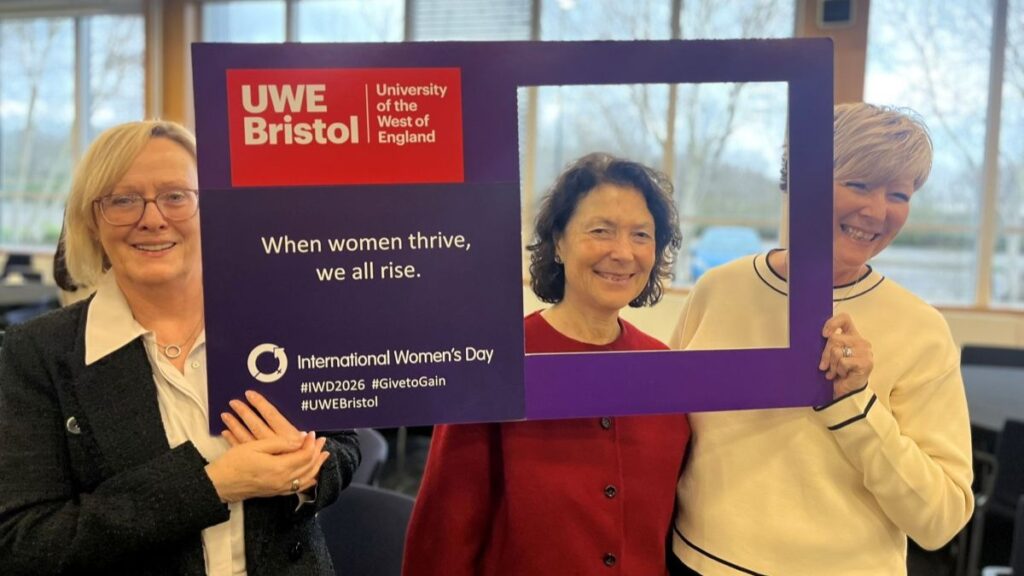
This event, hosted by UWE Bristol, on 6 March 2026, brought together researchers, practitioners and students to explore an urgent theme: challenging gender-based violence. Almost two months on, it is important that these conversations do not lose momentum. The issues raised throughout the event remain pressing for both individuals and institutions, reminding us that International Women’s Day should not mark the end of the conversation, but rather encourage continued reflection, discussion and action.

The event combined a powerful keynote with a thought-provoking panel discussion and interactive stands, offering both critical insight and practical reflection on how change can happen.

Alternative strategies to halve violence against women and girls? 

Keynote by Professor Sylvia Walby – OBE FBA FAcSS, Royal Holloway, University of London 

The keynote from Professor Sylvia Walby set the tone for the day, highlighting the systemic causes of violence against women and girls and alternative strategies to reduce it.

A central message was the importance of specialised support services. Across Britain, hundreds of organisations support survivors of domestic and sexual violence but despite recognition in government strategies, these services receive only a fraction of the funding they need. Professor Walby also drew attention to the importance of gender inequality. While violence against women and girls is widely understood as both a cause and consequence of inequality, this connection is not always visible in official strategies.

Another key theme was how we understand violence itself. Rather than isolated incidents, Professor Walby framed violence as part of a broader social system, linked to institutions such as the economy, the state and civil society. She also highlighted challenges in measuring violence, noting that current data is fragmented and often under-reports the true scale of the problem and its gender dimension. This lack of clear data makes effective policy responses difficult.

Perhaps most striking was the imbalance in funding: while the economic cost of domestic abuse in the UK is estimated at £66 billion, only a tiny proportion is invested in specialised support services. Instead, the focus is on policing and criminal justice.
Panel discussion: insights from UWE researchers

The powerful keynote was followed by a panel discussion which brought together academics from UWE Bristol’s College of Business and Law including Duncan McPhee (Associate Professor), Sophie Marsh (Lecturer in Law) from the Bristol Law School, and Chloe Tarrabain (Senior Lecturer in Organisational Studies) and Stefano Gasparri (Senior Lecturer in HRM) from the Bristol Business School. Each highlighted their research expertise in different aspects of gender-based violence and contributed to discussion which brought to the fore the many shared challenges across policing, the justice system, workplaces and wider society.

A strong theme that emerged was the lack of progress, despite years of research and policy attention. Duncan McPhee reflected on over two decades of work in rape and domestic abuse investigations, noting how many of the same issues particularly around policing failures and limited support for victims remain unresolved. This was especially evident in research on sex workers, where deep mistrust of police continues to act as a barrier to reporting violence.

The discussion also highlighted the complex realities victims face when engaging with the criminal justice system. Sophie Marsh focusing on police interviews with rape survivors noted that, although efforts have been made to reduce trauma such as recording interviews for use in court many survivors still report negative experiences. It was suggested that a key issue is the lack of consistent support throughout the process. At the same time, police officers themselves face competing pressures, balancing the need for trauma-informed approaches with demands to gather evidence quickly and meet legal expectations.

Beyond formal systems, the panel explored how stigma shapes survivors’ everyday lives, particularly in professional environments. Chloe Tarrabain emphasised that victims are often navigating multiple identities as employees, colleagues and professionals while dealing with abuse. Fear of judgement or being perceived as less capable can prevent disclosure, leading individuals to adopt coping strategies such as avoidance or carefully managing how they present themselves at work. These insights highlighted the often invisible emotional labour involved in maintaining a sense of normality.

The conversation also turned to how gender-based violence is framed more broadly. Stefano Gasparri argued that the use of gender-neutral language in policy can obscure the reality that such violence is deeply connected to gendered power imbalances. Workplace sexual harassment, for example, is often treated as a procedural issue rather than recognised as a form of violence. The role of men in addressing these issues was also discussed, with emphasis on the importance and ongoing challenges of encouraging meaningful male allyship.

Taking action: interactive stands

Beyond these discussions, the event also highlighted practical ways to support gender equality.

One example was the presence of Smart Works, an organisation set up to help unemployed women back into work, including coaching, providing ‘ready for work’ clothing and building confidence. Donations of professional clothing were collected to help unemployed women prepare for interviews, an initiative that directly supports economic independence.

A stand organised by Vanda Papafilippou and Chathushka Kiriella invited participants to take part in a “Give to Gain” pledge aligned with the International Women’s Day 2026 theme. Attendees wrote personal commitments to advancing gender equality, contributing to a shared sense of responsibility and action.

These pledges ranged from professional commitments, such as “giving time to mentor others through every step of their journey” and “putting more effort into supporting women through flexible working practices”, to wider reflections on community and culture, including “passing empathy on to future generations” and simply encouraging women to “be kind to each other.”

Final reflections

The event made clear that gender-based violence is not an individual issue; rather, it is systemic, structural, and deeply embedded in society. From gaps in funding and policy to stigma and institutional barriers, the challenges are complex. But the research and discussions at this event also pointed toward solutions: better support services, stronger community engagement, more inclusive policies, better data, more research and a willingness to confront uncomfortable truths.

Most importantly, the event reinforced that meaningful change requires collective effort across researchers, institutions, communities and individuals.

Empowering Change Across Borders: The HR, Work and Employment (HRWE) Group’s  International Women’s Day Celebrations 

Posted on

By Chathushka Kiriella, Tinkuma Edafioghor, Vanda Papafilippou and Susan Durbin 

The last couple of weeks have been an incredibly busy and productive time for for HRWE group members as we celebrated International Women’s Day with a series of inspiring events. We wanted to share what we have been doing to Inspire Inclusion and Accelerate Action, the theme of this year’s International Women’s Day and one that resonates with us all as we continue to address gender inequalities and to celebrate women’s achievements and actions.  

The celebrations began within the University with a ‘pledge campaign’ where we asked staff and students to commit to how they would promote gender equality and to reaffirm their commitment to fostering gender inclusivity. Midweek, we hosted an international women’s day celebration event featuring powerful speeches from influential leaders, highlighting the importance of diversity in the workplace. Our activities then turned externally  to an event in London, hosted by the Royal Aeronautical Society’s Women in Aviation, Aerospace and Space Committee, highlighted and honouring the achievements of women in the industry; and a further event in Paris, France, hosted by the Royal Aeronautical Society’s Paris Branch, where we engaged with more incredible women from the aviation sector, sharing experiences and discussing ways to drive inclusive change. These events provided an excellent platform for networking, learning, and celebrating progress toward gender equality. In this blog, we will take a closer look at each event, sharing key moments and takeaways from this inspiring celebration. 


Vanda standing with Andrew Simpson ''Together we can forge Woman's Equality''

To celebrate International Women’s Day, Dr. Vanda Papafilippou and Ms. Chathushka Kiriella organised an interactive event aimed at promoting gender equality and inclusivity within the College of Business and Law (CBL) and wider University of the West of England (UWE Bristol) community. Staff and students participated by adding their personal pledges for gender equality to notice boards in the Atrium area. Organising such an event was crucial for several reasons: it made International Women’s Day more relevant by actively engaging staff and students, prompting them to reflect on their own experiences and the importance of gender equality in their personal and professional lives, and creating a space for open discussions about gender equality. By gathering pledges, the event provided tangible evidence of our community’s commitment to gender equality, which will inform future actions and initiatives, including our Athena SWAN application. 

Many pledges emphasised the importance of supporting gender equality in all areas: workplace, home, and community, highlighting that “the future is dependent on the continued development of gender equality” and that “women should not feel their gender is a barrier to work or education”. Staff and students expressed their commitment to empowering and supporting women and trans women in their personal and professional lives, saying “I pledge to support all women in work and home life,” “I pledge to continue to promote gender equality in my life and my teaching”.  Recognising and celebrating women’s achievements was also a key theme, highlighted by pledges such as “I pledge to make time to celebrate all women’s achievements”. Many pledges also called for active advocacy and taking action to promote gender equality with commitments like “I pledge to raise my voice,” “speak more about it encourage more open talks” and “I pledge to support our amazing UWE female students advocating for themselves and stand up when facing any sort of injustice or devaluing behaviour”. Finally, a great number of participants focused on the need for “equal pay, promotion, career opportunities for everyone” pledging to mentor colleagues and enabling them to reach their full potential. 


Midweek on March 5th, HRWE group members gathered to celebrate International Women’s Day (IWD) in their own unique style at Bristol Business School, UWE. A ‘grand potluck’ was organized, featuring a themed cake. The event began with a welcome speech by Chathushka Kiriella, who emphasized the importance of accelerating action—both in the workplace and in personal life. Whether big or small, committing to action was a key takeaway from her speech. The group lead, Professor Susan Durbin, then addressed the gathering, highlighting the significance of celebrating women and their contributions. 

The event featured three inspiring talks by Dr. Vanda Papafilippou, Dr. Tinkuma Edafioghor, and Dr. Stefano Gasparri. Dr. Papafilippou discussed UWE Bristol Business School’s application for the Athena Swan award and shared key insights into gender equality initiatives at UWE Bristol. Dr. Edafioghor shared her personal experience with the 100 Black Professors Scheme, highlighting the invaluable support she had received as a mentee. Her speech was deeply inspiring and underscored the importance of strong support networks for women. Dr. Gasparri spoke about the crucial role men must play in shifting from bystanders to “man-allies” in protecting women from sexual harassment, sharing key findings from his recent research. The event was filled with inspiration, empowerment, and a strong sense of community. 

The IWD celebrations then expanded to London, where Professor. Susan Durbin, Dr. Tinkuma Edafioghor, and Ms Chathushka Kiriella attended the International Women’s Day event organized by the women in Aviation, Aerospace and Space Committee, Royal Aeronautical Society, London. The event featured inspiring talks by women leaders, panel discussions, and networking sessions. The event was opened by Christine Matthews, WAASC Chair, with a welcome speech from Sameer Savani, GKN, who sponsored the event. Speakers included, Celia Pelaz, COO and Theresa Condor, CEO At Spire Global. There was also a panel event on ‘Voices of the Future” with Maleha Khan, UK Space Agency, Alice Goodwin, Virgin Atlantic and Janine Hornsby, CEO – Air League. The keynote speech was delivered by Former Boeing VP Pam Valdez, who shared the incredible journey of Hedy Lamarr as an inventor—an inspiring story to hear on International Women’s Day. The day rounded off with Professor Susan Durbin presenting on  ‘women’s safety at work’ with Kathleen Lowe, COO, Force Air Defence and Judith Milne, Little Blue Private Jets Limited. The importance of mentoring in this highly male-dominated sector was a theme throughout the day, the alta mentoring platform  being highlited and promoted by the UWE team.  

The final event, sponsored by the University of the West of England and run in parallel with the London event, was the Royal Aeronauticial Society’s Paris Branch IWD event, on 11th March, 2025. The event was base upon an expert panel of six women leaders from the aviation industry, with a focus on actions to improve gender diversity and inclusion and advice from panel members’ experiences of what does and does not work to achieve this. The panel, moderated by Carine Petitdemange, Logix Aero, comprised Yannick Assouad, Thales, Judith Milne, Eastwinds Resort, Anne-Segolene Abscheidt, IPSA, Ann-Marie Matheus Ochoa, Eutelsat and Space women Alliance, Claire Barcham, UK Space Agency and Professor Susan Durbin, UWE. The event was opened by the Branch Chair (David Cooke) and an introduction by Dr Susanne Svensdotter.  

The panel discussed key challenges, including the decline in STEM participation due to educational reforms in France and the importance of fostering interest in STEM from an early age, with parents playing a key role. Panellists emphasised the importance of creating supportive communities, promoting mentorship, and addressing barriers such as visa restrictions and language challenges for international female talents. They critiqued superficial diversity policies, advocating for meaningful cultural change, inclusive language, and environments where women succeed on merit, not quotas. Reverse mentorship was suggested to challenge traditional perspectives, and the importance of diverse career paths beyond engineering — such as HR and data analysis — was highlighted. Intersectionality and microaggressions were acknowledged as significant hurdles for women from diverse backgrounds, with advice to leverage networks and speak out against inappropriate behaviours. David Cooke closed the event with a powerful statement: “The future of humanity is in the hands of women,” leaving attendees inspired to drive lasting change in the industry. 

UWE Comets Cheerleading team posing ''Together we can forge Woman's equality''

The past few weeks of International Women’s Day celebrations have been a testament to the power of collective action in promoting gender equality and inclusivity. From pledge campaigns and interactive discussions to thought-provoking speeches and global networking events, the HRWE group has played a pivotal role in fostering dialogue and inspiring change. The celebrations in Bristol, London, and Paris have provided valuable platforms for sharing experiences, advocating for systemic progress, and emphasizing the importance of mentorship and community support. As we reflect on these impactful events, it is clear that the journey toward gender equality requires continuous effort, collaboration, and commitment. By championing these conversations and supporting one another, we can continue to break barriers and create a more inclusive future for all. 


Exploring Neurodiversity in Engineering: A Video Series by Vanda Papafilippou and Lucy Downes

Posted on

Vanda Papafilippou and Lucy Downes, have recently published a series of videos exploring their findings around their research on neurodiversity in engineering. They have made these videos so that the information from their research is free and accessible, publishing the information on YouTube for all to access. More information on each video can be found below as well as a brief bio of each author.


Introducing the study.

The first video in the series,  Introducing the study neurodiversity in engineering, introduces a study conducted by Dr. Vanda Papafilippou (Principal Investigator) and Miss Lucy Downes (co-Investigator). The study, carried out in 2023, focused on the experience of neurodivergent engineers in the workplace.


Getting in.

91% of survey respondents found that there were barriers in the recruitment process for neurodivergent people. The second video, Neurodiversity in Engineering: Getting in, addresses the topic of recruitment and selection. What parts of the recruitment process pose the biggest barriers – what works well? The video looks at what organisations can do to remove barriers from the selection process, and what Neurodivergent people look for when applying for a new role.


Moving on.

The third video, Neurodiversity in Engineering: Moving on, presents the main findings of the research on neurodiversity in engineering, focusing on the experience of neurodivergent engineers once in the workplace. What are challenges both physical and social that  they face and how HR processes and the questions of ‘’disclosure’’ can have an impact.


Moving up.

Part four of the series, Neurodiversity in Engineering: Moving up, explores the findings related to career development and progression, and how this interacts with neurodiversity in engineering. How lack or role models and certain role requirements not inline with the skill set such as people management created barriers to progression in the workplace.


Implications for practice.

Finally, the last video in the series, Neurodiversity in engineering: Implications for practice, discusses the implications of the research findings for smaller teams, line managers, senior managers, HR policies and practices, and organizational culture more broadly.


About the Authors

Dr. Vanda Papafilippou is a Senior Lecturer in Human Resources Management at the University of the West of England (UWE Bristol), specializing in Equality, Diversity, and Inclusion (EDI) in the workplace. Her research focuses on addressing gender inequality, improving diversity management practices, and promoting inclusive recruitment, as evidenced by her leadership on projects exploring women’s networks, the experiences of European expatriates, and neurodiversity in engineering. Combining her academic expertise in qualitative research methods with her active engagement with industry, Vanda has developed and delivered inclusive recruitment and selection training for organizations, created EDI training materials for social enterprises, and served as a judge for the Chartered Institute of Personnel and Development’s Applied Research Conference, making her a prolific researcher and practitioner dedicated to fostering more equitable and inclusive workplaces.

Lucy Downes, a Lecturer in Human Resource Management at UWE Bristol. She has achieved Fellow status with the Higher Education Academy and is close to completing the Post Graduate Certificate in Academic Practice. Lucy’s research interests centre on equality, diversity, and inclusion in the workplace. As part of her dissertation, she explored the social factors that support or hinder the professional identities of senior female aerospace engineers. Since joining UWE Bristol, she has worked on a research project investigating the experiences of international students during the COVID-19 pandemic.

She has also collaborated with an interdisciplinary team on a Higher Education Innovation Fund-supported project to develop a framework to help engineering organizations recruit and retain neurodiverse employees.

Handbook Launch: Gender and Employment in the Public Sector

Posted on

Hazel Conley and Paula Koskinen Sandberg have co-edited a new International Handbook on Gender and Employment in the Public Sector, published by Edward Elgar in their International Handbooks on Gender series.  This blog is based on the introductory chapter of the handbook.  

Professor Hazel Conley would like to introduce her latest publication, at the formal launch of this handbook in the 11.12.23. There will be light refreshments, and ample opportunity to discuss the work. You can register to attend here.


Public sector employment is characterized by its high levels of gender segregation and, in many countries of the world, it is feminized providing both high and low skilled work for women.  Public sector employment is inevitably politically charged because the State is often both employer and paymaster and because adequate public services rely on significant levels of taxation, making it a target for neo-liberal reforms fuelled; in recent times, by austerity.  Here, trade unions still have a significant representation and collective bargaining presence, which periodically results in industrial unrest.

Further, Public sector employment is emotionally charged because it often involves work with the most vulnerable members of society – the old, the young, the sick, the homeless, victims of crime and other emergencies, which has included being on the front line of a global pandemic.  Despite this, the rewards for public sector employment, particularly in relation to gender pay equality, are frequently called into question.  However, these issues also mean that public sector employment has often been the focus of developing gender equality policies, practices and legislation.  These debates provide fertile ground for feminist and academic research on equality, from which the contributions to the Handbook are drawn.  The volume explores theoretical, conceptual and empirical research from established and early career researchers.  It takes an international and intersectional perspective, which acknowledges that those who work in public sector employment have differences in demography that shape their experiences at work.

The 26 chapters of this book explore five main subject areas:

  • Gender and the Neo-Liberal State as Employer
  • Gender and Working Conditions in the Public Sector
  • Women’s Pay, Reward and Pensions in the Public Sector
  • Women’s Representation and Voice in the Public Sector
  • Gender, Pandemic and Public Sector Employment

The book produces a wide range of global evidence detailing the ways in which women’s employment in public services is inevitably impacted by the many political and economic tensions that surround public spending. Women are used as flexible resources to move into or out of the labour market, depending on prevailing political ideologies and economic conditions. Their pay and job quality are used as tools to keep public spending low where neo-liberal ideologies demand while; at the same time maintaining levels of public service that limit the damage to the electoral chances of incumbent governments.

”…Women are used as flexible resources to move into or out of the labour market, depending on prevailing political ideologies and economic conditions...”

During the global pandemic the commitment and dedication of public service workers to the care of others was lauded, but their own health and well-being were secondary concerns, with ethnic minority and migrant women faring particularly badly.  This book documents how years of underfunding combined with the effects of the pandemic have left public services, and the women who work in them, exhausted and demoralized.  Lastly, despite propping up underfunded public services around the globe, women’s progress into leadership positions in this sector remains tortuously slow and unequally rewarded.

Although the evidence in this volume is international and is shaped by quite different cultural and political contexts, the underpinning logic for the position of women identified in each chapter is consistent: women’s paid labour is universally valued less than men’s and their unpaid labour is generally disregarded.  Although one of the main roles of the state should be to uphold the human rights of its citizens not to be discriminated against, it is complicit in discrimination when it draws on gendered assumptions about women’s lives, skills and motivations to keep public spending low.  The book highlights that change is possible, but this would require rethinking how public services, particularly care work, are valued and funded in societies.  Importantly, change can only be achieved if women’s labour ceases to be thought of as secondary, low-skilled, cheap and dispensable.  For these conditions to be realized, the trade unions and organisations that give women working in public services a collective voice must take this up as their raison d’etre and make sure that the exploitation of women is not the go-to solution for limiting public spending.


The International Handbook on Gender and Employment in the Public Sector provides a comprehensive overview of the latest research and policy debates on gender equality and diversity in public sector workforces around the world. Co-edited by Hazel Conley and Paula Koskinen Sandberg, this insightful volume features contributions from leading scholars across various disciplines. If you are interested in learning more about the challenges and opportunities related to promoting gender equality in public sector organizations globally, be sure to get yourself a copy of this important new handbook published by Edward Elgar Publishing.

Researching equality, diversity, and inclusion in Italy: why are transsexual individuals not included in the ‘equality debate’?

Posted on

Please note, this article discusses topics of suicide and discrimination and may be distressing or triggering for some. Links for support on topics that are discussed in this article can be found at the bottom of this page.

Sara Fanti

As an international PhD student researching pay gaps, gender, and sexual orientation in the context of my native country – Italy, I read a number of Italian newspaper articles to keep up with the latest business world news as well as current events in general. One article, in particular, caught my attention. This article left me baffled and in deep grief for my country, my community, and humanity: The suicide story of a transgender woman.

The story of Cloe Bianco

A single tree with a rope swing sits on a pink field with a baby blue sky, giving connotations of the trans pride flag.

Cloe Bianco was a high school teacher at the “Scarpa-Mattei” Agricultural School in San Donà di Piave (VE), Italy. In 2015 Cloe decided to ‘come out’ as a transgender woman to the school where she had worked for years. Specifically, to come out to her students, finally living her life as the person she had always felt she was “since she was 5 years old” (La Stampa, 2022). On the morning of 27th of November, Cloe walked into her classroom and introduced herself with her new name, asking her students to refer to her using the correct pronouns she/her. Unfortunately, Cloe’s courage to be herself did not sit well with some of the parents of her students, who promptly e-mailed the regional alderman for the Ministry of Education to complain about what had happened. This resulted in Cloe receiving a disciplinary sanction resulting in a three-day suspension, followed by a demotion to administrative roles in a back office of the school where she was permanently employed, and subsequentially any other schools in her Region (i.e. Veneto) where she tried to work as teacher (Open, 2022)[1].

On the 11th of June 2022, the remains of Cloe’s body were found in a torched campervan where she had been living in isolation for seven months. The investigation that followed uncovered a suicide letter left in her blog. The verdict: Cloe died of suicide at the age of 50, after she had been actively prevented from fulfilling her fundamental Constitutional right and duty to work (Art. 4 of the Italian Constitution).

Cloe’s story is just one of the many where active discrimination in the workplace undermines the lives of Italian LGBT+ people every single day. Whilst most western countries focus, more or less effectively; on developing inclusivity within the labour market, Italy falls far behind.

Even failing to legislate basic, protective laws against discrimination for gay, bisexual, transgender or non-binary people.

So, my question, as an extremely frustrated Italian academic is this.

Why, in Italy, is it so easy to ruin the life of somebody who works in the public sector by explicitly discriminating against them and get away with it?

To answer this question, it is first important to understand the influence of culture on the debate around gender vs. assigned-at-birth sex, and how this ultimately results in the lack of interest when including sexual and gender-based minorities in the equality, diversity, and inclusion debate.

Gender vs. Sex

The debate of gender and gender identities is not new in literature. Nonetheless, the definition of ‘What is gender’ is still very relevant and in a constant flux of redefinition and negotiation. A simple definition accepted by LGBT+ literature is that gender refers to the psychological sense of self, it relates to how someone deeply and truly feels on the inside and that this is based on their individual understanding of genders. Anatomical sex (or assigned-at-birth sex) is typically assigned at birth based on biological and physical characteristics such as chromosomes, hormones, genitals, body hair etc.

Queer theorists define gender as the result of power performances, negotiated within societies which are influenced by culture and the historical period (Foucault, 1981; Butler, 1990, 1993; Harding, 1998) It is performed in every moment and aspect of individuals’ lives throughout external appearance – gestures, language, clothes – prior to any choice of gender identity (Butler, 1990). Soon-to-be-parents are told what sex the baby will be, and while raising them, project their own socially learnt bias of gender. These include a series of norms on how to behave, how to dress, how to express emotions and, how to care for others, which differ depending on the assigned-at-birth sex.

The biological sex assigned at birth, plays a pivotal role in the societal expectations placed upon an individual. These expectations are dependent on whether they are born with female or male characteristics and can begin to form before they are even born. Gender identity however, develops within an individual’s sense of self and defines what an individual believe about themselves and who they are. Sometimes, this might not coincide with the anatomical or biological sex. Transgender, transsexual, gender-queer (GQ), gender-fluid, non-binary are all terms that are used to describe people whose gender identity does not align with their anatomical or biological sex (Stonewall, 2020).


“Gender identity develops within an individual’s sense of self and defines what an individual believe about themselves and who they are…”


Nevertheless, this definition of gender is often refused by institutions of conservative countries such as Italy, where an essentialist idea of sexuality is still very predominant. Within a gender essentialist paradigm every person is believed to be born with a male or female “essence” which is determined by the biological sex assigned at birth (Gagnon & Parker, 1995). Femininity and masculinity are, therefore, understood as a natural contraposition of sexes that is at the essence of sexuality regardless the culture and historical time, is defined by biology and chromosomes, and is carried within it a definite set of personality traits. The first gentle and maternal, and the other aggressive and strong (Segal, 1994).

Essentialist standpoints are often used to rationalise gender-based biases and heterosexist or transphobic discourses. For example, to justify the gender segregation of the labour market, gender pay gaps, and to withhold legislation in support of LGBT+ rights. Gender essentialists’ standpoints are clearly taken in the Italian political debate and supported by the Catholic Church which deeply influence political choices and welfare measures in Italy in a clientelist relationship.

When inclusivity is not even in the picture

A slate-grey city scape immersed in fog, displaying a foreboding scene

The first attempt to give a definition of gender as opposed to anatomical sex has been introduced in the proposal of the so-called DDL Zan (Disegno Di Legge, tr. Law Draft). Drafted in 2019, by Alessandro Zan, a member of the Chamber of Deputies and leading member of the gay association Arcigay. The DDL Zan (Senato della Repubblica, 2020) included a total of ten articles. Five of which suggest modifications to existent articles in the penal code giving aggravating circumstances for crimes against gay, bisexual, transexual, disabled people, and women. This law draft provides a definition for biological sex, gender, sexual orientation, and gender identity; it defines the line between the right to freely express an opinion as opposed to hate speech against sexual minorities and women; it proposes a national awareness day against homophobia, bi-phobia, and trans-phobia; and, finally, it proposes a strategy to collect hate crime data on a national scale and a plan to actively fight against homophobia, transphobia, and gender discrimination.

The opposition to this law was strongly supported by far-right parties – i.e., La Lega, Fratelli D’Italia (FdI), Il Popolo della Famiglia etc. – as well as the Catholic Church and pro-life associations. The main point of debate was precisely the Article 1 which provides a definition of gender and anatomical sex as two distinct concepts as outlined above. The opposition would have been willing to vote in approval of the law only if that definition was cancelled from the draft (La Repubblica, 2021). Terminating Article 1, however, would have further alienated trans people, excluding them from being protected against discrimination and transphobic crimes. Finally, without reaching an agreement, the drafted law was voted out by the Senate of the Republic in April 2021. A new discussion was scheduled in April 2022, but to date (June 2022) nothing has happened.

Conclusions

Cloe’s story is just one of many discrimination cases that end in tragedy. Gay Help Line, the main call centre helpline that provides phone support for LGBT+ people, reported in 2021 a steady increase of calls concerning discrimination such as: discrimination in accessing the labour market, or maintaining a job after coming out (35%); discrimination in accessing private (25%) or public services (22%) such as healthcare or housing; discrimination as customers (18%). It is also reported a 10% increase in calls concerning hate crimes against trans people, especially bullying, stalking, non-consensual sharing of private photos in the workplace (15%), aggressions and threats (19%). Also, 42% of cases concern family abuse, 59% of which are perpetuated by adult family members and 9% by partners; 21% of the cases concern violence perpetuated by strangers. 17% of all calls come from transgender or non-binary people. Gay Help Line also reported that very few people in the LGBT+ community report this type of crimes to the police.

The Italian Constitution proclaims equality and dignity amongst all citizens regardless of their personal or social condition (Art. 3). Sex and sexual orientation discrimination in the workplace and in the hiring, process is illegal under the Article 7 of the Legislative Decree no.165/2001; the Article 15 of Law no. 300/1970; and the Legislative Decree no. 216/2003. However, it appears clear that trans people are not included in the equality debate, and there is close to no interest in providing them the Constitutional right of equality and inclusion in society, let alone in the workplace.

Finally, the newly elected right-wing government, not only has purposely left out any reference to equality, diversity, and inclusion in their election campaign, but has also actively promoted legislations against adoption rights and surrogacy which have been contested by LGBT+ activists as discriminatory and homophobic (BBC, 2022) raising concerns for the future of equal and civil rights in Italy.


[1] To read an English version of the story, please see – https://jane-67706.medium.com/of-suicide-and-transphobia-1b077865b73f

Links for support

LGBT Foundation – Helpline and Email Support

Samaritans | Every life lost to suicide is a tragedy | Here to listen

Mindline Trans+ – Trans+ emotional support helpline

Citations

Butler, J. (1990). Gender trouble: Feminism and the subversion of identity. London and New York: Routledge.

Butler, J. (1993). Bodies that matter: On the discursive limits of sex. New York, 38.

Foucault, M. (1981). The history of sexuality: An introduction, volume I. Trans. Robert Hurley. New York: Vintage.

Gagnon, J. H., & Parker, R. G. (1995). Conceiving sexuality. Conceiving sexuality: Approaches to sex research in a postmodern world, 3-16.

Gay Help Line. (2021). Report Gay Help Line. [online] Available at: https://gayhelpline.it/report-gay-help-line/.

Harding, J. (1998). Sex acts. Practices of Femininity and Masculinity, London.

L’Unione Sarda English. (2022). Coming out at school, then marginalization: the story of Cloe Bianco, the trans teacher who set herself on fire. [online] Available at: https://www.unionesarda.it/en/italy/coming-out-at-school-then-marginalization-the-story-of-cloe-bianco-the-trans-teacher-who-set-herself-on-fire-a7ttj2qu [Accessed 20 Jun. 2022].

La Repubblica, 2021. DDL Zan, cos’è e cosa prevede, articolo per articolo e il testo integrale. la Repubblica. Available at: https://www.repubblica.it/politica/2021/06/22/news/omofobia_legge_zan_ecco_che_cosa_prevede-307139790/ [Accessed March 15, 2022].

La Stampa. (2022). La storia di Cloe Bianco, la prof transgender che si è data fuoco nel suo camper: ‘Ora sono libera’. La scuola la sospese dopo il coming out. [online] Available at: https://www.lastampa.it/cronaca/2022/06/14/news/la_storia_di_cloe_bianco_la_prof_transgender_che_si_e_data_fuoco_nel_suo_camper_ora_sono_libera_la_scuola_la_sospese_do-5405846/ [Accessed 20 Jun. 2022].

Open. (2022). Dal coming out a scuola al suicidio, tutta la storia di Cloe Bianco: la prof di fisica uccisa dalla transfobia. [online] Available at: https://www.open.online/2022/06/15/cloe-bianco-transfobia-suicidio-storia/.

Segal, L. (1994). Straight sex: Rethinking the politics of pleasure. Univ of California Press.

Senato della Repubblica , 2020, Misure di prevenzione e contrasto della discriminazione e della violenza per motivi fondati sul sesso, sul genere, sull’orientamento sessuale, sull’identità di genere e sulla disabilità available at: https://www.senato.it/service/PDF/PDFServer/DF/356433.pdf

Senato della repubblica, n.a., Constitution of the Italian Republic retrieved from https://www.senato.it/documenti/repository/istituzione/costituzione_inglese.pdf

Stonewall (2020). List of LGBTQ+ Terms. [online] Stonewall. Available at: https://www.stonewall.org.uk/help-advice/faqs-and-glossary/list-lgbtq-terms.

Kirby, P. (2022) Who is Giorgia Meloni? the rise to power of Italy’s new far-right PM, BBC News. BBC. Available at: https://www.bbc.co.uk/news/world-europe-63351655

.

Back to top

Follow this blog

Get every new post delivered right to your inbox.