
UWE Bristol announce new Accelerated Knowledge Transfer with Bristol Drugs Project

Posted on

UWE Bristol is delighted to announce a new Accelerated Knowledge Transfer (AKT) partnership with Bristol Drugs Project, co-funded by Innovate UK. This collaboration aims to develop and trial a digital communications campaign to facilitate engagement with early intervention in ketamine dependency. The development of the campaign will involve:

  • Researching barriers to users’ engagement with the night/festival programmes.
  • Developing effective messaging.
  • Identifying media and influencers through which the campaign may be delivered

Ketamine use has risen dramatically among young people across the UK in the past few years. There is very little research around the methods and messages we use to engage people around their drug use. This campaign will bring together the expert support that BDP offer people who use drugs in Bristol with the expert researchers at UWE Bristol to develop a body of evidence around what messages connect with people who use ketamine with the aim of engaging them in treatment  earlier to prevent long term physical health issues.

About Bristol Drugs Project Limited

Bristol Drugs Project (BDP) is a charity providing harm reduction and treatment for people who are experiencing a negative relationship with drugs and/or alcohol. With 39 years of experience, their goal is to support people towards the changes they want to see in their lives no matter what they may be.

BDP strives to support all members of Bristol in an open and inclusive service and are passionate about challenging the stigma faced by people who use drugs and alcohol wherever BDP see it.

The Project

With specialist support from the academic team based in the Bristol Business School at UWE Bristol, the project aims to increase engagement with the Bristol Drugs Project’s ketamine harm reduction interventions, via the application of social marketing (behaviour change) principles and digital marketing techniques.

“BDP are proud to deliver evidence-based interventions for people in Bristol around their drug and alcohol use. This project offers us an amazing opportunity to develop a body of evidence that will improve people’s engagement and experiences in treatment around their ketamine use. We are very proud to partner with researchers from UWE Bristol on this project.”

Lydia Plant – CEO of Bristol Drugs Project

Co-Funded by Innovate UK, the UK’s innovation agency. Innovate UK drives productivity and economic growth by supporting businesses to develop and realise the potential of new ideas. Innovate UK is part of UK Research and Innovation. For more information visit www.innovateuk.ukri.org 

Find out more about KTPs.

Skills that empower: How mentorship and strategy fuelled a leadership journey

Posted on

Nicola Reeves is the Managing Director of Happy Hour Productions, a Bristol-based TV and video advertising agency that blends strategy, creativity and production under one roof. In 2023, she enrolled on the Help to Grow: Management Course at UWE Bristol, seeking to sharpen her leadership skills and steer her agency’s next chapter with confidence.

Olly Reid is a business coach, adviser and mentor, and Co-Founder of HUM4NS – an award-winning professional development organisation based in Bristol. A UWE Bristol alum, Olly completed his BA, MA and PGCE at the university, and is now an Equity Coach on the UWE Equity programme, where he delivers the session ‘Success Starts with You’.

We caught up with Nicola to explore how the Help to Grow: Management course helped shape her journey, and how a powerful mentoring partnership with Olly Reid, forged during the programme, fuels her growth today – and continues to add value to both of their businesses.

Nicola, please could you tell us a bit about yourself, your career journey, and what made you apply to join the Help to Grow: Management Course at UWE Bristol?

I studied English at the University of Bristol and whilst I was there, some of the big advertising agencies came to present their graduate recruitment programmes – I saw M&C Saatchi and thought yep, I want to work for an ad agency in client services!

From there, I got my first job at McCann – one of the big global agencies – and worked across brands like Cathay Pacific, SimplyHealth, Badger Ales and Unilever. I worked my way up for around seven years before going travelling and working at smaller independent agencies, including a great agency in Sydney too.

During my time at McCann, I’d met the Happy Hour team many times on TV production shoots and knew what a great bunch they were, especially Tom George, the founder and owner. So when I was approached by Tom to join Happy Hour as Client Services Director on their TV and video clients, I was excited for the new challenge of working in both advertising and production.

I’ve now been there for 13 years and took over the mantle of Managing Director in 2023. So, in that new role with newfound freedom to plan the strategic development of the business, I felt that the Help to Grow: Management Course would give me the support and new network that I’d need.

How was your time on the Help to Grow: Management Course?

It did just that! It was a great grounding in all the fundamentals of running a business – some of which you know you have nailed, and some you realise quite quickly that you don’t!

It gave me dedicated time to work on the business, instead of just in it. The course was also perfect for meeting great individuals from different businesses and sectors – the group coaching and support that comes from an outside perspective is invaluable.

Olly, could you tell us a bit about yourself and your career journey – from studying at UWE Bristol to co-founding your company, and becoming a mentor on the Help to Grow programme?

My early career was in hospitality leadership and management, but in 2008 I arrived at UWE Bristol as a mature student to train as a teacher and completed a degree in Education Studies. That experience was genuinely life-changing. During my time there, I was elected Vice President for Education at the Students’ Union – two incredible years that taught me a huge amount about people, leadership, and the power of purpose. After my term finished, I returned to complete my PGCE and later a Masters in Integrated Professional Development.

I’ve always been fascinated by how people learn, grow, and perform – that curiosity has really shaped everything I’ve done since.

After teaching, I began blending my experience in leadership, management, and education – first with The Prince’s Trust, then with the social enterprise Entrepreneurial Spark, before moving into the corporate world and leading the NatWest Entrepreneur Accelerator across the Midlands, South West, and Wales . Working with leaders and business owners,  I truly saw the power of mindset and culture in driving business success.

That passion led me deeper into coaching and leadership development. I went on to complete an ILM Level 7 in Executive Coaching and Mentoring and, over the past decade, I’ve had the privilege of coaching hundreds of leaders and business owners – from CEOs to founders – helping them strengthen their mindset, performance, and resilience.

In 2021, I co-founded HUM4NS, a personal and professional development company on a mission to help people and teams become happier, healthier, smarter, and kinder. We deliver programmes like HELP (the Empowered Leadership Programme), coaching for senior leaders, and team development experiences that build better humans, not just better businesses.

Alongside this, I’m Trustee at the Marmalade Trust and a proud mentor on the Help to Grow: Management programme, supporting SMEs across the UK to scale sustainably and lead with confidence. Watching leaders reconnect with their purpose and potential is what keeps me inspired every single day.

How did you find the mentoring aspect of the course, and how has your mentoring partnership continued since the course finished?

Nicola: I’d say the mentoring aspect of the course was the thing that makes it so valuable – you need that person to hold you accountable for putting into practice what you’ve learnt. Your mentor also gives you the personal, mental and emotional support you need as a leader.

There’s a reason they say it’s lonely at the top and having a mentor is such a good sounding board – if you get the right one!

I was lucky enough to find Olly who has stayed on as my mentor and coach since I finished the course over two years ago. We have regular 121 sessions and I’m also now on the 12-month HUM4NS Empowered Leadership programme (HELP) run by Olly.

Olly: Great mentoring is a two-way relationship. It only works when both sides show up. The best outcomes happen when there’s the right match: a mentor who listens, challenges and supports, and a mentee who’s open, curious and ready to put things into practice. That’s exactly what Nicola brought to the table. For me, the mentoring element of Help to Grow is where the learning becomes real leadership – it’s the bridge between knowing what to do and actually putting it into action. I joined Help to Grow to give back, but mentoring Nicola has turned into an unexpected long term partnership that has added value to both our businesses.

What have you been up to since?

Nicola: We’ve been busy at Happy Hour since Help to Grow!

We’ve refined our positioning, and overhauled the look and feel of our brand, including launching a new website, alongside fully integrating HubSpot to manage our pipeline.

We launched our own podcast – Happy Half Hour – where we chat to guests from production, advertising and media in our own purpose-build podcast studio. We’ve also launched ‘TV Essentials’, which is a lower cost entry point for first-time TV advertisers.

In the team, we’ve had a handful of new hires, as well as celebrating two 10-year anniversaries. We’ve made it to the number one spot in Campaign magazine’s Top Regional Agencies (and number 27 in the UK’s Top 100). We’ve also recently picked up a Cannes Dolphin for our work on Arsenal’s No More Red Campaign, a film promoting their work to reduce youth knife crime in London – something we’re incredibly proud of.

As for the future, perhaps another acquisition, and bringing a non-exec director on board to help focus our growth plans. Let’s see where the future takes us!

Olly: I’ve gone on to win two Help to Grow Mentoring Matters Awards, one for Innovation and the other for the Most Inspirational Mentor, alongside an Entreconf Award and being finalists at the National Start Up Awards, Great British Entrepreneur Awards and Bristol Life Awards.

HUM4NS has launched new programmes, expanded from Bristol, to Wales to Australia, and I’m continuing to support the Happy Hour team through coaching, workshops and SLT days.


Explore the Help to Grow: Management Course at UWE Bristol.

Innovation with impact: Matthew Freeman, Bridging Universities and Start-ups

Posted on

In this blog, Professor Matt Freeman, Centre Director of Future Space, UWE Bristol’s innovation centre for high-tech businesses, shares his journey from academic to start-up founder to university-business innovation leader, reflecting on what it truly takes to bridge these worlds and make collaboration thrive.


If you had met me a few years ago, I might have introduced myself as Professor Matt Freeman, a digital media academic who published books and led research at a university. I spent over a decade in academia, from completing a PhD and lecturing, all the way to running a research centre, leading REF and becoming a professor. Yet, despite the publications and promotions, I realised that being an academic was never really about the research for me, it was always about the role of innovation.

Along the way, I’ve learned a few lessons about what it takes to make university-business partnerships thrive. In this blog, I want to share those insights with both my university colleagues and our industry partners. My hope is that these reflections can spark ideas on how we innovate together across the academia-industry divide.

My journey from academia to entrepreneurship

My personal turning point came during a secondment to a £6.8m university-business R&D partnership (Bristol+Bath Creative R+D, itself led by UWE Bristol). There, I fell in love with bringing together commercial businesses, academic research, knowledge exchange and fresh student minds under one collaborative effort. I saw first hand how powerful it is when ideas developed in universities get tested and applied by industry and vice versa. In fact, I loved it so much that I took the leap into entrepreneurship myself. In 2021 I founded Immersive Promotion Design, an R&D-led marketing consultancy to help virtual and augmented reality creatives put cutting-edge ideas into practice. That experience, applying research insights to real business challenges; taught me more about bridging academia and industry than any journal paper ever could.

Fast-forward to today: I now run Future Space, an innovation centre on UWE Bristol’s Frenchay campus, where we support 70+ high-tech start-ups. It’s a role that lets me combine both identities: the academic and the entrepreneur, to drive university-partnered innovation. If I’ve learned anything, it’s that innovation is never a ‘bolt-on’ to business, it’s an all-encompassing reimagining of what can be done and how.

What makes innovation partnerships succeed

Working at the intersection of academia and industry, I’ve seen some partnerships soar and others stall. Success isn’t automatic; university-business collaboration doesn’t happen by accident. There are two ingredients that I believe make all the difference:

Physical proximity and shared goals: Firstly, both sides need to be committed to a common purpose. The most successful collaborations I’ve led weren’t transactions, they were true partnerships built on trust and aligned vision. A recent national evaluation of University Enterprise Zones reinforced this: Place-based innovation infrastructure can work. A chat by the campus coffee shop can spark a R&D project or a hire, but only when paired with clear sector focus and active engagement. In short, everyone needs to row in the same direction.

Bridge-builders and brokers: Secondly, successful innovation partnerships need people who can speak both ‘languages’ and broker the relationship. In many ways, that’s become my job description. Universities and companies often have different cultures and timelines, so you need dedicated translators to connect the dots. It takes skilled facilitation to turn an introduction into a funded R&D project. Having a team with the skills and capacity to broker relationships and deliver tailored business support is critical.

Bridging cultural gaps between universities and industry

Even when the will to collaborate is there, cultural and structural barriers can get in the way. I’ve lived in both worlds, so I know the misconceptions that academics and business folks sometimes hold about each other. Universities can see industry as too fast paced and profit driven; businesses can see academia as an ivory tower too slow to adapt. The reality is, both worlds do things differently, and together they can offer different insights and value. Recognising this is the first step to bridging the gap.

One major difference is how each measures success. Academia rewards rigour, depth and publication. Industry rewards speed, customer satisfaction and revenue. Neither approach is ‘better’ outright – they are just different. The key is finding ways to reconcile these approaches. For example, at Future Space we pair 121 business support (an industry-style, bespoke approach) with one-to-many support like workshops and student projects (a university-style approach). Rather than argue over which is superior, there’s plenty of room for both models to co-exist, delivering richer support together.

Communication is another common barrier. Academics speak in terms of theories and long term impact; entrepreneurs speak in MVPs and quarters. We’ve learned to build a common language, often around solving concrete problems. Framing a collaboration around a shared challenge (say, prototyping a new medical device or testing a software algorithm) helps both sides see the value. I always remind my academic peers that innovation needs research but research should not be done in isolation. We need to get research ideas out of the classroom or even the journals and into real use. Likewise, I reassure start-ups that tapping into university expertise isn’t about getting bogged down; it’s about supercharging and validating their product with insight and evidence.

What universities and start-ups can learn from each other

Having one foot in a university and the other in the start-up world has convinced me that universities and start-ups actually have a lot more in common than people think… and a lot to teach each other. In fact, as pressures mount on higher education, universities may increasingly need to think like start-ups to survive and fulfil their mission.

What does that mean in practice?

For universities learning from start-ups: It means embracing agility, customer-focus and a willingness to adapt. Start-ups thrive by being lean and pivoting quickly when something isn’t working. Universities, by contrast, often carry heavy legacy structures that resist change. But universities can adopt a more market oriented mindset, tuning in closely to what students (the customers) and employers (the market) need. That could mean updating curricula faster, focusing on practical skills, or even launching entirely new bite size boot camp style programmes in response to emerging fields. In short, academia can borrow the start-up ethos of ‘adapt or perish’, staying mission driven, but being willing to reinvent how we deliver on that mission.

For start-ups learning from universities: I’d argue there’s an equally valuable lesson in the other direction. Start-ups can benefit from the depth of research and the long term thinking that universities are built on. In the rush to ship product, start-ups sometimes skip the step of truly understanding why something works or doesn’t. University expertise can provide that rigour, whether it’s a data science start-up tapping into a professor’s algorithm knowledge, or a biotech venture using university lab facilities to validate their tech. Moreover, universities train people to question assumptions and think critically, a useful check against the exuberance of start-up culture. In our innovation centre, I’ve seen start-ups gain huge advantages by engaging with faculty and students: they access state-of-the-art facilities and research labs, collaborate with experts on R&D, and plug into a pipeline of talent by recruiting graduates and interns.

As I often say, when a start-up partners with a university, it’s like getting a ‘sage’ on board. Someone who values knowledge and education as the path to breakthroughs. Conversely, the university benefits by partnering with a ‘hero’ within innovation, nurturing new companies that make the world better. Both sides win by combining the Sage’s wisdom and the Hero’s drive. By learning from each other, agility from start-ups, and research depth from universities we can each become more effective in our missions.

My offer to you

I want to close on a personal note. Having navigated this path from academia to entrepreneurship and back into the fold of university-business collaboration, I’m making an offer to you. Whether you’re an academic, a business leader, or both:

  • I commit to being a bridge-builder. If you’re an academic with an idea that could have commercial impact, or a business seeking academic insight, my door is open. I will use my position to help connect you with the right people, be it researchers or partners. Bridging the gap between our two worlds is my passion, and I’ll gladly play the translator to get a partnership off the ground.
  • I commit to sharing lessons (including the hard ones). Innovation isn’t all success stories. There will be setbacks and failures. I promise to be candid about what doesn’t work and to foster a culture where we learn from mistakes. Whether it’s through my own Innovate Together think-piece (published monthly on LinkedIn) or a casual coffee chat, I’ll share the insights I’ve gained (and the scars I’ve earned) so that we can all innovate smarter together.
  • I commit to championing change. Within my university and in my interactions with others, I’ll continue to challenge the status quo that hinders collaboration. That means advocating for more flexible policies, celebrating engaged academic and industry-savvy students, and pushing for initiatives that make partnership the norm, not the exception. Institutions only change when people inside them drive the change – consider me fully on board for that mission.

Ultimately, my offer is partnership. Let’s break down the barriers and unleash more innovation. The challenges our society faces are too complex for one sector to solve alone. But I truly believe that by combining the curious minds in universities with the daring doers in business, we can create solutions neither could achieve independently.

Find out about the amazing work at future space and how you can get involved.

Strengthening Higher Education systems through UK-Mexico collaboration

Posted on

UWE Bristol is leading a new international partnership with Universidad Tecnológica de Saltillo (UTS) the Secretaría de Educación de Coahuila (SEDUC), and Universidad Politecnica de Ramos Arizpe (UPRA) Mexico, under the British Council’s HE Connects 2025 programme.

The project, titled “Strengthening systems to improve the quality and efficiency of Higher Education Institutions in Coahuila, Mexico,” aims to build institutional capacity, enhance educational quality, and foster inclusive international collaboration across the higher education sector. This partnership is developed on the previous project “Improving soft skills, learning outcomes and employability of women students, graduates, and early career professionals in STEM” and existing relationship with the State of Coahuila (government) in Mexico.

Building capacity for quality and internationalisation

Led by Dr Tariq Umar (Senior Lecturer, School of Architecture and Environment, UWE Bristol), this initiative will co-create frameworks and tools to strengthen institutional governance, curriculum quality, and international engagement. Working closely with Mexican partners, the project will develop a strategic institutional toolkit – a bilingual resource that supports higher education institutions in Coahuila to benchmark and plan improvements in teaching, management, and global collaboration.

Over 2026, the project will deliver a series of collaborative activities, including:

  • Institutional self-assessment workshops to identify capacity gaps in quality assurance and governance.
  • Strategic toolkit co-development labs to design internationalisation and improvement frameworks tailored to local contexts.
  • Capacity-building training for academic and administrative staff focused on curriculum, leadership, and quality enhancement.
  • A UK–Mexico Policy Dialogue Forum bringing together higher education leaders and policymakers.
  • A final dissemination event to share outcomes and best practices with wider academic communities.

Supporting sustainable and inclusive higher education

The project contributes to several UN Sustainable Development Goals (SDGs), particularly SDG 4 (Quality Education), SDG 8 (Decent Work and Economic Growth), and SDG 10 (Reduced Inequalities). Through inclusive participation and gender-responsive design, the collaboration will promote equitable access to international opportunities, leadership development for women in academia, and sustainable education models.

Dr Umar explains: “This partnership is about more than system strengthening – it’s about mutual learning and shared innovation. By working alongside our Mexican colleagues, we aim to co-create practical tools that foster inclusion, sustainability, and quality improvement across the higher education sector.”

From Mexico, Dr Yolanda Soberón Rodríguez, Director of Liaison (Universidad Tecnológica de Saltillo), added: “For us, this collaboration represents an opportunity to transform institutional practices through shared knowledge and joint development. Working with UWE Bristol and the British Council enables us to strengthen our systems and open new pathways for international engagement that directly benefit our students, staff, and regional communities.”

Enhancing UWE Bristol’s international engagement

For UWE Bristol, this initiative represents a strategic step in deepening engagement with Latin America. It aligns with the UWE Bristol’s Transforming Futures agenda, expanding its global network and advancing transnational education (TNE) initiatives. The School of Architecture and Environment will particularly benefit from new opportunities to integrate global perspectives into teaching, research, and professional practice.

Expected outcomes include:

  • A co-developed institutional toolkit for quality and internationalisation, applicable across global partnerships.
  • Policy recommendations to support education reform in Coahuila and beyond.
  • Formal collaboration agreements (MoUs) establishing the foundation for joint programmes, staff exchanges, and research projects.

A shared roadmap for transformation

The partnership underscores the importance of cross-cultural collaboration in achieving systemic educational improvement. By combining UWE Bristol’s expertise in higher education quality and governance with the contextual knowledge of Mexican partners, the project will create a scalable model for international partnership and capacity development.

“The collaboration with Universidad Tecnológica de Saltillo, SEDUC and UPRA exemplifies the power of partnership in advancing inclusive and globally connected higher education,” said Matthew Jones, Dean and Head of School of Architecture and Environment (UWE Bristol). “This initiative strengthens UWE’s commitment to fostering innovation and impact through international engagement.”

Arturo Mendoza, Head of Higher Education (British Council, Mexico), commented: “Through HE Connects 2025, we are proud to support collaborations that enhance educational quality and create sustainable partnerships between the UK and Mexico. The UWE–UTS partnership demonstrates how international cooperation can lead to meaningful institutional reform and greater opportunities for students and educators alike.”

Mónica Angulo Miñarro, Project Manager for Higher Education (British Council, Mexico), added: “This project showcases the best of the HE Connects programme—co-creation, inclusivity, and long-term impact. It will help institutions in Coahuila strengthen their systems, improve teaching and governance, and connect more deeply with the global higher education community.”

Project details

Project Lead: Dr Tariq Umar, Senior Lecturer, School of Architecture and Environment (UWE Bristol)

Partners:

  • Universidad Tecnológica de Saltillo (UTS)
  • Secretaría de Educación de Coahuila (SEDUC)
  • Polytechnic University of Ramos Arizpe (UPRA)
  • COPARMEX Coahuila Sureste
  • Comité de Recursos Humanos Derramadero (Human Resource Committee of Coahuila)

Funding: British Council – HE Connects 2025 (Going Global Partnerships)

Contact

For more information, please get in touch with the Project Lead, Dr Tariq Umar (tariq.umar@uwe.ac.uk).

UWE Global Migration Network: Upcoming Seminar Series 2025/26

Posted on

The Global Migration Network, a research group at UWE Bristol chaired by Dr Emily LeRoux-Rutledge, brings together over 60 academics and practitioners across the university working on migration-related research. The network supports cross-disciplinary collaboration, informs public debate and policy, and fosters engagement with communities affected by migration and displacement.

For the 2025/26 academic year, the Network is hosting a new seminar series that explores global migration through psychosocial, legal, political, and community-centred lenses. All sessions are free, open to all, and hybrid, with the option to attend in person on UWE’s Frenchay Campus or join remotely.

For more information or if you’d like to give a talk in a future seminar, please email emily.leroux-rutledge@uwe.ac.uk.

Seminar Programme

Wednesday 19 November 2025, 1:00–2:00pm (3S803)

Voices and Dreams from a Tide Isle
Dr Lita Crociani-Windland & Prof Candida Yates

This evocative session invites audiences to engage with a soundscape created from the voices and dreams of women volunteers who supported asylum seekers housed on the Bibby Stockholm barge in Portland, Dorset. The soundscape reveals the emotional and symbolic experiences of the volunteers, interwoven with reflections on community, displacement, and care.

This project is a collaboration between academic researchers and community partners, including the Centre for Social Dreaming, The Portland Global Friendship Group, and The Freud Museum.

Wednesday 10 December 2025, 1:00–2:00pm (3S803)

Remote Conflict Stress: How on-going violence in origin countries affects wellbeing
Dr Emily LeRoux-Rutledge

Building on research with South Sudanese communities in the UK and Canada, this seminar introduces the concept of Remote Conflict Stress — the emotional, social and financial toll that ongoing violence in countries of origin has on diaspora populations.

Dr LeRoux-Rutledge explores how this stress plays out across individual, interpersonal and community levels, drawing on interviews with community members and mental health professionals to highlight the urgent need for better-informed support systems.

Wednesday 21 January 2026, 9:00am–5:00pm (UWE Frenchay Campus)

Asylum Seeker and Refugee Wellbeing Conference
Hosted by Sam Parker & Dr Emily LeRoux-Rutledge

This annual conference brings together practitioners, researchers and organisations working to support the mental health and wellbeing of asylum seekers and refugees across the South West. It offers space to reflect, share insight, and explore new approaches to supporting displaced people and the services that care for them.

To attend or find out more, please contact: asrwconference@uwe.ac.uk

Wednesday 25 February 2026, 1:00–2:00pm (3B032)

Governing (Im)mobilities: Ukrainians and Russians in Poland and Denmark
Dr Denny Pencheva (UCL)

This talk examines how Poland and Denmark have responded to post-2022 migration from Ukraine and Russia. Dr Pencheva explores the application of the Temporary Protection Directive, the politics of mobility and immobility, and what these policies reveal about the dynamics of migration governance in two Eurosceptic EU nations.

Wednesday 25 March 2026, 1:00–2:00pm (3B032)

The Home Office in the Home: A longitudinal look at mixed-citizenship families and deportability
Dr Melanie Griffiths (University of Birmingham)

Drawing on a decade of longitudinal research with families affected by immigration enforcement, this seminar explores how the UK’s immigration system infiltrates domestic life, shapes relationships, and creates lasting emotional, financial and developmental impacts — even on British citizens.

Dr Griffiths examines how deportability and precarity are experienced within families and what these experiences reveal about the politics of belonging and exclusion in the UK.

If you’re interested in migration, psychosocial studies, refugee wellbeing, or transnational politics — this seminar series offers a powerful platform for reflection, dialogue and shared learning.

To join the mailing list or propose a future talk, please contact: emily.leroux-rutledge@uwe.ac.uk

Research with purpose: Supporting independence through reablement: The Happy Care Project 

Posted on

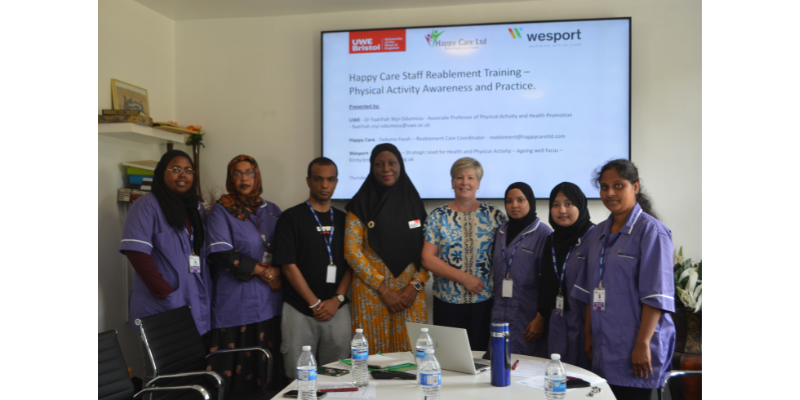
We spoke with Dr Faatihah Niyi-Odumosu (MBChB, MSc, PhD, PGCTHE, FHEA), Associate Professor of Physical Activity and Health Promotion, School of Applied Sciences, College of Health Science and Society, UWE Bristol, about a new collaboration designed to strengthen independence and wellbeing among older adults and people requiring reablement support. 

About the project 

Happy Care Ltd first approached UWE Bristol looking for innovative ways to help their service users regain independence and improve their quality of life. Through their hospital discharge work, they identified a gap in how reablement could be supported more holistically. 

From there, the partnership developed naturally, bringing together: 

  • UWE Bristol (Associate Prof Faatihah Niyi-Odumosu) – leading on the research and evaluation framework. 
  • Happy Care Ltd (Ahmed Ibrahim, Fadumo Farah, Ayan Buleh, and Natnael Guliano) – embedding the work within their care provision and providing access to service users. 
  • Wesport (West of England Sport Trust) (Kirsty Brown) – contributing expertise in inclusive physical activity and programme design. 

Together, the partners are developing and evaluating approaches to reablement through everyday physical activity. 

What “developing and evaluating reablement” looks like 

In practice, this means supporting individual clients in their own homes. Carers from Happy Care help build independence and mobility into daily routines i.e. reducing sitting time, encouraging regular movement, and supporting everyday tasks that promote confidence and autonomy. 

A key focus is educating carers to understand how small, consistent actions can make a big difference to physical and psychological wellbeing. Alongside this, the team is gathering evidence and feedback to evaluate the impact on clients, families, and carers. 

Aims and outcomes 

The Happy Care Project aims to: 

  • Improve independence, confidence, and quality of life for service users. 
  • Equip carers and families with practical tools to support reablement. 
  • Demonstrate the value of regular physical activity within reablement settings. 
  • Develop a model that can be shared across Bristol and the Southwest, influencing both practice and policy. 

Building evidence and influencing practice 

By systematically evaluating the programme, the project is generating an evidence base that shows how physical activity can be effectively embedded into reablement services. This work could help inform local commissioning decisions and shape future models of care, demonstrating how reablement through movement (and regular physical activity) can reduce longer-term health and care needs. 

If successful, the model could be replicated across social-care providers in Bristol and beyond. 

Early progress and next steps 

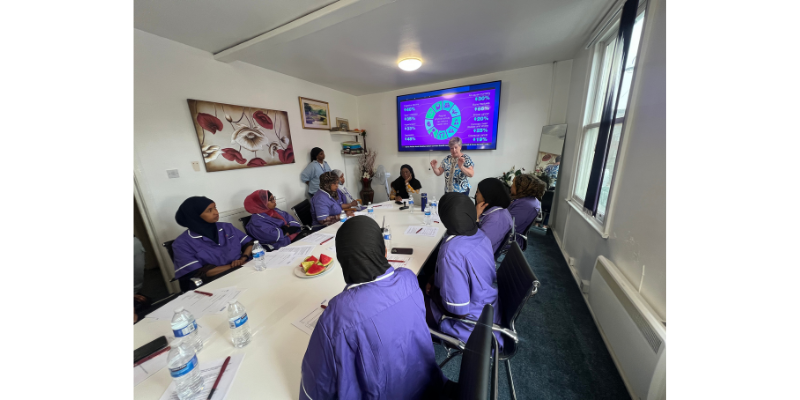
The team has delivered its first training workshop to carers, focusing on the knowledge and confidence needed to integrate physical activity into care routines. Feedback and evaluation from this session will be shared in a follow-up blog. 

Although still in its first year, the project is already helping to strengthen connections between health research, social care, and community wellbeing. 

Looking ahead, the team plans to explore internal UWE funding opportunities and engage MSc Health Psychology placement students and final-year undergraduates to support evaluation and data collection. 

UWE Bristol wins at the 2025 Innovate UK KTP Awards for pioneering digital agriculture project in Nigeria

Posted on

UWE Bristol has been recognised at the 2025 Innovate UK Knowledge Transfer Partnership (KTP) Awards, marking the 50th anniversary of the UK’s longest-running innovation programme.

The partnership between UWE Bristol, Obafemi Awolowo University (OAU) in Nigeria, and Taro Agric Farm (TAF) was named winner of the African Agriculture KTP Award for its work applying data-enabled innovation to transform poultry farming in Nigeria.

Led by Professor Kamran Munir, Professor of Data Science at UWE Bristol, and Professor Saidu Oseni, Professor of Animal Sciences at OAU, the collaboration has transformed poultry production through the use of Internet of Things (IoT) sensors, dashboards, and predictive analytics.

About Taro Agric Farm

Taro Agric Farm (TAF) is a broiler-chicken production company based in southwest Nigeria with more than a decade of experience in commercial poultry farming. Operating concurrent batches of 2,000 birds per cycle, TAF runs multiple production centres across Osun and Oyo States.

Beyond production, the company provides consulting services, training, and capacity building for poultry farmers, supporting every stage of the broiler-chicken value chain-from input supply and production to processing, distribution, and marketing.

Through the African Agriculture KTP (AAKTP), TAF integrated smart technologies such as IoT-enabled sensors, real-time data storage systems, and predictive analytics, positioning itself as one of the leaders in digital and sustainable poultry farming in Nigeria.

Tackling sector-wide challenges through innovation

The Knowledge Transfer Partnership (KTP) between TAF, OAU, and UWE Bristol set out to apply data-enabled innovations (DEI) to commercial chicken production and to optimise business operations.

Nigeria’s poultry industry faces long-standing challenges such as high mortality rates, inefficient management practices, limited data use, and poor environmental conditions affecting bird welfare and productivity. Previously, farms relied on manual data collection and intuition rather than real-time monitoring, which often led to delayed interventions and losses.

To address these issues, the project introduced IoT technology, smart sensors, and a cloud-based dashboard for continuous monitoring of key welfare and environmental parameters, including temperature, humidity, air quality, and toxic gases.

Project activities included setting up and testing the IoT platform, configuring sensor nodes, creating a real-time database, developing dashboards to track key performance indicators (KPIs), and holding a stakeholder engagement workshop with around 100 participants to promote adoption across the sector.

Transformative results

The KTP has delivered measurable improvements in productivity, efficiency, and profitability at Taro Agric Farm.

  • Staff gained hands-on expertise in deploying sensor nodes to monitor broiler health and welfare.
  • A smart-farm infrastructure was installed, combining Wi-Fi, inverters, smart cameras, and sensor clusters for remote monitoring and improved decision-making.
  • A MySQL database now tracks and analyses data on performance, costs, and returns, supporting evidence-based planning.
  • A real-time decision-support dashboard enables proactive management of poultry welfare and performance.
  • Staff training in KPI tracking has enhanced consistency and forecasting accuracy.

As a result, sales turnover is expected to grow by 30 – 40% within three years, and profit before tax by 20%, driven by improved efficiency and scalability.

The collaboration also led to the creation of a Data-Enabled Innovation (DEI) Lab within OAU’s Department of Animal Sciences, and integration of digital agriculture into the university’s curriculum – embedding long-term change in teaching and research.

Wider industry impact

The project’s influence extends across Nigeria’s poultry sector:

  • 100+ poultry farmers and industry professionals trained in data-driven farming.
  • 19 undergraduate and 2 MSc research projects launched on digital poultry innovation.
  • Findings presented at the Nigerian Poultry Show 2024, positioning TAF as a leader in smart farming.
  • Increased demand for TAF’s consultancy services from farms keen to adopt similar digital systems.
  • Continuous, solar-powered IoT system operation achieved through inverter installation.

Voices from the partnership

“The KTP experience was truly transformative for me. It provided a unique opportunity to bridge the gap between academic research and real-world business applications. Through hands-on engagement with IoT sensors and data analytics, I have gained invaluable expertise in optimising broiler production through data-driven decision-making. The mentorship and collaboration have strengthened my skills in AI, machine learning, and predictive modelling—all crucial for the future of precision livestock farming.”

– Rasheed Lawal, KTP Associate

“This KTP was a game-changer for our business. Before the partnership, we relied on manual processes with limited real-time insight. Now, IoT-driven smart farming technologies allow us to monitor flock health, predict performance trends, and optimise efficiency. Productivity has increased, mortality reduced, and costs cut. We’re now recognised as one of Nigeria’s leading smart poultry farms and plan to expand AI-driven automation for disease detection, weight prediction, and feed optimisation.”

– Olamide Akintaro, Managing Director, Taro Agric Farm

“The KTP was an excellent opportunity to blend academic research with industry application. At OAU, we’ve long been committed to advancing precision livestock farming, and this project allowed us to demonstrate the power of digital transformation in practice. The training delivered to students is already inspiring new courses in AI, computer vision, and smart farming.”

– Professor Saidu Oseni, Professor of Animal Sciences, Obafemi Awolowo University, Nigeria

“This has been a transformative collaboration between TAF, OAU, and UWE Bristol. By applying data-enabled innovations, we’ve tackled challenges such as high mortality and inefficient farm management. TAF staff have gained advanced digital-farming skills, and OAU has enhanced its curriculum and research capacity. This partnership exemplifies how innovation and collaboration can drive sustainable agricultural development.”

– Professor Kamran Munir, Professor of Data Science, University of the West of England, Bristol

Delegates from Taro Agric Farm, Obafemi Awolowo University, UWE Bristol and partner institutions stand together inside a hall at OAU following a stakeholder workshop on smart poultry farming.

A model for global collaboration

As Innovate UK marks 50 years of KTP, this award highlights how international partnerships can combine academic expertise, business insight, and innovation to create lasting social and economic impact.

From real-time environmental monitoring to AI-driven productivity gains, the Taro Agric Farm partnership demonstrates how research can be turned into practical solutions – improving livelihoods, strengthening industry resilience, and setting a new benchmark for digital agriculture across Africa.

For staff: Call for proposals – Integrated Care Academy

Posted on

ICA@UWE Bristol Innovation Grants 2025

Funding is available for UWE Bristol innovators to deliver scalable pilot innovation projects in collaboration with external partners. Demonstrating potential for significant impact, projects must align with the mission of the Integrated Care Academy (ICA) and its core priorities. Successful projects will focus on the three shifts, as identified in Lord Darzi’s review of the NHS:

  • Moving care from hospital to community
  • Implementing digital transformation
  • Shifting from treatment to prevention
Professor Darren Reynolds (Pro Vice-Chancellor for Research & Knowledge Exchange) along with Professor Marc Griffiths (Pro-Vice Chancellor for Regional Partnerships, Engagement & Innovation), Dr Peter Brindle and Nicola Temple (Head of Innovation and Impact) introduce the Integrated Care Academy (ICA) Innovation Grants 2025.

Key dates

  • The scheme is now open, and all applications must be submitted by 8 December 2025, midday.
  • All activities must be fully completed (including budget spend) by 31 July 2026.

Project size and scope

UWE Bristol innovators can apply for grants of between £5,000 and £15,000 (which can include funding for time).

All projects must be delivered in collaboration with an external partner.

We are looking to fund projects that have the potential to deliver high-impact solutions that:

  • Address real-world challenges in integrated care
  • Have clear potential for scaling beyond the project
  • Demonstrate innovation in approach or application
  • Include meaningful stakeholder engagement
  • Show potential for securing future external funding
  • Contribute to reducing health inequalities

Please read the full guidance and how to apply (UWE Bristol staff login required).

From plate to planet: Wild Kitchen and Generation Soil close the loop on food waste

Posted on

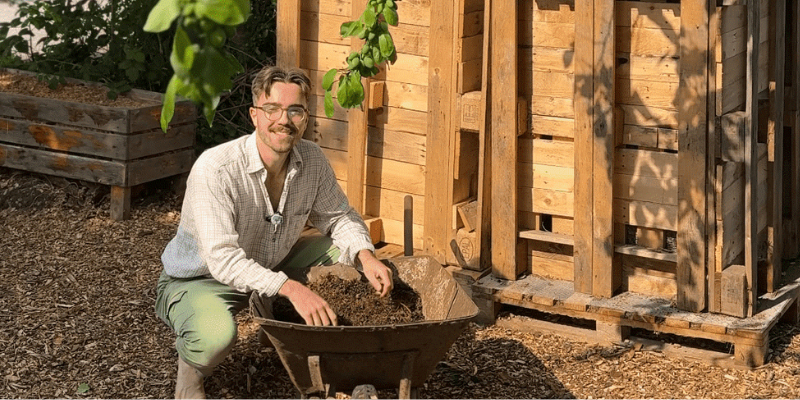
UWE Bristol’s Wild Kitchen is taking its sustainability ambitions to the next level through a new collaboration with Generation Soil, the community composting organisation founded by UWE Bristol alum and doctoral researcher Alex Montgomery. Together with the UWE Hospitality Team and UWE Bristol’s Sustainability Team, this partnership will see food waste from Wild Kitchen transformed into living, nutrient-rich compost – feeding back into the UWE Bristol Community Garden and helping regenerate soil health right here on campus.

Rethinking food waste through soil

For Alex Montgomery, soil isn’t just dirt – it’s a living system at the heart of everything we eat. As Founder and Director of Generation Soil and a Doctoral Researcher in UK Food Systems, he’s dedicated to reshaping how we think about food waste, soil health, and community resilience.

“Ninety-five per cent of our food comes from soil, yet around ninety per cent of soils could be degraded by 2050 if we don’t act now,” Alex explains. “Food waste doesn’t have to be a problem – it can be part of the solution. By composting locally, we can turn kitchen scraps into the foundation of future harvests.”

Generation Soil operates community composting hubs and delivers education projects that reconnect people with the land beneath their feet. The organisation was born from Alex’s time studying for an MSc in Sustainable Development in Practice at UWE Bristol, where his passion for circular food systems began to flourish.

Composting at the Wild Kitchen

Located on Frenchay Campus, Wild Kitchen is UWE Bristol’s first fully vegan café – serving fresh, 100% plant-based meals made with locally sourced, seasonal ingredients. The Wild Kitchen is now closing the loop by composting its food waste through Generation Soil.

The resulting compost will be used to enrich the UWE Community Garden, supporting a thriving space where students and staff can grow food, learn practical skills, and experience first-hand how waste can be transformed into a resource that sustains new life.

A UWE Bristol partnership rooted in sustainability

This collaboration between the UWE Hospitality Team, Sustainability Team, and Generation Soil demonstrates how research, innovation, and community values can come together to create lasting environmental impact. It’s a local partnership with global relevance.