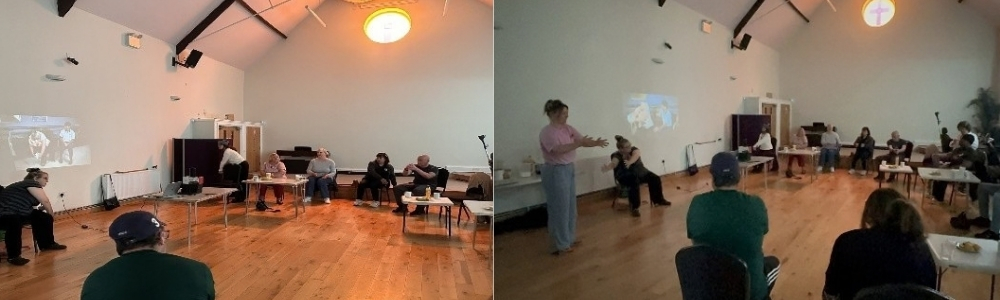
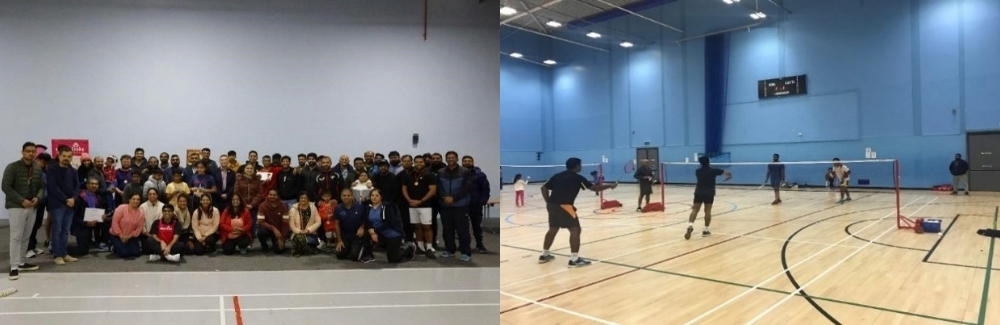
Above: Workshop participants at Universidad Tecnológica de Saltillo (UTS).
By Dr Tariq Umar, Associate Professor in Sustainable Construction and the Built Environment (UWE Bristol) and UK Project Lead
A three-day programme in Saltillo brought together universities, government and industry to explore how international collaboration can strengthen higher education quality, institutional capacity, employability and future opportunities for students and staff.
From 5 to 7 August 2026, colleagues from the UWE Bristol worked with higher education, government and industry partners in Coahuila, Mexico, through the project Strengthening systems to improve the quality and efficiency of higher education institutions in Coahuila, Mexico.
The project is funded by the British Council through the Going Global Partnerships – HE Connects 2025 programme and aims to strengthen higher education systems through UK–Mexico collaboration, with a particular focus on quality assurance, governance, internationalisation, capacity building and strategic planning.
Hosted by Universidad Tecnológica de Saltillo (UTS), the three-day programme involved students, academic and professional services staff, institutional leaders and external stakeholders. Engagement also included Universidad Politécnica de Ramos Arizpe (UPRA), the Secretaría de Educación del Estado de Coahuila (SEDU), COPARMEX Coahuila Sureste, and the Comité de Recursos Humanos de Derramadero.
The on-site activities were designed not simply to present approaches from the UK, but to understand local priorities, exchange experience and co-develop practical actions that can inform the project’s institutional toolkit, strategic roadmap, policy recommendations and future collaboration.
Understanding what partners want from international collaboration
The first day focused on institutional engagement and understanding the local context. Following an introduction to the HE Connects project, discussions explored UWE Bristol’s approach to international collaboration alongside UTS’s institutional priorities, existing initiatives and future challenges. Academic and professional services colleagues also contributed perspectives on where international cooperation could add the greatest value.
Interactive live polling was used alongside the discussions to enable participants to contribute directly to the emerging priorities.
An opening exercise generated 50 responses to the question of what a successful UWE–UTS partnership should achieve. The most frequently recurring themes included innovation, improvement, opportunities and knowledge, alongside trust, learning, mobility, student exchange and future collaboration.
These aspirations became more specific when 44 participants were asked to rank priorities for future UWE–UTS collaboration. Student mobility emerged as the highest-ranked priority, followed by internationalisation and joint or dual programmes. Industry engagement, quality enhancement, curriculum collaboration, staff development and joint research were also identified as important areas for future cooperation.
Together, these responses highlighted an appetite not only for institutional agreements, but for collaboration that creates tangible opportunities for students and staff.
Building capacity in internationalisation and quality enhancement
The second day moved from institutional dialogue to capacity building with academic and professional staff. Sessions focused on internationalisation in higher education and quality enhancement and institutional development, followed by interactive round-table discussions and priority-setting activities.
A central message was that internationalisation should not be understood simply as overseas recruitment or physical mobility. The workshop considered it as a whole-institution approach encompassing curriculum, partnerships, research, staff development, student experience and employability.
Participants explored practical questions such as how international perspectives can be embedded within curricula, how staff and student mobility can be developed, how collaborative research can be strengthened, and how international engagement can connect more directly with regional economic priorities.
The priority-setting exercise provided a clear indication of where participants believed institutional attention should be concentrated. Among 18 participants, internationalisation ranked first, followed by industry engagement and quality. Employability and research followed, with equality, diversity and inclusion and sustainability also included among the seven institutional priorities considered.
When internationalisation was examined in greater detail, international partnerships and collaborative research were the two areas most frequently identified as requiring further development. In one exercise involving 21 responses, international partnerships received seven responses, collaborative research five, and transnational education three.
These results helped shift the conversation from a broad ambition to “be more international” towards more focused questions about what internationalisation should mean in practice for UTS and its partners.
From priorities to action
The third day was deliberately designed to turn the previous discussions into practical next steps.
Faculty members worked with an action-planning approach that required priorities to be translated into specific actions, identified owners, potential partners, timescales and indicators of success. The intention was to move away from broad statements such as “improve internationalisation” towards more concrete and deliverable commitments.
Several practical opportunities emerged from the discussions. These included benchmarking curricula against international practice and labour-market expectations, developing international online masterclasses and guest lectures, exploring staff and student mobility, and strengthening collaboration between faculty and industry around real-world challenges.
The discussion also recognised that internationalisation does not always need to begin with large-scale overseas mobility. Where resources are constrained, visiting academics, online masterclasses, collaborative teaching and other forms of international engagement can provide accessible starting points while relationships and funding opportunities develop.
As Dr Tariq Umar, Associate Professor in Sustainable Construction and the Built Environment at UWE Bristol and UK project lead, reflected during the action-planning session:
“The question here is, how do we move from these thoughts and new questions to action?”
That question became an important theme throughout the final day.
Connecting higher education with government and industry
The programme subsequently widened to include a policy and industry dialogue with representatives from SEDU, COPARMEX Coahuila Sureste and the Comité de Recursos Humanos de Derramadero.
The discussion examined how institutional quality and internationalisation can contribute to regional development, what system-level barriers may affect improvement, and how universities, government and employers can share responsibility for employability and innovation.
A particularly important theme was the changing meaning of graduate readiness.
Stakeholder contributions emphasised that a university degree alone is increasingly insufficient in a rapidly changing labour market. Employers need graduates who can communicate effectively, collaborate, solve complex problems, adapt to change, continue learning and work alongside emerging technologies.
The conversation therefore extended beyond employment rates to consider how higher education can develop the capabilities needed for longer-term professional and economic resilience.
Industry engagement was also discussed as something that should influence education before students graduate. Participants highlighted opportunities for employer input into curricula, practical projects, faculty engagement with industry, international exposure, problem-based research and stronger alignment between academic programmes and evolving workforce requirements.
The final day’s programme also included engagement with UPRA, extending the conversation across institutions and creating further opportunities to explore future academic and research collaboration.
What participants prioritised
Across the three days, several clear messages emerged from the participant responses:
- 50 responses to the opening exercise associated successful collaboration particularly with innovation, opportunities, knowledge, improvement and trust.
- Among 44 participants, student mobility was ranked as the leading priority for future UWE–UTS collaboration, followed by internationalisation and joint or dual programmes.
- Among 18 staff participants, internationalisation, industry engagement and quality were ranked as the three highest institutional priorities for the next two years.
- In a 21-response exercise focused specifically on internationalisation, international partnerships and collaborative research were most frequently identified as areas requiring further development.
These responses are important because they demonstrate that the priorities of the project are being shaped through participation and dialogue rather than being predetermined by one institution or one national context.
Building beyond the three-day visit
The on-site programme represents one stage in a wider partnership rather than an endpoint.
Evidence generated through the discussions, workshops, live polling and action-planning exercises will now contribute to the project’s institutional toolkit, strategic roadmap, policy recommendations and final reporting. The project is also exploring longer-term possibilities around mobility, international curriculum development, joint research, staff capacity building and university–industry collaboration.
Perhaps the strongest message from the visit is that meaningful internationalisation is not simply about connecting institutions across borders. It depends on co-creation, reciprocity, trust and an understanding of local priorities.
By bringing together universities, government and industry, the Coahuila programme created a space not only to exchange ideas, but also to ask what practical changes are possible, who needs to be involved and how progress can be sustained.
The next stage of the British Council-funded partnership will focus on turning these shared priorities into actions that can create lasting opportunities for institutions, staff, students and the wider region.
The project team would like to thank colleagues and participants from UTS, UPRA, SEDU, COPARMEX Coahuila Sureste and the Comité de Recursos Humanos de Derramadero for their contribution, engagement and support throughout the visit, and the British Council for supporting the UK–Mexico collaboration.
Further information
If you have any questions about the project or would like further information, please contact Dr Tariq Umar.