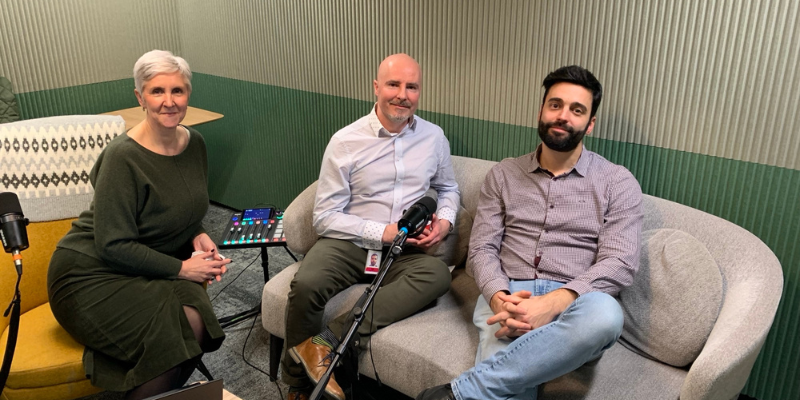
The Global Migration Network, a research group at UWE Bristol chaired by Dr Emily LeRoux-Rutledge, brings together 60+ academics and practitioners from across the university working on migration-related research. The aim is to facilitate and contribute to cross-disciplinary research on migration, inform policy and public debate, and engage with users of migration research.
The Network has a fantastic seminar series lined up for Spring 2025, and attendance is open to all. The seminars are hybrid, but you are encouraged to come in person for sociability and community (if you are able). For more information please contact emily.leroux-rutlege@uwe.ac.uk.
Seminars:
Migration and Memory, how we prepare for and cope with loss and change
Wednesday 12 February 2025, 1:00pm – 2:00pm (3S803) – Nigel Williams
After offering case examples about how migration is anticipated, and losses are worked with this session will help participants to develop their own sense of the similarities and differences between intergenerational memory running in families, groups and organisations and longer-term transgenerational memory located in culture and bodies in deeper time. Using these cases and some of our own experiences we will explore how to go about addressing first, second, third generation (and beyond) responses to the challenges of migration as a complex multifaceted experience extended in time.
Nigel Williams is a Visiting Fellow in Psychology at the University of the West of England and is author of Mapping Social Memory a Psychotherapeutic and Psycho-Social Approach, in the Palgrave Psychosocial series and has recently published a chapter on generational memory in Studying Generations, Bristol University Press edited by Helen Kinston and Jennie Bristow.
Support for ‘replacement migration’? Region-level demographics and attitudes towards immigration in Europe
Wednesday, 12 March 2025, 1:00pm – 2:00pm (4D005) – Artjoms Ivlevs
Does demographic decline make Europeans more pro-immigration? Our longitudinal, regional-level analysis, drawing on the 2008-2019 European Social Survey (278 regions in 22 countries) and the 1999-2021 German Socio-Economic Panel (16 federal states, 96 planning regions), suggests that people become more favourable to immigration as regional birth rates fall and ageing indicators worsen. While this result would support the logic of replacement migration, we also shed light on the role of the natives/foreigners balance in driving this relationship and tentatively conclude that the link between demographic decline and attitudes towards immigration could also be explained by group conflict theory.
Artjoms Ivlevs is Professor of Economics at the Bristol Business School (UWE Bristol) and a Research Fellow at the Institute for the Study of Labor (IZA). His research interests include migration and subjective well-being, and more recently tourism. Artjoms is an applied microeconomist working with large-scale survey data; much of his work focuses on the post-socialist countries of Central and Eastern Europe.
Supportive local policy, hostile national policy: the integration experiences of refugees and asylum seekers in Wales.
Wednesday, 2 April 2025, 1:00pm – 2:00pm (3S803) – Sam Parker
In 2001, following the Immigration and Asylum Act 1999, four towns and cities in Wales became asylum dispersal locations and, as such Government has devolved responsibility in many social policy areas that impact upon refugee and asylum seeker integration. This seminar begins by outlining developments in UK immigration and asylum policy and highlights the ways in which successive Westminster governments have introduced legislation creating a ‘hostile environment’ designed to deter asylum seekers from entering the UK and encourage failed asylum seekers to leave the UK. Such policies have restricted the civil and social rights of asylum seekers whilst simultaneously the Westminster government has focused upon policies for the integration of those granted refugee status only. This seminar reports on the findings from interviews conducted with 19 refugees and asylum seekers in Wales, where in contrast to Westminster, the Welsh Government see integration as a process beginning on day one of arrival in Wales. The data are taken from a project focusing on refugee and asylum seeker integration in Wales and demonstrates how policies introduced in recent years have led to restrictions on the day-to-day lives of asylum seekers in Wales and their ability to integrate. It argues that in a system of multi-level governance, the Welsh Government’s vision of integration remains problematic when immigration and asylum remain matters reserved to the Westminster Government. It highlights ways in which Welsh Government policy diverges from that in England and argues that further use of devolved powers could be made to facilitate integration in Wales.
Sam Parker is a Senior Lecturer in Social Psychology at UWE Bristol and has previously worked at Cardiff University and Birmingham City University. Sam is also Chair of Trustees for Space4U Cardiff, a small community organisation that supports newly arrived refugees and asylum seekers in Cardiff.
Am I happier than you are? It depends on when you ask: Reflections on the need for longitudinal studies on the well-being of international students
Wednesday 14 May 2025, 1:00pm – 2:00pm (2A027) – Trang Trần
If an international student speaks English as their first language (EFiL) instead of as an additional language (EAL), would their predicted well-being be higher compared to their EAL peers? English language proficiency has been shown to significantly predict various indicators of mental health among international students. Our longitudinal data shows that during early arrival, EAL students scored significantly higher than their EFiL peers on their psychological well-being measures. While this may seem unexpected, it does align with some previous findings suggesting that UK home students’ well-being indicators are significantly lower than those of their international peers. However, further analysis of longitudinal data (collected at 3 time points over 18 months) showed that the trajectory of psychological well-being for EFil and EAL international students was reversed, with EFiL students’ wellbeing improving over time, while their EAL peers’ well-being score decreased over time. Despite the small sample, these findings invite further reflection on the importance of longitudinal studies, or at the very least, the need to contextualise psychological well-being in the timing of students’ journey, alongside other contextual factors.
Trang Trần is a Senior Lecturer in Psychology at UWE Bristol. Her research interests include international students’ coping strategies and psychological well-being.
From Harm to Hope: Examining Migrant Integration Policies and Practices in the City of Bristol
Wednesday 11 June 2025, 1:00pm – 2:00pm (4D005) – Ryan Lutz
Integration has been a heavily critiqued term with its history of creating exclusionary and racialized policies is well documented (Favell, 2022). Despite this, the term has remained and become stronger. The restrictive approach towards migrants has made way for a worrying trend of decreasing social rights, political inclusion and civil liberties for the citizens that migrants are supposed to be integrating into (de Noronha, 2022). Findings from co-produced mixed methods research, this research attempts to show that the lens of social harm (Hillyard et al., 2004) allows for a bottom-up approach to integration and investigates the efficacy of localized integration policies and how much they can make up for failures at the national level.
Ryan Lutz is a PhD student in Social Policy at the University of Bristol’s School for Policy Studies in the UK. His research looks at integration, social harm, and the binary between citizens and migrants. Previously Ryan was an Assistant Manager of Research and Strategy at the Kennedy Center for the Performing Arts, received his master’s in public administration from the University of Southern California in Los Angeles.
Contact the Global Migration Network for more information.