Applications open for Partnership PhD scheme

Posted on

UWE Bristol has recently announced another application round of its successful Partnership PhD programme.

A Partnership PhD bridges the gap between external organisations and university. It enables an organisation to gain access to cutting-edge real-world research that can help transform it.

The Partnership establishes a relationship between an organisation and UWE Bristol, based on a specific project that is mutually beneficial.

Organisations have the opportunity to choose a relevant research area and gain access to cutting-edge research. The researcher will work extensively with the organisation to provide a tailored piece of research.

In turn, the researcher will gain an opportunity to pursue their research in a real-world setting, developing transferable and interdisciplinary skills whilst gaining cross-sector experience.

Over the past two years, the Graduate School, part of the Research, Business and Innovation team at UWE Bristol, has been developing the Partnership PhD scheme. Through it, UWE’s investment in Post Graduate Research has been matched by over £1.5m from 40+ partner organisations.

Future application deadlines

  • ​1 October
  • 1 January
  • 1 April
  • 1 July

Email uwebusiness@uwe.ac.uk to find out more.

Please find below full Partnership PhD guidance, costings, useful information and the flyer for businesses:

See below for our slides for businesses:

Email uwebusiness@uwe.ac.uk to find out more.

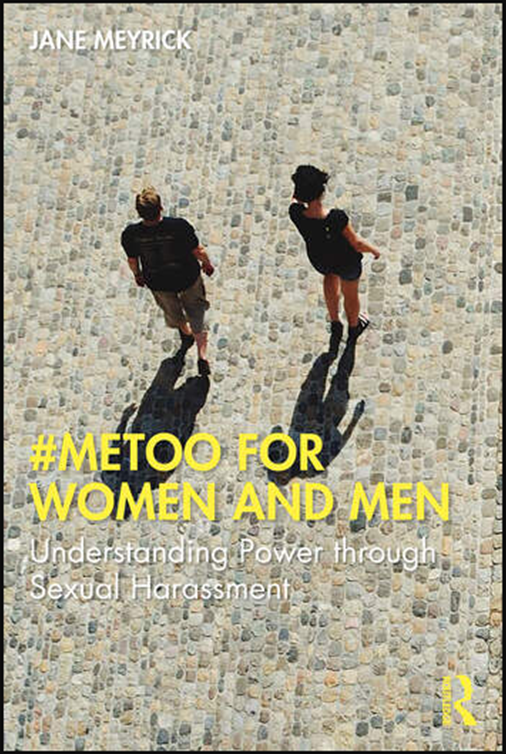
“#MeToo for Women and Men: Understanding Power through Sexual Harassment” – new book released by UWE Bristol academic

Posted on

#MeToo – a grassroots movement that swept the world 

The phrase “Me Too” was first used in the context of sexual assault and abuse by activist Tarana Burke, when she highlighted the issue on the social media platform Myspace in 2006. Tarana’s aim was to empower survivors, especially young and vulnerable women, through empathy, solidarity, and through strength in numbers. It was the start of a social movement that would sweep the globe more than a decade later, following the exposure of numerous sexual-abuse allegations against film producer Harvey Weinstein in October 2017: millions of people started using the phrase as a hashtag on social media, and it spread to dozens of other languages, highlighting the magnitude of the problem worldwide. 

#MeToo had a far-reaching global impact, including the approval of the #MeToo Bill by US Congress, guaranteeing people who experience sexual harassment at work can seek recourse in the courts. In the UK, a new Code of Practice from the Equalities and Human Rights Commission (EHRC) now sets out how to prevent and address sexual harassment in the workplace. 

A guide to understanding sexual bullying and building safer communities 

Dr Jane Meyrick, a UWE Bristol Health Psychology Lecturer, chartered Health Psychologist and Public Health Specialist has been closely following the #MeToo movement over the years. She has now written a book on the topic, drawing on 25 years’ experience of working in frontline sexual health services, national policy, and research. 

The book, published by Routledge, titled “#MeToo for Women and Men: Understanding Power through Sexual Harassment” provides an overview of sexual violence and the #MeToo movement, presenting a timely and accessible look at the evidence from diverse fields. Its evidence-based approach builds on public health and health psychology principles to increase the reader’s understanding of sexual bullying and aims to help inform the building of safer communities. 

Emphasis on the voices of survivors 

The book identifies patterns of sexual harassment and considers how sexual bullying can be used to express power. Intended as an ‘explainer’, it can widen readers’ knowledge of the causes and impacts surrounding sexual harassment and abuse. The book also encourages an open discussion of these topics to enable society to move closer to combating it. Using first-person accounts alongside evidence of both individual behaviours and the ways the topic is dealt with in laws, institutions, cultures and organisations, the book ensures that voices of survivors and their experiences are emphasised throughout. 

The book is aimed at a wide audience of public, professional, academics and clinicians, highlighting the impact sexual harassment has on survivors. It offers insight into how connections across a range of fields help us to understand and – more importantly – prevent perpetration and victimisation. This guide is also for non-academics wanting to understand what #MeToo means, what it tells us about prevention and how to address the increasing problem of sexual harassment, violence, and abuse. 

Forwards to the book represent the 3 perspectives used in this inclusive approach, one by our community partners and the survivors perspective, SARSAS (Somerset and Avon Rape and Sexual Abuse Services), one by Professor Purna Sen, ex UN Women’s lead representing prevention and finally our own Professor Kieran McCartan who does work around prevention of perpetration completes the 3 perspectives. 

The book is out towards the end of June. Pre-order the book.

Academic Spotlight: Dr Simon Scarle

Posted on

Dr Simon Scarle is a Senior Lecturer in Games Technology and Program Leader for the MSc Commercial Games Development.

Simon is a Theoretical Physicist by background, and previously worked in a number of postdoctoral roles producing computer simulations for various systems, before going to the Games Developer Rare Ltd. part of XBox Game Studios.

Whilst at Rare he chiefly worked on a GPU based particle effects system laying the primary elements of all aspects of its Asset Pipeline, from pulling in data from artist input to final runtime simulation. As a personal project he also merged his GPU particle work with his prior research work on Electro-Cardio dynamics and published the first paper of running such simulations on a GPU:  Implications of the Turing completeness of reaction-diffusion models, informed by GPGPU simulations on an XBox 360: Cardiac arrhythmias, re-entry and the halting problem

This is Simon’s research interest; the application of methods and techniques from Games Technology and applying them to more serious applications, a kind of Applied Games Technology.

Computer games are some of the most unusual pieces of software, not only do they have to be produced under a design led process but make use of cutting edge and ever evolving technology all within the tight budget constraints of a creative industry project. This has led the games industry to create some of the most flexible and reusable code ever produced: Game Engines and their associated Asset Pipelines. Instead of producing code for a single game, an Engine is created as general software that can be repurposed to create any game by the technical team, whilst presenting an Asset Pipeline to the design team to allow them to create new content for these games without having to touch this low-level code.

A main example of this is Simon’s work on a generic network visualization tool called PhysViz. This started as a collaboration with a former colleague, Neil Walkinshaw, now based at the University of Sheffield, who had software that could analysis other pieces of software producing measures of various metric of its elements and how they interconnected. Most visualisations of software are rather fixed to address single questions, and so the idea was to create a much more customisable visualisation system. PhysViz could visualise a generic network and didn’t need to “know” what the data on that network was about, different file loaders could be made and then the designer of the visualisation could choose how their data got mapped on to the PhysViz’s visualisation. This “visualisation pipeline” effectively treated the software engineer as though they were a designer using the asset pipeline of a game engine and allowed them to create a range of visualizations without needed to recode PhysViz.

Some of the power of using a similar approach to the game asset pipeline for visualisations was shown when another former colleague of Simon’s, Chris Ewels, now at Nantes University, also approached him to visualise their work on carbon nanotubes. Due to the flexible nature of the underlying architecture of PhysViz it could be retooled to display the structures of his molecules within a couple of days, leading to the images below of a grinning colleague who is experiencing in VR a flight down the length of the molecule which is the subject of his PhD.

James Lear was one of Simon’s PhD students who expanded on this concept of using the Game Asset Pipeline concept more broadly in his thesis “The video game asset pipeline – A pattern approach to visualization” https://uwe-repository.worktribe.com/output/6844257 This involved describing the an Asset Pipeline as an Architecture Pattern, bringing wider attention to the design patterns of the pipeline.

This has also fed back into the teaching of one of Simon’s main modules for the MSc Commercial Games Development: Games Research & Development. The principal assignment for this module is to produce a prototype of a Games Technology based solution for a client external to games. This has led to a range of games and game-like implementations: range finder for a table-top battle game, serious games to raise awareness of suitability, layout your bathroom with tiles based on the home builder from The Sims, simulations of slime moulds and visualisations of molecules controlled by Xbox Kinect. Clients have been researchers from both with and without UWE and various SMEs.

[[Description of first picture: This is Simon’s Xbox Avatar. These Avatars were part of Microsoft Live accounts on the XBox 360. The system for them was produced by Rare whilst Simon was working there, and allegedly the waistcoat his is wearing was put into the starting wardrobe for the Avatars because of him. Simon took part in early alpha testing of the system and a designer ensured the waistcoat was in there to ensure he could make an avatar in his usual style.]]

UWE Bristol Expanding Research Excellence Scheme

Posted on

In May 2021, UWE Bristol launched the first ever Expanding Research Excellence (ERE) scheme, aimed at supporting and developing interdisciplinary, challenge-led research across the University.

The scheme is designed to bring together research clusters of individuals from across disciplines to respond to challenges aligned with major research themes.

In early November, four successful clusters were announced:

  • Healthy Waters
  • Data Research Access and Governance Network (DRAGoN)
  • Biospheric Microplastics
  • Cyber Security and Cyber Crime

Find out more about each cluster below:

Healthy Waters

Co-led by Professor Darren Reynolds, Professor Chad Staddon, Dr Tavs Jorgensen and Professor Wendy Phillips

People and ecosystems require both an adequate quantity of water as well as an adequate quality of water if key development objectives such as health, food security and water security are to be realised. Actions to protect water quality should be embedded in the larger concepts of sustainability, resilience and appropriate technology. There is an urgent need to explore and develop scientific, technological and societal responses to deteriorating water quality at all scales from cellular to global, but especially at the biophysical and community scales.

The Healthy Waters Research Cluster centres on three core themes, with integrated cross-disciplinary management, each drawing upon a wider sphere of scientific, societal and technological knowledge:

  • Science
  • Society
  • Design & Technology

Data Research Access and Governance Network (DRAGoN)

Led by Professor Felix Ritchie

Data Research, Access & Governance Network (DRAGoN) is a multi-disciplinary research group aiming to bring together researchers and practitioners from academia, think-tanks, industry and government. DRAGoN recognised that effective data use and governance requires contributions from many different professions: ethicists, statisticians, computer scientists, psychologists, economists, management scientists. Their aim is to create an environment for discourse which can bring differing perspectives together for the wider benefit.

Data access, management and governance is a highly applied topic; decisions being made every day affect our lives, our business, our government, often in ways which are obscure or known only to specialists in that area. They see the application of theory to practice as essential to the ethos of the group. They also reflect on practice: decisions about data use are often highly political, based on psychological or institutional factors. Working with practitioners helps inform our research with operational insights, as well as allowing us to challenge accepted viewpoints.

Cyber Security and Cyber Crime Cluster (CSC3)

Co-led by Dr Phil Legg and Professor Nic Ryder

From a cyber crime perspective, there are two classes of attack: cyber-dependent crime (criminal behaviour that is reliant on technology and its use in society, such as ransomware attacks and cryptocurrency money laundering) and cyber-enabled crimes (traditional crimes that have now become more widespread due to technology, such as cyber bullying and online fraud). Such cyber-attacks may originate from “script kiddies” and insider threats, through to sophisticated and professional operations by organised crime groups and enemy nation states.

The Cyber Security and Cyber Crime Cluster (CSC3) will conduct novel multi-disciplinary research relating to both the conduct of, and the mitigation of cyber attacks. As a broad and ever-evolving research domain, this will involve a number of related areas, including understanding the motivations and precursors of criminality, the technical means that enable criminality to be conducted, and appropriate mitigation and best practice to uphold security and defence.

Biospheric Microplastics Research Cluster (BMRC)

Co-led by Dr Ben Williams and Dr Stephanie Sargeant

Microplastic pollution is a considerable emerging health and ecological crisis on a global scale. The BMRC, building on microplastic research across UWE Bristol, aims to address critical gaps in the microplastics research landscape, notably the association between environmental exposure to microplastics through source, pathway, receptor relationships, and their potential to cause harm.

The BMRC brings together expertise from multiple disciplines, all of which play a crucial role in understanding the impact of microplastics on human and ecosystem health, expanding research excellence and enhancing teaching across the university landscape.

Through understanding the human and ecosystem health implications of plastics, there is an opportunity to contribute to their redesign, reuse and replacement throughout society. The research ambitions of the BMRC closely align with the UWE Bristol 2030 Strategy and at an organisational level UWE Bristol has pledged its support to the UK Plastic Pact.

The successful clusters were each awarded some money to help them develop their projects over the next 12 to 18 months. Cluster leads are interested to hear from UWE Bristol academics who may have research interests or expertise that may be relevant to their cluster, so please do reach out to the appropriate leads.

Springboard Projects

In November 2021, five Springboard projects were awarded smaller pots of money to help them progress their ideas further. The five smaller projects are:

  • ‘Designing urban environments for human health: from the microbiome to the metropolis’ – Dr Abby Tabor
  • ‘The UWE Appearance Accepting University Initiative’ – Dr Amy Slater
  • ‘Sustainable, healthy and accessible food Systems’ – Dr Angelina Sanderson Bellamy
  • ‘The prevention of sexual abuse’ – Professor Kieran McCartan
  • ‘Creative Resilience Cluster’ – Dr Tarek Virani

The Springboard leads would also be interested to hear from UWE Bristol academics with research interests or expertise relevant to their Springboard, so do reach out as appropriate.

The ERE Clusters and Springboards are part of UWE Bristol’s commitment to support research and achieve its ambitious targets for 2030. Find out more in our Research Strategy.

To find out more please contact research@uwe.ac.uk

UWE Bristol academic researches the language of fungi derived from their electrical spiking activity

Posted on

UWE Bristol academic Professor Andrew Adamatzky has theorised that electrical impulses sent by mycological organisms could be similar to human language, after undertaking research into four type of fungi.

Professor Adamatzky research, which has recently been published in the Royal Society Open Science, highlighted that fungi exhibit oscillations of extracellular electrical potential (or electrical spikes) recorded via differential electrodes inserted into a substrate colonized by mycelium or directly into sporocarps.

The research found that the spikes often became clustered, resembling vocabularies of up to 50 words, and the spreading of these “fungal word lengths” strongly complemented those of human languages.

Andy commented: “In the future, it would be good to collect more data on `language’ of different species of fungi to check if there are any species-specific variations.”

Professor Andrew Adamatzky is a Professor in Unconventional Computing and founded the Unconventional Computing Laboratory in 2001 as a response to an urgent need to develop computers for next century.

Read more about Professor Andrew Adamatzky work in this Guardian Article.


NEW Air Quality courses available

Posted on

Following the success of our online offer over the past 2 years the Air Quality Management Resource Centre (AQMRC) in the Department of Geography and Environmental Management, are pleased to once again offer these courses online.

Please click on the links below for further information, to make an enquiry and how to book:  

Delivered with a mixture of self-learning and face-to-face delivery, the courses provide attendees with an opportunity to develop their knowledge and skills in the area of Air Quality. The courses will appeal primarily to local authorities, consultancies, government agencies and regulatory bodies, as well as students and are IAQM-accredited. 

Accreditations and partnerships:

On these courses, delegates cover the basics of air quality management, including what causes air pollution and its effects, before looking at monitoring and modelling techniques using ADMS-Roads. They also learn about the role of planning in air quality and explore how air pollution can be tackled through technical and non-technical measures. 

The courses align with the University’s commitment to sustainability. 

Course lead and Associate Professor for Clean Air, Dr Jo Barnes, commented on the success of the courses:  

“Our IAQM-accredited Air Quality CPD short courses, underpinned by our research and teaching, aim to provide a comprehensive overview to enable those with little or no knowledge on the subject, to those with years of experience, the tools and ability to apply their learning in their workplaces. The combination of extensive access to online materials provided in advance, the live presentation and interactivity of the practical sessions, really bring this subject to life and gives delegates the chance to also learn from each other.” 

Course attendee Amelia Rivers, Environmental Health Officer commented:  

“The learning I will apply back at work will be the importance of monitoring air quality when looking at planning applications and really think about the potential effects on air quality the proposed application can have.” 

UWE Bristol art exhibition project on motherhood receives over 700 submissions

Posted on

A UWE Bristol project calling for artwork from artists/mothers at all stages of their careers receives over 700 pieces of art from around the world.

The “This is Essential Work” project is an online open-access intersectional feminist exhibition initiated by academic mothers and creators, Michal Nahman (UWE Bristol) and Susan Newman (Open University) in response to their experiences and interdisciplinary research on the commodification of breastmilk and forms of exploitation of women’s bodies and labour.

They came to this from research conducted just before the Covid 19 pandemic, in Bengaluru, India, into women’s provision of “excess” breastmilk to a private company that was pasteurising it and selling the milk online and across borders at a profit.

For the exhibition, the team are looking for art that conveys how women’s work and their bodies get devalued. This feminist exhibition is about showcasing women’s work: to acknowledge, to grieve, and importantly, to connect with one another.

The team are looking to showcase women artists who question the value that society puts on their work, including all kinds of labour. The list of our Essential Work is endless and it holds up the world.

One of the project leads Michal Nahman commented:

“We are very excited that our work and ideas have struck such a chord with people globally. It is clear that the themes of exploitation of motherhood and the extraction of value from our bodies is am important and universal theme.”

The call for submissions has now closed. The successful pieces will be announced on Sunday 15 May and the exhibition will go live in June.

Find out more via the This is Essential Work website and their Instagram.

Pedagogies of Discomfort- spaces for working with challenging conversations and topics: Call for papers

Posted on

Friday 24 June 2022

Organisers: TAG and UWE Bristol, in collaboration with BRIDGE research centre.

This symposium explores the ethics of critical pedagogy – long central to training and education approaches in youth work, social work and education for social justice. Drawing on critical pedagogy, youth work and the scope for discomforting pedagogies (Boler, 1999; Zembylas, 2015), we seek ways to (re)think anew about complex and sensitive areas of practice and everyday life. We note here that practitioners’ personal and working lives reproduce issues of inequity and thus need to be reflected upon and explored in education spaces. The event aims to draw together all those with an interest in opening up and progressing debates on how to reflect on, challenge and explore critical and sensitive issues in social justice pedagogies. This is particularly pertinent when we recognise the difficult and demanding neoliberal institutions which provide limited space and recognition for reflection and care (Bradford and Cullen, 2014).

Consideration will be given to how decisions in relation to notions of safety and discomfort should be made, and who is empowered to make these decisions. Central to this discussion will be a consideration of the purpose and significance of discomfort as a pedagogic resource.

We invite papers, provocations and workshops that explore questions including:

  • How is discomfort handled within professional training?
  • What spaces remain for critical reflection, dialogue and compassionate challenge within youth services and related fields?
  • What are the ethical implications of critical pedagogic practice in University-based professional education and other training settings?
  • What role do compassion and care have in developing critical pedagogical approaches on thorny and sensitive issues?
  • How do we handle difficult ‘emotions’ in the classroom and beyond?
  • How do identities and investments play out in the training room and to what affect?

Papers, workshops and round table formats welcome.

Timeline
  • Abstract Submission Deadline: Monday 2 May 2022
  • Registration Deadline: Friday 10 June 2022
Call for papers

Abstracts should be no more than 300 words for papers and alternative formats (workshops etc). Please save your abstract with the author’s name followed by the name of the conference, and send it to national.officer@tagpalycw.org along with a brief bio and contact details.

Register for the event

Register for the event by completing this form.

UWE Bristol leads the way to mainstream genomics in the NHS via upskilling nurses and midwives

Posted on

Genetic variations occur in the human body, which can make us sick, more susceptible to diseases such as diabetes, cancer or make us respond to drug treatments differently. UK is recognised worldwide as a leader in genomics, which is utilised in the NHS to deliver these advances for patient benefit in line with the NHS Long Term Plan. These commitments are delivered by the NHS Genomic Medicine Service (GMS) for England to provide consistent and equitable care across the country; operate to a common national standard and deliver a single national test directory covering use of all technologies from single genes to whole genome sequencing. This approach will allow quicker and earlier diagnosis and more effective use of therapies with reduced likelihood of adverse drug reactions. To help achieve this ambition the NHS workforce needs to understand where genomics is relevant to their role.

At UWE Bristol, with the leadership of Prof Aniko Varadi, we have been committed to genomics education of the NHS workforce and mainstreaming of genomics since the launch of the 100,000 Genomes Project in 2012. UWE Bristol was one of the West of England NHS Genomic Medicine Centre establishing partner organisations during the delivery of the 100,000 Genomes project and we led the Education and Training workstream for the region.

Since 2019 we have been transforming genomics education of nurses and midwives in collaboration with Health Education England (HEE), Macmillan Cancer Support, the British Heart Foundation (BHF), Genomics England and the South West Genomic Laboratory Hub. This long partnership led to the development and recent validation of the first national Post Graduate Certificate in Genomics programme aimed specifically for these professionals. 

The validation panel were exceptionally complimentary about the PG Cert in Genomics programme and made several commendations including for ‘The passionate, compassionate and excellent understanding of students and their journey’ for ‘thoughtful and inclusive assessment strategies’ and for ‘inclusive and innovative alignment to strategy 2030’!”

We influenced the education of nurses and midwives in genomics nationally and internationally, and presented at the Health Education England’s round table discussion: Genomics Education Programme’s Nursing and Midwifery Transformation Strategy for participants from a range of organisations, professional bodies and Royal Colleges (2021); at the Royal College of Nursing From niche to necessity: Genomics in routine care national meeting (2021); and at the Festival of Genomics and Biodata (2022), the world’s largest genomics event.

To date UWE Bristol have been awarded £675,000 research and knowledge exchange income from HEE for genomic-related workforce development. Prof Varadi highlighted that “This work involved extensive collaborations with stakeholders and support from our 65 students, who have helped us to develop an innovative programme, the first of its kind. It is exciting to be a pioneer in an area which has the potential to revolutionise   health care. So many people helped us to get to this point that it would be hard to include everyone but a special thanks goes to Louise Trimby (RBI); Emma Youde, Sarah Bateman, Pam Moule (HAS); Alison Pope (HEE); Amanda Pichini (Genomics England); Maureen Talbot (BHF); Dany Bell (Macmillan Cancer Support); Tracie Miles (Royal United Hospital, Bath); Catherine Carpenter-Clawson and Melanie Watson (South West Genomic Laboratory Hub); and to all our students who have completed our first module. We are very excited about the future of genomics education, workforce training and mainstreaming of genomics.”

Back to top