
Roger Griffith: A Journey of Life-Long Learning 

Posted on

Dr Roger Griffith MBE is a part-time Lecturer specialising in Creative Writing in the College of Arts, Technology and the Environment and working on several community projects at UWE Bristol. He is also a writer, social activist and has a passion for sharing cultural stories, global observations and insights on race, inclusivity and social inequality. He has been delivering race equality and diversity training for over 30 years and is a leading voice in the fight for equality and representation in Bristol and Britain. 

Roger’s career exemplifies resilience, dedication to social justice, and a passion for empowering marginalised voices. He has used his career to help lift up and promote others from disadvantaged backgrounds.  

His impressive dedication to social justice, education, and community advocacy has been recognised through being awarded a Bristol Lord Mayor’s Medal, an honorary doctorate and an MBE for his services to community, diversity and the arts. Roger has always been a champion of Life-Long learning and was recently invited to give a TEDx talk on his journey of life-learning called The Re-Education of Roger Griffith. Roger’s incredible educational journey highlights that’s it’s never too late to learn and that there is always a second chance.  

In this blog post, we talk to Roger about his TEDx experiences and career so far:  

“I left school without qualifications and grew up thinking education was not valued and had long periods of unemployment and unskilled labour. I have always fought racism, and this gave me the skills to advocate for racial equality. I went back to study at 25 when I rebuilt my life and career in housing by working for Bristol City Council.” 

Roger’s TEDx talk

Roger undertook a number of courses including in management, coaching, project management and teacher-training. After becoming a trainee housing officer, he rose through the ranks to become an equalities adviser and senior manager.  

Being made redundant at 44 spurred him on to change career – he became a broadcaster and CEO of a community radio station Ujima. Under his guidance, Ujima Radio became a respected voice in the community, broadcasting diverse perspectives on social issues, arts, and culture winning several awards. 

“With austerity being introduced we ran Ujima as a social enterprise working in partnership with several public and private organisations. At 50, I became a writer, and my book was about growing up Black and British, after witnessing the inauguration of President Obama. With my training skills I was invited to become a lecturer at UWE Bristol which I enjoyed. From never seeing a Black teacher I’ve now become one. I’m still studying and supported by my writing group I’m finishing my first novel at 60.” 

Roger is also consultant and CEO of his company Creative Connex CIC. They are a social enterprise providing high-quality, affordable digital marketing support to grassroots organisations and groups. Their clients include Caribbean Elders lunch clubs, the former High Sheriff of Bristol, and First Bus. They have helped several UWE Bristol graduates and students enter their first paid and volunteering roles. 

Commissioned art piece by a UWE Bristol alumni Marta Zubieta.

When speaking about his recent TEDx talk Roger commented that the experience was wonderful.  

“It was overwhelming coming from where I’m from, from having no hope or skills to being asked to deliver a TEDx Talk based on the amazing life I’ve lived.” 

Roger is currently working on several writing projects.  He has published an essay called My Roots and Routes in the book  Breaking the Dead Silence Engaging with the Legacies of Empire and Slave-Ownership in Bath and Bristol’s Memoryscapes. He captures how living with the trauma of Transatlantic Trafficking of Enslaved Africans has shaped his identity through history.  

His first novel “Boyz Weekend”, about a group of friends from multi-cultural backgrounds dealing with past betrayal and lies over one wild British stag-weekend. He also has a play in development about President Obama haunted by his dreams in the White House and he is starting his second non-fiction work on race, class and politics post the UK and US elections in 2025. 

Talking about life-long learning Roger commented:  

“It has been the foundation stone of my entire life and the not-so-secret of my success. Everything I have, a network of support, acclaim and travelling has been the result of study and developing my skills and then put into practice what I have learnt.” 

Roger continues to inspire through this his writing, teaching, and advocacy. His story reminds us that adversity can be a powerful catalyst for change and that one person’s determination can make a profound impact on communities of all backgrounds. 

UWE Bristol & Milbotix project wins funding to revolutionise dementia care with advanced wearable technology

Posted on

A team at UWE Bristol and Milbotix have won Innovate UK funding to deliver an initiative that seeks to re revolutionise dementia care with advanced wearable technology.

Dementia poses significant challenges globally. It often leads to communication difficulties, and people with dementia may become easily confused by new situations.

Milbotix is developing SmartSocks®, a family of sock-based wearable devices. SmartSocks® holds the potential to significantly improve dementia care by providing real-time insights into patients’ emotional states.

SmartSocks® has demonstrated capability within care homes to gather real-time actionable information enabling carers to rapidly build effective behaviour management strategies for people with dementia. For caregivers, a potential 75% reduction in time spent managing agitation is game changing, particularly considering difficulties social care is facing with care provision/staffing.

Milbotix now seeks to work with UWE Bristol to adapt SmartSocks® to allow the device to be used in healthcare. This will involve understanding differences in user-need (both for clinicians and patients) in a more acute setting. Currently, best practice is to manually record patient behaviour at set times of day. SmartSocks® can provide significantly more information at a lower cost. Data can be readily assimilated to allow better behaviour management plans to be put in place more rapidly.

The funding will help to deliver:

  1. Participatory design with healthcare stakeholders. This phase involves engaging stakeholders such as people with dementia, family caregivers, and healthcare professionals. Through focus groups and co-design workshops, participants will identify challenges in dementia care and explore how SmartSocks® can address these issues effectively.
  2. SmartSocks® pilot in a healthcare setting. A feasibility study will be conducted in an inpatient setting involving up to 10 dementia patients wearing SmartSocks® for four weeks. This study aims to assess the practicality and acceptance of SmartSocks® in an acute hospital setting.

Through stakeholder engagement, pilot studies, and robust project management, this project is poised to deliver tangible improvements in dementia care.

The SmartSocks®

Chief Executive Officer Dr Zeke Steer commented on the project:

“We’re very excited to be working with UWE Bristol to advance research and technological innovation for dementia. The original research on SmartSocks® was completed at the Bristol Robotics Laboratory on the UWE Bristol campus. I’m delighted Milbotix is returning to its roots to undertake this impactful project which will help us understand how SmartSocks® can be adapted for use in more acute settings where behavioural and psychological symptoms of dementia are most prevalent.”

Dr Jac Fennell, Senior Lecturer in Product Design at UWE Bristol commented:

“We are delighted to contribute our co-design expertise to this project and engage directly with those at the heart of dementia care. SmartSocks® is a fantastic innovation, and through participatory design and collaboration, we can build on Milbotix’s success in addressing real-world challenges in meaningful and impactful ways.”

Dr Marcela Munera, Associate Professor in Assistive Robotics at the Bristol Robotics Laboratory said:

“Thanks to this funding opportunity, we can collaborate with the community to design innovative wearable technologies that support users and healthcare staff. The SmartSocks offer a non-invasive solution for physiological monitoring.”

UWE Bristol and Milbotix received funding through the Innovate UK Design Foundations competition.

UWE Bristol announce new Knowledge Transfer Partnership with WASE Limited

Posted on

UWE Bristol is excited to announce a new three-year Knowledge Transfer Partnership (KTP) with WASE Limited, funded by Innovate UK. A KTP is a unique collaboration between a business, a university, and an associate. It aims to create a positive commercial impact, enable transformational improvements, and drive innovation.

WASE provides their customers with decentralised, next-generation technology that converts wastewater and organic waste into energy (methane-rich biogas). Their services help clients reduce energy costs, shielding themselves from market volatility and lowering waste treatment costs. This is all achieved, whilst decreasing carbon impact through an enhanced local circular economy.

They currently support SMEs in food and beverage manufacturing and agriculture. Their direct sales team offers a Waste and Sustainable Energy as a Service (WASEaaS) model that requires no CAPEX for instant low-cost renewable energy. They also provide an ownership model with remote operation and maintenance support.

The KTP will create a machine learning-based soft sensing platform. This platform will be integrated within WASE’s Electro-Methanogenesis Reactor (EMR) to remotely optimise system performance. The system will help expand EMR technology, allowing customers to treat wastewater on-site while generating energy, reducing carbon emissions, and producing cleaner water and nutrients for use as fertilizers.

The project aims to develop game-changing improvements to the EMR technology by enhancing the system’s monitoring and adaptability. This will ensure minimal downtime and maximum value from the waste. The improvements will involve optimizing WASE’s industrial-scale system and improving predictive analytics in anaerobic digestion (AD). We will use feedback from microbial electrolysis cell (MEC) modules to enhance sensor accuracy.

If you would like to find out more about WASE’s next generation anaerobic digestion system and the novel machine learning biosensing, reach out to the team at WASE: Get in touch – WASE.

Will Gambier, Head of Science from WASE commented:

“We’re delighted to partner with UWE Bristol on this exciting Knowledge Transfer Partnership. This collaboration is an important opportunity to take our waste-to-energy solutions to the next level, combining our industry expertise with the University’s innovative research capabilities. 

We see great potential in using data-driven insights to help our customers treat wastewater more effectively, generate clean energy, and support sustainability goals.”


KTPs integrate academic research into companies, to promote innovation and growth. The unique three-way collaboration between a business, a university and a graduate help businesses  improve competitiveness and productivity.

Find out more about KTPs.

UWE Bristol logo

Meet the apprentice: Roland Jones

Posted on

In this blog post, our Degree Apprenticeship Project Support Officer Angel Capili, speaks to Roland Jones about his Civil Engineering apprenticeship. Roland didhis apprenticeship with WSP, technical experts who design comprehensive and sustainable solutions and engineer projects that will help societies grow.

When asked about the most enjoyable aspect of his apprenticeship, Roland highlighted the invaluable years of hands-on experience gained in the industry. This experience not only deepened his understanding of their role but also underscored the importance of the academic modules they were studying at university. The fusion of practical experience and theoretical knowledge provided a holistic view of their profession within the broader industry landscape.

In terms of preparation for the workforce, Roland emphasised the significance of mastering the art of balancing work, life, and university commitments. This skill, honed during the apprenticeship, proved to be a valuable asset in navigating the demands of a dynamic work environment. Moreover, Rolandnoted the alignment of transferable skills between university education and practical work.

Looking towards the future, Roland expressed a strong commitment to continuingtheir journey at WSP, citing a positive experience and a desire to further hisprofessional development. With aspirations to achieve their IEng qualification in the coming year.

As Roland’s story illustrates, an apprenticeship can serve as a springboard for personal and professional growth, equipping individuals with the skills, knowledge, and behaviours needed to thrive in his chosen field. By embracing the opportunities presented during an apprenticeship, individuals can chart a course towards a fulfilling and successful career trajectory.


Find out more about our higher and degree apprenticeships and explore the many higher and degree apprenticeship courses on offer with us. 

Black History Month: Spotlight on Research and Innovation Contributions 

Posted on

In this blog post, we highlight some of the groundbreaking discoveries Black academics have made that have significantly advanced our understanding and capabilities in numerous areas.

Black History Month is a time to honour and celebrate the rich contributions of Black individuals to various fields, including innovation and research.

The theme for this Black History Month 2024 is Reclaiming Narratives and for us in Research, Business and Innovation that means celebrating Black heritage, culture and doing our best to highlight Black contributions to the world of research and innovation.

Research at UWE by Black Researchers 

Below is an introduction to just some of our fantastic Black researchers based at the university: 

Dr Tinkuma Edafioghor

Dr Tinkuma Edafioghor is a Senior Lecturer in Human Resource Management, based within the Bristol Business School. Her research focusses on the relationship between HRM and organizational resilience, exploring key areas such as Talent Management, Employee Engagement and Well-being, Leadership and Change Management, Crisis Management and Response, and Strategic HRM Alignment. Tinkuma is currently working on a project titled “A Gender-role Perspective of Employee Well-being and Resilience,” funded by the VC Early Career Researcher Development Awards.  

Dr Rachael Ununuma Chidugu-Ogborigbo is a Senior Lecturer in Biological Sciences in the School of Applied Sciences. Rachael’s research focuses on the biological effects of environmental contaminants at the molecular level, known as ecogenotoxicology. Rachael’s current projects include the exploration of novel extremozymes from marine sponges for application in Biotechnology; cloning of CYP1-like and CYP3-like genes in Sea sponges as potential biomarkers of organic pollutants; and assessment of organic pollutants in environmental matrixes from the Niger Delta. 

Dr Amina Hamoud is a Lecturer in Systems Engineering, based within the School of Engineering. Her research interests include modelling and simulation for connected and autonomous vehicles systems and their verification and validation. Alongside her research and teaching duties, Amina is a keen volunteer and STEM Ambassador, providing mentorship to students from diverse backgrounds. She is a member of the Association for Black and Minority Ethnic Engineers (AFBE-UK) and a member of the Women in Engineering Society. Last year, Amina was named as one of the top 50 Women in Engineering by the Women’s Engineering Society, a testament to her research as well as her advocacy work for black and ethnic minority groups. 

Dr Shawn Sobers
Professor Shawn-Naphtali Sobers

Professor Shawn-Naphtali Sobers is Professor of Cultural Interdisciplinary Practice in CATE’s School of Arts. Shawn’s research has spanned a wide range of diverse topics, from the use of youth media in informal education, through to using media as an ethnographic research tool exploring subjects such as the legacy of the transatlantic trafficking of enslaved African people, through to disability issues and walking. His recent book ‘Black Everyday Lives, Material Culture and Narrative: Tings in de House’, published by Routledge (2023), explores British Black history through looking at the stories of objects found in Black British homes. His recent research, funded by the AHRC, explores the intra-cultural, religious, and political relationships between Britain, Ethiopia, and the Caribbean. This year, Shawn was awarded an Honorary Fellowship from the Arts University Bournemouth, in recognition of his unique contribution to the field of filmmaking, photography and writing. 

 
Professor Emmanuel Adukwu is Professor of Applied Microbiology and Deputy Head of the School of Applied Sciences. His research focuses on strategies to reduce the burden of infections caused by antimicrobial-resistant pathogens, employing a range of experimental and public health approaches. In recognition of his outstanding teaching, Emmanuel was awarded the Royal Society of Biology Higher Education Bioscience Teacher of the Year in 2023. He was also elected as a Fellow of the Royal Society of Biology, the society’s highest grade of membership, acknowledging his notable contributions to the advancement of biological sciences. Beyond his research, Emmanuel is committed to fostering diversity and inclusion within academia. He was previously nominated for a National Diversity Award, included in the Bristol BME 100, and continues to Chair the Africa Staff Network at UWE Bristol and an active member of the BME forum.  

Contributions of Black British Academics 

Black academics across the UK have made significant contributions and visionary achievements to various fields, often overcoming systemic barriers to achieve ground-breaking discoveries.

Here are a few notable examples:  

Professor Dame Elizabeth Nneka Anionwu: A pioneering nurse and geneticist, Dame Nneka Anionwu made significant contributions to the understanding and treatment of sickle cell disease and became the first UK sickle cell nurse specialist. Anionwu received a Damehood in 2017 for her services to nursing and the NHS. 

Dr Mark Richards: A physicist at Imperial College London, Dr Richards’ research focuses on using optics and spectroscopy for trace-gas quantification. He is a strong advocate for diversity and inclusion in STEM fields and has dedicated his career to inspiring young people into physics through his science education, outreach, and public engagement activities. To support this, Dr Richards developed The Blackett Lab Family, a UK-wide network for Black physicists aiming to diversify perceptions of physics and promote Black representation at all levels in the field. These contributions have resulted in Dr Richards receiving the Institute of Physics’ Honorary Fellowship for his “inspiring contributions, advocacy and commitment to increasing equity in physics”.  

Dr Maggie Aderin-Pocock: A space scientist and science communicator, Dr Aderin-Pocock has worked on numerous projects, including the development of instruments for the James Webb Space Telescope. She is also known for her efforts to inspire young people, particularly girls and those from underrepresented backgrounds, to pursue careers in science. On the topic of racism, Dr Aderin-Pocock has said “I always think that when we acknowledge our biases, we grow… and become better people. It’s also important to show that we aren’t trying to pull others down. Rather, it’s about trying to make a level playing field for everyone.” 

Professor Robert Mokaya: Professor Mokaya’s research focuses on porous carbons as sustainable energy materials. His work has significant implications for the development of more efficient and environmentally friendly energy solutions. Furthermore, his achievements have been pivotal in developing chemistry in Africa and in the Black community in the UK. At present, Professor Mokaya is the only Black Professor of Chemistry in the country. He has recently been elected as the future president of the Royal Society of Chemistry and will enter the role in 2026.  

These pioneers, among many others, have made invaluable contributions to their respective fields. Their work continues to inspire and pave the way for future generations of researchers in the UK and further afield. 

100 Black Women Professors NOW 

The 100 Black Women Professors NOW initiative is a pioneering program aimed at increasing the number of Black women in the academic pipeline. Launched by the Women’s Higher Education Network (WHEN), this program addresses the significant underrepresentation of Black women in academia by providing career coaching, sponsorship, mentoring, and community building. 

The programme is about supporting Black academic women to navigate and manage their careers; and it is also about challenging institutional assumptions and bias, recognising the need to address fundamental societal inequities, and acting to achieve systemic change for a fairer world. For this programme to work, a deep commitment is required from institutional leaders, line managers, and the academic cohort.  

In 2018, there were 25 Black women professors in the UK, compared to 12,500 white men. As of April 2024, the number of Black women professors in the UK has increased to 66. While this is encouraging progress, Black women professors still represent the smallest group numerically among all professors, demonstrating that there is still a long way to go to achieve greater representation and equity in academia. 

RBI’s Support for 100 Black Women Professors NOW 

UWE Bristol is one of only eight universities actively participating in the 100 Black Women Professors NOW initiative, with active support from UWE’s Research, Business, and Innovation (RBI) department. 

RBI is committed to fostering an inclusive environment that supports the career progression of Black women academics and is in close contact with the cohort identifying areas for development and support tailored to their needs. A mentor is assigned to each cohort member to support their research ambitions, offering guidance and practical support with bidding. A knowledge sharing programme has also been developed, with RBI colleagues attending cohort meetings to present on their roles and areas of expertise.  

Knowledge Transfer Partnership Associate Spotlight: Louis Aberdeen

Posted on

In the below spotlight, we meet Louis Aberdeen, Knowledge Transfer Partnership (KTP) Associate for Metrea.

Metrea Mission Data Limited and the Centre for Machine Vision (CMV) at UWE Bristol began their KTP together in October 2023. The KTP is developing unique software solutions that process telescopic images of objects in Low Earth Orbit to detect, track, image and categorise Resident Space Objects. The KTP will embed machine learning principles to allow autonomous detection and categorisation of space objects to provide essential data to clients. Metrea sought a partnership with CMV in order to utilise their extensive experience and expertise in employing state-of-the-art machine learning for complex image processing and feature recognition.

 What attracted you to the position?

At the time I was searching for Data Analysis roles and was immediately drawn in by the title “Space Data Analyst” because what’s cooler than space. Initially I assumed I would be underqualified as I had only done a degree in mathematics. However, as I read the job description, I could see how I matched more and more of the requirements and this really excited me. Because of the nature of work the details of the job description were vague which just made me more interested. Space debris is a very serious problem and there aren’t enough cost-effective approaches to dealing with this, this project will take a step forward in this regard.

“I’m looking forward to when the work I have done makes a real impact on the Space Domain Awareness (SDA) system and contributes to the field of SDA”

How is the partnership between UWE Bristol and the company working?

The partnership between UWE Bristol and Metrea is really productive for both parties. The guidance and technical background of UWE Bristol and specifically the Centre for Machine Vision has been critical to the progress of the project and I’d especially give credit to Lyndon and Mark for their mentorship as I follow down this pathway.  Metrea have the unique capability to capture imagery of objects in Low Earth Orbit (LEO) and the opportunity to work on this project is only possible because of the hard work Metrea has done to develop this system. In particular I would like to highlight Chris and Ryan for their stewardship of the project and for giving me invaluable direction as I develop professionally.

“The benefits are that UWE Bristol are able to produce novel research in an area of study new to the CMV and that Metrea have access to the resources and expertise at the CMV to develop their SDA system.”

What do you enjoy most about your job?

I really love the variety of the work. The project encompasses so many different areas, machine learning, optical systems, signal processing, workflow optimisation, customer engagement, project management. The research is really enjoyable, the processes of working through a problem and experimenting with different approaches is very rewarding. I have a lot of work ahead of me but I’m excited to tackle it head on.

What do you think about the support available from UWE and the Company – give examples if you can

Thanks to Metrea and UWE Bristol’s support I have been able to take a course in video and image processing which has been instrumental in the progress of the project, inspiring a promising direction of study. I have attended serval conferences including the Farnborough air show and SPAICE hosted by ESA on using AI in space. These gave me a really great insight into the wider Space Domain Awareness business as well as modern reinforcement learning, and AI techniques being applied in the space domain. I learned how these trends will only continue to grow which is why it is so important to become knowledgeable.

I have also had many discussions with the academics at UWE Bristol in the CMV guiding me towards writing my first paper. The process of writing a good literature or abstract were very new to me and their expertise was really helpful.

Additionally, I am working with UWE Bristol and Metrea to use the KTP budget on a machine learning/development computer. As a part of this I consulted with many stake holders at UWE and within Metrea to determine the correct allocation of the money. UWE have a lot of experience with purchasing workstations for researchers, so their input was invaluable. Metrea’s IT department were very knowledgeable and knew how they wanted the workstation to be integrated within the wider IT system.

UWE Bristol logo

KTPs integrate academic research into companies, to promote innovation and growth. The unique three-way collaboration between a business, a university and a graduate help businesses  improve competitiveness and productivity.

Find out more about KTPs.

Incubator support for AI Innovators: Nesti’s Journey with Launch Space

Posted on

In the dynamic landscape of tech startups, the University of the West of England (UWE Bristol) continues to help new startups grow and thrive. UWE’s Launch Space incubator has consistently developed groundbreaking ideas to transform opportunities for the startups it supports. Among its recent success stories is Nesti, a startup that exemplifies the cutting-edge talent and innovative spirit cultivated at UWE Bristol.

Driving the AI-Powered Marketing Revolution

Nesti, a startup founded by UWE Bristol Business School alumni Morgan Edmondson and Will Fletcher and Exeter University graduate Luke Kellet, has recently launched a groundbreaking AI video platform for outbound marketers. This Software as a Service (SaaS) product is set to transform how B2B organisations execute outbound marketing campaigns.

Morgan Edmondson, Nesti co-founder:

“We founded Nesti to address the decreasing returns marketers saw from traditional outbound channels. Our research showed that video content significantly boosts engagement. However, the creation of personalised videos was too time-consuming. Nesti’s automated, scalable video prospecting solution is designed to industrialise video marketing, enabling sales teams to achieve transformational growth…”

The startup’s innovative approach, and ability to secure early customers, have not gone unnoticed. Nesti recently secured a £260,000 seed investment round, led by SFC Capital and supported by several angel investors, including experts from the outbound marketing industry. This funding milestone validates the potential of Nesti’s technology and sets the stage for future growth.

Investor at SFC Capital:

“The team at Nesti are building one of the most exciting B2B platforms we have seen recently. Nesti is well designed, extremely easy to use and is already proving its effectiveness amongst sales teams. There is an abundance of potential to not only own the generative AI video prospecting space but also expand into horizontal markets. We are excited to be working with the team as they expand and grow.”

Luke Kellett, Will Fletcher and Morgan Edmondson from Nesti

The Power of Incubation

Nesti’s success is a testament to the impact of UWE Bristol’s Launch Space incubator. Over the past seven years, Launch Space has supported over 220 companies, helping them raise an impressive £125 million in funding.

Mark Corderoy, Entrepreneur in Resident, UWE Bristol:

“Executing a successful startup is not easy. We actively look for new ways to enable founders to realise their ambitions. Technology is changing what can be delivered by early-stage, small startup teams, and we want to ensure these tools are accessible to all founders.”

Embracing Low-Code Innovation

What sets Nesti apart is their ability to develop a sophisticated SaaS product despite none of the founders having a technical background. With help from Launch Space, the team leveraged low-code technology to build an advanced AI application that generates personalized video avatars for highly targeted marketing campaigns.

Revolutionising Outbound Marketing

Nesti’s platform uses cutting-edge video AI tools to create an avatar of a presenter from a brief video recording. This avatar can then be used with marketing scripts and ‘mail merge‘ techniques to produce unique videos for each recipient in an outbound campaign. The results speak for themselves: Nesti’s approach has doubled response rates compared to traditional outbound marketing techniques.

From Undergraduates to Entrepreneurs

The Nesti team’s journey with Launch Space began while they were still undergraduates at UWE’s Bristol Business School. The incubator played a crucial role in helping them evaluate early product ideas and develop their go-to-market strategy.

With its recent funding success, Nesti is now focused on expanding its customer base and demonstrating the value of its innovative platform. As they continue to grow, they are real examples of how university incubators can help transform ambitious students into successful entrepreneurs.

Nesti’s story exemplifies what can be achieved by ambitious founders when their entrepreneurial spirit and hard work is supported by innovative incubation services.

UWE Bristol academic works with Greek government around managing people convicted of a sexual offense

Posted on

Professor Kieran McCartan, Professor of Criminology at UWE Bristol, was recently invited with the Council of Europe, by the Greek government to talk to the Ministry of Civil Protection about their approach to managing people convicted of a sexual offense in prison.

Kieran had worked on the recommendations on the assessment, treatment, and integration of people accused or convicted of a sexual offense for the Council of Europe. The Greek government wanted to talk through those recommendations as well as the research and evidence landscape across Europe.

The Council of Europe emphasized the need for risk assessment, treatment and proper management of sexual offenders based on a person-centered approach, evidence-based practice, and the involvement of multi disciplinary teams of professionals. Victims and community support, the role of Probation, the staff selection and training as well as the media and communications strategy to be followed, were also discussed.

The ultimate objective of the new prisons should be reintegration of the sexual offenders. To this end, Council of Europe will follow up the implementation of the two Ministerial Decisions for the designation of two sex-offenders’ only prisons and stands at the disposal of Greek authorities for further support in view of the European Court of Human Rights and other member States jurisprudence and practices, as well as the findings of the European Committee for the Prevention of Torture and Inhuman or Degrading Treatment or Punishment (CPT).

Read more on the Council of Europe website.

View the recommendations from Kieran.

UWE Bristol team to compete in CYBATHLON 

Posted on

An interdisciplinary team led by UWE Bristol will be competing at this years CYBATHLON in Zurich in October.  

Around 80 international teams from the worlds of academia and industry will compete in a unique competition.  

Senior Lecturer in Mechatronics & Researcher in Rehabilitation Robotics Dr Appolinaire C. Etoundi shares below information about the amazing work his team are doing for the competition:  

The work:  

Our project is part of a larger initiative focused on improving the quality of life for individuals with above-knee amputations. Our participation in the CYBATHLON competition is centred around the development of an advanced prosthetic leg that is designed to empower our pilot to excel in the Leg Prosthesis Race. 

The core of our work lies in bio-inspired and user-centric prosthetic design, with a strong focus on optimising comfort, performance, and adaptability. Our device integrates cutting-edge technologies, such as advanced materials and adaptive mechanisms, to ensure stability, control, and speed during the race. 

We are seeking to test and validate this technology at the CYBATHLON event, where we will demonstrate its feasibility, attract attention from potential collaborators, and foster interest from key players in the prosthetics industry. 

“Our project is not just about creating a prosthetic device; it’s about pushing the boundaries of assistive technology and improving amputees’ daily lives. The CYBATHLON competition offers us a platform to showcase that we can make the impossible possible for the people who needs solutions today and also what’s possible when innovation and human-centred design come together.”

Dr Appolinaire Etoundi 

The Team:  

Our team, known as SPARK (Specialists in Prosthetic Advancements and Rehabilitation Kinetics), consists of engineers, designers, researchers, physiotherapists, and sport rehabilitation specialists. This diverse and multidisciplinary team, for which UWE Bristol leads the collaboration with two startup companies, allows us to take a holistic approach, blending engineering and technology with human physiology and biomechanics. 

“By involving amputees in the design process, we’ve created a prosthetic solution that is more than just functional—it is life-changing.”

Dr Nic Brink, Part of the SPARK team  

We believe our collaborative and agile methodology helps us address complex challenges and develop robust solutions for our pilot, Igor Burkovetskyy. 

“As a pilot, I’m thrilled to be part of this project. The prosthetic leg developed by the team has given me a renewed sense of freedom and possibility. I’m excited to see what we can achieve together at CYBATHLON.”

Igor Burkovetskyy, SPARK team pilot

The Future:  

Beyond CYBATHLON, our goal is to further refine our prosthetic technology and engage with leading prosthetic companies such as Ottobock and Össur for potential collaborations. We are also pursuing patent applications for several components, including the socket, bio-inspired knee joint, and ankle joint, to protect our innovations and generate revenue streams. 

“Working on this project as a collaborator has been a deeply rewarding experience. Seeing how our technology can potentially transform lives is incredibly motivating.”

Tribonix Ltd and Rose Industries Ltd CEOs 

Furthermore, we aim to advance our Technology Readiness Level (TRL) from 4 to 5, demonstrating the commercial potential of our prosthetic solutions. We will continue working closely with stakeholders to gather feedback and improve our designs, ensuring we meet real-world needs. 

“CYBATHLON is an unparalleled opportunity to validate our work as a UWE multidisciplinary team in a real-world competitive setting, and we are thrilled to be part of it.”

Mrs Ellen Cook, part of the SPARK team. 

Meet the apprentice: Vicki

Posted on

In this blog post, our Degree Apprenticeship Project Support Officer Angel Capili speaks to our Occupational Therapy Apprentice Student apprentice Vicki Walters about her experiences so far on the course:

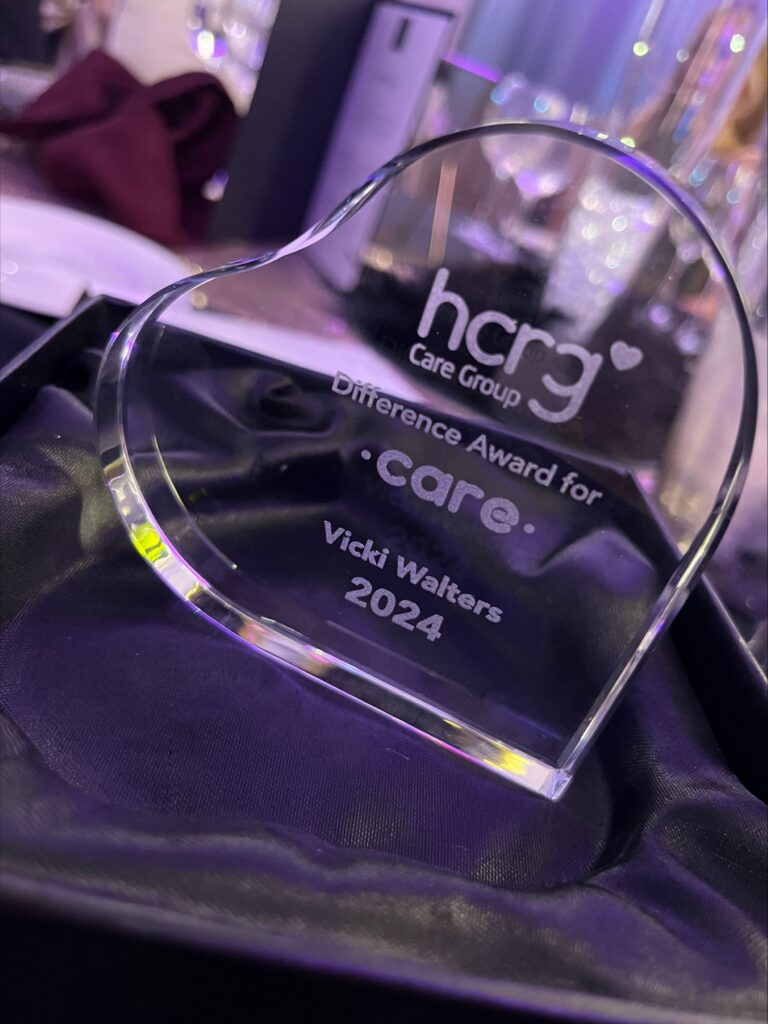
In July, an exceptional individual received The Chief Nurses Care Award, chosen by their team from all HCRG Care Group employees.

Despite facing challenges like dyslexia, they pursued a career in occupational therapy, showcasing resilience and dedication. Starting as a hairdresser, they transitioned to the care sector and found their passion in occupational therapy at Serona.

Over 11 years, they have excelled in their role, inspiring others with their journey from humble beginnings to prestigious recognition. Their story exemplifies the transformative power of passion and perseverance:

“My apprenticeship provided me with a solid foundation in theory, giving me a deep insight into the reasons behind the impact of my work. Having a mentor for the last 3 years has been instrumental in shaping my approach and guiding me towards success.”

The Chief Nurses Care Award

As she looks to the future, with three diverse placements and valuable experience in the healthcare system, she is well-prepared for her career. Mentors and employers have been instrumental in her growth, while innovative software has enhanced efficiency.

Challenges like balancing work and family persist, but she is ready to navigate her career path confidently.

“Remember, obstacles are just stepping stones on your path to success. With the right support and determination, you can overcome any challenge, including mastering time management. If it’s something you truly desire, go for it!”


Find out more about our higher and degree apprenticeships and explore the many higher and degree apprenticeship courses on offer with us.