
Empowering Communities: The ALIBSA Network

Posted on

The Ageing Lifestyle in Blacks and Asians (ALIBSA) network is a groundbreaking initiative dedicated to improving health literacy and reducing health inequalities within Black and Asian communities. Founded by Associate Professor Faatihah Niyi-Odumosu of UWE Bristol, the network focuses on empowering these communities to take control of their health by addressing the unique barriers they face in accessing healthcare.

ALIBSA emerged from a collective passion for reducing health disparities among its six core team members. These include Dr Niyi-Odumosu, who leads the initiative, alongside Dr Zheng Ma, a senior lecturer in public health who engages with Chinese ethnic minorities to promote health awareness. Other members include Alosh Jose, CEO of Cricketqube; two medical doctors, Dr Gisele Abissegue and Dr Abolanle Adesope; and doctoral researcher Oluwatobi Fatola. Together, this multidisciplinary team combines expertise to design culturally tailored interventions that enhance access to healthcare while fostering self-confidence and autonomy in managing health conditions.

The network operates through a variety of community-focused activities. One of its key initiatives is the organisation of monthly webinars that bring together experts to discuss health-related topics relevant to Black and Asian populations. These sessions serve as a platform for knowledge exchange, where participants can engage with speakers and share experiences. Beyond these events, ALIBSA maintains a vibrant WhatsApp group with over 120 members, which acts as a resource hub for sharing links to ongoing research, health services, and other useful information.

ALIBSA’s influence extends well beyond the UK. Participants and volunteers from countries including Nigeria, Ghana, the Netherlands, Canada, Malaysia, Australia, and the United States contribute to the network’s mission. Volunteers also serve as champions in their regions, advocating for health literacy and supporting local community initiatives. The network offers mentoring opportunities to early-career researchers and health professionals passionate about addressing lifestyle-related health conditions.

At its core, ALiBSA strives to be a global movement. Its vision is to establish health literacy initiatives led by communities, with a champion in every country. By empowering individuals through education and accessible resources, ALiBSA aims to reduce health disparities and ensure equitable access to healthcare services for Black and Asian populations worldwide.

Joining ALIBSA means becoming part of a collective effort to create a healthier, fairer future. Whether as a volunteer, researcher, or advocate, there are opportunities to contribute to this important work. Together, we can make a lasting impact.

To learn more about ALiBSA and how to get involved, visit their website or join one of their upcoming events.
UWE Bristol win funding to evaluate digital self-management app

Posted on

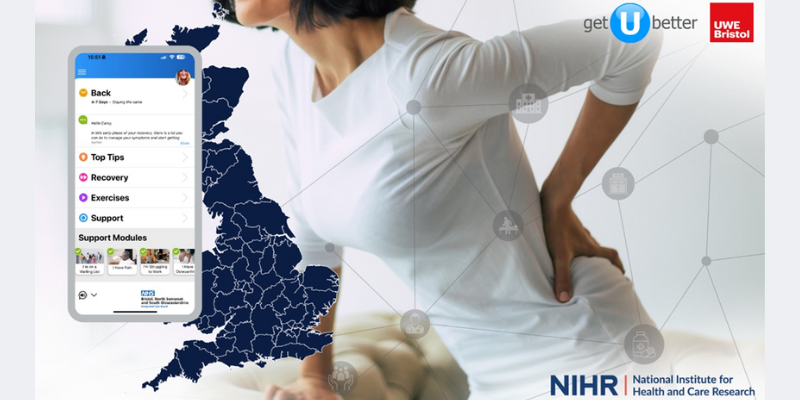
UWE Bristol, in collaboration with the Bristol, North Somerset, South Gloucestershire Integrated Care Board and getUBetter, and partners University of Bristol and St George’s University Hospital NHS Foundation Trust has won funding to evaluate the implementation of the musculoskeletal self-management app, getUBetter.

Low back pain affects many people in the UK, restricting their daily activities and accounting for 5% of GP appointments. Many digital tools exist to support people with low back pain to self-manage their symptoms. However, we don’t know how they work for patients and healthcare professionals, and whether they provide good care.

The getUBetter app is already used by the NHS to support people with low back pain. Typically, patients are directed to the app by their doctor, GP practice staff, or physiotherapist. A simple registration process connects them to guidance and support throughout the recovery journey, providing them with advice about symptoms, information about what to expect, relevant exercises, goal-setting tools, and referral to local treatments and services. 

The funding comes from the National Institute for Health and Care Research (NIHR) Invention for Innovation (i4i) Programme, in collaboration with the Office for Life Sciences and the National Institute for Health and Care Excellence. NIHR have funded seven new projects aimed at bringing new technologies into the NHS to benefit patients.

The funded teams will be gathering real-world evidence for their products. This will help to accelerate adoption of these technologies, which have been recommended for early use in the NHS through NICE Early Value Assessment.

The funding aims to help make the UK a leading testbed for late-stage health innovations. It will allow researchers and companies to generate the evidence needed to achieve full NICE guidance, and to accelerate uptake in the NHS so that patients can benefit sooner.

This project aims to assess if using getUBetter improves pain, and the ability to engage with daily activities, reduces the need for further care, and whether it offers the NHS good value for money. This research will help to understand how the app is being used by patients and GP practices and develop guidance on how getUBetter and other digital self-management tools can be used to support patients with low back pain.

Dr Alice Berry, Associate Professor in Rehabilitation at UWE Bristol and lead for the project commented: We are very excited to be leading this work and to receive NIHR funding and support from the Office of Life Sciences to broaden understanding of how digital technologies can be utilised by the NHS.

More information on the funding: NIHR and OLS invest £7.8m in new technology to benefit patients | NIHR

The UWE Bristol Community Fund

Posted on

The UWE Bristol Community Fund awards grants of up to £3,000 for community partnership projects.

This initiative aims to support projects which help to achieve the following aims of the fund:

  • build relationships between staff, students and local communities
  • develop opportunities for students to volunteer in the local community and enhance teamwork, communication and project management skills
  • develop opportunities to enhance student learning through practical, community-based projects
  • develop projects which will have significant impact for the West of England region
A mural in Stokes Croft created through the fund

The UWE Bristol Community Grant is jointly funded with the Quartet Community Foundation.

Applications for Community grants are now open.
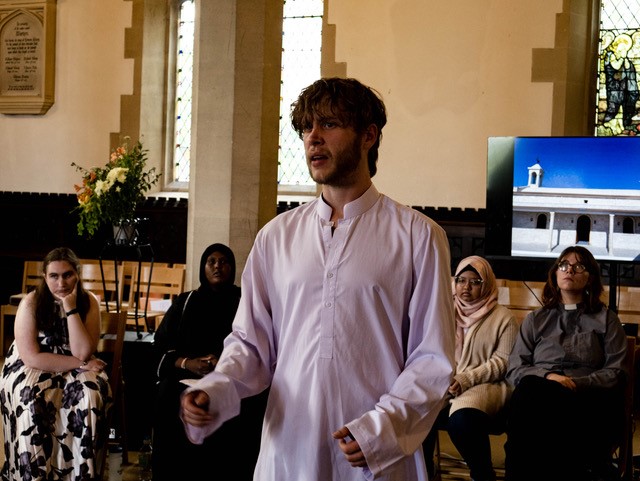
A drama group that was supported through the fund

Applications must be led by a current UWE Bristol student or staff member, and identify a lead community partner. If you have a good idea and are seeking a suitable community partner, the UWE Bristol Fund and civic engagement team can help with this.

The community partner must be a ‘community organisation’ that can clearly demonstrate its charitable aims in a governing document. These can be CICs, charities, CIOs, constituted groups etc. Public bodies such as schools or local authorities can also apply to the fund. The activity must be clearly non-profit making and not for commercial purposes.

The project must benefit communities in the following areas – Bristol, Bath and North East Somerset, North Somerset and South Gloucestershire.

The fund give priority to projects that focus on the following areas:

  • schools and education – UWE Bristol students working with young people in areas with low progression into Higher Education
  • sustainability – supporting the city and West of England region to become more sustainable, with a low impact on our planet and a healthy environment for all
  • stronger communities – helping to build resilient and inclusive neighbourhoods, where people are able to participate in and benefit from the economic and cultural opportunities in the city and region
  • health and wellbeing – ensuring that everyone has the opportunity to live a life in which they are mentally and physically healthy

The deadline for full applications is midnight Monday 16 December 2024. Decisions on funding will be made by mid-January 2025.

To learn more about the fund, to submit an expression of interest form or to get in touch with the team, please visit the UWE Bristol Community Fund webpages.

UWE Bristol Beeline highly commended at Green Gown awards

Posted on

UWE Bristol’s Beeline has been highly commended at the 20th Green Gown Awards. The award winning Beeline biodiversity scheme brings nature into the heart of campus by introducing plants that are specifically “edible pollinators” whilst providing staff and students with access to free herbs, fruit and vegetables.

Planting schemes have been designed around ten key edible pollinators, this core planting is then supplemented by seasonal edibles and high-performing pollinator plants on a continuous basis throughout the year.

The project was a finalist in the Nature Positive category. Find out more about the Beeline:

UWE Bristol also won the 2030 Climate Action award at the awards for its highly sustainable student accommodation, Purdown View, the largest certified Passivhaus student accommodation development in the UK.

The Unconventional Computing Lab construct new vigilance robot

Posted on

Professor Genaro J. Martínez, Professor Andrew Adamatzky and colleagues from the Unconventional Computing Lab (UCL), based at UWE Bristol, recently finished a multidisciplinary project where they constructed a new vigilance robot named “McIntosh I”. Involving the Artificial Life and Robotics Lab in Mexico and Unconventional Algorithms & Computation Lab in Czech Republic.

The main characteristic and difference with other similar robots around the world is that the navigation system is implemented with a new bio-algorithm based on a Physarum polycephalum complex cellular automata model.

Physarum polycephalum represents an enigmatic group of organisms known as the slime molds. Despite their name these organisms are not related with fungi,  and form a genuine branch in the tree of life, beside plants, animals, and fungi. When Physarum takes up nutrient by its surface, the plasmodium will grow but still maintains coherence of the network structure. As a result, the network architecture is highly dynamic with flexible rearrangement of its junctions, following a decentralized and intelligent protocol of organisation.

The result will be presented in “The 15th International Workshop on Networking, Computing, Systems, and Software (to be held in conjunction with CANDAR’24) in Okinawa, Japan, from November 26 to 29 2024.

The results will be published in March 2025 in the Advances in Cellular Automata: Volume 1: Theory, and Advances in Cellular Automata: Volume 2: Computation and Applications

Major funding to support next generation of biology researchers

Posted on

The University of the West of England has been part of a successful bid for new Doctoral Landscape Award funding from UK Research and Innovation, for the South West Biosciences Doctoral Landscape Partnership (SWBio DTP) from the Biotechnology and Biological Sciences Research Council (BBSRC) worth £22.4 million.

The SWBio DTP is led by the University of Bristol, together with the Universities of Bath, Cardiff and Exeter, alongside Rothamsted Research.  This partnership also includes the following associate partners; Marine Biological Association (MBA), University of Plymouth, SETsquared Bristol, Swansea University, UCB Pharma and University of the West of England (UWE). SWBio4 will offer PhD studentships over five cohorts starting in October 2025, with a vision to train the next generation of highly skilled leaders in research, innovation, science policy, and communication. Students will receive structured training in data and project management, science communication, innovation, research impact, and artificial intelligence.

Professor Jeremy Tavaré, Pro Vice-Chancellor, Faculty of Health and Life Sciencesat the University of Bristol, said: “This award is a testament to the excellent academic and support teams across the existing SWBio Doctoral Training Partnership, which have built a buoyant, multi-disciplinary research training environment, with academic and non-academic partners guiding and championing 350 PhD students to date.”  

Professor Jon Lane, Director of the SWBio DTP and Professor of Cell Biology at the University of Bristol, said: “This is fantastic news. We are delighted to have received this vote of confidence in our vision to train and inspire future leaders in bioscience research and innovation. This award is a huge endorsement of our sector-leading biosciences departments within our institutions, recognising the world class biosciences research taking place in the South West and Wales.”

Professor Aniko Varadi, Lead of the SWBio DTP at UWE Bristol added: “Our bioscience research and innovation training formed integral part and contributed to the success of the SWBio DTP in the past five years. This award is the recognition of our excellent research, PhD supervision and training, which will enable us to build on our success and grow talented PhD students working in biology addressing significant global challenges.”

UWE Bristol Researchers Developing a Prosthetic Microbiome for ‘Vertical Farms’  

Posted on

Vertical farms for crops eliminate the soil microbes that, in the field, help plants grow – UWE Bristol academics are putting the microbes back. 

Professor Neil Willey, Dr Mukesh Sharma, and PhD student Segun Ogunmefun are part of a €6 million European Innovation Commission (EIC) project, ‘Microbial Hydroponics (Mi-Hy)’, that is making vertical farms more sustainable by incorporating microbial processes.  

In the next few decades Controlled Environment Agriculture (CEA) will produce an even higher proportion of the world’s food than it does now. It will include not just greenhouses but vertical farms and urban agriculture. In CEA crops are frequently grown without soil in a controlled environment with artificial light.  In contrast to growing in soil, crops are just fed a nutrient solution (‘hydroponics’) and there’s no microbiome involved in nutrient uptake – a bit like intravenously feeding a human.  In the field, the soil around plant roots (the rhizosphere) teems with microbes that help not just nutrient uptake but also stress avoidance and pathogen resistance. When plants in hydroponics have no rhizosphere microbiome, they are completely dependent on inorganic unsustainable sources of nutrients and their taste and nutritional quality can be different.  This makes sustainable growth of nutritious crops in hydroponics difficult.   

Basil growing in hydroponics in the Envirotro

The Mi-Hy project is using wastewater streams to drive Microbial Fuel Cells (MFCs) and Microbial Electrolysis Cells (MECs) and is developing a system to manage them as a prosthetic rhizosphere. This prosthesis captures nutrients from waste, provides energy for lights and pumps, and produces organic compounds like those of the rhizosphere.  The project is also developing designs for incorporating this hydroponic system into urban spaces.  The plant growth  experiments for the project will be done in the UWE Envirotron and the whole system will be demonstrated at, for example, the Sony Computer Science Labs in Paris and the Milan Triannale 2025.  Numerous UWE student projects and modules are linked to the research. 

The Mi-Hy project

Professor Neil Willey commented on the research so far: 

We’ve already been able to capture from waste streams more than 50% of the nitrogen that hydroponic plants need so we’re confident that when we’ve made the whole system and can fine-tune it, we will be able to grow plants completely on nitrogen captured from waste streams. We‘re hoping that we might help develop buildings that can feed their inhabitants!   

The other partners on the Mi-Hy project are The Dept of Regenerative Architecture at Katholieke Universitaet Leuven , the microbiology labs of the Consejo Superior de Investigaciones Cientificas in Madrid, the Engineering Dept of the University of Southampton, the Sony Computer Science Research Laboratories in Paris and Biofaction in Vienna. Mi-Hy is working closely with 8 other projects to meet the EIC’s €29mi Pathfinder Challenge: Carbon Dioxide and Nitrogen Management and Valorisation.   

Professor Neil Willey, Dr Mukesh Sharma, and PhD student Segun Ogunmefun are part of a €6 million European Innovation Commission (EIC) project, ‘Microbial Hydroponics (Mi-Hy)’, that is making vertical farms more sustainable by incorporating microbial processes.  They are funded by UKRI under the Horizon Europe Guarantee.

Nurturing Deep Tech Success: UWE Bristol’s long-term support propels Altered Carbon to new heights.

Posted on

‘SmartScent. A portable & compact scent monitoring device housing Altered Carbon’s latest AI-powered chip.’

In the fast-paced world of technology startups, deep tech ventures face unique challenges. Resolving complex technical issues, securing adequate funding, and transitioning from concept to commercial operation demands time, resources, and unwavering patience.

At UWE Bristol, we understand these challenges and have committed to providing long-term support to innovative deep-tech startups. One shining example of this commitment is our partnership with Altered Carbon, a company revolutionizing scent detection technology.

The Altered Carbon Journey

Founded by UWE Bristol alumnus Ali Rohafza, Frazer Barnes and Sam Onwugbenu, Altered Carbon has been on a remarkable journey of growth and innovation. From its early days in UWE Bristol’s Launch Space and Bristol Robotics Laboratory incubators to its current home in our Future Space Innovation Centre, the company has flourished with consistent support from the university. Ali Rohafza affirms this support:

“Without doubt, we would not have been able to achieve what we have without the support of UWE. Our partnership with UWE Bristol has impacted every stage of our journey; mentoring, offices laboratories and workshops, research collaboration, working with students, and finding new staff!”

Today, Altered Carbon boasts a team of 11 staff, with 9 being proud UWE Bristol graduates. This success story exemplifies the power of nurturing talent within the university ecosystem and providing continued support as startups evolve.

Groundbreaking Technology

At the heart of Altered Carbon’s success is its innovative scent detection technology. Using patented graphene chips and an AI platform capable of learning and distinguishing between good and bad scents, the company has developed a system that can detect gases, volatile organic compounds, and complex scent compounds. This technology has wide-ranging applications; from fire detection, food waste management, wound infection and mould detection.

The potential of this technology hasn’t gone unnoticed. Altered Carbon recently closed a £1.3 million investment round, building upon £800,000 of Innovate UK grant finance and previous investments totalling £1 million. This financial backing is a testament to the company’s innovative approach and market potential.

UWE Bristol’s Comprehensive Support

UWE Bristol’s relationship with Altered Carbon spans over six years, demonstrating our commitment to long-term partnerships with promising deep-tech startups.

Our support has been multifaceted, including:

  1. Start-up support and incubation services through Launch Space and the Bristol Robotics Laboratory  (BRL) Hardware Incubator
  2. Access to state-of-the-art facilities at the Future Space Innovation Centre
  3. Collaborative projects with our Health Technology Hub and BRL’s Robotic Innovation Facility
  4. Academic collaboration with the School of Applied Science.
  5. A steady pipeline of talented graduates and undergraduate interns.

Mark Corderoy, UWE Bristol’s Entrepreneur in Residence, emphasizes the importance of this approach:

“At UWE, we don’t just incubate startups; we try to nurture long-term partnerships. Our sustained support for companies like Altered Carbon creates a win-win scenario, driving innovation while providing invaluable real-world experiences for our students and researchers.”

Mutual Benefits

The partnership between UWE Bristol and Altered Carbon exemplifies the mutual benefits that can arise from long-term collaboration between universities and startups:

For Altered Carbon:

  • Access to cutting-edge facilities and expertise
  • A talent pool of graduates and interns
  • Support through various stages of growth and development

For UWE Bristol:

  • Funding for two PhD positions
  • Provision of 20 paid internships for undergraduates
  • Real-world experience and employment opportunities for students and graduates

The Power of Sustained Support

Deep tech development is not a sprint; it’s a marathon. The success of Altered Carbon underscores the importance of sustained support in nurturing groundbreaking innovations. By providing a comprehensive ecosystem that supports startups from incubation to scale-up, UWE is playing a crucial role in driving technological advancements and economic growth in the region.

As we look to the future, the Altered Carbon success story serves as a blueprint for university-startup collaborations in the deep tech sector. It demonstrates that with the right support, patience, and perseverance, transformative technologies can emerge from university ecosystems, creating value for businesses, students, and society at large.

At UWE Bristol, we remain committed to fostering such partnerships, supporting the next generation of innovators, and contributing to the vibrant deep tech landscape in the UK and beyond.

Latest News

Altered Carbon has just been announced overall winner at the United Nations World Food Forum Startup Innovation Awards in Rome (October 2024).  

Black History Month: Spotlight on The Young Foundation and Camden Giving

Posted on

As part of this year’s Black History Month ‘Reclaiming  Narratives’ theme; here in Research, Business and Innovation at UWE Bristol we are closing the month of events and activities with a focus on the reclaiming of Black Narratives in Social Justice. To mark this theme, we spotlighted The Young Foundation’s Community Knowledge Fund and fund recipient Camden Giving.

Through a partnership with UK Research and Innovation (UKRI), The Young Foundation’s Community Knowledge Fund has supported community groups and organisations around the UK through an open grant fund that has sought to enable ideas that use the knowledge in communities to address challenges that matter locally; putting community at the heart of research and innovation.

The Fund aims to test innovative methods and approaches for community-led research and knowledge creation.  

Camden Giving were one of the Community Knowledge Fund recipients; with a community led project that has set out to research the root causes of racism in UK cities.  Camden Giving are an independent charity that work to end local poverty and inequality in the London borough of Camden. They are a participatory funder which means that local residents who are experiencing inequality make the organisation’s funding decisions. In this way, Camden Giving prioritise the shifting of power to a diverse range of voices for community-led solutions.

Ruth Stables and Yasmin Farah

Research, Business and Innovation colleagues at UWE Bristol welcomed Yasmin Farah Head of Data and Community Knowledge from Camden Giving and Ruth Stables Innovation Practitioner from The Young Foundation to share insights and impact from this funded activity. A brilliant opportunity to spotlight an initiative which has sought to reclaim community and citizen-led narratives for social justice driven outcomes.  

Celebrating UWE Bristol Black Excellence podcast series

Posted on

UWE Bristol are proud to launch a special series of the Changemaker podcast that shines a light on some of the incredible work our Black academics are doing to drive change.

The Changemaker Podcast Series is about highlighting work that is taking place across UWE Bristol to transform futures and drive positive impacts.

This special series features six of our Black academics that are each pioneering change in their research areas and teaching practice. The series celebrates each of these amazing academics and confronts a range of racial justice issues in the Higher Education sector.

The inspiring series covers a range of topics, including celebrating Black heritage and culture, and the importance of research that involves and benefits the wider community.  

In each episode, we get to hear about the academic’s career so far and how they are creating positive & impactful change through their work.

The idea for this special podcast series came from Professor Emmanuel Adukwu who has previously championed the Black History Month Celebrating excellence booklet. Emmanuel features in one of the episodes.

The first two episodes are now live:

Changemaker podcast series: Amy Saleh

Changemaker podcast series: Malcolm Richards

Future episodes will include:

Chief People Officer Dan Wood commented:

“This podcast is a chance to really understand the wealth of brilliance our Black academics bring to the UWE Bristol community. These conversations are both inspiring and impactful.

Colleagues have shared their experiences with raw honesty, highlighting both their achievements and sadly the painful realities of racism they face. Their message is clear, and I fully support it: we must acknowledge the harm racism causes and take meaningful, sustained action to address it—both institutionally and personally. These conversations are challenging, but vital.

Passivity won’t suffice. We must actively commit to anti-racist practices and foster a culture of equity and racial justice. There is much to improve, and it’s on us to lead that change and be accountable. This podcast series is a clarion call, urging us to question, challenge, and transform ourselves, our institution, our sector and wider society. At UWE our evolving anti-racism strategy, along with new resources and actions, will be shared soon.”

We are incredibly grateful to Emmanuel, Amy, Angelina, Shawn, Ann and Malcom for giving up their time for this series. The collective sharing of their expertise has led to a truly unique podcast series, with each episode brilliant in its own right.

The first two episodes are available on the UWE Bristol Soundcloud page and the next episodes will be released weekly.