Faculty of Business and Law Fundraising Event at the House of Commons

Posted on

fbl

On Tuesday 6 September UWE Bristol launched its £2 million public fundraising campaign to help raise funds for the new Faculty building currently under construction.

This £2million fundraising campaign supports the university’s £56million commitment to build a new facility to house the Bristol Business and Law Schools, a much needed hub in the South West of England to drive forward regional growth and boost the local economy. The new building will promote collaboration and bring our students into direct contact with today’s business leaders, great legal minds and successful entrepreneurs.

The launch was held at the iconic Houses of Parliament and was attended by London based alumni. John Penrose MP welcomed the alumni and friends to the event before speeches were given by Donna Whitehead, Executive Vice Chancellor and Executive Dean, and Tracy John, Head of Research and Business Development.

Guests were treated to canapes and drinks which they could enjoy on the terrace which overlooked the sunny South Bank.

The event was designed to inspire alumni and friends to engage with the project and the university, as well as providing an opportunity for the alumni and staff to reconnect.

An incredible £1.2 million has already been raised towards the campaign target from previous fundraising activities. Thank you to everyone who has already donated.

All the money raised through this campaign will have a life changing impact on our current and future student population, as well as a huge impact on businesses in the Bristol area.

fbl6.jpg

If you would like more information on the campaign or to find out how you can make a donation you can take a look at our Business and Law Schools fundraising campaign pages or get in touch with the team on development@uwe.ac.uk.

Graduate stands to receive award after 5 years in a wheelchair

Posted on

Watch the inspirational and emotional video on the UWE Bristol Facebook page.

A student at the University of the West of England (UWE Bristol) stood to receive his degree, having spent the past 5 years in a wheelchair as a result of a car accident.

Law graduate, Jeremiah Daliel, told his classmates during his first year at the University that he would stand to receive his degree, and stayed true to his word at his graduation ceremony, held at Bristol Cathedral on Wednesday 20 July.

Jeremiah’s inspirational action was aptly met by a standing ovation from his classmates, who clapped and cheered as Deputy Vice Chancellor, Professor Jane Harrington, conferred his degree.

Jeremiah, said, “I can’t believe that I am standing unaided for the first time in 5 years. It is a miracle and thank you so much. Thanks to my friends, and the University, for all their support and encouragement.”

Jeremiah wrote a LinkedIn article about his journey and the experience – you can read the full article here.

UWE Bristol awards an honorary degree to Lord Michael Bichard

Posted on

Lord Michael Bichard has been awarded the Honorary Degree of Doctor of Business Administration in recognition of his service to Government.

The Honorary Degree was conferred at the Awards Ceremony of the Faculty of Business and Law on Tuesday 19 July 2016 at Bristol Cathedral.

Michael Bichard was born in Southampton where his father was a school caretaker. He studied law at Manchester (and subsequently social sciences at Birmingham) and began a career in Local Government in Reading. He became Chief Executive of the London Borough of Brent aged 32 and then became Chief Executive of Gloucestershire County Council. With considerable reluctance he left the County to lead the Governments Benefit Agency then responsible for £100 billions of public money. To his surprise he was appointed Permanent Secretary of the Employment Department when that post was, for the first time, advertised publically and then became Permanent Secretary of the merged Employment and Education Department shortly before the 1997 Election. In that role he worked closely with the Prime Minister and David Blunkett to deliver education reforms which were the centre piece of Labour’s first term. In 2001 he decided to do something completely different and for the next seven years was Vice-Chancellor of the University of the Arts, London, the largest creative arts learning centre in Europe.

During this period, he also chaired the inquiry into the Soham murders; chaired the Legal Services Commission and the Design Council. He became the first Director of the Institute for Government in 2008 and is now Chair of the National Audit Office, the Social Care Institute for Excellence and the Shakespeare Globe. He was knighted in 1999 and appointed as a Crossbench member of the House of Lords in 2010 where he is now a Deputy Speaker. He had lived in Gloucestershire on and off for 30 years and is now settled with his wife Gillian in Nailsworth. He has had contact with UWE Bristol since he came to Gloucestershire and recently agreed to chair the faculty advisory board for the Business School. He has been an active supporter of Manchester United for fifty years and is glad to see the end of the current season!

UWE Bristol awards an honorary degree to Robert Bourns

Posted on

Robert Bourns, has been awarded the Honorary Degree of Doctor of Laws in recognition of his support of the work UWE Bristol does to reach out to the community, supporting the ambitions of so many members of our diverse and strong community.

The Honorary Degree was conferred at the Awards Ceremony of the Faculty of Business and Law on Wednesday 20 July 2016 at Bristol Cathedral.

The youngest of 4 brothers, born following his parents’ move to Bristol, Robert is a proud Bristolian.

Educated in Bristol and now living with his wife and their 4 children in South Gloucestershire, he has long been determined that young people growing up in the West of England should be given line of sight on the opportunities open to them, so that their ambitions are not limited by environment, lack of awareness or self-confidence.

He is a solicitor in practice, training with Osborne Clarke and in due course moving to a Bristol firm, Trumps. As Managing Partner he merged that firm with Lawrence Tucketts [in 2000], creating TLT LLP. In 2002 Robert was elected Senior Partner and working with the Managing Partner and their colleagues, saw the firm grow from its Bristol base to become a UK wide firm employing in excess of 1000 people.

In 2000 Robert said that the firm would only succeed if it made sense from the view of its clients and those working within it.

The theme of developing others continues to be a fundamental believe and driver. Robert is a trustee of ABLAZE (Bristol Learning Action Zone- promoting attainment of students at primary school and the ambitions at secondary school), a governor of Merchants’ Academy (Hartcliffe), a supporter of Room 13 (an excellent arts project run by the students at Hareclive primary school) and the incoming President of The Law Society of England & Wales, where he has made it a theme of the Society to ensure that its 160,000 members are equipped with the skills to support their individual career ambitions, in a changing and competitive environment.

UWE Bristol awards an honorary degree to Christopher Curling

Posted on

Chris Curling has been awarded the Honorary Degree of Doctor of Laws in recognition of his work in environmental conservation and education in the region.

The Honorary Degree was conferred at the Awards Ceremony of the Faculty of Business and Law on Monday 18 July 2016 at Bristol Cathedral.

Chris Curling is a lawyer, businessman and environmentalist.

Following a state-sponsored education he ended up at Cambridge University in the exciting and turbulent days of the late 1960s. This experience has had a lifelong influence on him.

After travelling round the world he and his wife hitch-hiked in 1974 down to Bristol, where he joined the law firm Osborne Clarke as a corporate finance lawyer. Within ten years he was the firm’s Chief Executive and after a further seven years its Executive Chairman. So for 15 years he led its development from a Bristol-based provincial law firm to one with an international presence and reputation. For the past 12 years he has been involved in a number of businesses, including Bristol Water, where as a Non-Executive Director he established and chaired the Board ‘s Environment Committee, and a waste recycling business.

Chris was an early member of Friends of the Earth in the 1970s, and on coming to Bristol he was involved in the establishment of the cycling charity Sustrans. Initially a protest organisation Sustrans has developed into the UK’s leading active travel charity, responsible for the construction of the 14,000 mile National Cycle Network, for encouraging many people (especially those who are disadvantaged or isolated) to take up walking and cycling, and for promoting to Governments the environmental and health benefits of cycling and walking. Chris recently stood down as Chairman of the Sustrans Board.

Chris was also for five years Chairman of Wildscreen, the international charity based on Bristol’s position as the world’s leading centre for wildlife film production. Wildscreen harnesses the power of wildlife imagery to promote globally the vital importance of biodiversity conservation. UWE Bristol has had a significant involvement in this organisation over the years.

Additionally Chris was for three years Chairman of a group of industrial and financial experts advising the Cabot Institute, the environmental research institute of the University of Bristol, on its research priorities.

In education, Chris was Chairman of the Governors of an academy school in the disadvantaged community of Withywood in South Bristol, during a period of rapid transformation of this school. As a member of the Society of Merchant Venturers he is now Chairman of the Board which oversees the education of some 4,500 students through its management of the Merchant Venturers’ stable of nine schools, including the independent Colston’s School and eight state-maintained schools in Central East Bristol and South Bristol.

Faculty of Business and Law attracts regional business leaders to new advisory team

Posted on

Donna Whitehead, Pro Vice-Chancellor and Executive Dean at UWE Bristol’s, Faculty of Business and Law has unveiled an impressive new advisory team of 21 regional business leaders.

The new FBL Faculty Advisory Board has been assembled to look at how the new Faculty and its new £50m building can serve the needs of the region and its economy.

Business leaders from the region’s financial, commercial, legal, public and health sectors are represented on the panel. They are:

Chair – Lord Bichard, Chairman of the National Audit Office

Barbara Davies, Former CEO – West of England Local Enterprise Partnership

Bonnie Dean, CEO – Bristol and Bath Science Park

Chris Nott, Senior Partner – Capital Law

Clive Hetherington, Ex-Area Director – Lloyds Bank

Dame Ruby McGregor-Smith, CEO – Mitie Group

David Relph, Director – Bristol Health Partners

Iain Lovatt, Founder and Chairman – Blue Sheep

Jason Sprague, Management Consultant – ASE Consulting

John Moriarty, President – Bristol Law Society

Karl Brown, Senior Associate – Clark Willmott

Katherine Bennett, Vice-President – Public affairs – Airbus

Keith Probert, MD – Viimi

Luis Garcia, CEO – Bristol Water

Nicola Yates OBE, City Director – Bristol City Council

Peter Rillett, Chairman – North Bristol Trust

Phil Smith, MD – Business West

Rick Sturge, President – ICAEW

Sarah Pullen, MD – Trinity Mirror

Simon Gibson, CEO – Wesley Clover

Vanessa Moon, Moon Consulting

Donna Whitehead, Pro Vice-Chancellor and Executive Dean of the Faculty of Business and Law says, “We’re delighted by the calibre of our new advisory board and the leadership experience they bring will stand the Faculty in good stead to drive forward our new strategy to make our provision meet the needs of employers and ensure that we forge an international reputation for business and law at UWE Bristol.”

Lord Bichard, Chair of UWE Bristol Faculty of Business and Law advisory board, says, “To be effective universities must work hard to stay close to business; build strong partnerships with local and nationally significant employers; show that they value and respect the voice of industry and look for ways of making their knowledge and research base more accessible to business. This is a partnership of genuine mutual benefit.”

Students are set to benefit from state-of-the art facilities, as the new building for the Faculty of Business and Law draws a step closer to completion. With completion due for January 2017, the new building will include: two showcase law courts, a city trading room, a 300 seat lecture theatre, two Harvard lecture theatres, a number of smaller teaching spaces, IT suites, flexible social learning spaces, external business engagement space, central social space and café.

Is Brexit possible in fisheries?

Posted on

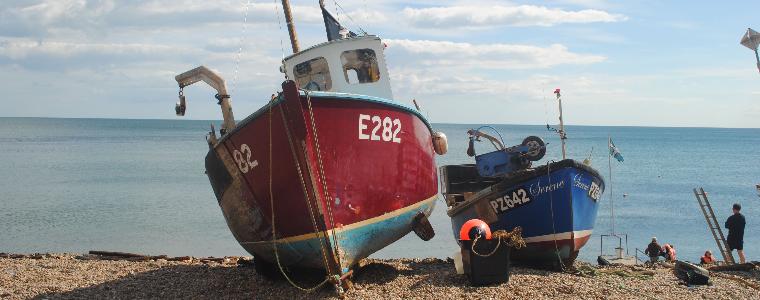
Dr Tom Appleby from the University of the West of England’s Environmental Law Unit is a leading expert in marine and fisheries law. Writing for the BlueMarineFoundation, following the Brexit vote, Dr Appleby outlines the complexities involved in renegotiating the UK’s fisheries quota.

5070

“Britain’s legal bilateral arrangements with its neighbours date back to themiddle ages. Yet many fishermen have broken with this international tradition and to leave the EU on the basis that it will gain greater fishing rights for British vessels. But while that is fine as a protest vote; it is a very different job for British and European civil servants to re-engineer 40 years of technical regulation.

“For leavers on paper it all looks fine; simply serve notice and regain control of UK waters which in some cases go out to 200 nautical miles. But fish do not respect national borders. As prominent leave campaigner and Fisheries Minister, George Eustice says, “If we re-establish national control for 200 nautical miles or the median line as provided for in international law then we would also be in the strongest possible position”, we would in theory be able to and argue for a better share of quota allocations in many fish stocks based on control of this area. But this approach ignores several hard realities. The UK already has a significant amount of international quota which permits its vessels to operate in other European waters and vice versa, these quota are already the subject of annual horse trading between member states so to some extent this quota already represents a national division of quota and would almost certainly be used as the basis for any redrawn arrangement. So while UK may gain exclusive control to UK waters we will lose access to others. Moreover fish do not recognise national boundaries and so international agreements are required under international law. When (and if) the new Prime Minister takes the bold step of commencing Article 50 negotiations Mr Eustice has already acknowledged that all he is hoping for is a ‘fairer share’ of the stock. In other words this is about renegotiating the EU Common Fisheries Policy (CFP), not getting rid of it: Brexit from the CFP is impossible as a new CFP will be required or at least a multinational agreement along similar lines.

“Moreover, the latest version of the CFP is widely regarded as a success, catches are rising and environmental safeguards seem to be working so it is only this ‘fairer share’ point that the Minister is concerned about. Exiting the EU and renegotiating the CFP through multilateral frameworks would cost many tens of millions and take many years. And it would not even be that simple because of the Scottish independence question which would surely follow it. Adding yet more to the cost and delay. During that period uncertainty would stalk the UK fleet and it would be a difficult time for fishing businesses (and any businesses for that matter) to raise investment.

“A recent report by UWE Bristol gave a total capital value of the UK fishery at £1.125 billion. The cost to fishing businesses (let alone the broader fishing sector) of several years of uncertainty would weigh heavily against any increase in the size of the fishery. Moreover renegotiating quota is not as simple as that as The National Federation of Fishermen’s Organisations indicate in their response to the Brexit crisis:

“We can certainly seek to renegotiate quota shares as well as access arrangement but it is realistic to expect that there will be a price of some sort. Who will pay that price is a critical question.”

“If we gain £200 million of extra quota for the UK fishing industry some other UK industry is bound to suffer in the international negotiations. Sectors like banking and finance, the traditional bellwethers UK economy would have to give some ground in the diplomatic dance if we were to expand our fisheries. Moreover the economic chaos which the Brexit vote has wrought will inevitably lead to a smaller tax take and even less room for manoeuvre from Britain’salready overstretched diplomatic service.

“One further element of the Common Fisheries Policy will remain to be decided, the huge European Marine and Fisheries Fund distributes £243million to fishing interests in the UK. The Leave campaign finances have been vague at best and in some cases (like the £350million a week payment to the NHS battlebus claim) absurd. All sorts of promises have been made, but centre around the concept that money once ring fenced by Brussels will now be at the discretion of the British public. There is therefore no guarantee that the fund would continue beyond the current 2020 round of distribution, and fishermen may well lose that significant benefit.

“Whoever presses the Article 50 red button is going to have to manage the significant expectations of the fishing industry into the reality that after years of expensive and protracted legal wrangling we are likely to end up back in the same place. Brexit is impossible for fisheries.”

Lawyer awards recognise pro bono work by UWE students

Posted on

5072

The Legal Advocacy Support Project, a partnership between Avon & Bristol Law Centre (ABLC), the University of the West of England (UWE Bristol) and the University of Law has won ‘Pro Bono Initiative of the Year’ at The Lawyer Awards 2016. The announcement was made at a gala dinner at the O2 Intercontinental Hotel, London, attended by over 1,000 people from law firms across the country last night.

Whilst at UWE Bristol Law School, students are actively encouraged to get involved in a variety of projects from supporting local residents in dealing with community issues to providing free legal advice and assistance to members of the public.

This pro bono work provides UWE students with a great way of gaining experience in legal work and learning how to provide law-related advice.

UWE Bristol students have been volunteering at the ABLC advising claimants challenging changes made to their disability entitlement for over three years. To date they have helped to win more than £1 million in benefits for clients incorrectly judged to be capable of working by the Department for Work and Pensions.

Clare Carter, ABLC’s Director, said, “We are immensely proud of our team who are working with the some of the most disadvantaged people in our community. Following cuts in legal aid, these people have nowhere else to turn. This project is now a model that other areas of the country are following.”

Marcus Keppel-Palmer, UWE’s pro bono liaison, said, “We are delighted that the Avon & Bristol Law Centre has been recognised for the pro bono partnership with the University.

“At ABLC, our student volunteers have helped to advise claimants by challenging changes made to their disability entitlement. Since the project started the success rate of appeals made by the students and ABLC stands well above the national average at 95 per cent.

“Last year we announced that the students had helped to win more than £1 million in benefits for clients incorrectly judged to be capable of working by the Department for Work and Pensions.

“Recognition at The Lawyer Awards 2016 for our partners at Avon & Bristol Law Centre is wonderful news and demonstrates huge success for our commitment to pro bono work and the mutual benefits that both organisations have derived from this.

“We are committed to giving students as many opportunities through extra-curricular activities such as pro bono, whether at undergraduate or postgraduate level.

“Our students devote significant amounts of their time to assisting the local community, and we are very proud of the recognition for the link with the Avon & Bristol Law Centre.”

The project has helped more than 200 people over the last two years with an average of £5,000 won for each client.

Students who take part in pro bono work do well in the future as is borne out by the University’s Destination of Leavers in Higher Education data released today showing that 96% of UWE Bristol law graduates were in employment or further study just six months after graduation.

Money management app created by UWE graduate attracts £1.5 million investment

Posted on

5054

A start-up company spearheaded by a former University of the West of England (UWE Bristol) student has received a £1.5 million investment.

Law graduate Oliver Purdue has secured backing from high-profile investors for his banking service Loot just two years after finishing his studies.

The company, which also employs UWE Bristol undergraduate Chris Denny, is aimed at helping students balance their books through a smart money management app.

Loot has the features of a traditional bank account, such as ATM cash withdrawals and transfers, along with a specially-designed app targeted at helping customers stick to their budget.

Oliver, 22, set up the company shortly before graduating from UWE Bristol in 2014 having grown frustrated in his attempts to budget effectively using the app offered by his High Street bank.

He spotted a gap in the market after noting that while established banks were offering generous interest-free overdrafts and gifts to entice students, they were failing to help them manage their finances to make sure loans stretched across the entire academic year.

Users of the app will soon be able to benchmark their outlay against other students to check if they are overspending, and access tailored offers designed to help them save money.

On the inspiration behind the company, Oliver said: “I found that my banking app just showed my current balance, which didn’t really mean much to me. When students have their loans come in, their bank balance makes it looks like they have loads of money. But it doesn’t tell them how much that actually amounts to per week, until they get their next loan in.”

Loot launched at seven universities in September and plans to expand this year. The company has attracted £1.5 million in investment from Austrian early stage fund Speedinvest and Global Founders Capital.

Chris, also 22, a third year philosophy student set to graduate this summer, met Oliver at UWE Bristol and also worked alongside him at an Apple Store in Bristol.

Of the company, he said: “It’s a banking service for students and young people – one of its main features is that it helps students manage their money better. It doesn’t just tell you how much money you’ve got, as other banking apps do. You can set a savings goal which can help you budget, giving you a day-to-day spending limit. There is also categorisation, so you can see where you have spent your money, whether it’s food, going out, entertainment or clothes. We believe this makes it more meaningful.

“You will be able to compare your spending with other students. With food, for example, you might not know what constitutes a reasonable amount to spend on food in a week. If you are spending too much, relative to other students, we can provide customers with offers to help them save money.”

Loot is aiming to become the leading student banking provider, tapping into a potential market of more than two million people in the UK. Students are reportedly the least satisfied bank customers and use more paid-for money management apps than other consumers.

The 14-strong team behind Loot is hoping to make a major breakthrough in the burgeoning fin tech sector, with plans to invest its new funding in marketing and recruitment.

Chris said Loot would eventually generate profit through international transfers, but by charging a smaller fee than the established banks, and through its targeted promotions for customers.

He said: “Our first few months have been really great. Now we are moving on to the next stage, which is development, perfecting the iOS app and looking at launching an Android version so more people can use it. The investment will allow us to grow our team.”

The prepaid card which comes with a Loot account is an electronic money product. Although regulated by the Financial Conduct Authority, it is not covered by the Financial Services Compensation Scheme.

Why do we British find the EU so hard to swallow and why does it matter to business?

Posted on

4609

Britain, Business and Europe 2016 Series

To register

Sir Stephen Wall, the former foreign policy advisor to John Major and Tony Blair, sets out his thoughts on Britain’s often difficult relationship with Europe and why it matters to British business and the UK economy at UWE Bristol’s Exhibition and Conference Centre, on Wednesday 20 January 2016.

The event forms part of a series of special events during 2016 discussing Britain, Business and Europe, is hosted by UWE Bristol in collaboration with Business West.

In the half century since the British Government first applied to join the European Community, British membership has been a matter of ceaseless controversy. Why? And what implications does this have on our long term economic interest and the UK’s global influence?

Sir Stephen will discuss why the British find the EU so hard to swallow and why the idea of ‘leaving Europe’ dominates political discussion in a way that is unique among European nations. The United Kingdom is the only Member State ever to have had a referendum on whether to stay in only two years after joining. Why are we now the only Member State which seriously contemplates leaving? Why do other Member States think we treat them less as partners than as adversaries? What risks does this pose to our economy and global influence?

This year is likely to see a referendum on the UK’s membership of the European Union. Companies across the South West will find themselves part of a passionate debate with potentially far reaching consequences for the environment in which they do business. Sir Stephen’s insider and long term view will shed light on the dilemma facing voters, businesses and politicians and help stimulate debate on what the referendum vote means for the UK.

Series organiser, UWE Bristol’s Professor Nicholas O’Regan says, “We’re delighted to welcome Sir Stephen Wall to get our 2016 Bristol Distinguished Address Series off to a flying start with one of the year’s hot political debates – the Brexit referendum. This series has become a popular event for the Bristol business community, with the opportunity to network and hear directly from inspirational figures in industry with a wealth of strategic experience and leadership skills at the highest level.”

Phil Smith, Managing Director, Business West, says, “This event launches a series of events to better inform the business community about the European Union and the referendum debate. We are lucky to have such an experienced, informed and respected speaker to help kick off what promises to be a full and passionate year of discussions.

“When we surveyed nearly a thousand local businesses last year, two thirds believed that leaving the European Union could pose a direct risk to their own business. This demonstrates that for many South West firms the referendum is not an abstract question, but one with real and personal consequences. Our members also strongly felt the need for a better informed debate with more detailed information about the costs and benefits of the European Union. Sir Stephen’s visit is the perfect way to start this business discussion on Europe.”

The Bristol Distinguished Address Series is delivered by the Bristol Business School in partnership withACCA,Bristol City Council, Bristol Junior Chamber, Bristol Post, Business West, CBI, CMI, FSB, IoD,ICAEW and the West of England LEP.

Discuss this event on Twitter using the hashtag #BristolLectures

Back to top