UWE Bristol with Milbotix Ltd have been successful in securing grant funding from Research England’s Regional Innovation Fund (RIF) to form a new 3.5-month project. The project will look at advancing the integration of kinematic and kinetic sensors for holistic healthcare monitoring in aging adults.
Milbotix was founded to improve access to digital technologies for people with unmet needs related to dementia and other neurocognitive diseases. Milbotix founder Zeke Steer conceived of the SmartSocks® after witnessing his great grandmother’s journey with dementia and escalating agitation and aggression.
This project seeks to collect a simulated falls dataset from healthy individuals using motion capture equipment and a range of wearable pressure and IMU devices including Milbotix’s SmartSock® prototype. This enhancement delivers precise falls detection and gait tracking capabilities. Our solution prioritizes safety with technological precision for older adults’ healthcare.
Professor Carlos Cifuentes, Associate Professor in Human-Robot Interaction, will be leading on this project. He is an expert in robotics and sensing technologies for gait assistance and rehabilitation, alongside human robot interaction. He has studied the clinical conditions and pathologies and the mechanisms stimulating the patients’ recovery and quality of life.
Ben Allen and Yikun Wang will join as associates on the project. Mr Allen is a current PhD student at Bristol Robotics Laboratory, and is a versatile electronics engineer, specialising in robotics, and Mr Wang holds an MSc degree in robotics and a BEng degree in Electronic Engineering, bringing expertise to the team in developing assistive robots for older adults.
The Regional Innovation Fund (RIF) is a program designed to support universities in developing innovative projects that have the potential to positively impact their local communities or regions. These funds are allocated by regional or national governments to encourage research, development and collaboration between universities and local industries to spur economic growth and innovation.
Contribution to the UN 2030 sustainable development goals
UWE Bristol is proud to align our research to the UN sustainable development goals. The above research aligns with the following goals:
Marzia Dulal was awarded the prestigious Commonwealth PhD Scholarship for 2021 in the UK, which enabled her to join UWE Bristol in September 2021. She is currently undertaking a PhD at the Centre for Print Research.
Funded by the UK Foreign, Commonwealth & Development Office, Commonwealth PhD scholarships contribute to the development needs of Commonwealth countries by supporting research that will have a developmental impact. They also enhance individual teaching and research capacity leading to increase institutional capacity in academic and other sectors in Commonwealth countries and will contribute to UK higher education and research by attracting high-calibre international applicants and encouraging links and collaboration, and are aimed at those who could not otherwise afford to study in the UK.
Marzia’s research focus is sustainable wearable electronic textiles. Her aim is to contribute to the sustainable development goals in health and well-being, innovation, and responsible consumption.
She has an MSc and BSc in Textile Engineering from Bangladesh University of Textiles (BUTEX), Dhaka, Bangladesh.
“My research proposes a sustainable approach to producing e-textiles for the monitoring of human vital signs with the aim of overcoming the challenges of fabric deterioration, particularly at the end-of-life processings.”
The first stage of Marzia’s research has been to investigate the sustainability analysis of e-textiles, from the sourcing of potential materials through to manufacturing and end-of-life disposal alternatives. Through this, she has increased the understanding of the environmental impact of wearable e-textiles, forming the basis for responsible end-of-life solutions
The second stage of her research has involved exploring multifunctionality of wearable e-textilesand looking for creative ways to incorporate cutting-edge functions into textiles. This involves integrating smart materials and technologies into textiles to improve their performance and adaptability for a range of applications, such as sensing, energy storage, or providing heating.
Jointly, these projects will contribute to the creation of adaptable and environmentally-friendly textile solutions, pushing the frontiers of usefulness and innovation to support the healthcare sector and provide a blueprint for transforming the textile industry more widely.
“E-textiles allow medical professionals to provide individualised patient care with the ability to take preventative measures if a patient’s health starts to decline.”
Developing sustainable e-textiles that will transform the textile industry requires expertise in materials, textiles, and electronics. This can only be achieved through collaboration with specialists in these fields and in cooperation with wider stakeholders such as the consumer groups that drive change within the industry.
“As an academician and researcher, I have the privilege and opportunity to convene a research group at my university which can take this innovative work further and support other researchers striving to achieve sustainable e-textiles that bridge the gap between technological advancement and responsible consumption.
Together, we can instigate a revolutionary change in the textile industry, aligning environmental sustainability and social empowerment to create innovative e-textiles with the power to improve health and wellbeing for all.”
Narrative Technologies is a workshop, followed by seed-funding, aiming to bring together a diverse group with a common interest in how creative technologies can enable new ways of telling stories or representing experiences. The initiative hopes to foster new collaborations between researchers from University of Bristol, UWE Bristol and those working in the creative technology sector.
What forms of storytelling meet the potential of emerging technologies? How do stories themselves change in response to the technologies used to tell them? What do new technologies make possible, and how can creativity push the potential of these technologies?
On Thursday 13 June 2024, there will be a half-day workshop (with lunch) at Bristol Digital Futures Institute, followed by a chance for attendees to apply for seed-funding (up to £5k) to further develop an idea.
Recently there has been an increase in awareness surrounding sibling sexual behaviour (SSB) in practice and research debates. However, it is important to note that this is not a new form of intrafamilial sexual abuse. In recent months these conversations have come to the fore via popular culture and media such as a File On 4 Radio programme, a storyline in Hollyoaks and an article in The Sunday Times magazine that are all focussed explicitly on SSB.
The research was titled ‘Sibling sexual abuse: supporting victims and survivors to recover, heal and rebuild their lives’. The research identified what was needed for adults’ victim/survivors of historical SSB to understand and recover from their experiences as well as to develop bespoke provision for those experiencing SSB currently to support them and their families.
These research studies concluded that there is not consistent or fit for purpose policy guidelines surrounding SSB in the UK. In order to understand SSB better, and therefore respond to it and prevent it more effectively there needs to have a clearer view of what the actual scale, nature and reality of the issue is.
The research also found that the support offered to families was piecemeal and fragmented, which consisted of pockets of excellent provision in some postcode and no bespoke provision available in others. This points to the need for a joined up approach from the government to tackle this pressing issues consistently nationwide.
This resulted in the development of these policy and practice recommendations for government that relate to:
Clearer definition, criteria and recording of SSB cases in Children in Need Data.
The implementation of Sibling Sexual Behaviour Mapping Tool.
National recognition ofSSB as a multi-faceted health and well-being issue.
SSB being included in relationship, sex and health education (RSHE) in schools.
The importance of earlyearly upskilling all frontline workers to identify SSB.
Both authors are engaged in ongoing research, policy and practice with leading charities and social justice organisations (including, NSPCC, Barnardo’s, Lucy Faithful, Thriving Survivors, and Be Safe) to better understand the prevalence of SSB, the activities involved and the best ways to prevent and respond to it.
A New Crime of Ecocide: Opportunities, Challenges and Implications for the UK
On 2 February 2024, Dr Suwita Hani Randhawa (Senior Lecturer in Politics and International Relations) convened a workshop to discuss the opportunities, challenges and implications that a new crime of ecocide presents for the UK’s domestic and foreign policies.
Supported by an Impact Acceleration Award from the Arts and Humanities Research Council (AHRC), the workshop brought together a diverse group of external stakeholders, all of whom are actively engaged in ongoing efforts to criminalize ecocide in the UK.
Academics with an interest in ecocide, climate justice and green politics were also present, including: Dr Jane Kirkpatrick (Senior Lecturer in Politics and International Relations, UWE Bristol); Professor Kate Mackintosh (Executive Director, UCLA Law Promise Institute Europe), Professor Damien Short (Director of Human Rights Consortium and Reader in Human Rights, University of London) and Professor David Whyte (Professor of Climate Justice, Queen Mary University of London).
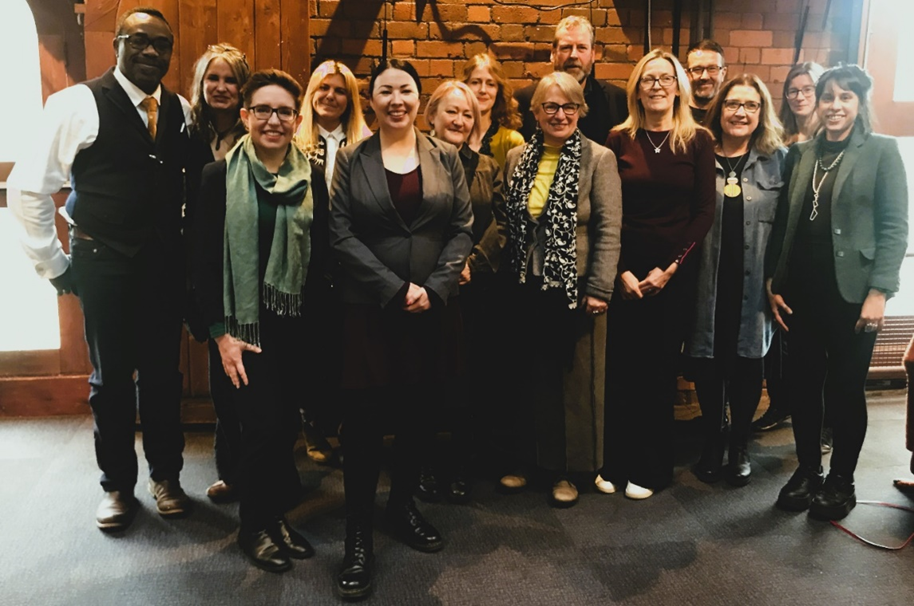
Dr Suwita Hani Randhawa (far right) with participants of the UK Ecocide Workshop
In recent months, ecocide has been the subject of increasing political discussion and legislative efforts in the UK. In September 2023, Camden became the first UK council to call for ecocide’s recognition as an international crime and a Private Member’s Bill (Ecocide Bill) was recently introduced in the House of Lords by Baroness Boycott. In Scotland, Monica Lennon (MSP for Central Scotland) has proposed the introduction of the crime of ecocide under Scottish law, and her (Proposed) Ecocide (Prevention) (Scotland) Bill has been open for public consultation since November 2023. Several UK political parties, including the Labour and Green Parties, have also expressed support for an international crime of ecocide.
These developments are reflective of deepening global sentiment on the necessity of criminalizing ecocide. In November 2023, the European Union became the first international body to criminalise wide-scale environmental damage by including acts comparable to ecocide within the bloc’s revised crime directive. Furthermore, national bills on ecocide are currently being discussed in over 10 national parliaments. Since 2017, ecocide has also the subject of an ongoing global campaign spearheaded by Stop Ecocide International, which is pushing for its recognition as a crime under international law.
However, the UK Government is currently opposed to ecocide: it neither supports proposals to recognize an international crime of ecocide, nor intends to introduce domestic legislation on ecocide. Considering the current global ecological crisis though, there is a critical need for the UK Government to reconsider its current position.
As the UK Government’s stance on ecocide has not yet been the subject of public discussion, the workshop provided the opportunity to critically engage with this pressing topic. Moreover, given that the small grouping of UK politicians and activists campaigning on ecocide have not yet explored opportunities to collaborate, the workshop also offered a strategic space for them to discuss how to coordinate action towards their shared goals.
Drawing on her expertise on the process of international criminalization, Dr Suwita Hani Randhawa played a leading and facilitative role at the workshop. The discussions centred on two central objectives: the development of cross-party strategies to support legislative change on ecocide in the UK, as well as mechanisms to encourage the Foreign, Commonwealth and Development Office to reconsider its official diplomatic stance on ecocide.
Dr Suwita Hani Randhawa chairing the UK Workshop on Ecocide
The discussions were insightful, stimulating and thought-provoking – and were captured in visual form by Camille Aubry, a live illustrator and resident of the Pervasive Media Studios.
Dr Suwita Hani Randhawa will now be taking the lead to operationalize the ideas explored at the workshop, all of which are aimed at mainstreaming ecocide within UK politics.
At UWE Bristol, Dr Suwita Hani Randhawa delivers research-led teaching on the undergraduate Politics and International Relations degree programme – and she is planning to channel her research into the development of a new specialist module on Ecocide and Climate Justice.
Dr Tariq Umar delivered a keynote on “Meeting Future Urbanization Need – A Research Agenda” and a research proposal development workshop covering the economic development and social welfare, environmental impact, and risk assessment. The event was organised and funded by the Ministry of Higher Education, Science, Research, and Innovation, along with Chiang Mai University and the British Council in Thailand. The overall purpose of the event was “Promoting Cross-Disciplinary Research and Impacting Sustainable Development Goals (SDGs)”. The two-day event was held in Bangkok, Thailand on 18 and 19 December 2023 at Sukosol Hotel.
Dr Tariq’s keynote covered the expected burden on the current cities due to population increase. The sinking of Bangkok and Jakarta at 2 to 10 cm a year was used as an example to the thread from sea rise to current cities. Different approaches to meet the future requirement of urbanization with most important sustainability indicators were explore in the presentation.
Likewise, Dr Tariq’s workshop on research proposal development provided audience example on how to demonstrate the economic development and social welfare in the research proposal particularly when the funding need Official Development Assistance (ODA) compliance. The environmental impact arising from the proposal during and after completion of the project along with the strategies on how to mitigate such impact were discussed with the audience. Examples on risk assessment and mitigations were provided to the audience – explaining how a better risk management approach can translate risk into opportunities and strength in research proposal.
The half day workshop ended with group discussion and reflection from audience on different aspects including future thoughts.
Rachel Campbell, NHSE South West Public Health (Blended Team)
Helen Erswell, Public Health Wales
On Friday the 8th December at UWE Bristol, we held the 4th meeting, and 1st all day conference of the public health and criminal justice network. The network is a collaboration between national Health Service England, UK Health Security Agency, and UWE Bristol. The aim of the network is to bring professional’s and academics together to talk about issues that sit at the interface between health and justice, no where is this more essential than in the case of trauma and trauma informed practice. Trauma is not a new topic in public health and health research, policy, and practice; but it is in criminal justice, and given the nature and function of criminal justice systems and procedures there needs to be discussions about its usability and utility.
The conference was opened by Chris Jennings the reflexively fresh in post Executive Director HMPPS Southwest, South Central & Public Protection. Chris opened the day buy talking about the importance of collaboration and the need for partnership working in this area. In doing so hehuiighlighted that prisons and probation need to continue to develop they trauma informed practices and policies, not only in supporting clients/survive users but also in supporting staff. He indicated that the better-informed services where, the better trained they were, and the better supported they were to better they could work with their client population and public the public. Chris highlighted that prison and probation shared common challenges and opportunities, but their where distinct ones that needed to be resolved for each individually. Which tied nicely to the next talk by Dr Chris Pawson (Assoc Professor in Psychology, UWE Bristol) who talked about the challenges of implementing trauma informed practice in the criminal justice system, His talk reflected on previous work to incorporate trauma through PIES and suggested that a broader lens than just trauma might be a good starting point. Chris reflected on a recent Publication that he co-authored for the HMI Probation which set out 10 key questions/challenges for trauma informed practice in probation. The two presentations by the two Chris’s dovetailed well together and suggested that we must adapt trauma informed practice to the criminal justice system, not simply copy it from health.
In his opening presentation, Chris Jennings referenced the good work being done at HMP Channing Wood on working with and supporting staff in a trauma informed way, the next presentation was by Graham Duncan on that very topic. Graham talked about his experiences of trauma in working at HMP Channing’s Wood and how that propelled him, with the support of the governor, to develop and roll out several staffing interventions and support tools to help them deal with the trauma that they face in working in prisons. Which was followed by Hazel Renouf the Trauma informed network lead for Bristol, North Somerset and South Gloucestershire ICB who talked about the challenges and opportunities of developing a trauma informed system that was coordinated, collaborative, and fit for purpose. Hazel updated the room on the development of a new trauma informed system document that had just been released and was currently being rolled out. The first four speakers really complemented each other well and highlighted the importance of having a connected, adaptive, fit fair purpose apparoach to working with trauma in the criminal justice system that supported clients/service users and staff.
The afternoon sessions where more service user/client focused with Dr Jane Meyrick (Assoc Prof in Psychology, UWE) talking about her survivor lead Co-production of paediatric SARC patient pathway work. Where her and colleagues worked with young people to better understand what they wanted from SARC referrals and how the professionals, mainly medical staff, could better engage with them. The research resulted in the development of a simple to use toolkit for staff that recently won a British Medical Association award. While Lucy Wainwright and Paula Harriot from EPIC Consultants talked about the service user journey and trauma histories of prisoners, which complemented Grham Duncans and Chris Pawson’s talks from earlier in the day, as it highlighted that not only is prison traumatising but that many of the people that are in prison have been traumatised in the earlier lives. They called for a more nuanced, supportive, and compassionate apparoach to working with people in prison, stating that the service had to go further.
The day finished with Professor Jane Powell (Professor in Public Health, UWE Bristol) talking about the importance of community engagement in public health, and how work around COVID 19 and a project on open spaces was re defining the landscape, Jane really enforced that community views were as central to public health development as individual ones. Which is important to hear from a criminal justice perspective, as community attitudes, values and beliefs are central to the integration of people who have offended post release. People who offend come from communities and go back into communities, so communities are central to reducing reoffending and risk management. Janes call for community engagement to be better developed was well received.
The conference was a great success and was well attended. It really reinforced the importance of collaboration, communication, and the need to build a shared vision of trauma informed practice. The more that Public Health and Criminal Justice are becoming intertwined, especially in Bristol; and the Southwest, the more these conversations need to happen so that we can built a system that is fully fit for purpose.
Fatigue is experienced by lots of people living with types of inflammatory arthritis, such as rheumatoid arthritis. For UWE Bristol’s rheumatology research team, based at the Bristol Royal Infirmary, understanding how best to manage fatigue has been a priority for over ten years. The team is led by Emma Dures, Professor in Rheumatology and Psychology, and here she describes the research journey so far:
We started with qualitative research to gain insights into how people with inflammatory arthritis experience fatigue and the impact that it can have on their lives. We heard that fatigue can be intrusive, overwhelming and that for some people, it is the most difficult symptom that they’re dealing with. It can affect work and leisure and it can stop people from doing the things that are important and that matter to them. It can also affect people’s relationships and their sense of who they are. This underpinning qualitative research has led to studies on fatigue assessment, fatigue interventions and clinical recommendations.
In 2014, we developed the BRAFs (Bristol Rheumatoid Arthritis Fatigue scales). The BRAFs are a set of measures that capture the nature and severity of people’s fatigue as well as the impact and how well they are coping. The BRAFs are free to use and have been translated into more than 36 languages.
We still don’t know what causes fatigue in inflammatory arthritis and currently there is no cure or medicines that can be prescribed to treat fatigue. However, we have developed an understanding of the interacting biological, psychological and social factors that can contribute to the symptom. They include the inflammation from the arthritis itself, the pain and poor sleep associated with arthritis, the things people do, including how much and how often, and the things that people have going on in their lives. Appreciating the complexity and range of factors that can affect individuals’ fatigue has helped us to develop and test self-management interventions, including training and resources for rheumatology health professionals.
One of our interventions involved people with inflammatory arthritis and fatigue having between two and four one-to-one sessions with a rheumatology health professional. The sessions incorporated cognitive-behavioural techniques and explored adaptive behaviour changes and ways to enhance coping skills. The study, called FREE-IA (Fatigue – Reducing its Effects through individualised support Episodes in Inflammatory Arthritis), was funded by the NIHR (National Institute for Health Research). The FREE-IA results suggested that the intervention was promising and could help people to self-manage the impact of their fatigue. This was the catalyst for our fatigue animation project.
When it came to dissemination, we felt that there was a bigger story behind the FREE-IA research. We agreed that those who needed to hear about the research were those who are dealing with how to manage the symptom, namely people with inflammatory arthritis and rheumatology health professionals.
In the FREE-IA study, we had interviewed people with inflammatory arthritis who took part in the intervention. We had heard them describe their fatigue and how it affected their health and wellbeing, as well as hearing about things that could help. We wanted to keep these narratives central to our dissemination and the overall story of fatigue, so we recruited three patient partners with personal experience to collaborate on an animation.
Together with the researchers, they wrote a script for an animation. The narrative is that fatigue in inflammatory arthritis is a real symptom and that it is one that health professionals and researchers take seriously.
“Animation is one of the most powerful storytelling tools. It can be beautiful, accessible, and is one of the best ways to make your story and message cut through and reach the people who need to hear it.” Lauren Orme at Picl Animation in Cardiff and her team brought the script to life visually and enabled the patient partners to record the script as the voiceover.
“Bringing the script to life felt exciting and rewarding. My challenge was self-consciousness over my voice and expressions: it took a while for me to relax into it. The recording of our three voices was a good combination which brought patients experiences and expressions to life and produced something which I believe those dealing with fatigue can connect with” – Marie Urban
“Helping to create a script by means of an online team call was certainly a new but rewarding experience for me…What was hardest for me was finding the recording studio. What I gained was the importance of attention to detail of the entire recording process such as working in harmony with the editor and sound engineer” – Terence Brady
Patient partners Marie Urban and Terence Brady with director Lauren Orme, Picl Animation
The patient partners involved reflected on the collaboration and the value of their involvement.
“By having patient and public being actively involved in research, will help to guide the research outcomes to a more patient orientated findings and hopefully will have more impact on the ‘good health’ of the general public”
“Patients and the public can often reach out to each other and communicate in additional ways. It can help ensure research is going in the right direction and not missing anything which people with a condition experience, need and find important.”
Now, our priority is putting research evidence into practice, making it easier for people to talk about their fatigue and making fatigue support easily and widely available to people with inflammatory arthritis. We have just published recommendations for fatigue management in inflammatory arthritis and we hope that this will help. The recommendations are based on systematic reviews of both pharmacological (drug) and non-pharmacological interventions and are endorsed by EULAR (European Alliance of Associations for Rheumatology).
We hope the animation will raise awareness with the public, people who have inflammatory arthritis and healthcare teams, including those working in rheumatology.
Emma Dures, Susan Bridgewater, Bryan Abbott, Jo Adams, Alice Berry, Lance M McCracken, Siobhan Creanor, Sarah Hewlett, Joe Lomax, Mwidimi Ndosi, Joanna Thorn, Marie Urban and Paul Ewings
Production Team
Lauren Orme and the team at Picl Animation
Oli Clarke – Sound engineer
Terence Brady – Patient partner and voiceover
Caroline Swales – Patient partner and voiceover
Marie Urban – Patient partner and voiceover n
Jen Orme – Project coordinator
This research was funded by the National Insitute for Health Research (NIHR) and sponsored by University Hospitals Bristol and Weston (UHBW) NHS Trust.
Dr Francesco Tava, Associate Professor of Philosophy, has recently been appointed to the STRONG-AYA Ethics and Regulatory Advisory Board. STRONG-AYA is a new, interdisciplinary, multi-stakeholder European network to improve healthcare services, research and outcomes for adolescents and young Adults (AYA) with cancer, defined as individuals aged 15-39 years at cancer diagnosis, funded by the European Union and UKRI Innovate UK.
AYAs with cancer form a unique group; they face age-specific issues (e.g. infertility, unemployment, financial problems) and decreased quality of life due to cancer and its treatment. Unlike dedicated healthcare and trials for paediatric cancer patients, AYA-specific healthcare services are scarce and vary across Europe.
AYAs, who are at the core of society and the economy, need access to age-adjusted and high-quality healthcare. AYA care and research will benefit from collection and pooling of patient-centered data and collaboration among all stakeholders: patients, healthcare professionals, scientists, and policymakers. The consortium includes clinical and scientific leaders in AYA-care, data science and registries, The European Cancer Organisation, Youth Cancer Europe and the European Organisation for Research and Treatment of Cancer (EORTC), building on previous initiatives and EU grants, and merging expertise with innovation.
The aim of STRONG-AYA is to set up a value-based healthcare research ecosystem to develop data-driven, interactive policy and visualization tools that bring, in co-creation with all stakeholders including patients, novel insights into AYA healthcare.
As per the grant agreements, the team are setting up advisory boards to provide perspective and non-binding guidance for the project. An external scientific advisory board has already been established with leading global experts on AYA cancer care, and we are in the process of setting up the Ethics and Regulatory Advisory Boards.
“Engaging in impactful interdisciplinary and multi-stakeholder projects such as STRONG-AYA, which brings together experts in patient-centred healthcare, data collection and governance, security, and ethics, offers an unparalleled opportunity to cultivate applied philosophy. This dynamic involvement not only hones philosophy’s analytical and normative facets but also empowers us to leverage this discipline in dedicated service to the greater common good”.
Dr Francesco Tava, Associate Professor of Philosophy
Dr Cody Porter , UWE Bristol, and Forensic Psychologist Daniel Lawrence, Priory Healthcare, are working together to examine employability barriers for individuals with diagnosed mental health conditions. This research is part of an ongoing project aiming to improve employment opportunities for this group of people.
The focus of their current research is to gain an understanding into how people with lived experiences (i.e., who have a mental health diagnosis) and practitioners (i.e., working with people diagnosed with mental health conditions) view employment barriers across the United Kingdom.
They are looking for participants to complete short surveys. You can find the link to both questionnaires below:
Employment can provide a sense of value and meaning, particularly for individuals grappling with mental health issues. Firstly, it offers a structured routine and purpose, providing a sense of stability and normality, which can be crucial for managing conditions such as depression and anxiety. Gainful employment creates a sense of accomplishment, bolstering self-esteem and confidence, and promoting a positive self-identity beyond the challenges of mental health.
Moreover, employment can provide a supportive social environment, reducing feelings of isolation and fostering a sense of belonging. This is because interactions with colleagues can cultivate a support network, leading to improved emotional well-being and a sense of community. Additionally, financial stability from employment can alleviate stress related to economic insecurity, preventing further exacerbation of mental health challenges.
Meaningful employment also encourages skill development and personal growth, offering opportunities for individuals to channel their abilities and talents, thus fostering a sense of purpose and fulfilment. Consequently, employment plays a crucial role in empowering individuals with mental health problems, facilitating their reintegration into society, and enabling them to lead fulfilling and independent lives.
This research is the first in a series of planned projects examining employability and mental health more generally. The next phase of this research will be to empirically examine employment discrimination based upon specific mental health disorders.