
Project Eco Brazil: Mentoring Early Career Researchers on biodiversity and climate resilience

Posted on

As a member of the UK delegation to the State of Para, Dr Tariq Umar, Senior Lecturer from the School of Architecture and Environment (UWE Bristol) visited Brazil to mentor Early Career Researchers (ECRs) on biodiversity and climate resilience. This visit (from 9 to 13 August 2025) is part of the Eco Brazil project that aims to bridge biodiversity and climate resilience in Brazilian landscapes through capacity building, knowledge exchange and simulation modelling.

The event brought together more than fifty researchers, selected from different universities from Brazil and the UK. The visit activities took place in the Universidade Federal do Pará (UFPA) – Federal University of Para, located in the city of Belem, State of Para.

Invited as a mentor and expert facilitator, Dr Umar guided ECRs from both countries in developing research roadmaps, building methodological capacity in simulation modelling, and fostering international collaboration for biodiversity and climate resilience. He contributed to workshop sessions involving cross-country knowledge exchange, collaborative group-work, and mentorship support for participants in both conceptual and applied research planning.

Dr Umar provided expert guidance during group work and proposal development, promoting capacity building and aiding in the formulation of short- and long-term research agendas. His contributions supported deeper understanding of simulation modelling techniques for ecosystem adaptation, drawing parallels to global best practices and enhancing the workshop’s technical dynamics.

In his presentation, he stated “My research is driven by a simple belief – that sustainable infrastructure should reduce environmental impact while promoting inclusive and equitable practices. The construction sector has a vital role to play in both.”

Demonstrating the link between his research and Eco Brazil, he mentioned that “Brazil’s unique environmental and urban challenges provide a fascinating backdrop for collaboration. Through Eco Brazil, I see many opportunities to exchange knowledge on sustainable construction and inclusive urban planning.”

On future collaborations, he outlined “Brazil’s diverse climate and ecosystems offer a unique living laboratory for climate-resilient, energy-efficient infrastructure research. I’m confident our collaborations here will lead to solutions that work for both our countries.”

His contributions supported deeper understanding of simulation modelling techniques for ecosystem adaptation, drawing parallels to global best practices and enhancing the workshop’s technical dynamics. Engaging with both UK and Brazilian researchers, Dr Umar fostered the emergence of collaborative initiatives – potentially leading to joint publications, funding proposals, and sustained UK-Brazil research ties.

Engaging with both UK and Brazilian researchers, Dr Umar fostered the emergence of collaborative initiatives – potentially leading to joint publications, funding proposals, and sustained UK-Brazil research ties. Dr Umar’s mentorship contributes to lasting outcomes such as enhanced research capacity, establishment of long-term collaborations between UK and Brazilian institutions, and advancement in ecosystem adaptation strategies. These align strongly with Eco Brazil’s objectives to enable ongoing joint research, publications, and socio-environmental impact

The workshop embodies principles of ecosystem-based adaptation (EbA)—an approach that uses biodiversity and ecosystem services as climate-resilience tools, integrating community engagement and scientific insight—a global standard in environmental resilience.

Belém’s relevance as the host city is timely—it is advancing climate-adaptation strategies via urban ecosystem initiatives like NBCities (Nature-Based Cities project) that align with the workshop’s climate-resilience objectives. Later in 2025, Belem will welcome the world again as the host city for COP30, placing it at the centre of international climate action discussions.

During the visit, participants also explored the city of Belém, reflecting on its rich historical heritage, observing the ongoing repairs and renovations underway in preparation for COP30, and discussing the potential negative impacts these developments could have on the local population.

Dr Umar’s participation in the Eco Brazil Workshop not only deepened his engagement with both UK and Brazilian researchers but also resulted in the creation of a joint research action plan. He also shared insights from his current research on high-performance computing, which aims to develop a roadmap for inclusive innovation in the environment, health, and the built environment: read the blog to find out more.

Building on the connections established, the teams will work together to develop research proposals and co-author publications that advance sustainability and climate resilience. To minimise environmental impact, future collaborations will continue through online events, ensuring momentum while reducing the project’s carbon footprint.
UWE helps shape international Framework for Health Promoting Campuses

Posted on

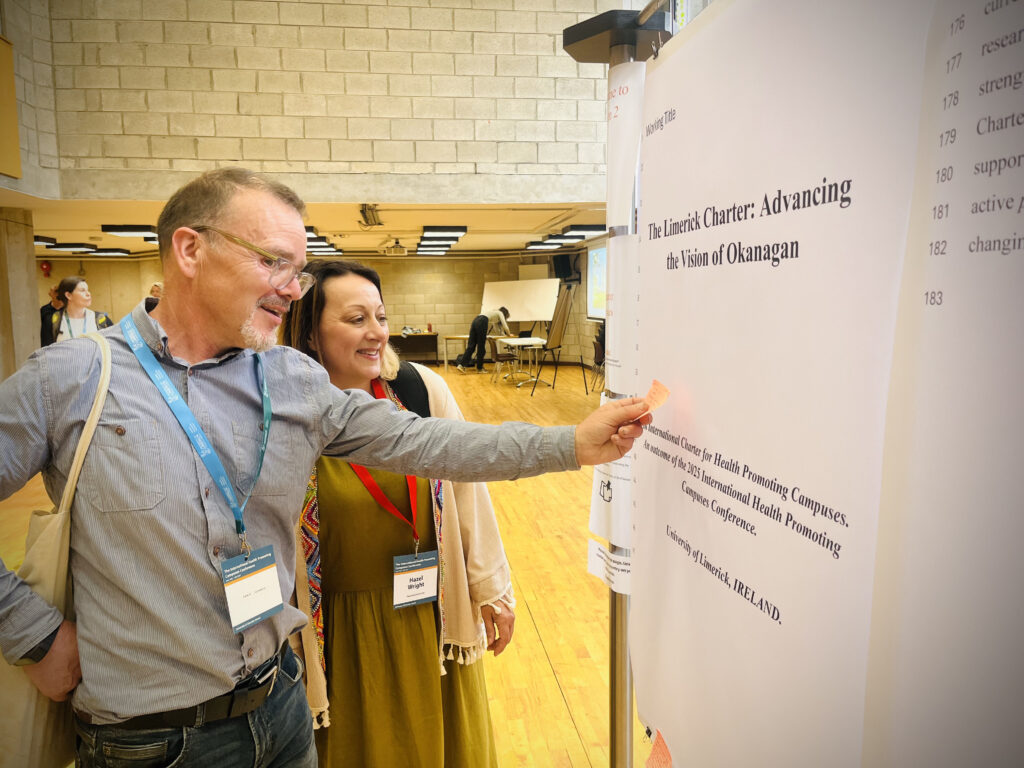
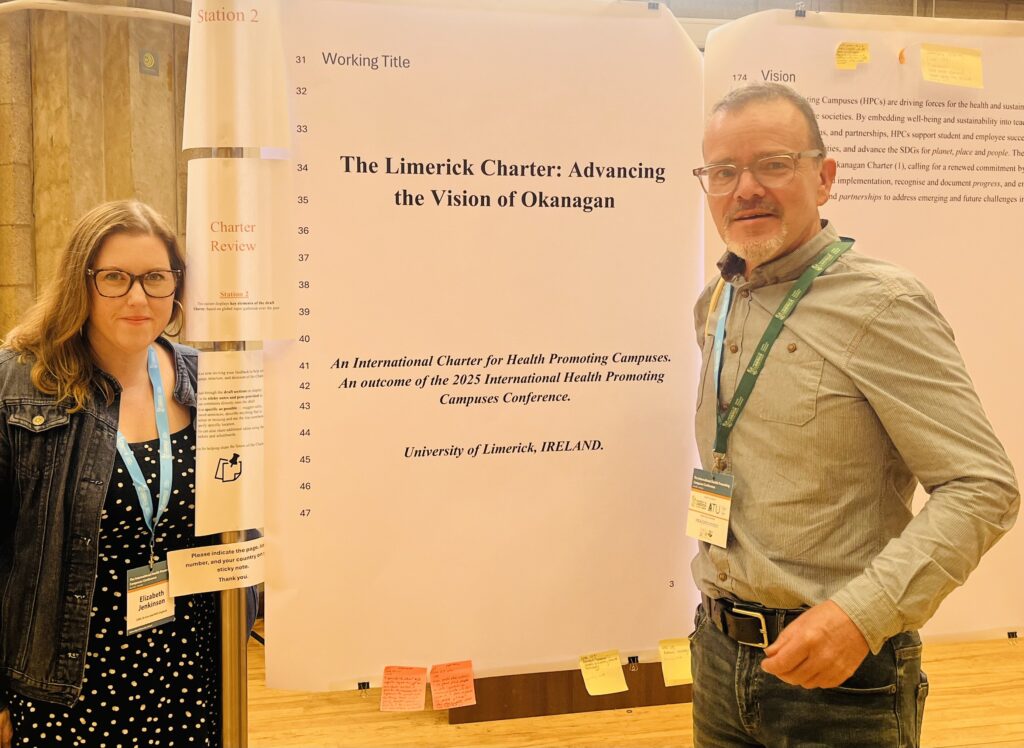
How can universities better embed health and wellbeing into everything they do – from teaching and research, to student experience and policy? That was the focus of the 2025 International Health Promoting Campuses (IHPC) Conference, hosted by the University of Limerick, where UWE Bristol helped shape a major new global framework.

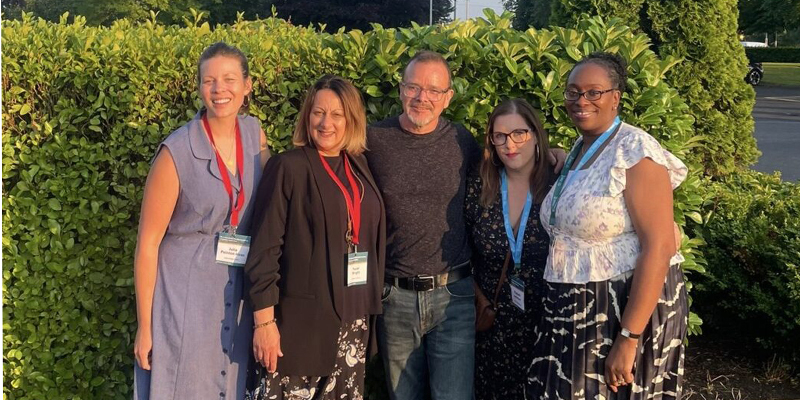
Associate Professor Dr Liz Jenkinson and Professor Mat Jones represented UWE and the UK Healthy Universities Network at the four-day conference in Ireland, which welcomed over 400 delegates from six continents. Participants included students, researchers, policy-makers, and global organisations such as WHO, UNESCO, and the International Union for Health Promotion and Education.

The result? A newly launched Limerick Framework for Action – a shared roadmap for higher education institutions to take action on health, wellbeing, and sustainability across campus life.

“UWE Bristol is recognised as an international leader in promoting health and wellbeing – thanks to our strong foundations in local and global collaboration. The conference was a vital opportunity to combine forces with peers around the world. The Limerick Framework offers a powerful international focus to help us scale up action and amplify future impact.”

Dr Liz Jenkinson

The Framework was co-developed with representatives from universities across the UK, Canada, Europe, Asia and Australia, and endorsed at the conference’s closing ceremony as a future-facing guide to institutional transformation.

UWE’s Contribution

As long-standing members of the UK Healthy Universities Network, Dr Jenkinson and Prof Jones shared insights from UWE’s Healthy University Group, which supports cross-university efforts on staff and student wellbeing. They collaborated with colleagues from Teesside, King’s College London, and UCLan to ensure the UK’s leadership and learning helped shape the international agenda.

“This isn’t just academic discussion – delegates from around the world are sharing actionable strategies to build healthier campus communities and environments. We’re proud of what was accomplished here in Limerick.”

Dr Matt Dolf, Co-Chair of the IHPC Network and Director of Wellbeing Strategy at the University of British Columbia

SmartSocks® land at UWE Bristol to support innovative ageing research

Posted on

The first delivery of SmartSocks®DISCOVERY – sensor-embedded wearable socks developed by Bristol health-tech company Milbotix – has arrived at UWE Bristol. These smart wearables will play a key role in the university’s ageing and assistive tech research, as part of the SAW-Health project led by the Bristol Robotics Laboratory (BRL).

Funded by the Medical Research Council, the two-year SAW-Health project is exploring how socially assistive robotic systems can support older adults’ physical, emotional and social wellbeing. UWE is collaborating with AgeUK and the ExtraCare Charitable Trust on the project, which centres around developing a next-generation robotic walking aid that promotes independence and meaningful social interaction in later life.

The SmartSocks® – which look and feel like ordinary socks – are anything but. Embedded with discreet sensors, they monitor skin temperature, heart rate, movement and more, providing real-time insights that will help researchers better understand daily routines, emotional states, and mobility patterns. Because they’re non-invasive and machine-washable, they’re especially valuable for people who may struggle with or reject bulkier devices like wristbands or chest straps.

“Receiving the first SmartSocks® from Milbotix marks an exciting milestone for our research at Bristol Robotics Laboratory. These innovative sensors will allow us to monitor gait patterns in real time, which is vital for progressing our work on walking assistive technologies. By integrating SmartSocks® with our smart walkers and exoskeleton systems, we can start to develop responsive solutions that actively support mobility and independence in older adults and users with neurological impairments.”

Dr Carlos Cifuentes, Associate Professor in Human-Robot Interaction at UWE Bristol.

The SAW-Health team are taking a co-design approach throughout – involving older adults, carers and healthcare professionals in shaping the design of the robotic walker and testing it in real-world settings. The physiological and movement data collected by the SmartSocks® will feed directly into this work, helping the team evaluate user interaction and real-world use.

The socks arrived as a full research-ready kit – including multiple pairs, swappable sensors, a charger and access to a cloud-based data dashboard – and are now ready to be put to work.

“It’s an honour to see SmartSocks®DISCOVERY supporting such vital research. This handover represents an exciting milestone for Milbotix and aligns closely with our mission to improve the lives of older adults through intelligent, wearable technology. We’re proud to support UWE’s innovative and impactful work.”

Dr Zeke Steer, CEO and Founder of Milbotix.

SmartSocks®DISCOVERY is now available to other researchers and students through milbotix.com/shop, including a low-cost starter kit suitable for student and postgraduate projects.

“Touching Time”: UWE Bristol co-hosts international symposium on embodied time and experience

Posted on

What might it mean for time to be felt or embodied? How can the study of time help us understand complex lived experiences such as ageing, illness, incarceration or displacement?

These were just some of the questions explored at Touching Time: Duration, Bodies, Politics – a two-day international symposium co-organised by Dr Jessie Stanier, Lecturer in Philosophy at UWE Bristol, with the British Society for Phenomenology (BSP) and partners in the Netherlands. Held on 23–24 June 2025, the event welcomed nearly 70 in-person and online participants.

The symposium brought together interdisciplinary thinkers to explore how time is experienced, shaped, disrupted, or resisted – through bodies, relationships, institutions, and creative practice.

Event highlights

  • An opening exercise using a strand of red yarn to explore tension, connection, and collective time
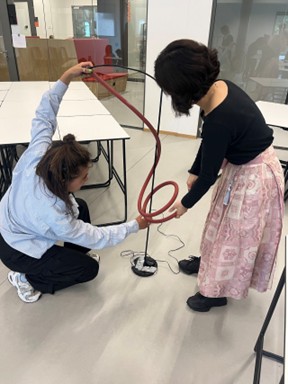
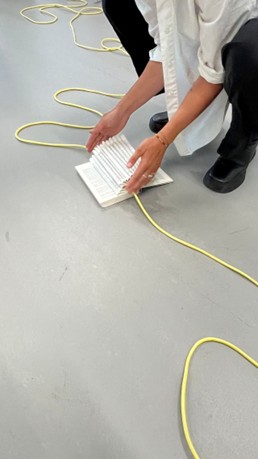
  • Two interactive workshops featuring kinetic sculpture and creative writing
  • A closing dance performance, developed and performed during the symposium
  • Panels and keynotes covering topics such as: affect and ageing across the life course; colonialism, memory and displacement; chrononormativity and care; psychoanalysis, pedagogy, and politics of time.
Above: Participants explore embodied time and interconnection through a kinetic sculpture workshop at the Touching Time symposium.

Touching Time: Duration, Bodies, Politics

The event drew together 2 keynote speakers – Prof Lisa Baraitser (Birkbeck, University of London) and Dr David Ventura (Newcastle University) – and 10 panel speakers, bridging philosophical phenomenology with other intellectual traditions including aesthetics, psychosocial theory, anthropology, queer theory, affect studies, and literary analysis.

Above: A creative writing workshop invites participants to engage with time physically, using unconventional materials and movement.

About the symposium

The Touching Time symposium is part of the BSP’s International Symposium series, an annual event spotlighting innovative phenomenological research around the world. Jessie Stanier has chaired these events since 2022.

This year’s event was co-sponsored by the Department of Culture Studies at Tilburg University and the Netherlands Institute for Cultural Analysis, making participation free for all delegates.

It also builds on a growing relationship between UWE Bristol and the BSP. UWE hosted the BSP’s annual conference on Frenchay Campus last year – part of wider efforts to foster international dialogue and raise the profile of UWE’s philosophy research.

UKRI funding secured to co-design an inclusive roadmap for future high performance computing infrastructure

Posted on

The UK Research and Innovation’s National Federated Compute Services (NFCS) NetworkPlus Flexible Fund recently awarded funding to Dr Tariq Umar, Senior Lecturer in Construction and Project Management, at the School of Architecture and Environment, UWE Bristol, to lead a major new project. Titled “Enhancing HPC adoption through user-centred design: A roadmap for inclusive innovation in environment, health, and the built environment”, the initiative will help shape a more accessible, trusted, and user-friendly future for the UK’s high-performance computing (HPC) infrastructure.

HPC systems are essential for tackling data-intensive challenges in fields such as climate science, healthcare analytics, and digital construction. However, professionals in these sectors often face barriers to adoption – including complex access processes, limited awareness, and usability issues. This project addresses these challenges by exploring the full user journey, from applying for HPC access to working with technical systems and evaluating collaboration models.

Dr Umar is joined by co-investigators, Dr Kwok Chun and Professor Jim Smith, also from UWE Bristol’s College of Arts, Technology and Environment. The interdisciplinary team brings expertise in environmental science, interactive artificial intelligence, and sustainable construction. Together, they will lead a series of workshops, surveys, focus groups, and training events with stakeholders across the built environment, environmental sciences, and NHS sectors.

Working in partnership with Imperial College London, National Taiwan University, the Vatican Observatory, Coventry University, Istanbul Technical University, and Arcadis Consulting UK, the project will also explore issues of trust, governance, and international interoperability.

The project’s outcomes will include a co-designed roadmap, actionable recommendations, and user personas to inform a more inclusive and future-ready national HPC federation, aligning with UKRI’s goals for sustainable digital research infrastructure.

The project runs from July 2025 to June 2026 and is part of UWE Bristol’s ongoing commitment to inclusive, interdisciplinary innovation in science and technology.

If you are from the built environment, environmental sciences, and health or NHS sectors and want to know more about project, or would like to get involved in the project workshops, focus group discussion or training activities, then please get in touch with project lead, Dr Tariq Umar (tariq.umar@uwe.ac.uk).

Celebrating connection, collaboration and creativity at the first College of Business and Law Research Conference 

Posted on

On 18 June, colleagues from across the College of Business and Law came together for the first annual CBL Research Conference – an energising day dedicated to showcasing the breadth and depth of research taking place across the college and with partner institutions. 

Themed around People, Work and Organisations, the programme brought together academics, early career researchers and doctoral candidates exploring everything from green jobs and AI-driven place branding to maternity leave during Covid-19 and police interviews with victims of rape. The day offered a vibrant mix of theory, practice, personal storytelling and policy insight. 

Held at Frenchay Campus, the conference was the result of months of work by a passionate organising committee: Dr Jenna Pandeli, Dr Tinkuma Edafioghor, Dr Hugh Waters, Professor Richard Bolden, Dr Pawel Capik, Briony Whitaker and Sophie Marsh. Their aim? To create space for connection and joy in research, and to spotlight the creative, impactful work happening across the college. 

Highlights from the day 

  • Keynote speaker Professor Hazel Conley opened the conference with a powerful and thought-provoking talk reflecting on 25 years of researching Equality, Diversity and Inclusion in higher education. Drawing on historical and contemporary data, Hazel made a compelling case for why EDI research matters more than ever – despite, and perhaps because of, ongoing backlash and political resistance. 
  • Conference sessions spanned diverse topics, including: 
  • Organisational resilience and social capital in SMEs 
  • The lived experiences of maternity leave in extreme contexts 
  • Volunteering in crisis settings, sustainability at music festivals, and informal career barriers in male-dominated industries 
  • Leadership for systems change and healthcare improvement across global contexts 
  • Engagement was a key thread, with in-person and online presentations from UWE researchers and partner institutions including Taylors University (Malaysia) and Villa College (Maldives). Delegates were encouraged to vote throughout the day to recognise exceptional contributions across three categories. 

Celebrating research excellence 

Congratulations to the recipients of this year’s inaugural conference awards: 

  • Best Overall Paper – Dr Mahwish Khan 
  • Greatest Potential Impact – Sophie Marsh and Pujan Ghosh 
  • Best Early Career Researcher (ECR) – Briony Whitaker 

These awards celebrated not only academic rigour but also the potential to make meaningful change—whether in policy, practice or community. 

A moment to reflect and reconnect 

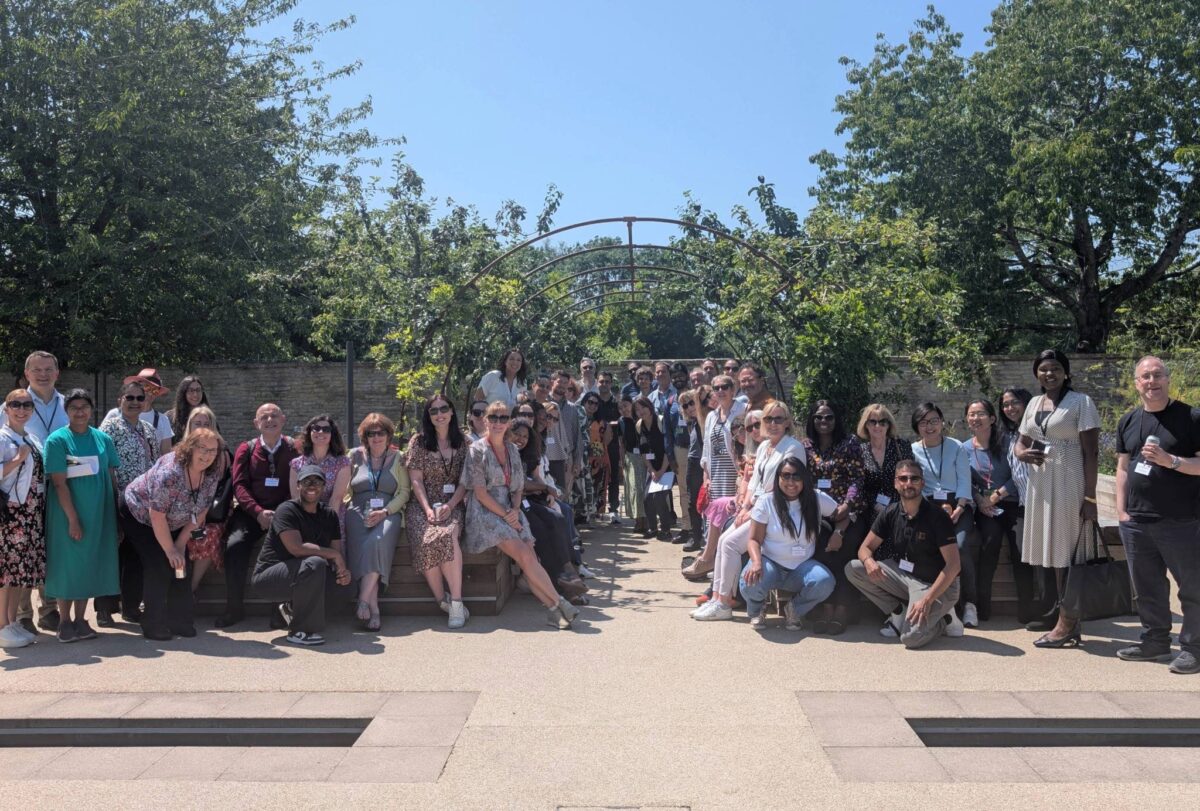
From the opening coffee to the sun-soaked lunch in the walled garden, the conference buzzed with energy and exchange. The day was not only a showcase of research, but a reminder of what academic communities can be when we make time to come together: collaborative, curious and full of possibility. 

We’re already looking forward to seeing how this new annual tradition evolves – and to the ideas, partnerships and projects it helps spark along the way. 

Let’s Talk Health and Care Podcast: Spotlighting People, Research and Real Impact

Posted on

At UWE Bristol, our Let’s Talk Health and Care podcast series is growing into a powerful platform for conversation, connection and collaboration across the health and care sectors.

Led by Professor Marc Griffiths and Peter Brindle from the College of Health, Science and Society, each episode opens up a different topic with honesty, insight, and lived experience – showcasing brilliant people, breakthrough research and thoughtful reflection on real-world challenges.

We’re shining a spotlight on two episodes that deserve to be heard far and wide.

Episode 7: Preventing Child Sexual Abuse – A Public Health Approach

Featuring: Professor Kieran McCartan, Professor of Criminology at UWE Bristol

In what Marc and Peter describe as their most impactful episode to date, they sit down with Professor Kieran McCartan to discuss the urgent and often uncomfortable topic of child sexual abuse – and how we can apply public health strategies to prevent it.

The conversation covers prevalence, community-level action, and why talking about this issue openly is essential to creating safer environments for all children.

Listen now on Spotify, Apple Podcasts, or SoundCloud

Trigger warning: This episode includes sensitive discussions around child sexual abuse. For support or further information, visit NSPCC.org.uk.

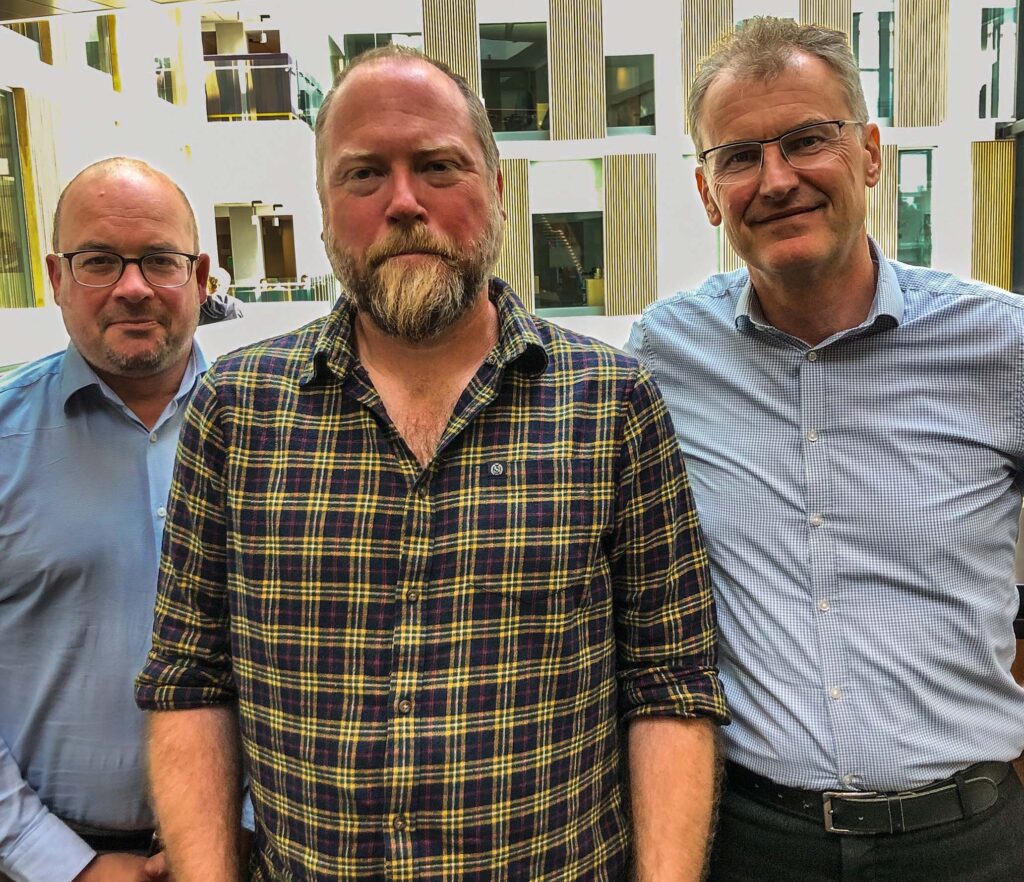
Professor Marc Griffiths, Peter Brindle and Professor Kieran McCartan standing next to one another

Coming Soon: Episode 8 – People, Prosthetics and Possibility

The next episode, out later this week, explores what happens when patient experience, engineering innovation, and collaborative problem-solving come together.

Featuring voices from across healthcare, prosthetics and mechatronics, the conversation highlights the power of a user-centred approach in solving real challenges in rehabilitation. This is a conversation that speaks directly to ICA, UWE’s values, and the future of integrated care.

Available soon on Spotify, Apple Podcasts and SoundCloud

New book by UWE’s Dr Stephen Hunt explores land, liberation, and ecology

Posted on

We’re excited to share that We Must Begin with the Land – a new book by Dr Stephen E. Hunt, Senior Learning Developer (Business and Law) at UWE Bristol – has just been published by Zer0 Books. The title has been added to the UWE Library catalogue and may become a valuable resource for students and staff across a range of programmes.

In this timely and thought-provoking publication, Stephen examines how we grow, share and eat food – not just as a practical issue, but as a political, ecological, and philosophical one.

About the author

Stephen is a writer, ecological activist and radical historian. He holds a PhD in English Literature (Romantic Ecology) from UWE Bristol and continues to contribute to the field of environmental humanities. His previous works include The Revolutionary Urbanism of Street Farm and a co-edited Bloomsbury collection on ecological solidarity and the Kurdish freedom movement.

A social ecology of food and farming

Framed through the anti-colonial lens of social ecology, We Must Begin with the Land explores how communities – from Wiltshire to Rojava – are reclaiming the way we think about agriculture and abundance.

Through real-world case studies and radical theory, Stephen touches on:

  • Food sovereignty movements like La Via Campesina
  • Indigenous knowledge and ecological traditions
  • The promise of hemp, fungi, and seaweed in sustainable material science
  • Refugee-led urban growing communities
  • The surprising rise of Japanese Shumei cultivation in rural England

As described by reviewer Dr Clémence Scalbert Yücel (University of Exeter), “This is a rich and nourishing work written by someone passionate about good food – good for the people, for the planet, for society.”

A must-read for changemakers

This book offers fresh insight for those interested in agroecology, ecological democracy, and sustainable futures. “A must-read for social movements struggling for emancipatory agroecologies radical ecological democracy, and food justice,” says Professor Michel Pimbert (Coventry University).

Explore the book

A freight future that delivers for everyone

Posted on

“I want a freight future that delivers for everyone, and is economically, environmentally and socially sustainable.”

Dr Daniela Paddeu, Associate Professor of Sustainable Freight Futures  

Working closely with academic, government and industry partners and stakeholders, my research explores how we can co-design a more innovative, sustainable freight future. A freight future that’s responsive to the needs and expectations of all partners and stakeholders.   

As the freight specialist for the Centre for Transport and Society (CTS) at UWE Bristol, I provide a strong link between research and practice. For example, I work on projects with strong policy impact, especially related to strategic thinking on decarbonisation and innovation plans for the future of transport. I’m looking at the environmental impacts of freight, as well as its social and economic impacts. I see things from both an industry and stakeholder perspective, as well as a public one. That’s important to me. It’s important to all our futures too.   

Balancing efficiency and sustainability

I work to better understand how we move freight, especially in busy urban areas. Because the way we buy things has changed a lot. We buy things and want them to be delivered to our doorstep the same day or the next day. That’s very convenient for us but what does it mean in terms of environmental and social impact? What is the bigger cost of this? Through my work, I want to better understand how to design appropriate policies and plans that address freight issues from both an efficiency and sustainability perspective.   

Another big question for me is how we build freight systems that are resilient to uncertainty. In the last few years, we have had very disruptive events. I want to try to help the industry and its many stakeholders to make better decisions today but also take into consideration the uncertainties we might be facing in the next 10 or 15 years.  

The freight future we want – and need   

What does the future of freight look like? It’s a good question but, in many ways, the wrong question. For me, it’s more about what is the future we want? Where do we want to get to? We all want a future that is more sustainable, more inclusive, more economically prosperous for everyone. That’s where I’m heading. That’s where I want my research work to take this very important industry.   


Contribution to the UN 2030 sustainable development goals

UWE Bristol is proud to align our research to the UN sustainable development goals. The above research aligns with the following goals:


Giving nurses and midwives the practical genomics knowledge they need to positively impact patient care

Posted on

Professor Aniko Varadi, Director for the Centre for Research in Biosciences

I lead the Generation Genome education team here at UWE Bristol. But my interest in genomics education goes back to 2012, to the launch of the 100,000 Genomes Project.   

The 100,000 Genomes Project was an English initiative to sequence and study the role our genes play in health and disease. Even now, even when you see how far the science has come, there is still untapped potential in genomics.

For example, if you know the changes in the DNA sequence in a cancer, say breast cancer, you can identify its subtype. You can then look at how that subtype responds to different drugs. And, providing the drugs exist, you can select the best possible drug for an individual patient.  

Mainstreaming genomics  

But genomics isn’t just about identifying treatment options; you can predict what’s going to happen in a family too. If one family member has, for example, colorectal cancer, and it turns out to be an inherited form, then we can do surveillance for the family members who have the same DNA variants.

But all this depends on our NHS professionals having the genomics knowledge in the first place. At the moment, we have a knowledge gap; our nurses and midwives don’t have genomics training. If they have training, when they gain genomics knowledge, they can use it to make a real difference to patients.  

This is what excites us. Upskilling our health professionals with the genomic know-how they need to positively impact patient health.

Workforce training  for our healthcare professionals 

So, in collaboration with NHS England, Macmillan Cancer Support, the British Heart Foundation (BHF), Genomics England and the South West Genomic Laboratory Hub, we have created a competency framework for healthcare practitioners.  

Based on this competency framework, we have developed a totally new education programme. It’s the only fully validated PgCert in Genomics for nurses, midwifes and allied health professionals in England – and UWE Bristol is currently the only HE provider of genomic CPD aimed specifically for nurses and fully funded by NHS England. 

Better access to genomics for more patients  

For all of us in the team, it’s about practically improving the knowledge of frontline NHS professionals. Helping them so they help more patients. As a result of training, many more patients are being tested. I’ll give you a specific example. Lynch Syndrome (LS) is a condition that can run in families and can increase the risk of developing some cancers. So, it’s an inherited type. In one region one of our course participants led an LS clinic. In the past in that region 35-40% patients with LS were missed but with this new clinic in place all those eligible for LS genomic testing were referred for testing. So, we know that what we are doing has a huge impact. For patients, for services, for our nurses. 

Changing lives in many ways  

We know we have changed lives. And, at a time when the NHS is so strapped for cash, if you can provide a better test quicker, then surely that’s only a good thing. For everyone.  

So far, we’ve educated over 200 nurses, midwives, allied healthcare professionals, physios, even some GPs. My ambition is to increase that number tenfold. That’s the ambition – and we always have very big ambitions here. 


Contribution to the UN 2030 sustainable development goals

UWE Bristol is proud to align our research to the UN sustainable development goals. The above research aligns with the following goals: