With autumn approaching, it’s the ideal time to invest in professional growth – for yourself or your team – and build valuable new skills. At UWE Bristol, we’re pleased to be delivering a range of programmes and courses, many of which are heavily subsidised and open to both independent learners and employees of small and medium-sized enterprises (SMEs).
Whether you’re looking to upskill, explore a new area, or support your team’s development, there’s something here for you. Take a look below to find the programme or course that fits your goals and start planning your next step.
A 10-week, highly-subsidised programme that helps SMEs build essential leadership skills to strengthen their teams and support sustainable growth. Starts 19 September 2025.
Coaching and Mentoring Courses
A discount for UWE Bristol Alumni is available for the Coaching and Mentoring courses listed below.
This ILM qualification aims to give you the skills and experience to develop your coaching and mentoring skills by practically completing sessions and critically reviewing these. Starts 29 September 2025.
This ILM qualification is ideal for senior leaders with significant responsibility for coaching and mentoring as part of their day-to-day role working with employees or colleagues. Starts 13 October 2025.
Skills Bootcamps
Our Skills Bootcamps are short, intensive cost effective training solutions lasting between 8-12 weeks, equipping individuals with industry-relevant skills to help you futureproof your business.
A 10-week, 90% funded high impact training programme for SMEs, designed to equip professionals with the digital expertise needed to drive innovation and efficiency in modern industry. Apply by 8September 2025.
A 10-week, 90% funded practical training experience designed to equip individuals with cutting-edge digital construction and manufacturing capabilities. Apply by 15 September 2025.
An 8-week, 90% funded programme designed to enhance project management skills including communication, leadership, teamwork, critical thinking and problem-solving abilities. Apply by 15 September 2025.
A 9-week, 90% funded programme equipping green tech entrepreneurs, founders and emerging leaders with the advanced leadership, strategy and sales capabilities needed to scale sustainability. Apply by 8 September 2025.
A 10-week, 90% funded programme designed to help creative professionals thrive in senior roles or freelance contracts, through gaining vital business skills including networking, pitching, and accessing funding. Apply by 8 September 2025.
A 10-week, highly-funded programme designed for professionals looking to deepen their understanding of urban biodiversity and apply innovative greening techniques to their work. Apply by 15 September 2025.
School of Engineering Professional Development Courses
This one-day programme will help you develop an understanding of how hydrogen fuel cells offer a zero-emission alternative to fossil fuels, making them a promising solution for reducing greenhouse gases and combating climate change. Takes place on 16 September 2025.
This three-day course will cover the fundamental aerodynamic theory of wind turbines, wind turbine control methods, and other relevant topics such as wind turbine noise, wind distribution and capacity factor. Starts 17 September 2025.
UWE Bristol is delighted to announce that we have won Training Provider of the Year at the Enginuity Awards 2025!
The Training Provider Skills Champion of the Year award recognises outstanding commitment to learning and skills development that supports sustainable engineering and manufacturing growth through partnerships between providers and employers.
Since 2017, UWE Bristol has supported over 1,000 Engineering and Built Environment apprentices, with achievement rates up to 100%. Our Women in Industry project addresses skills and diversity gaps by partnering with employers and STEM networks, boosting female applicants by 60% in a year.
We are so proud of our Apprenticeship programmes, and the opportunities they provide for increasing access and participation and addressing under-representation. This award reflects so much hard work and dedication from so many people, underpinned by the critical projects that UWE Bristol delivers such as the Women Like Me project.
Simon Flenley, Assistant Director of Research & External Engagement (Skills) at UWE Bristol
Continuing on from our success at the Enginuity Awards, we are also thrilled to have been shortlisted for University of the Year at the Multicultural Apprenticeship Awards.
The prestigious Multicultural Apprenticeship Awards aim to showcase the range of talent and hard work within multicultural communities that is made possible with the contribution and support of employers and learning providers.
As part of our commitment to diversifying participation, UWE Bristol recognises the importance of its apprenticeship offer to reach those communities and groups who do not typically access higher education.
We are committed to improving the opportunities for residents across our city, region, and beyond. Our outreach work aims to connect with all communities to improve the understanding of the offers that are available. In doing so, we are proud of our continued work with employers, who are at the heart of increasing social mobility with apprenticeship programmes. Our research activities and projects, such as those like Women Like Me, led by Dr. Laura Fogg-Rogers, address the inequalities faced by under-represented groups.
At Babbasa, we believe all young people regardless of background, deserve the chance to realise their professional ambitions. Through our partnership with UWE’s Centre for Apprenticeships, we’re bridging the gap between aspiration and opportunity by empowering employers with inclusive practices, uplifting young voices, and creating pathways to a fairer, more representative workforce.
Sangeetha Wynter, Head of Services at Babbasa
Whilst we acknowledge there is still a lot of work to be done in this area, this recognition is a fantastic opportunity to build on the work already being done in this area. We look forward to the Awards ceremony on 7 November.
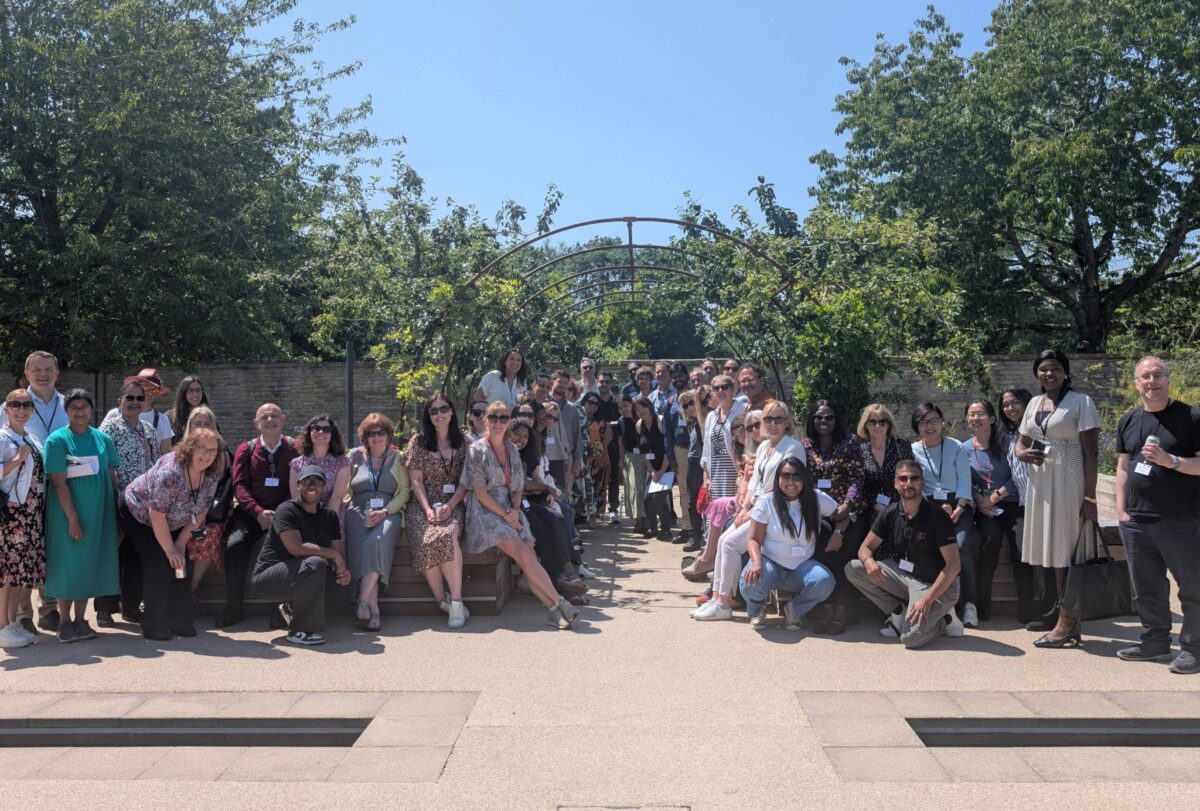
On 18 June, colleagues from across the College of Business and Law came together for the first annual CBL Research Conference – an energising day dedicated to showcasing the breadth and depth of research taking place across the college and with partner institutions.
Themed around People, Work and Organisations, the programme brought together academics, early career researchers and doctoral candidates exploring everything from green jobs and AI-driven place branding to maternity leave during Covid-19 and police interviews with victims of rape. The day offered a vibrant mix of theory, practice, personal storytelling and policy insight.
Held at Frenchay Campus, the conference was the result of months of work by a passionate organising committee: Dr Jenna Pandeli, Dr Tinkuma Edafioghor, Dr Hugh Waters, Professor Richard Bolden, Dr Pawel Capik, Briony Whitaker and Sophie Marsh. Their aim? To create space for connection and joy in research, and to spotlight the creative, impactful work happening across the college.
Highlights from the day
Keynote speaker Professor Hazel Conley opened the conference with a powerful and thought-provoking talk reflecting on 25 years of researching Equality, Diversity and Inclusion in higher education. Drawing on historical and contemporary data, Hazel made a compelling case for why EDI research matters more than ever – despite, and perhaps because of, ongoing backlash and political resistance.
Conference sessions spanned diverse topics, including:
Organisational resilience and social capital in SMEs
The lived experiences of maternity leave in extreme contexts
Volunteering in crisis settings, sustainability at music festivals, and informal career barriers in male-dominated industries
Leadership for systems change and healthcare improvement across global contexts
Engagement was a key thread, with in-person and online presentations from UWE researchers and partner institutions including Taylors University (Malaysia) and Villa College (Maldives). Delegates were encouraged to vote throughout the day to recognise exceptional contributions across three categories.
Celebrating research excellence
Congratulations to the recipients of this year’s inaugural conference awards:
Best Overall Paper – Dr Mahwish Khan
Greatest Potential Impact – Sophie MarshandPujan Ghosh
Best Early Career Researcher (ECR) – Briony Whitaker
These awards celebrated not only academic rigour but also the potential to make meaningful change—whether in policy, practice or community.
A moment to reflect and reconnect
From the opening coffee to the sun-soaked lunch in the walled garden, the conference buzzed with energy and exchange. The day was not only a showcase of research, but a reminder of what academic communities can be when we make time to come together: collaborative, curious and full of possibility.
We’re already looking forward to seeing how this new annual tradition evolves – and to the ideas, partnerships and projects it helps spark along the way.
We’re excited to launch a new series of Skills Bootcamps at UWE Bristol, designed to equip learners with specialist knowledge and hands-on experience that can be applied immediately. These highly subsidised, practical training programmes provide an accessible pathway for freelancers, SMEs, and employees in larger organisations to gain industry-relevant skills and make an immediate impact – whether advancing their careers or driving success within their workplaces.
Each bootcamp includes 1:1 career or industry coaching, ensuring learners can confidently apply their newly acquired expertise to current roles and future aspirations.
Our new Skills Bootcamps launching in 2025/26 are:
Launching in 2026: Visitor Economy – British Art Show 2027
“The Project Management Skills Bootcamp at UWE was a genuinely hands-on experience. The mix of short theory bursts with live simulations and team challenges meant I could transfer concepts like critical-path mapping, stakeholder analysis, and risk planning straight into my role at my workplace the very next day! Learning from seasoned project managers who have delivered large-scale, high-budget programmes added genuine credibility to the bootcamp.”
The Skills Bootcamps Programme is funded and managed by the West of England Mayoral Combined Authority, and delivered by The University of the West of England, Bristol.
We’re excited to share that We Must Begin with the Land – a new book by Dr Stephen E. Hunt, Senior Learning Developer (Business and Law) at UWE Bristol – has just been published by Zer0 Books. The title has been added to the UWE Library catalogue and may become a valuable resource for students and staff across a range of programmes.
In this timely and thought-provoking publication, Stephen examines how we grow, share and eat food – not just as a practical issue, but as a political, ecological, and philosophical one.
About the author
Stephen is a writer, ecological activist and radical historian. He holds a PhD in English Literature (Romantic Ecology) from UWE Bristol and continues to contribute to the field of environmental humanities. His previous works include The Revolutionary Urbanism of Street Farm and a co-edited Bloomsbury collection on ecological solidarity and the Kurdish freedom movement.
A social ecology of food and farming
Framed through the anti-colonial lens of social ecology, We Must Begin with the Land explores how communities – from Wiltshire to Rojava – are reclaiming the way we think about agriculture and abundance.
Through real-world case studies and radical theory, Stephen touches on:
Food sovereignty movements like La Via Campesina
Indigenous knowledge and ecological traditions
The promise of hemp, fungi, and seaweed in sustainable material science
Refugee-led urban growing communities
The surprising rise of Japanese Shumei cultivation in rural England
As described by reviewer Dr Clémence Scalbert Yücel (University of Exeter), “This is a rich and nourishing work written by someone passionate about good food – good for the people, for the planet, for society.”
A must-read for changemakers
This book offers fresh insight for those interested in agroecology, ecological democracy, and sustainable futures. “A must-read for social movements struggling for emancipatory agroecologies radical ecological democracy, and food justice,” says Professor Michel Pimbert (Coventry University).
Abdulrazaq is a Software Engineer as part of our Knowledge Transfer Partnership (KTP) with WASE and UWE Bristol. A KTP is a UK-wide, 3-way partnership between a business, a university and talented graduate, and aims to help businesses improve competitiveness and productivity, whilst also boosting the career prospects of the graduate.
WASE and the College of Arts, Technology and Environment (CATE) at UWE Bristol began their KTP together in April 2025. The KTP will create a machine learning-based soft sensing platform. This platform will be integrated within WASE’s Electro-Methanogenesis Reactor (EMR) to remotely optimise system performance. The system will help expand EMR technology, allowing customers to treat wastewater on-site while generating energy, reducing carbon emissions, and producing cleaner water and nutrients for use as fertilizers.
The project aim is to develop game-changing improvements to the EMR technology by enhancing the system’s monitoring and adaptability. This will ensure minimal downtime and maximum value from the waste. The improvements will involve optimizing WASE’s industrial-scale system and improving predictive analytics in anaerobic digestion (AD). We will use feedback from microbial electrolysis cell (MEC) modules to enhance sensor accuracy.
The KTP team caught up with Abdulrazaq to hear about their experience of the KTP so far:
What attracted you to the position?
I’m drawn to the role for several reasons. Primarily, it’s the excitement around the project’s potential — what we can achieve and the path to getting there. I enjoy challenges and solving problems, and this feels like the perfect project for someone like me. I’m especially excited about helping position WASE at the forefront of innovation in the anaerobic digestion (AD) sector through the application of AI and operational automation.
Another reason is the role’s position at the intersection of academia and industry. Having previously worked in academia, I’ve been considering a transition into the industry. This opportunity allows me to bridge both worlds. Finally, the sustainability aspect is very important to me. I’ve worked on a project that was somewhat related to sustainability, and being part of an initiative that contributes to a healthier climate is truly rewarding.
What are you most looking forward to?
I’m most looking forward to realising the project’s objectives. I say “realising” because I genuinely believe they’re achievable, even though the journey might be challenging. Reaching those goals will be a testament to the work, support, and growth that come along the way. It will also reflect the level WASE will have reached — and I’m excited to be a key contributor to that progress.
How is the partnership between UWE Bristol and the company working?
It’s only my third week so far, but the partnership has been fantastic. Everyone at both the company and the university has been incredibly supportive and engaged, which is great because it shows that everyone is equally invested in the project. One thing that stands out to me is how they’ve managed to involve the right people — experts who understand exactly what we need to do. That alignment is crucial to the project’s success, and I think they’ve nailed it.
What are the major benefits/support available from UWE Bristol?
The major sources of support from UWE have been the academic team and the KTP team. The KTP team has been actively involved from the start, guiding me through key steps and helping me understand the important elements of the partnership. The academic team has also been very supportive and clearly committed to mentoring and guiding me throughout the project.
What do you enjoy most about your job?
Although it’s only my third week, it already feels like an environment where I’ll get to learn a lot — especially about anaerobic digestion, a field I hadn’t worked in before. The learning curve is steep, but that only makes it more exciting. The people here have also been amazing. They could probably list “Family” as one of their core values, because that’s exactly how they operate — with a strong sense of unity and belonging. That culture really helps drive a shared sense of purpose.
The Knowledge Transfer Partnership (KTP) between University of the West of England (UWE), Obafemi Awolowo University (OAU), the Taro Agric Farm (TAF) was established to harness data-enabled innovations (DEI) for the commercial poultry industry in Nigeria. The project aimed to enhance chicken production efficiency and optimise overall business operations through the strategic application of data-driven technologies and academic expertise. Kamran Munir (Professor of Data Science) led the collaborative relationship with the Nigerian partners and the project from UWE. Saidu Oseni (Professor of Animal Sciences) led the project from OAU.
The Company
Taro Agric Farm (TAF), is a broiler chicken production company based in Southwest Nigeria. With over a decade of experience, TAF specialises in commercial broiler farming, operating concurrent batches of 2,000 birds per cycle. The company has multiple production centres, including its main base in Ile-Ife, Osun State, and outgrower units in Ilesa (Osun State) and Ibadan (Oyo State). Beyond production, TAF is actively engaged in consulting services, capacity building, and training for poultry farmers, offering expertise across the entire broiler chicken value chain—including input supply, production, processing, distribution, and marketing. A defining characteristic of TAF is its forward-thinking approach to poultry farming. Through the African Agriculture Knowledge Transfer Partnership (AAKTP), TAF successfully integrated smart technologies such as IoT-enabled sensors, a data storage for real-time data management, and predictive analytics to enhance decision-making in poultry production. This has positioned TAF as one of the leaders in leveraging data-driven solutions for sustainable poultry farming in Nigeria.
The Challenge
The Knowledge Transfer Partnership (KTP) between Taro Agric Farm (TAF), Obafemi Awolowo University (OAU), and the University of the West of England (UWE) was initiated to apply data-enabled innovations (DEI) to commercial chicken production in Nigeria and to improve and optimise business operations. A key focus was developing a strategy for embedding DEI to create sustainable broiler chicken operations over the long term. The poultry industry in Nigeria faces multiple constraints, including high mortality rates, inefficient farm management practices, limited use of data in decision-making, and poor environmental conditions affecting broiler chicken welfare and productivity. In the past, TAF like many others in the industry, relied on conventional methods of managing poultry production, which lacked the real-time monitoring and predictive capabilities needed to optimise productivity and farm environment. Farmers and farm managers had to rely on manual data collection and experience-based intuition, making it difficult to identify early warning signs of health risks or performance inefficiencies. Without data-driven insights, farm operations were reactive rather than proactive, often leading to delayed interventions and losses. In addition, one of the biggest challenges TAF faced in the past was high mortality and morbidity rates in broiler production. Various environmental factors, such as poor ventilation, excessive heat, high humidity, and exposure to noxious gases, particularly ammonia, significantly affected bird health. Without a robust system to monitor and control these environmental conditions, broiler chickens were at risk of disease outbreaks, respiratory problems, and stress, which ultimately led to economic losses.
Tackling these constraints required innovation in both poultry management and business practices to enhance the viability and profitability of operations. The KTP project activities included setting up an IoT platform, configuring sensor nodes, and establishing a database to record and store data on various parameters such as chicken welfare, input supplies, production, processing, distribution, and marketing. The project also involved the development of dashboards for monitoring key performance indicators (KPIs), the use of predictive analytics, and conducting performance comparisons across production batches. Additional activities included stakeholder engagement through workshops to build and embed capacity. The key accomplishments of KTP project include the successful setup, testing, and deployment of a IoT platform in a broiler chicken unit in southwest Nigeria, where key variables related to chicken welfare and performance were captured and monitored. Company data was archived in a database, and a dashboard was developed to track temperature, relative humidity, air quality and noxious gas parameters. An end of project Stakeholders’ Engagement Workshop aiming towards widening participation and sustainability with approximately ~100 participants, including poultry farmers and industry professionals, was also successfully conducted.
“This project equipped TAF staff with advanced digital farming skills, enhanced OAU’s research capacity and curriculum, and strengthened international collaboration—demonstrating how innovation and partnership can drive sustainable agricultural development.”
Prof. Kamran Munir (Professor of Data Science, University of the West of England, UWE Bristol)
Benefits and Changes
The Knowledge Transfer Partnership (KTP) between Taro Agric Farm (TAF), Obafemi Awolowo University (OAU), and the University of the West of England (UWE) has led to significant improvements in broiler chicken production, farm efficiency, and data-driven decision-making at TAF. As a result of the KTP, Taro Agric Farm and its staff have acquired several new knowledge areas and capabilities. These include (but not limited to):
The staff gained expertise in deploying sensor nodes to monitor key health and welfare indicators of broiler chickens. This application of digital technology is directly contributing to improved productivity and profit margins by enabling real-time data collection and analysis of poultry welfare to guide operations at the unit.
TAF implemented a smart farm infrastructure, incorporating WiFi, inverters, and clusters of sensor nodes, along with smart cameras to monitor the comfort, welfare, and performance of chickens. This integration allows for continuous, remote monitoring, improving operational control and decision-making.
The business acquired the capability to track, manage, and analyse its data assets—spanning performance, ambient conditions, costs, and returns—via a MySQL database. This centralised data storage allows for enhanced data organisation, retrieval, and long-term analysis.
A key capability gained was the deployment of a real-time dashboard that tracks health and welfare indicators of broiler chickens. This dashboard offers a user-friendly interface for staff to monitor key variables and make informed decisions regarding poultry welfare and management.
The staff were trained to track and monitor key performance indicators (KPIs) across production batches and historical data. This has allowed TAF to benchmark performance, identify trends, and adjust improve the consistency and quality of production, while also enabling more accurate forecasting and strategic planning
TAF’s adoption of data-enabled innovations (DEI) and IoT technologies positioned it as a leader in digital poultry farming in Nigeria. Sales turnover is expected to increase by 30%-40% within three years, due to improved efficiency and scalability. Profit before tax is projected to grow by 20%, within the next three years. Increased demand for TAF’s consulting services, as other poultry farms seek to implement similar digital solutions.
Obafemi Awolowo University (OAU) updated its Animal Sciences curriculum to incorporate digital technologies. The project also strengthened ties between OAU and UWE, fostering international collaboration in poultry technology research. The project research outcomes are being published as open access where possible which cover the use of digital technologies and data-enabled innovations for the enhancement of the welfare and performance of broiler chickens – as a case study in Nigeria.
“The KTP was an excellent opportunity to blend academic research with industry application. At OAU, we have always been committed to advancing precision livestock farming, and this project allowed us to practically demonstrate the power of digital transformation in poultry production.”
Prof. Saidu Oseni (Professor of Animal Sciences, Obafemi Awolowo University, OAU, Nigeria)
Key Facts
To best of our knowledge, TAF is the first poultry farm in Nigeria to integrate IoT and digital technologies into broiler production to this scale.
IoT-enabled sensors deployed to monitor temperature, humidity, air quality, and toxic gases in real-time.
A database established for real-time data collection and performance tracking
Decision Support Dashboard developed, allowing farmers to make data-driven decisions
Sales turnover expected to grow by 30 – 40%within three years
Profit before tax projected to increase by 20%
100+ poultry farmers and industry professionals trained on smart poultry farming
19 undergraduate & 2 MSc projects initiated on digital poultry farming at OAU
Presented findings at the Nigerian Poultry Show (NPS) 2024, reinforcing industry leadership
OAU integrated digital technologies into its Animal Sciences curriculum, influencing future research.
Find out more about the Knowledge Transfer Partnership in the Case Study below.
This partnership received financial support from the Knowledge Transfer Partnerships programme (KTP). KTP aims to help businesses to improve their competitiveness and productivity through the better use of knowledge, technology and skills that reside within the UK knowledge base. This successful Knowledge Transfer Partnership project, funded by UK Research and Innovation through Innovate UK, is part of the government’s Industrial Strategy.
“There needs to be a societal shift in the way mothers are viewed and supported,” says Dr Jenna Pandeli. “These issues didn’t start with the pandemic- the pandemic simply intensified them.”
Isolated, overwhelmed and unheard
Maternity leave is often misrepresented as a time of rest. In reality, it is labour – unpaid, unacknowledged and uncompensated labour. During the COVID-19 pandemic, this invisible labour intensified, leaving new mothers isolated, overwhelmed and unheard.
Dr Jenna Pandeli (Associate Professor in Organisation Studies), Dr Chloe Tarrabain (Senior Lecturer, Organisation Studies) and Dr Mahwish Khan (Associate Director, Organisation Studies) at UWE Bristol- all of whom became mothers during the pandemic – decided to turn their personal journeys into a powerful research project: The invisible labour of new mothers on maternity leave in a global pandemic. Shining a light on the unseen burdens of motherhood, this research from UWE Bristol challenges organisations, policymakers and society to do better for new mothers and working parents.
The study: A personal and collective lens
A personal project from the beginning, the team combined auto-ethnographic accounts of their own experiences with interviews from 13 women who had babies in 2020. What they found was striking: the pandemic did not create these challenges, it magnified them. Exposing the structural inequalities that have long shaped maternity leave.
The concept of “invisible work,” first coined by sociologist Arlene Kaplan Daniels, became central. Invisible work refers to the hidden, unpaid labour that sustains families and communities but is rarely recognised. For new mothers during the pandemic, this work fell into three interconnected areas:
Emotional and mental work: Coping with grief over “stolen moments” missed family visits, cancelled celebrations and absent support networks – while carrying the mental load of constant planning and worry about health and safety.
Physical work and self-advocacy: With professional and social support networks severed, mothers shouldered all physical labour alone. They also had to fight to be heard in healthcare settings, often facing dismissal or ‘gaslighting’ when raising concerns.
Managing societal expectations: Isolation amplified the pressure to be the ‘perfect mother.’ Conflicting messages about breastfeeding, screen time and returning to work left many women feeling guilt, shame and burnout.
Knowledge exchange in action
Findings from the project were shared widely, so far they have featured in:
A dedicated conference stream at the 17th Equality, Diversity and Inclusion Conference in Seville, chaired by UWE Bristol academics; a book chapter, Navigating Vulnerability and Resilience, documenting pregnant women’s experiences during COVID-19; and a podcast episode in UWE Bristol’s Future Impact series, amplifying the voices of mothers and connecting research to practice.
This visibility has led to invitations into international networks, including the Council for the Advancement of Career-Parental Care Integration, where UWE Bristol researchers collaborate with academics worldwide on motherhood and work.
Shifting the burden
The research makes one point clear: the responsibility for change should not fall on mothers alone. Instead, organisations, governments and society must act.
For organisations, employers must recognise that returning to work after maternity leave is not a simple reset. Tailored, flexible return-to-work plans, mental health support and mindful language are essential. Phrases like “enjoy your holiday” trivialise the reality of maternity leave and must be avoided.
In society, a broader cultural shift is needed to validate women’s experiences and confront systemic issues, particularly in healthcare where women’s concerns are too often dismissed.
For the mothers themselves. the research offers solidarity. It encourages mothers to be less self-critical, to trust their choices and to support one another. Motherhood is not about perfection – it is about resilience, community and care.
Driving change through research
Through innovative platforms such as podcasts and digital storytelling, UWE Bristol researchers validated and amplified the experiences of mothers to inspire change. This important work challenges entrenched social norms and inequalities in our society, helping to shape inclusive workplaces and more resilient and sustainable communities for all.
Research with purpose. Innovation with impact. Skills that empower. Enterprise that fuels progress.
RISE with us.
Contribution to the UN 2030 sustainable development goals
UWE Bristol is proud to align our research to the UN sustainable development goals. The above research aligns with the following goals:
Every year, approximately 45,000 migrants go missing globally, with up to 15,000 dying in the Mediterranean Sea alone. For every body recovered, two others are never found, leaving thousands of families without answers, unable to grieve, and trapped in devastating uncertainty. Dr. Nwibo’s works to transform this invisible crisis. His work is ground-breaking within an underexplored, yet crucial area. His PhD was the first doctoral study on missing migrants in the UK.
Missing Migrants in the UK.
Despite being one of the world’s most advanced legal jurisdictions, the UK has no specific policy framework for missing migrants, instead relying on standard immigration laws and missing person procedures that simply aren’t fit for purpose to combat this transnational crisis.
My research adopts a “transnational law perspective,” to recognise that when migrants die crossing multiple jurisdictions, no single state can solve the problem alone. I’m developing a “theory of transnational effectiveness” that examines how different policy approaches can take preventative action to better protect migrants as well as how we can globally support families of those who have gone missing or lost their lives.
Creating Real Solutions
In the same way I have taken a transnational approach to this problem I have needed to take an interdisciplinary approach. Working with others across fields like international law, family psychology, political philosophy, and psychosocial science I have been able to develop comprehensive policy recommendations. My research involves global experts and organisations including the Netherlands Commission on Missing Persons, Germany’s Migration Data Analysis Centre, and the UN Special Rapporteur on Enforced Disappearances.
I am working to build practical frameworks that give families clear pathways to report missing relatives, provide guidance on contacting international authorities, address burial procedures for recovered bodies, and establish coordination mechanisms between governments and international organizations.
Long-term Impact
My research has spanned 15 years so far, with expanding elements at each stage. In the future I hope to explore how we can facilitate searches for missing persons using newer technologies. An example of this is social media where sometimes a photograph shared online can restart search processes and even locate people previously presumed dead.
The analysis of family testimonies reveals the profound psychological impact of ambiguous loss, where grief becomes frozen and families do not know where to find help and cannot move forward. I hope the change this with policy frameworks that will provide concrete support mechanisms, offering hope for closure and dignity to thousands of affected families.
Through rigorous research, international collaboration, and policy advocacy, this work transforms an invisible crisis into visible change, ensuring families aren’t forgotten when migration journeys end in tragedy.
Contribution to the UN 2030 sustainable development goals
UWE Bristol is proud to align our research to the UN sustainable development goals. The above research aligns with the following goals:
In a world powered by data, access is everything… but so is trust. My research tackles a core challenge: how to make sensitive data like NHS records or government files accessible to researchers, without compromising the privacy of the people behind it.
Working with Professor Felix Ritchie, the original creator of the Five Safes framework, I enable institutions around the world rethink how data is governed, so that systems focus on human judgment, not fear.
From ‘Lock It Down’ to ‘Use It Well’
For years, data governance has defaulted to caution. In many systems, especially legal ones, the assumption has been: people are a risk, data must be locked away. This approach comes at a cost. Without access to large scale, real world data, researchers are forced to work with small sample sizes, outdated studies or no data at all. This limits progress in vital areas like healthcare, social services, and public policy. As the recent pandemic has shown, these limits can be crippling to people in the moment.
This is why I am creating a different path. We need to shift our perception, It’s not about assuming people are dangerous, It’s about giving them the tools, training, and support to act responsibly and recognising that most people want to do the right thing
The Five Safes Framework
At the heart of this rethink is the Five Safes: a simple but powerful set of questions asked of any data project:
Are the people safe?
Is the project safe?
Is the data safe?
Is the environment safe?
Are the outputs safe?
By considering each aspect separately, it allows us to manage risk sensibly without defaulting to blanket denial. It’s a more flexible, responsive way to govern data, and it works. Since its introduction, the Five Safes model has been adopted by the Office for National Statistics, HMRC, and health bodies in the UK and beyond. It’s now written into the UK’s Digital Economy Act and used in Canada, Australia, and across Europe.
A Human Approach to Risk
What sets this work apart is its emphasis on people, not process. The legal route tends to focus on punishment; fines, prosecution, jail time. The thing is most breaches happen not through malice, but by mistake, or because people don’t feel safe enough to speak up. Using this framework I train other researchers and data custodians to reflect on their own biases, question assumptions, and take active responsibility. This is building a new culture and approach to data where people flag risks early, work collaboratively, and trust the system to support and not to punish them.
Since joining the project in 2015, I have worked with organisations across the UK and internationally. We have embed the Five Safes into their systems, trained staff, and shifted mindsets. We’ve worked with everyone from national statistical agencies to healthcare providers and tax authorities. What’s more We’ve seen countries redesign entire legal frameworks because they saw how effective this model was. It’s making data access cheaper, safer, and more impactful. Ultimately, enabling research to deliver real benefits to the public.
Behind every dataset are real people, the more we understand their experiences, the better we can design policies, services, and support that work. It is possible to respect privacy without stalling progress and with the right framework, trust becomes the foundation of a stronger, safer data ecosystem. After all, It’s not about locking data away, it’s about building systems people can trust, so data can be used safely, responsibly, and for public good.
Contribution to the UN 2030 sustainable development goals
UWE Bristol is proud to align our research to the UN sustainable development goals. The above research aligns with the following goals: