WRMS 2026 Launch Event – 3 December

Posted on

Join the Women Researchers Mentoring Scheme (WRMS) Launch Event 2026/27 on Wednesday 03 December 2025, 12pm – 2pm at Frenchay Campus.

This event is open to all UWE Bristol staff, a great opportunity to learn more about the WRMS and find out how to become a Mentor (open to women & men) or a Mentee (open to women only) in the next cohort, starting March 2026. Please feel free to forward it to your colleagues.

Our guest speaker, Rachel Gardner-Poole, will launch the new call for WRMS with her speech, “Ready to Soar: How Mentoring Helps You Reach New Heights”. Rachel is an Environmental Consultant at NATS (National Air Traffic Services), a Board Advisor for Astroscale, and a Director of Aviascia. Rachel is passionate about building high-performing teams and creating cultures where people thrive. She’s also an aviation enthusiast with 15 years of private flying experience across four continents, so when she talks about flight, she really means it! Her story reminds us that soaring to new heights isn’t just about technical skill; it’s about lifting others through mentoring and empowering them to achieve extraordinary things. 

Stay for lunch and network with other WRMS colleagues. 
Whether seeking mentorship or the chance to mentor, WRMS offers an invaluable platform to explore and achieve career aspirations, gain tools to navigate academic challenges and feel supported in a community dedicated to women’s growth.

Light lunch will be provided. Spaces are limited. Register by Thursday 27 November 2025, midday using this form, so that we can organise catering: WRMS 2026 Annual Launch Event with Rachel Gardner-Poole

UWE Global Migration Network: Upcoming Seminar Series 2025/26

Posted on

The Global Migration Network, a research group at UWE Bristol chaired by Dr Emily LeRoux-Rutledge, brings together over 60 academics and practitioners across the university working on migration-related research. The network supports cross-disciplinary collaboration, informs public debate and policy, and fosters engagement with communities affected by migration and displacement.

For the 2025/26 academic year, the Network is hosting a new seminar series that explores global migration through psychosocial, legal, political, and community-centred lenses. All sessions are free, open to all, and hybrid, with the option to attend in person on UWE’s Frenchay Campus or join remotely.

For more information or if you’d like to give a talk in a future seminar, please email emily.leroux-rutledge@uwe.ac.uk.

Seminar Programme

Wednesday 19 November 2025, 1:00–2:00pm (3S803)

Voices and Dreams from a Tide Isle
Dr Lita Crociani-Windland & Prof Candida Yates

This evocative session invites audiences to engage with a soundscape created from the voices and dreams of women volunteers who supported asylum seekers housed on the Bibby Stockholm barge in Portland, Dorset. The soundscape reveals the emotional and symbolic experiences of the volunteers, interwoven with reflections on community, displacement, and care.

This project is a collaboration between academic researchers and community partners, including the Centre for Social Dreaming, The Portland Global Friendship Group, and The Freud Museum.

Wednesday 10 December 2025, 1:00–2:00pm (3S803)

Remote Conflict Stress: How on-going violence in origin countries affects wellbeing
Dr Emily LeRoux-Rutledge

Building on research with South Sudanese communities in the UK and Canada, this seminar introduces the concept of Remote Conflict Stress — the emotional, social and financial toll that ongoing violence in countries of origin has on diaspora populations.

Dr LeRoux-Rutledge explores how this stress plays out across individual, interpersonal and community levels, drawing on interviews with community members and mental health professionals to highlight the urgent need for better-informed support systems.

Wednesday 21 January 2026, 9:00am–5:00pm (UWE Frenchay Campus)

Asylum Seeker and Refugee Wellbeing Conference
Hosted by Sam Parker & Dr Emily LeRoux-Rutledge

This annual conference brings together practitioners, researchers and organisations working to support the mental health and wellbeing of asylum seekers and refugees across the South West. It offers space to reflect, share insight, and explore new approaches to supporting displaced people and the services that care for them.

To attend or find out more, please contact: asrwconference@uwe.ac.uk

Wednesday 25 February 2026, 1:00–2:00pm (3B032)

Governing (Im)mobilities: Ukrainians and Russians in Poland and Denmark
Dr Denny Pencheva (UCL)

This talk examines how Poland and Denmark have responded to post-2022 migration from Ukraine and Russia. Dr Pencheva explores the application of the Temporary Protection Directive, the politics of mobility and immobility, and what these policies reveal about the dynamics of migration governance in two Eurosceptic EU nations.

Wednesday 25 March 2026, 1:00–2:00pm (3B032)

The Home Office in the Home: A longitudinal look at mixed-citizenship families and deportability
Dr Melanie Griffiths (University of Birmingham)

Drawing on a decade of longitudinal research with families affected by immigration enforcement, this seminar explores how the UK’s immigration system infiltrates domestic life, shapes relationships, and creates lasting emotional, financial and developmental impacts — even on British citizens.

Dr Griffiths examines how deportability and precarity are experienced within families and what these experiences reveal about the politics of belonging and exclusion in the UK.

If you’re interested in migration, psychosocial studies, refugee wellbeing, or transnational politics — this seminar series offers a powerful platform for reflection, dialogue and shared learning.

To join the mailing list or propose a future talk, please contact: emily.leroux-rutledge@uwe.ac.uk

Research with purpose: Supporting independence through reablement: The Happy Care Project 

Posted on

We spoke with Dr Faatihah Niyi-Odumosu (MBChB, MSc, PhD, PGCTHE, FHEA), Associate Professor of Physical Activity and Health Promotion, School of Applied Sciences, College of Health Science and Society, UWE Bristol, about a new collaboration designed to strengthen independence and wellbeing among older adults and people requiring reablement support. 

About the project 

Happy Care Ltd first approached UWE Bristol looking for innovative ways to help their service users regain independence and improve their quality of life. Through their hospital discharge work, they identified a gap in how reablement could be supported more holistically. 

From there, the partnership developed naturally, bringing together: 

  • UWE Bristol (Associate Prof Faatihah Niyi-Odumosu) – leading on the research and evaluation framework. 
  • Happy Care Ltd (Ahmed Ibrahim, Fadumo Farah, Ayan Buleh, and Natnael Guliano) – embedding the work within their care provision and providing access to service users. 
  • Wesport (West of England Sport Trust) (Kirsty Brown) – contributing expertise in inclusive physical activity and programme design. 

Together, the partners are developing and evaluating approaches to reablement through everyday physical activity. 

What “developing and evaluating reablement” looks like 

In practice, this means supporting individual clients in their own homes. Carers from Happy Care help build independence and mobility into daily routines i.e. reducing sitting time, encouraging regular movement, and supporting everyday tasks that promote confidence and autonomy. 

A key focus is educating carers to understand how small, consistent actions can make a big difference to physical and psychological wellbeing. Alongside this, the team is gathering evidence and feedback to evaluate the impact on clients, families, and carers. 

Aims and outcomes 

The Happy Care Project aims to: 

  • Improve independence, confidence, and quality of life for service users. 
  • Equip carers and families with practical tools to support reablement. 
  • Demonstrate the value of regular physical activity within reablement settings. 
  • Develop a model that can be shared across Bristol and the Southwest, influencing both practice and policy. 

Building evidence and influencing practice 

By systematically evaluating the programme, the project is generating an evidence base that shows how physical activity can be effectively embedded into reablement services. This work could help inform local commissioning decisions and shape future models of care, demonstrating how reablement through movement (and regular physical activity) can reduce longer-term health and care needs. 

If successful, the model could be replicated across social-care providers in Bristol and beyond. 

Early progress and next steps 

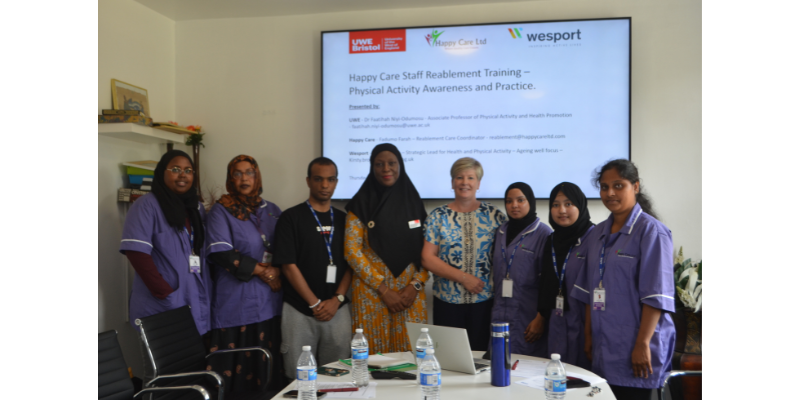
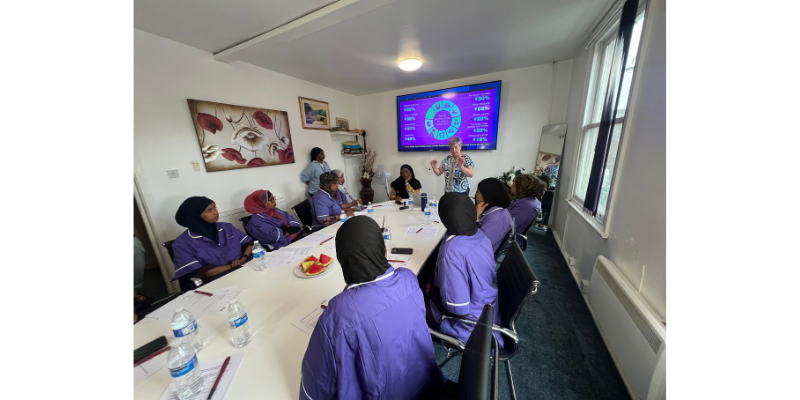
The team has delivered its first training workshop to carers, focusing on the knowledge and confidence needed to integrate physical activity into care routines. Feedback and evaluation from this session will be shared in a follow-up blog. 

Although still in its first year, the project is already helping to strengthen connections between health research, social care, and community wellbeing. 

Looking ahead, the team plans to explore internal UWE funding opportunities and engage MSc Health Psychology placement students and final-year undergraduates to support evaluation and data collection. 

Research with purpose – Putting lived experience at the heart of policymaking

Posted on

How can people with lived experience help shape better, fairer policy?
That’s the question explored by Dr Rounaq Nayak, whose 18-month Economic and Social Research Council (ESRC) Policy Innovation Fellowship examined how experts-by-experience can be meaningfully involved in knowledge mobilisation for policy and practice.

From November 2023 to April 2024, Dr Nayak was seconded to the Wales Centre for Public Policy (WCPP) to investigate how knowledge brokering organisations (KBOs) – such as the What Works Network – can embed lived experience into their work. While co-production is well established in health policy, practice elsewhere remains emergent. This fellowship set out to understand how involvement can be done ethically, effectively and with impact.

Exploring practice and principles

Working with colleagues Dr Katie Crompton and Dr Alex Jones, and in collaboration with WCPP and three What Works Centres – the Centre for Ageing Better, Youth Futures Foundation, and Centre for Homelessness Impact – the team conducted:

  • interviews with What Works and evidence centres,
  • a rapid review of current practice, and
  • an Insight Note distilling implications for those seeking to involve lived-experience experts in knowledge mobilisation.

Their findings show growing recognition of the value that lived-experience perspectives bring, enriching evidence with real-world insight and helping create policies with greater reach and relevance. Yet they also highlight the risks of tokenism, over-burdening individuals, and ethical concerns if involvement is not well supported.

Principles for ethical and effective engagement

The report outlines a series of guiding principles for knowledge brokering organisations, including:

  • safeguarding and fair remuneration,
  • clarity on purpose and participation,
  • building reciprocal and trusting relationships,
  • allocating time and resources from the outset,
  • planning clear pathways to impact, and
  • ensuring equity, diversity and inclusion in who participates and how.

Research with purpose

This fellowship reflects UWE Bristol’s commitment to Research with purpose – research that informs practice, shapes decision-making and centres people’s lived realities.

By working across academia, government and evidence organisations, Dr Nayak’s work is helping redefine what inclusive and ethical policymaking can look like.

👉 Read the full report: Involving experts by experience in knowledge mobilisation – Wales Centre for Public Policy

Research visit to University of Malaya, Malaysia

Posted on

Dr Tariq Umar, School of Architecture and Environment at UWE Bristol, visited University of Malaya (UM), Malaysia to participate in the collaborative activities of external funded project “Building psychological resilience in women leaders: strengthening support systems in Malaysian and Indonesian universities” – funded by Southeast Asian Ministers of Education Organization (SEAMEO) Regional Institute for Higher Education Development (RIHED) and the British Council.

The on-site activities were held from 17 September to 19 September 2025 at the Faculty of the Built Environment, University of Malaya. The on-site activities included awareness sessions, trainings, panel discussion, guest lectures and meeting with the University of Malaya leadership – to share the results and recommendations arriving from the project.

Above: Workshop (women leadership) participants

In his speech, Dr Umar highlighted the key findings of the project. He stated that, both in UM and Universitas Gadjah Mada (UGM), Indonesia, women face more obstacles and men in attaining leadership positions. This clearly highlighted the continued importance of UM and UGM commitment to gender equity.

Referring to the focus group discussion, he further stated that these challenges are not seen as barriers but as opportunities for both universities to expand mentorship programmes, support mechanism, build more structured leadership policies, promote inclusivity and ensure equal access to opportunities. Referring further to the results of the project, he stated that overall, both the organisations culture is widely supportive of women’s leadership advancement – particularly, how peers are supporting each other in routine work and in difficult situations.

Dr Umar outlined that gender considerations still influence the performance evaluation and leadership selection – negatively affecting fairness and inclusion. A major setback in this arises from the assumptions about women availability and or the higher level of scrutiny for women leaders. A way forward for this is to include leadership training, unconscious awareness, strengthening trust, leadership development pathways and creating supportive spaces for women to build confidence and leadership.

He finally touched on a very difficult aspect of the women leadership – work-life balance. He noted that, while there are several polices such as maternity leave and childcare facilities, there is a need of more flexible work arrangements, childcare option on campus and consistency across different faculties. He stated that our project findings suggest that many women declined leadership roles due to childcare or elderly dependents. He emphasised that enhancing work-life balance is not just a welfare initiative but a leadership development strategy. Supporting flexibility can expand the pool of capable women willing to take up leadership roles improving the gender, inclusion and diversity in the university.

During his visit, he had several meetings with UM leadership, including Deputy Vice-Chancellor, the Dean of Built Environment, and academics and researchers from different faculties. He also met the project team from UGM Indonesia, academics from International Islamic University, Malaysia and the founder and chairman of the Women Leadership Foundation, Malaysia. Several overlapping research interests strongly suggest that the collaboration and connections formed through this project will continue in the future – which is likely to enhance future institutional collaboration among UWE Bristol, UM, and UGM.

Innovation with impact – exploring robotic solutions for dementia care: in conversation with Dr Carlos Cifuentes

Posted on

In early October, the Bristol Robotics Laboratory (BRL) will host the 2nd Workshop on Enabling Independence with Robotic Solutions for Enhanced Wellbeing. The event brings together experts from sociology, psychiatry, gerontology, dementia care, and robotics to explore how socially assistive robots can support independence, dignity, and wellbeing for people living with dementia.

We spoke to Dr Carlos Cifuentes, Associate Professor in Human-Robot Interaction at BRL, about why this work matters, how it connects to UWE Bristol’s RISE priorities, and what to expect from the workshop.

Can you give us a short overview of the workshop – what it’s about and who it’s for?

This workshop will explore the evolving role of technologies in supporting individuals living with dementia, focusing on human-robot interaction, cognitive support, and the lived experience of dementia in care environments. Bringing together experts in sociology, psychiatry, gerontology, dementia care and robotics, the event will showcase interdisciplinary perspectives on how socially assistive robots can be designed to meaningfully engage with the cognitive, emotional, and social needs of individuals with dementia.

The goal is to foster dialogue around how technology can enhance dignity, autonomy, and quality of life while supporting caregivers in delivering person-centred care.

Why is it important to look at robotics in the context of independence, ageing and dementia?

The increase in the ageing population is inevitable, and care homes are facing a lack of long-term caregivers. Robotics can help address the dual challenges of promoting independence, supporting caregivers, and building sustainable models of future care.

This is the second edition of the workshop. What’s new or different this year?

The first workshop focused on how robotics can enhance wellbeing in ageing populations more broadly. The second edition goes deeper into dementia care, examining human-robot interaction, cognitive support, and the lived experience of dementia in care settings.

Can you share a highlight or example of the technologies being presented or demonstrated?

We have developed a smart assistive walker (Zimmer frame) that can guide people living with dementia while walking in their homes or outdoors. It also helps guide users in performing daily activities, such as preparing a cup of tea or finding specific places. Additionally, it monitors walking patterns and provides alarms to family members and caregivers when needed.

We have also created tablet-based software that integrates with a social robot to deliver reminiscence therapy and promote physical activity for people living with dementia.

How are older adults, carers or practitioners involved in shaping these robotic solutions?

We work closely with care homes and charities. Focus groups and co-design sessions are central to our process, enabling us to gather insights and optimise technologies to better support older adults, people living with dementia, and their caregivers.

Why is the interdisciplinary approach so valuable?

The interdisciplinary approach helps us develop more suitable technologies. Gerontology and psychiatry provide insights into the behavioural modes of people living with dementia. Sociology helps us run focus groups and co-design sessions. Robotics then translates this knowledge into feasible technological solutions.

What role does BRL and UWE Bristol play in leading this kind of innovation?

The assistive robotics group at UWE is leading the co-creation of these technologies, connecting users’ expectations with innovative solutions to empower carers and family members. We are developing an ecosystem that integrates tech innovators in the UK to accelerate translation and improve affordability.

How does this work connect to UWE’s RISE priorities?

We are aligned with RISE priorities, working closely with users to develop simple and reliable solutions that can transform care delivery for people living with dementia. This reflects both Innovation with Impact and Shaping integrated healthcare, helping address the ongoing challenges faced by the NHS.

What do you hope participants will take away from the workshop?

I hope participants will witness our technologies in action and gain a better understanding of the importance of interdisciplinary research in dementia care. We also hope to foster new collaborations and inspire more people to join this field of research.

Finally, what’s next for this area of research?

The next step is to deploy these technologies in care homes so people living with dementia can experience them over the long term. The greatest opportunity for impact is to reduce the pressure and burden on caregivers, while ensuring that everyone has access to dignified, person-centred care.

🔗 Want to know more?
Explore some of the team’s recent research on socially assistive robotics and dementia:

Gerontechnology Journal – Robotic Assistive Technology

IEEE Xplore: Smart Walker for Cognitive Support

IEEE Xplore: Reminiscence Therapy with Robots

Frontiers in Robotics and AI – Socially Assistive Robotics

📅 Workshop details:
Date: Friday 3 October 2025
Time: 10:00 AM
Location: Seminar Room OT145, Bristol Robotics Laboratory, UWE Bristol
Registration is required.

📌 RISE connection: This work exemplifies Innovation with impact by co-designing robotic solutions that address real-world challenges in dementia care. It also contributes to Shaping integrated healthcare, one of our four RISE beacons, by bringing technology, health expertise, and lived experience together to improve independence, dignity and quality of life.


Research with purpose – the Visible Difference Support Hub

Posted on

Living with a visible difference, such as alopecia, eczema, burns and skin conditions can affect confidence, wellbeing, and everyday experiences, from school life to social media. For many years, UWE researchers have been working with charities and people with lived experience to create resources that make a difference.

Now, for the first time, those resources are all brought together in one place: the Visible Difference Support Hub.

“We wanted this to be research that makes a difference. The hub is about wanting to make a positive difference to people living with visible differences – making the outputs from our research accessible to everybody.” – Professor Diana Harcourt

Until now, resources for people with visible differences were scattered, failed to address today’s realities such as social media and were rarely based on rigorous scientific research. The Hub changes that. It offers inclusive, modern, evidence-based and accessible guidance for:

  • Children and young people
  • Adults
  • Parents and carers
  • Teachers and professionals
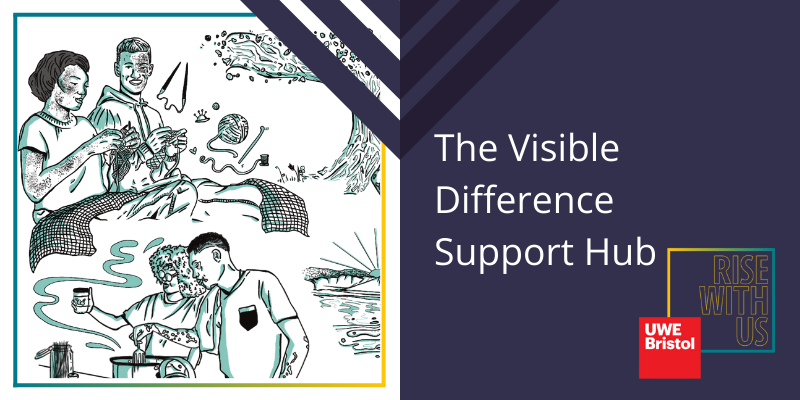
Illustration of three people with visible differences standing together by the water at sunset. One person raises their arm joyfully towards the sky, while the others stand close, smiling. The sun is setting behind mountains in the background, with rays stretching across the sky and reflections shimmering on the water.

Bringing Research, Practice and Experience Together

The Hub represents years of UWE research, shaped by collaboration with charities, healthcare professionals, and advisory groups.

“Charities have informed it a lot, from helping to recruit volunteers, to being on advisory groups. This is our way of giving back, offering them something they can offer to the people who use their services.” – Diana Harcourt

From the colours chosen (carefully selected to be inclusive and non-triggering) to the accessibility of the design, the Hub has inclusivity “baked in there from the beginning”.

Real Impact

Feedback so far has been overwhelmingly positive. Users describe the Hub as inclusive, accessible, seamless, and modern.

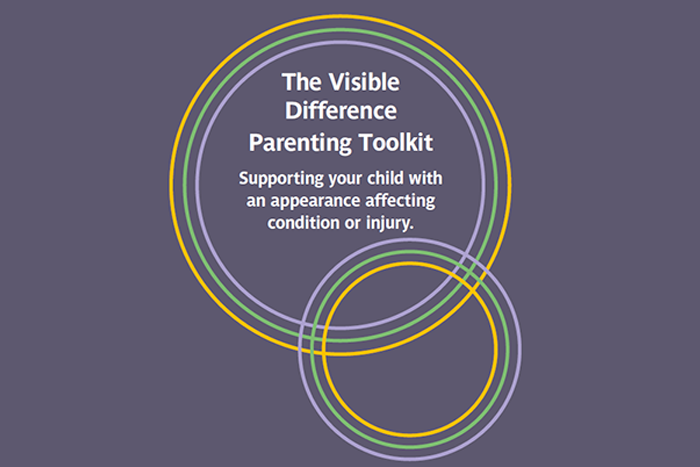
Spotlight: The Visible Difference Parenting Toolkit

One example of the Hub’s impact is the Parenting Toolkit, designed to help parents and carers support children with visible differences. It offers guidance on building confidence, navigating conversations, and tackling challenges in everyday life.

Cover image for the Visible Difference Parenting Toolkit. It features overlapping yellow, green, and purple circles on a dark purple background, with white text reading: “The Visible Difference Parenting Toolkit – Supporting your child with an appearance affecting condition or injury.”

Looking Ahead

The Hub is just the beginning. Future developments include:

  • Adding new and translated resources
  • Launching the Loving Action podcast series for adults with visible differences navigating relationships
Illustration of an adult and child with a visible difference walking together. The adult holds a flower-patterned umbrella, while the child rides a scooter. A winding path with a hopscotch game is visible on the ground ahead of them.

Acknowledgements

The Hub was developed with support from UWE’s Impact Fund in 2024, with web development by Neil Robert Leonard and illustrations by Abbi Bayliss.

“It’s been a team effort – past and present researchers, charities, and creative collaborators have all helped shape the Hub.” – Diana Harcourt

Explore the Hub

The Visible Difference Support Hub is free, open, and designed to be shared.

👉 Visit the Visible Difference Support Hub

📌 RISE connection: This blog aligns with Research with Purpose and Enriching culture, place and community by demonstrating how UWE research is making a tangible, positive difference in people’s lives.

Developing and implementing a public health and criminological approach to tackling sexual abuse

Posted on

A new book from UWE Bristol colleagues is shining a light on how we can take a fresh approach to preventing sexual abuse.

Content note: This blog discusses sexual abuse and prevention.

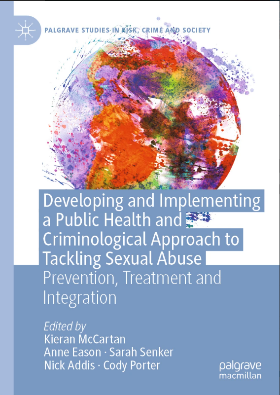
The book, Developing and Implementing a Public Health and Criminological Approach to Tackling Sexual Abuse, has been written by Professor Kieran McCartan, Dr Anne Eason, Dr Sarah Senker, Dr Nick Addis, and Dr Cody Porter. It brings together years of research and collaboration across different academic disciplines, supported in part by a UWE Emerging Research Excellence (ERE) grant.

A new way of thinking

The authors argue that tackling sexual abuse should not be left solely to after-the-fact responses in the criminal justice system. Instead, they suggest adopting a public health and criminological model known as Epidemiological Criminology (EpiCrim).

EpiCrim looks at prevention through the socio-ecological model – from individual and interpersonal relationships, right through to communities and society. This means focusing on:

  • Preventing first-time offending,
  • Reducing repeat offending, and
  • Addressing the life experiences and trauma that can lead to harmful behaviour.

By framing sexual abuse as a behaviour that can be prevented, treated, and understood, this approach encourages earlier interventions and more proactive solutions, alongside continued support for victims.

Book cover of “Developing and Implementing a Public Health and Criminological Approach to Tackling Sexual Abuse: Prevention, Treatment and Integration.” The design features a colourful abstract globe illustration in red, purple, orange, and green on a white and blue background. Authors listed: Kieran McCartan, Anne Eason, Sarah Senker, Nick Addis, and Cody Porter. Published by Palgrave Macmillan.

From research to practice

The book explores the roots of sexual abuse, how and where it happens, how society responds, and how people can be supported to safely re-enter communities after conviction. It highlights evidence from service users, victims, professionals, and policymakers, showing that prevention is possible with the right structures in place.

To help turn research into action, the UWE team have also created a policy briefing aimed at practitioners and policymakers. It makes clear recommendations, such as:

  • Broadening prevention beyond individuals to communities and society,
  • Coordinating multi-agency responses,
  • Embedding trauma-informed approaches, and
  • Expanding and funding victim support services.

These recommendations were also shared at a dedicated UWE Bristol conference, supported by a visual infographic designed to capture the key themes.

Sharing knowledge more widely

Before the book was published, Professor McCartan joined the UWE Let’s Talk Health and Care podcast to discuss the research and its real-world impact. The message is clear: sexual abuse is preventable, and change is possible if we take a more holistic, evidence-based approach.

Find out more

📘 Read the book

🎧 Listen to the podcast

UWE Bristol win funding to use Deep Learning to create a Holistic Assessment of Animal Welfare  

Posted on

The Centre for Machine Vision (CMV) at UWE Bristol have recently won funding to investigate towards a Holistic Assessment of Animal Welfare using Emotion and Deep Learning, building on prior work from CMV.  

The project aims to develop technology for automated assessment of animal emotional wellbeing through the interpretation of body language, informed by work in human activity and emotion recognition using AI. Body posture and movement, which together characterise a wider body language, manifest as varying body shapes/poses and movements. The team will utilise human eye tracking to identify holistic spatial temporal animal features linked to perceived animal emotional states, then apply this knowledge via a novel form of supervised machine learning. 

The project comprises of five partners including BOKU University, Scotland’s Rural College, University College Dublin, Linnaeus University and UWE Bristol.

The call was run by the European Partnership on Animal Health and Welfare with each partner funded by their national funder, DEFRA in UWE Bristol’s case.  

The total grant is €1,459,800, with €492,000 allocated to CMV/UWE. There has also been a spinout InnovateUK project, “Pig Health Station” aimed at realising a commercial product, arising from the work. 

The interdisciplinary team will explore computer vision-based machine learning techniques to train machine models with numerous examples of pig body language corresponding to different animal emotional states (ground truth), such as positive emotions associated with reward or negative emotions caused by unfamiliar environments. With extensive examples including structured treatments and environments to create a spectrum of emotional experiences, they aim to correlate specific animal stances and movements with given emotions and levels of arousal. 

Through a system of detected trends and alerts, AI enabled automation could offer a powerful means to identify animals needing follow-up interventions in a timely manner, ensuring animal wellbeing, reducing production costs (e.g. treatments, morbidity) and antimicrobial usage (e.g. fewer blanket treatments). 

The project will be led by Associate Professor of Computer Vision and Machine Learning Dr Wenhao Zhang, Lecturer in Robotics and Machine Vision Dr Disi Chen and Professor of Machine Vision Professor Melvyn Smith.  

14 UWE Bristol academics named among world’s top scholars by ScholarGPS

Posted on

Fourteen UWE Bristol academics have been recognised as leading experts in their fields by ScholarGPS, which ranks the most productive and influential researchers globally based on the impact of their published work.

Spanning disciplines including Psychology, Computer Science, Engineering, Linguistics and Biomedical Sciences, the list celebrates both long-term research excellence and recent impact across the past five years.

ScholarGPS rankings are based on comprehensive publication and citation data, offering an independent view of scholarly productivity and influence. Recognition in these rankings highlights the quality and global reach of UWE’s research activity.

UWE’s top-ranked scholars:

Lifetime rankings (All Fields):

Top scholars (Prior five years):

We are proud to see our colleagues impactful research being recognised and shared across the world, working across areas as diverse as fungal computing, emergency medicine and climate change activism. Every citation in Google Scholar reflects not just the quality of their work, but also the commitment, creativity and collaboration that drive research at UWE Bristol.

Philippa Shelton, Assistant Director of Research an External Engagement.

Back to top