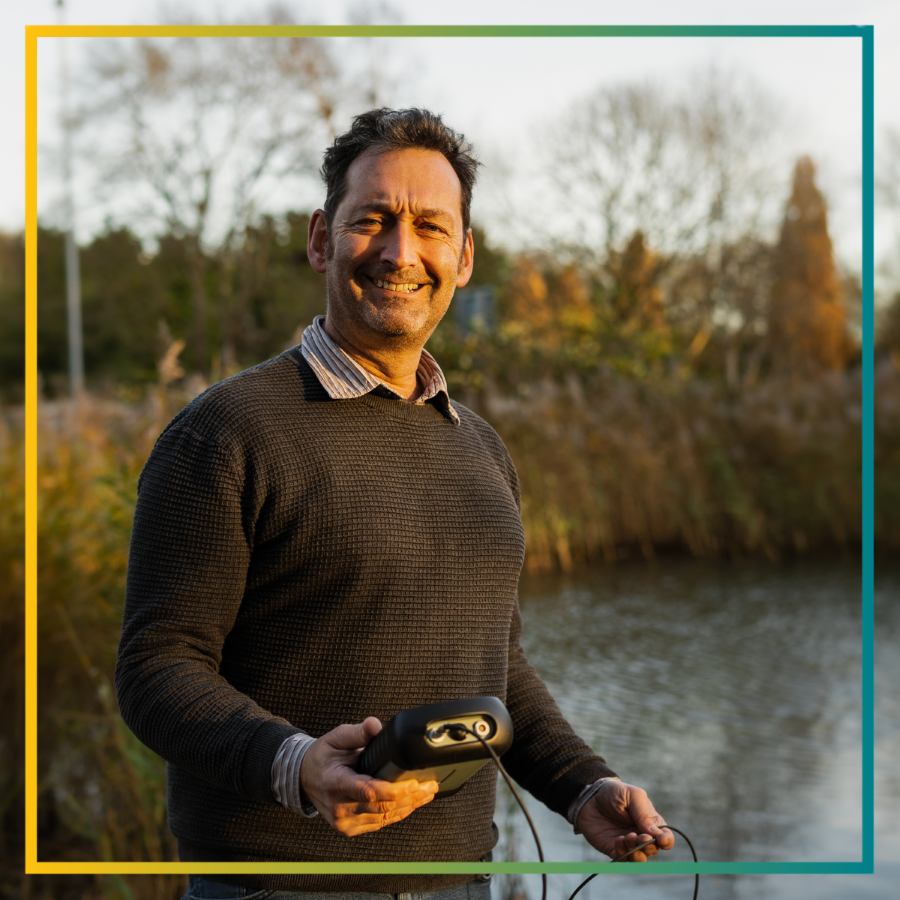
At first glance, a badminton tournament might just seem like an enjoyable recreational event. But for Dr Praveen Kumar, Associate Professor in Stroke Rehabilitation at UWE Bristol, it has become a powerful vehicle for innovation, student engagement, and community impact.
Now in its eighth year, the annual charity tournament – held at UWE Bristol’s Centre for Sport – has grown from a gathering of 24 teams to nearly 80, raising over £32,000 for Bristol After Stroke. Yet the true legacy of the event lies not in the numbers, but in the relationships and research it has helped foster.
From Research Challenges to Real-World Solutions
Dr Kumar’s connection to Bristol After Stroke began during his PhD, when recruiting stroke survivors for research proved difficult through conventional hospital channels. The charity’s day centres offered a vital bridge – not only to participants, but to deeper understanding.
This collaboration sparked a commitment that extended beyond academia. Dr Kumar began volunteering with the charity, running exercise classes for the last nine years and listening closely to the needs of stroke survivors. One recurring theme was the lack of ongoing support after discharge – a gap he sought to address through innovation.
With input from patients, he developed a library of over 25 rehabilitation-focused exercise videos, now freely available on YouTube. These resources are tailored to individual needs through assessments and feedback, and have become a valuable tool for both patients and clinicians.
Inclusive Innovation and AI-Driven Rehabilitation
Recognising the importance of cultural relevance in healthcare, Dr Kumar partnered with South Asian organisations to create linguistically appropriate exercise materials. Recent funding from the University Hospitals Bristol and Weston NHS Foundation has enabled similar resources for Gujarati-speaking communities, expanding accessibility and impact. These videos are now available on Sirona YouTube channels.
Looking ahead, Dr Kumar is collaborating with AI specialists at the University of Bristol and being supported by the National Institute for Health and Care Research to develop a machine learning algorithm that generates personalised rehabilitation plans. This cutting-edge project aims to empower stroke survivors with tailored support, bridging the gap between clinical expertise and everyday recovery.
A Living Lab for Student Learning
The tournament and associated projects have also become a dynamic learning environment for UWE Bristol students. Over 200 physiotherapy and sports rehabilitation students have volunteered, gaining patient interaction, community health promotion, and hands-on experience with these Next-Step exercise classes that are delivered at UWE Bristol Glenside Campus. This year, Sports Rehab students will be offering pre and post event massage to badminton players participating in this exciting annual charity tournament.
This year, with support from UWE Bristol leadership, the Centre for Sport has offered a 50% discount on venue hire, enabling reduced entry fees for student teams and encouraging broader participation. Dr Kumar’s fundraising goal for 2025 is £6,500, with an ambitious target of £50,000 by the tournament’s 10th anniversary in 2027.
A Model for Community-Led Change
Dr Kumar’s work exemplifies the university’s commitment to research that makes a difference. By integrating sport, technology, and community engagement, he has created a model for how academic initiatives can drive real-world impact.
“In 2016, Bristol After Stroke in partnership with Dr Praveen Kumar, funded by South Gloucestershire Local Authority, launched a new physiotherapy led exercise group in the region. Its aim was to support stroke affected people gain strength, balance and confidence in movement. It also set out to give people a better understanding of their stroke so was complemented with an educational and social aspect after the physio led exercise. Since this time, we have supported approximately 350 people with their physio goals and seen many overtake their goals. I am proud to say that I often meet alumni of the course that proudly tell me they don’t need to use their stick any more or it has led them on to a more active confident life.
We could not do this without Dr Praveen Kumar and this unique partnership with UWE Bristol Physiotherapy students. This is a pioneering approach and one that many areas envy. However, we could not do this and the many other services we provide without active fundraising. Dr Praveen Kumar’s Badminton tournament has become a key fundraising activity in our calendar and to date has raised over £32,000.
This funding has enabled BAS to grow and take on new challenges and services. In 2016 we were receiving about 180 referrals a year and now we receive approximately 900 and we support those people with a broad range of services. During this time, this funding has contributed to us providing counselling support, groups and cafés, volunteering and our new walking sport groups like walking netball or walking football.
All this funding supports helping stroke affected people get back on their feet and have a fulfilling life after Stroke. Praveen’s commitment and passion toward this end not only supports us financially but also motivates us at Bristol After Stroke to continue to innovate and provide this vital support.”
Rebecca Sheehy, CEO Bristol After Stroke
Students, staff, and supporters are invited to get involved in this year’s tournament – whether by playing, volunteering, or donating. Every serve supports recovery, inclusion, and innovation.
Get involved
Tournament details:
Date: Sunday 9 November 2025
Time: 09:00-18:00
Location: UWE Bristol Centre for Sport, Coldharbour Lane, Frenchay, BS16 1QY
If you would like to register for the tournament, please see the flyer below. If you would like to sponsor the event – to cover costs of courts, shuttles etc, please get in touch using the details on the flyer.
You can also support by making a donation on the Just-Giving page here.
📌 RISE connection: This work exemplifies Innovation with Impact by blending research with community engagement to forge innovative approaches to healthcare. It also contributes to Shaping integrated healthcare, one of our four RISE beacons, by integrating sport, technology and community engagement to empower stroke survivors and support recovery.