The Leaders Award sets this challenge to encourage children to identify a problem that engineering could solve, and devise a solution. Philippa’s invention was picked as a winning design for the South West, and then selected to be turned into a working prototype by a team of UWE Bristol engineers. Philippa’s design displays variable red lights on the back of a vehicle to alert other drivers of the severity of the braking and levels of attention needed.
The prototype was unveiled at the South West Leaders Award exhibition at UWE Bristol on Friday 14th June 2019 by Philippa, Katy and Miriam. The prototype, along with this year’s shortlisted entries, was also on display on Saturday 15th June at the University’s Exhibition and Conference Centre (ECC). Hundreds of visitors of all ages were able to try it out, as well as taking part in exciting STEM activities provided by the MOD, Aerospace Bristol, and UWE. The displays included having a go with drones, Lego Mindstorm, and a virtual reality tour of the new Engineering Building.
Congratulations to Philippa and the team for designing and creating a fantastic new engineering solution!
Hosted at the IET, the 2019 conference offered delegates a range of keynote speakers, plenary and panel sessions and breakout workshops. Highlights included insights into how women job hunt, the plasticity of our brains and the complexity of ethics in robotics and AI. Sessions can now be viewed online.
Udonna was able to make some useful connections for his project BAME Girls in Engineering, while Laura was able to discuss the new platform to support girls in STEM, My Skills My Life, with our Women Like Me partners from WISE.
Bristol Women’s Voice is a powerful voice for women making women’s equality in Bristol a reality. They make sure that when key decisions are taken in the city women’s voices have been heard and their concerns acted upon, working to increase awareness of women’s rights and to make sure services meet women’s needs. They bring women together to share ideas and experiences, support campaigns and celebrate success so that together we can make Bristol a showcase for women’s involvement, empowerment and equality.
Our work was highlighted in the blog as
“Revisiting and rewriting a traditionally male-dominated and gendered history has never been more topical and this initiative has help ensure that female engineers and in other STEM roles, past and present, are afforded the recognition that they deserve.”
We are very proud to that Engineering our Future and Women Like Me have been highlighted! The full post can be read here.
In our public event at Bristol and Bath Science Park today, as part of Women Like Me’s closing event for this round, we are exploring the concept of emotional intelligence with Caroline Morris of Wide Eyed Group Leadership Consultancy.
There’s still time to sign up for two FREE events, hosted by UWE at the Bristol and Bath Science Park tomorrow (please note the change of venue; these events were originally scheduled to be held at UWE):
Wednesday 3rd April: Training 09:30-10:00 | Wikithon drop in 10:00-14:00
Come and join us to develop your digital skills and learn more about editing Wikipedia. Help to celebrate brilliant women engineers by creating and improving their pages on the world’s favourite online historical record.
Complete beginners and experienced editors, all are welcome to attend – we’ll provide training for anyone new to editing. If you already have some wiki editing experience, we can help you improve your skills and learn a few new tricks. If you’ve spotted an article that needs improving, bring along your queries and we’ll see what we can do to help. Suggestions for articles to improve and create will also be provided, along with research resources.
Girls from Bristol Brunel Academy and Bristol Metropolitan Academy, coordinated by Future Quest’s Gemma Adams, attended an exclusive showing of Sarah Guppy: The Bridge, The Bed, The Truth in UWE’s filming studio at the university’s Bower Ashton campus. The performance was filmed, thanks to UWE’s Abigail Davies, and followed by a panel discussion on women in STEM (Science, Technology, Engineering and Maths) which was also recorded so that both elements of yesterday’s production can be shown in schools.
“It’s still not great for women in STEM but at least we’re allowed to be engineers and scientists now!”
Dr Laura Fogg Rogers, UWE Bristol
Discussion ranged from why girls don’t choose STEM subjects to the best thing about an engineer and back again, via conversation about what engineers can expect to earn, how to get into engineering and more.
Feedback was positive – Future Quest described hearing from a panel of women in STEM and their thoughts and advice about their careers as
“both inspiring and thought provoking”
And it is hoped that the film will inspire many more school students in future.
Header image shows left to right: Trish Johnson (Clifton Suspension Bridge), Nicola Grahamslaw (SS Great Britain), Rachel Gollin, Kim Hicks as Sarah Guppy, Dr Laura Fogg Rogers (UWE Bristol), Dr Laura Hobbs (UWE Bristol), Miriam Cristofoletti (UWE Bristol), Sheila Hannon (Producer, Show of Strength), Dr Madge Dresser (UWE Bristol) and Gemma Adams (UWE Bristol/Future Quest).
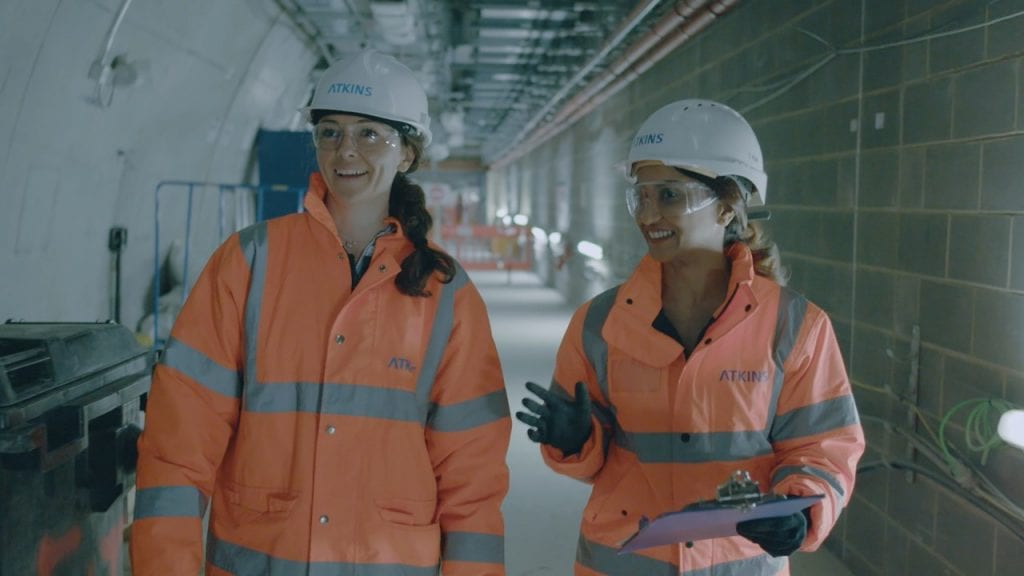
Our Women Like Me participant and Atkins engineer Charlene Chung took part in the I’m an Engineer, Get me out of here competition earlier this month, answering children’s questions about engineering in the ‘Milligram Zone’.
I’m an Engineer, Get me out of here is an online event where school students connect with engineers. It’s an X Factor-style competition between engineers, where the students are the judges.
Students challenge the engineers over fast-paced online live CHATs. They ASK the engineers anything they want, and VOTE for their favourite engineer to win a prize of £500 to communicate their work with the public.
The Milligram Zone was a general engineering zone, where children could meet six engineers working in different areas. In her profile, Charlene described her work as a hydraulic modeller:
“I construct and investigate hydraulic models of sewer systems. Ever thought about what happens to the dirty water flushed from toilets, down from the kitchen, bathroom and utility rooms? Well I deal with that! I use computer and mapping software to investigate flood risk and flood mechanisms, ensuring that the sewer systems are fit for purpose and suitable for future growth.”
She reached hundreds of children and answered many questions about engineering – well done Charlene!
Back in November, Atkins engineer and Women Like Me participant Louise Hetherington wrote a blog post for us on Engine Ears, Atkins’ first STEM video for 7-11 year olds. The video has now been viewed more than 300,000 times and won an award, as fellow Atkins and Women Like Engineer Jess Batt tells us in this guest post.
In 2018, Atkins was involved in the UK Government’s Year of Engineering initiative which focused on helping people get to know what engineering is really like. As part of this work, we created Engine Ears – an animated film aimed at the engineers and designers of tomorrow, giving them an insight into the fascinating world of engineering.
In February, Engine Ears beat some stiff competition to win a RAD award in the ‘best single use of video’ category. The annual awards showcase the very best in recruitment communications and the judges were particularly impressed with the catchy song as well as the bright, appealing graphics.
The short film crossed a new frontier; its aim was to excite and inspire primary school children about engineering. It showcased how important engineers are to our daily life by showing what the world would be like if engineers did not exist, a world with no bridges, buildings or roads but more importantly – no Xbox or Nintendo.
Ellie Harte and Katie Cockerton from Atkins Talent Attraction team drove the project from inception, working very closely with film agency, Fifty One Films. “It’s a real honour to receive this award and we also want to say a special thanks to our STEM Ambassadors Vicky Stewart, Louise Hetherington and Kirsty Greener,” reflects Katie. “They provided invaluable feedback throughout the project, as did members of the ParentNet group who volunteered to show the first film drafts and lyrics to their children so that we could get first hand feedback from our target age group.”
The film has now been viewed over 300,000 times online. Every little bit helps in the quest to show young people just how exciting a career in engineering can be.
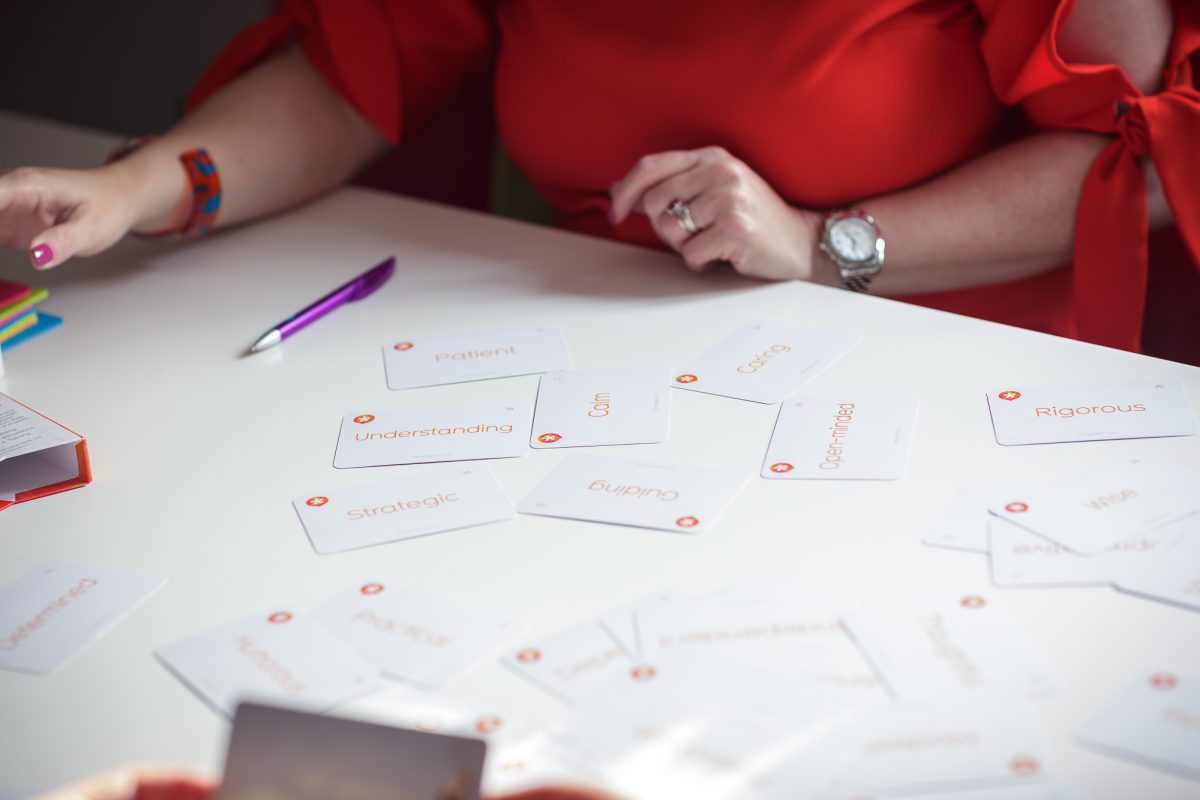
Our Women Like Me partner Caroline Morris, of Wide Eyed Group Leadership Consultancy, is an executive coach who works with leaders and their teams. She began her career in STEM building customer management systems for large organisations and throughout her career she has combined her love of tech and people, helping people to embrace their unique qualities and bring their whole selves to work. She is an Emotional Intelligence assessor and Time to Think facilitator who is obsessed about becoming, and helping others to become, better listeners! In this guest post, she explores the importance of emotional intelligence and human skills for STEM professionals.
As someone who was drawn to science and maths subjects, and who then worked in STEM I often reflect on how things have changed from when I first started my career. When I started out as a consultant, although I was considered a people person, I was far more focussed on the process. If we followed the process, I believe it would all be OK. I noticed though that some of my colleagues did not always do this. At first this irritated me, yet as I developed my own Emotional Intelligence I realised (probably not quickly enough) that as people some of us are “people people” whilst others are “process people”. Some would rather I pick up the phone to discuss something whilst others would rather I updated the job ticket.
This over the years has shifted my perspective from process
to people, I am now firmly in the people camp.
If we can get a team of people to function well, then the process is an
enabler (the cherry on the cake as it were), rather than the be all and end
all.
I often take this reflection into my work with
multi-functional groups especially when they have a breakdown in
communication. The situation is likely
that they have different communication methods and need to become more curious
about each other’s preference. To do
this we need to become more self-aware and aware of others, all part of
developing our Emotional Intelligence.
Where did Emotional
Intelligence originate?
Emotional intelligence developed from the discipline of Social Intelligence, which allows people to develop relationships, self-awareness and empathy.
Peter Salovey and John D. Mayer coined the term ‘Emotional Intelligence’ in 1990 describing it as “a form of social intelligence that involves the ability to monitor one’s own and others’ feelings and emotions, to discriminate among them, and to use this information to guide one’s thinking and action”.
Emotional Intelligence expands into other “people” skills,
such as how adaptable we are, our ability to be straightforward, and how
optimistic we are based on how much resilience we have. The founder of Emotional Intelligence Daniel
Goleman, identified that for successful leaders, having a high level of EQ was
more impactful on their success than their IQ.
EQ unlike IQ, which is set by our late teens, is something that can be consciously developed and continues to develop throughout our adult life. To find out more Daniel Goleman has a wealth of TedEx talks and details on his website:
What does it take to
be emotionally intelligent?
Emotional Intelligence covers a wider spectrum of human skills from self-awareness, adaptability, resilience and optimism to how straightforward we are and are perceived to be. These are skills we develop to a greater or lesser extent throughout our whole lives. What fascinates me is how often the conscious development of this is avoided by STEM professionals.
I recently delivered a workshop on how to “Collaborate &
Share as a Team” to a group of Data Analysts and Data Scientists, this was a
rare group who had voluntarily chosen to attend. They acknowledged they were out of their
comfort zone and that they often found the “soft skills” quite difficult. I remember one of my coaching friends once
saying if only they had been called “hard skills” and people would realise that
in fact they are difficult and that is takes effort to develop them, rather
than as is sometimes consider that they are “soft and fluffy” and some kind of
“other” intended for other people….
I believe that now more than ever it is essential that STEM professionals
embrace the difficult and consider how they might develop their Emotional
Intelligence. As Artificial Intelligence
enhances and more and more of the repeatable predictable processes can be
carried out by robots and software, our differentiation is our EQ. Our ability to adapt, to connect with each
other and to understand nuances is extremely sophisticated.
Where do we start?
I always begin my Leadership and EQ workshops with a reflection on what it takes to give people great attention… As a Time to Think Facilitator and fan of Nancy Kline, I am a great advocate on developing our listening skills. It has transformed how I and the people I have worked with connect with others. It’s a great way to notice how we communicate with others, interact with different people and connect with our colleagues. By listening to someone, allowing them to speak without fear of interruption and allowing our own judgements and thought processes to be put to one side allows us to become deeply interested and curious in someone else’s perspective. The first step in the important quality of empathy.
“Sometimes the best thing we can
do for another human being is to listen to them without interruption” Nancy
Kline
How many times have you been in a meeting when someone has
finished your sentence or interrupted your flow? This is one of the most inefficient styles of
communication and often means that we do not really explore alternative
perspectives and diverse ideas. When we
know that we won’t be interrupted (rather than being lucky enough not to be:
Nancy Kline) then we are able to expand our thoughts and often answer our own
problems. As the listener we develop a
deeper state of curiosity and learn about what is important to the person. It might change our thinking or help us to
question deeply entrenched ideas.
It is so easy to say, and yet each time it works. Once we feel heard the magic happens. We feel our needs are met and thus our
feelings towards another person changes.
This is the first step on an ongoing journey to develop our
EQ.
If you would like to commence your EQ journey… then reflect on where you want to develop yourself, the following may help…
Stella is a Research Associate in the Bristol Leadership and Change Centre with a background in applied social research. She supports a wide range of research project teams within Bristol Business School and also teaches research methods at both undergraduate and postgraduate level. Her expertise includes social marketing and the understanding of psychological pathways for behaviour change in health; gender and inequality in organisations; the gender pay gap; and women working in male-dominated industries. She is a founder member of alta, a mentoring scheme for professional women in aviation and aerospace. She is also a member of the British and European Sociological Association and on the board of the Research Network ‘Gender Relations, Labour Markets and the Welfare State (RN14).
The mentoring scheme extends beyond the boundaries of the participating organisations, to impact on the industry at the national and international levels. After an initial pilot phase, alta was launched to the industry on 8th March, 2019 – International Women’s Day. It aims to empower women to gain confidence by receiving guidance from a more experienced woman in the industry and looks to change the way females are perceived in male dominated industries.
alta is hosted by the Royal Aeronautical Society and is part of their commitment to delivering on the pledges it made as a supporter of the Women in Aviation Charter, which was signed by government and industry representatives in June, 2018. alta is the first mentoring scheme of its kind in the industry and is currently open to professional women in the industry, with the help of financial donations from industry bodies and employers.