
Research Spotlight on Bristol Leadership & Change Centre

Posted on

Over the next few months, we will be bringing you Research Spotlights on some of our research centres and groups to give you and understanding of the work undertaken within each area.

This first spotlight focuses on the Bristol Leadership & Change Centre:

Bristol Leadership and Change Centre (BLCC) is a research centre within the Bristol Business School, with 52 members including 32 faculty members, 8PhD students and 12 visiting fellows/professors. BLCC has built a thriving community of academics, practitioners and students all actively engaging with and exploring the complex nature of leadership and change in contemporary organisations and society.

The focus of their work ranges from promoting leadership and organisational change in the NHS, to supporting people with complex multiple needs in Bristol, developing entrepreneurial learning in Turkey and supporting malaria elimination in Southern Africa.  Such examples demonstrate the potential for inclusive and collaborative leadership to build a shared sense of purpose and commitment that makes a real positive difference to the lives of many people. It is a welcome antidote to the myth of the hero leader and the divisive and destructive practices that feature all too often in news and social media headlines.

Within the Centre members focus on key research themes based around the question ‘How to mobilise and sustain responsible change in complex and uncertain contexts?’ Their research sits within four broad themes:

  1. Leadership & Followership in a Changing World: including responsible and sustainable leadership; complexity, paradox and ambiguity; distributed, shared and systems leadership; and alternative ways of organising.
  2. Cultures of Leading and Organising: including equality, diversity and inclusion; space, place and time in organisations; language and indigenous leadership; and power, influence and identity.
  3. Leadership and Organisational Learning and Development: including ethics, wisdom and spirituality; action research, collaborative enquiry and evaluation; leadership & Management Learning; and coaching & Mentoring.
  4. Behaviour Change and Social Influence: including social Movements; Systems Change; Social Practice Theory; and Creativity, innovation and enterprise.

The following projects showcase a snippet of the work they have been involved with over the last two years, but please visit the research pages to find out more.

Case Study 1: Our Work with the NHS Leadership Academy

Bristol Leadership & Change Centre is involved with a number of projects with the NHS Leadership Academy, below we have showcased two of the projects they are currently working on.

Project 1: Leadership Landscape in London – Learning from the pandemic to inform future leadership development – Richard Bolden, Professor of Leadership & Management

Leadership Landscape in London is led by Professor Richard Bolden and has been commissioned by the NHS London Leadership Academy to capture learning and insights from the Covid-19 pandemic to inform the design and provision of leadership development interventions for NHS staff (and affiliates) across the health and care system in London. 

The NHS in England is facing a series of substantial challenges that raise questions about what kind/s of individual and collective leadership capacity is/are required and how this can be most effectively developed within the current context.

The overarching research question for this study is:

‘What has the pandemic revealed about the nature and purpose(s) of leadership in health and care and how effective leadership capacity can be nurtured for the future? ‘

Through a mixed method, qualitative study, we aim to capture a diverse range of perspectives on issues including:

  • How leaders, managers and staff across the health and care sector within London have been impacted by the Covid-19 pandemic.
  • How individuals, teams, organisations and the wider system have responded to the challenges and what learning and insights have emerged.
  • Where there are examples of innovation and adaptation that could be drawn on to inform future leadership and/or management practice and development in London and beyond.
  • What gaps/limitations have been revealed around current leadership/management capacity and support and what needs to be done to address this.
  • How to begin addressing the trauma and inequalities revealed by Covid-19 through the creation of spaces for open and honest discussion and opportunities for reflection on lived experience.

Findings will be presented in a report to the NHS London Leadership Academy and partners to review, revise and develop leadership and management development provision in the region.

Project 2: Nottinghamshire Integrated Care System OD Collaborative – Carol Jarvis, Professor of Knowledge Exchange & Innovation

Given the well documented and significant challenges facing the Health and Social Care system, organisations need to develop new and different ways of doing things to sustain their success, and this includes tapping into the potential of their staff to develop creative, innovative and technologically advanced ways of working and caring for patients and service users.

Nottingham & Nottinghamshire Integrated Care System (ICS) is leading the way on integration to close the gap in health and wellbeing outcomes against a backdrop of limited finances, increasing population numbers and increasing numbers of people living in ill health. To support this, partners are working as an Organisation Development (OD) Collaborative across the whole system to develop well supported, informed and involved leaders and services that have the ability to influence the wider system into working effectively with partners across health, social care and the voluntary sector to provide joined up patient/service user care.

In preparation for the introduction of ICS’s on a formal footing in 2022, a team from BLCC led by Professor Carol Jarvis has been commissioned by NHS Midlands Leadership Academy (Leadership and Lifelong Learning) to conduct a pre-diagnostic study. This research seeks to develop recommendations, grounded in a robust investigation of current and best practice, that will support the implementation of a sustainable, system-wide community of practice, with an emphasis on cultural development; service improvement/innovation methodologies; and leadership and in support of providing joined up patient/service user care.

Case Study 2: Shaping the Teaching & Researching Environment in Turkey – Selen Kars, Senior Lecturer Organisation Studies

In 2020, Arthur Turner, Carol Jarvis, Harriet Shortt, Hugo Gaggiotti and Selen Kars designed and delivered a one-week workshop on “Creativity in Research” to over 30 management researchers across Turkish universities. This workshop forms part of the Knowledge Exchange Partnership with Izmir University of Economics (Turkey) Faculty of Business, funded by British Council Newton Fund Research Environment Links and was led by Selen Kars. It aims to transfer UWE Bristol Business School’s three areas of distinctiveness to the lead project partner, Izmir University of Economics to improve the partner’s research environment. More information about the project can be found here.
During the week-long programme of synchronous and asynchronous sessions amounting to 24 hours of interactive material, Turkish management researchers were introduced to a range of creative approaches to management research from finger puppets to collage, from photography to storytelling. They discussed examples from their own practice and co-reflected with participants how these approaches can be adopted to participants’ own area of research. The workshop was received with enthusiasm and resulted in four research ideas that participants are keen to forward in collaboration with the workshop team, and has also been nominated for higher Education Council Turkey’s Outstanding Performance Award.

Case Study 3: Improved Healthcare service delivery for infectious diseases in Africa – Peter Case, Professor of Organisation Studies

Professor Peter Case secured a prestigious Bill & Melinda Gates Foundation grant (in collaboration with the Malaria Elimination Initiative research centre based at the University of California, San Francisco) to assist the Ministry of Health and Child Care (MOHCC) in Zimbabwe to improve HIV prevention. The project, entitled ‘Optimizing Stakeholder Operating Models for HIV Prevention in Zimbabwe’, is running from June 2020 to December 2022 with an overall aim of integrating prevention services and moving them forward in a more sustainable way. Using a variety of methods, such as, key informant interviewing, participatory action research and action learning, the study will focus, in particular, on the transformation and integration of Voluntary Male Medical Circumcision (VMMC) services. The research objectives are to:

  • Identify and quantify the barriers and enablers for uptake of key VMMC and prevention program responsibilities.
  • Identify the current state of motivation, organizational and individual ability to change stakeholder operating models, and organizational intervention gaps to achieve sustainability. 
  • Identify the drivers (e.g. incentive structures, information, and other triggers) to achieve a sustainable HIV prevention and VMMC program.
  • Segment community and system stakeholders by their behaviour towards the uptake of VMMC program responsibilities in order to better target interventions.

Engaging the Community and Society

Alongside research projects, BLCC engages with the wider community through a number of projects including;

Unleadership

“In integrating unleadership into organisational life after the pandemic, we anticipate a flourishing of creativity and the humanising of our workplaces to accommodate the human spirit.”

Covid-19 has brought unprecedented disruption to our lives and workplaces. The leaderly acts that have emerged have often been from unexpected places and have achieved outcomes that inspired us. Professor Carol Jarvis and Selen Kars have characterised these acts and associated practices, descrbing them as ‘unleadership’ (Jarvis et al, 2020; Kars-Unluoglu et al, under review). 

Unleadership Logo

Carol and Selen are curious about how these leaderly practices can allow communities and organisations to tap into their latent leadership potential.  Through seeking out the less obvious and illuminating the spaces in-between they want to create a new movement for unleadership. They will collaborate, reflect upon and be inspired by the leaderly actions of others co-creating innovations that keep developing the concept and practices of unleadership.

Through a series of participative, co-creation workshops and interviews of unleaders they plan to create a resource for others to draw on as we all strive to build back and organise ourselves differently in the future.

To join the Unleadership movement follow us on Twitter @Unleadership.

Find out more about the work undertaken by the members in Bristol Leadership and Change Centre below:

An enhanced Partnership PhD scheme at UWE Bristol

Posted on

UWE Bristol has recently announced a significant increase in funding for organisations interested in Partnership PhDs. 

A Partnership PhD bridges the gap between organisations and universities. It enables an organisation to gain access to cutting-edge real world research that can help transform it.

The Partnership establishes a relationship between an organisation and UWE Bristol, based on a specific project that is mutually beneficial.

Organisations have the opportunity to choose a relevant research area and gain access to cutting-edge research. The researcher will  work extensively with an organisation to provide a tailored piece of research. 

In turn, the researcher will gain an opportunity to pursue their research in a real-world setting, developing transferable and interdisciplinary skills whilst gaining cross-sector experience.

Over the past two years, the Graduate School, part of the Research, Business and Innovation team at UWE Bristol, has been developing the Partnership PhD scheme.  Through it, UWE’s investment in PGR has been matched by over £1m from 23 partner organisations – an amount that we now hope to significantly increase.  

You can apply for a Partnership PhD here.

Please find below full Partnership PhD guidance and costings:

View the flyer for businesses here or view the slides below:

Email uwebusiness@uwe.ac.uk to find out more. 

Knowledge Transfer Partnerships: Harris Evolution LTD Associate Spotlight

Posted on

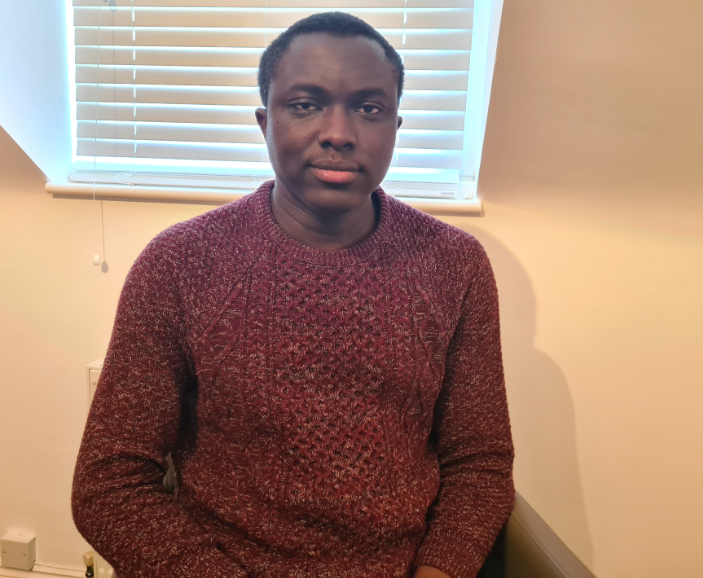
Mayowa Olanrewaju, our Knowledge Transfer Partnership (KTP) associate for Harris Evolution LTD, recently spoke to KTN about his experiences as a KTP Associate.

Based in Bristol, Harris Evolution is a commercial refurbishment company, specialising in quick turnaround projects carried out whilst the buildings are still in occupation. Harris’ work is targeted within three main sectors; Education, Healthcare and Hotel/Leisure.

The 24-month KTP project aims to implement transformational innovation through an Advanced Services approach to contract design and development of leadership capacity and will be led by Dr Kyle Alves , Dr Mel Smith and Professor Gareth Edwards (BBS). Through the collaboration with UWE Bristol, Harris will move from a standardised service offer to implementing outcome-based service contracts, tailored around individual customer value.

Please provide a short summary of the KTP company and the KTP project objectives?

To move Harris Evolution LTD from standardised offering towards advanced services by implementing outcome-based contracts tailored around individual customers.

What have been the most positive aspects of your role?

I would say the buy-in from the company senior management, they have given me all the support so far and my academic supervisor is always there to guide me anytime I need him. Also, the project objectives align with my own objectives, so it has been exciting working on the project.

What have been the biggest challenges?

Covid-19 has been a big challenge in that I will have to wait for a response when I need to ask questions or set up a meeting with someone which ordinarily, I would have done by walking into the person’s office. Also, trying to communicate what each party will get from this project is a big challenge as stakeholders have their own expectations and I have to make sure their expectations match the project objectives.

Describe a typical day as a KTP Associate?

Hmmm, a typical day. I would say, you check your Gantt chart to monitor project progress and plan what needs to be done for the day. Check and plan whom to have meetings with or attend planned meetings. Research academic journals to see how you can implement them in your project, communicate with your academic supervisor if you have questions.

What training and development have you benefited from as a result of working as a KTP Associate?

I just started the Ashorne trainings and it has been informative so far. The training program will cover basic project management, leadership and communication skills which will be useful in my project. I also plan to get Prince2 agile Certification and specific trainings in Internet of Things (IOT) and technology. My KT adviser has done well so far; he has given hints on how to manage my project efficiently and what is expected from the project. Like I said, it is still early days.

How would you describe the unique experience of working as a KTP Associate?

There has always been this disparity between academics and the business world as they both have unique ways of doing things so having the opportunity to bridge that gap in a partnership is a wonderful opportunity only KTP can give. The business world is now coming to terms with growth and development academics offer and if properly harnessed, businesses can see the benefits in their annual turnovers

Would you recommend the KTP Associate role to other grads/post grads?

In fact, I have so far recommended it to my friends I graduated with and I have been speaking to friends still in grad school about it. The skills and achievements you will get is second to none. It is a good platform to start your career.

Which 3 words best describe your experience of being a KTP Associate?

Transformative, innovative, and informative.

To find out more about the Knowledge Transfer Partnership opportunities at UWE, visit our website


Knowledge Transfer Partnerships (KTPs) are funded by UKRI through Innovate UK with the support of co-funders, including the Scottish Funding Council, Welsh Government, Invest Northern Ireland, Defra and BEIS. Innovate UK manages the KTP programme and facilitates its delivery through a range of partners including the Knowledge Transfer Network (KTN), Knowledge Bases and Businesses. Each partner plays a specific role in the support and delivery of the programme.  

UWE Bristol’s Associate Professor Nikki Cotterill studies included in the Covid-19 Nursing Research Portfolio Summary

Posted on

This month UWE Bristol’s Dr. Nikki Cotterill, Associate Professor in Continence Care, Continence Lead for North Bristol NHS Trust, and BABCON HIT Director succeeded at having two of her studies selected for inclusion in the Chief Nursing Officer (CNO) England’s new Research portfolio summary.  Dr Cotterill’s studies were the only inclusions from the Bristol, North Somerset and South Gloucestershire (BNSSG) area out of 46 studies demonstrating the breadth and value of nursing research during the pandemic. 

Nursing research matters: learning from COVID-19 aims to increase knowledge of nurse-led research in response to Covid-19, inspire other nurse researchers and promote pride in what nursing has achieved through research leadership and its impact.   Finally the portfolio will underpin future plans for research and priorities addressing consequences of Covid-19. 

The two studies included were conducted under the auspices of the BABCON Health Integration Team, that Dr Cotterill is the Director for, as part of Bristol Health Partners Academic Health Science Centre.  

The first study Exploring Perspectives of the Impact on Continence Care of COVID-19 (EPICCC-19) – looks at the changes that have been made to community continence services because of COVID-19. Researchers are surveying healthcare providers working in those services to find out what advantages and disadvantages for continence care they have seen from these changes. The study is funded by the Elizabeth Blackwell Institute at the University of Bristol and NIHR ARC West, and collaborators include ERIC: the Children’s Bowel and Bladder Charity, and Bladder and Bowel UK.

The second study included in the Portfolio explores users’ perspectives of bladder and bowel services since changes were made due to COVID-19, and also examines wider issues such as the impact of public toilet closures during the pandemic. This is a collaborative study with Healthwatch Bristol, North Somerset and South Gloucestershire and the Bristol Urological Institute, North Bristol NHS Trust.  Both studies are due to report during the summer and are intended to inform policy and decision making for service recovery and future service innovation.

Dr Nikki Cotterill said:

“I’m delighted for our research to be included in this prestigious collection alongside peers conducting high quality research in healthcare, showcasing the contribution nursing research can make for the benefit of patients and raising the profile of bladder and bowel care.”

UWE Bristol researcher awarded funding for innovative clean air project

Posted on

Dr Fiona Crawford, Research Fellow in Transport Studies, has been awarded funding for a new innovative clean air project as part of the University of Birmingham-led TRANSITION Clean Air Network, funded by UK Research & Innovation.

TRANSITION has awarded £48,000 to five innovative clean air research projects, including Fiona’s, aimed at helping to shape the UK’s low-emission mobility revolution to deliver clean air solutions and help meet the government’s ‘net zero’ targets by 2050.

The five projects, led by both commercial and academic organisations, aim to: characterise changing travel patterns; measure exposure to pollution in different transport modes; progress real-time identification of pollution sources; reduce the emissions of pollutants from so-called ‘zero-emission’ vehicles; and minimise public exposure at the roadside.

It comes after the UK government last month (April) announced it has set the world’s most ambitious climate change target into law to reduce emissions by 78% by 2035 compared to 1990 levels.

Dr Suzanne Bartington, TRANSITION Lead Investigator and Public Health Clinician and Environmental Epidemiologist at the University of Birmingham, said: “We are delighted to fund these innovative projects spanning UK road, rail and bus transport. The outputs will advance our knowledge, understanding and tools to reduce health harms of transport emissions.”.

Fiona’s project, Characterising Changing Travel Patterns in the COVID-19 era, looks at applying methods previously used in gene sequencing to number plates and vehicle registration data to generate insights into travel behaviour during the COVID-19 pandemic to provide insights into the air quality impacts of changes in working patterns and shopping behaviour (e.g., increasing home working and home deliveries). The research will use data supplied by Bristol City Council (under a data sharing agreement) and is very timely with the Clean Air Zone due to be introduced in the city in October 2021.

Fiona commentated: “We are thrilled to receive this funding to help with our research. We know that there have been far fewer cars on the road during the pandemic, but what we don’t know is whether it is the least polluting vehicles that have been taken off the roads.  This research will examine how car and van travel has changed across Bristol during different stages of the pandemic and these behavioural responses will be examined alongside the emissions standard of the vehicles involved.” 

The other four funded projects are:

  1. Measuring Exposure in Different Transport Modes – led by Nick Molden (Emissions Analytics Ltd)

Focussing on ultrafine particles and currently unregulated pollutants, Emissions Analytics Ltd will measure differential exposure when opting to walk, cycle, drive*, catch a bus* or travel by train* (*comparing diesel and electric variants) on a commuter journey between Oxford and London.

2. Progressing Real-Time Source Identification– led by Gordon Allison (DustScan Ltd)

Enabling real-time air quality management at high spatial coverage, Dustscan Ltd will develop statistical techniques for machine learning to differentiate between construction dust and non-exhaust vehicle emissions using its new DustScan Cloud ‘low-cost’ air quality sensor, including on the HS2 Curzon Street site.

3. Understanding the Impact and Effects of Non-Exhaust Emissions (NEE) on human health and the environment – led by Jon Tivey (First Bus)

NEE from friction related elements of vehicles (namely particulate matter from brake, tyre and road wear) will remain in spite of a changing vehicle market from Internal Combustion Engine to electric propulsion (electric battery and/or hydrogen fuel cell).  First Bus will engage vehicle and component manufacturers in a review of opportunities to reduce vehicle wear and associated NEE to inform future policy and regulation.

4. Minimising Public Exposure at the Roadside – led by Dr Fabrizio Bonatesta (Oxford Brookes University)

Focussing on roadside exposure to momentary peaks of air pollution from passing vehicles, Dr Fabrizio Bonatesta’s team will use state-of-the-art airflow simulation software to optimise bus shelter design for minimum air pollutant exposure. The study will be undertaken in collaboration with Oxfordshire County Council and Oxford City Council.

Fiona is part of the Centre for Transport and Society at UWE Bristol.

UWE Bristol researching ways to support black men and sexual health

Posted on

In a recent webinar, Doctoral trainee Uzochi Nwaosu discussed his research on ways to support black men and sexual health, supervised by Dr Jane Meyrick.

Uzochi Nwaosu is a sexual health adviser at a busy London sexual health service and a trainee on the Professional Doctorate in Health Psychology programme.

Dr Jane Meyrick is a Senior Lecturer in Health Psychology at UWE Bristol and Public Health specialist. She focuses on researching sexual health/wellbeing and sexual violence. Her recent work speaks both to UWE’s approach to inclusivity and the importance of community collaboration, focusing on less heard voices in sexual health including sex workers, survivors of sexual violence and racially minoritized groups.

They are working together to find a platform for the voice of black men within the area of sexual health.  There work started with building the evidence base around what works and is soon to be published as peer review journal article.  Uzochi has interviewed black men in London, to place their voice at the centre of sexual health service development in the NHS.

They are connecting the work to key professional bodies such as BASHH (British Association of Sexual health and HIV) as well as providing additional engagement with the local Health Foundation funded research programme ‘Common Ambitions’, led by African Voices + Brigstowe, which looks to talk to Black men in Bristol about HIV.

View the slides from Zoch’s presentation below and to listen to their podcast here.

UWE Researcher wins research grant to grow bespoke crystals

Posted on

Imagine being able to grow your own gemstones?  Well Research Associate, Sofie Boons, from the Centre for Fine Print Research at UWE Bristol has been awarded a research grant from DAAD to try and work out how to grow innovative bespoke crystals for jewellery designers and wider applications in industry. 

Man-made crystals already drive innovations in a range of industries, however they have not yet been adopted by the world-wide jewellery industry which is fearful of a significant disruption to the market by these ‘fakes’.

Sofie will work in collaboration with the Trier University of Applied Sciences, Department of Gemstones and Jewellery in Idar-Oberstein and Electro-Optics Technology Inc to explore the unique possibilities that these new materials provide beyond imitation. She will undertake tests on the viability, limitations and use of innovative and experimentally grown crystals in the production of a range of contemporary jewellery.

As world-wide pressure increases due to a reduced supply of mined gemstones, the environmental damages due to mining, increased competition from countries with lower labour costs and an increase in research, investment and skills being applied to the enhancement and innovation of grown crystals in other industries this is a perfect time to undertake this research so the jewellery industry can take advantage of the opportunities bespoke man-made crystals could offer to support the move to specialist and innovative designs, which the area is currently making. 

With sustainability becoming more and more important to consumers and industry, the potential environmental benefits man-made gemstones provide; their traceability and the transparent labour practices involved, should be of huge value around the world.

Dr. Daniel Rytz from Electro-Optics Technology Inc describes the research as being an ‘opportunity for innovation, which in turn could lead to benefits for the wider jewellery industry’.


About the partners:

Electro-Optics Technology (EOTech) has been producing components for manufacturers worldwide since 1987. EOTech designs, grows, and fabricates laser crystals for the world’s leading laser manufacturers. EOTech’s high quality standard in manufacturing laser and nonlinear crystals are the result of intensive research and development activities to improve crystal growth processes and develop new materials. 

Trier University of Applied Sciences – Dept. of Gemstones and Jewellery in Idar-Oberstein is unique in the world for its specialisation in gemstones. Its studios, extensive library and connections with the industry in Idar-Oberstein, in addition to its key role in the global contemporary jewellery field through for example its bi-annual Schmuck Denken (Thinking Jewellery) symposium, places it at the forefront of gemstone research.

About the funder:

Deutscher Akademisher Austauschdienst (DAAD) (German Academic Exchange Service) is the world’s largest funding organisation for the international exchange of students and researchers. Change by exchange is the motto of the DAAD. Exchange promotes understanding between countries and individuals and helps secure the peace. New scientific findings enable us to meet global challenges. Cooperation contributes to political and social progress. Change by exchange is our contribution to shaping a global society that finds solutions to the pressing issues of tomorrow.

UWE Bristol Dr Alice Mary Young shares transnational organised crime research to organisations around the globe

Posted on

Dr Mary Alice Young, Senior Lecturer and Researcher of Transnational Organised Crime from UWE Bristol has been invited to a series of engagements and placements around the world to share her expertise and research.   

Dr Young has also been successful in applying for funding to undertake a project which focuses on exploring the resilience of transnational organized crime in the pandemic and post-pandemic world. She has also incorporated Dr Amber Philips from UWE Bristol Criminology to assist with the project.  

  • This month, Dr Young and Dr Simon Sneddon (Law, Northampton) chaired the annual Transnational Organized Crime stream for the Socio-Legal Studies Association conference.  

These appointments will initially begin as virtual residences with a focus on existing research projects, and will also see Dr Young contributing guest lectures.  

Dr Young will also be undertaking a placement with the Financial Investigations Unit in Jamaica and also the Jamaica Constabulary Force’s Research and Policy Development Unit – both of these positions will involve assessing current legal frameworks on addressing organized and financial crime.  

Dr Young has been appointed as an editor for the Journal of Financial Crime, the Journal of Money Laundering Control and, the European Review of Organised Crime. Dr Young has recently submitted an editorial for the former, and is being mentored by Professor Barry Rider (Cambridge) to undertake wider research dissemination duties. 

Centre for Fine Print Research project selected as Best Practice at EU Industry Days 21, a flagship event of the EU Commission

Posted on

A Centre for Fine Print Research project, led by Associate Professor Fabio D’Agnano, has been selected as Best Practice at EU Industry Days 21, a flagship event of the EU Commission. The project featured in the main exhibition of the fourth edition of the European Industry Days 2021 which took place virtually 23-26 February 2021.

The UNESCO4ALL TOUR project was undertaken with the aim of producing replicas to be displayed at four UNESCO World Heritage sites (Basicica Aquileia, Alhambra Palace, Sibenik Cathedral, Rila Monastery) to aid visually impaired audiences.

The scope of the research was to develop accessible, innovative, transnational cultural tourism artefacts and experiences by integrating tactile exploration with audio data.

Researchers tested a high-tech “ring” detection of Near Field Connectivity (NFC) tags integrated into 3D printed artefact replicas. NFC sensors located on tactile surfaces are triggered to communicate wirelessly with a smart device (through an app for tablets or mobile phones).

The team found innovative solutions for the production of three-dimensional models for tactile exploration. This required translating real objects into digital models through photogrammetry, digital 3D modelling and digital sculpting.  Digital models were then built using a variety of materials and techniques including Computer Numerically Controlled (CNC) routing, laser cutting and engraving, and resin 3D printing. One of the main challenges was to create a precise replica of an artefact, of considerable size and at reasonable expense. In addition, the material used needed to be easy to maintain and pleasant to touch.

Watch the video below to learn more about the project:

Replicas will be sited at four UNESCO World Heritage sites and findings will be disseminated via conferences and public talks in 2021.

Find out more here.

Award winning book created by UWE academics: DRY:The Story of a Water Superhero launches a children’s competition

Posted on

An exciting competition for school children has been launched by UWE Bristol academics in collaboration with Waterwise. Based on the award winning book DRY: The Story of a Water Superhero, the competition provides an ideal opportunity to engage young people to think about water use and enable positive behaviour change.

Having won the Geography Association’s Silver Award, the book written as a young girl’s diary, has been published by the Drought Risk & You (DRY) Project (UWE Bristol), which is funded by the Natural Environment Research Council (NERC). The story runs over the course of a year and tells how an ordinary schoolgirl in the UK transforms into a water superhero when a dry summer and winter with little rainfall lead to drought. Seeing life through ‘water goggles’, the girl shares her new-found love of water with her school and community, as the drought progresses.

The story and accompanying teacher notes were created by Professor Lindsey McEwen, who heads the DRY project and is Professor of Environmental Management and Director of the Centre for Water, Communities and Resilience at the UWE Bristol, Dr Verity Jones, Senior Lecturer in Education at UWE; Sarah Whitehouse, Senior Lecturer in Education & Humanities at UWE and Dr Sara Williams, an environmental psychologist and researcher. The illustrations by artist Luci Gorell Barnes play a key role in projecting the relevance of the story and the science behind it.

The curriculum-led competition is a creative challenge for children to read and enjoy the engaging STEM book and use their imagination to illustrate what their community would look like if we all used water more wisely. It also offers an ideal opportunity to embed geography, science and PSHE into real-world learning, informed by evidence-based scientific research. Which can be carried out in lessons / activities or set as a homework assignment. It is also ideal for out-of-school activity groups.

The aim of the competition is to:

  • Raise awareness of the importance of treating water as a precious resource in the face of climate change, based on the research of the Drought Risk and You (DRY) Project
  • Teach the causes of and impacts of drought in the UK
  • Prompt changes in behaviour to use water more wisely – inspiring children to be agents of change, to protect our communities and our planet, carrying the message back to their homes and families
  • To give them the confidence and background knowledge to engage with some of the themes and messages of COP26, the world’s biggest climate change summit being hosted by the UK in Glasgow in November
  • Communicate the accessible science behind the DRY Project, part of the NERC-funded About Drought programme

The competition is open to 5-9 and 10-13 year olds entries must be submitted between May 1st-28th 2021

For more information about the competition see the website: www.waterwise.org.uk/drycompetition

You can access the online DRY: The Story of a Water Superhero book and teacher notes here