Illicit Drug Contamination of the Bristol Pound

Posted on

Recent research conducted by undergraduate forensic students at UWE Bristol has revealed levels of drug contamination on the Bristol Pound (£B) notes. 

A high percentage of circulating bank notes across the world are contaminated with illicit drugs. Contamination on bank notes can be spread through direct contact and contamination from cash points, whilst paper-based bank notes are also believed to present a suitable matrix for the inclusion of drug particles.

Research has revealed that it is possible to detect some geographical or regional variation in the drugs found on different bank notes- for example, cocaine is the most frequently seized stimulant in western and southern European countries, whereas, amphetamine and ecstasy predominates across northern and eastern Europe.

To present, there have been no investigations regarding drug contamination of local currencies. The team at UWE Bristol have delved into this area of research, which presents an interesting angle on drug circulation.

The Bristol Pound at the time of sampling was the largest local currency in the UK, with approximately 7 million circulating from September 2012. Using a total of 28 £B banknotes, drugs were extracted by simple sonication, filtered to remove dirt and paper fibres. The levels of drugs were then determined by liquid chromatography tandem mass spectrometry. Cocaine represented the predominate contamination, mostly associated with the £B 20 notes, the highest domination in circulation.

Senior Lecturer Forensic Chemistry Dr. Kevin Honeychurch, who led the research, commented:

“This is an exciting piece of research, undertaken with a number of undergraduate Forensic Science students as co-authors on the paper. It highlights the extremely low levels of drugs that can be determined by sophisticated instrumentation such as liquid chromatography tandem mass spectrometry. I now undertaking further research into the levels of illegal drugs in water and air.”

To find out more please visit our research repository.

Academic Spotlight: Dr Pippa Tollow

Posted on

In this Academic Spotlight we asked Dr Pippa Tollow, Senior Lecturer in Health Psychology at UWE Bristol.

Tell us about your background and how you became interested in your research area?

It was during my undergraduate degree and a sandwich year working in the NHS that I discovered an interest in health psychology and decided this was the area I wanted to work in. This interest was further reinforced through my MSc in Health Psychology and subsequent PhD studies at the University of Surrey, and it was through my PhD that I became particularly interested in the importance of communication in healthcare and the patient-clinician relationship, as well as the value of representing the patient voice in research. When looking across my previous experience in research and clinical settings, appearance-altering conditions were a clear theme and so the opportunity to join the Centre for Appearance Research (CAR) in 2017 felt like the perfect fit. Since joining CAR, I’ve been able to work across many exciting projects, developing expertise in the areas of cancer and burns, and in psychosocial interventions to support individuals with appearance-altering conditions.

Tell us more about your research and research projects, are there any particular projects you want to highlight?

My research primarily investigates the psychosocial impact of appearance-altering conditions, with a specific focus on this topic within cancer and burns. In particular, I’m really proud of the work that we’ve done at the Centre of Appearance Research (CAR) around decision making and breast cancer, where I’ve worked on projects to promote shared decision making around breast reconstruction (the PEGASUS trial, funded by Breast Cancer Now) and exploring the experiences of women seeking a Contralateral Prophylactic Mastectomy (CPM). Each of these projects has allowed us to further understand the experiences of women when making decisions around their care and to make recommendations about how to improve these experiences in the future, including the development of the PEGASUS intervention (http://www.pegasusdecisionmaking.com/).

Another project that I feel is particularly important is some work that I led exploring the experiences of adults with incurable cancer with regards to their appearance, which was the first study to look at this topic in detail, and revealed the powerful role that appearance changes played in the experiences of these individuals. This was identified as an area where patients felt significant distress and wanted further support in order to improve their wellbeing. We hope to take this work further in the future, with the potential to develop support for patients and healthcare professionals in this underexplored area.

How could your academic expertise be practically applied for a business partner or external collaboration?

Our research at the Centre for Appearance Research (CAR) is highly applied and often involves collaborations with charities, clinicians and other organisations. A real strength of these collaborations is the combination of our research knowledge, our wealth of experience working in the area of appearance-altering conditions, and our expertise developing psychosocial interventions, with the knowledge and expertise of our collaborators who work in these areas. These collaborations allow us to help solve real-world problems, ensure that our research is relevant to the populations we are hoping to help, and increases the impact of our work.
My own specific expertise lies in the psychosocial impact of cancer and burns, including exploring the experiences of individuals in relation to these sensitive topics and how these groups can be further supported with regards to appearance concerns. I’d be keen to hear from any organisations who would like to work together on projects in this area.

You Can connect with Dr Pippa Tollow via her LinkedIn

UWE Bristol’s Expanding Research Excellence scheme: The Prevention of Sexual Abuse

Posted on

The Prevention of Sexual Abuse Springboard (part of UWE Bristol’s Expanding Research Excellence scheme) currently pulls together existing areas of research strength at UWE Bristol, drawing on our work with victims and those who have committed sexual abuse. The Springboard investment has provided an opportunity for the team to take a more multi-disciplinary approach that is needed to address the complicated reality of sexual abuse. This approach will bring together academics to try to drive a much-needed and likely disruptive shift toward preventing sexual abuse, as well as responding to it.

Our work is currently focused around two research streams:

Helping communities to understand and engage with sexual abuse to assist “at risk” populations (primary prevention & secondary prevention)

The first stream focuses on primary and secondary prevention with victims as well as with people who commit sexual abuse. The aim is to examine the issue at a place based, community level, as this research stream will be addressing three distinct research questions.

The first research question addresses campus, place-based approaches to sexual abuse prevention. This project will focus on student perceptions around on-campus prevention and reporting in cases of sexual misconduct. In the 2019 Campus Climate Survey (CCS), 50% of student respondents reported experiencing some form of sexual abuse and/or harassment, with many incidents taking place on campus. A primary data collection effort, including a new Campus Climate Survey, will allow researchers to identify knowledge around support services available at UWE and students’ needs.

The second research question has a focus on understanding disclosure and points of intervention. The purpose of the work under this section of the Springboard is to grow the identification of early intervention and prevention points. We are working on research to build better routine enquiry around sexual violence through a study of those services who do this well, and those who struggle. Another key setting for prevention work is through sports. Sports teams have been identified hotspots of problematic male dominant norms, so we will work with teams and groups who need support around bystander intervention.

The final question under this first research stream is on developmental understandings of sexual abuse and means and ways of intervening in school settings. This question focuses on the need for a streamlined package of advice, guidance, and resources for students whilst at university, to enable them to become ambassadors against violence against women and girls (VAWG). We are asking students what they already know about VAWG, and how they think their university courses could further equip them to be able to prevent and respond to VAWG within the world of work. We aim to be able to build upon what is learnt, feeding it back into practice to complement existing provision for the future workforce.

Supporting recovery from sexual abuse in both victims and perpetrators (quaternary prevention)

The second stream focuses on quaternary prevention with victims as well as people who commit sexual abuse. This research stream aims to look at innovative ways of integrating people impacted by sexual abuse, both victims and people convicted of sexual abuse, back into the community post-offence. This research stream will be addressing two primary questions.

The first question involves understanding the role of trauma in the lives of people who sexually offend and how best to incorporate this into our response. This stream involves affording consideration to the term “trauma informed” and exploring what is meant by this, how it is currently used, by who and in what way. This has been supplemented by several interviews with professionals working in the sector. Using a semi-structured interview schedule, the interviews have explored professional use and understanding of “trauma informed” approaches. This exercise has contributed to a form of small-scale “mapping” to consider good practice, gaps and pathways to support in community, healthcare and criminal justice settings.

The final question in this second research stream focuses on developing a restorative culture/system that enables desistence and recovery from sexual abuse. This research will examine the role of restorative justice in cases of sexual offending. Our aim is to identify gaps in the literature which can help develop future funding bids. We hope to develop a very clear understanding of how restorative justice can be of benefit in different cases of sexual offending.

The Springboard and the prevention of sexual abuse is gathering steam with UWE academics and external partners, demonstrating the importance of collaboration and the potential for real world impact. Sexual abuse is not a new or emerging issue, but the way that we are tackling the issue at UWE through a trauma informed, strengths-based approach is, because it enables effective community engagement and integration.

For more information about this Springboard please email kieran.mccartan@uwe.ac.uk.

UWE Bristol academics developing sensory training system for Complex Regional Pain Syndrome

Posted on

Adapted from post by the University of Leeds.

UWE Bristol academics have helped to develop an innovative device to tackle chronic limb pain which is currently being trialled across the UK.

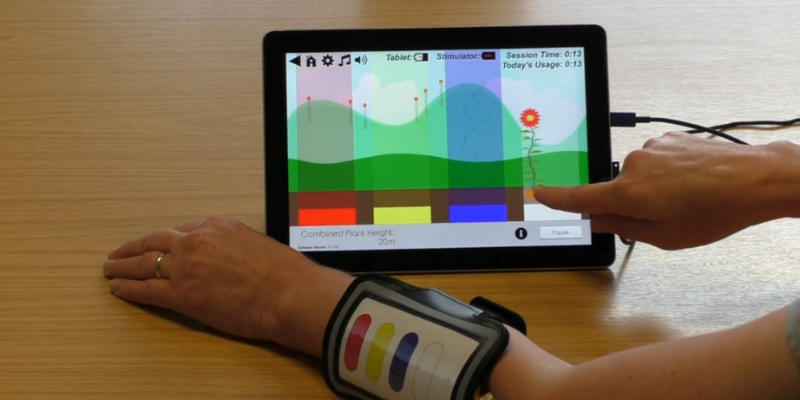
The Sensory Training System aims to help patients regain a finer range of nerve sensation in their limbs, which they often lose due to constant, localised pain. While it may seem counter-intuitive, research has shown that if patients can retrain their brains to distinguish sensations in their limbs more clearly, their levels of pain will reduce.

The system involves four electrode pairs that patients wear on or close to their painful body part, as they play specially designed electronic games on a linked tablet device. The games ask them to correctly identify which electrodes are being lightly electrically stimulated as they move through a series of different scenarios. The tablet records information about the patients’ activities including time spent, levels reached, and accuracy.

The device was developed by Professor Candy McCabe, Professor of Clinical Research and Practice, at UWE Bristol and Dr Darren Hart, Principal Clinical Scientist at the Royal United Hospitals in Bath, in collaboration with colleagues at both organisations. A multidisciplinary approach has been taken to develop the sensory training system. Dr Mark Palmer, a Senior Lecturer in Computer Science and Creative Technologies at the University of the West of England, alongside undergraduate Games Technology students, were involved in creating the engaging games-based software.

Professor McCabe explains: “Over time, patients will have fewer neurons (nerve cells) representing these painful body parts ‘switched on’ in the brain because those neurons are effectively not having to work so hard – all they’re having to process is constant pain rather than subtle differences in sensation. If we can increase the range of the sensations that the limb and brain have to interpret, we believe that it will reduce the levels of pain for that patient.”

The trial hopes to collect information on 20 participants across the UK using the system daily for half an hour over four weeks. The level of pain patients are feeling will be assessed before and after the month to see if there has been an improvement. While it’s a small study, if the team can prove that patients can engage with the device for the length of time that is thought to provide therapeutic benefit, they will seek more funding for future trials and commercial product development.

Find out more.

Academic Spotlight: Dr Caroline Flurey

Posted on

In this Academic Spotlight we asked Dr Caroline Flurey, Senior Lecturer in Health Psychology at UWE Bristol.

Tell us about your background and how you became interested in your research area?

I never really had that big long-term plan for what I wanted to do when I grow up, I’m a pretty good example of keep your eyes and your options open and the right thing will come along. My undergraduate degree was Psychology BSc at Swansea University, I was the first in my family to go to University so getting a degree was the end goal, I hadn’t even considered post-grad as a possibility. After graduating I worked as a Health Care Assistant at North Bristol NHS Trust for around a year while I figured out what I wanted to do – and decided on an MSc in Health Psychology at UWE. After my MSc, I got some experience working as an assistant psychologist and worked in a bank to pay the bills, which is what I was doing when I saw a funded PhD studentship advertised through UWE alumni comms.

My PhD studentship was funded by Arthritis Research UK (now Versus Arthritis) supervised by Prof. Sarah Hewlett (emeritus), Dr Marianne Morris, Dr Jon Pollock, and Dr Rod Hughes and focused on rheumatoid arthritis (RA), specifically how patients self-manage, their tipping points for seeking help for an RA flare, and whether patterns of symptoms or early warnings of RA flares could be identified. My PhD unexpectedly found that men were struggling to cope and/or self-manage more than women, and they reported that the support currently offered in rheumatology didn’t meet their needs. This led me to connect with Prof. Alan White at the Centre for Men’s Health at Leeds Beckett University to gain a better understanding of men’s health and along with Prof. John Kirwan and Prof. Karen Rodham develop an application for a competitive Arthritis Research UK post-doctoral fellowship.

Tell us more about your research and research projects, are there any particular projects you want to highlight?

My main research focus is men’s health, particularly men with long-term conditions, which so far has been focused within rheumatology. My Arthritis Research UK post-doctoral fellowship focused on experiences, coping styles, and support needs of men with rheumatoid arthritis (RA) to understand how better to support men with RA. I then broadened this out to another rheumatic condition – Systemic Sclerosis (also known as Scleroderma), which is a rare condition that men are dying from at around twice the rate of women, but no studies had focused on men before. So funded by the World Scleroderma Foundation & French Scleroderma Association (alongside a team of collaborators) I ran focus groups with men with systemic sclerosis in the UK and USA to understand their experiences and support needs – and I’m currently in the process of publishing the findings from that. These two different but related conditions have also helped me to look at whether it’s possible to design support for men across rheumatic diseases potentially broadening out to across long-term conditions, or whether disease-specific support is needed. Findings would suggest there is certainly over-lapping needs, although a modular approach to support with some disease or symptom specific components would be ideal – for example men want the opportunity to discuss erectile dysfunction or intimacy issues, or worries about mortality but preferably amongst other men who also experience these issues.

My key messages from my work with men with rheumatic diseases are despite public narratives suggesting ‘men don’t talk about their health’ – they do – when given a safe, trusted environment, and when given permission by being explicitly asked. For support, men tend to prefer ‘covert intimacy’ – support occurring as a by-product of taking part in other shared activities, and my future work (in development) will focus on developing support that meet these preferences for men within healthcare.

Whilst my own work has focused mainly on men aged 30 and over, one of my current PhD students Ruben McNeil-Walsh is funded by ESRC South West Doctoral Training Partnership scheme to focus on the experiences and support needs of younger men (age 16-30) with inflammatory arthritis.

Within Rheumatology, I’m also interested more broadly in psychosocial support, self-management, and patient reported outcome measures. I’m part of OMERACT (Outcome measures in rheumatology trials), which is an international initiative of key stakeholders (clinicians, researchers, patients, methodologists, industry) interested in outcome measures.

I’m co-chair for the OMERACT Drug Safety group in which we’re aiming to develop a way to measure the cumulative burden of drug side-effects in rheumatology clinical trials in a way that is meaningful to patients.

I’m also co-chair for OMERACT Remission in rheumatoid arthritis (RA): patient perspective working group, which is working towards including the patient perspective in how remission is measured for RA. Our previous work has found that according to patients: pain, fatigue, and independence are missing from the current measure of remission in RA. Whilst instruments exist to measure pain and fatigue, there isn’t a measure for independence. I’m currently funded by Arthritis Australia to conduct focus groups with patients from UK, North America, and Australia to understand how patients define independence in the context of remission in RA, and to see how patients suggest measuring this. The next steps would be to gain consensus on what to include in such a measure and then to develop and validate that measure.

How could your academic expertise be practically applied for a business partner or external collaboration?

My current work includes collaboration with rheumatologists, researchers, and patients internationally and I am always happy to be contacted to develop new connections and consider new collaborations. For broader studies I can contribute a men’s health focus, including advice on how to improve recruitment of male participants – who are often under-recruited to qualitative and psychosocial studies.

I’m a Trustee for the Men and Boys Coalition, which enables me to contribute an academic perspective to the charitable aims including connecting the various sectors that focus on improving wellbeing for men and boys. I’m always open to collaborate and engage with charities/grass roots organisations/industry with an interest in men’s health or mental health.

You can connect with Dr Caroline Flurey via her LinkedIn

New research network co-led by UWE Bristol to help agri-food industry reach net zero

Posted on

Adapted from this news release.

Dr Angelina Sanderson Bellamy, Associate Professor of Food Systems at UWE Bristol, is co-leading a network of researchers that has been funded to explore effective ways to support the industry to reduce its greenhouse gas emissions and improve its environmental sustainability.

Angelina is working with Professor Tim Benton of the University of Leeds; Professor Sarah Bridle of the University of York; and Professor Neil Ward of the University of East Anglia to drive the network and bring together researchers, industry leaders, government and members of the public.

Almost a quarter of the country’s greenhouse gas emissions can be attributed to the agri-food industry, according to the latest research. This provides the industry that is contributing to the problem, a chance to be part of the solution.

Dr Angelina Sanderson Bellamy said:

“This is a hugely important and exciting initiative, and we are thrilled to have the opportunity to build a network to move the agrifood system towards net zero.

We are really pleased to have been able to bring together such an extensive network team around a shared vision and plan of action. The 2020s is the decade of action. The three-year period of this project will be absolutely critical for the decade and jump-starting coordinated research and action.”

The network is being funded by UK Research and Innovation and four of its research councils: Biotechnology and Biological Sciences Research Council (BBSRC); Economic and Social Research Council (ESRC); Engineering and Physical Sciences Research Council (EPSRC) and Natural Environment Research Council (NERC).

Read the full story.

UWE Bristol academic co-leads HIV Prevention Programme in Zimbabwe

Posted on

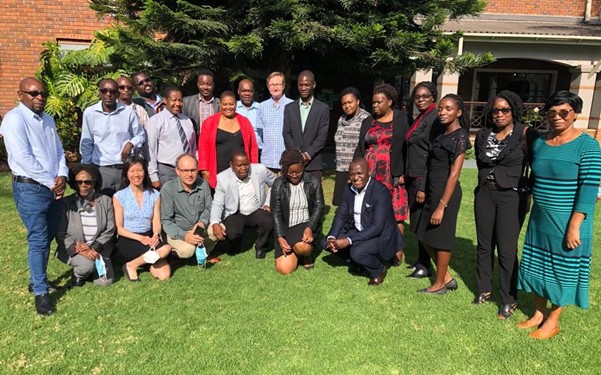
UWE Bristol academic Professor Peter Case has recently returned from Zimbabwe, where he helped run a series of workshops linked to a project funded by a Bill & Melinda Gates Foundation grant, “Optimising Stakeholder Operating Models for HIV Prevention in Zimbabwe” (OPTIMISE), that he co-leads.

The work is being delivered in collaboration with researchers from the University of California, San Francisco (UCSF) with whom Peter has been collaborating for over 10 years.

The project aims to assist the Ministry of Health and Child Care (MOHCC) to improve HIV prevention programme management and service delivery. The workshops took place between 4-8th April and marked a mid-stream opportunity to review progress to date and plan activities for the remainder of the project. Using participative action research as the main approach to leading change, the intervention seeks to integrate HIV prevention services (which are typically funded by a variety of external donors) and move them forward in a more effective and sustainable way in relation to MOHCC strategy.

The workshops involved reviewing progress with HIV health professionals representing five pilot districts in Matabeleland South, Matabeleland North and Manicaland provinces. The national director the MOHCC HIV Programme, Dr Murunguni, and his deputy were present to hear and comment on the progress updates, as were Provincial Medical Directors and other senior administrators.

There was also workshop representation from key INGO partners, such as, the Clinton Health Access Initiative and Population Services International, as well as the Bill & Melinda Gates Foundation and prospective future donors, including the U.S. President’s Emergency Plan for AIDS Relief and the Joint UN Programme on HIV/AIDS (UNAIDS).

District-level research groups highlighted key improvements to service delivery that had been achieved to date and discussed the results of ‘user research’ presented by the UCSF/UWE Bristol team. The events were a great success, with strong endorsements for the OPTIMISE project coming from the MOHCC and the prospect of future funding to expand the work stemming from the review exercise.

On the final day of events, 18 healthcare professionals associated with the OPTIMISE project and enrolled on FBL/UWE’s Post-Graduate Certificate in Professional Practice in Change Leadership (PPCL) had to opportunity to present and report on independent project work that they had completed as part of their degree. The module is being delivered in collaboration with a local HE provider, the Women’s University in Africa, and, as evidenced by the project presentations, is contributing significantly to the strengthening of leadership and management capabilities of Zimbabwe’s HIV Programme staff.

Thanks go to the UWE Bristol /WUA local tutors, Dr Greyling Viljoen and Dr Priscilla Mataure, for their help in delivering the PPCL presentation workshop. The team is also grateful to Katie Joyce, UWE Bristol PPCL module leader, for her support. As with the workshop outcomes, the presentations were very well received by senior MOHCC colleagues and the project donor.

Research into student fears of oral presentations receives over 20k downloads

Posted on

Recent research undertaken by academics at UWE Bristol on student fears of oral presentations has been downloaded over 20k times since being published 11 months ago. The paper is currently the 2nd most read paper in the Journal of Further and Higher Education.

The research by Dr Rob Grieve,  Dr Stephen Hunt, Alison McKay and Dr Julie Woodley took a qualitative approach to understanding student fears of oral presentations and public speaking in higher education.

The objective of the research was to seek further insight into the concerns experienced by students who fear public speaking, including oral presentations. The team wanted to further determine if their fear affected their overall experience of higher education.

The results of the research identify the specific fears students have in public speaking and provides evidence of the overall negative effect on their higher education experience. The research provides further evidence that higher education institutions should acknowledge public speaking fear among some students and provide more support in oral presentation assessments.

Rob Grieve commented:

“I have been astounded by the impact this paper has had over such a short period of time. However, not surprised that this issue around student fear of public speaking has gained such traction, as the paper clearly outlines how this fear negatively impacts on the university experience.”

Many of the findings from the study have informed the “Student Voices” in Rob Grieve’s book called “Stand Up and Be Heard: Taking the Fear Out of Public Speaking at University”.

UWE Bristol researchers develop new method to detect date rape drug in drinks

Posted on

UWE Bristol Researchers have developed a smartphone-based sensor for the determination of gamma-hydroxybutyrate (GHB); a popular recreational drug. Its strong sedative and amnesic effects have led to drug-facilitated sexual assaults, poisonings, overdose, and even death, something widely reported in the news amidst a recent rise in cases of drink spiking incidents.

As a result, legislation has restricted its availability, leading to GHB consumers switching to its pro-drug, gamma-butyrolactone (GBL). A pro-drug is a medication or compound that, after administration, is metabolised into a pharmacologically active drug. There is a growing need for methods capable of determining GBL in complex samples such as beverages. It was shown possible to quantify both, GBL and GHB, using the camera of a smartphone to record images of the purple colour developed following simple chemistry.

A downloadable free App available from the Apple App Store (Color picker and helper, version 1.1.6) was used to extract the numerical values of the Red, Green, and Blue (RGB) colour components of the purple colour.  Using these values, it was possible to determine the concentration of the drugs present in fortified lager samples; indicating the method holds promise for the determination of both GBL and GHB in such drinks.

The findings were recently published in a paper:  Procida, A., & Honeychurch, K. C. (2022). Smartphone-based colorimetric determination of gamma-butyrolactone and gamma-hydroxybutyrate in alcoholic beverage samples. Journal of Forensic Sciences.

Copies are available via the UWE Repository at: https://uwe-repository.worktribe.com/output/9282890

Report by UWE Bristol academics highlights implications for the future of open justice in a digital world based on research with journalists covering criminal courts during COVID-19

Posted on

A new report has been released by academics at UWE Bristol which looks at the experiences of journalists reporting on criminal courts during the Covid-19 pandemic.

Building on years of experience researching Law and Media, Dr Tom Smith; Dr Sally Reardon; Marcus Keppel-Palmer and Dr Bernhard Gross interviewed journalists to provide a unique insight into the unprecedented challenge of  covering online criminal courts during the initial stages of the Covid-19 pandemic.

The report considers the way in which courts and information on hearings were accessed by journalists; the routines of court reporters in this new context; and their perceptions of the maintenance of the principle of open justice during a time of emergency. The report explores this by detailing the self-reported experiences and insights of reporters, obtained through interviews.

They found that while most reporters believed that online courts afforded greater opportunities to access a greater range of hearings, the loss of face-to-face contact meant that traditional approaches to newsgathering in criminal courts – such as the ability to follow up on matters arising in hearings and the maintenance of key relationships – were significantly challenged. This arguably had negative implications for the quality and depth of reporting on criminal cases, with a potential impact on open justice. The report concludes that online hearings do have significant implications for open justice (albeit complex ones) and makes various recommendations which should be acted on in light of the expansion of online justice beyond the crisis of the pandemic.

Dr Tom Smith, one of the co-authors of the report commented:

“The system wasn’t perfect, but our research shows that journalists and court officials worked really hard at making sure that closing court rooms to the public didn’t mean closing justice to public scrutiny in this moment of crisis. In the long run, though, with more and more justice proceedings likely to move online and stay out of court rooms, it’s important to put systems and checks in place that uphold and facilitate open justice in this new normal.”

Dr Sally Reardon, another of the co-authors commented:

“One thing that struck me is how journalists mentioned that, “yes, sometimes being kind of there was made easier by being online” but also stressed how important it was for them to be in the court room. So much of their reporting also relies on the relationships they’ve built over time. This just highlights that it’s not one or the other. It’s not fully online or fully in-real-live. Both have their pros and cons.”

The full report can be found here: ‘An endlessly strange experience’: Experiences of media reporting on criminal courts during the Covid-19 pandemic

Part of this research was funded by the ACE-FBL Connecting Research Scheme, which encourages interdisciplinary work between academics in the faculties of Arts, Cultural Industries & Education and Business & Law.

Back to top