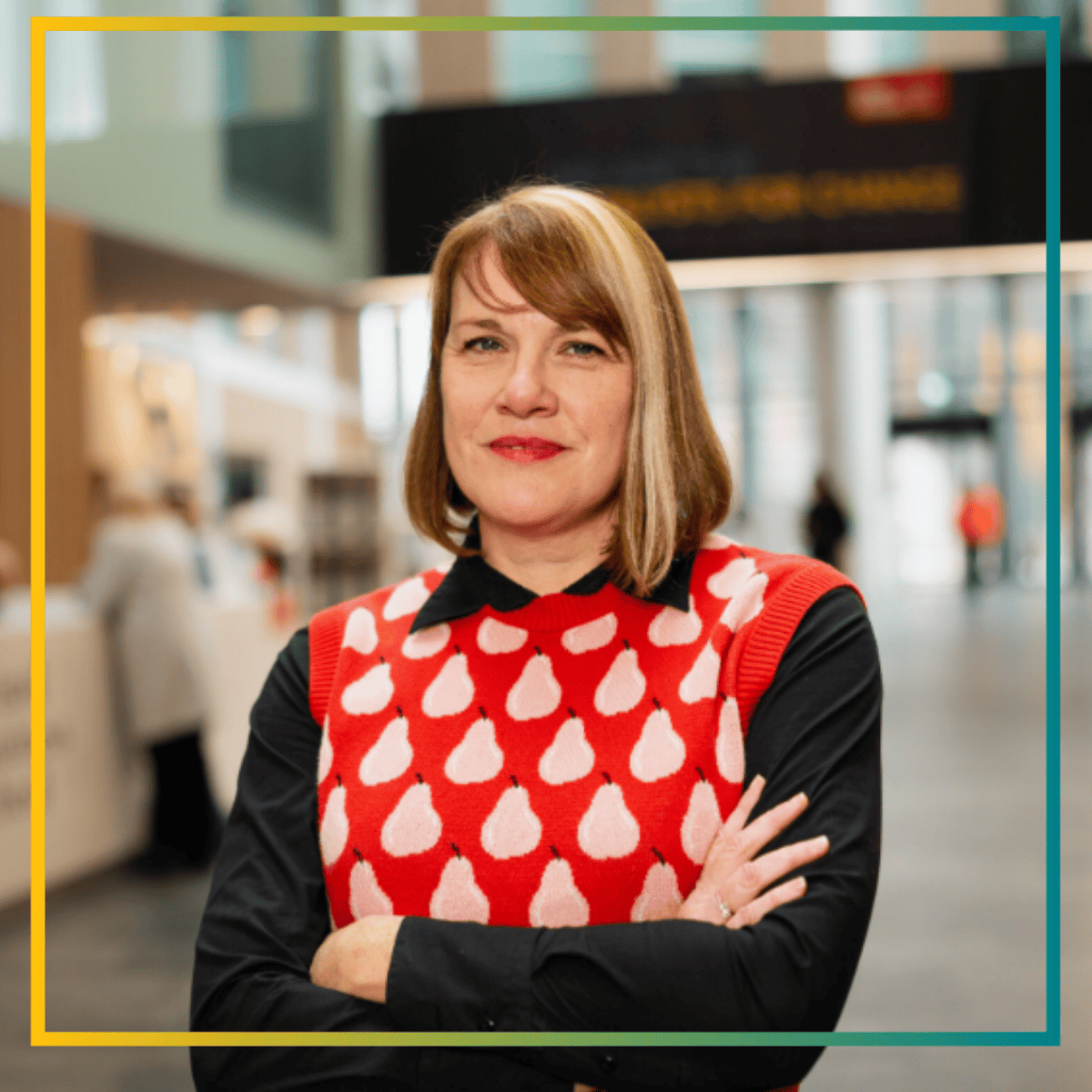
I work closely with minoritised communities around their sexual health and on marginalisation through sexual violence. Recent BMA award winning work has been with young survivors of sexual violence.
Collaborating with local partners, the Greenhouse and the Bridge SARC via Bristol Health Partners Sexual Health Improvement Health Integration Team (SHIP HIT), we set out to put survivors of child sexual abuse in charge of improving sexual health services for survivors like them in the city.
Their voice, their path
We supported young survivors to redesign the way that their treatment worked. We paid attention to power dynamics to ensure real co-production. We produced a new patient pathway guided by a kind of a passport or map to help children, young people and their carers find their way through the service, through the journey.
The map showed them all their options and put them in charge of decisions about where they could go and what it was like. We used bitesize videos to show them what they could expect, what the sexual health clinic looks like, who you’ll be meeting, here’s the room, here’s the process. For all of us involved, it was – always is – about finding the options that they like, what’s going to work for these young survivors.
More power to the individual
Throughout the design process, we used safe, trauma informed art based methods to uncover what survivors needed from a service. The young survivors designed different characters and imagined what each would need. At the end, we also asked them to tell us how to evaluate the work, if it was for them, what do they think success looks like.
For me, it’s about giving power to these unheard voices and in the case of trauma survivors, the process needs to be restorative, giving them back voice and options. And I guess that’s the thread in my work. I’m passionate about listening to people to find out what they need – not what we assume or think they need. That’s so important.
This is true across a range of groups I work with, there’s never one answer. I have other research students working with minoritised groups including black men in London telling us what they need from sexual health services, sexual violence survivors telling us what stops them using healthcare and what support male sex workers need. We are looking for funding to build a digital community around their sexual needs. The latest project I am working on is to get refugee and asylum seekers better served by sexual health and gender-based violence services.
Trusted to make a real difference
I love what I do. I really love listening to people’s stories – and helping to tell them, to share them. It’s an honour in many ways. But there’s real responsibility too. I work with groups that have often suffered trauma. And so it’s incredibly important that these survivors can see that their stories making real world change. I recently handed over £2000 in BMA prize money to the young survivors at Greenhouse who co-produced the patient pathway and they will decide how to spend it.
Because that’s what it’s all about. What we do has to make a change. It has to result in improvements. So yes, I tell my students that we’re here to change the world. Not just here to find out about it, but to make it better.
Contribution to the UN 2030 sustainable development goals
UWE Bristol is proud to align our research to the UN sustainable development goals. The above research aligns with the following goals:
I’m a research fellow in the Unconventional Computing Lab. It’s a European funded project (COGiTOR) to make liquid robots.
We are working to produce liquid computing and biological computers. Holonomic memory and computing, pressure sensing, and energy harvesting from thermal gradients will be achieved using colloids. These will have a lot of benefits for the environment. Liquid robots are completely environmentally friendly too. They can be recycled easily in the environment.
New, novel, next
My great passion is to change the world and help the environment. I believe that through our work we can make a very big difference in the future. This is exciting to me. What we are doing is new and novel.
I love what I do. And being in research at UWE Bristol is very inspiring and you’re constantly learning.
Contribution to the UN 2030 sustainable development goals
UWE Bristol is proud to align our research to the UN sustainable development goals. The above research aligns with the following goals:
The Knowledge Transfer Partnership (KTP) between University of the West of England (UWE), Obafemi Awolowo University (OAU), the Taro Agric Farm (TAF) was established to harness data-enabled innovations (DEI) for the commercial poultry industry in Nigeria. The project aimed to enhance chicken production efficiency and optimise overall business operations through the strategic application of data-driven technologies and academic expertise. Kamran Munir (Professor of Data Science) led the collaborative relationship with the Nigerian partners and the project from UWE. Saidu Oseni (Professor of Animal Sciences) led the project from OAU.
The Company
Taro Agric Farm (TAF), is a broiler chicken production company based in Southwest Nigeria. With over a decade of experience, TAF specialises in commercial broiler farming, operating concurrent batches of 2,000 birds per cycle. The company has multiple production centres, including its main base in Ile-Ife, Osun State, and outgrower units in Ilesa (Osun State) and Ibadan (Oyo State). Beyond production, TAF is actively engaged in consulting services, capacity building, and training for poultry farmers, offering expertise across the entire broiler chicken value chain—including input supply, production, processing, distribution, and marketing. A defining characteristic of TAF is its forward-thinking approach to poultry farming. Through the African Agriculture Knowledge Transfer Partnership (AAKTP), TAF successfully integrated smart technologies such as IoT-enabled sensors, a data storage for real-time data management, and predictive analytics to enhance decision-making in poultry production. This has positioned TAF as one of the leaders in leveraging data-driven solutions for sustainable poultry farming in Nigeria.
The Challenge
The Knowledge Transfer Partnership (KTP) between Taro Agric Farm (TAF), Obafemi Awolowo University (OAU), and the University of the West of England (UWE) was initiated to apply data-enabled innovations (DEI) to commercial chicken production in Nigeria and to improve and optimise business operations. A key focus was developing a strategy for embedding DEI to create sustainable broiler chicken operations over the long term. The poultry industry in Nigeria faces multiple constraints, including high mortality rates, inefficient farm management practices, limited use of data in decision-making, and poor environmental conditions affecting broiler chicken welfare and productivity. In the past, TAF like many others in the industry, relied on conventional methods of managing poultry production, which lacked the real-time monitoring and predictive capabilities needed to optimise productivity and farm environment. Farmers and farm managers had to rely on manual data collection and experience-based intuition, making it difficult to identify early warning signs of health risks or performance inefficiencies. Without data-driven insights, farm operations were reactive rather than proactive, often leading to delayed interventions and losses. In addition, one of the biggest challenges TAF faced in the past was high mortality and morbidity rates in broiler production. Various environmental factors, such as poor ventilation, excessive heat, high humidity, and exposure to noxious gases, particularly ammonia, significantly affected bird health. Without a robust system to monitor and control these environmental conditions, broiler chickens were at risk of disease outbreaks, respiratory problems, and stress, which ultimately led to economic losses.
Tackling these constraints required innovation in both poultry management and business practices to enhance the viability and profitability of operations. The KTP project activities included setting up an IoT platform, configuring sensor nodes, and establishing a database to record and store data on various parameters such as chicken welfare, input supplies, production, processing, distribution, and marketing. The project also involved the development of dashboards for monitoring key performance indicators (KPIs), the use of predictive analytics, and conducting performance comparisons across production batches. Additional activities included stakeholder engagement through workshops to build and embed capacity. The key accomplishments of KTP project include the successful setup, testing, and deployment of a IoT platform in a broiler chicken unit in southwest Nigeria, where key variables related to chicken welfare and performance were captured and monitored. Company data was archived in a database, and a dashboard was developed to track temperature, relative humidity, air quality and noxious gas parameters. An end of project Stakeholders’ Engagement Workshop aiming towards widening participation and sustainability with approximately ~100 participants, including poultry farmers and industry professionals, was also successfully conducted.
“This project equipped TAF staff with advanced digital farming skills, enhanced OAU’s research capacity and curriculum, and strengthened international collaboration—demonstrating how innovation and partnership can drive sustainable agricultural development.”
Prof. Kamran Munir (Professor of Data Science, University of the West of England, UWE Bristol)
Benefits and Changes
The Knowledge Transfer Partnership (KTP) between Taro Agric Farm (TAF), Obafemi Awolowo University (OAU), and the University of the West of England (UWE) has led to significant improvements in broiler chicken production, farm efficiency, and data-driven decision-making at TAF. As a result of the KTP, Taro Agric Farm and its staff have acquired several new knowledge areas and capabilities. These include (but not limited to):
The staff gained expertise in deploying sensor nodes to monitor key health and welfare indicators of broiler chickens. This application of digital technology is directly contributing to improved productivity and profit margins by enabling real-time data collection and analysis of poultry welfare to guide operations at the unit.
TAF implemented a smart farm infrastructure, incorporating WiFi, inverters, and clusters of sensor nodes, along with smart cameras to monitor the comfort, welfare, and performance of chickens. This integration allows for continuous, remote monitoring, improving operational control and decision-making.
The business acquired the capability to track, manage, and analyse its data assets—spanning performance, ambient conditions, costs, and returns—via a MySQL database. This centralised data storage allows for enhanced data organisation, retrieval, and long-term analysis.
A key capability gained was the deployment of a real-time dashboard that tracks health and welfare indicators of broiler chickens. This dashboard offers a user-friendly interface for staff to monitor key variables and make informed decisions regarding poultry welfare and management.
The staff were trained to track and monitor key performance indicators (KPIs) across production batches and historical data. This has allowed TAF to benchmark performance, identify trends, and adjust improve the consistency and quality of production, while also enabling more accurate forecasting and strategic planning
TAF’s adoption of data-enabled innovations (DEI) and IoT technologies positioned it as a leader in digital poultry farming in Nigeria. Sales turnover is expected to increase by 30%-40% within three years, due to improved efficiency and scalability. Profit before tax is projected to grow by 20%, within the next three years. Increased demand for TAF’s consulting services, as other poultry farms seek to implement similar digital solutions.
Obafemi Awolowo University (OAU) updated its Animal Sciences curriculum to incorporate digital technologies. The project also strengthened ties between OAU and UWE, fostering international collaboration in poultry technology research. The project research outcomes are being published as open access where possible which cover the use of digital technologies and data-enabled innovations for the enhancement of the welfare and performance of broiler chickens – as a case study in Nigeria.
“The KTP was an excellent opportunity to blend academic research with industry application. At OAU, we have always been committed to advancing precision livestock farming, and this project allowed us to practically demonstrate the power of digital transformation in poultry production.”
Prof. Saidu Oseni (Professor of Animal Sciences, Obafemi Awolowo University, OAU, Nigeria)
Key Facts
To best of our knowledge, TAF is the first poultry farm in Nigeria to integrate IoT and digital technologies into broiler production to this scale.
IoT-enabled sensors deployed to monitor temperature, humidity, air quality, and toxic gases in real-time.
A database established for real-time data collection and performance tracking
Decision Support Dashboard developed, allowing farmers to make data-driven decisions
Sales turnover expected to grow by 30 – 40%within three years
Profit before tax projected to increase by 20%
100+ poultry farmers and industry professionals trained on smart poultry farming
19 undergraduate & 2 MSc projects initiated on digital poultry farming at OAU
Presented findings at the Nigerian Poultry Show (NPS) 2024, reinforcing industry leadership
OAU integrated digital technologies into its Animal Sciences curriculum, influencing future research.
Find out more about the Knowledge Transfer Partnership in the Case Study below.
This partnership received financial support from the Knowledge Transfer Partnerships programme (KTP). KTP aims to help businesses to improve their competitiveness and productivity through the better use of knowledge, technology and skills that reside within the UK knowledge base. This successful Knowledge Transfer Partnership project, funded by UK Research and Innovation through Innovate UK, is part of the government’s Industrial Strategy.
I’m an anthropologist, so for me there’s no separation between the personal and the practice. That’s why I call my research heart work. Because it’s directly connected to me, myself, my cultural identity.
Through my work, I want to tell stories that need to be told. Some call them untold stories, but I prefer to call them unheard stories rather than untold, because often I’m not the first person ever to tell them, but I bring the stories to light in different ways. They’ve already been told in the oral tradition, so they’ve been heard, but not by everyone. Often communities don’t have the mechanisms to share these stories, tin the mainstream, in the media, or other formats. To get the stories out there for more people to hear. I’m keen to help them do just that.
The Emperor’s best friend
An example: a big part of my research work has been around a space in Bath called Fairfield House. It’s where Emperor Haile Selassie lived for four years when he came to England to campaign for allied support to liberate his country from Mussolini’s invasion. The Emperor left his former home Fairfield House to the city of Bath for aged citizens. My own parents spent much time there too at the day centre, when they were alive.
Back in 2016, I was at Fairfield House for an Ethiopian cultural day. I got talking to a lady around my mum’s age. Her name was Emeyou Teklamariam. She mentioned how her great grandfather used to live at Fairfield House. She told me his name: Blattenguetta Herouy. I knew about him because I made a documentary film in 1999 called Footsteps of the Emperor for ITV West, which featured his grave in Bath and the speech the Emperor gave at the graveside.
He was the emperor’s closest friend, his foreign minister, his trusted advisor. And at a time when the emperor was at one of his lowest points in his life following the invasion of his country , his friend Blattenguetta Herouy died. He was buried about 10 minutes down the road from where we were in Fairfield House. But when I mentioned it, Emeyou didn’t believe me. Nor did everyone else! She told me his body was now in Ethiopia, not Bath. And she was right, his body was exuhmed by the Emperor in 1947, butut his elaborate grave, which contains beautiful Ethiopian writing, is still there. To prove it, about half an hour after meeting Emeyou, I took her and her family and friends down to the graveyard, and they were shocked to see it there.
Restoring, re-telling
While there was no longer a body in the grave, and it needed repair, as the large cross and surroundings had all toppled over. Blattenguetta Herouy was a much-loved and respected man, so this was sad to see. So, after talking to the community, I secured some research funding for a project around Ethiopian culture and its connection to the city of Bath. I used some of this funding, as well as additional money raised, to restore Blattenguetta Herouy’s grave.
When the restoration work was finished, we organised an unveiling, with Haile Selassie’s grandson leading the ceremony. It was a very personal, significant moment for Blattenguetta Herouy’s family, many generations of which were present, and the wider Ethiopian community in the country.
Then, as a very generous thank you, the family invited me out to Ethiopia for a memorial service for Blattenguetta Herouy, and for his official reburial. I was also asked to say a few words. This was in 2023, seven years after I first met Emeyou, and 24 years after I first found the grave myself and featured in my film for ITV in 1999, (which was the first time the Emperor’s stay in Bath, and also anything about Blattenguetta Herouy, had featured on British television It is these forms of slow unravelling, moments of serendipity, and relationship building, that I find fascinating in research, and that I build into my work. Sometimes research projects can be quite fast, but even then, I look for the longer threads than can evolve and become something quite unknown in the future. For me that is where the beauty in research resides. As it lives and breathes and takes on a life of its own. Taken ownership by people and communities themselves, rather than me the researcher.
Little moments and small anthropology
Hopefully that shows you what really inspires and motivates me: sharing these unheard stories and helping to connect the dots between different generations. I call my work small anthropology. My way of seeing these little moments in history, these small details in life, and connecting them to now, to current and future generations.
And I’m much more interested in these small aspects of culture, because they still speak to bigger themes. For example, how central the radiogram was to life in my childhood home, and for many other Black British and working-class families. Or the souvenirs my mum collected, and what they meant to her – and their relevance to me, to our community, today. These everyday objects can tell us so much about our culture, heritage and value systems.
Our never-ending stories
I want to keep shining a light on these stories. To connect the dots from then, to now, to next generations. It’s so important that communities can tell and share their own stories. Because if they can’t, who will?
Contribution to the UN 2030 sustainable development goals
UWE Bristol is proud to align our research to the UN sustainable development goals. The above research aligns with the following goals:
“We’re both really passionate about participatory research. To do something about microplastics, you must have the conversation with people who can force change through. Change is the goal. It’s the only goal. ”
Dr Ben Williams, Senior Research Fellow, Air Quality Management Resource Centre & Dr Stephanie Sargeant, Senior Lecturer in Environmental Science, School of Applied Sciences
We co-lead the Biospheric Microplastics Research Cluster (BMRC). In short, the BMRC brings together expertise from multiple disciplines to understand the impact of microplastics on both human and ecosystem health.
The BMRC came about in a, well, roundabout kind of way. We both love trying to understand how our natural environment works, how everything’s connected and fits together. And we’re both committed to protecting environmental health and human health. The two being inextricably linked.
Everything is connected
This mutual passion led to a conversation about microplastic pollution in the air and water. And we quickly realised that we can do more, have a greater impact, if we worked together. So, we did. We do.
Our first university-wide research project looked at the impact of microplastics from inhalation and drinking water. Now, our mutual interest in microplastics is really about trying to understand what kind of impact and effect they’re having on the natural environment and then trying to do something about it.
Knowing what we don’t know
We’re looking at microplastic pollution in different environments, in the air, in the water. We’re exploring various methodologies to capture microplastics, quantify them, and assess polymer types.
There’s a lot of work out there – in studies and the media – that’s focused on just quantifying plastics in the environment. While we now have a pretty good idea of where microplastics are, we still don’t know much about the impact they’re having.
The power of citizen science
One of our goals is to better understand and, importantly, quantify the impact they’re having on plants, vertebrates and microbial communities. This way, bodies like the Environment Agency can set clear, definitive limits. Because currently, there aren’t any. While we have limits for things like nitrates and phosphates, and the water framework directive stipulates what those maximum limits are, we don’t have that for microplastics. And we want the same for drinking water as we do for our rivers.
We’ve done a lot of what we call citizen science projects, to measure, co-create, display and share the information and evidence we’ve captured. To help everyone see where microplastics are coming from, where they’re going, and what the impact is – or will be. Because if you don’t understand or you don’t know what’s going on, you can’t do anything about it. You can’t engage the people who can force through the necessary change.
Always looking ahead
There’s already been a lot of progress in terms of plastic pollution over the last five, ten years. There are certain organisations who are really pushing the boundaries of microfibre reduction, people like The Microfibre Consortium. They’re working with the textile industry and fashion brands to reduce microfibre release to protect our environment.
So yes, we’re positive, excited. Excited where the research will take us next. We’re going to be working with schoolchildren to help them understand microplastics and microfibres, how they’re generated and where they go. We’re also interested in understanding the chemicals associated with plastics and how they leach off into different environments. There are still questions around how far these chemicals actually disperse. We’ve found microplastics in the clouds and the Mariana Trench but, are they even further out? Where else are they?
For the good of human and environmental health
And we haven’t even talked about microrubbers yet… That’s the next big conversation. Because as we answer one question, another one presents itself. It’s up to us to find the answers, for the good of human health and environmental health.
Contribution to the UN 2030 sustainable development goals
UWE Bristol is proud to align our research to the UN sustainable development goals. The above research aligns with the following goals:
As a team here at UWE Bristol, we’re co-creating, co-designing and developing IT tools for public authorities, health providers and citizens.
Right now, I’m leading the Horizon Europe project GREENGAGE to develop citizen observatories in Bristol, Copenhagen, Gerace, Turano and North-Brabant. For this €4.9 million project, with 17 partners involved, we’re reimagining smart data-driven information intelligence for better decision making for the benefit of citizens.
Better data, better decisions, better outcomes
The big idea is that we, as a consortium, introduce a certain set of technology and social science-based tools that enable local authorities to better engage with people and collect data. Because if they can collect more data, better data, richer data, they can make better decisions for those citizens.
For example, we’re using sensors to collect data. Sensors that measure, say, the air quality at street level or the effectiveness of street lighting. We’re looking at everything that affects the environment that people live in. By capturing this data we can provide some kind of index, like an urban living index, which can help public authorities to make more evidence-based decisions and improve the quality of the environment.
On-the-ground, not up-in-the-air
Ultimately, we can use technology and data to get to the ground truth, the real picture. Another example of what I mean by that. Local authorities often run their own surveys to collect data. They also run their own workshops. But the problem with these surveys and workshops is that they’re not diverse or representative. People with the time to get involved, get involved. So, they don’t really tell local authorities what people from every community and walk of life really want or need.
So, the whole idea is we can broaden the tools available – to local authorities and their citizens. We’re giving them new ways to capture the on-the-ground picture and people’s opinions.
Contribution to the UN 2030 sustainable development goals
UWE Bristol is proud to align our research to the UN sustainable development goals. The above research aligns with the following goals:
Ifeoma Elizabeth Dan-Ogosi, Senior Lecturer in Public Health, Student Success and Inclusivity Champion & Disability Access Champion
My worldview is compassion. Naturally, I like making people feel happy and well. My personal and professional philosophy is based on critical pedagogy, where you try to reduce the oppression of underrepresented and underserved groups of people. In many ways, this is my life’s work and my great passion: I want to improve outcomes for people who are less privileged and have little say in decisions that directly affect them.
Right now, I’m teaching on the public health leadership module at UWE Bristol. We’re developing future public health leaders who better reflect and understand underserved groups of people and communities.
I’m teaching my students what public health leadership means, the impact that positive leadership can have. I’m also working on a proposal to co-create public health leadership modules with my students. I am very keen to enable them to better reflect on what they’ve done and what they’re going to do in the future. To help them to use their knowledge and training to create positive, effective action as public health leaders. Leaders who can deliver real change for these communities.
I have also done a lot of research into bottom-up decision-making and participatory budgeting. These two ideas are about putting power – and decisions and funding – into the hands of people who are underserved. People who don’t have a voice.
Through appreciative inquiry, we can listen to communities. We hear their voices. We get them around a table to really understand their needs. By listening and by helping them to make decisions about their own communities, we can improve outcomes.
So, for instance, in my PhD, I had four case studies. Three of these came out of the participatory budgeting project. We used participatory budgeting as a democratic tool, to enable and allow citizens to make the decisions about money that will be used for their community.
In doing so, the communities choose only the projects that are most beneficial to them. For example, a project that helps women from abusive relationships, or a project around healthy eating. It’s all about what’s right and best for that community at that time.
In my PhD, I evaluated the evolution and impacts of participatory budgeting for health and wellbeing. We trained local communities on how to bid for grant funding and then how to use the grants within their community. Putting fast, effective decision-making in their hands. They don’t have to wait two, three weeks for people behind a closed door to make a decision that affects their community. They make the decisions. They have power and agency. That can be life changing.
Because communities know what is best for their community. This is true democracy. It allows local citizens to make decisions about their own health and wellbeing. We make them the owners. This means that they can see and see and feel a direct, positive impact on their everyday lives.
Concepts like bottom-up decision-making and participatory budgeting create a real buzz in communities. I’m very excited about what’s to come – for myself and for my students, and, importantly, for the underserved communities we are committed to helping.
Contribution to the UN 2030 sustainable development goals
UWE Bristol is proud to align our research to the UN sustainable development goals. The above research aligns with the following goals:
I study the creative and cultural industries. I started here at UWE Bristol in 2020. My first day here was also day one of the first lockdown: 23 March 2020. Some day.
Right off the bat, and with my academic/research head on, I noticed that the creative and cultural sector was being decimated by the pandemic. Pre pandemic, many of these businesses were already often dancing between autonomy and precarity. Then the pandemic hits.
Testing our resilience
So, we decided to do a project to look at how the COVID pandemic was affecting creative and cultural organisations of all sizes here in the south west of England.
It was initially a small study, about a year long. Through it, we saw that around 70% of creative and cultural businesses in the region suffered terribly in the pandemic. But some 18-22% of these businesses did really well. But why? How?
We secured some more funding to carry out a study for the entire country. Through this project, we started to develop the idea of resilience. How these creative and cultural businesses can resist external shocks like the pandemic; how they can continue to thrive and grow and play the important part they have to play.
Fitter for the future
For example, we looked at the practical, financial assistance available to these businesses. Things like VAT referral, business rates and tax relief. Now, if you know about them, they can really help. But if you don’t, you can’t access them. So, we co-designed and developed a resilience toolkit for micro businesses. It’s a toolkit where you can go online and register your business. It asks you a bunch of questions and then gives you a score of how resilient your business is – and what you can do to beef up your resilience.
We’re now looking to scale this, to create a suite of business improvement tools for strengthening our creative and cultural businesses. I guess that’s what really drives me: I care about securing the health – the future – of these vital businesses.
The Blue Planet Effect
I want to help create a healthy, vibrant ecosystem for these businesses that will keep them alive, buoyant and thriving. Simply because they are so valuable. For example, we know that one in five new university applicants wants to work in media and communication. We also know that the creative industry in this country is huge. I think it outperforms most sectors of the economy. Also, if you look at the impact of TV and film, music and performing arts, this country punches way above its weight. There’s soft power in our creative and cultural industries too. They have influence.
So yes, there are lots of reasons why the creative industries are vitally important. Cultural currency. Messaging is another reason. The idea of cultural messaging outside of propaganda. A perfect example is what we call the Blue Planet Effect. When Blue Planet first came out, the climate crisis suddenly became a lot more central in people’s minds.
We must protect our creative economy. We have to love it and nurture it. And that’s my passion. That’s why I do the research work I do.
Contribution to the UN 2030 sustainable development goals
UWE Bristol is proud to align our research to the UN sustainable development goals. The above research aligns with the following goals:
I’m Dr Verity Jones. My focus is on social and environmental justice, working on issues that matter to people who don’t usually get their voices heard.
I work as part of a research group, who develop educational, engaging and empowering ways of getting people involved in doing and thinking sustainably. Art and creative practice is one way we do that. . The work I’m involved in with Sparks Bristol is a great example.
Sparking something sustainable
Sparks Bristol is a department store with a real difference. It’s a lively hub of sustainability, creativity and education. In the first six months of it being open, we had 250,000 visitors through the doors. And more than 1,200 children have already taken part in the research informed sustainability workshops. Through a creative approach we are having a big impact, engaging people in important topics, like climate change and the ecological emergency, food scarcity and migration.
We’ve just got our lease for Sparks extended into 2025 – and we have more exciting, creative projects planned with partners from across the city and beyond.
Shared stories
A lot of the work myself and my teams do explores novel ways of working with and communicating research to groups that might not usually have access to those kinds of findings.
For example, we’ve created a range of picture books for children. For example, we’ve taken high level, complex research findings about drought and water usage across the UK and communicated this in a way which is both familiar in form and easy to access – either by children themselves, or with their parents and teachers.
As well as extreme weather conditions, the teams I work with have supported children explore their lived experience of racism how it happens and what we can do to challenge and tackle it. . Our children’s book ‘If Racism Vanished for the Day’ is informed by this work and illustrated by some of the children who took part in the research – it’s being used by teachers, social workers and other groups that support young people across the UK.
We’re working with all sorts of people, including architects, artists, crafters and musicians to explore how their skills and knowledge can inform sustainable education ; I’m really excited about what we can do – what we must do.
“Now is the time to ensure that new immersive technologies, the metaverse and the next evolution of the internet, are designed in the interests of human rights, human dignity and democracy. ”
Verity McIntosh, Associate Professor of Virtual and Extended Realities
As Director of the City Campus VR Lab and an active member of UWE Bristol’s Digital Cultures Research Centre, I work with creative companies, charities, communities and policymakers to explore ideas about virtual and extended realities. And yes, this definitely includes artificial intelligence and the ‘metaverse’.
What I’m finding really vitalising at the moment is that because these tools and technologies are still emerging, people aren’t quite sure what to make of them. Some are incredibly excited. Others are quite concerned. Concerned about the uncritical way that they’re being deployed and that they are not being thought about enough in terms of equity, inclusion and accessibility.
Evidence over exaggeration
We’re in this wonderful kind of early moment, where nothing’s terribly resolved. There’s lots of hype and hyperbole. Lots of opinions. Lots of opportunity and, yes, risk too. Which makes now a really good time to find research-based evidence to support those that are making those crucial decisions.
Over the last couple of years, policymakers, those with the power to make change, have been more open and receptive to listening. They want to hear more and know more. They want evidence.
The right intentions, the best interests
I think policymakers were caught napping a bit with the social media revolution. There are lots of things that with hindsight, we wish had emerged differently. In terms of citizen protection, inclusive practice and accessibility. We now have to grasp these moments to make sure that, with these new immersive technologies, with the metaverse and the next evolution of the internet, we’re acting in the interests of human rights, human dignity and democracy. In other words, that we’re not just serving corporate interests.
It’s refreshing that people like me are able to kind of bend the ear of policymakers at quite a high level. We’re able to say this is what we know, this is how we might do it differently, these are our recommendations. Rather than shouting from the edges, we’re now shouting from the middle.
Playing to our strengths
Let me give you an example. I was talking recently at an event run by Meta and Tech UK. One of the big questions there was what should the UK focus on. What do we want to be known for, celebrated for. Never one to hold back, I happily shared my thoughts with anyone who’d listen. While there’s lots of talk about STEM, about the UK being a centre for excellence in science and technology, I think there’s something else. What the UK has, has always had, is the capacity to have a strong creative arts and humanities sector – one that complements and works in tandem with our technology sector.
Full STEAM ahead
The UK is actually pretty good at what we might call STEAM: STEM with A for Arts in the middle. There’s genuine uniqueness to the way that the UK has managed to powerfully combine the two. At UWE Bristol our College of Arts, Technology and Environment is a fantastic example of this approach in action. So yes, I’m working to show government the importance of this sweet spot of tech, arts and humanities.
Through STEAM, we can create whole new modes of storytelling and expression for creative practitioners. We should invest in STEAM, focus our energies into it. We can unlock even more creativity through crtical engagement with technology and make a positive impact on the world around us.
Contribution to the UN 2030 sustainable development goals
UWE Bristol is proud to align our research to the UN sustainable development goals. The above research aligns with the following goals: