Just before Christmas, our most recent cohort of the 90% funded Help to Grow: Management course attended their final case study session of the course. It was a fantastic opportunity to reflect on what each person will take forward from their twelve weeks of engagement with the course into the future of their businesses.
Since UWE Bristol first started delivering the course in March 2021, the university has helped over 200 businesses to complete the course.
It has been fantastic to work with so many interesting and diverse businesses both local to Bristol and from across the South West region, and to see the supportive networks formed as a result of the course.
With two other cohorts currently underway, we are looking forward to welcoming more SME leaders onto the course for our next cohort, commencing in March 2024. There are still places available on this cohort. Each place is 90% funded by the government and costs just £750 per participant.
The Help to Grow: Management offers short, focused sessions to allow you to complete the course alongside running your business. The course combines online sessions with face-to-face learning, alongside peer support and mentoring.
The blended learning consists of:
4 practical and interactive face-to-face workshops
8 facilitated online 2-hour sessions
10 hours of confidential 1-1 mentoring
8 online peer group calls
UWE Bristol Help to Grow Management Alumni, Christabel Blanch of Alvan Blanch Development Co. Ltd, commented:
“Thank you so much for a very useful, thought provoking short course. One of the best achievements was getting a group of very interesting and diverse business leaders together to share and support each other, within a localised region.”
Find out more about courses available and book your place on our website or contact the team on helptogrow@uwe.ac.uk.
UWE Bristol’s new repair café will launch on Wednesday 11th, from 12.15 – 1.45pm at the School of Engineering. Students, staff, and members of the public are invited to come along to the sessions with their broken items to get them fixed by a team of student and community repair volunteers, supported by technicians.
These items can include electricals and small appliances, clothes, and anything else that can be glued, soldered, or stitched. (There won’t be any capacity to fix tablets, laptops, or mobile phones, though Fix My Crack, which runs a pop-up on campus will be able to help with those). Repair Cafes are all about skill sharing and community, so people are encouraged to get involved and ask questions.
People looking to have their items fixed will be asked to have the registered at the “check-in” desk. This is to help keep a record of how much waste is saved from landfill, and to calculate the carbon footprint where relevant data is available. The data will feed into the Open Repair Alliance data, which is used by researchers, policy makers, manufacturers and other stakeholders to get a better understanding of the repair economy on a national and international level.
Once the items are checked in, people can take a seat in the waiting area until it’s their turn. They are welcome to bring lunch, as long as it’s kept away from the work area!
The repair café will run every 2nd Wednesday of the month 12.15 – 1.45pm at the School of Engineering.
Upcoming dates are:
11 October
8 November 2023
13 December 2023
10 January 2024
14 February 2024
13 March 2024
10 April 2024
This is a voluntary service and all repairs are done at people’s own discretion, so there is no guarantee that the item will be fixed.
Students and community partners from the wider Bristol Repair Café network are invited to get involved as repair volunteers. They can email kat.corbett@uwe.ac.uk for more information and to register their interest, or just drop in on the day of the session at 11.45am.
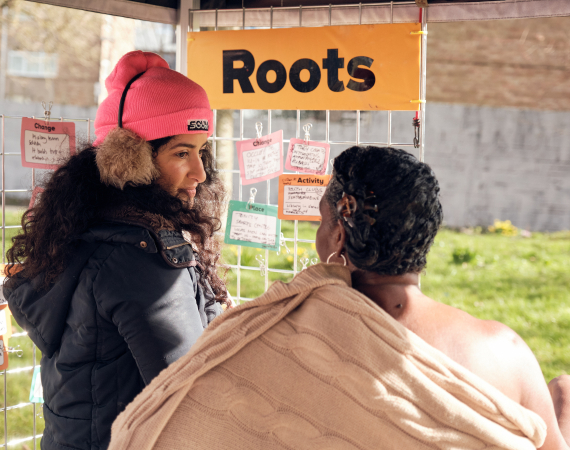
The programme, which is led by UWE Bristol, and was previously partnered with the Black South West Network and NatWest for 2022 activity, provides access to green jobs, training and business opportunities to Black, Asian and minoritised young people (aged 18-28), and recent graduates living in Bristol, South Gloucestershire, North Somerset, Bath and North East Somerset.
The programme beat off stiff competition from sustainability initiatives from institutions across the world including universities and colleges from Malaysia, France, Pakistan and Saudi Arabia, whilst the judges commended the programme, saying “This is a really innovative project bringing together an identified skills gap, employment, support and development opportunities for under-represented groups to deliver a net zero challenge.”
Over 100 young people have successfully completed the first stage of a transformational ‘first of its kind’ green skills training programme designed to empower young people with skills, knowledge, insights and industry contacts to assist them in pursuing careers in the growing green sector. The initial phase of the project has provided each of them with access to eight days of paid training – covering energy, food, living and the circular economy, transport and air quality, Passivhaus construction, innovation and enterprise.
They have been introduced to a number of inspirational industry, community and business consultants, participated in interactive workshops, completed group activities and been provided with opportunities to reflect on their personal development and future careers through one-to-one coaching and mentoring sessions.
Stage two of the project has provided the learners with the opportunity to embed their knowledge and refine the skills they have been developing through access to one of four skills pathways: a fully funded internship with a local organisation, a fully funded research internship at UWE Bristol, funding to cover industry training, or further learning and support to help set up a Green Tech business or Social Enterprise.
On winning the award Vice-Chancellor Steve West said: “Sustainability is at the heart of Transforming Futures, UWE Bristol’s Strategy 2030. Winning this Green Gown Award is welcome recognition for the many actions of students and staff that are helping to make UWE Bristol a more sustainable university.”
The Green Skills Programme is an initiative funded by the UK Government’s Community Renewal Fund (CRF) and managed by the West of England Combined Authority (WECA) on behalf of the Department of Levelling Up, Housing and Communities (DLUHC).
Although the 2023 activity is now funded and led solely by the University, we seek to acknowledge and recognise the invaluable funding and delivery partnerships that enabled and supported award-winning outcomes intially.
The winners were announced at an online awards ceremony held as part of the UN High Level Political Forum on Sustainable Development on Monday 17 July View the full list of winners and finalists on the Green Gown website which also includes a recording of the awards ceremony.
The Pervasive Media Studio is a collaboration between Watershed, UWE Bristol and the University of Bristol. It hosts a brilliant community of over 100 artists, creative companies, technologists and academics exploring experience design and creative technology.
In 2011, Watershed, University of Bristol and UWE Bristol entered into an extended partnership to undertake collaborative creative technologies activities together. Through this partnership the Pervasive Media Studio creates unique opportunities around research, knowledge exchange, innovation, incubation and teaching. The partnership enables the linking of creative practice and leading edge research to pioneer innovative creative technologies, novel applications of digital media and socially engaged experimental methodologies Researchers from the two universities work with Studio residents and local communities in an open innovation environment to explore ideas that can deliver new applications of creative technologies, new content, new experiences, new research questions and new business opportunities. The strength of the studio’s research lies in this eclectic mix of experience and perspectives within its projects.
Based within Watershed on Bristol’s harbourside, PM Studio is an open plan studio enabling the different businesses that work within the space to collaborate together.
UWE Bristol’s Digital Cultures Research Centre (DCRC) makes its home at the Pervasive Media Studio, as the strategic research partner of a unique and diverse community of artists, creative companies technologists and academics exploring experience design and creative technology.
Over the last 16 years Pervasive Media Studio has developed an international reputation for creative technology; producing cutting edge creative products, award winning cultural experiences, globally leading research outputs and leveraging millions of pounds of money into the region.
Our diverse community imagines more hopeful futures – ones where art, technology and society come together for everyone’s benefit – and works to make these futures happen.
I think that it is incredibly rare for universities and cultural partners to have such a high degree of openness and trust – by not predefining the outcomes of our collaboration we have enabled extraordinary things to emerge.
Jo Lansdowne, Executive Producer of Pervasive Media Studio
Current projects:
The PM Studio has a huge array of projects. This is a small snapshot of work currently taking place within the Studio:
Grounding Technologies
Play:Disrupt Creative High Streets, credit: Jack Offord
Grounding Technologies, a six month pilot project from Bristol + Bath Creative R+D, will support those engaged with climate action in the region to explore this question with us. We want to nourish new regional collaborations, unlocking imagination and sparking conversation. Bristol+Bath Creative R+D is a collaboration between UWE Bristol, Bath Spa, University of Bath, University of Bristol and Watershed, which has spent five years working to create a more equitable environment for innovation to raise the bar for the region’s creative industries.
The project invites those involved in climate action, together with creative technologists, artists, designers and creative practitioners to propose new and distinctive ideas that will bolster climate action in our region.
My World – Strength in Places
Over the next four years Watershed is part of a programme called MyWorld which will showcase pioneering new digital formats and technologies to create innovative experiences across fiction, documentary, games, and live performance.
With a unique set of creative partners and research collaborators MyWorld will present a set of trailblazing augmented, experimental and immersive experiences. Technologies taking centre stage in MyWorld include the latest developments in film and television visual and audio production; volumetric capture, mixed reality, motion capture, virtual production, digital doubles, remote robotics, avatar creation… and much more.
Playable City Sandbox
Playable City Seoul, image credit:Jon Aitken
Playable City Sandbox is a creative research and development programme. Watershed’s Sandbox methodology provides a facilitated space where participants have the chance to transform an experimental idea to a working prototype over three months of rapid research and development.
Six teams have been commissioned to create new innovative prototypes that push creative boundaries. The commissioned projects place play at the heart of the city, sparking imagination and conversation about inclusion, sustainability, surveillance and the future of cities.
We Don’t Bite
We Don’t Bite was a research and design project which explores early stage thinking towards how the Pervasive Media Studio can become a more equitable space for young people. The project was carried out by Joe Hill and Sumaya Hassan-Murphy, independently of the diversity and inclusion research and thinking already taking place within the studio.
The project ran during the first few months of 2022, and involved a mixture of conversations and workshops with young people and organisations.
Focus, but where?
As part of the 2023 winter residency, Focus, but where? aims to examine our misplaced attention when faced with climate change issues by creating an interactive web-based zine. This publication will playfully unpack our current information environment and help reimagine more productive (and hopefully kinder) ways of public engagement from the standpoint of a digital content creator/consumer.
Find out more about the amazing work happening at the Pervasive Media Studio
Senior Business Innovation & Growth Manager, Aimeé Skinner was named “Best Mentor” at the SPARKies in mid-July. The SPARKies, from techSPARK, brought together the best of the South West region’s tech and digital community to celebrate the best startups, designs, hardware, people and more.
Aimeé fought off fierce competition to win the Best Mentor award, sponsored by Babbasa.
Aimeé commented
“It’s an incredible honour to have been nominated and won this award. I can’t quite believe it. I’m just so thankful to everyone that has supported me over the last few years as I have joined the start-up ecosystem and worked my best to deliver innovation programmes and support businesses to grow. I’m grateful I get to do more of it!”
techSPARK is a not-for-profit community dedicated to connecting, educating and strengthening tech ecosystems from Swindon to Swansea. They work with tech and digital businesses from startups to scaleups, SME’s to global corporations to help them thrive through their networks and knowledge.
Image: Even When I Jump (dir. Jerry Rothwell, 2021)
The Documentary Film Council (DFC) is a new national trade body for the UK’s documentary film industry. Co-designed by filmmakers and executives from across the industry working in partnership with lecturers in the Film Studies team at UWE Bristol, the DFC will represent the UK’s documentary film community, facilitate transparent communication within the sector and take effective, coordinated action to address the key issues it faces. The first national trade body in the UK screen industries to incorporate as a co-operative, the DFC will be democratically run by and for its members in the interests of the wider community. It launches at Sheffield DocFest on Saturday 17 June.
The concept of the DFC stems from the UK Feature Docs research project, which was funded by the Arts and Humanities Research Council (AHRC) from 2018-2021 and which evidenced many of the challenges facing the independent documentary film industry.
Led by Dr Steve Presence, Associate Professor of Film Studies at UWE Bristol, the research team worked with freelancers and organisations across the industry as part of the ‘Industry Futures’ strand of the project. This developed into a major process of policy research and development, the findings of which were published in two reports: Keeping it Real (2020), based on a survey of independent producers and directors; and Making it Real (2021), a detailed policy programme co-created with stakeholders across the industry following an extensive consultation process. In 2022, the AHRC approved Dr Presence’s Follow-On Funding grant to seed-fund the development of the DFC.
Dr Presence commented:
Documentary films captivate, inspire, educate and entertain audiences all over the world, but the industrial infrastructures that support these films are under threat. Many of the challenges facing the screen industries – excessive workloads, precarious employment, poor mental health and so on – are mirrored in academia, so it’s been gratifying to build structures in the documentary sector to help address these issues.
We’re working with everyone from senior executives and commissioners to established and emerging filmmakers, distributors and exhibitors, so the DFC is a genuine example of stakeholder-centric, evidence-based policy-making. It’s an exciting time because if it succeeds, the DFC could have a transformative impact on the documentary film industry for years to come.
The DFC is so exciting because it brings together all voices of the UK independent documentary sector for the first time around shared challenges and opportunities. The unique importance of independent documentary to culture, society and democracy has never been more needed yet the sector faces external barriers that stop it reaching its full potential, getting films to audiences and maximising impact. The DFC is the first step to addressing sector needs in an inclusive, joined up way and we can’t wait to get started.
Two of the DFC’s first committees have already started work on two urgent priorities. To mitigate the impact of word-of-mouth recruitment on workforce diversity, the Equity, Diversity and Inclusion committee (led by producers and executives at FWD-Doc and Doc Society) is building the UK’s first directory for documentary talent and crew. The Mental Health committee (led by Film in Mind) is training therapists to work with nonfiction filmmakers as part of ongoing efforts to address the well-documented mental health crisis in the screen industries. This crisis is especially pronounced among documentarians because of the unique ethical and emotional challenges of the artform, which often also involves working with vulnerable people and/or in traumatic or dangerous situations.
The DFC is a new member-led organisation designed to advocate for the UK’s independent documentary film sector. It will launch officially at Sheffield DocFest in June 2023.
The Centre for Transport & Society (CTS) symposium on Thursday 6th July 2023 is a chance to share and consider research findings and their implications.
The symposium will bring together academics, practitioners, policy makers and others interested in transport. The afternoon will be dedicated to three workshops:
Improving the quality of walking environments;
Transport planners: are you ready to play a game?; and
Decarbonising travel behaviours.
We spoke to the organisers of each workshop to ask them three questions about what their workshop will entail.
Workshop 1: Improving the quality of walking environments
Can you describe what your workshop is in three sentences?
The quality of our walking environments: we talk about it, we (sometimes) measure it, but how do we improve it? This workshop aims to share insights and develop ideas that address this question. This session contributes to a workshop series held in partnership with Walk21, an international organisation that aims to make sure that walking is measured, valued and appropriately provided for- outcomes form this workshop will be presented at this year’s Walk21 conference.
Why is this topic interesting / important?
The quality of the walking environment significantly affects people’s decision to walk. However, there is no standard way to measure or share evidence on environment-quality which limits the ability of government and communities to take positive action to improve it. This workshop aims to understand how improving the walking environment can unlock the potential of walking. With an urgent need to take climate action, making it easy to make journeys on foot has never been more important.
What do you hope participants will achieve by the end of your workshop
Participants will have had the opportunity to:
learn about the “Social Model of Walkability”. This model links walking environments to behaviour;
critique the model, discussing its strengths, gaps, and potential;
share best practice for measuring the quality of walking environments and discuss the potential for a standard approach; and
share examples of policies and governance that support improvements to walking environments where it is needed most, and in a way that addresses the diversity of public need.
Workshop 2: Transport planners – Are you ready to play a game?
Can you describe your workshop in three sentences?
Have you heard of Triple Access Planning and Decide and Provide? Would you like to find out more in a fun and engaging way where you are hands on and get to have your say? Then this is the workshop for you, please come and play cards with us.
Why is this topic interesting / important?
You may have noticed the world is in a state of flux and we face a climate emergency which needs some big changes to transport and society. Local authorities in England are now entering into a ‘last chance saloon’ round of local transport plan development. We think Triple Access Planning can help.
What do you hope participants will achieve by the end of your workshop?
By the end of this workshop, you will have weighed up the strengths, weaknesses, opportunities, and threats (SWOT) of Triple Access Planning. You will have learnt from the game and from other players. You will be primed to share your views with others in your professional network.
Workshop 3: Decarbonising travel behaviours
Can you describe your workshop in three sentences?
This workshop focuses on decarbonising travel behaviours, i.e. the choices people make about their travel. Using the framework of strengths, weaknesses, opportunities, and threats (SWOT) you will take part in a guided discussion where you can exchange expertise and experiences. This workshop will then discuss areas for priority action.
Why is this topic interesting / important?
Travel decarbonisation is an essential element of addressing climate change, improving air quality, enhancing energy security, fostering innovation and economic growth, and promoting sustainable development and more!
What do you hope participants will achieve by the end of your workshop?
The workshop will allow attendants to explore ideas about potential future collaborations between practitioners, academics, and others interested in travel decarbonisation.
Are you interested in taking part in one of the workshops?
You can tell us which workshop you wish to join as you register for the free CTS symposium. Find out more and register.
Taking place 9th – 18th June, the Festival of Nature is the UK’s largest free celebration of the natural world. This year several academics will be sharing their research in various ways as part of the festival’s 20th anniversary.
Our academics will be taking part in the Festival of Nature’s Wild Weekend on Saturday 17 – Sunday 18 June. The Wild Weekend includes two huge outdoor days of free nature activities, stalls and screenings, food and drink, and special guest talks at the harbourside.
Highlights from UWE Bristol include:
Climate Change Book Club with Dr Sarah Robertson and Dr Ann Alston
Interested in climate, nature and stories? Then come and have a chat with Ann Alston and Sarah Robertson who will be running their Climate Change Book Stall at the Festival of Nature weekend. Passionate about how literature can help tell the story of climate change, Sarah and Ann who specialise in climate fiction in UWE Bristol’s English Literature department, will be on hand to recommend and talk about books. Sarah and Ann will have a selection of books on the climate available for you to browse, from children’s books, to young adult books and to adult books. So, if you’re looking for book gifts or something to read while sat in your garden, or simply a chat about climate literature and the book groups Sarah runs, then they would love to see you. Follow Sarah’s climate book group on Instagram to find out more (@climate_change_book_club)
Voices in a Pandemic Project
The Arts & Humanities Research Council Voices in a Pandemic (VIP-CLEAR) project is taking its Tree of Hope and Ambition, created by Bristol artist Luci Gorell Barnes, to the Festival of Nature. Children will have an opportunity to draw their hopes on coins and add their voices to the tree. This arts activity supports ‘looking forward’ during times where threats are difficult to navigate and often invisible (such as climate change, austerity, war) and mirrors the creative research activities carried out by VIP-CLEAR with Bristol primary schools. The research informed children’s book ‘Learning to Live with Fog Monsters’ will also be available.
UWE Bristol staff and students from the School of Applied Sciences have teamed up with Wild Carbon to develop cost-effective methods and techniques to monitor and validate improvements in carbon sequestration and biodiversity in rewilding and restoration projects. At the Festival of Nature, we will be showcasing our research on the spatial and temporal variation of greenhouse gas emissions from rewilding sites and the potential use of sound recording technology (bioacoustics) as a means to monitor soil health, quality and biodiversity.
Reverse Graffiti
In collaboration with Stop Ecocide, Dr Suwita Hani Randhawa will be hosting an art installation project on ‘reverse graffiti’, which aims to inspire collective creative responses to global environmental issues. Drawing on her research on international crimes, she will also be showcasing the importance of recognizing ecocide as an international crime through an interactive activity that encourages reflection on the question of who should be held accountable for crimes against the environment.
Bristol Women’s Voice: International Women’s Day event
Bristol City Hall
10am-5pm
International Women’s Day 2023 is being celebrated at a day long event organised by Bristol Women’s Voice. Researchers from UWE Bristol, University of Exeter and the University of Edinburgh will be showcasing their research during this event, as summarised by three local female artists.
This artwork represents a focus group that these institutions conducted to discuss and explore women’s experiences of reproductive events (e.g., menstruation, pregnancy, and menopause) and how they are related to mental health. Dr Kayleigh Easey, a Senior Lecturer at UWE Bristol who led these focus groups alongside Dr Siobhan Mitchell and Dr Kate Ash-Irisarri, explains “We were very fortunate to be joined by three local artists, who have produced some amazing artistic interpretations of the conversations and themes discussed on the day. We can’t wait to share this artwork with members of the public at the IWD event, to help bring awareness and discussion about the impact reproductive events can have on mental health, and what avenues exist to promote positive mental health around this area”.
Some of the outputs to be showcased at this event are from an ongoing GW4 funded grant awarded to the researchers to further investigate an understudied, but pivotal area that can contribute to poor mental health.
This International Women’s Day event is being organised by Bristol’s Women’s Voice, to be held at Bristol’s City Hall from 10am-5pm, involving multiple workshops and interactive displays.
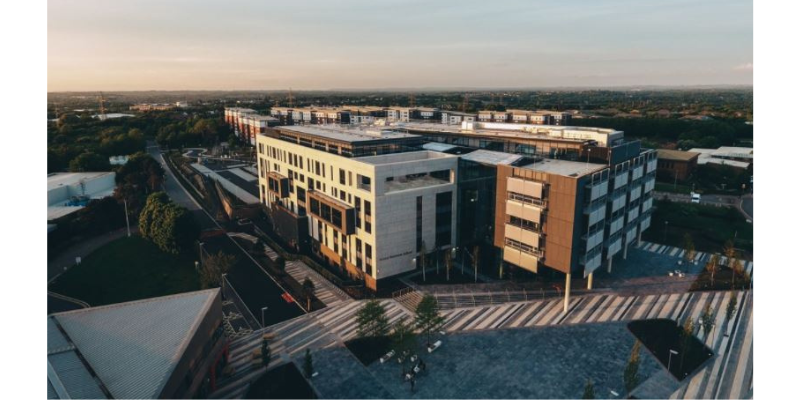
The College of Business and Law is located in the heart of Frenchay campus in a purpose built, ground-breaking building that is home to collaborative spaces, mock courtrooms, state of the art lecture halls and a Bloomsburg trading room.
The College is home to two schools, Bristol Business School (BBS) and Bristol Law School (BLS).
Bristol Business School
BBS is an innovative community full of diverse experts across business management, marketing, economics and accounting and finance. Its courses are accredited by leading professional bodies, such as Chartered Management Institute to the Association of Chartered Certified Accountants and support not only Graduate learners but are also leaders of all fields through many Continual Professional Development courses.
As a prominent university research centre for business, management, and employment, BBS are producing applied research with real-world impact. They are shaping the future of organisations through our active research networks in all of our subject areas, Accounting and Finance, Business Management, Economics and Marketing.
Bristol Business School
BBS has one research centre and six research groups:
The Applied Marketing Research Group (AMRG) exists to foster working relationships with external organisations with the aim of collaborating in areas of marketing and customer engagement.
A forum for world-leading inter-disciplinary research in the areas of corporate governance, asset pricing, market efficiency, corporate disclosure and accountability.
The Human Resources, Work and Employment Research Group takes on a reconstructive ‘both-and’ approach to human resources and employment studies research.
The Innovation, Operations Management and Supply Research Group is formed around the core disciplines of innovation, operations management and supply chain management.
The Sustainable Economies Research Group applies inter-disciplinary approaches to the analysis of complex systems to develop solutions and tools that can better bring forth a sustainable economy.
Mock courtrooms in the Bristol Law School
Bristol Law School
Bristol Law School (BLS) has been a leading provider of legal education for over 40 years. They have a diverse and inclusive learning community benefitting from a growing network of alumni, volunteer opportunities stemming from our Business and Law Clinic and invaluable legal work experience.
Bristol Law School is one of the top-rated ‘post 1992’ law departments in the country, scoring consistently high ratings in the official research assessment exercises. This reflects the fact that legal research provides a central focus for the work of the Law School, and that many staff are engaged in research of national and international significance.
They’ve established connections with professional regulatory bodies, plus regional and national law firms, chambers, and businesses. They’ve also built an extensive global network of partners.
Their world-leading researchers collaborate with national and international organisations on Public International Law, Environment Law and Financial Crime. From environmental law to criminal justice, we’re creating solutions to real-world challenges.
Providing a forum for research activity in the field of environmental, sustainability and natural resources law. Members are drawn from across the University as well as externally.
The Global Crime, Justice and Security Research Group provides a forum for research activity in the field of financial crime, criminal justice and procedure, serious organised crime and cyber security.