Bringing Vulnerability to Life: Transforming Police Learning Through Immersive Hydra Simulation at UWE

Posted on

In this week’s blog, Claire Bowers, Senior Lecturer at UWE, reflects on an innovative collaboration with UWE’s New Wave Agency to enhance simulation-based learning about vulnerability for Year 2 students on the Police Constable Degree Apprenticeship (PCDA). The project has produced highly positive outcomes, demonstrating the value of experiential learning in policing education.

Claire has over 20 years experience across safeguarding, criminal justice and education and is now based within the Social Work team in the School of Health and Social Wellbeing at UWE. Prior to this role, she was a Senior Lecturer in Policing and module leader for Investigating Vulnerability and Risk.

Why Vulnerability Matters to Every Officer

The National Vulnerability and Public Protection Strategy (2025) states that “vulnerability and public protection is everyone’s business” reflecting the understanding that recognising vulnerability, safeguarding victims and disrupting exploitation are essential responsibilities shared across all areas of policing. Vulnerability has evolved from a specialist safeguarding concern to a central organising principle of contemporary policing, with issues such as domestic abuse, county lines offending and modern slavery generating substantial policing demand and requiring coordinated safeguarding and enforcement responses.

Vulnerability is a core theme throughout the Police Constable Degree Apprenticeship (PCDA) at UWE.

The Year 2 ‘Investigating Vulnerability and Risk’ (IVR) module builds on Year 1 learning, deepening critical reflection and understanding of vulnerability-related harm through research, policy and practice. Student officers also examine new complex areas such as cyber-enabled crime, counterterrorism and radicalisation, while developing the skills to identify, assess and manage vulnerability through evidence-based policing and trauma informed perspectives. The module culminates in a ‘Hydra style’ simulation exercise, consolidating the learning and based on the facts of a true case.

HYDRA is the multi-agency decision-making simulation system developed for emergency services and public sector leadership training.

The name ‘Hydra’ is linked to the mythological Hydra; the many‑headed serpent from Greek mythology. The idea is that complex incidents present multiple, interconnected problems at the same time. Much like the many heads of the mythical Hydra, as you deal with one issue (or ‘head’ for the purposes of the analogy) others then emerge which also need to be carefully managed!

Hydra; the many‑headed serpent from Greek mythology.

Chernikova et al. (2020) clearly identifies the positive effects that simulation-based learning can have when utilised within higher education. Drawing upon Kolb’s (1984) experiential learning theory, simulation enables learners to develop knowledge and skills through active participation and reflective practice. Recreating policing incidents in this way offers a safe learning environment in which learners can apply theory to practice, develop decision-making skills, and learn from mistakes without the risks, costs, or resource implications associated with real-world incidents (Whitcombe et al. 2025).

During the IVR Hydra session, student officers receive information relating to a family, following concerns raised by a neighbour regarding suspected domestic abuse. The case unfolds in real time, requiring officers to gather information, complete investigative tasks, develop intelligence, and make critical decisions under pressure. Student feedback on the original scenario noted that it was useful, but lacked in realism.

Claire Bowers- UWE Senior Policing Lecturer:

“As module leader, I wanted to enhance the learning experience; moving away from written intelligence reports and witness statements; towards recorded victim and witness accounts, email screenshots and teams meeting updates. I wanted a more realistic simulation experience for the student officers.”

Enhanced resources would enable officers to engage with evidence in a more authentic way, mirroring the information-gathering processes used in operational policing and creating a more immersive learning environment.

Photo shows Claire Riecol and Martin Fox as Police Officers during an online ‘Teams meeting’.

The Evolution of the Hydra Exercise: Authentic Simulation Through Collaboration

Alongside achieving our core aims, we were keen to create meaningful opportunities for UWE students and support emerging creative talent. We therefore secured a budget to work with Anneliese Paul, Director of the New Wave Agency (and UWE Lecturer in Experiential Learning) who recruited a fantastic team of Film Making and Media Production students to work on the project.

New Wave Creative Agency at UWE Bristol’s School of Arts is designed to secure equitable access to professional freelance jobs and networks for students and recent graduates.

The production team consisted of the Producer; Madeline Jeffs (who was also Director Assistant, Editing Assistant and Camera and Sound Assistant), Eloise Hillsdon as Script-writer, Camera & Sound and Director Assistant, and Zuva Mutambasere, who was Script-writing Assistant and Editor. They approached the work with professionalism and enthusiasm, recognising the importance of creating a realistic learning experience for student officers.

Left photo shows Madeline Jeffs (Producer) and Eloise Hillsdon (Camera & Sound). Right photo shows Madeline Jeffs (Producer) and Eloise Hillsdon (Camera & Sound), Lauren Costello (Jane) and Claire Riecol (Police Officer).

We worked closely with the production team as they advertised for and casted actors to portray the key individuals involved in the case. Detailed scripts were developed and a series of filmed episodes were produced during March; with filming taking place both on location and within the Frenchay Simulation Suite at UWE Bristol.

From left to right: Madeline Jeffs (Producer), Claire Riecol (Police Officer), David Catt (UWE Senior Policing Lecturer and original author of the Hydra consolidation exercise), Charlie Downes (Mike), Eloise Hillsdon (Camera & Sound) and Martin Fox (Police Officer).

Several of the actors had previous policing experience, which proved invaluable in ensuring the scenarios reflected the realities of police practice.

The cast included Claire Riecol and Martin Fox as Police Officers, Lauren Costello as ‘Jane’, Charlie Downes as ‘Mike’ and Eiri Davies as ‘Amy’. Their insights helped shape dialogue, behaviours and investigative interactions, contributing significantly to the authenticity of the final product.

The overall commitment of the cast and production team resulted in a series of high-quality recordings, and the finished product is something of which we are all extremely proud.

Photo shows Martin Fox and Claire Riecol (Police Officers) and Eloise Hillsdon (Camera & Sound)

The first delivery of the exercise using the new resources took place in April and the introduction of Blackboard Ultra added to the interactive style of delivery. Information and evidence was released dynamically as the scenario unfolded, and interactive discussion boards further enhanced the immersive nature of the experience.

The session ended with a debrief from UWE Senior Policing Lecturer David Catt, the detective responsible for the original case upon which the exercise was based. Student officers were very positive about this:

“Dave’s input at the end and detailing rationale was so helpful. It was really interesting to hear about the actual case and how he questioned himself during his decision making. It really brought it and the learning to life.”

Since then, we have delivered the new and improved Hydra exercise to two separate cohorts of student officers and are delighted to report that the feedback has been overwhelmingly positive!

This word cloud shows the words used by students to describe the exercise. These included “engaging”, “enjoyable”, “effective”, “helpful”, “useful” “interesting”, “insightful” and “fun.” The larger the word appears, the more frequently it was used by students.

The feedback suggests that the new Hydra exercise was highly successful…

95% of students reported that they enjoyed the “innovative approach to learning” and over 90% “really enjoyed” the activity. 77% felt that the resources were “realistic and reflective of real policing practice”.

Comments made by students include:

“I thoroughly enjoyed it, one of my favourite days!”

“It was very realistic to real-life scenarios…”

“Fantastically taught! Genuinely quite realistic considering we’re in a classroom.”

“I really enjoyed not knowing what was going to happen, having to react and make decisions to the information as it was given…”

“It was a visual and interactive way of learning and consolidated everything we had learnt from the module…”

“It really got me thinking about decision making and safeguarding from a new light…”

When asked what the “most helpful learning” from the input was, students gave the following answers:

“It showed me how important trauma- informed policing is…”

“It helped me think about how to deal with CSE cases, making sure I look at the bigger picture when dealing with incidents…”

“It really highlighted the importance of ‘good’ decision making and different ways of thinking around problems…”

In Conclusion…

The feedback clearly demonstrates that the investment in developing authentic, scenario-based learning resources has had a significantly positive impact on student engagement and the perceived quality of the learning experience. By combining professional-quality video resources, realistic decision-making challenges, and interactive delivery through Blackboard Ultra, we have created a learning environment that more closely mirrors the complexities and pressures that officers will encounter in operational policing.

It is a resource that can now be adapted and incorporated into other aspects of the policing programmes to help educate around issues of vulnerability, better preparing future officers for the challenges of modern policing.

Eve Smietanko- UWE Senior Policing Lecturer:

“I used the new Hydra exercise on Wednesday with my year two Police Constable Entry Programme students and it was incredible! Having the actors made all the difference and a lot of the students mentioned in the end of module evaluation, stating it was one of their favourite parts of the module.”

Photo shows body worn camera footage of Eiri Davies, cast as Amy.

In Gratitude…

These positive outcomes reflect the collective effort that underpinned the project. This project truly was a team effort and a great example of cross college collaboration within UWE. Special thanks go to Peter Clegg, Head of the School of Social Sciences and Anne Eason, Associate Director of Policing, for supporting the funding bid from the outset and helping us secure the resources needed to bring the project to life.

We are also extremely grateful to the New Wave Agency production team and Anneliese Paul, as well all of the actors who gave their time, energy and expertise to the filming process. The realism and professionalism recognised by the students officers are testament to the high standard of work produced by the New Wave student production crew and actors, whose creativity, technical skills and commitment were instrumental in bringing the exercise to life.

Particular thanks go to David Catt, whose original vision and inspiration for the session laid the foundations for what the Hydra exercise has become.

Finally, a huge thank you must go to the lecturers who make the day possible.

Delivering the Hydra exercise is staff-intensive and requires considerable planning, coordination and facilitation, but the impact on student learning makes it more than worthwhile.

Photos shows Madeline Jeffs (Producer) and Eloise Hillsdon (Camera & Sound), Lauren Costello (Jane) and Claire Riecol (Police Officer).

Some Final Words from the New Wave Student Production and Filming team:

We will end with some final reflections from the New Wave Student Production and Filming team about their experiences of working on the project, which for most, represented one of their first commissioned professional productions:

Maddy Jeffs- Producer and Director Assistant:

“I really enjoyed the process! It was a unique and completely different approach to filmmaking. Because the scenarios were based on real-life policing, it was important to us to get every detail right. We were keen to cast actors with relevant experience to ensure the performances felt genuine and authentic, allowing scenes to feel less scripted and truer to life. The collaboration between the actors and crew was invaluable, particularly when it came to how people would realistically speak and behave. We thought carefully about the subtle clues officers would need to pick up on, from non-verbal communication to facial expressions, to create something as realistic and impactful as possible.” 

Eloise Hillsdon- Camera & Sound and Director Assistant:

“I learned so much about policing and just how complex the job really is. It was a great experience to write scripts based on real-life situations rather than pure drama. Knowing that the materials we produced could have a genuine impact on police officers’ decision-making, and may even help save a life one day, made the project especially meaningful.”

Zuva Mutambasere- Script-writing Assistant and Editor:

“I really enjoyed the team experience. It was a truly collaborative process, with everyone bringing their own ideas and expertise to create something meaningful together.”

References

Chernikova, O., Heitzmann, N., Stadler, M., Holzberger, D., Seidel, T., and Fischer, F. (2020) ‘Simulation-Based Learning in Higher Education: A Meta-Analysis. Review of Educational Research, 90: 499–541.

Kolb, D. A. (1984) Experiential Learning: Experience as the Source of Learning and Development. NJ: Prentice-Hall.

Whitcombe, D., Pepper, I., Baty, P., Bullen, E., Davies, A., Jessop, S., Vickery, J. and Whistance, R. (2025) ‘Simulations for police learning: an opportunity for standardised simulation design.’ Policing: A Journal of Policy and Practice, 19.

If you would you like to learn more about this project, please contact Paul.Williamson@uwe.ac.uk as Year 2 Programme Lead on the PCDA.

Editorial Team

Paul Williamson (Editor-in-Chief), Claudia McCready (Lecturer), Claire Bowers (Senior Lecturer), Eve Smietanko (Senior Lecturer) and Ian Lowe (Senior Lecturer).

Standing Against Racism & Inequality

Posted on

Author: Micah Hassall

This week, we are proud to share this insightful blog post about Stand Against Racism & Inequality (SARI), an organisation whose contributions have been invaluable to our Policing programme. Their sessions play a vital role in helping students understand the complexities of hate crime, discrimination, and the deep, lasting effects these issues have on individuals, families, and communities. 

For policing students, this learning is more than simply theoretical, it is foundational to professional practice. Future officers must be able to recognise when hate crime manifests, respond with fairness, transparency, and empathyand demonstrate positive action that upholds community safety and public confidence. Every interaction an officer has, especially in the context of hate and discrimination, contributes either to building trust or eroding it. 

There have been overwhelmingly positive responses from Police students within the PCDA programme and DHEP:  

The SARI team are great! They understood things from different perspectives and gave me real insight into hate crime and its effects on victims. It was a great input and I think it was needed. It was eye opening and good to learn about discrimination.”  

SARI’s work equips future officers with the insight needed to challenge discriminatory behaviours, support victims compassionately, and understand the wider societal contexts in which hate crime occurs. Their teaching reinforces the core values that underpin ethical policing in the UK: legitimacy, justice, equality, and procedural fairness. 

In the year ending March 2025, there were 115,990 hate crimes recorded by the Police in England and Wales (excluding the Metropolitan Police Service). This is a 2% increase compared with the previous year (Home Office, 2025).

Below, you will find short responses from SARI team members who have been interviewed about the challenges faced by victims, the barriers to reporting, and the crucial role that policing plays in response and prevention. The team’s insights capture their lived experience of this important work and the lessons they believe future police officers should take forward. 

What does SARI’s mission mean ‘in practice’ for communities in Bristol and beyond? 

We see our mission as combatting racism and inequality in all its forms; through support, education, and advocacy.

We strive to create a society where everyone, regardless of their background, is treated with dignity, respect, and fairness.

In practice, this means that people have a trusted and safe space to turn to when they experience hate, and that there is an organisation which is by their side in the fight against hate. We have been doing this work for over 30 years.

What does a ‘day in the life’ look like for someone working at SARI? 

Our Project Workers provide a free casework service to victims of hate crime and hate incidents. They offer to see clients at their homes or at a place of their choice and will draw up a support plan for each person they work with. This may include speaking to the client’s housing provider, going into a school on behalf of a young person, or liaising with the police. Project Workers will also chair multi-agency meetings, ensuring that hate and the impact it is having on their client is high on the agenda. 

A great deal of time will be spent on the victim’s caseload, working with them as they navigate the aftermath of the hate experience, and ensuring they are regularly kept up-to-date with how their case is progressing.  

Each interaction will be different, but the aim is always the same; ensuring clients feel heard, validated, and supported.

Our Training and Education department, along with members of the casework team, work to raise awareness of hate and the impact it has, delivering sessions to schools, organisations and agencies, including the police. These sessions aim to build understanding around how to recognise and respond to hate.  

What are the most common challenges individuals face when reporting hate crime or discrimination, and how does SARI support them? 

There are numerous issues that people face when reporting hate or discrimination. This is why our support is so important, because it gives victims a safe space to be validated by people who understand the impact of hate.  

One of the biggest challenges is the fear that they won’t be believed, or that their traumatic experience of hate will not be taken seriously.

 There can also be a lack of trust in institutions, such as the police, amongst some of the communities we work with, especially if they have had poor interactions with them in the past, or if the hate has come from within the police. In these cases, we do the reporting on their behalf, and work with them so that by the end of their time with SARI, they feel empowered and confident to report themselves.  

What misconceptions about racism or hate crime do you encounter most often, and how do you challenge them? 

There can be a lack of awareness around different cultures and communities, which then influences the bias that someone may have regarding an another person’s behaviour. We challenge this through our training, where we speak about misconceptions. 

What role does educating police students at UWE play in preventing hate crime, and what initiatives does SARI offer? 

We believe that education is fundamental to the work that we do here at SARI. Promoting social cohesion and the understanding of communities from diverse backgrounds is inherent for a better, more just society.

We feel it is essential that people with influence and power, who work with some of the most vulnerable people in our communities, understand the challenges and barriers that they face on a day-to-day basis. 

A lot of the work we do here at SARI is around the Equality Act 2010 and the sessions that we deliver to the police students at UWE is mostly based on lived experience.  

We offer a free casework service to any person who perceives that they have been targeted with a hate crime or a non-crime hate incident due to one of their protected characteristics. 

We also deliver training and education sessions to schools, colleges, organisations, and agencies, raising awareness of the impact of hate and how to respond to it. We attend strategic and multi-agency meetings, holding agencies to account and exploring trends of hate crime and non-crime hate incidents to ensure that we are where we need to be.  

What advice would you give to someone who witnesses or experiences a hate crime or incident? 

If it is an emergency, please call 999. If you are a witness of, or a victim of a hate incident, we encourage you to report it to SARI and to the police. We have compiled a useful resource for people if they encounter hate. 

Banner taken from the SARI website

How do you make a referral to SARI?  

You can make a referral via our website or by calling us on 0117 942 0060.  

We also run an out-of-hours service where you can leave a message, and someone will get back to you.  

What is SARI’s vision for the future? What changes do you hope to see in the next five years? 

It sounds cheesy but, we would like to see people be kinder to each other, respect and value difference. At the moment it feels like there is so much division, which is playing out in day-to-day interactions and seriously impacting how safe and welcome people feel in our communities. 

Practically, we would like to see tackling hate crime and incidents become a statutory duty in line with domestic abuse.

Hate has such a devastating impact across our communities, leaving people afraid to go out of their houses, go to school, live their lives and in the worst-case scenarios, hate crime kills.

 It is therefore imperative that hate crimes are addressed with the gravity they demand. 

Thank you so much to the team at SARI for providing these valuable insights. Your work continues to be a vital part of their learning journey, and it’s a privilege to have you involved in the Policing programmes at UWE.

To end this blog, we would like to leave you with some feedback from the lecturing team, reflecting student comments and the experiences that they have shared with them:

“I just wanted to say a sincere thank you for the sessions you delivered yesterday. Your input was incredibly valuable, and the impact on our students was clear and deeply appreciated.”

The feedback from your session was especially positive, students spoke highly of the relevance, openness, and the opportunity to engage with such important and challenging topics.”

If you would like to learn more about SARI and what they do, you can visit their website at SARI – Stand Against Racism & Inequality.

References

Home Office (2025) Hate crime, England and Wales, year ending March 2025. Available at: https://www.gov.uk/government/statistics/hate-crime-england-and-wales-year-ending-march-2025 (Accessed: 6 March 2026)

Editorial team

Paul Williamson (Editor-in-Chief), Claudia McCready (Lecturer), Claire Bowers (Senior Lecturer), Eve Smietanko (Senior Lecturer) and Ian Lowe (Senior Lecturer).

A festive message from 999 PC Elf (on the shelf)

Posted on

Our final UWE Bristol Policing blog for 2024 authored by 999 PC Elf, seeks to bring a touch of Christmas spirit to policing during this challenging time of year.

Hello everyone, so nice to be out and about again after 11 months being stuck in the office drawer. I say stuck but, in all honesty, I need the sleep after a December, is such a busy period for us Elves on the force. First on the agenda (and before the uniform goes on), a quick mince pie and if I’m lucky, a Starbucks coffee and I’m ready to go. Next, it’s catching up with the events of the last 11 months which let me tell you, is no mean feat. UWE and Avon and Somerset Police have been really busy. Another four Apprenticeship cohorts, a new DHEP neighbourhood route and the launch of the Applied Criminal Justice Top-Up (they’re a motley crew!) its busy, busy, busy. Oh and of course a change of government both here and across the pond…I think I need another mince pie!

The night time economy appears to be going well. I was patrolling last Friday night in the city centre and there were plenty of young people enjoying the nightlife (some a little too much it seems) but lots of taxis taking them home. BBC news has also reported that Bristol has won the Best Night Time Initiative Award for its Women’s Safety Charter Campaign. The seven-point code and providing the bystander intervention training to 500-night safety champions proving successful. This is great news, certainly makes us PC Elves feel better knowing that women, girls and female elves are safer.

Next to get teamsing to my counterparts across the area. These meetings tend to drag on a bit but good to share information and let’s face it, we’re pretty darn good at sharing information – how else would we know which officer wants what for Christmas and make sure that all the presents are secure until Christmas eve? Got to watch that lot – “oi, no peeking!”. Also need to make plans for wrapping, delivery and helping Santa get in and out of the station without being caught!

Last, but by no means least is preparing for the New Year festivities. Custody can be a nightmare this time of year so a quick visit to Bridewell, make sure the cells are in ship shape condition, ready for any invited guests over the course of the month, and especially for those New Years Eve celebrations. A briefing session, check the tyre pressures, lights and sirens are working and we’ll be ready. Hopefully it will be a quiet one. There’s been lots of ‘drink driving’ signage out and we know that everyone just wants to have a good time. Trouble is, those elves can get a bit rowdy, especially as they know they have eleven months to sleep it off!

Well, things to do, elves to see…but from us to you, our serving police officers (and elves) and all Blue light services, we wish you all a very merry Christmas and a happy, healthy and safe New Year.

999PC Elf …

999 PC Elf would like to acknowledge Associate Director’s of Policing Dr Anne Eason & Sarah Williams, for their fantastic support in creating this blog.

Editorial Team

The Editorial Team would like extend our thanks and gratitude to all of our guest contributors during 2024.

We wish you all a safe and happy Christmas.

Paul Williamson (Editor-in-Chief); Claudia McCready (Lecturer); Claire Bowers (Senior Lecturer); Eve Smietanko (Joint Programme Leader & Senior Lecturer); Ian Lowe (Senior Lecturer) & Micah Hassell (Senior Lecturer).

If you would like to be a guest blogger, please contact police.blog@uwe.ac.uk

A Day in the life of an IDVA

Posted on

We are fast approaching Christmas, an occasion generally regarded as one of the most wonderful times of the year. However for many, especially women, it is sadly the most dangerous time of the year, with a significant increase in risk of abuse and violence. The Christmas period typically sees a rise in police responses to domestic abuse incidents and a report by the NSPCC predicts that 15,000 children could be exposed to domestic violence over the two-week Christmas period.

According to the Office of National Statistics (2024), the police recorded approximately 1.4 million domestic abuse-related incidents and crimes in the year ending March 2024. The Crime Survey for England and Wales estimates that unfortunately 2.3 million people (4.8%) aged 16 years and over (1.6 million women and 712,000 men) have experienced domestic abuse this year. These are sobering figures indeed. The police play a crucial role in taking ‘positive action‘ to protect victims, investigate and prevent domestic abuse, however this issue requires a multi-agency approach.

The period from Monday 25th November to Tuesday, 10th December, represented the annual 16 Days of Activism against domestic abuse. To mark the UN’s International Day for the Elimination of Violence against Women and Girls, Next Link held candlelit vigils to highlight the number of women and children affected by Domestic Abuse and Sexual Violence.

Candle lit vigil to mark the UN’s International Day for the Elimination of Violence against Women and Girls. Photograph provided by Next Link.

 This week’s blog is written by Liz fromNext Link. Liz is an IDVA, which stands for Independent Domestic Violence Advisor. Next Linkis commissioned to provide IDVA services by South Gloucestershire, Bristol and North Somerset Councils, in partnership with the Office of the Police and Crime Commissioner.

Every 10 minutes, partners and family members killed a woman intentionally in 2023 (United Nations, 2024)

Like all crisis response teams, Liz and her colleagues are an essential support resource, keeping people safe and empowered during the Christmas season and throughout the rest of the year.

IDVAs are a primary point of contact for victims of domestic abuse. They prioritise victim safety by providing crucial advocacy, emotional and practical assistance to reduce the risk posed by perpetrators of domestic abuse.   

Next Link Candle-lit vigil 2024. Photograph provided by Next Link.

This blog will help you to understand more about the important work that IDVAs do. Over to you Liz… 

Can you tell us a bit about your background and what inspired you to become an IDVA? 

I have worked within support and trauma for 20 plus years! Yes, I am an oldie! Firstly, I worked within case management for under 25’s who had suffered a traumatic brain injury, often from a crime or negligence.  I worked with the whole family, co-ordinated a multi-disciplinary team of professionals and ensured a long-term plan was in place for them to rebuild their lives. 

I then started my family and when they went to school, I began working in trauma youth work and alternative education. 

“All of the children and young people were in care or secure units or pupil referral units (PRU). They were either care leavers, out of education, had severe mental health issues, or similar.”

I was often working within a large team of professionals from schools, police, youth offending teams, criminal justice service, children and adolescent mental health services (CAMHS) etc. I worked with children to build resilience and coping strategies, working through trauma and supporting them to reach their full potential. Domestic abuse was often a factor in their lives. 

“I had a break from this field for seven years as I became a survivor of domestic violence and stalking.”

After taking time to heal and work through my experience, I decided that I wanted to become an IDVA. I would not have been able to do all this without the support of my IDVA.

 “I wanted to turn something horrific into something empowering and support others.”

How does your day start?

I would like to say, meditating to the sun and having a green tea! But, in reality, it is a strong coffee and walking the hounds! Well, they are more the size of guinea pigs, but they still need walking! Then I am getting the tribe fed, out of the door and delivered to schools etc. before heading to work! 

What does a typical day involve?

There really is not a typical day for an IDVA…

“Much like the police, your day can be planned but you need to be responsive to victims and survivors needs. Risk can change quickly, so the priority is those at high risk of harm.” 

My day can be spent: 

  • Attending court. Often family court, but we have many cases at Magistrates and Crown Court. 
  • Support/advocacy at child protection meetings.  
  • Attending housing meetings for advocacy e.g. for emergency accommodation 
  • Appeals and support letters to access housing and other services. 
  • Support to give written or video statements to the police. 
  • Liaising with professionals in the criminal justice system e.g. Lighthouse and OIC’s to provide updates to the victim, ensure their voice is heard and assist in any way we can with the investigation. 
  • Safety planning, home-security referrals, co-ordinating with schools and services regarding safety. 

I work with the under 25’s who are living with domestic abuse, so I do some 1:1 work with them on safety planning, understanding their experiences, planning what they want to happen next and working with schools and social services.

I am also training to be an ISAC for South Gloucestershire. Many of the stalking cases will therefore come to me or other trained ISACs, and colleagues will also seek advice from us.

ISAC stands for Independent stalking advocacy caseworker and is a trained specialist who provides advice and support to anyone who has been the victim of Domestic Stalking 

As you can see it is very varied work, all with the common goal of helping victims to seek help and find safety by providing practical, emotional and legal support. We try to help victims to navigate the complex and often overwhelming criminal justice and family court systems they find themselves involved in.

How does your role link with policing?

“We work very closely with Lighthouse and Avon & Somerset Police.”

Often the referrals will come directly from the police where we will contact the OIC (Officer in charge) for a case update and ascertain what support the victim needs to support them with their investigation. We will work with the victim and police to facilitate as much as we can. This can range from requesting a ‘treat as urgent’ (TAU) marker on victim’s addresses, support at court and video interviews (Achieving Best Evidence) to support the victim during their process and liaising with police on any victim engagement and/or safety concerns.

“We advocate for the victim’s voice throughout the process and are a bridge between the police and the victim if needed, to achieve the best possible outcome.” 

As I am trained and understand the independence of my role, the police and CPS roles, I also can assist with ensuring the case is robust as possible for presenting to the CPS for a charging decision by supporting the victim to recognise the importance of evidence gathering/preservation and co-operating where they choose to do this. 

I was recently an IDVA on Operation Balearic which aimed to improve police investigations and provide support to victims immediately after a report had been made, whilst the suspect was in custody. Speaking to victims at this stage gave me a real understanding of Police and Criminal Evidence Act (PACE) and the police’s role in the initial interaction with the victim. This enabled me to be able to more explain fully to the victim why certain questions are asked and what was currently happening. 

Sometimes we will challenge decisions if this is in the victim’s best interests. For example, I have suggested a case is looked at as a stalking charge, rather than as a breach of bail etc. and will encourage it to be reviewed by putting forward my rationale and evidence. 

“For victims, making informed choices and having control over the process makes a big difference in their recovery, as they have already been subject to controlling behaviours and had their choices taken away from them.”

What aspects of your job do you find most rewarding?

“The most rewarding part of being an IDVA is when a very traumatised victim allows you to support them through an awful, disturbing and confusing time. This is a real privilege.”

Seeing their confidence build and get their lives back on track. Being present at the moment when they realise there is a light at the end of the tunnel.  

What would success in your role look like for you?

Survivors re-building secure futures and thriving. Not being a victim from domestic abuse again.

What do you see as the main benefits of a university education for police officers and what do you think the educational priorities are? 

A university education should teach a rounded and holistic approach to policing, with the opportunity to gain knowledge of the different areas.

“Empathy and compassion fatigue are a very real issue in this work. Educational priorities should include learning to look after yourself and having good boundaries. These are key to a lasting career.”  

And lastly, what do you do for fun? 

I am creative and often will be found in the garage upcycling some new find from the charity shop or Vinted! 

If you would like to learn more about Next Link and the important work that they do, you can visit their website or refer to their latest Impact Report and Guide to Services.

If you’re looking for more information on how to seek help for domestic abuse, the following links may be useful:

Editorial Team

Paul Williamson (Editor-in-Chief); Claudia McCready (Lecturer); Claire Bowers (Senior Lecturer); Eve Smietanko (Joint Programme Leader & Senior Lecturer); Ian Lowe (Senior Lecturer) & Micah Hassell (Senior Lecturer).

If you would like to be a guest blogger, please contact Police.Blog@uwe.

Welcome to our new series ‘A Day in the Life of’

Posted on

As we celebrate the first anniversary of the UWE Bristol Policing blog, we are thrilled to introduce our new series, “A Day in the Life of…,” where we explore the daily experiences of those who serve, protect and respect our communities. This series aims to provide an insider’s perspective on the diverse roles within policing and associated professions, highlighting the dedication, challenges, and triumphs faced by our contributors. 

Each post will feature a unique voice from the field, including police officers, educators, and other criminal justice practitioners. Through their stories, we hope to shed light on the realities of day-to-day criminal justice work, what they find most rewarding, and even their favourite breakfast to start the day! 

We invite you to join us as we step into the shoes of these dedicated professionals and gain a deeper understanding of the hard work and commitment that goes into the profession of policing and partner agencies.

We are delighted to launch this series with a contribution from Sir Steven West who has been Vice-Chancellor of UWE Bristol since 2007. His responsibilities include being the academic leader and chief executive, responsible for the strategic oversight, financial sustainability, and academic direction of the University. As UWE’s Policing Programme seeks to influence a new generation of officers, we were interested in hearing more about his typical day.

How does your day start? Do you have a favourite breakfast?

A workday starts around 6am getting to UWE around 7:15am. Atrium 8am Tea and Croissant with jam and butter or toast with marmite. 

What does a typical day involve?

Involves a number of meetings and committees in person and online. E-mails, letters and reports. A lot of reading and writing and if i’m lucky some visits to research centres and teaching. 

What aspects of your job do you find most rewarding?

Meeting staff and students and seeing the brilliant things they are doing every day. Great research and enterprise and inspiring teaching in simulation labs. 

What do you see as the main benefits of a university education for police officers?

The overwhelming benefit is having time to learn and expand your horizons. Graduate thinking is about challenge, curiosity, a thirst to find truth and applying all of that to developing new skills and deep understanding. It’s about thinking differently to problem solving and invention. My first degree was a 4-year top-up degree I did part-time in podiatry. I was working full-time in the NHS and had one day a week at university. I learnt a lot about myself, how I learnt and most importantly how I could continue to learn and develop on my own. 

What do you feel is the value of apprenticeships at UWE and the continued strengthening of relations with Avon and Somerset Police?

It’s clear the apprenticeship revolution will continue to grow and develop at all levels. I think increasingly lifelong learning will look more like modular apprenticeships creating more access and more engagement throughout someone’s career. 

And lastly, what do you do for fun?

I’m a scuba diver, dog walker and I love nice cars and mowing my grass on a sit on mower! 

Editorial Team

Paul Williamson (Editor-in-Chief); Claudia McCready (Lecturer); Claire Bowers (Senior Lecturer); Eve Smietanko (Joint Programme Leader & Senior Lecturer); Ian Lowe (Senior Lecturer) & Micah Hassell (Senior Lecturer).

If you would like to be a guest blogger, please contact Police.Blog@uwe.ac.uk

The idea of extreme ownership and how it is relevant to Policing.

Posted on

Author: Ian Lowe UWE Bristol

smart icon of a pencil

This week’s blog, from Senior Lecturer Ian Lowe, focuses on the idea of extreme ownership and how the concept may apply to policing. Along with his varied background within public services, and interest in coaching and leadership, Ian’s exploration originally stemmed from reading. His blog explores how, in a sector where ‘blame culture’ resonates, this theory might evoke reflection from those within on their decision-making and responsibilities.


The theory of extreme ownership

Have you ever asked/told someone to do something, and they have not done what you asked. Did you ask yourself why? Or did you just assume they didn’t get it. The idea of extreme ownership is the idea that if someone did not understand you. It is down to you and your inability to describe what is needed in a way they understand. Simply put, you did not explain yourself clearly or in a way that the individual could understand.

Stick person with a megaphone

I have long believed that, where I set a task in a group setting and only one group doesn’t carry out the task, then they were probably not listening. If two groups are not following instructions, I have to start questioning what I said. If three groups are struggling, it is clearly my fault. My communication was not good enough or clear enough and I need to rethink and adjust my style and my explanation. Maybe even restart the task.

It’s not my fault.

We hear this so often, people refusing to take responsibility for their actions and the actions of others that they have leadership responsibility for.

Extreme ownership.

Volatile increase on chart

This is an idea I have taken from Americas Navy Seals, a special forces unit and part of the US Navy. I have run with it a bit. But these ideas where originally tested in violent conflict situations in Iraq and have stood up to high levels of scrutiny and extreme pressure. This is where the term extreme comes from. You could easily argue that it could be utmost; maximum; high; ownership. It embodies the idea that this is not always the norm, and we are holding ourselves to an extremely high standard.

Extreme ownership is a leadership concept, which tells us to take responsibility for our own actions, and the action of others who we have had direct contact or influence over this includes being accountable for the actions that we have taken or the words we have spoken or written to others. We often read that we live in a blame culture. In my mind what this means is people are not accountable or refuse to take ownership for their words and actions. If a team, we have briefed to carry out an action (say execute an arrest warrant for instance) and something goes wrong. Is it the teams fault, or is it your fault for not ensuring the team fully understood the brief and you had included all the necessary contingencies and overall intents of the mission. I accept there can be dichotomies in a situation like this. It is important that the team understands clearly the tasks intents and has a level of autonomy to carry out what is required. But also fully understands the limit of what they are able to do.

Mistakes were made. But not by me.

One of the most obvious examples in modern culture is politicians who never seem to take true ownership always finding an ‘angle’ a way of blaming something or someone else. As a colleague of mine from PSD used to say, ‘they give the Priti Patel apology, I’m sorry you feel that way.’ This does work and can placate the situation. But does it show that you have taken ownership, taken responsibility, that you are genuinely sorry for the mistake and the resulting problems. Or when looked at closer are you just saying that you accept the individual is not happy, but that is not your problem?

As responsible professionals should we not be prepared to take ownership for our actions. I would potentially argue more so in the current media climate. Demonstrating clear honesty and integrity. I am pretty sure the Code of Ethics from the College of Policing explicitly states this.

If you are late. Is it the traffic or did you just not allow enough time.

Is the student officer you are working with really struggling or have I just not made the effort to understand and engage in a way that supports and enables them.

Was the drive to work today full of idiots. Or is the common factor me and my driving was not as good as it could have been.

We need to take extreme ownership and understand just how much of what we are involved in is OUR responsibility. How we do things, the clarity of our communications. I am not asking you to take the blame for everything. But to understand that by changing our perspective on events we can start to realize how much influence we have on the people and interactions around us. We can stop the continual self-justification of events that we can find ourselves in. The search to find a scapegoat or an excuse to validate or support our decision, so that we can accept them or so we can make others accept them (remember what sounds like a reason to you is often seen as an excuse by others).

three stick persons with lightbulb above their heads

Once you take this idea and absorb it fully it is freeing. Your perspective changes and you accept if the CPS turns down your case file, it is because you did not include enough clear and detailed information to reach the charging threshold. Extreme ownership also helps you to think ahead to prevent such problems before they happen. We start to realize and understand our own cognitive dissonance. That we know what we did was not quite right, but we are going to try and believe we did right anyway. Holding these two opposing ideas is exhausting, and the self-justification required is hard work. The smoker who knows smoking is bad for them but justifies vaping as a type of quitting. ‘Cuz it’s not as bad?’  

None of these ideas are new, as said above they are part of the Code of Ethics and should be at the centre of all the decisions made.

  • Accountability: You are answerable for your decisions, actions and omissions.
  • Integrity: You always do the right thing.
  • Objectivity: You make choices on evidence and your best professional judgement.
  • Openness: You are open and transparent in your actions and decisions.

Extreme ownership is also included in many forces’ visions and values. West Mercia Police actually has ownership as one of its values. Surely part of Avon and Somerset Police’s mission of Outstanding policing for everyone. Owning our actions and their results is included within that even if not stated.

Finally. If we know we have done all we can to help; support; explain to others what is required and tried every avenue. When the point comes that no more can be done, then we can be satisfied we have done the right thing.

As leaders, true leaders, we can share in the success of our teams but understand We take responsibility for the failures.


Student Surveys

You can access the National Student Survey here.


Year One and Two students can provide anonymous feedback on their course here, or by scanning the above QR code.


Editorial Team

Paul Williamson (Editor-in-Chief); Claudia McCready (Lecturer); Eve Smietanko (Joint Programme Leader & Senior Lecturer); Ian Lowe (Senior Lecturer) & Micah Hassell (Senior Lecturer).

mail sign

If you would like to contribute as a guest blogger, please contact Police.Blog@uwe.ac.uk

Read our previous blogs below

Collapsible

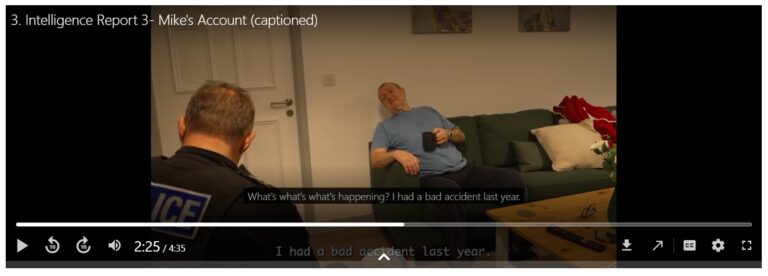
Photo shows body worn camera footage of Martin Fox (Police Officer) and Charlie Downes (Mike).
In this week’s blog, Claire Bowers, Senior Lecturer at UWE, reflects on an innovative collaboration with UWE’s New Wave Agency …
In this powerful and reflective blog, Imogen Hirst, Senior Lecturer on the Policing Programme at UWE Bristol, reflects on the …
May 2026 Taking trauma-informed practice to St Helena The British Overseas Territories police, do not benefit from the degree-level education …
This week’s blog is written by Sarah Williams, Associate Director in Policing at UWE Bristol. In this article, Sarah reflects …
We are grateful to Molly Diamond, a third-year Professional Policing Degree (PPD) student at UWE Bristol, for reflecting on her …
Author: Micah Hassall This week, we are proud to share this insightful blog post about Stand Against Racism & Inequality …

Finally, some good news!

Posted on

This week sees UWE Bristol wind down for the Christmas period, with the campus set to close between Friday 22nd December 2023 – Tuesday 2nd January 2024.

It has been a busy year for most, with some of the highs covered by Eve below. January 2024 brings the marking of March 2021’s dissertations and their End Point Assessments, we wish them all the best of luck and look forward to seeing their hard work pay off. We warmly receive some existing apprentices back on the 2nd January, with a new cohort of first year apprentices joining us the week after. This pace continues throughout the year and your academic team are excited for the times ahead.

Image of Eve Smietanko

We know that most of you will be busy over the festive period – turning up at work when it feels like the rest of the country remain at home with loved ones – all in aid of keeping your communities safe. Look after one another and stay safe. A heartfelt thank you to all of those that are working over this period and for the continuous hard work you all undertake 365 days a year, 24 hours a day.

This week’s blog is written by Eve Smietanko, a senior lecturer on the PCDA programme and programme lead for Law and Criminology. Eve has been collating positive news stories around the Criminal Justice System in the hope that it will show you that the hard work you do is recognised and making a difference.

Over to Eve…


The good news stories

It can be easy as a police officer to feel that the world is a dark place, and that what you do, day in, day out, makes little difference. There is pressure from all sides to do things differently, decisions made in split seconds are scrutinised and analysed and every person has an opinion on what was done wrong. It can be easy to feel the weight of the world on your shoulders and to believe that world is awful; where the bad guys win and good guys get criticised. Does this all sound familiar?

Well you will find none of that here. This post is for good news. Take five and let me remind you of a few of the many positive, inspiring and hopeful stories that may have passed you by.


Support for firearms officers

In September many firearms officers laid down their weapons due to concern of how they would be treated if they did need to pull the trigger, and the impact this would have on their families. It was positive to see both leadership within policing, politics and the public standing by officers, who had chosen not to carry. Sir Mark Rowley wrote in an open letter to the (then) Home Secretary that ‘[armed officers] are extremely well trained’ and that ‘we have one of the safest models of armed policing in the world’ (Rowley, 2023).

Icon of two hands shaking in collaboration

Avon and Somerset armed officers have in recent weeks had praise from the public on a number of jobs they have dealt with courageously and professionally. There are many out there who see and acknowledge the huge responsibility that is placed on our officers to make life-changing decisions in a matter of seconds. You are appreciated.


Robber turned runner

Ever feel like you’re just churning people through the criminal justice system with no hope of any change? Thankfully this is not always the case. John McAvoy, who is now known for being a triathlete, previously served a lengthy prison sentence for armed robbery. Whilst in prison he began training hard in the gym and, with the encouragement of a prison officer, Darren Davis, started beating records. Since his time inside he has become a professional athlete, and more recently a mentor to young people.

McAvoy has teamed up with a charity, Youth Beyond Borders, to train, coach and support young people from disadvantaged backgrounds to compete in trail running. There has long been an acknowledgement that nature, exercise and wellbeing are interlinked. Many of us take our ability to utilise the outdoors for granted but not all have this opportunity. As we know within policing and McAvoy surely knows himself, the connections you make in your childhood can have a huge impact, both positive and negative for the rest of your life. Despite McAvoy not having a great role model growing up, he is now trying to be one for young people across the country. It is worth remembering that he did not get to this point alone, he met encouragement and support along the way, like Darren Davis the prison officer. Without this he wouldn’t be where he is today helping other young people who could be in danger of making the same choices he once did. You too can be the difference.

Icon of stick male running

 The armed robber turned runner helping young people go straight – Positive News

John McAvoy interview: Former criminal turned Ironman (redbull.com)


Right Care, Right Person

When you ask most officers why they joined up they will say something along the lines of ‘to help people’. We know that being a police officer isn’t all about fighting crime but we also know that for many years now that the policing time and resource being put into mental health calls has been increasing. Dealing with people struggling with their mental health is becoming an increasingly common tasking. Whilst this is frustrating for officers it is potentially damaging for those who need mental health care and support. We do however appear to have reached the tide of change.

‘Right Care, Right Person’ (RCRP) was first introduced by Humberside Police in 2021 and since then has been rolled by a number of other forces throughout the country. The College of Policing has now issued national guidance on the scheme and the projections are that this could save up to a million police hours per year. This should mean that vulnerable people are getting the help they need and officers have more time available to them to investigate crime, build relationships with the community or any of the other invaluable actions you take.

Image of brain with neurons

Right Care Right Person – police adopt new national model re specialist care for health incidents – Policing News

Right Care Right Person (RCRP) national guidance launched | College of Policing


Court convictions

Over the last few months Avon and Somerset have got some great convictions at court. There have been several large-scale drugs convictions including eight men sentenced for a total of 36 years in relation to a county lines network. More recently three men have had their prison sentences for robbery increased.

Bristol robbers’ sentences increased | Avon and Somerset Police

Eight men sentenced for total of more than 36 years for drug offences | Avon and Somerset Police

Icon of scales of justice

It is easy for us to see the end result and forget about all the hard work that has gone on along the way. The big stories that hit the headlines often feel detached from the officers on the street but that couldn’t be further from the truth. It is those officers who gather intelligence, build rapport and begin the investigation when everybody else has gone to bed. In order to get a conviction at court, the silver thread of a quality actions has to be there throughout the investigation from beginning to end. It is with meticulous record-keeping, excellent decision-making and brilliant communication that people like those I have mentioned above have been put behind bars. It is also worth remembering that really, this isn’t the end goal. While the aim is to get a conviction, the purpose is to protect the public. To get drugs off the street, to allow people to run their business in peace, or whatever else it might be. Without our officers on the ground none of this would be possible.  


Good News from UWE

Icon of shining star

The PCDA has been subject of an Ofsted Inspection and an End Point Assessment Quality Inspection, both achieving ‘Good’ status. Our key partner Avon and Somerset Police (ASP) were ranked 75th in the Department for Education’s Top 100 Apprenticeship Providers and UWE was listed in the Top 20 ‘Rate my Apprenticeship’ providers. With the PCDA representing over 25% of all UWE apprentices, these accolades reflect our growing reputation. In addition, a PCDA apprentice won first prize for their research project at the 2023 Social Sciences Student Conference, evidencing academic excellence. In April 2023, Avon & Somerset Police celebrated growing from 2,835 operational officers to 3,393 since July 2019, exceeding the Uplift target and reflecting the popularity of the programme. Overall, the National Student Survey 2023 scores showed improvements in all areas of the PCDA programme in 2023 compared to 2022. The majority of areas saw double-digit increases compared to 2022. The programme is determined to build further on this positive direction of travel.

Our very own Dr Anne Eason – along with UWE colleagues Professor Kieran McCartan and Dr Sarah Senker – presented the early findings of their research at the NOTA conference this year.  Their research looked at how male perpetrators of sexual offences can be supported to address their own trauma. There will be more on this to follow in the year ahead. As well as this there are many other research and writing projects currently under-way in the Policing team which hopefully will be published and presented in 2024. Remember, your research journey doesn’t have to end with your dissertation! If there is more you would like to discover then keep in touch!

Information about Anne Eason, Keiran McCartan & Sarah Senker's early research findings presented to NOTA this year.

A final round-up

So there is my round-up. There are many stories I haven’t included, some because I haven’t got the word count and some because they have been told to me in confidence but take it from me, you are doing a fantastic job. Policing is difficult and it is easy to feel under-valued so on behalf of the many, many people who are grateful for what you do, I want to say thank you. You make the difference, and we know it.

Useful links

Avon and Somerset Police (2023) Bristol robbers’ sentences increased. Available from: https://www.avonandsomerset.police.uk/news/2023/11/bristol-robbers-sentences-increased/ [Accessed 18 Dec 2023].

Avon and Somerset Police (2023) Eight men sentenced for total of more than 36 years for drug offences. Available from: https://www.avonandsomerset.police.uk/news/2023/10/eight-men-jailed-for-total-of-more-than-36-years-for-drug-offences/ [Accessed 18 Dec 2023].

College of Policing (2023) Right Care Right Person (RCRP) national guidance launched. Available from: https://www.college.police.uk/article/rcrp-national-guidance-launched [Accessed 18 Dec 2023].

Eason, A & Senker, S. ‘Dual identity’ and the forgotten trauma in the histories of people who have sexually offended [research presentation to NOTA Conference] . Cardiff. 3 May. Available from:https://www.nota.co.uk/wp-content/uploads/2023/07/NOTA-presentation.pdf [Accessed 18 Dec 2023].

Metropolitan Police Services (2023) Commissioner letter to Home Secretary 14 September 2023 [online]. Available from: https://news.met.police.uk/documents/commissioner-letter-to-home-secretary-14-september-2023-dot-pdf-434982 [Accessed 18 Dec 2023].

Policing News (2023) Right Care Right Person – police adopt new national model re specialist care for health incidents. Available from: Right Care Right Person – police adopt new national model re specialist care for health incidents – Policing News [Accessed 18 Dec 2023].

Positive News (2023) The robber turned runner helping young people stay on the straight and narrow. Available from: https://www.positive.news/lifestyle/sport/the-robber-turned-runner-helping-young-people-go-straight/ [Accessed 18 Dec 2023].

Red Bull (2023) The incredible story of John McAvoy, armed robber turned top triathlete. Available from: https://www.redbull.com/gb-en/john-mcavoy-from-iron-bars-to-ironman [Accessed 18 Dec 2023].

Editorial Team

Icon of paper plane for email

Paul Williamson (Joint Programme Leader & Senior Lecturer); Claudia McCready (Lecturer); Eve Middleton (Tripartite Assessor – Policing); Eve Smietanko (Joint Programme Leader & Senior Lecturer); Ian Lowe (Senior Lecturer) & Micah Hassell (Senior Lecturer).

If you would like to contribute as a guest blogger, please contact Police.Blog@uwe.ac.uk

Taking Youth Work Week 2023 as a moment to pause & reflect on our work with children.

Posted on

Welcome to the latest UWE Policing blog, where we’re excited to celebrate Youth Justice Week. At UWE Bristol, we take immense pride in our commitment to cultivating a diverse and expert Policing Programme. As we delve into the important discussions surrounding youth justice, it’s crucial to acknowledge the ever-growing diversity within our teaching team.

This week’s additional blog is written by Claire Bowers in light of Youth Work Week 2023. Claire recently joined us as a Senior Lecturer and brings a wealth of experience and expertise of working in various fields reflecting the real-world complexity of policing in today’s society. With experiences ranging from community policing, probation and risk management to tackling international organised crime, our programme teaching team is uniquely positioned to equip our students with a comprehensive understanding of the challenges and opportunities in modern law enforcement.

As we celebrate Youth Justice Week, we invite you to explore the perspectives, insights, and initiatives shared by Claire.


Shining the spotlight on our staff…

Senior Lecturer, Claire Bowers joined UWE in 2023 having spent an impressive and varied career within the Criminal Justice System. Claire brings extensive experience in crime reduction initiatives, prisoner rehabilitation, and youth justice diversion and preventative work – including specialisms in safeguarding, harmful sexual behaviour and trauma informed working, as a Manager of North Somerset Youth Offending and Prevention Service. Claire is also a passionate advocate for young victims of crime and domestic abuse having managed Avon and Somerset’s Young Victims Service for four years. Claire holds two masters with distinction in Psychology and Criminology & Criminal Justice, and has a varied and expansive teaching career.


This week is Youth Work Week.

This week is Youth Work Week, and so it seems the perfect opportunity to shine a light on the important work carried out with children by the youth work sector, as well as taking a moment to contemplate the current challenges facing children and their families and our approach to working with them.

Blue icon of laptop and internet.

We are living in uncertain times, with the cost-of-living crisis, living through a pandemic and the rise of technology and social media to mention just a few. In their 2022 report, Barnados highlighted the top issues facing young people from a practitioners’ perspective. This included increasing mental health issues and insufficient support, poverty and financial instability, potential exposure to sexual exploitation and online abuse and lack of safety and cohesion in the home.

Blue icon of male. female and girl.

This is a very real threat for children as one in seven will have lived with domestic abuse at some point in their life (Radford, 2011) and domestic abuse related crimes increased 7.7% in 2022 (ONS, 2022). Every generation has its struggles, however, the children of today are facing a unique set of challenges. However, despite these concerns youth services such as youth clubs and youth workers have been cut by 69% since 2010 (Local Government Association, 2023) and children’s services have never been under more pressure. 


Representations

Blue icon of downwards statistics.

Negative representations of young people is commonplace (Guardian, 2004). However, the statistics show that youth crime rates have consistently been in decline for many years (ONS, 2022; ONS, 2023) . Most children are not involved in crime, and those who are, still spend much of their time leading law-abiding lives. Working with children can be challenging at the best of times, however it is a child’s job to push boundaries! Ask any parent coming towards the end of the summer holidays, let alone the police officer who is having to deal with repeated incidents of anti-social behaviour and disrespect. That being said, I am sure we can all reflect back and think of examples of behaviour from our younger selves that we would rather forget.

Working with children requires a specific attitude and skill set. Youth workers often adopt a PACE approach (Hughes, 2006). Standing for playfulness, acceptance, curiosity, and empathy, the focus is on building rapport and high-quality relationships. Maturation of the brain is not accomplished until 25 years old (Arain et. al, 2013).

The law is clear. The term ‘child’ is preferred practice for any young person below the age of 18 (CPS, 2023). A young person may well look and act as if they are an adult, but they are not and we must not treat them as such. Children that do come to the attention of the youth justice system should be seen as children ‘first’ and ‘offenders’ second” (CPS, 2023). This recognises that children may make mistakes, but this should be viewed through a rehabilitative lens, rather than a punitive one. Research outlined in the The Punishing Abuse report (Chard, 2021) argue that 9 in 10 children in the youth justice system are known or suspected to have been abused, with 7 in 10 having lived with domestic abuse (MOJ, 2013). Over 60% of people in youth justice estate have difficulties with speech, language or communication (Gateshead Council, date unknown).

Icon of 5 hands touching

Youth work emphasises education, mentorship and support to help guide children away from criminal behaviour and contribute to their positive development. The primary focus is on prevention, diversion and early intervention to avoid criminalisation of children.


What can we do to support young people?

So what can we do to support young people? In their book “the power of showing up” Dr Daniel Siegel and Dr Tina Bryson outline 4 fundamental needs for children. First children need to feel ‘safe’.  When children feel unsafe, they are not able to access their upper ‘thinking’ brain. They go into survival mode. Children who have experienced trauma may already be hypervigilant and struggling to self-regulate, having learned to always be on the lookout for danger. Once they know that they are safe, the young person has access to more resources to enable them to cope and manage their behaviour. Tone of voice and body language is key. Anxiety will be reduced by slow movements and a gentle voice.

The second factor is being ‘seen’. In children, behaviour is communication and language matters. Being curious about what is happening for a young person and viewing them through a trauma-informed lens helps us to help them. Are they ‘not engaging’ or do they simply not feel safe enough to engage?

Soothed’ is the third need and this is based on the adult- child interaction. Children need to learn how to self-soothe through modelling by adults. Letting children know that we are there for them and we want to connect with them is fundamental. This can be achieved through being calm, actively listening to them, showing empathy and offering strategies for ‘brain breaks.’ The final ‘S’ is ‘secure’. This means showing up for the child and being a ‘safe base’. It can take time for a young person to trust, especially if they have learnt that people let them down. Youth workers show reliability by agreeing a time and place to meet and ensuring that they are there every week, even if the young person is not. Over time, trust can be established and meaningful interactions can take place.

Blue icon of footprints.

It sounds like a cliché (or the lyrics from a famous song) but children literally are our future. Whilst youth work week specifically recognises and celebrates the achievements of youth workers in particular, these are not the only people that have an impact on a young person’s life. Police, teachers, social workers, and doctors to name but a few, all leave footprints on a young person’s journey. We all therefore have a responsibility to consider what type of imprint we want to make.


I will leave you with the words of trauma specialist, Dr Karen Treisman (2020):

“Every moment and interaction can be an intervention…can be change agents…Every moment has the potential to open a door or to close a door.”

Dr Karen Treisman, 2020.

Helpful Resources

Arain, M., Haque, M., Johal, L., Mathur, P., Nel, W., Rais, A., Sandhu, R., & Sharma, S. (2013). Maturation of the adolescent brain. Neuropsychiatric disease and treatment, 9, 449–461. https://doi.org/10.2147/NDT.S39776

Hughes, D. (2006). Building the bonds of attachment: Awakening love in deeply troubled children. Oxford: Jason Aaronson

National Youth Agency – Youth Work Week 2023


Editorial Team

Paul Williamson (Joint Programme Leader & Senior Lecturer); Claudia McCready (Lecturer); Eve Middleton (Tripartite Assessor – Policing); Eve Smietanko (Joint Programme Leader & Senior Lecturer); Ian Lowe (Senior Lecturer) & Micah Hassell (Senior Lecturer).

If you would like to contribute as a guest blogger, please contact Police.Blog@uwe.ac.uk


Applied Criminal Justice – Top Up Degree

Posted on
UWE Bristol Logo

This week we explore the Applied Criminal Justice – Top Up Degree at UWE. This will enable professionals to use previous experience or qualifications, along with some study, to achieve an undergraduate degree within 1 – 2 years.

An introduction into programme lead – Dominic McVeigh.

Programme Lead and Senior Lecturer, Dominic McVeigh

I joined the police in 2004, working for both Gloucestershire Constabulary, and then Avon and Somerset. During my time in both organisations, I had plenty of training opportunities, qualifying as a Tutor Constable, a role which explores coaching, mentoring and teaching. I was a qualified taser carrier and an experienced interviewer. Whilst working within the professional development unit, I was lucky enough to be in post when the Police Constable Degree Apprenticeship (PCDA) and Degree Holder Entry Programme (DHEP) commenced, allowing me to see the qualifications that new officers attain. I looked at the criteria set by the Police Education Quality Framework (PEQF) and College of Policing (CoP) and realised very quickly that I had a lot of knowledge and just as important, experience ‘in the job’. Unfortunately, I was not able to re-enrol and obtain the qualification, a BSc (Hons) in Professional Policing Practice, which was hugely disappointing for someone who has a thirst for development. It suddenly became apparent that the knowledge and experience I had gained over the past 12 years was not recognised by anyone other than the police.

Fast forward to 2023, I find myself in the fortunate position of being the Top-Up Programme Leader. I have achieved a post-graduate qualification in higher education teaching and can provide an opportunity for those in the police and wider criminal justice sector to have their occupational experience and expertise recognised towards a recognised undergraduate degree.

What is the Applied Criminal Justice Degree – Top Up?

The Applied Criminal Justice Top-Up is an undergraduate degree programme that recognises the expertise of those within the criminal justice sector as an entry pathway. Using an evidence-based approach it exposes practitioners to the underpinning theoretical concepts of criminal justice, encouraging a deeper and more informed approach to problem solving and critical thinking; an opportunity to engage in research to further theoretical understanding and the development of a more critical workforce.

When I speak to ex-colleagues and friends who have retired and who have chosen to leave policing, the same theme becomes apparent when in conversation, which is “What can I offer to other employers?” “What skills have I got?”. Those within policing, who joined prior to the commencement of the PCDA can ‘top-up’ their skills and be recognised for their expertise.

The niche that is policing, is that the skillsets are very bespoke. Trying to explain to a prospective employer that you have a taser qualification, which means that you make quick time decisions, following legislation, national policy, whilst assessing the wider impact of that decision on the reputation of the police and the media perception that will likely follow is quite hard. Those within policing will acknowledge those skills. To communicate positively with someone holding a knife, to ensure a safe resolution, can be hard to quantify in an interview/CV setting.

This is also true of other criminal justice professions where work in crime prevention, reduction, desistance, and victim protection entails a particular set of skills and knowledge in many key areas, yet no formal certification is achieved.

Powerpoint title slide discussing ‘Ethical approaches to policing diverse communities’
Image of F Block on Frenchay Campus.

Who can apply?

The BSc (Hons) in Applied Criminal Justice Top-Up acknowledges the work of criminal justice practitioners and utilises them as proven criteria for entry onto the programme. At UWE we are introducing the BSc (Hons) in Applied Criminal Justice Top-Up, as an option for those who are already working in the sector. The recognition of prior learning and experience will be based operational knowledge and expertise. For those police officers wishing to undertake the programme, the Initial Police Learning Development Programme (IPLDP) and other police training will provide you with a springboard to top up the knowledge that you already have.

The course itself is flexible, designed to meet the needs of the applicant. There are full (one year) or part time (two years) options available, with modules that have a blended approach, with online and on campus teaching. On completion of the degree, students will have the necessary skills and knowledge to apply in their current occupation.

The programme will be launched in September 2024, so these are exciting times ahead. Policing is evolving and this will be something to provide further development for those who want to improve their knowledge, not just of police practice but widening understanding of the multi-agency environment. For those in the wider criminal justice sector who do not have an undergraduate degree, the programme will demonstrate their knowledge and understanding at a recognised level. Continuing Professional Development for those who are competent within their roles is a fundamental principle in most employer’s arsenal to ensure that staff are provided opportunities.

Is it just for Police Officers?

No, it’s not just for police officers. It’s for anyone who doesn’t have a recognised qualification who works in the criminal justice sector. The programme is about levelling-up the professional practice arena.

What is Accredited Prior Learning?

The skillset and occupational experience that applicants already have will contribute towards Accredited Experiential Learning (AEL) and other Accredited Learning (AL). What is this?  Being experienced and skilled in investigations, understanding emotional intelligence, communication skills or development planning. Being solution focussed and managing problem solving plans, undertaking internal training and development, such as sergeants’ exams and tutor qualifications. For those from prison, probation or private sector criminal justice backgrounds, this might be training in risk assessment, or coaching and mentoring or skills gained from initial training courses. These will help demonstrate the necessary prior experiential learning that is needed to undertake this course.  

Watch this space for further updates or for posters that will be sent out to your organisation.  For any enquiries or questions in relation to the programme, please contact Dom McVeigh at Dominic2.McVeigh@uwe.ac.uk or via my LinkedIn.

Watch this space blue wave graphic

Editorial Team

Paul Williamson (Joint Programme Leader & Senior Lecturer); Claudia McCready (Lecturer); Eve Middleton (Tripartite Assessor – Policing); Eve Smietanko (Senior Lecturer); Ian Lowe (Senior Lecturer) & Micah Hassell (Senior Lecturer).

If you would like to contribute as a guest blogger, please contact paul.williamson@uwe.ac.uk

Back to top