

Why Trauma-Informed Leadership Is Important in Policing

Posted on

How can today’s police leaders support a workforce routinely exposed to trauma while maintaining professional standards and accountability? In this blog, Anne Eason, Associate professor in Trauma Informed Learning and Practice and Associate Director of Policing at UWE Bristol, explores the importance of trauma-informed leadership in building trust, supporting wellbeing and creating psychologically safe workplaces. Anne also reflects on how UWE’s policing programmes help student officers recognise the impact of trauma and develop the understanding and confidence to support themselves and others. Over to Anne…

Policing is an inherently demanding profession. Police officers and staff are routinely exposed to incidents involving violence, death, abuse, crisis, and human suffering. Alongside operational pressures, organisational change, public scrutiny, resource constraints, and increasing complexity in demand can create significant psychological and emotional strain. Against this backdrop, trauma-informed leadership has emerged as a critical approach for supporting workforce wellbeing, enhancing organisational culture, and improving service delivery.

A trauma-informed leader recognises that trauma can affect not only members of the public but also the professionals who serve them. Rather than asking, “What is wrong with this person?” trauma-informed practice encourages leaders to consider, “What has happened to this person?” This shift in perspective can fundamentally change how leaders understand behaviour, performance, wellbeing, and resilience within policing environments.

The key principles of trauma informed practice

The Substance Abuse and Mental Health Services Administration (SAMHSA) (2023) defines a trauma-informed approach as one that realises the ripple effect of trauma impact, recognises its signs and symptoms, responds by integrating knowledge about trauma into policies and practices, and seeks to avoid re-traumatisation. SAMHSA suggests 6 key principles framework for workforce wellbeing including safety, trustworthiness, transparency, collaboration, empowerment, and peer support and which provide a valuable framework for police leadership.
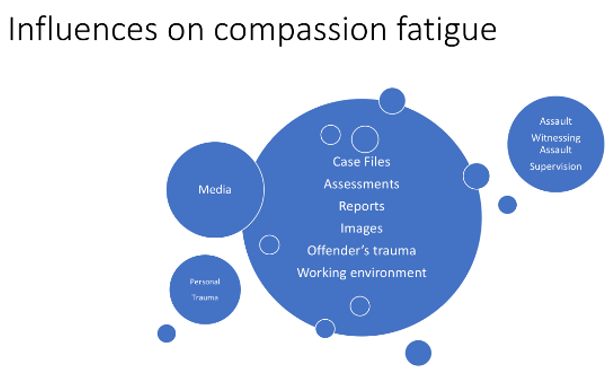
Trauma is highly relevant within policing because officers frequently attend traumatic incidents during their careers with an average of approximately 400 – 600 incidents across a 30-year career (Eason, 2025, p227). They are also exposed to traumatic materials, imagery and investigative content that can lead to vicarious trauma. These alongside negative media coverage, and a political and public blame culture, it is of no surprise that officers and staff across all ranks, experience substantial exposure to stress and trauma, all of which contribute to psychological difficulties, burnout and compassion fatigue, reduced wellbeing, and increased risk of mental health challenges if left unaddressed.

A trauma-informed leadership approach acknowledges that repeated exposure to traumatic incidents can influence how officers think, feel, and behave. Typical trauma responses can be experienced in hypervigilance, emotional exhaustion, difficulties concentrating, irritability, withdrawal, or reduced engagement. Without understanding these potential impacts, leaders may mistakenly interpret trauma responses as poor attitude, resistance, lack of commitment, or incompetence. This inevitably causes further stress in professional relationships, and possible disciplinary action rather than recovery interventions.

Trauma-informed leaders seek first to understand context and provide support while maintaining professional standards and accountability.

One of the most important benefits of trauma-informed leadership is the creation of psychological safety (Eason, n.d). Psychological safety refers to an environment where individuals feel able to speak openly, admit mistakes, ask for help, and raise concerns without fear of humiliation or punishment. In high-risk professions such as policing, psychological safety is essential because it supports learning, decision making, innovation, and wellbeing. Trauma-informed leaders create conditions in which officers and staff feel respected, heard, and valued, promoting agency and personal growth. This not only benefits individual wellbeing but also strengthens organisational effectiveness.
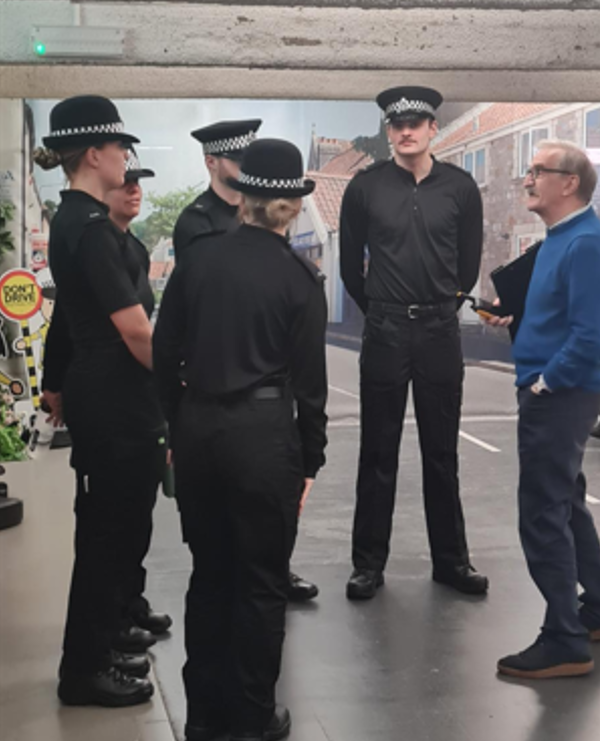
Trauma-informed leadership is also important because of the prevalence of adverse childhood experiences (ACEs) and other traumatic life events across society. These often form part of the lived experience of victims and offenders, but also officer’s themselves (Kyranides et al, 2025) resulting in maladaptive cognitive emotion regulation strategies (CERS) that can result in poor professional quality of life. Police leaders therefore supervise individuals with diverse experiences and vulnerabilities that may influence workplace interactions and wellbeing.

Within policing specifically, trauma-informed leadership can contribute to improved workforce retention. Many police areas continue to struggle with sickness absence, stress-related illness, burnout, and attrition. When leaders demonstrate empathy, openness, and understanding of trauma, employees are more likely to feel supported and connected to their organisation. Staff who believe their wellbeing matters are often more engaged, productive, and committed to remaining in the professions.

Trauma informed learning

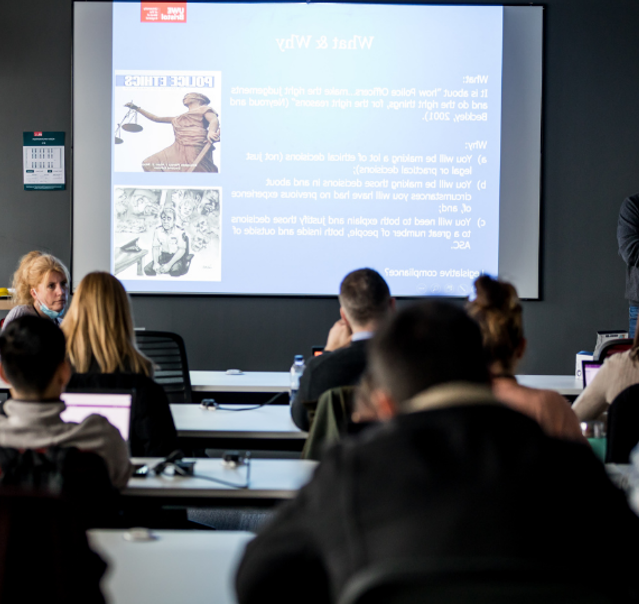
In our police programmes at UWE, trauma informed approaches form part of the learning for our student officers and form part of our teaching practices. Helping officers understand the symptoms of compassion fatigue and empowering them to have the confidence to speak up about their own experiences (and supporting others with theirs) is our contribution to the embedding of trauma informed practice values in the policing leaders of the future. Through the modelling of safe environments, non-judgemental discussion and dispelling of stigma across a wide range of behaviours through structured conceptual understanding, we hope our graduates are better prepared for the stressors of the policing profession and can begin to support cultural change in areas such as learning by mistakes and reflective practice.
Valuing staff does not mean lowering standards

Leaders who embed trauma-informed principles help create policing cultures that are more aligned to a compassionate, effective, and procedurally just organisation. This can enhance trust and legitimacy while reducing the likelihood of unintentional further harm to individuals who have already experienced adversity.

Most importantly, trauma-informed leadership does not mean lowering expectations or avoiding accountability. What is does mean is to lead with curiosity, compassion, and evidence-informed understanding. Leaders remain responsible for addressing misconduct, poor performance, and operational requirements however, they do so in ways that recognise human experiences and seek to balance organisational needs with employee wellbeing. This can be achieved by conducting supportive wellbeing conversations, providing access to psychological support, encouraging reflective supervision, promoting peer support networks, ensuring transparent communication during organisational change and recognising signs of cumulative stress and trauma exposure. Leaders can also model healthy behaviours by speaking openly about wellbeing and encouraging help-seeking without stigma (SAMHSA, 2023).

Final thought

As policing continues to evolve, the importance of trauma-informed leadership is likely to increase. Contemporary policing need leaders who can navigate complexity, support workforce wellbeing, and build cultures characterised by trust, compassion, resilience, and psychological safety. By recognising the impact of trauma on both staff and communities, trauma-informed leaders can help create healthier organisations and more effective policing outcomes.

References

Eason, A. (2025) “Keeping Practitioners Safe: Looking After the Health and Wellbeing of the Criminal Justice Professional and Compassion Fatigue,” in K. McCartan et al. (eds.) Developing and Implementing a Public Health and Criminological Approach to Tackling Sexual Abuse. Cham: Springer Nature Switzerland, pp. 217–236. Available at: https://doi.org/10.1007/978-3-031-93634-0_11.

Eason, A., & McCartan, k. (n.d.). The challenges and opportunities for trauma informed practice in a changing police culture. The International Handbook on Trauma-Informed Practice in the Justice System. Palgrave.. Available from https://uwe-repository.worktribe.com/output/15813197

Miller, N. (2022). Do no harm: Five ways to become a trauma-informed leader who fosters a resilient workforce. LinkedIn. https://www.linkedin.com/pulse/do-harm-five-ways-become-trauma-informed-leader-who-nancy-miller-phd

SAMHSA. (2023). Practical Guide for Implementing a Trauma-Informed Approach. https://library.samhsa.gov/sites/default/files/pep23-06-05-005.pdf

Kyranides, M. N., Antoniadou, M., Papageorgiou, K. A., & Kloess, J. A. (2025). Wellbeing and professional quality of life in police officers: Past adverse childhood experiences and current cognitive emotion regulation strategies. The Police Journal: Theory, Practice and Principles, 0(0). https://doi.org/10.1177/0032258X251378945

Editorial Team

Paul Williamson (Editor-in-Chief); Claudia McCready (Senior Lecturer); Claire Bowers (Senior Lecturer); Eve Smietanko (Joint Programme Leader & Senior Lecturer) and Ian Lowe (Senior Lecturer).


Passionately curious: Bridging Theory and Practice in Police Education

Posted on

How can police education successfully connect academic theory with the realities of operational practice?

In this latest UWE Bristol Policing blog, our colleague Tracey Payne reflects on the research and personal learning behind her MA Education dissertation. Drawing on the experiences of PCDA students and academic staff, Tracey explores where theory and practice complement one another, where tensions remain, and how teaching approaches can help student officers recognise the operational value of academic learning.

Alongside the research findings and recommendations, Tracey offers an honest account of completing a substantial research project while balancing professional responsibilities. Her reflections highlight the importance of curiosity, protected study time, supportive supervision and lifelong learning, not only for student officers, but also for those who teach and support them.

Aligning Theory and Practice: Reflections on My MA Research Journey

“I have no special talents. I am only passionately curious.”

Albert Einstein

When I came across this quote, it made me smile because it sums up my approach to this research journey. Curiosity about the experiences of PCDA students and the relationship between theory and practice motivated me throughout the project and, if anything, fuelled an even greater enthusiasm for research and lifelong learning.

Completing my MA Education dissertation, Aligning Theory and Practice: Exploring Dissonance and Congruence on the Police Constable Degree Apprenticeship (PCDA), has been one of the most challenging and rewarding experiences of my professional academic career. As both a former police officer and current academic, the research provided an opportunity to explore an issue that I have observed throughout my time in policing education: the relationship between academic theory and operational policing practice.

What Did the Research Find?

The study explored the experiences of a small number of students and academic staff on the PCDA programme, examining where theory and practice align well and where tensions emerge. Through surveys, interviews and a review of the literature, the research found that participants recognised the value of criminological theory, particularly theories such as Social Learning Theory and Adverse Childhood Experiences (ACEs), in helping officers better understand behaviour, vulnerability and decision-making. However, students sometimes struggled to see the direct relevance of certain academic concepts to their day-to-day operational duties. Although participants acknowledged that criminological theory could enhance critical thinking, ethical reasoning and understanding of behaviour, a recurring source of dissonance arose when theoretical frameworks appeared disconnected from operational realities. Academics reported that students were more likely to engage with theory when it was explicitly contextualised through real-life policing examples, reflective practice and scenario-based learning.

Analysis identified six themes that shaped participants’ experiences:

  1. Theory to Practice Alignment – difficulties in translating theory into operational practice.
  2. Curriculum Complexity and Misalignment – perceptions of academic overload.
  3. Cohort Dynamics and Engagement Patterns – the influence of peer groups and policing culture.
  4. Lecturer Strategies and Pedagogical Adaptations – approaches that successfully bridge theory and practice.
  5. Impact on Motivation and Identity Formation – the influence of learning on professional identity and confidence.
  6. Challenges and Cultural Resistance – ongoing resistance to degree-level policing education.

Importantly, the research also highlighted significant examples of existing good practice. Scenario-based learning, practitioner-led teaching, reflective practice and strong collaboration between the university and police service were all identified as effective ways of helping students make sense of theoretical concepts and apply them within operational settings.

Key Recommendations

While the findings demonstrated many strengths within the programme, several recommendations were identified to further strengthen theory and practice integration.

These included:

  • Embedding more structured reflective practice throughout the curriculum.
  • Increasing the use of real-world case studies and practitioner input.
  • Exploring immersive technologies such as virtual and augmented reality.
  • Involving alumni more regularly as mentors, guest speakers and role models.
  • Creating safe spaces for discussion around challenging topics.
  • Encouraging greater student participation in curriculum development.
  • Developing curriculum heat maps to identify areas of perceived misalignment between theory and practice.
  • Exploring the use of Cognitive Dissonance Theory exercises to support learning and professional development.

At the heart of the recommendations is a simple message: theory and practice should not be considered competing concepts. Instead, when effectively aligned, they can strengthen professional competence, critical thinking and evidence-based policing.

Reflecting on the Research Journey

Schön (1983) describes reflection as a key component of professional practice, enabling practitioners to learn from their experiences and improve future performance. Conducting my own research increased my understanding of the challenges experienced by students balancing work and study, allowing me to become a more reflective and empathetic educator.

One of the most important lessons I learned was understanding how I work best. As Mondays are my non-working day, I quickly realised that meaningful progress was achieved when I consolidated my research into dedicated blocks of time. It often takes me a while to fully immerse myself in a task, therefore trying to complete small pieces of work around a busy working week was not particularly effective.

Instead, I found that setting aside specific periods of uninterrupted time allowed me to become fully focused on the research. This meant that many weekends and non-working days became dedicated research days. While this required personal commitment and sacrifice, it also provided clarity and structure. During my working week I was able to focus entirely on supporting students, confident that dedicated time for my research had already been planned.

Towards the latter stages of the project, I was fortunate to utilise scholarly leave. This proved invaluable. Having protected time away from the day-to-day demands of my role enabled me to immerse myself completely in the project without feeling conflicted between competing responsibilities. The ability to focus solely on the research significantly increased my productivity and allowed me to complete several key stages of the dissertation.

The Value of Support

Although research can often feel like a solitary endeavour, I was fortunate to benefit from excellent support throughout the process.

My personal tutor provided an invaluable sense check at key stages of the project. Their encouragement, guidance and constructive challenge helped me maintain confidence during moments of uncertainty and ensured that I remained focused on the overall research objectives.

I also set myself a personal target of completing the dissertation two weeks before the submission deadline. Previous experience had taught me that the final checks associated with a substantial piece of work, reviewing references, citations, formatting, indexing and overall accuracy, can take far longer than expected, and I wanted to avoid the stress of completing these tasks against a looming deadline. Additionally, setting an earlier completion date helped create a clear endpoint and reduced the temptation to make continual amendments that added little value to the final submission. In hindsight, this proved to be the right decision.

By the end of the process, I can honestly admit that I had reached a point where I felt I had given everything I could to the project.

Looking Back and Looking Forward

“We do not learn from experience… we learn from reflecting on experience.”
John Dewey (1933)

A few months after submission, my perspective has changed again. Having had time away from formal study, I now find myself increasingly drawn back towards research and learning. What initially felt like relief at finishing has gradually become a renewed curiosity and enthusiasm for further academic enquiry.

Perhaps the greatest personal outcome from this experience has been the increased empathy I now have for my students. Conducting the research myself reminded me of the challenges associated with balancing professional responsibilities alongside academic study. It has made me more current, more understanding and, hopefully, better equipped to offer meaningful advice and support to those navigating similar challenges.

Finally, completing this journey alongside our PCDA students made the achievement even more special. To graduate at the same time as many of the student officers whose educational journeys I have supported throughout their degree felt particularly fitting. It served as a reminder that learning never truly stops, regardless of career stage or experience.

The dissertation may be complete, but the questions it raised and the enthusiasm it reignited continue to shape my thinking today. Research has not only enhanced my understanding of policing education; it has also reminded me why lifelong learning remains such a rewarding journey.  

About the Author

Tracey Payne is a Senior Lecturer and Programme Leader for Year 3 of the Police Constable Degree Apprenticeship (PCDA) at UWE Bristol. After retiring from Avon and Somerset Police in January 2019 following 30 years of operational service, Tracey joined UWE a week later and played a key role in the design and delivery of the PCDA programme. Seven years on, Tracey remains committed to supporting student officers, driven by curiosity, continuous learning, and a passion for bridging theory and practice in police education.

References

Calaprice, A. (2011) The Ultimate Quotable Einstein. Princeton, NJ: Princeton University Press.

Dewey, J. (1933) How We Think: A Restatement of the Relation of Reflective Thinking to the Educative Process. Boston: D.C. Heath.

Schön, D.A. (1983) The Reflective Practitioner: How Professionals Think in Action. New York: Basic Books.

Editorial team

Paul Williamson (Editor-in-Chief); Claudia McCready (Senior Lecturer); Claire Bowers (Senior Lecturer); Eve Smietanko (Joint Programme Leader & Senior Lecturer) and Ian Lowe (Senior Lecturer).

Bringing Vulnerability to Life: Transforming Police Learning Through Immersive Hydra Simulation at UWE

Posted on

In this week’s blog, Claire Bowers, Senior Lecturer at UWE, reflects on an innovative collaboration with UWE’s New Wave Agency to enhance simulation-based learning about vulnerability for Year 2 students on the Police Constable Degree Apprenticeship (PCDA). The project has produced highly positive outcomes, demonstrating the value of experiential learning in policing education.

Claire has over 20 years experience across safeguarding, criminal justice and education and is now based within the Social Work team in the School of Health and Social Wellbeing at UWE. Prior to this role, she was a Senior Lecturer in Policing and module leader for Investigating Vulnerability and Risk.

Why Vulnerability Matters to Every Officer

The National Vulnerability and Public Protection Strategy (2025) states that “vulnerability and public protection is everyone’s business” reflecting the understanding that recognising vulnerability, safeguarding victims and disrupting exploitation are essential responsibilities shared across all areas of policing. Vulnerability has evolved from a specialist safeguarding concern to a central organising principle of contemporary policing, with issues such as domestic abuse, county lines offending and modern slavery generating substantial policing demand and requiring coordinated safeguarding and enforcement responses.

Vulnerability is a core theme throughout the Police Constable Degree Apprenticeship (PCDA) at UWE.

The Year 2 ‘Investigating Vulnerability and Risk’ (IVR) module builds on Year 1 learning, deepening critical reflection and understanding of vulnerability-related harm through research, policy and practice. Student officers also examine new complex areas such as cyber-enabled crime, counterterrorism and radicalisation, while developing the skills to identify, assess and manage vulnerability through evidence-based policing and trauma informed perspectives. The module culminates in a ‘Hydra style’ simulation exercise, consolidating the learning and based on the facts of a true case.

HYDRA is the multi-agency decision-making simulation system developed for emergency services and public sector leadership training.

The name ‘Hydra’ is linked to the mythological Hydra; the many‑headed serpent from Greek mythology. The idea is that complex incidents present multiple, interconnected problems at the same time. Much like the many heads of the mythical Hydra, as you deal with one issue (or ‘head’ for the purposes of the analogy) others then emerge which also need to be carefully managed!

Hydra; the many‑headed serpent from Greek mythology.

Chernikova et al. (2020) clearly identifies the positive effects that simulation-based learning can have when utilised within higher education. Drawing upon Kolb’s (1984) experiential learning theory, simulation enables learners to develop knowledge and skills through active participation and reflective practice. Recreating policing incidents in this way offers a safe learning environment in which learners can apply theory to practice, develop decision-making skills, and learn from mistakes without the risks, costs, or resource implications associated with real-world incidents (Whitcombe et al. 2025).

During the IVR Hydra session, student officers receive information relating to a family, following concerns raised by a neighbour regarding suspected domestic abuse. The case unfolds in real time, requiring officers to gather information, complete investigative tasks, develop intelligence, and make critical decisions under pressure. Student feedback on the original scenario noted that it was useful, but lacked in realism.

Claire Bowers- UWE Senior Policing Lecturer:

“As module leader, I wanted to enhance the learning experience; moving away from written intelligence reports and witness statements; towards recorded victim and witness accounts, email screenshots and teams meeting updates. I wanted a more realistic simulation experience for the student officers.”

Enhanced resources would enable officers to engage with evidence in a more authentic way, mirroring the information-gathering processes used in operational policing and creating a more immersive learning environment.

Photo shows Claire Riecol and Martin Fox as Police Officers during an online ‘Teams meeting’.

The Evolution of the Hydra Exercise: Authentic Simulation Through Collaboration

Alongside achieving our core aims, we were keen to create meaningful opportunities for UWE students and support emerging creative talent. We therefore secured a budget to work with Anneliese Paul, Director of the New Wave Agency (and UWE Lecturer in Experiential Learning) who recruited a fantastic team of Film Making and Media Production students to work on the project.

New Wave Creative Agency at UWE Bristol’s School of Arts is designed to secure equitable access to professional freelance jobs and networks for students and recent graduates.

The production team consisted of the Producer; Madeline Jeffs (who was also Director Assistant, Editing Assistant and Camera and Sound Assistant), Eloise Hillsdon as Script-writer, Camera & Sound and Director Assistant, and Zuva Mutambasere, who was Script-writing Assistant and Editor. They approached the work with professionalism and enthusiasm, recognising the importance of creating a realistic learning experience for student officers.

Left photo shows Madeline Jeffs (Producer) and Eloise Hillsdon (Camera & Sound). Right photo shows Madeline Jeffs (Producer) and Eloise Hillsdon (Camera & Sound), Lauren Costello (Jane) and Claire Riecol (Police Officer).

We worked closely with the production team as they advertised for and casted actors to portray the key individuals involved in the case. Detailed scripts were developed and a series of filmed episodes were produced during March; with filming taking place both on location and within the Frenchay Simulation Suite at UWE Bristol.

From left to right: Madeline Jeffs (Producer), Claire Riecol (Police Officer), David Catt (UWE Senior Policing Lecturer and original author of the Hydra consolidation exercise), Charlie Downes (Mike), Eloise Hillsdon (Camera & Sound) and Martin Fox (Police Officer).

Several of the actors had previous policing experience, which proved invaluable in ensuring the scenarios reflected the realities of police practice.

The cast included Claire Riecol and Martin Fox as Police Officers, Lauren Costello as ‘Jane’, Charlie Downes as ‘Mike’ and Eiri Davies as ‘Amy’. Their insights helped shape dialogue, behaviours and investigative interactions, contributing significantly to the authenticity of the final product.

The overall commitment of the cast and production team resulted in a series of high-quality recordings, and the finished product is something of which we are all extremely proud.

Photo shows Martin Fox and Claire Riecol (Police Officers) and Eloise Hillsdon (Camera & Sound)

The first delivery of the exercise using the new resources took place in April and the introduction of Blackboard Ultra added to the interactive style of delivery. Information and evidence was released dynamically as the scenario unfolded, and interactive discussion boards further enhanced the immersive nature of the experience.

The session ended with a debrief from UWE Senior Policing Lecturer David Catt, the detective responsible for the original case upon which the exercise was based. Student officers were very positive about this:

“Dave’s input at the end and detailing rationale was so helpful. It was really interesting to hear about the actual case and how he questioned himself during his decision making. It really brought it and the learning to life.”

Since then, we have delivered the new and improved Hydra exercise to two separate cohorts of student officers and are delighted to report that the feedback has been overwhelmingly positive!

This word cloud shows the words used by students to describe the exercise. These included “engaging”, “enjoyable”, “effective”, “helpful”, “useful” “interesting”, “insightful” and “fun.” The larger the word appears, the more frequently it was used by students.

The feedback suggests that the new Hydra exercise was highly successful…

95% of students reported that they enjoyed the “innovative approach to learning” and over 90% “really enjoyed” the activity. 77% felt that the resources were “realistic and reflective of real policing practice”.

Comments made by students include:

“I thoroughly enjoyed it, one of my favourite days!”

“It was very realistic to real-life scenarios…”

“Fantastically taught! Genuinely quite realistic considering we’re in a classroom.”

“I really enjoyed not knowing what was going to happen, having to react and make decisions to the information as it was given…”

“It was a visual and interactive way of learning and consolidated everything we had learnt from the module…”

“It really got me thinking about decision making and safeguarding from a new light…”

When asked what the “most helpful learning” from the input was, students gave the following answers:

“It showed me how important trauma- informed policing is…”

“It helped me think about how to deal with CSE cases, making sure I look at the bigger picture when dealing with incidents…”

“It really highlighted the importance of ‘good’ decision making and different ways of thinking around problems…”

In Conclusion…

The feedback clearly demonstrates that the investment in developing authentic, scenario-based learning resources has had a significantly positive impact on student engagement and the perceived quality of the learning experience. By combining professional-quality video resources, realistic decision-making challenges, and interactive delivery through Blackboard Ultra, we have created a learning environment that more closely mirrors the complexities and pressures that officers will encounter in operational policing.

It is a resource that can now be adapted and incorporated into other aspects of the policing programmes to help educate around issues of vulnerability, better preparing future officers for the challenges of modern policing.

Eve Smietanko- UWE Senior Policing Lecturer:

“I used the new Hydra exercise on Wednesday with my year two Police Constable Entry Programme students and it was incredible! Having the actors made all the difference and a lot of the students mentioned in the end of module evaluation, stating it was one of their favourite parts of the module.”

Photo shows body worn camera footage of Eiri Davies, cast as Amy.

In Gratitude…

These positive outcomes reflect the collective effort that underpinned the project. This project truly was a team effort and a great example of cross college collaboration within UWE. Special thanks go to Peter Clegg, Head of the School of Social Sciences and Anne Eason, Associate Director of Policing, for supporting the funding bid from the outset and helping us secure the resources needed to bring the project to life.

We are also extremely grateful to the New Wave Agency production team and Anneliese Paul, as well all of the actors who gave their time, energy and expertise to the filming process. The realism and professionalism recognised by the students officers are testament to the high standard of work produced by the New Wave student production crew and actors, whose creativity, technical skills and commitment were instrumental in bringing the exercise to life.

Particular thanks go to David Catt, whose original vision and inspiration for the session laid the foundations for what the Hydra exercise has become.

Finally, a huge thank you must go to the lecturers who make the day possible.

Delivering the Hydra exercise is staff-intensive and requires considerable planning, coordination and facilitation, but the impact on student learning makes it more than worthwhile.

Photos shows Madeline Jeffs (Producer) and Eloise Hillsdon (Camera & Sound), Lauren Costello (Jane) and Claire Riecol (Police Officer).

Some Final Words from the New Wave Student Production and Filming team:

We will end with some final reflections from the New Wave Student Production and Filming team about their experiences of working on the project, which for most, represented one of their first commissioned professional productions:

Maddy Jeffs- Producer and Director Assistant:

“I really enjoyed the process! It was a unique and completely different approach to filmmaking. Because the scenarios were based on real-life policing, it was important to us to get every detail right. We were keen to cast actors with relevant experience to ensure the performances felt genuine and authentic, allowing scenes to feel less scripted and truer to life. The collaboration between the actors and crew was invaluable, particularly when it came to how people would realistically speak and behave. We thought carefully about the subtle clues officers would need to pick up on, from non-verbal communication to facial expressions, to create something as realistic and impactful as possible.” 

Eloise Hillsdon- Camera & Sound and Director Assistant:

“I learned so much about policing and just how complex the job really is. It was a great experience to write scripts based on real-life situations rather than pure drama. Knowing that the materials we produced could have a genuine impact on police officers’ decision-making, and may even help save a life one day, made the project especially meaningful.”

Zuva Mutambasere- Script-writing Assistant and Editor:

“I really enjoyed the team experience. It was a truly collaborative process, with everyone bringing their own ideas and expertise to create something meaningful together.”

References

Chernikova, O., Heitzmann, N., Stadler, M., Holzberger, D., Seidel, T., and Fischer, F. (2020) ‘Simulation-Based Learning in Higher Education: A Meta-Analysis. Review of Educational Research, 90: 499–541.

Kolb, D. A. (1984) Experiential Learning: Experience as the Source of Learning and Development. NJ: Prentice-Hall.

Whitcombe, D., Pepper, I., Baty, P., Bullen, E., Davies, A., Jessop, S., Vickery, J. and Whistance, R. (2025) ‘Simulations for police learning: an opportunity for standardised simulation design.’ Policing: A Journal of Policy and Practice, 19.

If you would you like to learn more about this project, please contact Paul.Williamson@uwe.ac.uk as Year 2 Programme Lead on the PCDA.

Editorial Team

Paul Williamson (Editor-in-Chief), Claudia McCready (Lecturer), Claire Bowers (Senior Lecturer), Eve Smietanko (Senior Lecturer) and Ian Lowe (Senior Lecturer).

From Silence to Voice: Reflecting on a Powerful Event at UWE Bristol

Posted on

In this powerful and reflective blog, Imogen Hirst, Senior Lecturer on the Policing Programme at UWE Bristol, reflects on the courage of domestic abuse survivors and considers the importance of placing lived experience at the heart of education, professional practice and wider conversations about domestic abuse.

In Imogen’s own words

On 16 June 2026, I had the privilege of hosting Surviving Domestic Abuse: From Silence to Voice at UWE Bristol. Delivered in partnership with the Hartcliffe and Withywood Community Partnership Domestic Abuse Survivors Group, ‘WithHart’. The event brought together staff, students, practitioners and members of the wider community to listen, learn and reflect on the realities and lasting impact of domestic abuse.

More importantly, it created a space where survivor voices were placed at the centre of the conversation.

Creating a Space for Survivor Voices

The morning began with a welcome from Professor Peter Clegg, Head of the School of Social Sciences at UWE Bristol, whose opening remarks highlighted the importance of partnership working, community engagement and creating opportunities for lived experience to inform understanding and learning. Attendees then heard from the group lead about the origins and development of WithHart. What followed was both moving and memorable.

Courage, Creativity and Lived Experience

Three survivors shared deeply personal poems and letters to their younger selves. Their words spoke of fear, resilience, loss, survival and hope. The courage required to share such personal experiences with a room full of people was extraordinary. As the audience listened, there was a palpable sense of respect, reflection and connection.

The event was further supported by Dr Anne Eason, Associate Professor of Trauma Informed Learning and Practice and Sarah Williams, both Associate Directors of Policing, who spoke powerfully about the importance of genuinely listening to lived experience and ensuring that survivor voices inform both education and professional practice. They also acknowledged the extraordinary courage shown by the survivors in sharing deeply personal experiences through poetry, letters and artwork. Their contributions reinforced the importance of creating spaces where lived experience is not only heard but valued as a source of insight, learning and understanding.

Learning Through Art and Storytelling

Alongside the spoken contributions, attendees were able to engage with a range of creative work produced by members of the group. Large scale artwork, written pieces and recorded spoken word installations provided different ways of understanding and responding to experiences of domestic abuse. The exhibition encouraged visitors to spend time with the stories being shared and to engage with them at their own pace.

One of the most striking aspects of the event was the way in which creativity enabled voices to be heard. Through poetry, letters, visual art and spoken word, survivors communicated experiences that are often difficult to express through conventional discussion. The result was an event that was both challenging and inspiring.

The Role of Universities in Listening

For those of us working in higher education, the event also served as an important reminder of the value of lived experience. Universities have a vital role to play in creating opportunities for voices that are too often unheard. Events such as this allow us to move beyond statistics and policy discussions and engage with the human realities that sit behind them.

The feedback received throughout the day reflected the impact of what had been shared. Many attendees spoke about how powerful they found the personal stories, the artwork and the opportunity to reflect on experiences that are frequently hidden from public view.

Feeling Heard and Empowered

Perhaps most importantly, several of the survivors spoke afterwards about feeling genuinely heard and empowered. For individuals whose experiences have often been overlooked, dismissed or silenced, having the opportunity to share their stories in a supportive environment and knowing that people had truly listened was significant. The sense of empowerment that emerged from the event was powerful in itself and demonstrated the importance of creating spaces where lived experience is valued, respected and given a platform.

The event was made possible through the commitment, courage and generosity of the members of WithHart. Through their willingness to share their stories, creativity and experiences, they created an opportunity for meaningful learning, reflection and dialogue. Their contributions challenged assumptions, increased understanding and reminded all of us of the importance of listening to those with lived experience.

I would like to extend my sincere thanks to Mim and all of the members of WithHart who contributed to the event. It was a privilege to work alongside them and to help create a platform where their voices could be heard.

The event was entitled “From Silence to Voice”. By the end of the day, it was clear that the survivors had not only found their voice but had also experienced the power of being truly listened to. Sharing their stories meant they felt valued, respected and empowered. In many ways, that may be one of the most important outcomes of all.

You can find out more about Hartcliffe & Withywood Community Partnership and the support on offer here

Editorial Team

Paul Williamson (Editor-in-Chief); Claudia McCready (Senior Lecturer); Claire Bowers (Senior Lecturer); Eve Smietanko (Joint Programme Leader & Senior Lecturer) and Ian Lowe (Senior Lecturer).

Delivering Domestic Abuse and Trauma Informed Practice – Continuous Professional Development

Posted on

May 2026

Taking trauma-informed practice to St Helena

The British Overseas Territories police, do not benefit from the degree-level education that new police officers are afforded on the mainland. So, in May 2026, we (Dr Anne Eason and Sarah Williams – Associate Directors of Policing, UWE Bristol) went over to the beautiful island of St Helena, in the South Atlantic to deliver some Continuous Professional Development (CPD) on domestic abuse and trauma informed practice. Originally to be delivered to the Royal St Helena Police, it rapidly transformed into a multi-agency event; two lots of four days of knowledge exchange to police, social care, child and adolescent services, probation and more. This was an incredibly impactful experience for us, learning about the island, the islanders, their culture and practices, different from the mainland yet with similar challenges. And for those participants, an opportunity to learn more about the evidence base to domestic abuse and understand the traumatic experiences of those involved in it. A journey of mindfulness and personal and professional development, this reciprocal experience is nicely captured in the reflection below from PC Jamie Peters, who has shared his learning experience and how it has impacted upon his practice.

Putting CPD into practice

Continuous Professional Development (CPD) is most valuable when it can be applied immediately in practice. Following recent training on trauma-informed approaches, I have already been able to incorporate the learning into my day-to-day policing, particularly when dealing with vulnerable victims and complex domestic situations.

Working within a small police service, response officers are often the first point of contact for people experiencing some of the most difficult circumstances in their lives. This means that our approach can have a significant impact on how supported victims feel and how willing they are to engage with the criminal justice process. As a result, being victim-led and delivering the most effective service possible remains one of our highest priorities.

Responding to vulnerability and coercive control

Shortly after completing the training, I attended an incident involving concerns of controlling and coercive behaviour within a household. The circumstances presented an opportunity to immediately put the principles of trauma-informed policing into practice. Rather than focusing solely on the events that had been reported, I was able to consider the wider context of the victim’s experiences, their behaviour, and the potential impact that ongoing abuse may have had on their decision-making and interactions with police.

The training reinforced the importance of understanding that trauma can affect how people communicate, recall events, and engage with support services. By adopting a trauma-informed approach, I was able to take more time to listen, build rapport, and better understand the victim’s circumstances. This helped ensure that the victim felt heard and supported while allowing me to gather a fuller picture of the situation.

Applying this approach also uncovered an instance of physical abuse within the same household. This discovery was pivotal, as it revealed a pattern of more serious allegations affecting a victim over a period of more than ten years. By recognizing the signs of trauma and taking a victim-led approach, I was able to identify risks and safeguard the individual in a way that may not have been possible through a standard response approach.

Understanding the impact of trauma

One of the key messages from the training was the importance of recognising that victims may not always present in the way we expect. Understanding the effects of trauma helps officers avoid making assumptions and instead focus on the individual’s experiences and needs. This perspective proved particularly valuable during this incident and influenced the way I approached conversations, safeguarding considerations, and the support options that were offered.

From learning to lasting practice

The experience demonstrated how effective CPD can be when learning is directly relevant to operational policing. The ability to take knowledge gained in a training environment and apply it immediately in a real-world context not only benefits officers but also improves outcomes for victims and communities.

As policing continues to evolve, so too must our understanding of the people we serve. The trauma-informed training has provided practical tools and greater awareness that I will continue to use throughout my role. It has reinforced the importance of putting victims at the centre of our decision-making and ensuring that every interaction is approached with professionalism, empathy, and an understanding of the potential impact of trauma.

For me, this training was not simply an academic exercise or another death by PowerPoint; it has already influenced my policing style and enhanced the service I am able to provide to members of our community.

Looking ahead

Thanks to Jamie for sharing his experience. We look forward to returning to St Helena in the future and extending this to other islands of the British Overseas Territories.

Anne and Sarah

Dr Anne Eason & Sarah Williams – Associate Directors of Policing at UWE Bristol

Editorial Team

Paul Williamson (Editor-in-Chief); Claudia McCready (Lecturer); Claire Bowers (Senior Lecturer); Eve Smietanko (Joint Programme Leader & Senior Lecturer) and Ian Lowe (Senior Lecturer).

Raising the Bar for Young People

Posted on

This week’s blog is written by Sarah Williams, Associate Director in Policing at UWE Bristol. In this article, Sarah reflects on an inspiring initiative aimed at widening participation both within higher education and across professional pathways. Brought to life at UWE by Kane Allen, Programme Leader in Primary Education, the initiative highlights the power of targeted outreach in raising aspirations, building confidence and providing practical insight into routes into university.

Initiatives like this help ensure that talent is recognised and nurtured, by creating inclusive spaces where students can see themselves represented, ask questions without judgement and explore opportunities that may previously have felt out of reach. This is particularly important in professions such as policing, where trust, understanding and representation are essential to serving communities effectively.

Author: Sarah Williams

In 2023, UWE launched ‘Raise the Bar’ – an outreach event outreach event for Black, Brown and Asian students who may be considering higher education but who may also face additional barriers to transition. Introduced by the School of Education and Childhood, Raise the Bar has now engaged well over 400 young people and is continuing to grow. This year, Policing is proud to have supported this fantastic event. 

On February 3rd 2026, 150 students from St Mary Redcliffe and Temple Sixth Form, Fairfield, Montpelier, St Brendan’s, John Cabot, Bristol Cathedral, Redland Green and Cotham School attended UWE Frenchay campus. Starting with a session aimed at raising and addressing barriers to higher education, the students also had a tour of the campus, taking in Future Quest and attending a Graffiti workshop.  

Across the day, students threw themselves into a brilliant range of activities, including music, cookery, finance, robotics, and art. 

About 70 students attended the Policing, Criminology and Forensics workshop in UWE’s simulation suite. This included a presentation about the programmes of study available, guidance on how to apply, and tips on how to understand and investigate crime and manage a crime scene. They then had the opportunity to practice their skills by investigating and processing a crime scene staged in the simulation rooms. 

A great time was had by all, with many of the students reporting it as the “highlight of the day.”  

UWE is committed to inclusive and widening participation in higher education and this great example of outreach shows how seriously UWE takes its position as a local gateway to our young people’s future. 

We look forward to welcoming some of these students onto our programmes in the future and hope that their enjoyment of the day really does raise the bar. 

Editorial Team

Paul Williamson (Editor-in-Chief), Claudia McCready (Lecturer), Claire Bowers (Senior Lecturer), Eve Smietanko (Senior Lecturer) and Ian Lowe (Senior Lecturer).

Professional Policing student shares Project Zulu experience

Posted on

We are grateful to Molly Diamond, a third-year Professional Policing Degree (PPD) student at UWE Bristol, for reflecting on her experience last August with the volunteering scheme Project Zulu.

The Professional Policing degree is a pre-join programme designed to prepare students for roles in the police and wider criminal justice sector after completing their studies. Project Zulu offers students from a range of disciplines the opportunity to volunteer in township schools in KwaZulu-Natal, South Africa.

As part of the safeguarding project, Molly worked alongside two fellow UWE Bristol students from other programmes. During her time there, she delivered lessons to schoolchildren on safety and sexual harassment, presented at a conference for teachers, and discussed safeguarding strategies with school principals. Molly was a real asset to the project, and here she reflects on the experience and the impact it had on her.

Why I took part in Project Zulu

Project Zulu is an organisation that collaborates with various departments at UWE to provide educational support and resources to schools in South Africa. I applied knowing it would be a once-in-a-lifetime opportunity, even though I was also in the middle of my application to join the police specials. When I received an offer to start training, I had to make a difficult decision — the dates clashed with my trip to South Africa. Ultimately, I chose to turn down the offer, trusting that I could reapply later and that this trip was something I couldn’t miss.

Arriving in KwaZulu-Natal

Before leaving, I felt a mix of nerves, excitement, and anticipation. I expected to run a few sessions with the support of Tim, Matt, and the other girls who were offered a place Erin and Emily.  I was anxious about flying solo for the first time and being far from family. Thankfully, the flights were smooth, and meeting the Project Zulu team immediately put me at ease.

Delivering safeguarding education

Working in the schools and leading conferences, workshops, and meetings was more manageable than I expected. I’m not someone who thrives on improvisation, and the first workshop tested me: our presentation failed, the children didn’t speak English, and we had 25 more students than planned. It was overwhelming, but with support from Matt, Tim, and the team, we adapted and restructured our workshops to better suit the classrooms.

Engaging with the teachers brought its own challenges, though the language barrier was less of an issue. One conference didn’t go as planned, but we made the most of it and sparked meaningful conversations about the issues children face.

What I learned from the experience

This trip has made me more confident, patient, and flexible. Working alongside Emily, Erin, Matt, and Tim was a privilege, and I’m deeply grateful for the experience. It was filled with hard work, early mornings, and moments of anxiety — but also laughter, growth, and unforgettable memories.  If you are thinking of applying, I recommend you go for it, I will never forget this and had the best time ever. 

Thank you, Molly, for sharing your experiences and for being such a positive representative of the UWE Bristol PPD programme.

Interested in the PPD at UWE Bristol?

UWE Bristol are regional pioneers of the national transformation in police education. If you would like to find out more about the Pre-join Degree in Professional Policing, you can follow this link

Editorial team

Paul Williamson (Editor-in-Chief); Claudia McCready (Lecturer); Claire Bowers (Senior Lecturer); Eve Smietanko (Joint Programme Leader & Senior Lecturer) and Ian Lowe (Senior Lecturer).

Standing Against Racism & Inequality

Posted on

Author: Micah Hassall

This week, we are proud to share this insightful blog post about Stand Against Racism & Inequality (SARI), an organisation whose contributions have been invaluable to our Policing programme. Their sessions play a vital role in helping students understand the complexities of hate crime, discrimination, and the deep, lasting effects these issues have on individuals, families, and communities. 

For policing students, this learning is more than simply theoretical, it is foundational to professional practice. Future officers must be able to recognise when hate crime manifests, respond with fairness, transparency, and empathy, and demonstrate positive action that upholds community safety and public confidence. Every interaction an officer has, especially in the context of hate and discrimination, contributes either to building trust or eroding it. 

There have been overwhelmingly positive responses from Police students within the PCDA programme and DHEP:  

“The SARI team are great! They understood things from different perspectives and gave me real insight into hate crime and its effects on victims. It was a great input and I think it was needed. It was eye opening and good to learn about discrimination.”  

SARI’s work equips future officers with the insight needed to challenge discriminatory behaviours, support victims compassionately, and understand the wider societal contexts in which hate crime occurs. Their teaching reinforces the core values that underpin ethical policing in the UK: legitimacy, justice, equality, and procedural fairness. 

In the year ending March 2025, there were 115,990 hate crimes recorded by the Police in England and Wales (excluding the Metropolitan Police Service). This is a 2% increase compared with the previous year (Home Office, 2025).

Below, you will find short responses from SARI team members who have been interviewed about the challenges faced by victims, the barriers to reporting, and the crucial role that policing plays in response and prevention. The team’s insights capture their lived experience of this important work and the lessons they believe future police officers should take forward. 

What does SARI’s mission mean ‘in practice’ for communities in Bristol and beyond? 

We see our mission as combatting racism and inequality in all its forms; through support, education, and advocacy.

We strive to create a society where everyone, regardless of their background, is treated with dignity, respect, and fairness.

In practice, this means that people have a trusted and safe space to turn to when they experience hate, and that there is an organisation which is by their side in the fight against hate. We have been doing this work for over 30 years.

What does a ‘day in the life’ look like for someone working at SARI? 

Our Project Workers provide a free casework service to victims of hate crime and hate incidents. They offer to see clients at their homes or at a place of their choice and will draw up a support plan for each person they work with. This may include speaking to the client’s housing provider, going into a school on behalf of a young person, or liaising with the police. Project Workers will also chair multi-agency meetings, ensuring that hate and the impact it is having on their client is high on the agenda. 

A great deal of time will be spent on the victim’s caseload, working with them as they navigate the aftermath of the hate experience, and ensuring they are regularly kept up-to-date with how their case is progressing.  

Each interaction will be different, but the aim is always the same; ensuring clients feel heard, validated, and supported.

Our Training and Education department, along with members of the casework team, work to raise awareness of hate and the impact it has, delivering sessions to schools, organisations and agencies, including the police. These sessions aim to build understanding around how to recognise and respond to hate.  

What are the most common challenges individuals face when reporting hate crime or discrimination, and how does SARI support them? 

There are numerous issues that people face when reporting hate or discrimination. This is why our support is so important, because it gives victims a safe space to be validated by people who understand the impact of hate.  

One of the biggest challenges is the fear that they won’t be believed, or that their traumatic experience of hate will not be taken seriously.

 There can also be a lack of trust in institutions, such as the police, amongst some of the communities we work with, especially if they have had poor interactions with them in the past, or if the hate has come from within the police. In these cases, we do the reporting on their behalf, and work with them so that by the end of their time with SARI, they feel empowered and confident to report themselves.  

What misconceptions about racism or hate crime do you encounter most often, and how do you challenge them? 

There can be a lack of awareness around different cultures and communities, which then influences the bias that someone may have regarding an another person’s behaviour. We challenge this through our training, where we speak about misconceptions. 

What role does educating police students at UWE play in preventing hate crime, and what initiatives does SARI offer? 

We believe that education is fundamental to the work that we do here at SARI. Promoting social cohesion and the understanding of communities from diverse backgrounds is inherent for a better, more just society.

We feel it is essential that people with influence and power, who work with some of the most vulnerable people in our communities, understand the challenges and barriers that they face on a day-to-day basis. 

A lot of the work we do here at SARI is around the Equality Act 2010 and the sessions that we deliver to the police students at UWE is mostly based on lived experience.  

We offer a free casework service to any person who perceives that they have been targeted with a hate crime or a non-crime hate incident due to one of their protected characteristics. 

We also deliver training and education sessions to schools, colleges, organisations, and agencies, raising awareness of the impact of hate and how to respond to it. We attend strategic and multi-agency meetings, holding agencies to account and exploring trends of hate crime and non-crime hate incidents to ensure that we are where we need to be.  

What advice would you give to someone who witnesses or experiences a hate crime or incident? 

If it is an emergency, please call 999. If you are a witness of, or a victim of a hate incident, we encourage you to report it to SARI and to the police. We have compiled a useful resource for people if they encounter hate. 

Banner taken from the SARI website

How do you make a referral to SARI?  

You can make a referral via our website or by calling us on 0117 942 0060.  

We also run an out-of-hours service where you can leave a message, and someone will get back to you.  

What is SARI’s vision for the future? What changes do you hope to see in the next five years? 

It sounds cheesy but, we would like to see people be kinder to each other, respect and value difference. At the moment it feels like there is so much division, which is playing out in day-to-day interactions and seriously impacting how safe and welcome people feel in our communities. 

Practically, we would like to see tackling hate crime and incidents become a statutory duty in line with domestic abuse.

Hate has such a devastating impact across our communities, leaving people afraid to go out of their houses, go to school, live their lives and in the worst-case scenarios, hate crime kills.

 It is therefore imperative that hate crimes are addressed with the gravity they demand. 

Thank you so much to the team at SARI for providing these valuable insights. Your work continues to be a vital part of their learning journey, and it’s a privilege to have you involved in the Policing programmes at UWE.

To end this blog, we would like to leave you with some feedback from the lecturing team, reflecting student comments and the experiences that they have shared with them:

“I just wanted to say a sincere thank you for the sessions you delivered yesterday. Your input was incredibly valuable, and the impact on our students was clear and deeply appreciated.”

“The feedback from your session was especially positive, students spoke highly of the relevance, openness, and the opportunity to engage with such important and challenging topics.”

If you would like to learn more about SARI and what they do, you can visit their website at SARI – Stand Against Racism & Inequality.

References

Home Office (2025) Hate crime, England and Wales, year ending March 2025. Available at: https://www.gov.uk/government/statistics/hate-crime-england-and-wales-year-ending-march-2025 (Accessed: 6 March 2026)

Editorial team

Paul Williamson (Editor-in-Chief), Claudia McCready (Lecturer), Claire Bowers (Senior Lecturer), Eve Smietanko (Senior Lecturer) and Ian Lowe (Senior Lecturer).

From Rhineland-Palatinate to the South West: International reflections on Community-Centred Policing

Posted on

This blog has been written by Lynn Mohring, Simon Hauk and Simon Grethlein.

This January, three student officers from the Rhineland-Palatinate University of Police immersed themselves in a week of policing, culture, and community at UWE Bristol and with Avon & Somerset Police.

Lynn, Simon and Felix’s reflections uncover meaningful contrasts— from court procedures and officer safety approaches to discovering a policing style grounded in communication, patience, and community engagement. This blog captures a week of international knowledge exchange, showcasing the value of openness, curiosity and shared learning across policing cultures.

And if all of that is not enough, it also features photos of our local police horses and working dogs… because no international exchange is completed without a few four-legged colleagues.


What were your first impressions when you arrived in England?

When we arrived at London Heathrow in the morning of Saturday Jan. 10th, we were welcomed by sunshine which was a surprise, England being known for its rainy weather. We then got our rental car, which led us to our first challenge: driving on the left side of the road. But for Felix, being an experienced driver, it was no problem after a short time of getting used to it. On our way from London to Bristol, we made a little detour to Oxford where we were just in awe of the beautiful old buildings and the city’s history being present in every street. After spending some time just roaming through the city, we drove to Bristol where we met Claudia McCready, who turned out to be the loveliest and most welcoming person. She showed us around UWE Campus, which is different from the German School of Policing at Campus Hahn as it is a normal university which includes the department of Policing. The part of school where the policing students work really impressed us because it is so modern. For instance, the simulation rooms are not comparable to the ones on Hahn – we felt like we were walking through Ikea.

One Monday we first had a lovely chat with Dr. Anne Eason, the Associate Director of Policing, over some tea and coffee she treated us to. Thanks again, Anne! It was really nice to see a woman as the “Big Boss”.

We then met the second year DHEP students who were super nice and open-minded. They enthusiastically joined our little German quiz at the end of our presentation on the German Police in Rhineland Palatinate, where we asked them what words like “Zeugnisverweigerungsrecht” meant.

During the week we met many interesting people – Martin and Gary took us to visit Crown Court, the Major Crime Department and CID. We had very informative conversations with the first year students, and also with one of the lecturers, Imogen Hirst, who shared many of her valuable experiences.

Sam and Lloyd showed us the Mounted Police facilities, their Headquarters, the dog and drones units, and most interesting for some of us (looking at you, Felix), the firearms unit at Black Rock. Everyone we met had such a positive and friendly attitude which made our stay really comfortable.

Even outside of UWE and the police, the people we met were super friendly, open-minded and interested. All in all, we found the British people to always be very polite and considerate.

What did a typical day on the exchange look like?

A typical day on the exchange began with meeting Claudia in the morning and joining her and/or the students to lectures, scenarios or presentations from people outside the Police. We met peers from the CPS and people who support street sex workers to stay safe.

It was really interesting because it gave us a good understanding of how the Avon & Somerset Police operate. Especially the scenarios were very interesting to watch, showing us how all in all the British and the German police are very similar. However, there are some differences such as how to perform a body search, or in the general dealing with a citizen.

On Tuesday and Friday, we had a diverse program off UWE Campus, visiting Crown Court, criminal departments and various police units. For me as a horse rider, seeing the mounted police was a highlight of course. At Crown Court we were surprised by the wigs the officials wore and the fact that the barristers switch between prosecuting and defending, which in Germany are two completely separate jobs.

At CID we were shown the timeline of a crime, created with the help of CCTV. You could trace back every step of the involved thanks to the footage which is a huge benefit for the investigation. German data protection could never!

By the end of the daily program we were always very tired because of the many new and interesting impressions – but we had to take advantage of our rental car… So every evening we visited cool new spots, and although we saw everything in darkness it was totally worth it. We were almost blown away by the wind on the south coast (shoutout to the friendly stranger who showed us the fossils in the cliffs). We also walked over the beautifully illuminated Clifton Bridge, tried fish & chips, watched football in a British pub, visited Bath, and even crossed the border to Cardiff/Wales. Together with Claudia we enjoyed a lovely trip to Bristol City where we visited a really nice museum and had discussions over some politics, went souvenir shopping and just had a wonderful time.

Are there any policing methods or approaches in England and Wales that stood out to you?

Of course, the biggest and most outstanding difference between the British and the German police to us is the fact that British police officers don’t carry firearms. In the German police, officers are trained and getting used to carrying a gun within the first year of police training. Being out on the streets and not carrying a gun as protection is unimaginable to most of us. But it must be said that using a gun in a real-life scenario is really uncommon and bound by strict rules.

However, seeing the British approach and the deep respect for it within the police, but also in society, showed us that this method works just as well. From all the conversations with the students, the lecturers and the other police officers we learned that the goal with this method is to appear more citizen-friendly and approachable to the community. We got the impression that in this way the police seem more ‘harmless’ and that in return people are somewhat less prone to violence, which seems a good danger prevention tactic.

 In general, the British police are more sensitive and more in contact with the people and communities. The officers take the time to explain everything in detail and sometimes even a few times, so the person really understands the measures and feels understood. The students are explicitly trained in this approach. Communication is also very important in the German police, but I feel the patience is quickly lost and officers want to move on, which is often (sadly) necessary because there is always too much to do with too few officers.

There are many reasons for this, including the fact that in Germany there are always two officers working together. In the car, on patrol or while taking measures, we are never alone. This is different in the British police where the officers are usually on their own. With this method they get more tasks done but from a German point of view this comes with a high risk. The so called “Eigensicherung”, the self-protection, is always of utmost importance for German police officers – after all everybody just want to get back home safely. When you are always with somebody you can discuss how to handle a situation, learn from one another and in case of a fight or attack, you always have immediate backup.

Even the students go out alone after only a few months of training which seems kind of crazy to us. Our students are always the third officers of the patrol for the entire three years of education. Personally, I would be more than overtaxed with being on my own after such a short time of learning, but on the other hand the British students have a much quicker learning progress.

In conclusion, the British police have some very different approaches in parts which I mostly appreciate and admire, only being on my own while doing such a dangerous job would be too high risk for me.

Written by Lynn Mohring.


How did the experience challenge or change your perspective on policing?

I would not say that the exchange influenced my point of view or created a new perspective on policing in general but during the exchange I have learnt that there are many different approaches.

During our week we spent time with the students of Avon & Somerset Police at UWE Bristol.  

Having watched a few training scenarios and other lessons I noticed that the biggest aim of the English police is to communicate with the citizens in a friendly and comprehensible way and to impose their measures by words. Therefore, at first the police officers are eager to understand the problems of the citizens and then come to a solution with a positive communication.

This approach reinforced my thinking of communication as probably the strongest tool when it comes to handling police situations. Back in Germany I am sure that I can transfer this approach into my daily work routine as a German police officer.

What was the most memorable moment during your exchange?

The whole week was full of highlights and entertaining conversations. If I had to pick one moment or event of the whole exchange, I would probably name our visit to the Police Headquarters.

On this day we were able to see the Dog Unit, the Mounted Police, ‘Black Rock’ and other practical parts of the Avon & Somerset Police. This day and especially the conversations with colleagues enabled a certain comparison to our practical training, education and special forces.

But I can also recommend our short visit to the Crown Court in Bristol where we could be part of a real trial and discover how the English court system works. Each of us were able to feel the influence of the past and we could see some old traditions during a trial. A good example would be the curly wigs the prosecutors and the defending barristers have to wear.

In addition to that, we finished the day by visiting ‘CID’ and the ‘Major Crime Investigation Team’.

Did you notice any significant difference in how the police engage with the public in Avon and Somerset compared to Rhineland-Palatinate?

I have already mentioned the importance of the communicating with the opposite person being very important for the English officers. This kind of sensitive treatment of the citizens and detailed way to explain or to justify the measures done by the police is much more relevant and existent than it is in Germany. For instance, in Germany you do not spend that much time determining whether the person involved understood your assignment or not.

Therefore, I admired the patience of the English colleagues they put in to make the person involved feel comfortable.

Another big difference between German and English policing is obviously the fact that not every police officer in England is allowed to carry a gun during their shifts.

During the whole week we had some discussions about this interesting topic. Afterwards I was able to fully understand the thoughts and the aim behind the limited access to guns inside the police and the limited presence of armed police officers on the streets. For us it still remains a completely different approach but also an extraordinary approach worthy of admiration and respect.

Written by Simon Hauk.


How has this experience influenced your development as a student officer?

I think for me it was a great experience to gain insights into a police context outside of my own police organization. Until now, approaches and possible courses of action only came from “our own ranks.” Through the exchange with English colleagues and the insight into their methods of working, I was able to gain some great ideas, which I believe will also help me in Germany to handle my assignments. For example, we had the chance to watch the role plays of our fellow police students. We especially noticed some very helpful victim protection techniques in dealing with affected individuals, which I definitely want to take home with me.

How did it feel to represent your university and police service on an international platform?

For me, it was an absolutely wonderful experience, which also made me very proud. That applies to all of us. We were also very happy to present our host, Claudia, with our state emblem, under which we do our daily duty as police officers, as a gift.

Overall, it was a fantastic experience to exchange ideas with our British colleagues about everyday police work and to contribute experiences from Germany. Therefore, we would definitely recommend not missing any opportunity for an exchange with the Police of Avon & Somerset. For us, it was a unique experience that brought us many wonderful moments. Therefore, we would also like to thank Claudia, UWE Bristol, and the Police of Avon & Somerset, as as well as all other participants from the Rhineland-Palatinate Police University.

Written by Felix Grethlein.


Final thanks

Claudia and the Editorial Team would like to extend a huge thank you to Lynn, Simon and Felix for sharing their reflections. It was a pleasure to spend the week with such positive, engaged and genuinely inquisitive student officers. All the best with your upcoming graduation and the wonderful career ahead of you.


Editorial team

Paul Williamson (Editor-in-Chief); Claudia McCready (Lecturer); Claire Bowers (Senior Lecturer); Eve Smietanko (Senior Lecturer) and Ian Lowe (Senior Lecturer).

National Apprenticeship Week

Posted on

To mark the NAW2026 Apprentice Wednesday theme, we are sharing another snapshot of life on the Police Constable Degree Apprenticeship (PCDA). In this blog, apprentice officer Tom Owen from our June24 cohort, reflects on the variety and pace of frontline policing, busts a common myth about the journey into the role, and explains how academic learning, reflective practice and real-world experience combine, often under pressure, to shape professional judgement. Over to Tom…

Favourite part of the role

Variety – no two days feel the same. You might be writing coursework, reflecting on your experiences one day, and the next you’re then seeing how the theory translates into practice as you juggle safety, legislation, and investigation at the scene of a roadside collision. That overlap between academic thinking and frenetic frontline policing is demanding, but it makes the PCDA feel like real professional development, not just policing with university on the side.

One Myth to bust

It’s a long road to becoming a police officer. That’s definitely not been my experience. Day one, its impressed upon you that you’re an officer – with the accountability and responsibility that comes with it. The expectations are rightly high even as you learn the basics.

Day in the life

There’s no standard day, and no easy ones either! You might be on a nine-hour shift, with no possibility of rest and no guarantee of finishing on time. During that you’ll work collisions, assaults, thefts, and anything else that you’re thrown at and whether you’re with your tutor (in the early days) or out on your own, you’re constantly applying what you’ve learned to some really chaotic situations. You may never have experienced real conflict before, but you’ll suddenly find yourself trying to remember how a complex piece of legislation fits the circumstances you find yourself in and gets you to a good outcome for the people involved. If you’re not on shift and back in an academic cycle the pressure doesn’t lessen. Sure, you may not be in harm’s way, but you’ll have assignments and deadlines that keep the pressure on. It’s so important to find ways of balancing it all, managing that stress, but it’s worth it. It really is.

Top 3 learning moments

Reflective writing helps you. It feels strange and perhaps less than relevant when you begin writing reflections as part of the apprenticeship programme. Lean into it: It’s a crucial skill. It teaches you to take a moment and breathe, to learn what you can from a situation and to recognise the things that are within (or beyond) your control. You’ll need that every day you’re on duty.

Keep de-escalating. Find new ways to try to calm a situation. Even if you’ve tried, even if you’re repeating yourself, even while you’re having to physically intervene just keep trying to calm them.

Theory and Practice: it’s fair to say that some models you look at in university don’t quite land cleanly out in the world. Policing is messy and chaotic and you’ll scratch your head trying to find the relevance of a particular model. Take the pieces of each of them that apply to a situation though and you’ll quickly find yourself building better ways of approaching problems that come up again and again.

Challenges

The hardest part of the process is workload. The University periods seem well contained, but managing your reflective practice and selecting evidence to meet competencies while being bounced from incident to incident can prove challenging. The work of response policing alone can be challenging to be honest, if somewhat expected. The best advice is to speak with your tutor and supervisor early and check in if you need to.

Advice for applicants

Get comfortable with planning your work in advance – even on district. If you have investigations, you’re managing then understand who you need to speak to, where you need to go to advance them and do it before the radio calls you to the next demand on your time. It’s fair that even the best laid plans rarely survive a busy shift but keep a record of outstanding tasks and get to them when you can – it’ll save you a headache later as you try to catch up and the radio’s calling.

Thanks to Tom for sharing such an honest and thoughtful snapshot of life on the PCDA. If you are interested to find out more, you can follow these links to #NAW2026 and the Police degree apprenticeship route.

Editorial team

Paul Williamson (Editor-in-Chief); Claudia McCready (Lecturer); Claire Bowers (Senior Lecturer); Eve Smietanko (Joint Programme Leader & Senior Lecturer) and Ian Lowe (Senior Lecturer).

Back to top