

Why Trauma-Informed Leadership Is Important in Policing

Posted on

How can today’s police leaders support a workforce routinely exposed to trauma while maintaining professional standards and accountability? In this blog, Anne Eason, Associate Professor in Trauma Informed Learning and Practice and Associate Director of Policing at UWE Bristol, explores the importance of trauma-informed leadership in building trust, supporting wellbeing and creating psychologically safe workplaces. Anne also reflects on how UWE’s policing programmes help student officers recognise the impact of trauma and develop the understanding and confidence to support themselves and others. Over to Anne…

Policing is an inherently demanding profession. Police officers and staff are routinely exposed to incidents involving violence, death, abuse, crisis, and human suffering. Alongside operational pressures, organisational change, public scrutiny, resource constraints, and increasing complexity in demand can create significant psychological and emotional strain. Against this backdrop, trauma-informed leadership has emerged as a critical approach for supporting workforce wellbeing, enhancing organisational culture, and improving service delivery.

A trauma-informed leader recognises that trauma can affect not only members of the public but also the professionals who serve them. Rather than asking, “What is wrong with this person?” trauma-informed practice encourages leaders to consider, “What has happened to this person?” This shift in perspective can fundamentally change how leaders understand behaviour, performance, wellbeing, and resilience within policing environments.

The key principles of trauma informed practice

The Substance Abuse and Mental Health Services Administration (SAMHSA) (2023) defines a trauma-informed approach as one that realises the ripple effect of trauma impact, recognises its signs and symptoms, responds by integrating knowledge about trauma into policies and practices, and seeks to avoid re-traumatisation. SAMHSA suggests five key principles framework for workforce wellbeing including safety, trustworthiness, transparency, collaboration, empowerment, and peer support and which provide a valuable framework for police leadership.
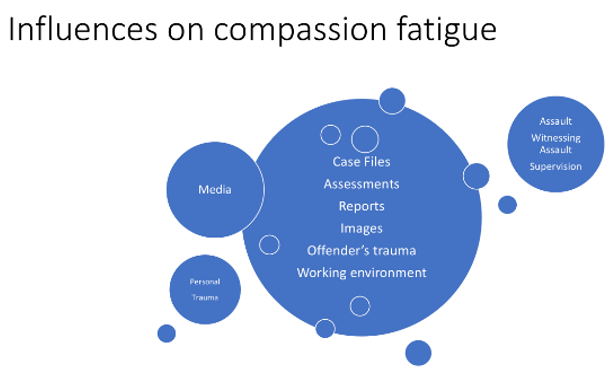
Trauma is highly relevant within policing because officers frequently attend traumatic incidents during their careers with an average of approximately 400 – 600 incidents across a 30-year career (Eason, 2025, p227). They are also exposed to traumatic materials, imagery and investigative content that can lead to vicarious trauma. These alongside negative media coverage, and a political and public blame culture, it is of no surprise that officers and staff across all ranks, experience substantial exposure to stress and trauma, all of which contribute to psychological difficulties, burnout and compassion fatigue, reduced wellbeing, and increased risk of mental health challenges if left unaddressed.

A trauma-informed leadership approach acknowledges that repeated exposure to traumatic incidents can influence how officers think, feel, and behave. Typical trauma responses can be experienced in hypervigilance, emotional exhaustion, difficulties concentrating, irritability, withdrawal, or reduced engagement. Without understanding these potential impacts, leaders may mistakenly interpret trauma responses as poor attitude, resistance, lack of commitment, or incompetence. This inevitably causes further stress in professional relationships, and possible disciplinary action rather than recovery interventions.

Trauma-informed leaders seek first to understand context and provide support while maintaining professional standards and accountability.

One of the most important benefits of trauma-informed leadership is the creation of psychological safety (Eason, n.d). Psychological safety refers to an environment where individuals feel able to speak openly, admit mistakes, ask for help, and raise concerns without fear of humiliation or punishment. In high-risk professions such as policing, psychological safety is essential because it supports learning, decision making, innovation, and wellbeing. Trauma-informed leaders create conditions in which officers and staff feel respected, heard, and valued, promoting agency and personal growth. This not only benefits individual wellbeing but also strengthens organisational effectiveness.

Trauma-informed leadership is also important because of the prevalence of adverse childhood experiences (ACEs) and other traumatic life events across society. These often form part of the lived experience of victims and offenders, but also officer’s themselves (Kyranides et al, 2025) resulting in maladaptive cognitive emotion regulation strategies (CERS) that can result in poor professional quality of life. Police leaders therefore supervise individuals with diverse experiences and vulnerabilities that may influence workplace interactions and wellbeing.

Within policing specifically, trauma-informed leadership can contribute to improved workforce retention. Many police areas continue to struggle with sickness absence, stress-related illness, burnout, and attrition. When leaders demonstrate empathy, openness, and understanding of trauma, employees are more likely to feel supported and connected to their organisation. Staff who believe their wellbeing matters are often more engaged, productive, and committed to remaining in the professions.

Trauma informed learning

In our police programmes at UWE, trauma informed approaches form part of the learning for our student officers and form part of our teaching practices. Helping officers understand the symptoms of compassion fatigue and empowering them to have the confidence to speak up about their own experiences (and supporting others with theirs) is our contribution to the embedding of trauma informed practice values in the policing leaders of the future. Through the modelling of safe environments, non-judgemental discussion and dispelling of stigma across a wide range of behaviours through structured conceptual understanding, we hope our graduates are better prepared for the stressors of the policing profession and can begin to support cultural change in areas such as learning by mistakes and reflective practice.
Valuing staff does not mean lowering standards

Leaders who embed trauma-informed principles help create policing cultures that are more aligned to a compassionate, effective, and procedurally just organisation. This can enhance trust and legitimacy while reducing the likelihood of unintentional further harm to individuals who have already experienced adversity.

Most importantly, trauma-informed leadership does not mean lowering expectations or avoiding accountability. What is does mean is to lead with curiosity, compassion, and evidence-informed understanding. Leaders remain responsible for addressing misconduct, poor performance, and operational requirements however, they do so in ways that recognise human experiences and seek to balance organisational needs with employee wellbeing. This can be achieved by conducting supportive wellbeing conversations, providing access to psychological support, encouraging reflective supervision, promoting peer support networks, ensuring transparent communication during organisational change and recognising signs of cumulative stress and trauma exposure. Leaders can also model healthy behaviours by speaking openly about wellbeing and encouraging help-seeking without stigma (SAMHSA, 2023).

Final thought

As policing continues to evolve, the importance of trauma-informed leadership is likely to increase. Contemporary policing need leaders who can navigate complexity, support workforce wellbeing, and build cultures characterised by trust, compassion, resilience, and psychological safety. By recognising the impact of trauma on both staff and communities, trauma-informed leaders can help create healthier organisations and more effective policing outcomes.

References

Eason, A. (2025) “Keeping Practitioners Safe: Looking After the Health and Wellbeing of the Criminal Justice Professional and Compassion Fatigue,” in K. McCartan et al. (eds.) Developing and Implementing a Public Health and Criminological Approach to Tackling Sexual Abuse. Cham: Springer Nature Switzerland, pp. 217–236. Available at: https://doi.org/10.1007/978-3-031-93634-0_11.

Eason, A., & McCartan, k. (n.d.). The challenges and opportunities for trauma informed practice in a changing police culture. The International Handbook on Trauma-Informed Practice in the Justice System. Palgrave.. Available from https://uwe-repository.worktribe.com/output/15813197

Miller, N. (2022). Do no harm: Five ways to become a trauma-informed leader who fosters a resilient workforce. LinkedIn. https://www.linkedin.com/pulse/do-harm-five-ways-become-trauma-informed-leader-who-nancy-miller-phd

SAMHSA. (2023). Practical Guide for Implementing a Trauma-Informed Approach. https://library.samhsa.gov/sites/default/files/pep23-06-05-005.pdf

Kyranides, M. N., Antoniadou, M., Papageorgiou, K. A., & Kloess, J. A. (2025). Wellbeing and professional quality of life in police officers: Past adverse childhood experiences and current cognitive emotion regulation strategies. The Police Journal: Theory, Practice and Principles, 0(0). https://doi.org/10.1177/0032258X251378945

Editorial Team

Paul Williamson (Editor-in-Chief); Claudia McCready (Senior Lecturer); Claire Bowers (Senior Lecturer); Eve Smietanko (Joint Programme Leader & Senior Lecturer) and Ian Lowe (Senior Lecturer).

Supporting the Wellbeing of Investigators week of action 2025

Posted on

A consistent finding in policing research is that investigators report some of the lowest levels of wellbeing, highest levels of emotional fatigue, and elevated risks of vicarious trauma compared with other policing roles (Police Federation, 2020).

This week’s Wellbeing of Investigators Week of Action provides both a moment for reflection and an opportunity to examine the organisational, cultural and emotional pressures experienced by investigators across policing. Coordinated by the National Police Chief’s Council (NPCC) Recruitment, Retention and Wellbeing of Investigators Portfolio, the week has brought together leaders, investigators and academics to explore challenges that have long been acknowledged, yet persistently under-addressed.

Supported by the updated Investigator Wellbeing Toolkit, the work of the Investigator Wellbeing Group is vital to build on decades of awareness and ensure that improvements are made at the pace needed.

Understanding the Demands and the Costs

As a career investigator, I have experienced the full spectrum of investigative pressures from volume and priority crime up to PIP3 Senior Investigating Officer (SIO) and PIP4 Strategic Investigator. Much of my career centred on major and complex investigations, including leading homicide and national high-profile investigations into child sexual exploitation and organised crime. These were testing environments but also hugely rewarding.

These roles shaped me professionally, but they also came with significant personal impact. Like many investigators, I missed family birthdays, school events and milestones. Long deployments away from home were not uncommon. Such sacrifices that come with ‘the job’, are rarely acknowledged, yet they intensify emotional burdens that investigators accumulate over time.

Academic research consistently shows the cumulative effect of such strain. Investigators experience secondary traumatic stress, particularly when investigating rape, child sexual exploitation and abuse (Foley et al., 2024). Emotional labour and chronic exposure to interviewing victims and viewing distressing material, all reduce psychological energy and increase vulnerability to burnout. These pressures are compounded by a policing culture that historically rewards endurance and “getting on with it” (Loftus and Holdaway, 2013), even when doing so jeopardises wellbeing, impairs judgement and decision-making (Cook and Tattersall, 2014).

The Work That Never Switches Off

My personal experience was that one of the most persistent challenges is the inability to mentally switch-off. Even after leaving work, investigative threads replay in the mind as you go over key evidence and unanswered questions searching for that vital break-through. On long-running harder to solve cases, I would routinely keep a notepad by my bed, as I would wake up with flashes of inspiration that needed to be captured before I could nod back off to sleep.

While dedication is essential, research by McLean, Meakins and White (2022) shows that cognitive overload and fatigue impair decision-making, reduce investigative accuracy and increase risk-taking. Research also cautions on the structure of investigative work, long unsociable hours, high-risk and often under-resourced teams, (James et al., 2025) which can leave investigators feeling like rest is a luxury rather than a necessity.

Wellbeing literature emphasises the critical role of recovery in sustaining performance in high-risk roles (Hope, 2016). Each investigator must find what works for themselves, but such practices are only fully effective when embedded within supportive organisational cultures. For me, watching my children’s sporting achievements, running and (who would have thought) gardening became rare moments of mental relief, providing space to decompress and recalibrate.

Victims, Moral Injury and Emotional Weight

Investigators carry a profound responsibility towards victims and their families. In many cases, they are the voice and the person they rely on to reveal the truth and achieve justice. The emotional weight of supporting victims and families whilst remaining professional and objective can be considerable, especially on long-running hard to solve cases. Blumberg et al. (2020, p.1) argue that investigators can then also experience psychological distress resulting from “the cost of caring” by feeling unable to reduce the suffering experienced by others. Investigators carry their stories with them long after the investigation concludes and this is a major reason that wellbeing support is so vital.

Organisational pressures

Organisational demands such as tight time frames, high case volumes and pressure to ‘wrap up’ all influence investigative decision-making ((McLean, Meakins and White, 2022). This can push investigators into a more cursory investigative mindset where they are prevented from upholding their own professional values (Blumberg et al., 2020). This is central to why investigator wellbeing requires more than simply individual resilience.

Team Culture and Leadership

No SIO can shoulder the responsibility of an investigation alone. Evidence shows that effective leadership and psychological safety (meaning the confidence to raise concerns, admit uncertainty and seek support), significantly enhance wellbeing and team performance (Phythian et al., 2023). In practice, however, as James, Cox and Carr (2025, p.1) have found, investigative teams still operate within a culture in which “high workloads, stress, and skills shortages” impact on their capacity and capability. 

The work of the National SIO Wellbeing Group also reflects a growing recognition that the unique pressures faced by senior investigators require dedicated support. The group acts as a peer forum for confidential discussion, challenge and shared learning, with similarities to the NCA’s National SIO Adviser mentorship role. While a positive step, the groups very existence also highlights the continued gaps in organisational design, investment and support.

Preparing the Next Generation of Investigators

At UWE Bristol, the Degree Holder Entry Programme (DHEP) in partnership with Avon and Somerset Police plays a crucial role in preparing future detectives for both the operational and human challenges of investigative work.

The programme combines academic learning with professional practice, introducing student officers to concepts such as reflective practice, emotional resilience, trauma exposure, and the psychology of decision-making. It also focuses heavily on trauma-informed approaches, inclusive investigatory practice and acting in a procedurally just way – both in their engagement with members of the local community, as well as interactions with their peers.  

Taught by a team of academics from a range of professional backgrounds, it encourages critical engagement with the realities of policing, the pressures that contribute to poor wellbeing as well as tools for self-management and ownership.

Moving forwards

The “Wellbeing of Investigators Week of Action” represents significant progress under the leadership of ACC Martin Brunning, who I first met as an SIO colleague on a cross-border serial killer investigation. I have no doubt that having walked the path, Martin will do his upmost to deliver sustainable change and embed wellbeing as a core component of investigative practice. Many of the challenges for investigators wellbeing are structural rather than individual, and I wish him and the working group all the very best.

Reflecting on my own investigative career, I am proud of the investigators and teams I worked alongside and the justice we collectively achieved. For me though, it was not until I walked out of the office for the last time, and stopped investigating, that I came to realise how much I had internalised and normalised the stresses of the job.

My message to those still investigating is “keep persevering “as it is a fantastic career but remember that resilience is not about running on empty. It is about knowing when to stop, recharge and go again!

References

Blumberg, D. M., Papazoglou, K., and Schlosser, M. D. (2020). Organizational Solutions to the Moral Risks of Policing. International Journal of Environmental Research and Public Health [online]. 17(20. [Accessed 10 November 2025]. 

Cook and Tattersall (2014). Blackstone’s Senior Investigating Officers’ Handbook. 3rd Ed. Oxford University Press. 

Hope, L. (2016). Evaluating the effects of stress and fatigue on police officer response and recall: A challenge for research, training, practice and policy. Journal of Applied Research in Memory and Cognition, 5(3), pp. 239–245.

James, A., Cox, C., and Carr, R. (2025). Caseloads, culture, and capacity: rethinking investigative policing [online]. Policing & Society, pp. 1–22 [Accessed 12 November 2025].

James, A., Rogers, C., Turner, J. and Silverstone, D. (2025). Helping the police with their inquiries: improving investigator resilience and capacity in England and Wales [online]. Available from: https://researchonline.ljmu.ac.uk/id/eprint/18899/1/Helping%20the%20police%20with%20their%20enquiries.pdf [Accessed 12 November 2025].

Loftus, B. and Holdaway, S. (2013) Police culture in a changing world. Criminology & criminal justice [online]. 13 (1) p.119–120. [Accessed 10 November 2025].

McLean, F., Meakins, A. and White, E. (2022). College of Policing. Conducting effective investigations: Rapid evidence assessment [online]. Available from:  https://assets.college.police.uk/s3fs-public/2022-07/Conducting-effective-investigations-rapid-evidence-assessment.pdf [Accessed 11 November 2025].

National Police Chiefs Council. 2025. Wellbeing of investigators toolkit. Available from: [Accessed 6 November 2025].

Police Federation (2020). Detectives in Crisis: Findings from the Police Federation Demand, Capacity and Welfare Survey 2020. Available from: https://www.polfed.org/media/16610/detectives-in-crisis.pdf [Accessed 11 November 2025].

Phythian, R., Birdsall, N., Kirby, S., Cooper, E., Posner, Z., & Boulton, L. (2023). Organisational and individual perspectives of police wellbeing in England and Wales. Police Journal (Chichester), 96(1), pp. 128–152.

Editorial Team

Paul Williamson (Editor-in-Chief); Claudia McCready (Lecturer); Claire Bowers (Senior Lecturer); Eve Smietanko (Joint Programme Leader & Senior Lecturer) and Ian Lowe (Senior Lecturer).

If you would like to be a guest blogger, please contact Police.Blog@uwe.ac.uk