

How can today’s police leaders support a workforce routinely exposed to trauma while maintaining professional standards and accountability? In this blog, Anne Eason, Associate Professor in Trauma Informed Learning and Practice and Associate Director of Policing at UWE Bristol, explores the importance of trauma-informed leadership in building trust, supporting wellbeing and creating psychologically safe workplaces. Anne also reflects on how UWE’s policing programmes help student officers recognise the impact of trauma and develop the understanding and confidence to support themselves and others. Over to Anne…
Policing is an inherently demanding profession. Police officers and staff are routinely exposed to incidents involving violence, death, abuse, crisis, and human suffering. Alongside operational pressures, organisational change, public scrutiny, resource constraints, and increasing complexity in demand can create significant psychological and emotional strain. Against this backdrop, trauma-informed leadership has emerged as a critical approach for supporting workforce wellbeing, enhancing organisational culture, and improving service delivery.
A trauma-informed leader recognises that trauma can affect not only members of the public but also the professionals who serve them. Rather than asking, “What is wrong with this person?” trauma-informed practice encourages leaders to consider, “What has happened to this person?” This shift in perspective can fundamentally change how leaders understand behaviour, performance, wellbeing, and resilience within policing environments.
The key principles of trauma informed practice
The Substance Abuse and Mental Health Services Administration (SAMHSA) (2023) defines a trauma-informed approach as one that realises the ripple effect of trauma impact, recognises its signs and symptoms, responds by integrating knowledge about trauma into policies and practices, and seeks to avoid re-traumatisation. SAMHSA suggests six key principles framework for workforce wellbeing including safety, trustworthiness, transparency, collaboration, empowerment, and peer support and which provide a valuable framework for police leadership.
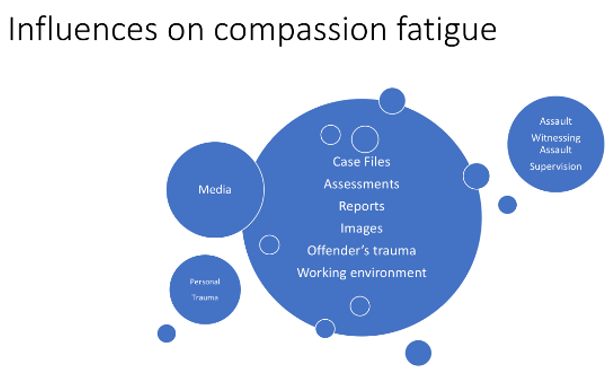
Trauma is highly relevant within policing because officers frequently attend traumatic incidents during their careers with an average of approximately 400 – 600 incidents across a 30-year career (Eason, 2025, p227). They are also exposed to traumatic materials, imagery and investigative content that can lead to vicarious trauma. These alongside negative media coverage, and a political and public blame culture, it is of no surprise that officers and staff across all ranks, experience substantial exposure to stress and trauma, all of which contribute to psychological difficulties, burnout and compassion fatigue, reduced wellbeing, and increased risk of mental health challenges if left unaddressed.
A trauma-informed leadership approach acknowledges that repeated exposure to traumatic incidents can influence how officers think, feel, and behave. Typical trauma responses can be experienced in hypervigilance, emotional exhaustion, difficulties concentrating, irritability, withdrawal, or reduced engagement. Without understanding these potential impacts, leaders may mistakenly interpret trauma responses as poor attitude, resistance, lack of commitment, or incompetence. This inevitably causes further stress in professional relationships, and possible disciplinary action rather than recovery interventions.
Trauma-informed leaders seek first to understand context and provide support while maintaining professional standards and accountability.
One of the most important benefits of trauma-informed leadership is the creation of psychological safety (Eason, n.d). Psychological safety refers to an environment where individuals feel able to speak openly, admit mistakes, ask for help, and raise concerns without fear of humiliation or punishment. In high-risk professions such as policing, psychological safety is essential because it supports learning, decision making, innovation, and wellbeing. Trauma-informed leaders create conditions in which officers and staff feel respected, heard, and valued, promoting agency and personal growth. This not only benefits individual wellbeing but also strengthens organisational effectiveness.

Trauma-informed leadership is also important because of the prevalence of adverse childhood experiences (ACEs) and other traumatic life events across society. These often form part of the lived experience of victims and offenders, but also officer’s themselves (Kyranides et al, 2025) resulting in maladaptive cognitive emotion regulation strategies (CERS) that can result in poor professional quality of life. Police leaders therefore supervise individuals with diverse experiences and vulnerabilities that may influence workplace interactions and wellbeing.
Within policing specifically, trauma-informed leadership can contribute to improved workforce retention. Many police areas continue to struggle with sickness absence, stress-related illness, burnout, and attrition. When leaders demonstrate empathy, openness, and understanding of trauma, employees are more likely to feel supported and connected to their organisation. Staff who believe their wellbeing matters are often more engaged, productive, and committed to remaining in the professions.
Trauma informed learning
In our police programmes at UWE, trauma informed approaches form part of the learning for our student officers and form part of our teaching practices. Helping officers understand the symptoms of compassion fatigue and empowering them to have the confidence to speak up about their own experiences (and supporting others with theirs) is our contribution to the embedding of trauma informed practice values in the policing leaders of the future. Through the modelling of safe environments, non-judgemental discussion and dispelling of stigma across a wide range of behaviours through structured conceptual understanding, we hope our graduates are better prepared for the stressors of the policing profession and can begin to support cultural change in areas such as learning by mistakes and reflective practice.

Valuing staff does not mean lowering standards
Leaders who embed trauma-informed principles help create policing cultures that are more aligned to a compassionate, effective, and procedurally just organisation. This can enhance trust and legitimacy while reducing the likelihood of unintentional further harm to individuals who have already experienced adversity.
Most importantly, trauma-informed leadership does not mean lowering expectations or avoiding accountability. What is does mean is to lead with curiosity, compassion, and evidence-informed understanding. Leaders remain responsible for addressing misconduct, poor performance, and operational requirements however, they do so in ways that recognise human experiences and seek to balance organisational needs with employee wellbeing. This can be achieved by conducting supportive wellbeing conversations, providing access to psychological support, encouraging reflective supervision, promoting peer support networks, ensuring transparent communication during organisational change and recognising signs of cumulative stress and trauma exposure. Leaders can also model healthy behaviours by speaking openly about wellbeing and encouraging help-seeking without stigma (SAMHSA, 2023).
Final thought
As policing continues to evolve, the importance of trauma-informed leadership is likely to increase. Contemporary policing need leaders who can navigate complexity, support workforce wellbeing, and build cultures characterised by trust, compassion, resilience, and psychological safety. By recognising the impact of trauma on both staff and communities, trauma-informed leaders can help create healthier organisations and more effective policing outcomes.
References
Eason, A. (2025) “Keeping Practitioners Safe: Looking After the Health and Wellbeing of the Criminal Justice Professional and Compassion Fatigue,” in K. McCartan et al. (eds.) Developing and Implementing a Public Health and Criminological Approach to Tackling Sexual Abuse. Cham: Springer Nature Switzerland, pp. 217–236. Available at: https://doi.org/10.1007/978-3-031-93634-0_11.
Eason, A., & McCartan, k. (n.d.). The challenges and opportunities for trauma informed practice in a changing police culture. The International Handbook on Trauma-Informed Practice in the Justice System. Palgrave.. Available from https://uwe-repository.worktribe.com/output/15813197
Miller, N. (2022). Do no harm: Five ways to become a trauma-informed leader who fosters a resilient workforce. LinkedIn. https://www.linkedin.com/pulse/do-harm-five-ways-become-trauma-informed-leader-who-nancy-miller-phd
SAMHSA. (2023). Practical Guide for Implementing a Trauma-Informed Approach. https://library.samhsa.gov/sites/default/files/pep23-06-05-005.pdf
Kyranides, M. N., Antoniadou, M., Papageorgiou, K. A., & Kloess, J. A. (2025). Wellbeing and professional quality of life in police officers: Past adverse childhood experiences and current cognitive emotion regulation strategies. The Police Journal: Theory, Practice and Principles, 0(0). https://doi.org/10.1177/0032258X251378945
Editorial Team
Paul Williamson (Editor-in-Chief); Claudia McCready (Senior Lecturer); Claire Bowers (Senior Lecturer); Eve Smietanko (Joint Programme Leader & Senior Lecturer) and Ian Lowe (Senior Lecturer).


