A Day in the Life of A Young Victim’s Advocate

Posted on

‘Everyone has the right to feel safe. Nothing is too small that it can’t be spoken about with someone.’

These are the words that greet visitors to the Young Victims Service homepage, setting the tone for the next edition of our ‘Day in the Life’ series.

In this episode, we highlight the vital work of policing partners supporting young victims of crime, anti-social behaviour, and domestic abuse.

Managed by North Somerset Youth Justice Service, the Young Victims Service (YVS) is funded by Avon and Somerset Office of the Police and Crime Commissioner (OPCC), Bristol, North Somerset and South Gloucestershire Integrated Care Board (BNSSG ICB) and North Somerset Council to provide specialist intervention support from professionally qualified Young Victim’s Advocates to children across Bristol, North Somerset, Somerset, Bath and North East Somerset (BANES) and South Gloucestershire.

YVS utilises a ‘trauma-informed’ approach, offering bespoke and individualised support plans, completed in collaboration with the children and their families.

The service works in partnership with schools and other agencies in the best interests of the child, ensuring that their voice remains at the centre of all decision-making. YVS works with children aged 5 to 18 years, and those with additional learning needs who are 18 to 25 years old. 

YVS ensures children and young people have appropriate, practical and emotional support to help them begin to process and move forwards from their experience as a victim of crime, as well as helping them engage with the criminal justice system if they choose to do so.

This week we hear from Sian Hancock, who has been a Young Victim’s Advocate with YVS for 7 years.

Join us as we explore the dedication, compassion, and expertise that goes into supporting young victims.

Sian, can you tell us a bit about your background and what inspired you to become a Young Victims Advocate?

I was born in South Wales, but have spent most of my life in and around Bristol.  I have worked with children, young people and their families in both community and educational settings.  I was a young leader in the Guide Movement and a Youth Worker for several years. Whilst my daughters were growing up, I led and managed a pre-school before going to university and training as a primary school teacher. 

“Whilst teaching, my post graduate study focussed on ways to empower independent learners.  This challenged a lot of my thinking, alongside a trip to Sierra Leone as part of the ‘Just Life Project’ visiting community projects helping the country recover from its civil war.” 

I then moved into Higher Education, training youth and community workers, which is what I was doing before I joined the Young Victims Service.

“These experiences have equipped me for my Advocate role, which I often consider to be the ‘non-anxious presence’ alongside children and young people when their world has been turned upside down”

The impact of being a victim can be profound and far-reaching for a child or young person, affecting their emotional, psychological, and physical well-being. They may have experienced trauma and abuse, leading to low self-esteem and feelings of worthlessness or guilt. Their behaviour might also be impacted. For example, they may be dysregulated, withdraw or become aggressive, displaying disruptive behaviours as a way of coping.

Calm, consistent support helps children feel valued, heard, and safe as they work through the complex emotions tied to their experiences. It creates a foundation for recovery and healing, which can make a significant difference in the child’s emotional development and future well-being.

How does your day start?

I like to ground myself at the start of the day, so I’ll walk the dog before my first coffee!  

Vegan banana pancakes are my breakfast choice at the moment.

What does a typical day involve?

Most days start with me taking time to recall my last session with the young people I will be seeing.  This helps me to build continuity in our work and to ensure I have a range of resources to offer them choice in how they might respond. Most sessions happen in the school day, so I travel to my first school and meet with that young person for an hour.  Like many, he needed the therapeutic space to offload and reset. 

“The day hadn’t started well for this young person, and he was feeling overwhelmed, so I asked for the Head of Year to join us so we could request some amendments to the day to help him decompress and approach the afternoon lessons feeling less anxious.”

After the session, I ring home to update the parents on my concerns and any actions. Between visits I make some notes about the sessions and respond to phone calls. Sometimes I may be answering as the Duty Advocate, which involves answering initial enquiries or providing follow-up information. 

In the next school, I join a meeting with a young person, their parents, Head of Year and Pastoral Lead.  We talk about what was going well for them and share any concerns.  The young person was able to express their struggles and contributed to the way forward that was agreed to by the end of the meeting.

The final visit was to siblings at their home.  After some initial play time together, they each had their own time with me to explore their feelings and how to manage them when family life is messy.  English is not their first language, so at times I needed to navigate cultural distinctions, however being in their home, with Mum nearby, made that easier.

“We use a range of tools to build safe trusting relationships with the young people and to help them to explore their thoughts feelings and wishes. This includes ‘getting to know you games’, breathing and grounding techniques, talk, art or play therapy. Sometimes we will use sports, or ‘walk and talk’ methods to engage a young person.”

Some of the interventions I provide are from the ‘Healing Together‘ programme. All of the YVS team are accredited ‘Healing Together’ facilitators. The programme includes activities and videos on content such as ‘how to keep safe’, ‘understanding how our brains and bodies work together’ and ‘finding and feeling feelings safely.’ We also use the ‘Spark’ Curriculum and resources.

Provided by Innovating Minds, ‘Healing Together’ is a Home Office approved trauma-informed programme that was born out of a request from mothers who had started their journey of recovery from domestic abuse. These mothers wanted help and support for their children but could not find anything suitable.

The ‘Healing Together’ programme incorporates evidence-based models, including attachment, neuroscience (including polyvagal theory and Daniel Siegal’s work) and relational approaches.

At some point during the day I will send reminders to the parent carers and/or young people I will be seeing the next day, to remind them of timings and to check that they’re still okay to meet. When I make it back to my desk, I will write up my case notes, respond to emails and then begin to prepare for tomorrow’s visits.

How does your role link with policing?

Whilst YVS accepts referrals from schools, other agencies, families and young people, many referrals come through from the police via Lighthouse Victim Care.  Not all cases are going through the Criminal Justice System but when they are, we support families through that process and will accompany them to ABE interviews, pre-trial visits and at Court.  At these times we may have a closer link with the investigating officer. 

“It is reassuring to a young person to have an Advocate alongside them having already established a rapport.”

Advocates can help explain the process and provide the emotional support needed whilst awaiting decisions on whether charges will be made and cases going to Court.

What aspects of your job do you find most rewarding?

I learn so much from the young people I meet, and am often amazed at the transformation that can be seen after our short intervention. 

“Working WITH them and giving THEM the opportunity to make choices can make such difference. Young people are empowered, self-esteem is boosted again and resilience deepens.”

What would success in your role look like for you?

“A young person THRIVING, not just surviving.”

Sometimes this is seen in their face or body language.  Or, we might hear it as they talk about experiences that show they have their confidence and sense of safety restored and are re-emerging again.  We may be told by parents, carers or teachers how they have begun to see glimpses of their old self again. 

Formally, success or quantitative data is captured when we revisit an assessment questionnaire the young person completed at the beginning of the support process.   It involves scaled responses to questions and is a good visual tool for young people to see where things have changed, and for us to reflect with them together on how and why responses may be different now.  We also get affirming feedback from families and schools.

What do you see as the main benefits of a university education for police officers and what do you think the educational priorities are?

“University provides a constructive reflective space for the lived experience to be shared, thinking to be expanded and misconceptions and bias to be challenged.”

Academic study encourages reflection on ‘action’, and can provide a language for understanding the underlying values and principles for ways of working.  Going through study in this way will inevitably deepen self-awareness, help develop the relational and communication skills needed for front line work with the public as well as for collaborative working.

On behalf of young victims, it would be helpful for the understanding of TRAUMA to be a priority.  It’s a complex subject and can continue to trigger strong physiological and emotional responses.  Exploration of what it means to be ‘trauma-informed’ in approach and when communicating would be beneficial to all concerned, and less triggering for young people.

A comprehensive understanding of DOMESTIC ABUSE in its many guises would be helpful, as it is often hidden behind presenting behaviours and incidents.  Alongside that would be insight to the subtleties of ‘controlling coercive behaviour’ and an awareness to how this often continues post-separation.  Some of the children we work with find themselves caught amid adult disagreements, and struggle with this and their feelings for each adult.

And lastly, what do you do for fun?

I climb trees, read books and play board games…not necessarily in that order!

Editorial Team

Paul Williamson (Editor-in-Chief); Claudia McCready (Lecturer); Claire Bowers (Senior Lecturer); Eve Smietanko (Joint Programme Leader & Senior Lecturer); Ian Lowe (Senior Lecturer) & Micah Hassell (Senior Lecturer).

If you would like to be a guest blogger, please contact Police.Blog@uwe

A Day in the life of an IDVA

Posted on

We are fast approaching Christmas, an occasion generally regarded as one of the most wonderful times of the year. However for many, especially women, it is sadly the most dangerous time of the year, with a significant increase in risk of abuse and violence. The Christmas period typically sees a rise in police responses to domestic abuse incidents and a report by the NSPCC predicts that 15,000 children could be exposed to domestic violence over the two-week Christmas period.

According to the Office of National Statistics (2024), the police recorded approximately 1.4 million domestic abuse-related incidents and crimes in the year ending March 2024. The Crime Survey for England and Wales estimates that unfortunately 2.3 million people (4.8%) aged 16 years and over (1.6 million women and 712,000 men) have experienced domestic abuse this year. These are sobering figures indeed. The police play a crucial role in taking ‘positive action‘ to protect victims, investigate and prevent domestic abuse, however this issue requires a multi-agency approach.

The period from Monday 25th November to Tuesday, 10th December, represented the annual 16 Days of Activism against domestic abuse. To mark the UN’s International Day for the Elimination of Violence against Women and Girls, Next Link held candlelit vigils to highlight the number of women and children affected by Domestic Abuse and Sexual Violence.

Candle lit vigil to mark the UN’s International Day for the Elimination of Violence against Women and Girls. Photograph provided by Next Link.

 This week’s blog is written by Liz fromNext Link. Liz is an IDVA, which stands for Independent Domestic Violence Advisor. Next Linkis commissioned to provide IDVA services by South Gloucestershire, Bristol and North Somerset Councils, in partnership with the Office of the Police and Crime Commissioner.

Every 10 minutes, partners and family members killed a woman intentionally in 2023 (United Nations, 2024)

Like all crisis response teams, Liz and her colleagues are an essential support resource, keeping people safe and empowered during the Christmas season and throughout the rest of the year.

IDVAs are a primary point of contact for victims of domestic abuse. They prioritise victim safety by providing crucial advocacy, emotional and practical assistance to reduce the risk posed by perpetrators of domestic abuse.   

Next Link Candle-lit vigil 2024. Photograph provided by Next Link.

This blog will help you to understand more about the important work that IDVAs do. Over to you Liz… 

Can you tell us a bit about your background and what inspired you to become an IDVA? 

I have worked within support and trauma for 20 plus years! Yes, I am an oldie! Firstly, I worked within case management for under 25’s who had suffered a traumatic brain injury, often from a crime or negligence.  I worked with the whole family, co-ordinated a multi-disciplinary team of professionals and ensured a long-term plan was in place for them to rebuild their lives. 

I then started my family and when they went to school, I began working in trauma youth work and alternative education. 

“All of the children and young people were in care or secure units or pupil referral units (PRU). They were either care leavers, out of education, had severe mental health issues, or similar.”

I was often working within a large team of professionals from schools, police, youth offending teams, criminal justice service, children and adolescent mental health services (CAMHS) etc. I worked with children to build resilience and coping strategies, working through trauma and supporting them to reach their full potential. Domestic abuse was often a factor in their lives. 

“I had a break from this field for seven years as I became a survivor of domestic violence and stalking.”

After taking time to heal and work through my experience, I decided that I wanted to become an IDVA. I would not have been able to do all this without the support of my IDVA.

 “I wanted to turn something horrific into something empowering and support others.”

How does your day start?

I would like to say, meditating to the sun and having a green tea! But, in reality, it is a strong coffee and walking the hounds! Well, they are more the size of guinea pigs, but they still need walking! Then I am getting the tribe fed, out of the door and delivered to schools etc. before heading to work! 

What does a typical day involve?

There really is not a typical day for an IDVA…

“Much like the police, your day can be planned but you need to be responsive to victims and survivors needs. Risk can change quickly, so the priority is those at high risk of harm.” 

My day can be spent: 

  • Attending court. Often family court, but we have many cases at Magistrates and Crown Court. 
  • Support/advocacy at child protection meetings.  
  • Attending housing meetings for advocacy e.g. for emergency accommodation 
  • Appeals and support letters to access housing and other services. 
  • Support to give written or video statements to the police. 
  • Liaising with professionals in the criminal justice system e.g. Lighthouse and OIC’s to provide updates to the victim, ensure their voice is heard and assist in any way we can with the investigation. 
  • Safety planning, home-security referrals, co-ordinating with schools and services regarding safety. 

I work with the under 25’s who are living with domestic abuse, so I do some 1:1 work with them on safety planning, understanding their experiences, planning what they want to happen next and working with schools and social services.

I am also training to be an ISAC for South Gloucestershire. Many of the stalking cases will therefore come to me or other trained ISACs, and colleagues will also seek advice from us.

ISAC stands for Independent stalking advocacy caseworker and is a trained specialist who provides advice and support to anyone who has been the victim of Domestic Stalking 

As you can see it is very varied work, all with the common goal of helping victims to seek help and find safety by providing practical, emotional and legal support. We try to help victims to navigate the complex and often overwhelming criminal justice and family court systems they find themselves involved in.

How does your role link with policing?

“We work very closely with Lighthouse and Avon & Somerset Police.”

Often the referrals will come directly from the police where we will contact the OIC (Officer in charge) for a case update and ascertain what support the victim needs to support them with their investigation. We will work with the victim and police to facilitate as much as we can. This can range from requesting a ‘treat as urgent’ (TAU) marker on victim’s addresses, support at court and video interviews (Achieving Best Evidence) to support the victim during their process and liaising with police on any victim engagement and/or safety concerns.

“We advocate for the victim’s voice throughout the process and are a bridge between the police and the victim if needed, to achieve the best possible outcome.” 

As I am trained and understand the independence of my role, the police and CPS roles, I also can assist with ensuring the case is robust as possible for presenting to the CPS for a charging decision by supporting the victim to recognise the importance of evidence gathering/preservation and co-operating where they choose to do this. 

I was recently an IDVA on Operation Balearic which aimed to improve police investigations and provide support to victims immediately after a report had been made, whilst the suspect was in custody. Speaking to victims at this stage gave me a real understanding of Police and Criminal Evidence Act (PACE) and the police’s role in the initial interaction with the victim. This enabled me to be able to more explain fully to the victim why certain questions are asked and what was currently happening. 

Sometimes we will challenge decisions if this is in the victim’s best interests. For example, I have suggested a case is looked at as a stalking charge, rather than as a breach of bail etc. and will encourage it to be reviewed by putting forward my rationale and evidence. 

“For victims, making informed choices and having control over the process makes a big difference in their recovery, as they have already been subject to controlling behaviours and had their choices taken away from them.”

What aspects of your job do you find most rewarding?

“The most rewarding part of being an IDVA is when a very traumatised victim allows you to support them through an awful, disturbing and confusing time. This is a real privilege.”

Seeing their confidence build and get their lives back on track. Being present at the moment when they realise there is a light at the end of the tunnel.  

What would success in your role look like for you?

Survivors re-building secure futures and thriving. Not being a victim from domestic abuse again.

What do you see as the main benefits of a university education for police officers and what do you think the educational priorities are? 

A university education should teach a rounded and holistic approach to policing, with the opportunity to gain knowledge of the different areas.

“Empathy and compassion fatigue are a very real issue in this work. Educational priorities should include learning to look after yourself and having good boundaries. These are key to a lasting career.”  

And lastly, what do you do for fun? 

I am creative and often will be found in the garage upcycling some new find from the charity shop or Vinted! 

If you would like to learn more about Next Link and the important work that they do, you can visit their website or refer to their latest Impact Report and Guide to Services.

If you’re looking for more information on how to seek help for domestic abuse, the following links may be useful:

Editorial Team

Paul Williamson (Editor-in-Chief); Claudia McCready (Lecturer); Claire Bowers (Senior Lecturer); Eve Smietanko (Joint Programme Leader & Senior Lecturer); Ian Lowe (Senior Lecturer) & Micah Hassell (Senior Lecturer).

If you would like to be a guest blogger, please contact Police.Blog@uwe.

Staff Spotlight on Dr Anne Eason

Posted on

This week’s blog for the ‘staff in the spotlight series’ needs little introduction to many. Dr Anne Eason is our much loved and respected Associate Director of Policing at UWE, with extensive academic and operational experience within criminal justice, ranging from probation and assessment and management of high risk of harm offenders, to research in police decision making in domestic abuse and violence against women and girls. Anne represents the true essence of a ‘pracademic’ and has just published her second book with co-author Dr Rob Starr, entitled ‘The University Beat: Critical Reflections on the Delivery of Police Education In England and Wales.’ This book explores how the new degree routes draw together the evidence-based approaches of policing practices into a framework for educational study that meet policing needs, celebrating and drawing on the conceptual knowledge gained by UWE. And, for those of you that were wondering, her first book was ‘The Police Officers Guide to Academic Research.’ 

Anne embodies the perfect balance of practical expertise and academic insight, and since 2019 has been the cornerstone that has united and led so many, in partnership with UWE and Avon and Somerset Police, through the journey of professional policing degrees. We really enjoyed learning more about our Associate Director and we are sure that you will too. Over to you Anne… 

Could you tell us a little bit more about your role at UWE and the programmes you are involved with?

I am one of two Associate Directors of Policing and I am responsible for the strategic development of the PCDA and DHEP programmes (and more recently the PCEP) delivered in partnership with Avon and Somerset Police. I joint manage the policing team who teach, are part of the tripartite team and our administrator (who is the backbone of the EPA!) and develop new projects, programmes and research opportunities. Impressive huh? 

What previous experience do you bring to the role? 

My criminal justice background initially started when working within the drugs and alcohol arena. I used to run the needle exchanges and encountered many different people. Some from the sex industry, some from everyday jobs and homes, some who had been convicted of crimes. The latter really interested me and I soon started doing some voluntary work with the Probation Service. A few years later I did my training and worked with those who had committed a range of offences, but mainly violence and sexual violence.

As a Senior Probation Officer I was able to take a more strategic role public protection and multi-agency working, particularly MAPPA and really enjoyed empowering others to make change. In 2011 I took my first academic role teaching on a Police Foundation degree and an Offender Management degree and have been in academia since. 

What do you enjoy about working on the policing programmes? 

Let’s face it, crime and criminality is much more sophisticated, the intersectionality of victims is diverse, and the criminal justice sector has to respond to these intelligently and empathically. The policing role demands a better understanding of the issues that underpin crime and victimhood as well as a greater knowledge about crime itself; digital, cyber, domestic abuse, honour-based violence…the list goes on.

The best thing about working in this role is giving police officers the opportunity to develop their skills and knowledge about crime, victims and criminality in the depth that allows them to make informed decisions about complex problems.

Our programmes offer the evidence-base and practical skills needed to tackle these challenges. Being able to accredit all this into a programme of study is a well-deserved award that they can take with them on their professional journey, but more importantly, can use from the outset. 

What do you consider to be your areas of specialism and research interest? 

Risk and risk management, trauma informed practices and police education. I like to think of myself as a pracademic, someone who can operationalise theory into practice, and see that as all part of my magic power. 

What is your funniest or favourite ‘on the job’ experience? 

I don’t think I should talk about my funniest experience as this is a family Blog! However, one of my favourite experiences is graduation, seeing the look on some of our graduates’ faces realising what they have achieved.

It is a great privilege to be invited to their in-house ceremony and I always feel quite humbled saying a few words in celebration. 

What’s one book or movie that has profoundly changed your perspective on policing and related issues? 

Hot Fuzz! I didn’t realise police officers could jump over hedges so well! Haha

Rob Reiner in his book, The Politics of the Police, helped me understand some of the cultural nuances of policing, and how and why the ‘police family’ has to exist (to a certain extent anyway). I also really like Matthew Syed’s Black Box Thinking which is on our students reading list too. 

If you had to eat one food for the rest of your life what would it be? 

Cheese, definitely cheese. Cheese on toast, macaroni cheese, steak with stilton – just any cheese really…accompanied by a glass of Malbec of course! 

Editorial Team

Paul Williamson (Editor-in-Chief); Claudia McCready (Lecturer); Claire Bowers (Senior Lecturer); Eve Smietanko (Joint Programme Leader & Senior Lecturer); Ian Lowe (Senior Lecturer) & Micah Hassell (Senior Lecturer).

If you would like to be a guest blogger, please contact Police.Blog@uwe.

A Day in the life of an Apprenticeship Coordinator

Posted on

Ever wondered what goes on behind the scenes to ensure the seamless training and development of future policing professionals? In this week’s blog, we will hear about a day in the life of Steve Concannon, a dedicated Apprenticeship Coordinator at the University of the West of England (UWE) Bristol. Steve’s role is pivotal in bridging the gap between academic learning and practical experience, ensuring that our apprentices are not only well-educated but also well-prepared for the realities of modern policing.

Whether you are a current policing apprentice, prospective applicant, or simply curious about the inner workings of our policing programme, this behind-the-scenes look will give you a newfound appreciation for the tireless efforts of those who support our Police Constable Degree apprentices every step of the way.

Can you tell us a bit about your background and what inspired you to become an Apprenticeship Coordinator?

Prior to finding a bit of direction in life, I spent around 9 years working for a well-known global financial organisation. Departing in 2007, the financial crash occurred in 2008. Coincidence? Yes, absolutely.

Following that, I coached football in the USA for a couple of years. Living in New Jersey, I also got to work in fantastic places such as New York and Memphis. It was such a positive, life-changing experience that it gave me the confidence and aspiration to develop myself (about time). I came back to study a BSc Sports Coaching Degree in Wales. New Jersey to Newport! ‘What’s up?’ to ‘What’s occurring?’ 

It was as a student that I realised Higher Education (HE) was where I wanted to work. I found it to be a supportive environment and became very aware of how a diverse range of services, departments and most importantly people, worked to forge a student-centred approach. My aim came to fruition by working in ‘Widening Participation’ speaking to under-represented groups about the different HE routes available. It was great to open students’ eyes to ‘less traditional’ routes in addition to well-known pathways.

UWE feels like a natural fit for me, and as an Apprenticeship Coordinator at UWE, I’ve been able to apply methods utilised in coaching and widening participation with the apprentices themselves.

How does your day start? (do you have a favourite breakfast?)

My day starts with a covert operation of creeping downstairs without waking the kids to have at least one coffee in peace! I have porridge for breakfast but mix in banana and honey to avoid the taste and consistency of wallpaper paste.

What does a typical day involve?

After a coffee or two, the morning consists of getting our two boys ready for school and out of the door on time. Close in age but with differing personalities, a little management is required, and that is putting it diplomatically!

I get out on a run a few times a week. Obviously, it’s good for physical health and fitness but it’s a nice bit of headspace too. I don’t put any pressure on myself though. I enjoy running rather than being obsessed by it. Life is a balance! And then it’s onto work.

A significant part of my job is conducting tripartite reviews with the Police Constable Degree Apprenticeship (PCDA) officers and their Professional Development Unit (PDU) assessors from Avon and Somerset Constabulary (ASC). Whilst some students will navigate the PCDA in a smooth fashion, others may experience difficulties in the form of academic struggles, operational challenges, engagement issues or wellbeing problems.

Within a day of tripartite reviews, we’ll demonstrate a spectrum of behaviours. Empathetic, encouraging, understanding, motivating, persistent, diplomatic. And let’s not forget a little humour to break down barriers. Adaptable would be one word for us, but let’s call it supportive shape shifting! I mean, it sounds cool.

It’s important to state however that we are one part of a brilliant team, supported by a productive relationship with the UWE Policing academic staff. Being programme linked, we have a thorough understanding of the academic content, deep insight into apprentices’ development and an acute awareness of individual student needs. Also, by collaborating closely with ASC PDU Assessors, we ensure that each student has the best wraparound support. It is the very essence of a ‘joined up’ approach and I feel that the Tripartite team are the glue that helps keep it all together.

What aspects of your job do you find most rewarding?

Undoubtedly, the people. My Tripartite and wider UWE colleagues are supportive, creative, dedicated, diversely talented and never out of reach. Needless to say, all round good eggs.

Likewise, our Avon and Somerset colleagues and apprentices are an absolute pleasure to talk to. Whilst we’re sharing the love, let’s not forget the people that can make all the difference to the working day, but we might only see for 30 seconds on campus as we grab a coffee or ask directions (I still do). Smiling is infectious. Spike Milligan’s words, not mine.

What would success in your role look like for you?

As a student-centred role, we strive to provide everyone with the support required. It’s equally important however that apprentices are also equipped to deal with the demands of the role. Therefore, success is working productively with Avon & Somerset Constabulary to ensure individuals are supported according to their needs, yet autonomous in their learning.

What do you see as the main benefits of a university education for police officers and what do you think the educational priorities are?

It’s clear that the role of a modern-day Police Constable is multi-faceted and this is reflected in the breadth of academic learning gained by PCDA students. Combined with wide ranging competencies, knowledge, skills and behaviours, an apprentice can apply their understanding and become a critical thinking, well-rounded police officer.

We ask students to think critically, and I believe that the same priority applies to higher education institutions. We see policing programmes reflected on and evolve accordingly. It is so important that universities adapt to a fast-changing digital world, and that the courses remain relevant and useful. A further priority is embedding Professional Standards throughout an apprentices’ learning, particularly with the level of scrutiny being faced by police forces. This applies not only in the form of academic content but from the expectations of all on the PCDA programme, including us on the Tripartite team.

And lastly, what do you do for fun?

The simple pleasure of being around friends is a happy place. No stress, and a licence for us all to talk complete and utter nonsense while together!

I love my music and if I can find the time to squeeze in a little piano or guitar then I’m a happy lad! Thankfully for the neighbours, the drums are gathering dust in the garage.

I enjoy cooking and could happily live on a Mediterranean diet. Throw in some music whilst the hobs are on and suddenly a 90s Brit pop swagger is present in the kitchen too! But only when no-one is looking…

Editorial Team

Paul Williamson (Editor-in-Chief); Claudia McCready (Lecturer); Claire Bowers (Senior Lecturer); Eve Smietanko (Joint Programme Leader & Senior Lecturer); Ian Lowe (Senior Lecturer) & Micah Hassell (Senior Lecturer).

If you would like to be a guest blogger, please contact Police.Blog@uwe

Youthful Insights: Exploring Policing at the University of the West of England

Posted on

Introduction by Dr Georgie Benford: Director of Learning and Teaching for Health and Social Sciences

Welcome to our blog today. I am thrilled to share a unique and insightful piece from an exceptional young guest contributor. Katie recently had the exciting opportunity to gain secondary school work experience with the Policing Programme at UWE. This experience provided Katie with a glimpse into the world of higher education and our role in delivering a degree education to the profession of policing.

During Katie’s time with us, she was immersed in various activities, learning directly from professionals and academics who are passionate about Policing. Katie kindly agreed to write a reflection on her experience, which we are delighted to share in this blog. We hope you enjoy reading this as much as we enjoyed having Katie spend a week with the UWE Policing Team.

The truth, the whole truth  

During my work experience I took part in range of different activities. My favourite experience was a trip to the deception lab, which is all about detecting dishonest responses in interview scenarios. I was able to take a few surveys to see if I was able to initially recognise when people were lying. After testing my skills, I got taught how to detect lying and to support truthtellers in these scenarios. It was really enjoyable and interesting because you would think that identifying lying would be easy but during the session I realised that it is so much more complex than you would imagine! This experience really stood out to me because it was also really relevant to my future career as I’d like to become a Police Detective.

Another thing I did during my work experience was helping with a student engagement day. This included supporting the staff and students attending by going on a tour, observing some simulated crime scenes, for example a burglary scenario and attending some training about how to use handcuffs. There was also a talk about the Policing courses on offer at UWE.

Meeting the experts

I talked with a lot of ex police officers during the week; this inspired me a lot. They helped me understand what it was like to be an officer, shared their experiences and helped me learn about Police ethics, which was something new to me. They all helped me develop my knowledge on becoming a police officer, for example they talked about the rank structure and different jobs within the police. I also attended a workshop about drug and alcohol usage and how the students’ union support students to drink safely while still having fun at university.

Coming to UWE for work experience really helped me understand how to get into the Police and it made me look forward to going onto the Police Constable Degree Apprenticeship (PCDA) course. I gained new knowledge about the university and the different courses and I got taught about the student timetable. Throughout the week I have realised more and more that there are a range of different jobs within policing, and its more varied than I thought. There’s something for everyone in the police, there’s forensics involved, psychology and critical thinking; loads of different aspects and choices within one whole career.

Help is at hand 

If you have any questions about a career in Policing, but don’t know how to get there or what specific route to take, or even what role you want to be in I would recommend that you speak to UWE too. I would reach out, ask the staff any questions, and learn about their courses. If you do this, I would 100% say that you’ll have a better idea of the courses and whether Policing is for you.

To sum up my work experience it was really exciting and very interesting. I had a lot of fun hearing about the courses and in particular looking round the simulations and doing the deception lab.

The experience has improved my confidence in talking to new people, and my IT skills but the most important lesson I’ve learned would have to be that putting yourself out there is essential, and it gets so much easier the more you do it.

My advice to someone who’s thinking about doing work experience at UWE is to do it. The hardest part of my week was definitely the first day on Monday. This is because I didn’t really know what to expect and that was overwhelming. Further into the week the less nervous I got. Once you get used to it, it is definitely a really good place for work experience.   Also, I would recommend other student’s to be confident in your abilities and ask questions because, you aren’t going to get judged and people are trying to help you.  They’re doing it for you, so you might as well ask for help.

What I’ve learned   

This week has given me so much more information than I have ever been exposed to, not only about joining the police, but what it is like being in the Police too. I am now more confident in what routes I could to take to get into the Police, which I was uncertain about before. I have identified the training I need to do and I have been able to meet the relevant course leader. This course is my next step to achieving my goal and I am looking forward to progressing.

Here at UWE, we all wish Katie the very best in achieving her ambition of joining the Police. More information on joining can be found here

Editorial Team

Paul Williamson (Editor-in-Chief); Claudia McCready (Lecturer); Eve Smietanko (Joint Programme Leader & Senior Lecturer); Ian Lowe (Senior Lecturer); Micah Hassell (Senior Lecturer) & Claire Bowers (Senior Lecturer).

If you would like to be a guest blogger, please contact Police.Blog@uwe.ac.uk

UWE Bristol PCDA Alumni Spotlight

Posted on

In this blog, we shine the spotlight on UWE Bristol Police Constable Degree Apprenticeship (PCDA) graduate Duncan Gordon. We have a growing number of PCDA Alumni and it was nice to catch up over a coffee and find out how Duncan is getting on with his career in Avon & Somerset Police. Having successfully completed the PCDA, we also discover some top tips from Duncan for apprentices progressing through our programme.

What inspired you to pursue a policing degree apprenticeship at UWE?

My journey is different to most, arriving in policing as a mature student after a 20-year career as a schoolteacher. I had always wanted to join the police, so the PCDA programme gave me the chance to fulfil that aspiration. I joined the PCDA programme in 2020 right at the start of the COVID pandemic, graduating just over a year ago in June 2023.

What have you been working on since leaving UWE and what is your current role?

Since UWE, I have become a nationally accredited PACE Advisor supporting Senior Investigating Officers’ (SIOs) on a murder investigation, passed both my National Investigators’ Exam (NIE) and Sergeant’s Exam and most recently became an accredited PiP2 Detective. I have worked as an Assistant Detective Sergeant in a CID Core Team and in the last month have gained temporary promotion as one of only 16 Detective Sergeants across the constabulary working in the specialist Bluestone Department, overseeing investigations into rape and serious sexual offences. I am currently studying to take my Sergeants’ Board at the end of this year with the aim of becoming a substantive Detective Sergeant.

What skills did you acquire during your apprenticeship that you find most valuable in your current role?

I would say skills and mindset. Applying skills and knowledge learnt at UWE back on district is easy to demonstrate. I remember leading a briefing for a drugs warrant, with a room full of hugely experienced firearms officers, dog handlers, drone operators, search teams and response cops. I used the IIMARCH template from my Craft Skills module which gave me the structure and confidence to deliver a successful briefing. Working in CID, I was the Officer in the Case (OIC) for an investigation into a critical incident that received national media attention. I was able to use the knowledge of applying the National Decision Model (NDM) and Investigative Building Blocks to devise a successful investigation strategy that resulted in a criminal conviction and recognition for effective joint working across departments.

Mindset is less easy to demonstrate. However, as part of the promotion application officers must answer the questions ‘Why me? Why now?’ In preparation for this, I have been keeping a journal at the end of each month to record what I have done well and where I have developed from any mistakes made. The regular reflections written during the PCDA programme gave me a good foundation for reflective practice, allowing me to focus on my learning. Working in the Bluestone Department we must look at the whole story of offending, finding ways to disrupt offenders and protect victims. This is problem solving policing. Stepping back from the detail of an investigation to understand why it is occurring and how it can be prevented.

Studying for my NIE and Sergeants’ exams required commitment and dedication as these had to be done at the same time as carrying out my daily duties in CID. I was able to draw on the strategies that I used to complete my PCDA Year 3 dissertation where I was also studying at the same time as working. It certainly was not easy but knowing that I had done it before gave me the confidence to know that I could do it again.

What were some of the biggest challenges you faced during your apprenticeship, and how did you overcome them?

Spending the first year of my apprenticeship in lockdown, one of the biggest challenges was the sense of isolation. All of our teaching was remote learning so it was not as easy to talk through any issues or questions. I was fortunate that there were other people on my response team who were on different years of the PCDA programme, so I made a conscious effort to ask them questions. When I was finally able to attend UWE in person, I made a small study group of colleagues from my response station who I could talk to, share ideas, ask questions, and realise that we were all facing similar concerns. Over years 2 and 3 we would regularly meet, share news, help answer questions, laugh and develop a sense of camaraderie that I had never experienced in my previous career. I now consider those people some of my closest friends.

Can you share a success story or a proud moment from your time on the PCDA?

I had personal successes on the PCDA programme, obtaining high marks in individual modules and my overall degree classification. However, without doubt the proudest moment was sharing the success of my colleagues with whom I had developed a strong friendship over the PCDA programme. We all faced different challenges over the three years but knowing that we had been there for each without question or judgement gave me an immense sense of collective pride. Four years ago, I didn’t know their names, now I would do anything for them and know that they would do the same for me.

What advice would you give to someone on the PCDA at UWE?

My advice for colleagues currently on the PCDA programme is to show the Force value of ‘Courage’ in your studies. That may be showing the courage to overcome embarrassment in standing in front of the group to give a presentation or participate in a role-play exercise. It may be the courage to have the humility to ask for help when you are struggling with understanding a learning point or if an external factor is affecting your wellbeing. It is also the courage to be completely honest with yourself, reflecting and identifying how your mindset is affecting outcomes and not deflecting them on others. It is a cliche, but what you get from the course really will reflect what you put into it. Finally, be courageous to offer others help. You may feel that you don’t know the answers, but demonstrating compassion and active listening is extremely powerful.

I would also suggest volunteering for everything when back on district. Go to all types of jobs, work with all types of teams, demonstrate a ‘How can I help?’ attitude. Be professionally curious. It will put you in the position of gaining a range of experiences, helping you work out what you want to do and just as importantly, what parts of policing are not for you. A positive mindset also gets you noticed. Respect people’s rank, but do not be intimidated by it. Make the first move to initiate conversations, you will find that people are more than happy to share their advice and knowledge with you. Do not be surprised if the people who get selected for courses, operations and promotion are the ones who demonstrate positivity.

A final thought?

In policing we invariably meet people having the worst day of their lives. Be the person that you would want to turn up if you or your loved one were having the worst day of your life.

Duncan has certainly made an outstanding start to his policing career and we all wish him the very best for his Sergeants’ Promotion Board. We also hope to share more Alumni success stories over the coming months.

Editorial Team

Paul Williamson (Editor-in-Chief); Claudia McCready (Lecturer); Eve Smietanko (Joint Programme Leader & Senior Lecturer); Ian Lowe (Senior Lecturer) & Micah Hassell (Senior Lecturer).

mail sign

If you would like to be a guest blogger, please contact Police.Blog@uwe.ac.uk


UWE Policing Apprentice Spotlight

Posted on

Authors: Eve Smietanko and PC Jodie Norris

This week’s UWE Policing blog turns the spotlight on Police Constable Jodie Norris. Jodie is a police officer with Avon and Somerset and is a Police Constable Degree Apprenticeship (PCDA) student here at the University of the West of England (UWE). In the short time since he joined, he has made a big impression. Jodie has taken an active role within the PCDA as a student representative, acting as the voice of the PCDA student body.  He is also a valued member of his response team. Back in March Jodie was nominated for the ‘Officer of the Year’ award. Eve caught up with him to find out how that went, why he loves the job he does and whether he has any tips for new students…

Please tell me a little bit about your career so far.

I originally joined Avon and Somerset Police as a PCSO in 2019, working initially in Somerset West before transferring to Taunton. It was never my intention to become a Police Officer as I really enjoyed the community level work which comes as being a part of the neighbourhood team. However, as my career progressed, I found I wanted to do more. Whilst in Taunton I was very lucky to work with a great team, particularly a PCSO Supervisor named Sharon Baker who was so supportive of my progression. I was a Hate Crime Tactical Advisor and a tutor. A position came up as an acting PCSO supervisor which I applied for and was successful. I enjoyed the training and the role, however felt that it was not the right time for me to be more office based. I started working a lot of overtime, working side by side with response officers and got to see more about the PC role. Initially I was put off by the PCDA programme and having to go back into education, however the more I learned about the programme, the more it started to interest me. Eventually, I applied for the role of a PC and was successful and was lucky to be posted to Taunton working with response Team 3.

As a PC I have undergone a lot of additional training already, I have tried to upskill as much as possible and I have found a bit of an affinity for traffic related incidents. After my time on response, I hope to return to Neighbourhood policing, however the ultimate goal would be to join the Roads Policing Unit before looking at studying to become a Sergeant. I enjoyed my role as a Tutor when I was a PCSO and later in my career hope there is scope to return to training, either within the PDU or something with UWE.

Congratulations on being nominated for ‘Officer of the Year’, the ceremony was held on 12th March, how did you get on?

Unfortunately, I did not win, however I was not disappointed, sitting and listening to all the amazing stories of so many brilliant officers and staff, just to be in the room was a reward it in self. We do not do this role for the thanks; however it is always nice to be recognised.

Could you explain what the award is and what the ceremony was like?

I was nominated for ‘Police Officer of the Year’. The ceremony was glamourous and fun, officers and police staff of all ranks and roles coming together, enjoying an evening of each other’s company, talking about their experiences, having a lovely meal and a drink or two. Everyone was dressed formally and I got to wear the Police No1 uniform, being a tunic. I was allowed to bring along a guest, which was my wife Victoria, who has been so supportive of my journey into policing and I couldn’t have done this without her.

How did it feel to be nominated?

I was shocked to find out I had been nominated but even more to be shortlisted. The final came down to 3 officers. I am honoured to be considered along with the other amazing people; I feel very humbled by the whole experience, especially with so many of my peers approaching me to say congratulations and to wish me good luck.

You have clearly been recognised for your achievements as an officer but what is it that encourages you to keep up the good work?

The main reason I keep doing the work I do, is for my family. I have 4 children and an amazing wife. I want my children to see the work I do and understand that they can make a difference. I want them to be as proud of me as I am of all of them and I’m sure they will go on to do amazing things. I want to help keep the world they live in a little safer.

I also see so many people and families who are not as fortunate to have what I have and if I can help change things, whether that be through removing someone from their lives that harms them, putting in a social care referral or even just being there to hold their hand and say everything is going to be ok, that gives me the motivation to keep going.

Finally, I am extremely lucky to be surrounded by some of the most inspiring people I have ever worked with. I might be biased, but Team 3 Base 5, from front line officers to the custody team are the best. All are extremely hard working and supportive, I don’t think I would have been able to push myself as hard as I have without them.

There is a lot of talk at the moment of morale within policing being low, how do you stay positive and what is your advice to other officers?

Being on response is one of the most stressful jobs I have ever had. policing is certainly not what you see on the TV, with a lot of incidents we attend being more social related than policing. Sometimes you do wonder why we are going to things. We are under constant scrutiny and sometimes it feels like everyone has it in for the police. However, I have often felt it’s the smallest percentage who have the loudest voice. Good news doesn’t sell newspapers, so of course a good news story very rarely gets shared, but so often over my career I have had members of the public walk up to me and thank me for my service and this just reminds me that we do still have the support of the public. One of my favourite parts of this job is when you see a child smile and wave and they seem to be excited to see a police officer.

If I had any advice for other officers, it would be to just remember, we only really deal with people at their absolute lowest point and most of them are not happy to see us. We are either arresting them, detaining them under 136, stop searching etc or ruining their evening by telling them to go home after having a few too many drinks. In very few other jobs, do the people you deal with have an instant distain for you. However, this is only the smallest percentage of the population. If you think about all those victims we’ve helped, those people we’ve pulled off bridges, that social care referral that gives a child that better life etc, it really makes it all worth it.

You joined the police through the PCDA programme at UWE. How do you think this experience helped you become a good police officer?

Before my first day at UWE, it had been 23 years since I was last time I was in education and I was very nervous, however I have found the UWE side of role surprisingly enjoyable, not just learning about the laws and legislation, but about why these things exist.  The history of policing and how / why things progress as society changes. I often feel a lot better equipped to deal with my role thanks to this background knowledge I have gained from my studies. I have particularly enjoyed learning about the reasons why individuals commit offences and early intervention / preventative measure we can do.  I am now 18 months into my role as a student officer. I am both a cohort rep and the whole PCDA / DHEP programme rep. I am looking forward to completing my degree over the next 18 months.

We would like to thank Jodie for sharing his journey on the PCDA at UWE Bristol. His dedication and commitment to both studies and operational delivery are truly inspiring and his story not only highlights the challenges and rewards of this path but also serves as a motivating example for future apprentices. We greatly appreciate Jodie’s openness and the insights provided and wish him and all UWE PCDA apprentices the best of luck as they continue to grow and make a positive impact in their policing careers.

Editorial Team

Paul Williamson (Editor-in-Chief); Claudia McCready (Lecturer); Eve Smietanko (Joint Programme Leader & Senior Lecturer); Ian Lowe (Senior Lecturer) & Micah Hassell (Senior Lecturer).

mail sign

If you would like to contribute as a guest blogger, please contact Police.Blog@uwe.ac.uk

The idea of extreme ownership and how it is relevant to Policing.

Posted on

Author: Ian Lowe UWE Bristol

smart icon of a pencil

This week’s blog, from Senior Lecturer Ian Lowe, focuses on the idea of extreme ownership and how the concept may apply to policing. Along with his varied background within public services, and interest in coaching and leadership, Ian’s exploration originally stemmed from reading. His blog explores how, in a sector where ‘blame culture’ resonates, this theory might evoke reflection from those within on their decision-making and responsibilities.


The theory of extreme ownership

Have you ever asked/told someone to do something, and they have not done what you asked. Did you ask yourself why? Or did you just assume they didn’t get it. The idea of extreme ownership is the idea that if someone did not understand you. It is down to you and your inability to describe what is needed in a way they understand. Simply put, you did not explain yourself clearly or in a way that the individual could understand.

Stick person with a megaphone

I have long believed that, where I set a task in a group setting and only one group doesn’t carry out the task, then they were probably not listening. If two groups are not following instructions, I have to start questioning what I said. If three groups are struggling, it is clearly my fault. My communication was not good enough or clear enough and I need to rethink and adjust my style and my explanation. Maybe even restart the task.

It’s not my fault.

We hear this so often, people refusing to take responsibility for their actions and the actions of others that they have leadership responsibility for.

Extreme ownership.

Volatile increase on chart

This is an idea I have taken from Americas Navy Seals, a special forces unit and part of the US Navy. I have run with it a bit. But these ideas where originally tested in violent conflict situations in Iraq and have stood up to high levels of scrutiny and extreme pressure. This is where the term extreme comes from. You could easily argue that it could be utmost; maximum; high; ownership. It embodies the idea that this is not always the norm, and we are holding ourselves to an extremely high standard.

Extreme ownership is a leadership concept, which tells us to take responsibility for our own actions, and the action of others who we have had direct contact or influence over this includes being accountable for the actions that we have taken or the words we have spoken or written to others. We often read that we live in a blame culture. In my mind what this means is people are not accountable or refuse to take ownership for their words and actions. If a team, we have briefed to carry out an action (say execute an arrest warrant for instance) and something goes wrong. Is it the teams fault, or is it your fault for not ensuring the team fully understood the brief and you had included all the necessary contingencies and overall intents of the mission. I accept there can be dichotomies in a situation like this. It is important that the team understands clearly the tasks intents and has a level of autonomy to carry out what is required. But also fully understands the limit of what they are able to do.

Mistakes were made. But not by me.

One of the most obvious examples in modern culture is politicians who never seem to take true ownership always finding an ‘angle’ a way of blaming something or someone else. As a colleague of mine from PSD used to say, ‘they give the Priti Patel apology, I’m sorry you feel that way.’ This does work and can placate the situation. But does it show that you have taken ownership, taken responsibility, that you are genuinely sorry for the mistake and the resulting problems. Or when looked at closer are you just saying that you accept the individual is not happy, but that is not your problem?

As responsible professionals should we not be prepared to take ownership for our actions. I would potentially argue more so in the current media climate. Demonstrating clear honesty and integrity. I am pretty sure the Code of Ethics from the College of Policing explicitly states this.

If you are late. Is it the traffic or did you just not allow enough time.

Is the student officer you are working with really struggling or have I just not made the effort to understand and engage in a way that supports and enables them.

Was the drive to work today full of idiots. Or is the common factor me and my driving was not as good as it could have been.

We need to take extreme ownership and understand just how much of what we are involved in is OUR responsibility. How we do things, the clarity of our communications. I am not asking you to take the blame for everything. But to understand that by changing our perspective on events we can start to realize how much influence we have on the people and interactions around us. We can stop the continual self-justification of events that we can find ourselves in. The search to find a scapegoat or an excuse to validate or support our decision, so that we can accept them or so we can make others accept them (remember what sounds like a reason to you is often seen as an excuse by others).

three stick persons with lightbulb above their heads

Once you take this idea and absorb it fully it is freeing. Your perspective changes and you accept if the CPS turns down your case file, it is because you did not include enough clear and detailed information to reach the charging threshold. Extreme ownership also helps you to think ahead to prevent such problems before they happen. We start to realize and understand our own cognitive dissonance. That we know what we did was not quite right, but we are going to try and believe we did right anyway. Holding these two opposing ideas is exhausting, and the self-justification required is hard work. The smoker who knows smoking is bad for them but justifies vaping as a type of quitting. ‘Cuz it’s not as bad?’  

None of these ideas are new, as said above they are part of the Code of Ethics and should be at the centre of all the decisions made.

  • Accountability: You are answerable for your decisions, actions and omissions.
  • Integrity: You always do the right thing.
  • Objectivity: You make choices on evidence and your best professional judgement.
  • Openness: You are open and transparent in your actions and decisions.

Extreme ownership is also included in many forces’ visions and values. West Mercia Police actually has ownership as one of its values. Surely part of Avon and Somerset Police’s mission of Outstanding policing for everyone. Owning our actions and their results is included within that even if not stated.

Finally. If we know we have done all we can to help; support; explain to others what is required and tried every avenue. When the point comes that no more can be done, then we can be satisfied we have done the right thing.

As leaders, true leaders, we can share in the success of our teams but understand We take responsibility for the failures.


Student Surveys

You can access the National Student Survey here.


Year One and Two students can provide anonymous feedback on their course here, or by scanning the above QR code.


Editorial Team

Paul Williamson (Editor-in-Chief); Claudia McCready (Lecturer); Eve Smietanko (Joint Programme Leader & Senior Lecturer); Ian Lowe (Senior Lecturer) & Micah Hassell (Senior Lecturer).

mail sign

If you would like to contribute as a guest blogger, please contact Police.Blog@uwe.ac.uk

Read our previous blogs below

Collapsible

Passionately curious: Bridging Theory and Practice in Police Education
How can police education successfully connect academic theory with the realities of operational practice? In this latest UWE Bristol Policing …
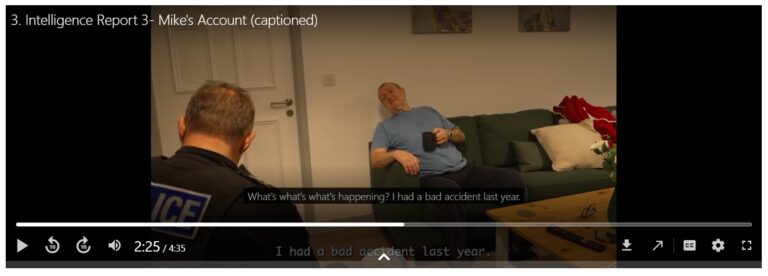
Photo shows body worn camera footage of Martin Fox (Police Officer) and Charlie Downes (Mike).
In this week’s blog, Claire Bowers, Senior Lecturer at UWE, reflects on an innovative collaboration with UWE’s New Wave Agency …
In this powerful and reflective blog, Imogen Hirst, Senior Lecturer on the Policing Programme at UWE Bristol, reflects on the …
May 2026 Taking trauma-informed practice to St Helena The British Overseas Territories police, do not benefit from the degree-level education …
This week’s blog is written by Sarah Williams, Associate Director in Policing at UWE Bristol. In this article, Sarah reflects …
We are grateful to Molly Diamond, a third-year Professional Policing Degree (PPD) student at UWE Bristol, for reflecting on her …

‘X: free speech vs. extreme narratives – sexism and misogyny’​ 

Posted on

Author: Claire Bowers UWE Bristol

In February 2024, six members of the UWE Bristol Team (Claire Bowers, Jack James, Katie Etherton, Dr Jennifer Holmes, Claudia McCready and Eve Smietanko) presented at the third annual colloquium of the European Society of Criminology Working Group on radicalisation, extremism, and terrorism at the University of Portsmouth. This week’s blog, authored by Claire and with input from all of the research team, takes a look at the important issues that this research seeks to explore.

Introduction

Issues of sexism and misogyny continue to be hugely topical within Policing. From acknowledged concerns of institutional misogyny in the Met, chronicled within the Casey report (2021), to the ongoing Angiolini Inquiry investigating how serving officers David Carrick and Wayne Couzens were able to commit such horrific crimes. This is reinforced by the recent College of Policing 2023 Action plan entitled ‘Tackling sexism and misogyny in policing’ whose review of published and unpublished evidence identified more than 200 ways in which sexism and misogyny are present in a policing context. Misogyny is a form of violence against women (Arsawati and Bunga, 2021) and gender-based violence is on the increase, partly due to the virtual space which did not previously exist (Singh and Singh, 2021; Yar and Steinmetz, 2024). As a group of six academics who teach on the policing programme, we are interested in the role that social media, particularly the platform ‘X’ formally known as Twitter, may play in fuelling this crisis.  

Our research proposal, presented at the 2024 Annual Terrorism and Extremism Colloquium, was triggered by recent events in the media, and particularly the influence of Elon Musk’s acquisition of Twitter/X in October 2022. At a cost of $44 billion on 28th October 2022, Musk announced to all “the bird is freed.” A self-declared ‘free speech absolutist’, Elon permitted the return of prominent public figures, such Donald Trump, Tommy Robinson, and Andrew Tate back to the site (Griffin, 2022).  

Background to our research

The online sphere (Papacharissi, 2022) can be a place of community and acceptance, but it has also become a place where extreme views can thrive and flourish. Since the dawn of social media there has been concern around its policing of hate speech. In 2018, 23% of women polled across eight countries stated that they had experienced harassment or abuse online (Amnesty International, 2018)​. Of those women, 47% stated the abuse or harassment was sexist or misogynistic. We expect that this statistic is likely to have increased, something we hope to explore in our research. 

Since social media has become mainstream, there has been increasing concern around online safety and what role companies such as Twitter should play. In the latter half of the 2010s, more safety advice and tools were added such as the ‘harmful reply’ nudge. Since the transition from Twitter to X there has been concern that the safety features are no longer as effective, with much of the team responsible for this facility being laid off when Musk took over (Brewster, 2024). 

Studies have been carried out into the effect that Musk has had on X since his takeover. For example, the Institute for Strategic Dialogue completed research for BBC Panorama in 2023. This found that in the days after Musk’s takeover there was an increase in new accounts created, that followed known misogynistic and abusive channels. Interestingly misogynistic views were not dominant but often included in more clear ideologies around anti-liberalism and pro-free speech. The research showed that there is a potential link between Musk’s own ‘free speech absolutist’ stance and a more permissive environment where hate speech can flourish. Other forms of hate speech have increased on the platform, for example antisemitism has doubled since Musk took over X (Miller et al, 2023). Research also suggests that people hold positive views of figures such as Andrew Tate, a self-proclaimed misogynist (Radford, 2023), especially from younger populations.  Polling data released by Skiner and Gottfried on behalf of IPSOS (2024) shows that young UK males are far more supportive of Tate than females and older males and surveys from 2022 illustrate that 56% of young male fathers also hold positive views of him (Internet Matters, 2023). 

About our research

64% of women see sexism as a major problem in the UK (Young Women’s Trust, 2019) and research from Stop Hate (2023) show extensive increases (as high as 322%) in incident reports relating to gender. This persistent trend of research and high-profile cases have led to a momentum for change (Chattier, 2020) telling us that women have had enough. 

There has been little research into misogynistic hate speech on the app since Musk’s takeover, and all of these appear to focus on the quantitative rise rather than the experience of its users. In our research we want to adopt a mixed methods approach, using both qualitative and quantitative methods to better understand the experiences of those using the platform.  

What do we want to find out? 

  • We want to explore whether there is a link between Musk’s ‘free speech absolutist’ stance and the perceived rise in hate speech.  
  • We want to explore firsthand experiences of users potentially exposed to this harmful narrative and the impact it has on them and society. 
  • We want to establish the current rates of misogynistic hate crime and incidences and how they are being recorded.  

 We look to achieve this through:  

  • Examining content from X after Musk’s acquisition in October 2022. 
  • Surveying X users on their experiences.  
  • Information requests from all Police forces in England and Wales about their recording of such crimes and incidences. 

Why is this research important? 

Violence against women and girls.  

Online misogynistic narratives drive gender-based Hate Crimes which disproportionately affect women and girls, used as a form of intimidation and suppression reflected in worldwide trends of prevalence of violence against women. Obtaining a true picture of experiences of users on platforms such as X helps us to better understand the problem to inform policy moving forward.  

Impact on mental health 

The research shows women’s mental health is being negatively impacted, with experiences of sexism correlating with reduced wellbeing and life satisfaction. Research from the Young Women’s Trust shows that young women are 5 times more likely to have clinical depression. Our research will consider whether these impacts are the same for users on X. 

Anti-feminist communities and radicalisation 

The online ‘manosphere’ (Van Valkenburgh, 2021) environment is associated with ‘cyber hate’ and online harassment.  It is a space where radicalisation can take place and misogynistic views can be validated and confirmed. It is a breeding ground for confirmation bias. Our research will consider whether there is evidence of this on X.  

Polemical gender discourse  

Unnecessarily, this topic can generate an ‘us and them’ paradigm which is divisive and compounds the problem. This perpetuates and justifies the need for some, further misogynistic challenge, particularly online. Taking the stance that challenging misogyny is ‘women taking on men’ is disproportionate and a narrative exploited by misogynists. Our research will examine X to see if there is evidence of this type of discourse. 

Limiting women’s voices and visibility online with additional ‘emotional labour’  

Incidences of misogyny experienced through online engagements consciously serve to limit women’s online voices and visibility (Aliche, 2023)​. To deal with this, women adopt a two-tier strategy: “moral persuasion” or “going hard” to deal with online abuse. With the emphasis being on women to change and regulate their behaviour, this approach constitutes serious ‘emotional labour’ and despite its utility, remains unsustainable in fighting online misogyny.  We will consider whether this is the experience of users on X. 

We do not fully understand the true extent of the issue.  

Pre-existing research shows that online sexually aggressive behaviours tend to be downplayed and are often not reported. Cyber-sexual violence is deemed as less serious (Vizcaíno-Cuenca, Romero-Sánchez, and Carretero-Dios, 2024). ​We hope that this research will shine a light on and help us to better understand the extent of incidences that go unreported as well as the impact of these experiences. 

Concluding Thoughts 

Elon Musk is known for saying “the point of freedom of speech is allowing those whose views you disagree with to express those views,” This is true, safeguarding freedom of speech is essential, but this must be balanced against enabling hatred against others or putting them in danger. It is simply not acceptable to claim freedom of speech protection when it is perpetrating, justifying, and breeding harm. The question is, where do we draw the line?  

Investigating sexist and misogynistic narratives on high profile platforms such as X and the impact on its users is an important area to investigate, so that we can improve our understanding of these issues and begin to think about how we, as a united society can take steps towards achieving a more egalitarian and safer society for both men and women. We look forward to sharing our findings at the conclusion of this research.  

References

Alichie, B. O.  (2023) “You don’t talk like a woman”: the influence of gender identity in the constructions of online misogyny, Feminist Media Studies, 23:4, 1409-1428 https://www.tandfonline.com/doi/full/10.1080/14680777.2022.2032253?scroll=top&needAccess=true [Accessed 31 January 2024] 

Amnesty International, 2018 Toxic Twitter – women’s experiences of violence and abuse on Twitter, Toxic Twitter – Women’s Experiences of Violence and Abuse on Twitter – Amnesty International [Accessed 30 January 2024].​ 

Arsawati, N. and Bundga, D (2021) Misogyny as Violence in Gender Perspective. International Journal of Business, Economics and Social Development. [online].Vol. 3, No. 1, pp. 19-27, 2021. [Accessed 27 February 2024]. 

Bewster, T. (2024) Musk’s X Fired 80% Of Engineers Working On Trust And Safety, Australian Government Says. Forbes. [online] 10 January. Available from: https://www.forbes.com/sites/thomasbrewster/2024/01/10/elon-musk-fired-80-per-cent-of-twitter-x-engineers-working-on-trust-and-safety/?sh=6c469b1c79b3 

Chattier, P. (2020) The Women’s movement: so much momentum, but still miles to go. ABT Associates [blog] 7 April. Available from:  https://abtgovernance.com/2020/04/07/the-womens-movement-so-much-momentum-but-still-miles-to-go/ [Accessed 01 February 2024]​ 

Griffin, A. (2022) Who has Elon Musk unbanned from Twitter? From Trump to Andrew Tate. The Independent. [online] 21 November. Available from: https://www.independent.co.uk/tech/elon-musk-twitter-ban-trump-tate-west-b2229716.html 

Institute for Strategic Dialogue (2023) BBC Panorama research: Misogyny and abuse on Twitter before and after Elon Musk’s takeover, BBC Panorama research: Misogyny and abuse on Twitter before and after Elon Musk’s takeover – ISD (isdglobal.org) [Accessed 30 January 2024].​ 

Internet Matters (2023) New research sees favourable views towards Andrew Tate from both teen boys and young dads. Internet Matters. [online] 28 September. Available from: https://www.internetmatters.org/hub/press-release/new-research-sees-favourable-views-towards-andrew-tate-from-both-teen-boys-and-young-dads/#:~:text=Over%20half%20of%20young%20dads,also%20positive%20about%20the%20influencer. 

Skinner, G and Gottfried, G. (2024) Masculinity and women’s equality: study finds emerging gender divide in young people’s attitudes. IPSOS. [online] 1 February. Available from: https://www.ipsos.com/en-uk/masculinity-and-womens-equality-study-finds-emerging-gender-divide-young-peoples-attitudes#:~:text=One%20in%20five%20(21%25),aged%2060%2B%20(2%25). 

Miller, C.,  Weir, D.,  Ring, S., Marsh, O., Inskip, C. and Prieto Chavana, N., 2023 Antisemitism on Twitter Before and After Elon Musk’s Acquisition. [online] Beam Available from: Antisemitism on Twitter – 15 March (beamdisinfo.org) [Accessed 30 January 2024].​ 

Papacharissi, Z. (2002). The virtual sphere: The internet as a public sphere. New Media & Society. [online] 4(1), 9-27. [Accessed 27 February 2024]. 

Radford, A. (2023) Who is Andrew Tate? The self-proclaimed misogynist influencer. The BBC [online] 4 August. Available from: https://www.bbc.co.uk/news/uk-64125045 

Singh, D. & Singh, V. (2021) An Increase in Gender-based Violence during COVID-19. Journal of midwifery and reproductive health. [Online] 9 (2), 2762–2766.​ 

Stop Hate UK (2023) [online] Annual Statistical Review 2022-2023 https://www.stophateuk.org/wp-content/uploads/2023/11/Annual-report-22-23.pdf [Accessed 31 January 2024]​ 

Van Valkenburgh, S. P. (2021). Digesting the Red Pill: Masculinity and Neoliberalism in the Manosphere. Men and Masculinities. 24(1), 84-103. https://journals.sagepub.com/doi/10.1177/1097184X18816118 [Accessed 31 January 2024] 

Vizcaíno-Cuenca, R., Romero-Sánchez, M., & Carretero-Dios, H. (2024). Making Visible the Myths About Cyber-Sexual Violence Against Women: An Analysis of Social Reactions Toward Victims on Twitter. Journal of interpersonal violence. [online] Advance online publication. https://pubmed.ncbi.nlm.nih.gov/38243759/ [Accessed 31 January 2024] 

Yar, M. and Steinmetz, K. F. (2024) Cybercrime and Society. 4th ed. London: Sage.​ 

Young Women’s Trust (2019) [online] Impact of sexism on young women’s mental  health https://www.youngwomenstrust.org/wp-content/uploads/2020/11/Impact-of-sexism-on-young-womens-mental-health.pdf . [Accessed 31 January 2024]​ 

You can access the survey here

Editorial team

Paul Williamson (Editor-in-Chief); Claudia McCready (Lecturer); Eve Smietanko (Joint Programme Leader & Senior Lecturer); Ian Lowe (Senior Lecturer) & Micah Hassell (Senior Lecturer).

If you would like to contribute as a guest blogger, please contact the team at Police.Blog@uwe.ac.uk

Celebrating Inspirational Women in Policing and Criminal Justice: Authors Sarah Williams and Dr Anne Eason

Posted on

To coincide with Women’s History Month and International Women’s Day on March 8th, 2024, here at the UWE Policing Blog we want to recognise inspirational women, past and present, who have played a role in shaping the police as an organisation and in practice.  We then ask the question how we can build on the work of these amazing women as we face the future, trying to forge a police force that works to protect our complex society. 

Police pioneers

Women had been contributing to policing for many years before their roles were formally recognised in 1914, when the Women’s Police Volunteers Organisation was established. As early as 1883 women had been working as ‘police matrons’ in the custody environment, searching female and child offenders (British Association of Women in Policing, 2024). 

The UK’s first female police constable was Edith Smith, who joined Grantham Police (now Lincolnshire) in 1915. She joined one year before the Police Act 1916 made it possible for women to join the police as Police Constables and three years before women achieved the vote in 1918. Edith had full powers of arrest in her role and was described by peers as “of outstanding personality, fearless, motherly and adaptable” (Jackson, 2014). 

Edith Smith (Photo courtesy of Grantham Museum, in Jackson, (2014). 

Several more female pioneers joined the police in the following years, and in 1920 the Baird Committee review of policing finally recommended women become an integral part of the police force (BAWP, 2024). This promising start nearly floundered in 1922, however, when Sir Edward Shortt (then Home Secretary) proposed the complete abolition of women police officers in the Metropolitan Police. His defeat is owed in no small part to another inspirational woman, Nancy Astor, Britain’s first female Member of Parliament. A vocal supporter of women’s rights, she worked hard to encourage women to play a greater role in civic life, including taking employment in the civil service, police and politics (Newton, 2020). 

Locally, Bristol has a proud heritage in promoting women in policing. Originally set up as a voluntary organisation in 1915 under the National Union of Women Workers (Byrne, 2014), in 1921 this initiative became the Bristol Training School for Police Women and Patrols. It was led by another female police pioneer, Dorothy Peto, who became the Metropolitan Police’s first female Superintendent (BAWP, 2024).  

By 1949 the number of female police officers had risen to 1148 (BAWP, 2024). More firsts were to follow. In 1969, Sislin Fay Allen became the first black female officer in the Metropolitan Police. Her achievement is even more remarkable because this was six years before the introduction of the Sex Discrimination Act 1975 which finally brought structural parity to women and men in policing and ended the separate rank structures (BAWP, 2024). Locally, Avon and Somerset’s first Black female officer is Adora Pomphrey, who joined in 1980 aged 19. Adora has spoken freely of the challenges she faced, both within and without, and how important it was that women like her created opportunities for others who followed (BBC, 2023).  

Sislin Fay Allen (photo from British Association of Women in Policing, 2024). 
Adora Pomphrey (photo from BBC News, 2023) 

These pioneering women opened up the police service in a way never seen before. Their contribution can be directly traced to developments such as the first ever female Chief Constable in 1995, Pauline Clare of Lancashire Police. Along the way, other remarkable women shone a light on structural inequalities facing women, such as Alison Halford, the Assistant Chief of Merseyside Police, whose book No Way Up the Greasy Pole (Halford, 1993) asked some searching questions about how the police service treated female officers in comparison to men. They have all contributed towards changes in the way women are recruited and valued within the police. Today, there are 51,210 female officers in the police forces of England and Wales, accounting for 34.7% of officers overall and around 30% of senior leadership positions (Home Office, 2023). Although there is still much to do, this s a phenomenal growth in a little over 100 years and has only been possible because of the bravery of those early pioneers. 

Halford was also a pioneer in the development of how police handled violence towards women. She was instrumental in developing training strategies for interviewing abused women and children (BAWP, 2024). If we look at the developments in how we tackle violence against women and children today, it is notable how many incredible women have devoted their lives to this cause. Women advocating for women less fortunate themselves is a powerful display of solidarity. 

Tackling Violence Against Women and Girls in the 21st Century 

At higher levels we have women like Dame Vera Baird (QC, DBE), former Victim’s Commissioner. She has a long history of supporting women, such as fighting against pregnancy discrimination in 1987 (Brown v Stockton on Tees Borough Council), and she was heavily involved in pushing the Equalities Act 2010 through Parliament. She recognised the link between female inequality and violence. She was awarded her DBE for services to women and equality and continues to fight for victims’ rights. 

Then we have women like Fiona Mackenzie MBE founder of We Can’t Consent to This, who established her campaign in response to more than 60 cases where women had been killed and the perpetrators had claimed the ‘rough sex defence’ – cases such as the death of Natalie Connelly, who sustained more than 40 injuries indicating an extreme level of violence. Campaigns such as We Can’t Consent to This have been hugely influential in the development and introduction of the Domestic Abuse Act 2021, which has removed this defence. 

Sadly, many of these campaigns have their origins in personal experience of suffering and loss. These grass roots campaigns are truly humbling, and it is testimony to the bravery of these women that they have sought to turn their experiences into a force for change. Women such as Carol Quinn whose daughter and grandchildren were killed by her son-in-law and who is petitioning against the parole board decision for open prison. Women such as Rachel Williams, who survived being shot by her husband in 2011 and hosted the first survivor-led domestic abuse conference in South Wales in 2019 (STUDA, 2024). Women like Elaine Newborough, Julie Devey and Carole Gould, whose daughters were killed by partners or ex-partners in knife attacks, who are campaigning for increased sentencing powers (Killed Women, 2024). Or Fiona Drouet whose daughter Emily took her own life after being subjected to a campaign of abuse and violence from her boyfriend at university. Fiona has developed the Emily Test, a Gender-based Violence Charter (GBV) for colleges and universities, that provides a framework of minimum standards in the prevention and intervention of GBV.  

More locally, at UWE we are trying to work with women who have personal experience to try to change the face of police education. We have our amazing survivor stories contributors at UWE, such as Sabrina Eason, who speaks to student police officers about what it’s really like to live with domestic abuse and how they can recognise the signs and help the women they meet in the course of their jobs. Chief Inspector Sharon Baker, of Avon and Somerset Police, regularly talks to our student officers about her own experiences as a victim of controlling and coercive behaviour and who has been instrumental in setting up an internal survivors’ group within the force. These dedicated women make an undeniable difference to victims of male violence, but it takes a society to create real change. 

Sabrina Eason 

We are fortunate enough to have fantastic organisations run by passionate professionals and dedicated volunteers, who work  tirelessly to support survivors. Charities and commissioned services such as Next Link and  SARSAS make a life-changing – sometimes life-saving – contribution to women’s lives. We also have organisations such as Bristol Women’s Voice, who campaign to end the structural inequality for women that underlies so many of these crimes. 

Other valuable organisations include The Nelson Trust, founded in 1985 by Mary and Roy Brash, who promote trauma-informed recovery services specifically for women. Their supportive approach to women who have travelled through the criminal justice system as offenders recognises that factors involved in female offending are often related to trauma. Approximately 60% of female prisoners are victims of domestic abuse (Ministry of Justice, 2018), while one  case study showed 91% of female offenders have multiple needs such as mental ill health and substance abuse issues (Ministry of Justice, 2020). The evidence base shows that women who receive support are less likely to reoffend than women who are imprisoned. Even better would be to prevent the violence against women and girls that often underpins this trauma. 

Despite all this dedication and good work, however, violence against women and girls remains a huge problem. Last week, ahead of IWD, Labour MP Jess Phillips used her time in the House of Commons to read out the names of women killed by men in the UK in the last 12 months. She has performed this grim task since 2016, based on the work of the UK Femicide Census (Femicide Census, 2024). It took her more than five minutes to read the full list of 98 named women (BBC News, 2024). More as-yet-unnamed women will be added to this tragic list. 

So, as we head further into the future, it is incumbent on all of us working in criminal justice to ask ourselves how we can build on the hard work and progress of the amazing female pioneers who have gone before us. How can we make the criminal justice system a fairer system for all women in the future? A system that embraces their expertise, knowledge, skills that can and do contribute different approaches to policing. A system that protects women and girls, that is more informed about their vulnerability and works in a preventative and reductionist way. At UWE, we embrace the challenge and would like to shout out a huge thank you for all the amazing, inspirational women, at all levels, both past and present, who have made their own contribution to making the world a better place for women. 

(Our thanks to this blog’s authors, Sarah Williams and Dr Anne Eason of the UWE Bristol Policing Programme).

References 

Brown v Stockton-on-Tees Borough Council [1987] Civ J0320-10. 

BBC (2023) Black women share insight into changing face of policing. BBC News [online] -08 January 2023. Available from: Black women share insight into changing face of policing – BBC News [Accessed 04 March 2024]. 

BBC (2024) MP Jess Phillips reads out list of women killed by men in past year. BBC News [online] 29 February 2024. Available from: MP Jess Phillips reads out list of women killed by men in past year – BBC News [Accessed 04 March 2024]. 

Bristol Women’s Voice (2024) Making Women’s Equality a Reality in Bristol [online] Available from: Bristol Women’s Voice (bristolwomensvoice.org.uk) [Accessed 04 March 2024]. 

British Association for Women in Policing (2024) History [online] Available from: Women in Policing History | BAWP – British Association for Women in Policing [Accessed 04 March 2024]. 

Byrne, E. (2014) Bristol’s War: Britain’s first Police Woman. Bristol 24/7 [online] 4 Nov 2014. Available from: Bristol’s War: Britain’s first policewoman (bristol247.com) [Accessed 03 March 2024]. 

Femicide Census (2024) About. Available from: About – Femicide Census [Accessed 04 March 2024]. 

Halford, A. (1993) No Way Up the Greasy Pole. Edinburgh: Constable. 

Home Office (2023) Police Workforce England and Wales: 31 March 2023 [online] Available from: Police workforce, England and Wales: 31 March 2023 – GOV.UK (www.gov.uk) [Accessed 07 March 2024]. 

Jackson, L.A. (2014) The First World War and the First Female Police Officer. Gov.UK [online] 17 June 2014. Available from: https://history.blog.gov.uk/2014/06/17/the-first-world-war-and-the-first-female-police-officer/ [Accessed 04 March 2024]. 

Killed Women (2024) Killed Women [online] available from: Killed Women [Accessed 04 March 2024]. 

Ministry of Justice (2018) A Whole System Approach for Female Offenders: Emerging Evidence [online] Available from: A Whole System Approach for Female Offenders – Emerging evidence (publishing.service.gov.uk) [Accessed 04 March 2024]. 

Ministry of Justice (2020) the Concordat on Women in or at risk of contact with the Criminal Justice System [online] Available from: The Concordat on Women in or at risk of contact with the Criminal Justice System (publishing.service.gov.uk) [Accessed 04 March 2024]. 

The Nelson Trust (2024) What We Do [online] Available from: What We Do | The Nelson Trust [Accessed 04 March 2024]. 

Newton, N. (2020) Nancy Astor: 100 years of women in Parliament. The National Archives [online] Available from: Nancy Astor: 100 years of women in Parliament – The National Archives blog [Accessed 04 March 2024]. 

Next Link (2024) Home [online] Available from: Home – Next Link (nextlinkhousing.co.uk) [Accessed 04 March 2024] 

SARSAS (2024) Our work online] Available from: Our work | SARSAS [Accessed 04 March 2024]. 

Stand Up to Domestic Abuse (2024) SUTDA: Still We Rise [online] Available from: SUTDA | Stand up to Domestic Abuse [Accessed 04 March 2024]. 

We Can’t Consent to This (2024) We Can’t Consent To This [online] Available from: We Can’t Consent To This (wecantconsenttothis.uk) [Accessed 04 March 2024]. 

You can access the survey here

Editorial Team

Paul Williamson (Editor-in-Chief); Claudia McCready (Lecturer); Eve Smietanko (Joint Programme Leader & Senior Lecturer); Ian Lowe (Senior Lecturer) & Micah Hassell (Senior Lecturer).

If you would like to contribute as a guest blogger, please contact the team at Police.Blog@uwe.ac.uk

Back to top