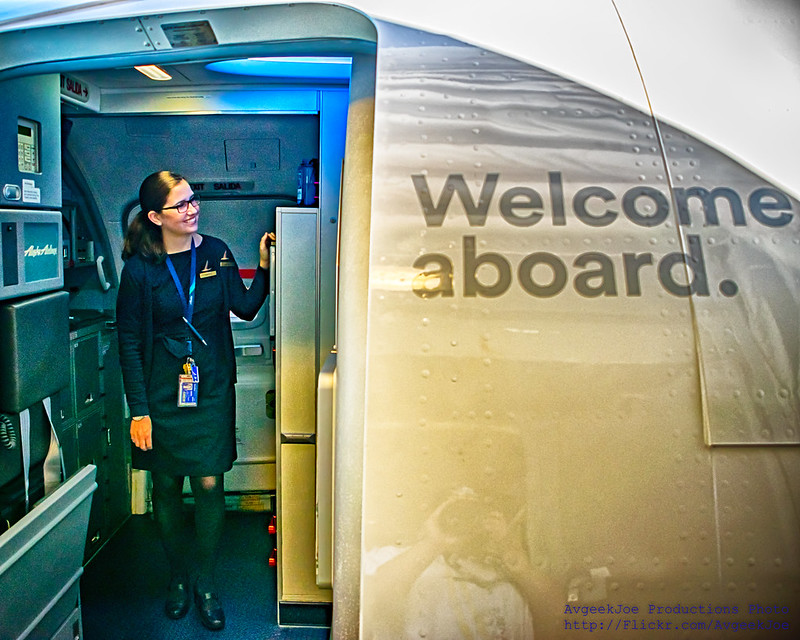
Today is International Women’s day (IWD) a global celebration and recognition of women’s achievements. It is also a time to reflect upon the challenges for women and the interesting and diverse ways in which these are being addressed, through a range of initiatives. One of these initiatives is the alta mentoring scheme, an on-line, free to use, mentoring platform set up to offer mentoring support to professional women across the aviation and aerospace industry. Launched on IWD in 2019, alta has continued to grow, offering mentoring support to more and more women and also being awarded a prize by the Economic and Social Research Council in 2022, for Outstanding Impact in Business and Enterprise.
The IWD campaign theme for 2023 is ‘Embrace Equity’.
According to Internationalwomensday.com ‘Equity recognizes that each person has different circumstances, and allocates the exact resources and opportunities needed to reach an equal outcome. Equity can be defined as giving everyone what they need to be successful. In other words, it’s not giving everyone the exact same thing. If we give everyone the exact same thing, expecting that will make people equal, it assumes that everyone started out in the same place – and this can be vastly inaccurate because everyone isn’t the same’. The concept of ‘equity’ does not replace ‘equality’, instead, equality is the goal and equity is the means to achieve this.
What is alta?
This resonates with the ethos of the alta mentoring platform. Whilst our aim is to achieve gender equality across the industry, we recognise that women are not all the same and that mentees will require different support from their mentors. For example, while one mentee may be looking for mentoring support to manage work-life balance, another may be looking for technical advice, while another may be looking for general career support. This means that not all of our mentors are the same and the nature of the alta mentoring platform (global, reaching across the industry and outside of the mentee/mentor’s organisation) means that our mentors are drawn from a range of backgrounds, roles and professions and can therefore offer a diverse range of support, depending upon the needs of their mentees. We also offer networking and mentoring events throughout the year to help mentors and mentees meet face to face or online, as well as provide insights into career development and management. Alta aims to empower women to be themselves and to progress their careers with the support of other, more experienced women.
The alta mentoring platform was designed with women in mind (it is the first global mentoring platform of its kind in the industry, designed ‘for women/by women’ and is free to individual women to sign up). It was designed on the back of industry research that asked women, ‘what they wanted and needed’ from a mentoring programme. We also enjoy support from a number of high profile organisations in the industry, whose donations help us to reach out to even more women and to improve our services (the likes of GKN, Boeing UK, Raytheon, Collins Aerospace, Vistair, Signature Flight Support).
The founding members of alta (the Royal Aeronautical Society, the University of the West of England, Airbus, the Royal Air Force and Little Blue Private Jets Limited) came together with a common purpose: to tackle the inherent gender inequalities in the industry and offer mentoring support to women working in a male dominated industry. We were funded partly by the Economic and Social Research Council and the founding partners. The platform is hosted by the Royal Aeronautical Society and is part of the Society’s commitment to delivering on the pledges it made as a supporter of the Women in Aviation and Aerospace Charter, which was signed by government and industry at the Farnborough Airshow.
Who can join alta?
Alta is open to professional women working in the industry who are looking for mentoring support and to women who wish to become mentors and connect with other women throughout the industry. It is free to join and you do not need to be a member of the Royal Aeronautical Society or an employee of any of the founding/supporting partners. The scheme looks to change the way females are perceived in male-dominated industries and aims to put an end to gender inequality.
How do I join alta?
The on-line platform is easy to sign up to and both mentors and mentees are required to answer a series of matching questions that then enables the platform’s algorithm to suggest the most suitable matches. After initial contact, both parties are free to arrange when, where, and how often they meet. All meetings and correspondence can be planned through the platform, providing a place for both parties to maintain their mentoring relationship in a safe, secure, and confidential online environment. On-line training and support is also provided through the platform, including videos and factsheets, a dedicated handbook with in-depth advice and guidance as well access to other mentoring materials which are reviewed and updated regularly.
While alta is free to individual women to join, organisations wishing to become more involved in alta can also join as alta supporters by making a small donation. This enables us to further develop alta and to reach out to even more women across the industry.
Digitalization has become the ‘buzzword’ that captures all aspects of technological change associated with the increasing use of digital technology in organizational and productive processes, especially after the outbreak of the Covid-19 pandemic and the diffusion of remote work that followed.
The business case seems straightforward: Digitalization drives productivity and, therefore, organisational growth and profitability (Forbes 2022; WEF 2023). However, we know that the digital transformation of workplaces is not a neutral process for the people involved and, in particular, it affects how workers and their managers interact. Indeed, digitalization is leading to standardization, work intensification, monitoring and surveillance of workers in an increasing number of workplaces. The spread of digital ‘labour platforms’ is also conducive to novel transformations of the ‘standard’ type of employment contract and presents trade unions with further difficulties in representing new groups of ‘atypical’ workers, such as ‘gig’ workers. Furthermore, the labour-replacing impact of digitalization may be considerable, especially for low skilled workers in low pay sectors and in countries with low levels of digital infrastructure and e-skills development.
To engage with these emerging issues, Arianna Tassinari and I investigated the capability of trade unions in Italy to actively govern and respond to the challenges of digitalization in the regulation and reordering of work and employment or, very simply put, to be tech-savvy and ‘smart’. The resulting research led to an article, published in the journal Relations Industrielles – Industrial Relations and now ( open access) exploring three illustrative issue areas that encapsulate the main challenges and opportunities of digitalization.
The research
We began by considering the role of trade unions in policy discussion surrounding the technological restructuring that digitalization imposes across the economy (e.g., Industry 4.0). We followed by examining trade union efforts to bargain with disruptive players, such as e-commerce platforms (e.g., Amazon). We then investigated trade union responses to the spread of ‘platform work’ as a novel model of work organization and contracting (e.g., food-delivery digital platforms). In general, upon a review of the literature and interviews with trade union officials and industrial relations experts; we note that union strategies and their effectiveness have been significantly shaped by the interplay between the political opportunity structure unions face at different levels and the power resources and capabilities they can mobilize.
First, the depth of trade union involvement in national policy initiatives such as Industry 4.0 remained limited, akin to ‘cosmetic’ consultation rather than substantive negotiation. Trade unions have thus sought to make use of their resilient power resources—especially network embeddedness and narrative resources—to develop their framing and learning capability. They have invested considerable resources, in both their production of knowledge to influence public debate about digitalization and their capability for intermediation and articulation. Simultaneously they work with employer organizations to extract concessions from the government on issues such as skill development.
Second, trade unions aiming to bring to the negotiating table key players in e-commerce such as Amazon took advantage of the degree of resilience that collective bargaining still enjoys in the country but, at the same time, faced difficulties due to the unilateral approach to industrial relations by management and the differences in the employment contract model between, first of all, warehouse workers and drivers. Results, as expected, were mixed: major agreements to regulate work and employment at Amazon were signed, but fragmentation between segments within sectors persisted, i.e., between those who are covered by protective institutions and those who are not.
Thirdly, given that digital platforms fall outside the scope of existing workplace representation and collective bargaining institutions, established trade unions have been limited in the channels of action available to them. Because of this, they have not yet managed to intervene effectively in the emerging platform economy through traditional, grassroots unionization. Instead, in the case of drivers, they have focused on strengthening their framing and intermediation capabilities by amplifying the demands of self-organized riders and pursuing novel collaborations and strategic alliances with the riders’ organizations. In this regard, they have shown themselves able to adapt their repertoires of action to compensate for their weaknesses.
Our conclusion
Overall, our findings suggest that unions have been able to respond to and manage digitalization. They have expanded already established institutions and utilised collective bargaining by investing considerable resources and by using their varied capabilities. The desirability of strengthening collective bargaining is unmistakable. It remains to be seen however, if such adaptive approaches are ‘smart’ enough to effectively govern the digital transformation of work for the whole supply chain or, if more radical institutional experimentation will become necessary. In particular, will this be enough for areas with weaker labour markets and areas with more hostility to organized labour? Either way, even if the goal of ‘smart’ industrial relations might be achieved in ways that are far from straightforward, trade unions still have an active role to play.
References
Gasparri, S. and Tassinari, A. (2020), ‘Smart’ Industrial Relations in the Making? Insights from Analysis of Union Responses to Digitalization in Italy, Relations industrielles / Industrial Relations, 75(4): 796-817.
Please note, this article discusses topics of suicide and discrimination and may be distressing or triggering for some. Links for support on topics that are discussed in this article can be found at the bottom of this page.
As an international PhD student researching pay gaps, gender, and sexual orientation in the context of my native country – Italy, I read a number of Italian newspaper articles to keep up with the latest business world news as well as current events in general. One article, in particular, caught my attention. This article left me baffled and in deep grief for my country, my community, and humanity: The suicide story of a transgender woman.
The story of Cloe Bianco
A single tree with a rope swing sits on a pink field with a baby blue sky, giving connotations of the trans pride flag.
Cloe Bianco was a high school teacher at the “Scarpa-Mattei” Agricultural School in San Donà di Piave (VE), Italy. In 2015 Cloe decided to ‘come out’ as a transgender woman to the school where she had worked for years. Specifically, to come out to her students, finally living her life as the person she had always felt she was “since she was 5 years old” (La Stampa, 2022). On the morning of 27th of November, Cloe walked into her classroom and introduced herself with her new name, asking her students to refer to her using the correct pronouns she/her. Unfortunately, Cloe’s courage to be herself did not sit well with some of the parents of her students, who promptly e-mailed the regional alderman for the Ministry of Education to complain about what had happened. This resulted in Cloe receiving a disciplinary sanction resulting in a three-day suspension, followed by a demotion to administrative roles in a back office of the school where she was permanently employed, and subsequentially any other schools in her Region (i.e. Veneto) where she tried to work as teacher (Open, 2022)[1].
On the 11th of June 2022, the remains of Cloe’s body were found in a torched campervan where she had been living in isolation for seven months. The investigation that followed uncovered a suicide letter left in her blog. The verdict: Cloe died of suicide at the age of 50, after she had been actively prevented from fulfilling her fundamental Constitutional right and duty to work (Art. 4 of the Italian Constitution).
Cloe’s story is just one of the many where active discrimination in the workplace undermines the lives of Italian LGBT+ people every single day. Whilst most western countries focus, more or less effectively; on developing inclusivity within the labour market, Italy falls far behind.
Even failing to legislate basic, protective laws against discrimination for gay, bisexual, transgender or non-binary people.
So, my question, as an extremely frustrated Italian academic is this.
Why, in Italy, is it so easy to ruin the life of somebody who works in the public sector by explicitly discriminating against them and get away with it?
To answer this question, it is first important to understand the influence of culture on the debate around gender vs. assigned-at-birth sex, and how this ultimately results in the lack of interest when including sexual and gender-based minorities in the equality, diversity, and inclusion debate.
Gender vs. Sex
The debate of gender and gender identities is not new in literature. Nonetheless, the definition of ‘What is gender’ is still very relevant and in a constant flux of redefinition and negotiation. A simple definition accepted by LGBT+ literature is that gender refers to the psychological sense of self, it relates to how someone deeply and truly feels on the inside and that this is based on their individual understanding of genders. Anatomical sex (or assigned-at-birth sex) is typically assigned at birth based on biological and physical characteristics such as chromosomes, hormones, genitals, body hair etc.
Queer theorists define gender as the result of power performances, negotiated within societies which are influenced by culture and the historical period (Foucault, 1981; Butler, 1990, 1993; Harding, 1998) It is performed in every moment and aspect of individuals’ lives throughout external appearance – gestures, language, clothes – prior to any choice of gender identity (Butler, 1990). Soon-to-be-parents are told what sex the baby will be, and while raising them, project their own socially learnt bias of gender. These include a series of norms on how to behave, how to dress, how to express emotions and, how to care for others, which differ depending on the assigned-at-birth sex.
The biological sex assigned at birth, plays a pivotal role in the societal expectations placed upon an individual. These expectations are dependent on whether they are born with female or male characteristics and can begin to form before they are even born. Gender identity however, develops within an individual’s sense of self and defines what an individual believe about themselves and who they are. Sometimes, this might not coincide with the anatomical or biological sex. Transgender, transsexual, gender-queer (GQ), gender-fluid, non-binary are all terms that are used to describe people whose gender identity does not align with their anatomical or biological sex (Stonewall, 2020).
“Gender identity develops within an individual’s sense of self and defines what an individual believe about themselves and who they are…”
Nevertheless, this definition of gender is often refused by institutions of conservative countries such as Italy, where an essentialist idea of sexuality is still very predominant. Within a gender essentialist paradigm every person is believed to be born with a male or female “essence” which is determined by the biological sex assigned at birth (Gagnon & Parker, 1995). Femininity and masculinity are, therefore, understood as a natural contraposition of sexes that is at the essence of sexuality regardless the culture and historical time, is defined by biology and chromosomes, and is carried within it a definite set of personality traits. The first gentle and maternal, and the other aggressive and strong (Segal, 1994).
Essentialist standpoints are often used to rationalise gender-based biases and heterosexist or transphobic discourses. For example, to justify the gender segregation of the labour market, gender pay gaps, and to withhold legislation in support of LGBT+ rights. Gender essentialists’ standpoints are clearly taken in the Italian political debate and supported by the Catholic Church which deeply influence political choices and welfare measures in Italy in a clientelist relationship.
When inclusivity is not even in the picture
A slate-grey city scape immersed in fog, displaying a foreboding scene
The first attempt to give a definition of gender as opposed to anatomical sex has been introduced in the proposal of the so-called DDL Zan (Disegno Di Legge, tr. Law Draft). Drafted in 2019, by Alessandro Zan, a member of the Chamber of Deputies and leading member of the gay association Arcigay. The DDL Zan (Senato della Repubblica, 2020) included a total of ten articles. Five of which suggest modifications to existent articles in the penal code giving aggravating circumstances for crimes against gay, bisexual, transexual, disabled people, and women. This law draft provides a definition for biological sex, gender, sexual orientation, and gender identity; it defines the line between the right to freely express an opinion as opposed to hate speech against sexual minorities and women; it proposes a national awareness day against homophobia, bi-phobia, and trans-phobia; and, finally, it proposes a strategy to collect hate crime data on a national scale and a plan to actively fight against homophobia, transphobia, and gender discrimination.
The opposition to this law was strongly supported by far-right parties – i.e., La Lega, Fratelli D’Italia (FdI), Il Popolo della Famiglia etc. – as well as the Catholic Church and pro-life associations. The main point of debate was precisely the Article 1 which provides a definition of gender and anatomical sex as two distinct concepts as outlined above. The opposition would have been willing to vote in approval of the law only if that definition was cancelled from the draft (La Repubblica, 2021). Terminating Article 1, however, would have further alienated trans people, excluding them from being protected against discrimination and transphobic crimes. Finally, without reaching an agreement, the drafted law was voted out by the Senate of the Republic in April 2021. A new discussion was scheduled in April 2022, but to date (June 2022) nothing has happened.
Conclusions
Cloe’s story is just one of many discrimination cases that end in tragedy. Gay Help Line, the main call centre helpline that provides phone support for LGBT+ people, reported in 2021 a steady increase of calls concerning discrimination such as: discrimination in accessing the labour market, or maintaining a job after coming out (35%); discrimination in accessing private (25%) or public services (22%) such as healthcare or housing; discrimination as customers (18%). It is also reported a 10% increase in calls concerning hate crimes against trans people, especially bullying, stalking, non-consensual sharing of private photos in the workplace (15%), aggressions and threats (19%). Also, 42% of cases concern family abuse, 59% of which are perpetuated by adult family members and 9% by partners; 21% of the cases concern violence perpetuated by strangers. 17% of all calls come from transgender or non-binary people. Gay Help Line also reported that very few people in the LGBT+ community report this type of crimes to the police.
The Italian Constitution proclaims equality and dignity amongst all citizens regardless of their personal or social condition (Art. 3). Sex and sexual orientation discrimination in the workplace and in the hiring, process is illegal under the Article 7 of the Legislative Decree no.165/2001; the Article 15 of Law no. 300/1970; and the Legislative Decree no. 216/2003. However, it appears clear that trans people are not included in the equality debate, and there is close to no interest in providing them the Constitutional right of equality and inclusion in society, let alone in the workplace.
Finally, the newly elected right-wing government, not only has purposely left out any reference to equality, diversity, and inclusion in their election campaign, but has also actively promoted legislations against adoption rights and surrogacy which have been contested by LGBT+ activists as discriminatory and homophobic (BBC, 2022) raising concerns for the future of equal and civil rights in Italy.
[1] To read an English version of the story, please see – https://jane-67706.medium.com/of-suicide-and-transphobia-1b077865b73f
Butler, J. (1990). Gender trouble: Feminism and the subversion of identity. London and New York: Routledge.
Butler, J. (1993). Bodies that matter: On the discursive limits of sex. New York, 38.
Foucault, M. (1981). The history of sexuality: An introduction, volume I. Trans. Robert Hurley. New York: Vintage.
Gagnon, J. H., & Parker, R. G. (1995). Conceiving sexuality. Conceiving sexuality: Approaches to sex research in a postmodern world, 3-16.
Gay Help Line. (2021). Report Gay Help Line. [online] Available at: https://gayhelpline.it/report-gay-help-line/.
Harding, J. (1998). Sex acts. Practices of Femininity and Masculinity, London.
L’Unione Sarda English. (2022). Coming out at school, then marginalization: the story of Cloe Bianco, the trans teacher who set herself on fire. [online] Available at: https://www.unionesarda.it/en/italy/coming-out-at-school-then-marginalization-the-story-of-cloe-bianco-the-trans-teacher-who-set-herself-on-fire-a7ttj2qu [Accessed 20 Jun. 2022].
La Repubblica, 2021. DDL Zan, cos’è e cosa prevede, articolo per articolo e il testo integrale. la Repubblica. Available at: https://www.repubblica.it/politica/2021/06/22/news/omofobia_legge_zan_ecco_che_cosa_prevede-307139790/ [Accessed March 15, 2022].
La Stampa. (2022). La storia di Cloe Bianco, la prof transgender che si è data fuoco nel suo camper: ‘Ora sono libera’. La scuola la sospese dopo il coming out. [online] Available at: https://www.lastampa.it/cronaca/2022/06/14/news/la_storia_di_cloe_bianco_la_prof_transgender_che_si_e_data_fuoco_nel_suo_camper_ora_sono_libera_la_scuola_la_sospese_do-5405846/ [Accessed 20 Jun. 2022].
Open. (2022). Dal coming out a scuola al suicidio, tutta la storia di Cloe Bianco: la prof di fisica uccisa dalla transfobia. [online] Available at: https://www.open.online/2022/06/15/cloe-bianco-transfobia-suicidio-storia/.
Segal, L. (1994). Straight sex: Rethinking the politics of pleasure. Univ of California Press.
Senato della Repubblica , 2020, Misure di prevenzione e contrasto della discriminazione e della violenza per motivi fondati sul sesso, sul genere, sull’orientamento sessuale, sull’identità di genere e sulla disabilità available at: https://www.senato.it/service/PDF/PDFServer/DF/356433.pdf
Senato della repubblica, n.a., Constitution of the Italian Republic retrieved from https://www.senato.it/documenti/repository/istituzione/costituzione_inglese.pdf
Stonewall (2020). List of LGBTQ+ Terms. [online] Stonewall. Available at: https://www.stonewall.org.uk/help-advice/faqs-and-glossary/list-lgbtq-terms.
Dr John Neugebauer, Visiting Fellow, Bristol Business School
How often do we step back to think critically and analytically about the issue of graduate employability? Here are some personal thoughts, based on my own experience in senior management in human resources, as an academic who has also been involved in higher education (HE) Knowledge Exchange, and most recently as a co-editor of the forthcoming SAGE Handbook of Graduate Employability.
Much Achieved Already
Strenuous efforts have been made across the HE sector to improve employability and knowledge exchange. Many employers have sought to improve graduate prospects. And, of course, graduates themselves are better prepared within the UK.
The Organisation for Economic Co-operation and Development (OECD) found that tertiary education averaged across 22 OECD countries is 45% and for the UK 56% (OECD, 2021 P43). According to the OECD, graduate status is also linked with the broader society benefits, such as positive development of employment, higher per capita income, and health and social outcomes (OECD, 2021).
For the UK, Higher Education (HE) statistics for 2021 seem suitably reassuring:
The employment rate for working-age graduates (aged 16 – 64) was 86.7%, for postgraduates 88.2%; and for non-graduates 70.2%;
The median salary premium for graduates over non-graduates was £10,000 and £16,000 for postgraduates;
65.2% of working-age graduates, and 77.4% of postgraduates were in high-skilled employment. For non-graduates the figure was 24.3% (ONS, 2022
Despite popularist nay-sayers, the value of Higher/Tertiary Education is valued, not only in the UK, but also globally.
But we don’t need to look very far to hear criticisms of graduate employability, and challenges for the future. Here are some personal views on issues which HE can still address.
Do we understand what future skills graduates need?
Across the overall global labour market (including non-graduates) the World Economic Forum (WEF) expects 85 million jobs to be displaced, but 97 million new roles to emerge, by 2025. (WEF, 2020). To respond to changing labour market requirements and the need for reskilling and retraining, the WEF places its emphasis on critical thinking and analysis, problem-solving, self-management, active learning, resilience, stress tolerance and flexibility (WEF, 2020). These are skills which higher education should be well equipped to deliver.
Understanding employers’ needs, especially the needs of smaller organisations
UK employment markets for graduates depend on a combination of open market (advertising roles then hoping to fill them), and varying degrees of organisational-HE relationships to co-operate in understanding needs and seeking to achieve an appropriate level of supply. But one significant area where scoping employment demand and supply is especially difficult is with smaller employer destination organisations.
Within the UK, the Federation of Small Businesses, (2021) claims that small and medium sized organisations account for three fifths of total employment and around half of economic turnover in the UK private sector; 48% of employment is within small organisations, employing less than 50 people.
Employers themselves, HE institutions, Local Enterprise Partnerships may seek to understand graduate requirements. But it is difficult to bring together a comprehensive and cohesive strategy in such a fragmented employment market.
Inclusion
Graduates enter an employment market where challenges of inclusion are similar to those of the wider workforce; other barriers are specific to higher education.
Gender pay gaps remain evident across all UK sectors of graduate employment (ONS, 2022 ; CIPD, 2017). The WEF (2020) has also reported that without proactive efforts, inequality is likely to be exacerbated by the dual impact of technology and the pandemic recession. Chapter submissions for the Handbook also highlighted researched challenges based on ethnicity, and disabilities, where UK opportunities continued to favour white British graduates, and those who are non-disabled (ONS 2022).
Class and/or elitism continues at all levels of the employment market, including opportunities for graduates. ‘Elite universities’ produce the highest returns, and draw ‘top’ employers to their graduates (for example, see Rivera, 2015, Sullivan, et. al., 2018, Berghaus, 2020). In the UK, media and even Government ministers stoke the devaluation of some HE courses, for example by speaking about international students ‘…propping up, frankly, substandard courses at inadequate institutions’ (Smyth 2022).
This might be changing, but very slowly. For example, PwC, the accounting and consulting group which recruits 2,000 graduates a year, has recently announced its intention to extend its campus visiting programme from 75 to over 100, drop the requirement for a 2.1 degree or higher, and no longer insist that graduate recruits should have first undertaken an internship with PwC. Along with similar plans for employers in the sector, it will also extend their remote/virtual outreach to undergraduates (Saunders, 2022).
Despite these public pronouncements, my own experience discussing graduate opportunities with a range of high-profile employers suggests a continued preference for ‘top’ universities. We will need to see more actual evidence of the positive impact of these wider resourcing pools.
Macro-economic timing mismatches
The African Union Agenda 2063 sets goals to revitalise and expand tertiary education, research and innovation, so as to address continental challenges and promote global competitiveness across its member states. (African Unity, 2013). Even so, The Economist (2019a) reports that these worthy objectives are often frustrated – graduates are leaving universities in Africa, but a lack of inward investment and opportunity limits their ability to work at professional level within Africa. The Economist (2019b) similarly reported on difficulties which students China encountered finding graduate level roles
A more radical response from HE?
And in case we might feel at ease- even comfortable- about the state of graduate employability, what might we think of more radical measures?
In a comprehensive review of graduate readiness for employment in Australia, Pennington, and Stanford, (2019) set out the opportunities, but considerable challenges, facing Australian graduates (even before Covid 19 global disruption). They comment on the demands for universities to produce candidates who are ready for roles but challenge the ‘distortions’ caused by employers’ expectations of graduates “fully formed” from the day they start work (P 99). However, Pennington, and Stanford, (2019) noted that 78% of Australian employers regarded post placement/internship graduates as better prepared, but that such opportunities had reduced by 25% to 29%.
This observation appears to be replicated elsewhere. For example, in the UK, the Institute of Student Employers (2021) continued to criticise a perceived lack of graduate employability skills such as lack of self-career management, poor team skills, and poor upward management of the manager. (Ironically, human resource managers might observe that some of those perceived deficient skills, were not confined to graduates, recent or otherwise.)
Little wonder that apprenticeships, apprenticeship degrees, and simply entering the workplace without a degree are seen as legitimate other options to studying for a degree. How also will degree related apprenticeships develop? As we evaluate widening experience of these, is there really any reason why they should not be just as robust academically as more conventional degree courses? And if they are, how willingly and capably would all stakeholders (HE, employers, students) transition to this model? For example, how could an extension in workplace internships or placements, not necessarily linked with an extension in the time of a degree course, make more intensive use of the 20 weeks a year when most students are not in class?
Conclusion
Higher education is a big, international and global business, and not just for the Universities. Students invest life years, money and commitment to their futures. Employer organisations offer opportunities. Wider societies benefit.
But we cannot allow the progress achieved over the past few decades to be an ‘end’ position. The journey of learning, discovery, and improvement continues. You might not agree with some ideas in this blog – but I hope that it will continue to stimulate our appetite to develop research and practice in this important area of HE activity.
If you are interested in the above, please contact John at john.neugebauer@uwe.ac.uk
References
CIPD (2017) The graduate employment gap: expectations versus reality, Chartered Institute of Personnel and Development, London
Institute of Student Employers (2021) Graduates lack work-ready skills that businesses need during Covid era, reports ISE Student Development Survey, available at https://ise.org.uk/page/graduates-lack-work-ready-skills-that-businesses-need-during-covid-era?msclkid=6649341abb6811ec93011f03070489b1
Pennington, A. and Stanford, J. (2019), The Future of Work for Australian Graduates: The Changing Landscape of University Employment Transitions in Australia, The Australia Institute, Centre for Future Work, Canberra
Rivera, L. A. (2015) Pedigree: How Elite Students Get Elite Jobs, Princeton University Press, Princeton New Jersey
Saunders, T (2022) PwC expands university visits in the race for new recruits The Times 5 October 2022
Smyth, C (2022) Ministers may cap number of children foreign students can bring to UK’ Sunday Times, 9 October 2022
When was the last time you heard somebody praise their HR department: “oh, they’re so helpful” or “they’re great at what they do”? HR professionals battle for credibility in organisations and struggle to convince others of their contribution. Many organisational members probably do not really know or have any interest in knowing what HR practitioners actually do on a day-to-day basis, never mind understand what doing it “well” might look like. Even more challenging for HR professionals though, is this lack of understanding and interest in the realities of HR practice is arguably just as true of many of the academics who study it.
The current narrative of most HR academics, practitioners, and the Chartered Institute of Personnel and Development (CIPD) emphasises the value of HR professionals as business partners to line managers who carry out devolved people management activity (e.g., Guest, 1987; Ulrich, 1997). In other words, it is suggested that to be strategic, HR practitioners should advise but not intervene with line managers who “do” people management. This idea of the “devolution” of HR management (HRM) is broadly accepted (Purcell & Hutchinson, 2007) but, nevertheless, is problematic for practitioners. It creates a tension where they are required to relinquish power to line managers but the accountability for HR outcomes remains with them (Sheehan et al., 2014). Current research tends to under-play and under-examine the influence of national regulation on HR practice (Gilbert et al., 2015). In the UK, where our research was undertaken, this means there is not sufficient consideration of how protective employment law, such as the Equality Act (2010), influence the work of HR professionals. In the UK, tribunals are the enforcement option for handling employment rights and HR practitioners are tasked by their organisations with managing legal risk and avoiding claims. However, this aspect of HR practice is near impossible to fulfil if HR professionals fully embrace the logic of devolution. Instead, the regulatory context creates an “interventionary” compliance role for HR, yet the HRM narrative that promotes devolution delegitimises such activity and may leave HR practitioners reluctant to promote this element of their role.
Our research
To gain insight into how HR professionals understand and navigate this tension between devolving people management activity to line managers, and the need to ensure compliance with national regulation, in our study we focused on talking to HR practitioners about what they actually do day-to-day (rather than what HR work “ought” to be). Our findings indicate that HR practitioners frame their role as both advisory and interventionary: they take an advisory, non-interventionary role when line managers’ decision-making is within a ‘safe zone’ but intervene when line managers risk provoking a tribunal claim. Both HR and line managers, from the perspective of the HR professionals, accept the need and value of this compliance role, seeing it as a “necessary evil” to protect the organisation.
Our findings highlight the strategies HR practitioners use to encourage compliant behaviour from line managers. At times, HR practitioners need to involve and garner support from those higher up the organisational hierarchy (e.g., the senior management team) in order to compel line manager action. As such, our data reveals that even in scenarios where a HR practitioner does not have the power to dictate line manager decision making (e.g., because HR lacks status within the organisation or the individual practitioner is more junior) they still have methods of moving between an advisory and interventionary approach to working with their stakeholders. When they consider it necessary to intervene, HR practitioners will also highlight the risk of tribunal claims and/or procure specialist legal advice to persuade line managers to adopt a specific course of action. This evidences how line managers can be unwilling to accept the recommendations of HR practitioners without the reinforcement of external legal advice, and therefore the challenges HR professionals face in establishing credibility with organisational actors. Importantly, while HR practitioners have strategies for overcoming these challenges and to influence line manager behaviour, these tactics do not necessarily resolve their struggles for status.
Despite HR practitioners use of employment lawyers to persuade and appease line managers, they do not simply regurgitate the third-party advice they have sourced. Our findings also demonstrate how HR professionals add value through their own balancing of the legal position and the specific needs and context of their organisation (e.g., taking into account the employer’s management of previous similar cases). However, HR professionals will not necessarily disclose this value adding activity to line managers as it may undermine the force and influence of obtaining the third-party advice. As such, aspects of HR’s compliance role, the skills and knowledge that they use to support positive outcomes for organisations, can go unseen and undervalued.
So what?
Based on the findings of our study, we propose that the value of and craft involved in HR’s compliance role has been downplayed by academics and the profession. We bring into question the nature of HR business partnering in organisations by highlighting that in their day-to-day working lives practitioners move between interventionary or advisory approaches to working with managers. We therefore suggest that intervention is not incommensurate with a HR Business Partner role but can be an essential element of it, and a component of effective HRM. Consequently, we call for researchers and the CIPD to acknowledge the need for and value of HR’s regulatory and compliance responsibilities in support of HR departments and professionals more clearly demonstrating their contribution to organisations.
If you are interested in this research and would like to know more, please contact: helen.mortimore@uwe.ac.uk or catherine.mackintosh@uwe.ac.uk