


The College of Arts, Technology and Environment (CATE) has a vibrant research culture, supporting a large range of exciting and impactful research across all our subject areas. Funded by a range of external funding bodies, our research impacts on industry and society, and enriches the experience of our students.
We have a strong track record of securing prestigious research grants from national research councils as well as research and consultancy from the UK government, the European Union and a wide range of clients in the private, public and voluntary sectors.
Our intention is to continue to enhance our reputation for conducting research which is of direct relevance to industry, society and the environment and which combines academic excellence with relevance to policy and practice. You can read how our research is changing your world.
Research Centres
Bristol BioEnergy Centre
A team based at Bristol Robotics Laboratory are researching energy solutions utilising microbial fuel cells. Funded by the Bill & Melinda Gates Foundation, EPSRC and the EU, the technology has been successfully trialled at Glastonbury Festival.
Bristol Centre for Linguistics
The Bristol Centre for Linguistics brings together researchers who are committed to understanding how language is organised socially, culturally and mentally.
Centre for Machine Vision
Part of the Bristol Robotics Laboratory, the Centre for Machine Vision solve real-world practical computer vision problems. Our particular excellence lies in 3D reconstruction and surface inspection.
Centre for Print Research
Aiming to innovate, contemplate and understand all aspects of fine print, from developing new inks and 3D printable ceramic materials to disruptive printing technologies and collaborating with international artists.
Centre for Sustainable Planning and Environments
The Centre for Sustainable Planning and Environments aims to develop understanding of how to achieve places that are environmentally sustainable, socially just and economically competitive.

Centre for Transport and Society
The Centre for Transport and Society aim is to improve and promote understanding of the inherent links between lifestyles and personal travel in the context of continuing social and technological change.
Centre for Water, Communities and Resilience
The Centre for Water, Communities and Resilience brings together established inter-disciplinary teams working on different national and international water security initiatives at UWE Bristol.
Computer Science Research Centre
The Computer Science Research Centre research activities cover many of the facets of 21st century computer science, from artificial intelligence to graphene sensors for IoT applications.
Digital Cultures Research Centre
An open and collaborative network of critical thinkers and doers. The Digital Cultures Research Centre interrogate, articulate and create practical approaches to responsible technological futures.
Regional History Centre
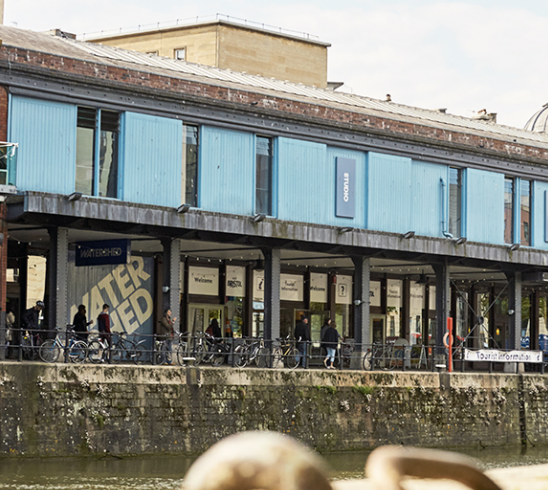
The Regional History Centre promote research about the history of Britain’s South Western counties and in the understanding of regionalism as a dynamic force in the shaping of the domestic and international past.
Research Groups:
Air Quality Management Resource Centre
Widely recognised by air quality and carbon management practitioners, nationally and internationally, as a leading provider of information, advice, research and consultancy.
Bristol Photography Research Group
A multidisciplinary network that is dedicated to exploring a broad understanding of photographic practices and the complex role photography plays in contemporary society.
Centre for Architecture and Built Environment Research
Developing innovative approaches, procedures, technologies and techniques that support the design, management, reconfiguration, maintenance and operation of buildings, their fabric and the environments they create.
Creative Technologies Lab
An interdisciplinary research group that spans and intersects computer science and the creative arts with the aim of creating and evaluating seamless interfaces between people and technology.
Document and Location Research Group
The Document and Location Research Group investigate how our understanding of place is directly formed through how locations are recorded and subsequently narrated by different disciplines, and how the identity of place is created through its representation.

Engineering, Modelling and Simulation Group
Bringing academics and researchers together to carry out high quality research in key engineering fields by applying modern and advanced modelling and simulation techniques.
Global and Transnational History Group
Consisting of historians conducting research across a broad geographic span, largely in the modern period.
Mathematics and Statistics Research Group
A research group that aims to deliver internationally excellent mathematics research, develop research collaboration and apply its research to outstanding learning.
Moving Image Research Group
Representing the full range of moving image research, including media industries, screen cultures, media politics and activism, genre, stardom and performance, and screen media practice research.
Robotics Engineering And Computing for Healthcare
Research into robotics technologies, intelligent sensors and machine learning to realise person-focused innovative healthcare solutions.

Unconventional Computing Laboratory
The Unconventional Computing Laboratory employ complex dynamics in physical, chemical and biological media to design novel computational techniques, architectures and working prototypes of non-linear media based computers.
Visual Culture Research Group
A group of cross-disciplinary art and design practitioners, historians and theorists interested in visuality and visual culture, with the intention to generate new knowledge and innovative methodologies.
Institutes and more:
Bristol Robotics Laboratory
The most comprehensive academic centre for multi-disciplinary robotics research in the UK. The lab is a collaborative partnership between the UWE Bristol and the University of Bristol, home to a vibrant community of over 300 academics, researchers and industry practitioners.
Institute of Bio-Sensing technology
Industry and academia working together to develop novel bio-sensing technologies.
Science Communication Unit
The Science Communication Unit is internationally renowned for its diverse and innovative activities, designed to engage the public with science.

WHO Collaborating Centre for Healthy Urban Environments
Promoting healthy and sustainable settlements through research, teaching, consultancy, knowledge exchange and publications. The WHO Collaborating Centre for Healthy Urban Environments work closely with municipalities, planning consultancies and health authorities in the UK, as well as with the wider WHO European Healthy Cities network.
Find out more about our research.