

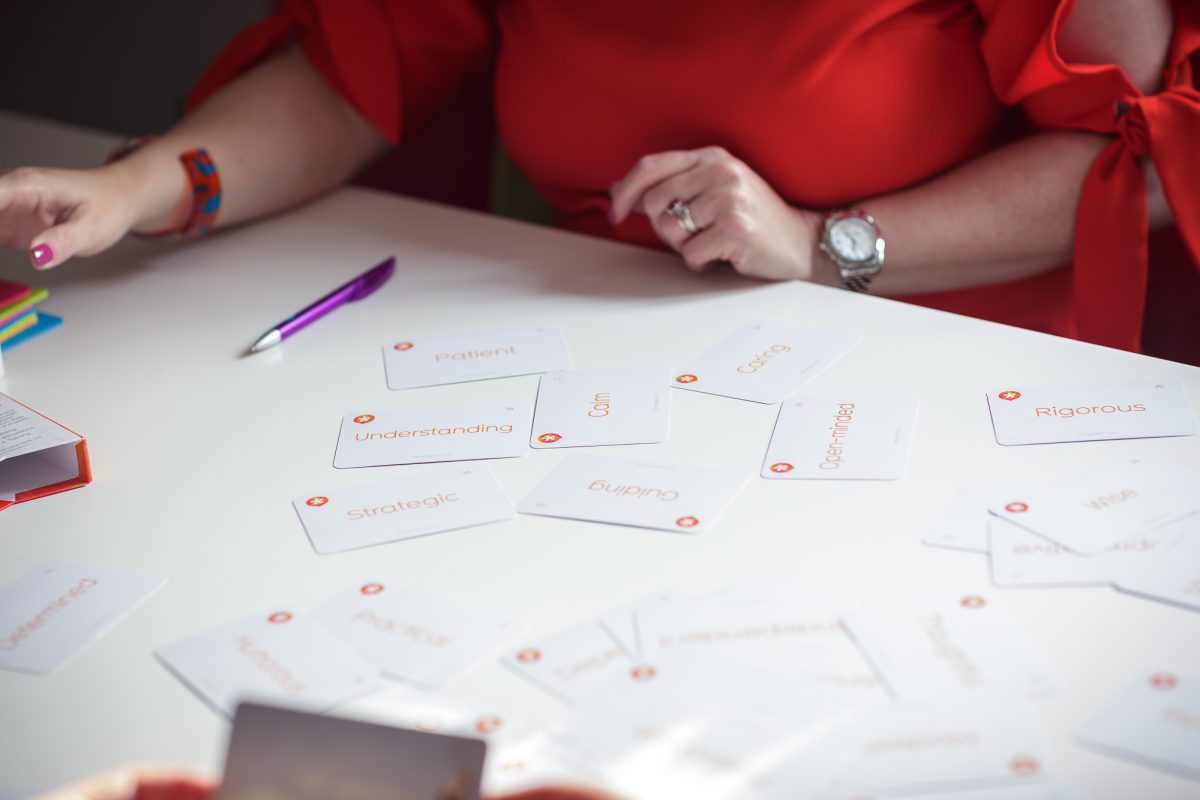
Why is Emotional Intelligence and the development of Human Skills so important for Engineers and other STEM professionals now?

Posted on

Our Women Like Me partner Caroline Morris, of Wide Eyed Group Leadership Consultancy, is an executive coach who works with leaders and their teams.  She began her career in STEM building customer management systems for large organisations and throughout her career she has combined her love of tech and people, helping people to embrace their unique qualities and bring their whole selves to work.  She is an Emotional Intelligence assessor and Time to Think facilitator who is obsessed about becoming, and helping others to become, better listeners! In this guest post, she explores the importance of emotional intelligence and human skills for STEM professionals.

As someone who was drawn to science and maths subjects, and who then worked in STEM I often reflect on how things have changed from when I first started my career.  When I started out as a consultant, although I was considered a people person, I was far more focussed on the process.  If we followed the process, I believe it would all be OK.  I noticed though that some of my colleagues did not always do this.  At first this irritated me, yet as I developed my own Emotional Intelligence I realised (probably not quickly enough) that as people some of us are “people people” whilst others are “process people”.  Some would rather I pick up the phone to discuss something whilst others would rather I updated the job ticket. 

This over the years has shifted my perspective from process to people, I am now firmly in the people camp.  If we can get a team of people to function well, then the process is an enabler (the cherry on the cake as it were), rather than the be all and end all.

I often take this reflection into my work with multi-functional groups especially when they have a breakdown in communication.  The situation is likely that they have different communication methods and need to become more curious about each other’s preference.  To do this we need to become more self-aware and aware of others, all part of developing our Emotional Intelligence.

Where did Emotional Intelligence originate?

Emotional intelligence developed from the discipline of Social Intelligence, which allows people to develop relationships, self-awareness and empathy.

Peter Salovey and John D. Mayer coined the term ‘Emotional Intelligence’ in 1990 describing it as “a form of social intelligence that involves the ability to monitor one’s own and others’ feelings and emotions, to discriminate among them, and to use this information to guide one’s thinking and action”.

Emotional Intelligence expands into other “people” skills, such as how adaptable we are, our ability to be straightforward, and how optimistic we are based on how much resilience we have.  The founder of Emotional Intelligence Daniel Goleman, identified that for successful leaders, having a high level of EQ was more impactful on their success than their IQ.

EQ unlike IQ, which is set by our late teens, is something that can be consciously developed and continues to develop throughout our adult life.  To find out more Daniel Goleman has a wealth of TedEx talks and details on his website:

What does it take to be emotionally intelligent?

Emotional Intelligence covers a wider spectrum of human skills from self-awareness, adaptability, resilience and optimism to how straightforward we are and are perceived to be.  These are skills we develop to a greater or lesser extent throughout our whole lives.  What fascinates me is how often the conscious development of this is avoided by STEM professionals. 

I recently delivered a workshop on how to “Collaborate & Share as a Team” to a group of Data Analysts and Data Scientists, this was a rare group who had voluntarily chosen to attend.  They acknowledged they were out of their comfort zone and that they often found the “soft skills” quite difficult.  I remember one of my coaching friends once saying if only they had been called “hard skills” and people would realise that in fact they are difficult and that is takes effort to develop them, rather than as is sometimes consider that they are “soft and fluffy” and some kind of “other” intended for other people….

I believe that now more than ever it is essential that STEM professionals embrace the difficult and consider how they might develop their Emotional Intelligence.  As Artificial Intelligence enhances and more and more of the repeatable predictable processes can be carried out by robots and software, our differentiation is our EQ.  Our ability to adapt, to connect with each other and to understand nuances is extremely sophisticated.

Where do we start?

I always begin my Leadership and EQ workshops with a reflection on what it takes to give people great attention…  As a Time to Think Facilitator and fan of Nancy Kline,  I am a great advocate on developing our listening skills.   It has transformed how I and the people I have worked with connect with others.   It’s a great way to notice how we communicate with others, interact with different people and connect with our colleagues.  By listening to someone, allowing them to speak without fear of interruption and allowing our own judgements and thought processes to be put to one side allows us to become deeply interested and curious in someone else’s perspective.  The first step in the important quality of empathy.

“Sometimes the best thing we can do for another human being is to listen to them without interruption” Nancy Kline

How many times have you been in a meeting when someone has finished your sentence or interrupted your flow?  This is one of the most inefficient styles of communication and often means that we do not really explore alternative perspectives and diverse ideas.  When we know that we won’t be interrupted (rather than being lucky enough not to be: Nancy Kline) then we are able to expand our thoughts and often answer our own problems.  As the listener we develop a deeper state of curiosity and learn about what is important to the person.  It might change our thinking or help us to question deeply entrenched ideas. 

It is so easy to say, and yet each time it works.  Once we feel heard the magic happens.  We feel our needs are met and thus our feelings towards another person changes.

This is the first step on an ongoing journey to develop our EQ.

If you would like to commence your EQ journey… then reflect on where you want to develop yourself, the following may help…

https://www.psychologytoday.com/gb/basics/emotional-intelligence

https://positivepsychologyprogram.com/emotional-intelligence-eq/

Co-founder Stella Warren on new alta mentoring scheme

Posted on

Our keynote speaker at the upcoming Women Like Me closing event, Stella Warren, tells us all about the new alta mentoring scheme in this guest post.

Stella is a Research Associate in the Bristol Leadership and Change Centre with a background in applied social research. She supports a wide range of research project teams within Bristol Business School and also teaches research methods at both undergraduate and postgraduate level. Her expertise includes social marketing and the understanding of psychological pathways for behaviour change in health; gender and inequality in organisations; the gender pay gap; and women working in male-dominated industries. She is a founder member of alta, a mentoring scheme for professional women in aviation and aerospace. She is also a member of the British and European Sociological Association and on the board of the Research Network ‘Gender Relations, Labour Markets and the Welfare State (RN14).

The mentoring scheme extends beyond the boundaries of the participating organisations, to impact on the industry at the national and international levels. After an initial pilot phase, alta was launched to the industry on 8th March, 2019 – International Women’s Day. It aims to empower women to gain confidence by receiving guidance from a more experienced woman in the industry and looks to change the way females are perceived in male dominated industries.

alta is hosted by the Royal Aeronautical Society and is part of their commitment to delivering on the pledges it made as a supporter of the Women in Aviation Charter, which was signed by government and industry representatives in June, 2018. alta is the first mentoring scheme of its kind in the industry and is currently open to professional women in the industry, with the help of financial donations from industry bodies and employers.

Join us for a Wikithon celebrating women in engineering

Posted on

On Wednesday 3rd April 2019, alongside our Women Like Me celebration, UWE Bristol will be linking up with the Women’s Engineering Society (WES) and Heritage Open Days to host a Wikithon celebrating women in engineering, and the WES Centenary year.

Extraordinary Women in Engineering: a WES Wikithon – UWE Bristol

Come and join us to develop your digital skills and learn more about editing Wikipedia. Help to celebrate brilliant women engineers by creating and improving their pages on the world’s favourite online historical record.

Complete beginners and experienced editors, all are welcome to attend – we’ll provide training for anyone new to editing. If you already have some wiki editing experience, we can help you improve your skills and learn a few new tricks. If you’ve spotted an article that needs improving, bring along your queries and we’ll see what we can do to help. Suggestions for articles to improve and create will also be provided, along with research resources.

Training will take place 09:30-10:00 with the Wikithon drop-in running 10:00-14:00. Please sign up for this FREE event on Eventbrite.

You are also welcome to attend the Women Like Me session on women’s mentoring running between 12:00 and 14:00; please sign up here.

Leaders Award online Engineering Extravaganza for British Science Week 2019

Posted on

The Leaders Awards are celebrating British Science Week 2019 by holding an Engineering Extravaganza in which they will hold two ‘Meet an Engineer’ interviews engineers every school day, starting from 8th March.

During British Science Week 2019 there will be two Live Online Engineer Events each day, available to all schools registered for the Scottish Engineering, Primary Engineer and Secondary Engineer Leaders Awards featuring:

  • Jenny Roberts a Mechatronic Engineer – Friday 8/3/19, 10.30 am-11.30 am
  • Gerry Ward – Manufacturing Engineer – Friday 8/3/19, 1.30 pm-2.30 pm
  • Iulia Motoc – Roboticist – Monday 11/3/19, 0.30 am-11.30 am
  • Mike Baldwin – Lead Mechanical Engineer – Monday 11/3/19, 1.30 pm-2.30 pm
  • Elaine Meskhi – Engineering Consultant – Tuesday 12/3/19, 10.30 am-11.30 am
  • Eleanor Davies – Structural Engineer and Women Like Me participant – Tuesday 12/3/19, 1.30 pm-2.30 pm
  • Yeff Karpuchenko – Mechanical Engineer – Wednesda 13/3/19, 10.30 am-11.30 am
  • Mike Jeschke – Materials Engineer – Wednesday 13/3/19, 1.30 pm-2.30 pm
  • Stephanie Alexander – Automotive Engineer – Thursday 14/3/19, 10.30 am-11.30 am
  • Lorna Bennet – Renewables Mechanical Engineer – Thursday 14/3/19, 1.30 pm-2.30 pm
  • Graeme Ralph – Manufacturing R&D Engineer – Friday 15/3/19, 10.30 am-11.30 am
  • Victoria Howells – Flight Simulation Engineer – Friday 15/3/19, 1.30 pm-2.30 pm

These events are expecting to very popular, so the Leaders Awards are recommending that schools who want to take part register their interest by emailing info@leadersaward.com as soon as possible citing the relevant engineer’s name and your school name in the subject line of the email.

Women Like Me engineer Rachel Kirkwood engages another 1161 pupils for Leaders Award

Posted on

Following a very successful online presentation for the Leaders Award in January by Rachel Kirkwood, graduate engineer at Peter Brett Associates and participant in our Women Like Me programme, she was invited back to deliver another! Rachel’s second presentation took place on Thursday 28th February 2019, reaching 1161 pupils in 10 schools across the UK.

Before the presentation, Rachel gave a taster of what she’d be talking about, and it sounds like she made a great impression on the students in her talk:

“We just wanted to say thank you very much for organising this event. Our pupils found Rachel’s talk very interesting and they were inspired by her passion for her job and for her enthusiastic responses to all of the questions. Thank you from all of us at Craigrothie Primary School.”

The Leaders Award is supported by UWE Bristol and asks children “If you were an engineer, what would you do?”. This free competition asks students to find a problem, invent a solution, draw it, explain and send it in. Pupils are encouraged to both interview engineers and watch the online interviews. If you’d like to take part in the Leaders Award as an engineer or school, please get in touch with the team.

FREE event: Women Like Me – Boosting mentoring for women in STEM in the West of England

Posted on

As our Royal Academy of Engineering funded project, Women Like Me, draws to a close for this year, we are hosting a celebration event at UWE Bristol:

Wednesday 3rd April 2019

12-2 pm

Bristol and Bath Science Park, main cafe entrance (NB this is a change of venue from the original listing)

FREE

Sign up on Eventbrite

Women Like Me – Boosting mentoring for women in STEM in the West of England

The West of England is home to an impressive list of STEM industries, and all are working to improve participation for women in STEM. As well as recruiting more women into STEM, we also need to think about retaining our talented workforce. Mentoring Schemes can help to do just that, with research showing that mentoring from other experienced women is a key factor in creating a welcoming workplace culture.

This event brings together our leading players in women’s mentoring across the West of England, to explore how we can support each other and learn from best practice. Organised by UWE Bristol’s Women Like Me project for engineering mentoring, the network also connects with Women in Science and Engineering Bristol, the Women’s Engineering Society centenary and Curiosity Connections Bristol.

The event includes lunch and a keynote talk on women’s mentoring, followed by a workshop to develop further connections between mentoring schemes.

Please sign up to come and join us!

Women Like Me engineer Rachel Kirkwood to return to Leaders Award

Posted on

Back in January, Rachel Kirkwood, graduate engineer at Peter Brett Associates and participant in our Women Like Me programme, delivered a very successful online presentation for the Leaders Award.

So much so, that she’s been asked to return and will give another presentation tomorrow, on Thursday 28th February 2019.

In the video below, Rachel gives a taster of what she’ll be discussing, by explaining what she does in her role in transport planning.

Engineers who would like to support Primary Engineer / The Leaders Award can find out more here. Schools which would like to participate in Meet an Engineer interviews can find more information here.

UWE student engineers visit Leaders Award winner’s school

Posted on


A team of engineers from UWE Bristol is bringing to life one of the winning designs from last year’s Leaders Awards. Designed by Philippa Griffiths of Hugh Sexey CE Middle School in Somerset, the Red Line Braking System (RLBS) displays red lights to alert other drivers of the severity of the braking and levels of attention needed, with the aim of reducing fatalities on our roads. Miriam Cristofoletti tells us more about their visit to the school of designer Phillipa Griffiths in this blog post.

Earlier this month we had the incredible opportunity to go and visit Philippa in her school, run a series of STEM activities with her classmates and to discuss her idea about the RLBS project! We were so excited! 

After about an hour of traveling, we reached Hugh Sexey CE Middle School, in the quiet Somerset countryside, and we met Ms Latti (Philippa’s teacher), who took us to the DT classroom and introduced us to the pupils. It was a great surprise to see the majority of them to be girls! 

We started with a brief introduction about who we are, what we do at UWE and we had a chat with them about their career plans after school. The students were very interested and it was nice to see them interacting with us and sharing their opinions, without feeling shy. We then had a couple of quizzes. First, we wanted the children to explore the different areas of Engineering, so we gave them a few job descriptions and they had to guess the job title. We picked the latest job adverts from real websites, in the Engineering sections, like Drone Pilot, App Developer, Machine Learning Engineer, Virtual Reality Designer,… to show them that all these jobs weren’t there a few years ago, but they are now possible because of the new technological advancement. When we said: “Think about the fact that you all will have jobs that are not there yet, because you haven’t invented them yet!”, a girl from the back went like “Oh my God, THAT-IS-SO-COOL!” 

And it’s for real, “SO COOL”! 

Another activity was to see whether they knew some of the most important past and present figures in the Engineering industry and research environment, like Elon Musk and Steve Jobs, but also Mary Jackson and Katherine Johnson, telling them that they all started from nothing, from a garage or from a little desk, and they all built their way up with determination and strength, never giving up. 

We showed them some of our work and projects at university, and we also brought a Mekamon (the spider-like robot produced by Reach Robotics). They were all so excited to see a real robot in front of them, but also interested by the fact that Silas Adekunle, was just an undergraduate student when he came up with the idea of building it and set up his own company. 

Then, it was time to discuss the Leaders Award competition and Philippa’s design. We presented her our work from the very first tests and the current progress. She shared with us the reasons behind her idea and she told us her thoughts about what we’ve done so far. It was a great experience for both sides – she managed to see her drawing slowly coming true and give her input about the next steps, and we got the opportunity to have our customer review, avoiding future errors and/or disappointment! 

The last hour was spent with our final activity, a practical one! We split the class in 4 groups and each group was further divided in 2 teams: a Hardware team and a Software team. We brought laptops, microcontroller boards, wires, sensors and LEDs, to allow the pupils to build their own circuit and program their own code, and make an easier version of Philippa’s RLBS: an LED would lit up based on how much a sensor was pressed. 

To create a more real life scenario, we supplied the 4 groups with slightly different materials and they had to share some components, because that’s what an Engineer project sometimes looks like, especially when you start with the first tests. You don’t always have everything as expected, you need to adapt and improvise with what you have or what you’re given, sometimes you have constraints in terms of money, resources, time… but you keep on trying, persistent and confident that eventually you can make it! 

The children worked hard and followed our instruction perfectly! They soon found out that nothing works fine on the first attempt, it’s not like in movies, when you just type on a keyboard and magically you get all the results you want! It takes time and team work. It was amazing seeing the members of the HW team agreeing with the ones in the SW team for the number of pins, and cooperating to get the whole system working! This is exactly what we do in our projects at university – no Engineer works alone! 

At the end, some children managed to lit up an LED, and the sense of achievement in their eyes was priceless! 

With the bell’s ring, we packed our things, and came back to UWE, happy to have lit up the first sparkle of inspiration for our future Engineers! 

Leaders Award prototype team ready to visit designer’s school

Posted on

Our team of engineers, including our Women Like Me engineer Katy, are busy building one of the winning designs from last year’s Leaders Award. Designed by Philippa Griffiths of Hugh Sexey CE Middle School in Somerset, the Red Line Braking System (RLBS) displays red lights to alert other drivers of the severity of the braking and levels of attention needed, with the aim of reducing fatalities on our roads. The team are due to visit Philippa’s school tomorrow, as Miriam Cristofoletti of the build team tells us here.

Today we had a very productive meeting, preparing our 2-hour session to Philippa’s school. We’ll have about 20-25 KS3 pupils and we will run a series of very interactive activities. We want to inspire them, and show them what the Engineering World looks like, through quizzes, games and a final practical session, building circuits and writing code! 

Philippa’s design is an incredible idea, and the Engineering principle behind it is actually quite straightforward: a pressure sensor and many LED strips lit up depending on the intensity of the force applied on it. We want her to fully experience her own design and with our practical session next Wednesday, she’ll be able to do so. We’ll also have a chat with her, and see whether we’re all on the same page for the project and what are her suggestions. It’s gonna be fun!

First prototype complete in Leaders Award design build

Posted on

A team of engineers from UWE Bristol is bringing to life one of the winning designs from last year’s Leaders Awards. Designed by Philippa Griffiths of Hugh Sexey CE Middle School in Somerset, the Red Line Braking System (RLBS) displays red lights to alert other drivers of the severity of the braking and levels of attention needed, with the aim of reducing fatalities on our roads. Here Miriam Cristofoletti of the build team shares their latest prototype progress.

In this first prototype, we installed a pressure sensor inside what looks like a break pedal of a car (but instead is an old sewing machine’s pedal!), and we build and programmed a circuit to control a strip of LEDs. This is the basic principle behind the final design. We will then make it bigger and we’ll attach it to a frame to fit around the car’s back windshield. We’d also like to add a Bluetooth system in order not to have wires running from one side of the car to another. 

Back to top