The events are designed to enthuse Further Education (FE) tutors with the diversity of STEM activity happening in the region and showcase the career opportunities available for their students in modern STEM workplaces.
Guests will provide clues about their jobs, then answer yes or no questions as participants try to guess what it is they do. Then you can inspire them with the juicy details!
There are 6 events in total with each one linked to an industry of interest to the region. As a Guest you’ll take part in the event most closely aligned to what you do.
Line Up
Tuesday 15th March: Advanced Manufacturing
Thursday 17th March: Construction
Tuesday 22nd March: Life Sciences
Thursday 24th March: Healthcare
Tuesday 29th March: Computing & Digital
Thursday 31st March: Cyber Security
Each event will run on Zoom from 4pm – 5:30pm.
Get Involved!
If you are interested in becoming a Guest then please contact ambassadors@graphicscience.co.uk with a brief description of who you work for and what work you do, and indicate which event(s) you think you would be a good fit for. The organisers will then follow up with you to confirm participation.
More details
Your clues will be provided beforehand to intrigue participants, then on the night you will have some time to go into more details: What is the impact of your work? Who does it help? How cool is it? How important is it? How much satisfaction do you get from it? Why should young people care about it? What’s the future of it?
The STEM Ambassador are also keen to know how your work intersects with sustainability – how your work contributes to reducing carbon emissions and helping societies work towards becoming carbon net zero.
You can just talk, but audio-visual additions are welcome too. And you can take part from wherever you think is most appropriate, as long as you have a reliable connection to the internet.
On Wednesday 6th April – pop along to the Prototype and Play lab in UWE’s School of Engineering for an hour (or as long as you want) to take a look at some of the intriguing inventions school children have been coming up with.
Children all over the country are currently furiously scribbling designs – all intended to solve some of the world’s most pressing issues. They are entering those ideas into the Leaders Award – and thousands of those entries will turn up at UWE Bristol (the Leaders Awards partner in the South West) for grading by our lovely local engineers.
Grading isn’t an onerous process – quite the opposite – you’ll simply be flicking through some drawings and putting the most interesting/credible ideas through to be shortlisted. Whilst being plied with tea and coffee plus biscuits (and maybe cake?!) of course.
Every year grading participants really enjoy the experience and leave feeling inspired and intrigued by ideas such as, solar powered blankets or a variable light braking system on cars.
You can see the Leaders Award process below – all starting with the challenge “If you were an engineer, what would you do?” Step 6 – grading is where you would be helping out.
Sign up to help show children that STEM is for everyone!
This year, the DETI Inspire team at UWE Bristol, in collaboration with the West of England STEM Ambassador hub, are launching a scientist storytelling programme in schools.
Why?
We want every child in the West of England to see themselves as scientists, and what better way than through immersing them in stories featuring women, people from black, Asian and minority ethnicity backgrounds and people with neurodiversity having science-y fun. All delivered by you, a real-life scientist, with your own unique story and passions to tell.
And it works – we’ve previously deployed the “Curious Stories for Curious Children” template, but in locations all over the city, from the Suspension Bridge to local Libraries – and it was a great success!
STEM Ambassadors attended an inspiring training session and then spread out to cover 11 events over October half-term 2019, where they engaged nearly 300 children and adults both during the story and in the following Q&A sessions. My colleagues and I were extremely impressed with all the STEM Ambassadors involved and the responses they invoked.
Now we’re going into schools where we hope to engage with more children, and make it possible for them to envision themselves as scientists.
And if all this tickles your fancy, then why not register as a STEM Ambassador to get involved. Plus you’ll get to see what other school outreach the STEM Ambassador Hub can connect you to.
Short training is provided!
As before, we’ll provide the storytelling training – scheduled for 3rd Feb, 4pm on UWE’s Frenchay campus. It’ll be led by UWE Bristol’s Associate Professor Jane Carter, who specialises in promoting reading with young children. (This training session isn’t mandatory, but I attended it last time – it really was brilliant and so worth trying to get along to)
What books?
We have a library of books, specially selected to change perceptions of what science is and who scientists are. Once you’re signed up, we’ll match you with a great stereotype-challenging (and super fun) science-y book and fix a date for you to go into school. (And if you want to go into your local school – please do let us know)
You can check out the book list here and I hope to meet many of you on Feb 3rd!
A STEM Ambassador storytelling at We the Curious in October 2019
UWE Bristol’s DETI Inspire team have taken their solutions focused climate change activity into schools for the first time last week (11th Jan 2022).
Year 5 and 6 classes at Elm Park Primary, took part in the curriculum-linked activities, which support children to learn about the grand challenges’ cities face in relation to urban travel, air pollution and the steps they can take collectively to make their school streets, and cities, safer, healthier and happier.
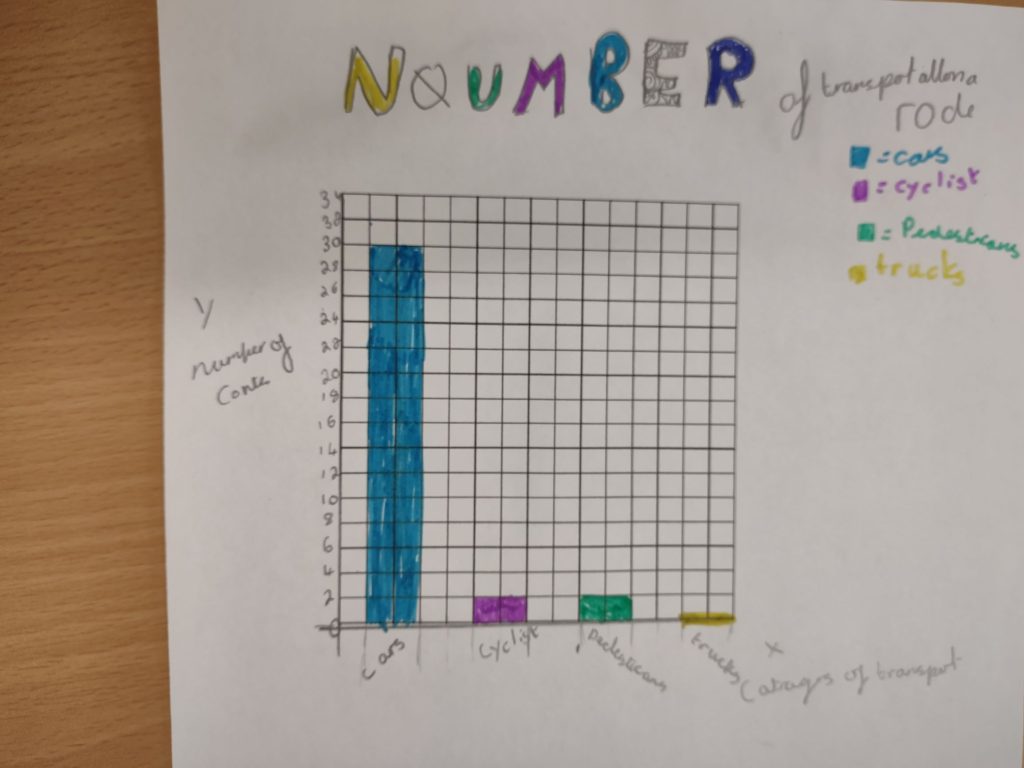
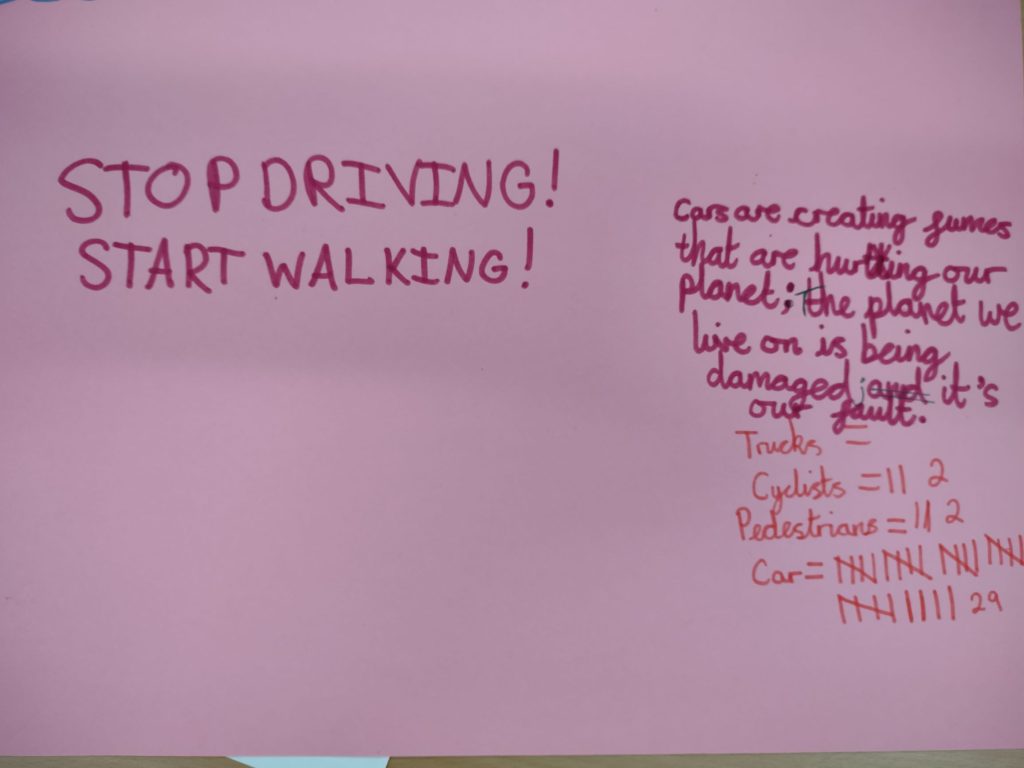
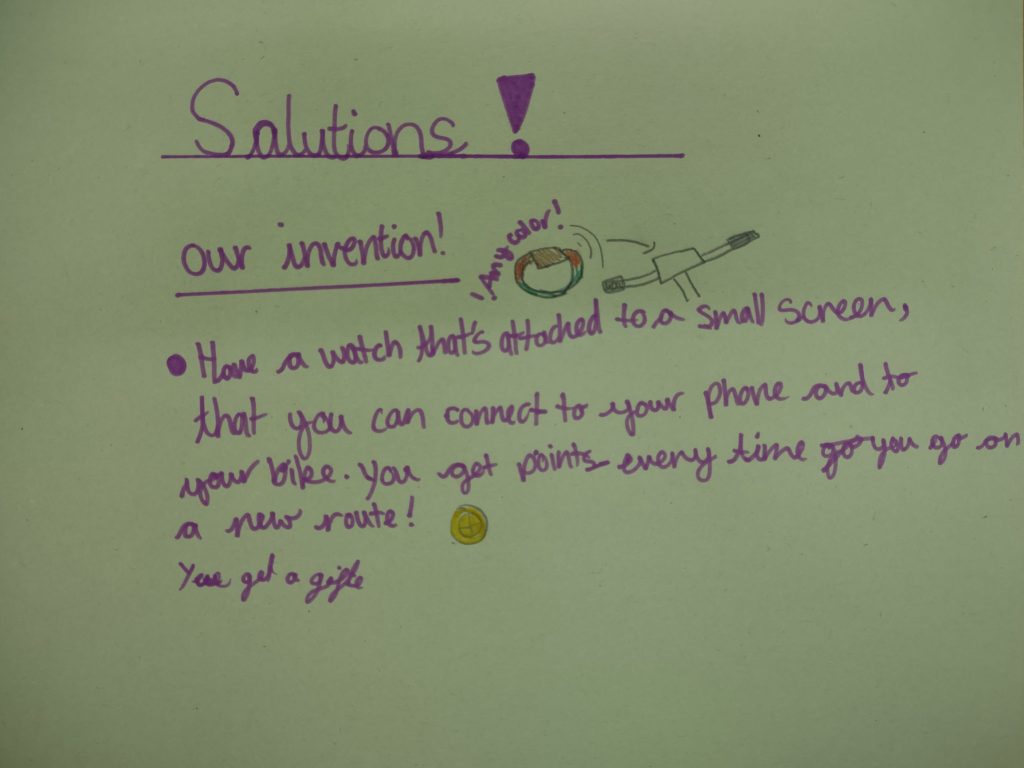
The interactive activities included a traffic survey, mapping of routes to school, graph making and solutions. Children were also shown how the Telraam traffic counting sensors can be used with a Raspberry Pi to assess urban travel.
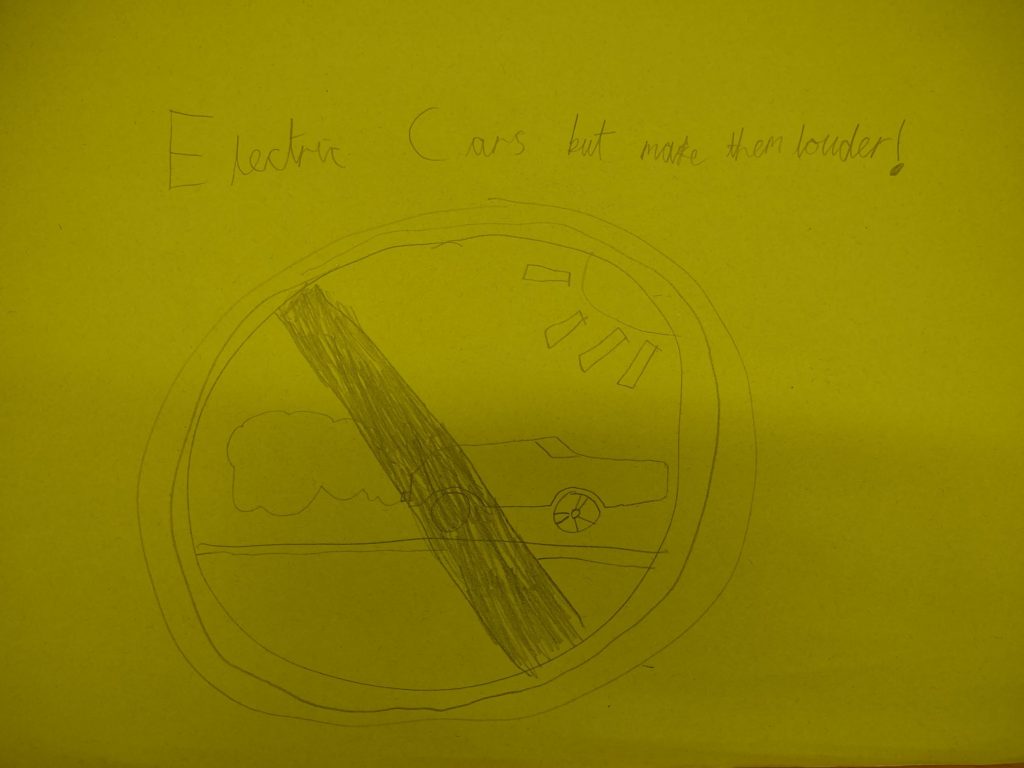
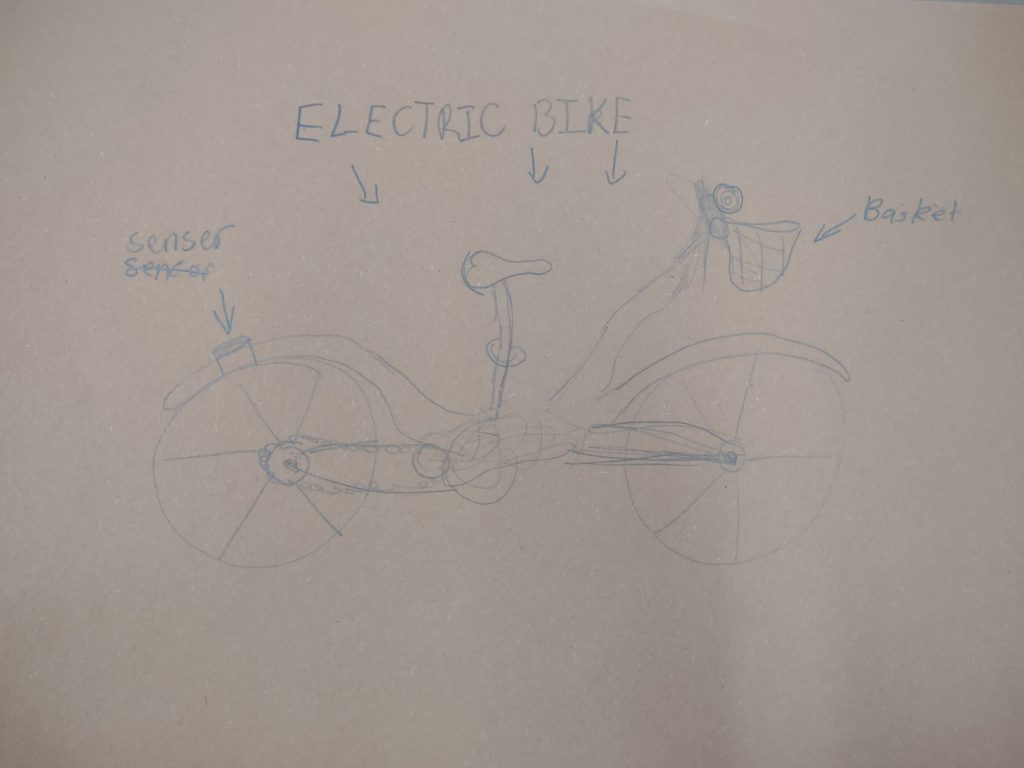
Some of the children’s ideas can be seen below:
The workshop was based on the WeCount Schools resources, created as part of the EU citizen science project WeCount, and we’ve got more schools booked in for session delivery.
Schools in the West of England can book a FREE WeCount Schools workshop, delivered by trained outreach coordinators from UWE Bristol by completing this online booking form.
And if you’re keen for your school to have their own traffic counting sensors, WeCount still have 5 sensors left to give away to schools across the West of England. Contact engineeringourfuture@uwe.ac.uk to apply.
Two members of team DETI arrived at Elm Park bright and early to deliver the outreach sessions!
The Engineering workforce in the UK is made up of only 12% Women and 7% of people from black, Asian and minority ethnicity backgrounds – so no wonder the sector is experiencing an employee shortfall! Engineering Industries are missing out on over half of the population, as well as, the vast range of experiences and perspectives that a diverse employee base brings to the table.
Digital Engineering Technology and Innovation (DETI)’s Innovate team at UWE Bristol wants to address the shortfall of engineers by finding how to best enable these underrepresented groups to enter and progress in the world of Engineering.
We asked Women, those with Neurodiversity, and people from Black, Asian, Brown and dual-heritage backgrounds, in the West of England – to tell us what they needed – check out the summary doc below to find out more.
There’s a huge digital engineering skills shortfall and employment gap in the UK’s engineering workforce. To help address that shortfall, UWE Bristol launched the new Big Data course in November 2021.
UWE Bristol runs the Digital Engineering Technology and Innovation (DETI) Innovate programme in the West of England – identifying what skills need boosting and then designing appropriate training courses – all to enable the digital transition of local industry supported by DETI’s main programme.
Big Data
With the high adoption rate of sensors and connected devices in manufacturing industries, there has been a huge increase in data points available. If analysed, this Big Data has potential to reveal new information and patterns that can enable the improvement of process efficiency.
Technicians identified Big data analysis as a core emerging area they lacked knowledge and analytic skills in, so UWE Bristol designed a course to upskill DETI partners employees.
Upskilling
The Big Data CPD course covered the fundamentals of Big Data concepts and the key tools and systems for practically applying the analytics. Topics covered included:
Introduction to Big Data
SQL vs NoSQL databases
Data Quality
Knowledge Retrieval
On 24th November 2021, Professor Kamran Munir & Dr Ahsan Ikram from UWE Bristol’s Department of Computer Science, delivered the course online to 15 participants from UWE, the University of Bath, the National Composites Centre and other local industries.
Growing the CPD offer
DETI Innovate recognises the need for continuing to offer this course to reach more of the Engineering workforce, therefore UWE Bristol are working to develop the content into a virtual pre-recorded offering. This will enable flexible self-study and the opportunity to revisit material. We’ll keep our readers informed of when this becomes available.
In addition to Big Data upskilling, UWE Bristol is assisting the NCC to deliver another DETI Innovate course on 5G Encode (AI and VR) – expected to be delivered in February.
If you have any questions about the Big Data or 5G Encode courses, our DETI Innovate colleague Dr. Halimah Abdullahi can be contacted on halimah.abdullahi@uwe.ac.uk.
Academics and students from a number of UWE Bristol departments are collaborating with the local community in Easton to investigate, on a granular real-time level, air quality and traffic’s impact on the local high-street.
St. Mark’s Road in Easton is a high-street bucking the trend, with new shops popping up in an amazing and unusual Covid recovery. The local community’s clear commitment to investing in their high-street isn’t limited to popping into local shops – residents are beginning to be interested in how traffic affects the street they’re proud of.
In the last few years air quality sensors that measure pollutants as small as 2.5 microns have begun to pop up all over the world, and St. Mark’s Road has been part of this. Although you wouldn’t notice on walking down the street.
“The sensors need to be waterproofed, so we put them into the drainpipes – nice and easy and out of the way,” said Stuart Phelps from Baggator (a community organisation offering a range of innovative programmes for young people in the local area) who has been the driver behind much of the project.
Easton Data Garden is growing
It’s not very glamorous, but these hidden sensors are providing real-world information that are inspiring local residents. Particularly the weekly children’s science and technology club – the ‘Easton Data Garden’ – which UWE Bristol have been heavily involved in.
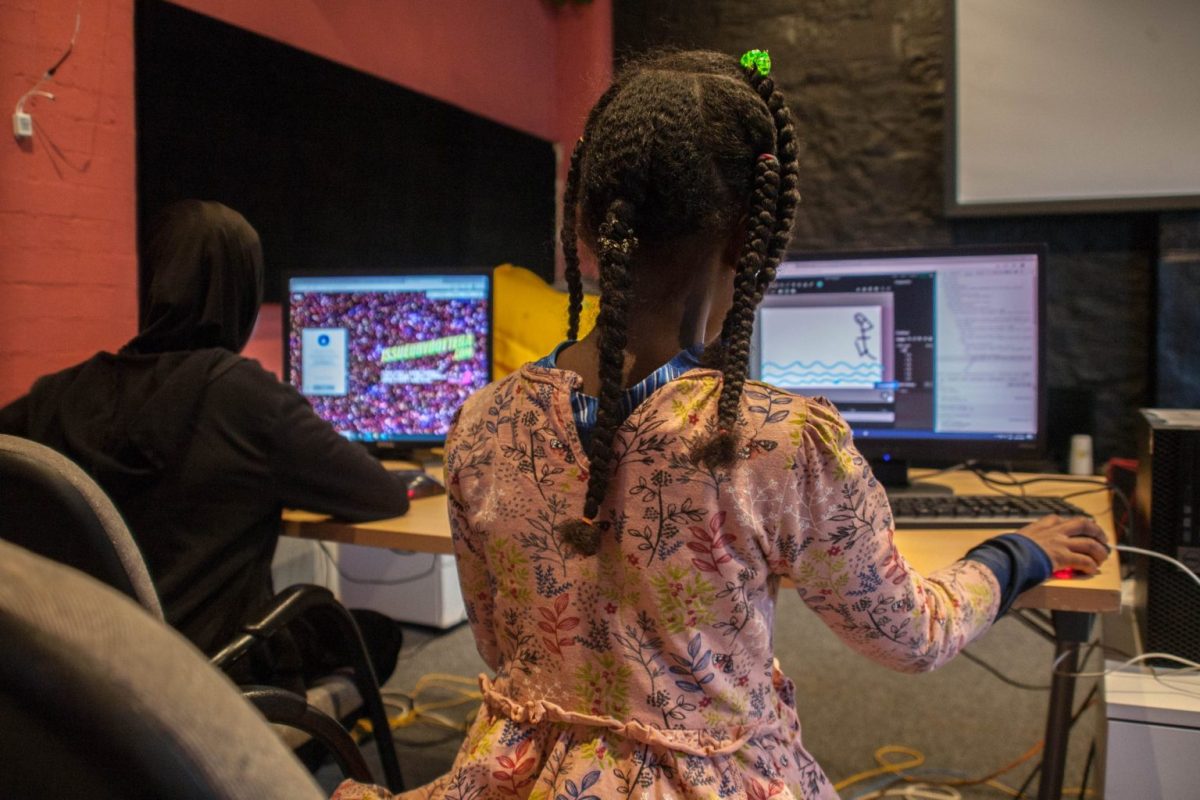
UWE Bristol’s Inspire team took a Minecraft activity into Easton Data Garden in 2021 (Photographer Anya Agulova)
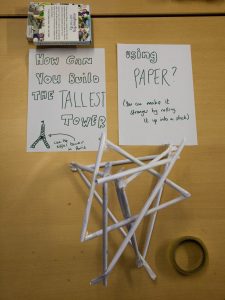
UWE Bristol staff inspired children about what an engineer can do (pack of engineering top trump cards) and then gave them an engineering challenge (Photographer Anya Agulova)
“The data gathered from the sensors on St. Mark’s Road gets the kids thinking about what that means in the real world,” explained Stuart. “Seeing this information in real-time is changing their view of science.”
And the children are about to take part in workshops, alongside academics from UWE Bristol and the University of Bath, to build new sensors for installation in more pieces of drainpipe on St Mark’s Road.
New sensors from the University of Bath and the European Space Agency, will give a detailed real-time readout of nitrogen dioxide (a significant greenhouse gas), carbon monoxide, carbon dioxide, ammonia and ozone. These will be installed alongside traffic monitors – supplied by UWE Bristol’s Digital Engineering Technology Innovation (DETI) Inspire project, which links to the EU citizen science project WeCount.
“Working with Baggator and the Easton Data Garden is a fantastic example of local residents leading on citizen science in their own area,” said DETI Inspire lead, Dr Laura Fogg-Rogers.
“The young people and their mentors came up with this exciting idea to use digital engineering to link local air quality monitors with traffic counting sensors, providing a real-time picture of how traffic impacts air quality on a granular scale.
“We are really excited to see how this develops and are looking forward to supporting their science learning and community development!”
That’s a lot of great data to look at and residents, and particularly the children in Easton Data Garden, want to see the results and identify any problems on their high-street. Again, UWE is stepping up to the ‘mark’, with several teams of students working on projects to help highlight St. Mark’s unique data set.
UWE students get visuals on the data
This includes a UWE Computer Science and Creative Technology student team undertaking the creation of a bespoke St. Mark’s Road website – where local news sits alongside local air quality data.
But Stuart’s not stopping there. He has a vision for this website to be viewed from a St. Mark’s shop window, with real-time data coming in from sensors mounted directly above the shop. And again, a student digital design team under UWE Bristol’s Dr Mic Palmer’s direction, are developing a bespoke display screen for residents.
Future of St. Mark’s Road
In the next few weeks, children from the Easton Data Garden club will bring their families along to workshops to build the sensors. Installation will happen soon after, all ready to start feeding delicious data into the website UWE students will deliver at the end of January. And viewed at the local corner shop!
All the while, local Easton children will be working alongside academics, asking questions about the effectiveness of real-world interventions, like, how do rumble strips impact on traffic speed and then air pollution? This will be the first time citizens have combined these technologies to directly test the impact of interventions on their streets – a necessary step to improve high streets.
For Stuart, almost the most important impact of this project, is the interactions made possible between the academics and children in Easton.
“The kids here wouldn’t normally have exposure to University and the people who work there, this project means they are getting to have those interactions” explained Stuart. “And the children are interested because it’s relevant to them, and because the academics are genuinely listening to what they have to say.”
Work alongside UWE academics is also a key part of another strand of Stuart’s work – supporting the local Muslim community to celebrate the end of Eid with a huge light display (called the Grand Iftar). Children in Easton Data Garden are again collaborating with UWE Bristol academics to design light patterns to be displayed on/in the Jamia Masjid Mosque dome.
We’ll be updating on the results coming out of Easton Data Garden in the next few months and later on in 2022 you can expect to see some amazing images from the Grand Iftar celebration.
See more about Easton Data Garden (& UWE Bristol’s involvement!) in the video below:
Last week, many of our student engineers here at UWE Bristol, got involved in fun, team-working challenges. And foundation students weren’t going to be left out – they took on their own Lego-based scrapheap challenge on Friday 26th November.
Programme leader for the Foundation Year, James Whiting, masterminded the challenge. Borrowing an assortment of Lego from the Engineering outreach team to form the scrapheap from which the students selected components to build a balloon-powered Lego car.
See photos below of the foundation students engaging with the team building activity, but also, having lots of fun.
Let the races begin!
Driving/Flying simulations
As part of the catch up and engagement week, Automotive Engineering With Foundation Year students, took part in simulation games in the Digital Engineering Lab. See photos below.
Last week (22 – 26th November) was Project week 1 for student engineers at UWE Bristol. Project weeks are time dedicated for students to develop teamworking skills as they learn how to apply the design process to real-world problems.
Students in the Engineering Practice 1 unit, undertook an Engineers without borders design challenge – selecting from 8 challenge areas facing the indigenous people living in one of Australia’s most remote regions – Cape York.
After researching the challenge areas and emphathising with the needs of the people involved – students started the week by the all important definition of the problem – making sure to consider user needs and practical factors e.g. economics and environmental impact.
With the design criteria set on day 1, the students needed inspiration to start coming up with possible solutions. And inspiration was provided in the form of guest speaker and UWE alumni – Silas Adekunle – who invented the world’s first intelligent gaming robot whilst still at University.
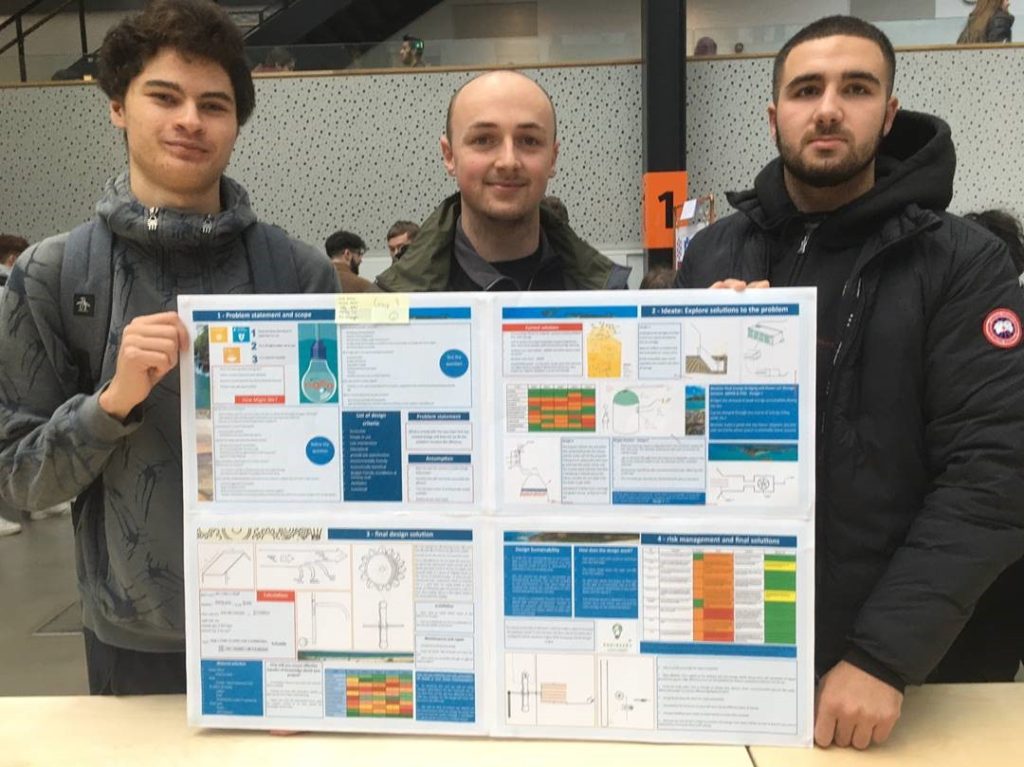
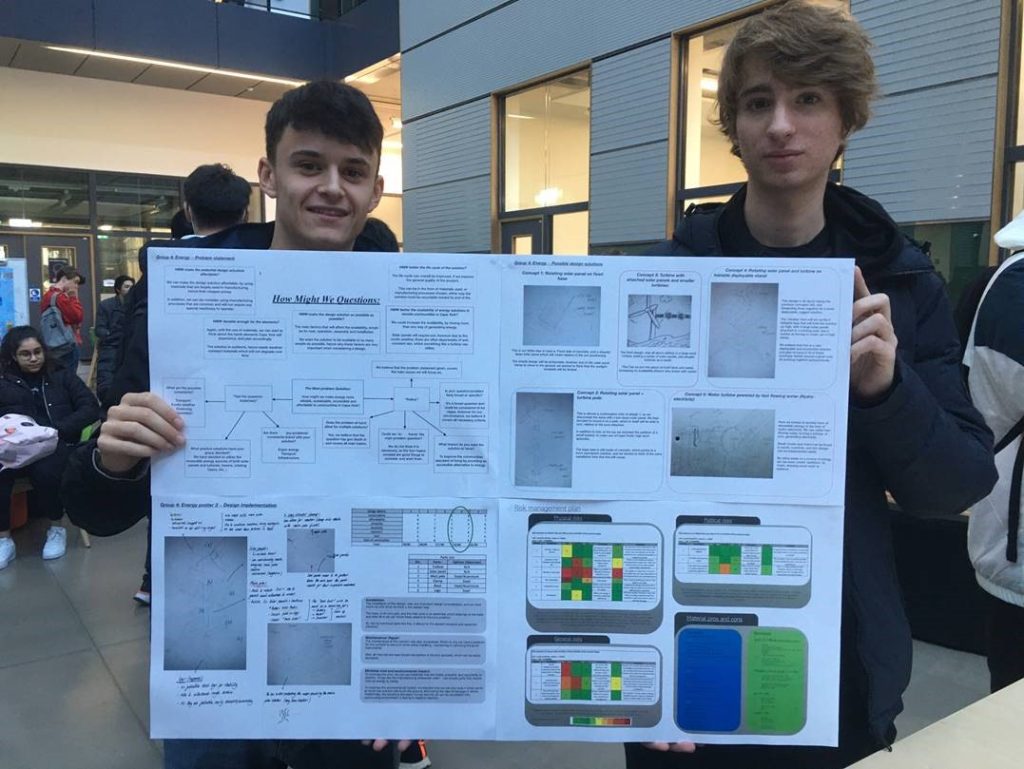
Team members furiously sketched concept ideas – voted on their favourites – before spending the rest of the week detailing the design, thinking through implementation from installation practicalities to costing, and risk management. All these elements were then pulled together by the teams to present in poster format on the final day.
Thanks to Senior Lecturer Dr David Richardson for preparing the week. Some of the teams’ posters can be seen below.
There was a celebratory feel on the final presentation day, with a mega scaletrix bought out for the students to play on.
During the three day Youth Engineering for Environmental Sustainability Summit (YEESS), 11-13 October 2021, young people across the West of England discussed carbon-emission cutting solutions with experts, before quizzing local politicians on their Climate Action strategies.
There was lots of great discussion worth noting, so we’re going to report each day’s targets, questions and potential solutions in a three-part series.
Day 2: How might we heat our homes without fossil fuels by 2030?
Moving heating reliance away from fossil fuels is a core target mapped into the local Climate Action Plans, and after exploring the hot topic, KS4 and KS5 YEESS delegates quizzed South Gloucestershire Councillor Toby Savage and Bath & North East Somerset Councillor Sarah Warren on their strategies.
Why can’t we keep using gas boilers?
Introducing the issue – Ruzanna Chitchyna, an associate Professor at the Cabot Institute, University of Bristol – “In the UK, most homes are heated via a gas boiler. Gas is a fossil fuel, with home heating accounting for 14% of our carbon emissions. The rules are already changing, with all new homes finding fossil fuel alternatives by 2025. The next step will be retro-fitting – replacing our current home heating with climate friendly alternatives.”
Watch her video intro below:
How to heat our homes without fossil fuels?
YEESS delegates watched video postcards from engineers leading the shift in heating away from fossil fuels, and then discussed the various ideas presented, including:
On the online chat, discussion was dominated by queries about causes of climate change, possibilities with nuclear power, how to personally reduce emissions and jobs of the future.
YEESS delegate Natalie asked, “What do you think is the most influential thing we can do to help solve climate change?”
Dr Deborah Adkins, UWE Bristol’s Fellow in Sustainable Buildings, recommended she – “Read the IPCC (The Intergovernmental Panel on Climate Change) summary report 2021. Share what you’ve learnt from reading it with three people.”
Another great question came from delegate Issyprime – “What new and exciting jobs are out there for young people?”
James Osborne (who manages projects on sustainable aviation at CFMS) answered – “I think young people are living in a very interesting time – look around you & practically everything you see probably requires some changes to make it compatible with our climate goals.”
Our region’s Climate Action Strategy
Savita Willmott, Chief Executive of the Natural History Consortium, interviewed South Gloucestershire Councillor Toby Savage and Bath & North East Somerset (BANES) Councillor Sarah Warren, on their respective Climate Action Strategies.
Josh Warren (from the DETI Inspire team) works the livestream tech for the interview with South Gloucestershire Councillor Toby Savage (in person) and Bath & North East Somerset Council Councillor Sarah Warren (online)
Both Sarah and Toby gave YEESS delegates an overview on what their councils are doing to address both the climate emergency and biodiversity crisis.
This included an insight into elements of the local building plans, with Sarah speaking about BANES council demanding more energy efficiency from housing developers, as well as supporting retrofitting projects. And Toby highlighting an interest in South Gloucestershire council acquiring land in order to build more affordable homes.
Find out more in the recording interview below:
Interview with councillors on Tuesday 12th October 2021