
UWE Bristol spin out company poised to improve the diagnosis of bowel disorders

Posted on

We are delighted to announce that a UWE-based spin out company, Nidor Diagnostics Limited, has been established to develop a medical diagnostic device.

The device, named Inform ™, can detect the volatile organic compounds in patient samples, in order to diagnose and monitor a range of medical conditions. Founding institutional shareholders include UWE Bristol, the University of Liverpool, the University of Bristol and The Wellcome Trust.

Nidor Diagnostics Limited will offer a range of diagnostic products, the first of which would enable patients to receive a positive diagnosis of Irritable Bowel Syndrome (IBS). Currently, the diagnosis of IBS and other related medical conditions can require many assessments, including blood and faeces testing, colonoscopy with biopsies, and radiology (X-ray) tests, and requires a lengthy process of elimination. Inform (IBS) ™ will help to speed up the diagnostic process for patients.

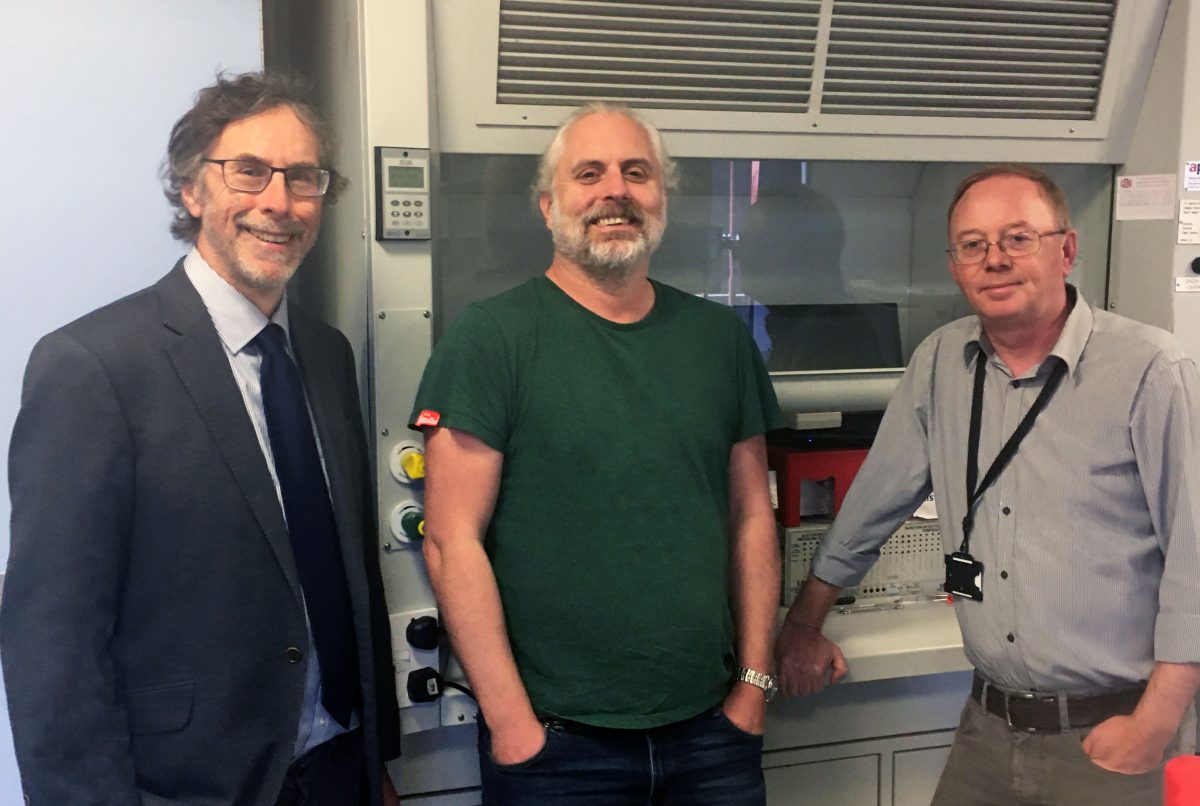
Professor Norman Ratcliffe’s and Ben Costello’s team in the Institute of BioSensing Technology have developed the core science over many years. The team have developed extremely sensitive, low cost semiconductor based technology and pattern recognition technology for fast evaluation of urine and stool for disease diagnoses.

Dr Taj S Mattu, CEO of Nidor said: “The Universities of the West of England and Liverpool have been instrumental in developing the core technology on which Nidor is based.  I am excited about realising the technology’s potential to improve the diagnosis of a number of diseases, not just IBS in the near future. Within the next six months, the company aims to raise seed investment and secure grant funding to develop its first diagnostic/prognostic test.”

Professor Martin Boddy, Pro Vice Chancellor for Research and Enterprise said “It’s good to see this big step towards getting real impact from UWE research. This research holds great potential for improving patient’s lives and also for creating jobs and spurring economic growth”.

Tracey John, Director of Research, Business and Innovation said “The formation of this spin-out company is the culmination of a wealth of research expertise to develop this ground-breaking science, in a strong collaborative partnership with University of Bristol and the University of Liverpool. It’s great to see that our intellectual property has helped secure a significant stake for UWE in Nidor Diagnostics Limited and also for the academics as founding shareholders”. 

UWE IP Commercialisation team (tech.transfer@uwe.ac.uk) can provide practical advice and support for protecting IP, such as filing patent applications for protecting University inventions, negotiating commercial licences, working with industry partners and setting up spin-out companies.  For more information please click here IP & KT Guide.

UWE Bristol receives £60k training funding to support BAME students and staff working in the NHS

Posted on

UWE Bristol’s Faculty of Health and Applied Sciences has received £60,000 in funding from Health Education England (HEE) to implement its Unconscious Bias Training programme.

This project offers UWE Bristol an opportunity to work collaboratively with colleagues at North Bristol NHS Trust (NBT) and University Hospitals Bristol NHS Foundation Trust (UHB) on the issue of the BAME attainment gap, a key priority for the University and the NHS.

The training programme, which begins later in March, takes a city-wide approach to building awareness and support for BAME students and staff working in the NHS, with the aim of ultimately improving the student, staff and patient journey to ensure the NHS best represents and serves the wider community.

UWE Bristol is delivering on its commitments to reduce the attainment gap for BAME students and promote equality, diversity and inclusion for all staff and students.

By taking a collaborative approach between University staff as well as NHS employees and practice facilitators, the programme will go some way in raising awareness of unconscious bias and how this can affect individuals.

The aim is to reduce incidents of racial harassment and discriminatory behaviours that affect retention and attainment of students and staff.

Unconscious biases are unintentional views, opinions and attitudes towards social groups that are influenced by one’s background, culture and personal experiences and operate subconsciously. 

The project consists of six evidence-based workshops for participants to learn about the difference between unconscious bias and implicit bias, how to reflect on their own biases, and to explore how unconscious biases can contribute towards prejudicial attitudes and discriminatory behaviour, each workshop will produce commitment statements to work towards closing the gap.

Upon completion of the programme, the training workshops will be evaluated through quantitative and qualitative methodologies to gain a holistic understanding of the project.

The University will also track participants’ personal development of their knowledge, skills, understanding and empathic responses. In addition to arranging follow-up reflection groups to ensure that continuous action and reflection is taking place across the collaboration, the University will continue to review retention and attainment figures annually.

Project leads

Eleanore Bliss, Senior Lecturer (Nursing) eleanore.bliss@uwe.ac.uk  

Alisha Airey, BAME Project Officer alisha.airey@uwe.ac.uk

Launch Space residents Scribeless win Santander Universities Entrepreneurship Award

Posted on

On October 3rd, Launch Space residents Scribeless won the Santander Universities Entrepreneurship Award.

Scribeless helps companies better engage their customers through the power of the handwritten letter. They automate the process, using AI and Advanced Printing technology to create handwritten letters which are indiscernible from human-written in an affordable and efficient fashion for organisations.

Robert Van Den Bergh co-founder of Scribeless commented:

‘We are incredibly proud to win the competition and now can’t wait to help more companies utilise our handwritten solution. UWE and its start-up accelerator, Launch Space, have been critical in helping us grow over the last 18 months. There free accelerator has been game-changing for us.’

Located in the new £16m University Enterprise Zone on Frenchay Campus, Launch Space provides physical incubator space and enterprise support for graduate start-up businesses.

In just 18 months, Launch Space has supported over 50 businesses, with over £1.8 million funds raised by its residents and employment created for more than 90 people.

Mark Corderoy, Incubation Manager, University Enterprise Zone commented:

“This is an excellent result for Rob and Scribeless, and caps a very successful year for the team. They joined Launch Space with a prototype handwriting robot which they evolved into a market-leading AI-led ‘Software as a Service’ product! They have raised a significant funding round, and are now delivering revenues from both the UK and USA.”

Santander holds the Santander Universities Entrepreneurship Award every year, for universities with agreements with the bank in the UK. The competition is divided into two categories: undergraduate and postgraduate students, with three awards for each category.

The winners will not only receive a cash prize, but will have the opportunity to make use of the bank’s services to help them start up their proposed business.

Congratulations to Scribeless!

UWE Bristol are a partner university of Santander.

Launch Space will receive up to £2,000,000 of funding from the European Regional Development Fund (ERDF), as part of the European Structural and Investment Funds (ESIF) Growth Programme 2014-2020. The Ministry of Housing, Communities and Local Government (MHCLG) is the programme’s Managing Authority. Established by the European Union, the ERDF helps local areas stimulate their economic development by investing in projects that support innovation, businesses, job creation and local community regeneration.

UWE Academics help in public trial of driverless pods

Posted on

As part of a research project involving UWE Bristol robotics, driverless pods helped transport members of the public around London’s Queen Elizabeth Olympic Park.

The project aims to pave the way for the use of connected and autonomous vehicle (CAV) transport services at public transport hubs and around private estates, including tourist and shopping centres, hospitals, business parks and airports.

With Queen Elizabeth Olympic Park already a testbed for smart mobility activity, alongside a wide range of other innovation projects, an important element of this trial assessed people’s behaviours and attitudes towards driverless pods. With little existing research on how people interact with CAVs in public spaces, representatives from UWE Bristol and Loughborough University observed how people behaved when confronted by the pods, as well as surveying passengers who took a ride on them.

Conducting the trial in the park allowed the UWE Bristol team to speak to users of the park to explore how they felt about the pods being in the same space, and if that raised concerns. Talking to groups such as cyclists, e-scooter users and families provided feedback on how accepting the public might be of driverless vehicles in off-road spaces like the park, and in other locations such as shopping centres, hospitals or airports.

The trial at Queen Elizabeth Olympic Park earlier this month was the first public appearance for the Capri pods, which picked up and dropped off passengers at a number of points on a circular route. The Capri pods will be at The Mall in South Gloucestershire in early 2020, returning to the park next year with a final trial that will extend their route and further test the on-demand technology.

Blog post adapted from UWE Bristol news article, which can be found here.

UWE academics help on conservation plan which could help endangered primates in Africa

Posted on

A project co-led by the University of the West of England (UWE Bristol), Bristol Zoo and West African Primate Conservation Action is set to help protect nine species of primate found across Africa. A five-year plan that will be sent to the International Union for the Conservation of Nature (IUCN), and which begins in 2020, sets out measures to protect the endangered Mangadrills.

Mangadrills include nine groups of African monkeys: seven within the genus Cercocebus, also known as mangabeys, and three within Mandrillus, including the mandrill and the two sub-species described as drills. These primates inhabit an area that stretches from Senegal and Gabon in West Africa, all the way to the Tana River Delta in Kenya. Yet despite the wide range of their habitats, they are among some of the world’s most threatened monkeys.

Dr David Fernandez, senior lecturer in conservation science at UWE Bristol who is co-leading the project, said: “These species are one of the least known primates, as there are very few people working on them. They are classed as ‘endangered’, except one ‘critically endangered’ and one ‘vulnerable’ by the IUCN. Although we know that in most cases their numbers are going down, for many we still don’t know exactly where the populations are or how many are left.”

The plan lists a set of actions that could help conserve these monkeys, which live in forest areas. Although the measures are still being finalised, one could be to protect the Bioko drill (Mandrillus leucophaeus poensis)species from hunters on Bioko Island, in Equatorial Guinea, by blocking off access routes to protected areas, which are used by hunters.

Said Dr Fernandez: “Most hunters enter the Caldera de Luba Scientific Reserve, a protected area in the South of Bioko where most Bioko drills live, using the only existing paved road. Setting up a checkpoint on it would help control poaching in that area and might constitute a plan that is achievable and could be highly effective.”

Another suggested action is to go into communities where primates raid sugar cane crops and are sometimes killed in retaliation. A solution, as set out in the plan, is to help communities to build appropriate fences to prevent this from happening.

As well as identifying what needs to happen to protect these animals, another goal of the action plan is to highlight the existence and plight of these animals.

One action is to set up ecotourism tours in locations like Bioko Island, where the primates have their habitats. Tourists would be able to spend the night in a tropical forest and go with local guides to view the monkeys up close.

Dr Grainne McCabe, head of Field Conservation and Science at Bristol Zoological Society, said: “This action plan is a genuine step forward in trying to save Mangadrill monkeys and we are really pleased to be working with the University of the West of England.

“Together we hope to promote awareness of these threatened species and encourage researchers, conservationists and governments to take the necessary actions to protect them.”

Blog originally appeared on the UWE Bristol website.

Launch Space Business Bunk to receive funding from Nationwide

Posted on

A start-up funded by our alumni, that grew out of Launch Space within the University Enterprise Zone has received investment from Nationwide Building Society:

Nationwide Building Society yesterday announced its latest venturing fund investment in Bunk, a digital lettings agency. Bunk uses the latest technology, including Open Banking, to help improve the rental market for both landlords and renters – something the Society, which both represents landlords, as a major buy to let lender, and tenants with over two million members who themselves rent their home, has campaigned on. 

The investment is the latest deal from the £50 million Venturing Fund set up just over a year ago to create partnerships enabling the Society and start-ups to share knowledge and expertise. As part of the fund, Nationwide is making strategic investments in and partnering with early stage start-ups exploring innovative products and services that could provide real benefits for the Society’s members in the future.

Around half of all landlords choose to run their rental businesses on their own. In a market where regulations change frequently, landlords often need support in ensuring they comply with the rules. Bunk can automatically list a landlord’s property on reputable sites, verify tenants as well as providing peace of mind to tenants by verifying the landlord proof of ownership.

The service allows landlords to list a property within minutes, which can then be viewed by potential tenants on their website and app as well as on major portals such as Rightmove and Zoopla. Bunk can make a landlord’s life easier by processing tenants’ references and completing the tenancy set up within the site. Once the properties are listed, landlords can view them on a dashboard, which also notifies them when a deposit and rent has been paid, saving the need to review their current account statements. Bunk also allows tenants and landlords to correspond within the site, so enquiries such as expressing an interest in renting a property and maintenance requests will go directly to them, providing transparency giving landlords and tenants peace of mind.

To ensure landlords are up to date with their responsibilities and able to comply with the latest regulation, Bunk offers prompts and smart insight. For example, landlords are unable to take more than five weeks’ rent as a deposit and the system will not progress if they try to take more than this. In addition, Bunk also offers support and advice for those who have become accidental landlords. Bunk have also partnered with Experian, so tenants who make regular rent payments on time will see this reflected in their credit file, something which starts to redress the balance between renters and homeowners, who’s regular mortgage payments already make up part of the credit file.

Tony Prestedge, Deputy Chief Executive at Nationwide Building Society, said: “Nationwide is one of the biggest Buy-to-Let lenders in the UK and we have long campaigned to improve standards within the rental sector for both tenants and landlords. Bunk is combining the latest digital technology backed up with human service to not only offer a seamless digital experience but also reduce friction in the rental market between tenants and landlords. Many landlords choose to manage their portfolio on their own, the service that Bunk offers could support them, ensuring they’re on top of their obligations and providing a better service to their tenants. They are a natural fit for our Venturing Fund investment, which seeks to fund start-ups that are focussed on making people’s lives easier through smart insights and fair practice.”

Tom Woollard, CEO at Bunk, said: “We want to build something the rental market has never seen before. Landlords are facing reduced margins coupled with increased regulation and there has never been a better time to make their lives easier through the use of technology. Bunk is there to make the process less stressful and more enjoyable for both renters and landlords. Bunk’s mission is to make renting work for everyone and we’re thrilled to have a partner like Nationwide backing our vision.” 

Mark Corderoy, Incubation Manager at Launch Space, said “Bunk is a great example of a business that has thrived through the support provided by UWE’s Launch Space incubator. During their time in Launch Space, Bunk grew from a team of 3 graduates to 11 staff, got through to the finals of Pitch@Palace, and successfully developed and executed their current funding round.”

Launch Space’s role is to provide support, guidance and experience for companies like Bunk as they embark on their entrepreneurial journeys. They provide free desk space and business support for graduate start-up businesses in the heart of the UWE Bristol University Enterprise Zone.

To find out more about Bunk visit their website.

Launch Space will receive up to £2,000,000 of funding from the European Regional Development Fund (ERDF), as part of the European Structural and Investment Funds (ESIF) Growth Programme 2014-2020. The Ministry of Housing, Communities and Local Government (MHCLG) is the programme’s Managing Authority. Established by the European Union, the ERDF helps local areas stimulate their economic development by investing in projects that support innovation, businesses, job creation and local community regeneration.

UWE research finds people taking fewer flights for environmental reasons but want leadership to provide stronger guidance

Posted on

People who are flying less often for environmental reasons want more visible leadership from environmental organisations and green employers to overcome expectations that ‘flying is normal’. That is the conclusion of a study investigating the views of flying ‘reducers’ conducted by two researchers at the University of the West of England (UWE Bristol).

The study found the ‘reducers’ were driven to act by strong ethical reasons, particularly concern about climate change. But they told researchers that they faced barriers in reducing their flights including social factors, such as ridicule from people around them and tension within families, including partners. Most of the respondents found it relatively easy to reduce their flying, but some mentioned high costs of international rail travel, and difficulties with booking, ticketing and making connections.

The two-year project surveyed members, supporters and staff of 80 organisations involved in environmental campaigning or sustainable development based in the UK. The study was conducted before the recent upsurge in awareness about aviation and climate change, and the ‘flight shaming‘ movement, which has reduced flying in Sweden. In total 153 people completed the online survey, with in-depth interviews conducted with 13 of them.

The study was conducted between 2016 and 2018 as part of Paul Purnell’s MSc in Sustainable Development in Practice at UWE Bristol. Paul works as a management consultant, specialising in general and environmental management systems for small engineering companies. The project was supervised by Dr Steve Melia, a Senior Lecturer in Transport and Planning, who has written and lectured about aviation and climate change.

Dr Melia said: “Several people in this study said they avoided talking about flying, to avoid conflict or embarrassing other people. Others described some difficult conversations with people around them.”

The study concluded that a ‘vanguard’ of flying ‘reducers’ could help to boost alternatives, such as ferry connections and long-distance sleeper trains, which have been eroded in recent years. This will require more leadership from environmental organisations and other organisations with a commitment to sustainability, the researchers found.

The full research paper, published in World Transport Policy and Practice, is available here. Originally appeared on the UWE website here.

UWE Bristol shortlisted for three Times Higher Awards 2019

Posted on

The University has been shortlisted in recognition of our outstanding achievements over the last 12 months in three categories: Outstanding Entrepreneurial University award; Business School of the Year; and Outstanding Strategic Planning Team of the Year.

Widely regarded as the ‘Oscars of higher education’, this year’s awards will see the biggest celebration yet of UK universities, recognising outstanding work across a wide-range of HE activity.

Our innovative approach to enterprise has been recognised by making the shortlist of the Outstanding Entrepreneurial University award.

UWE Bristol has enterprise and entrepreneurship at its heart which assessors recognised as a huge contribution to our award of TEF Gold.

Our submission highlighted the leadership culture across the institution, creating an enterprising and ‘can-do’ attitude amongst students and staff. Through the Enterprise 2020 strategic programme, the University has embedded enterprise in over 300 programmes across all faculties – from Aerospace and Animation, to Law, Nursing and Wildlife Ecology.

The submission also highlights our state-of-the-art facilities that bring enterprise alive including the University Enterprise Zone. Home to budding entrepreneurs and generating hundreds of jobs, the UEZ has contributed over £50m to the local economy.

The Bristol Business School has also made it onto the shortlist for Business School of the Year for the third year running. We hope to go one better this year, building a submission around impactful research, engagement with business and innovation in entrepreneurship.

The final award the University has been shortlisted for is Outstanding Strategic Planning Team of the Year.

Our submission centres on how our strategic approach has seen the University achieve its highest ever student satisfaction ratings.

Programme Leader for UWE Bristol’s BA(Hons) Business and Management programme Paul Bennett and Lecturer Mubarak Mohamud are presented with the award of Most Significant Positive Impact in the NSS award 2018 by Deputy Vice-Chancellor Jane Harrington and Chair of UWE Bristol Governors Sonia Mills

Focussing on our taskforce approach that shares best practice with programmes and areas requiring support, this has led to quickly resolving issues of performance and identify trends across the University. This culture of institutional performance has led to our highest ratings in the National Student Survey (NSS) and Postgraduate Taught Experience Survey (PTSE), placing the University in the top 10 of higher education institutions for student satisfaction in the country.

You can read the full stories of each submission on the THE awards 2019 website.

UWE Bristol appoints Sarah White as new Knowledge Transfer Partnership Manager

Posted on

UWE Bristol have appointed Sarah White as the new Knowledge Transfer Partnership Manager (KTP) within the Research, Business and Innovation Team.

Sarah has lived and worked in Bristol for over 30 years. She brings a wealth of knowledge of delivering projects, most recently with the NHS and pharmaceutical companies to jointly deliver service improvement schemes in hospitals.

Sarah commented, “The opportunity to work in Knowledge Transfer came up at UWE and I jumped at it, as it represents the very best of collaborative and innovative working across the public and private sectors. It is exciting to have joined a dynamic and diverse team that deliver excellent results”

Tracey John, Director of Research Business and Innovation at UWE Bristol commented, “We are delighted to have Sarah on board with us to manage our KTP office. She has already made a huge impact on the team and has helped us to secure another KTP with Reusabook, bringing our number of KTP’s to 11. We have ambitious plans to double this number over the coming year and I look forward to seeing how Sarah and the RBI team can work with all our faculties and with businesses in the region to achieve this.”

The KTP scheme helps businesses in the UK to innovate and grow. It does this by linking them with an academic or research organisation and a graduate.

A KTP enables a business to bring in new skills and the latest academic thinking to deliver a specific, strategic innovation project through a knowledge-based partnership. Find out more here.

Sarah has replaced Clare Rowson who retired in March after 20+ years at UWE.

KTP Case Study: Viper Innovations

Posted on

The Company

Since their foundation in 2007, Viper Innovations Ltd have provided innovative technology solutions within the oil and gas sector. Their technology-leading product, CableGuardian®, can monitor and identify the location of faults along cables and has helped Viper win several awards (2018 PwC SW Business of the Year, Queens Award for Enterprise, IET 2018 Intelligent Systems Innovation Award). Viper set out to transfer this success to new industry sectors, specifically rail, and sought collaboration with the University of the West of England (UWE) to innovate their market engagement models.

The Challenge

Viper recognised its technology had potential for sectors outside of subsea oil and gas, and a new opportunity in rail highlighted the need for a new market engagement model for the company.

Utilising the expertise from UWE, the project tackled the challenge of gaining visibility and credibility within the rail sector. UWE transferred the necessary knowledge to implement a sales and marketing plan for their CableGuardian product. Furthermore, through workshops and training sessions, staff at Viper Innovations were taught innovative methods, to secure future growth in various sectors both within the UK and globally.

“We would like to thank our Academic Partners at UWE for their invaluable contribution and dedication to this project. The KTP has proven to be an excellent vehicle for transferring and embedding a level of knowledge and understanding to the business”

Max Nodder, Business Development Director at Viper Innovations 

The Project

Fundamentally, the work of the team and knowledge exchange from UWE clarified the companies’ diversification strategy and, as a result, its future growth opportunity. Through extensive research of 29 market sectors across 18 countries, the project identified methods to optimise the CableGuardian routes to market. Furthermore, by taking a step change in its approach to product development, Viper now works a lot more closely with partners and stakeholders, which has ensured alignment to the needs of their clients, reduced development costs and time to market.

The Associate working on the project brought outstanding marketing skills and experience, and her proactive approach fuelled the success of the project. The KTP provided an opportunity for the Associate to conduct global research and produce journal articles which aided in her recruitment to an Associate Lecturer role at UWE.

Key Facts

  • Provided Viper’s employees with the knowledge to commercialise their technology in different markets
  • Led to collaborative testing with Network Rail
  • Established global visibility and brought an invitation to the Trade Mission to Malaysia, Singapore and Australia as well as leads from key organisations within the rail sector (AMEY, East West Rail, Alliance, Siemens, Alstom)

This partnership received financial support from the Knowledge Transfer Partnerships programme (KTP).  KTP aims to help businesses to improve their competitiveness and productivity through the better use of knowledge, technology and skills that reside within the UK knowledge base.  This successful Knowledge Transfer Partnership project, funded by UK Research and Innovation through Innovate UK, is part of the government’s Industrial Strategy.