Take a virtual tour of UWE’s planned new Engineering Building

Posted on

Work is set to begin on a new a state-of-the-art engineering building at UWE Bristol, with teaching and research facilities including engine test cells, wind tunnels and dedicated learning spaces. The building will accommodate a wide-range of engineering disciplines such as composite manufacturing, machining and metrology.

UWE Bristol is responding to the regional shortage of engineers by delivering a practice-based curriculum that will produce graduates equipped with the right industry skills, experience and knowledge. The new building will enable the faculty to respond to the emerging demand for Degree Apprenticeships in Engineering, accommodating 1,600 undergraduate and postgraduate students alongside 100 academic and technical staff.

Find out more, including visuals of the plans for the building, here and take  a virtual tour of the building, which is scheduled to open to staff and students in summer 2020.

Ready to engineer your future?

Posted on

Following International Women in Engineering Day on 23rd June, 135 female students in Years 9-11 from across the South West had the chance to participate in hands-on activities, demonstrating the ways in which engineering careers impact many aspects of society.

Each zone focused on a different contribution to society, with the ultimate challenge of designing and building a city of the future. The girls got involved in bridge building, urban design, smart technologies, and sustainable solutions. All these courses are taught in the Faculty of Environment and Technology at UWE Bristol.

The event aimed to challenge traditional perceptions that engineering is mainly for men, in order to tackle a lack of diversity in the profession. Laura Fogg Rogers, who helped to organise it, has also recently initiated the Women Like Me project at UWE Bristol, which aims to further encourage and support girls and women to enter and remain in engineering professions.

“If you were an engineer, what would you do?”

Posted on

2712 children from across the South West answered this question with their designs to solve real-world problems.

The Leaders Awards is organised by Primary Engineer, helping children to meet real-life engineers. Led by Laura Fogg Rogers, UWE Bristol is an official sponsor, in partnership with Defence Equipment and Support (the procurement arm of the Ministry of Defence).

The shortlisted entries were showcased at a public exhibition in June 2018, bringing together 19 winners and their parents in a celebration with engineers from across the South West.

Children from Reception through to Year 10 were recognised for their efforts. Designs ranged from rotating bunk beds to bird-identifier binoculars. Students from UWE Bristol’s EngWest Studio will make one of the winning entries as part of their studies.

The future of engineering is here!

Engineering Science Education: Teaching Science Through Engineering

Posted on

There are very few teachers in UK primary schools who have any scientific qualifications above GCSE level.  Many also report that they struggle with science subject knowledge; this causes them to feel less confident about teaching science, which can have a negative impact on children’s learning and attitudes to science.

So what can be done to address this? Supported by grants from UWE and the Engineer’s Professors Council, researchers at UWE’s Departments of Engineering and Education and Childhood have been pairing UWE trainee primary school teachers (ITE students) with UWE undergraduate engineering students to work together on engineering activities for local primary school children, running ‘Children as Engineers’ conferences and producing a toolkit for training teachers and engineers to jointly teach science through engineering.

Read more about it on the UWE Education blog.

TeachMeet South West: Improving STEM for girls

Posted on

28th June 2018   4:30 – 6:00 pm

 https://uwe.formstack.com/forms/teachmeet

Aimed at science teachers and educators, this free event is open to all

UWE Bristol Exhibition and Conference Centre, Filton Road, Stoke Gifford, Bristol, BS34 8QZ

How do you include girls in your STEM practice?

  • Hear from experts in role modelling and inclusion for girls in STEM
  • Share your experience of encouraging girls to take up a career in STEM professions
  • Meet science-teachers and educators from across the West


Improving STEM for girls
Led by Laura Fogg Rogers from the University of the West of England, this TeachMeet will feature guest speaker Shaaron Leverment.

Shaaron is from the Association for Science and Discovery Centres, and the Hypatia Project, the EU Horizon 2020 project which is challenging gender stereotyping and sharing the practical top tips that can re-position your practice and make a real difference to the gender-inclusivity of STEM communication.

Come along and share your professional experience in promoting STEM careers to girls in schools/colleges.

What has/has not worked for you? We look forward to meeting you at the event

On arrival please enter through the UWE North Entrance and park in the Exhibition and Conference Centre car park.

Laura Fogg-Rogers scoops award for science teaching project

Posted on

The Children as Engineers project led by Laura Fogg-Rogers from the Science Communication Unit at UWE Bristol has won a national award.

The TEAN (Teacher Education Advancement Network) Commendation Award for Effective Practice in Teacher Education was presented at an awards event held in Birmingham in May. Senior Research Fellow Laura Fogg-Rogers and Senior Lecturer Juliet Edmonds collected the award on behalf of UWE. The project team also brings together Dr Fay Lewis from the Department of Education and Childhood and Wendy Fowles-Sweet from the Department of Engineering Design and Mathematics.

The Children as Engineers project developed an undergraduate degree module called ‘Engineering and Society’, which pairs engineering students with teachers to bring hands-on science programmes into primary schools. It aims to address science, technology, engineering and mathematics (STEM) skills gaps in primary schools – for teachers and children.

The project sits against a backdrop of an urgent need for enough trained engineers to meet the country’s future needs. Estimates suggest the UK will need 100,000 new engineers in the next 20-30 years to solve problems affecting society, grow the economy, and design products for manufacture. In particular, more girls and women are encouraged to take up engineering as a career.

Pilot research indicates that student teachers specialising in science at primary school improved their subject knowledge and confidence to teach STEM in the future. Meanwhile, the engineering students taking the ‘Engineering and Society’ module benefit by developing their communication and presentation skills and creating a broad-based understanding of the relevance of their subject.

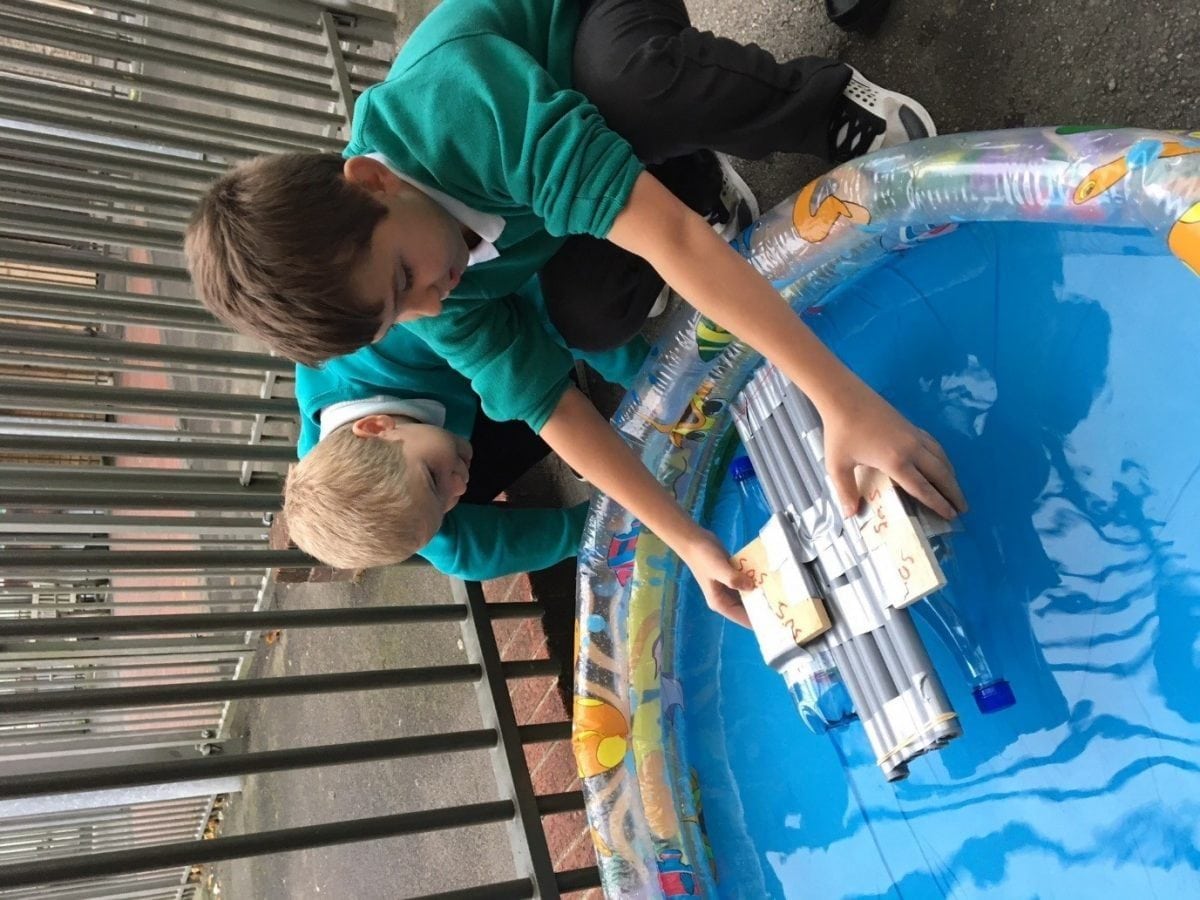
Pupils benefit from hands-on sessions delivered by the students, where they engage in activities such as building mini-vacuum cleaners, testing floating platforms and exploring flight. Children aged between eight and 11 learn about the skills, challenges and excitement of engineering.

Laura said: “We were delighted that our team’s hard work over several years has been recognised at a national level by teacher educators. We plan to continue expanding this project to bring real benefits to teachers, engineers, and pupils, to inspire creative STEM teaching and practice for the future.”

The project is believed to be the first in the country to pair university students in these two disciplines to enhance the learning of both groups as well as delivering real benefits to school teachers and pupils.


This blog was originally published on the Science Communication Unit blog.