

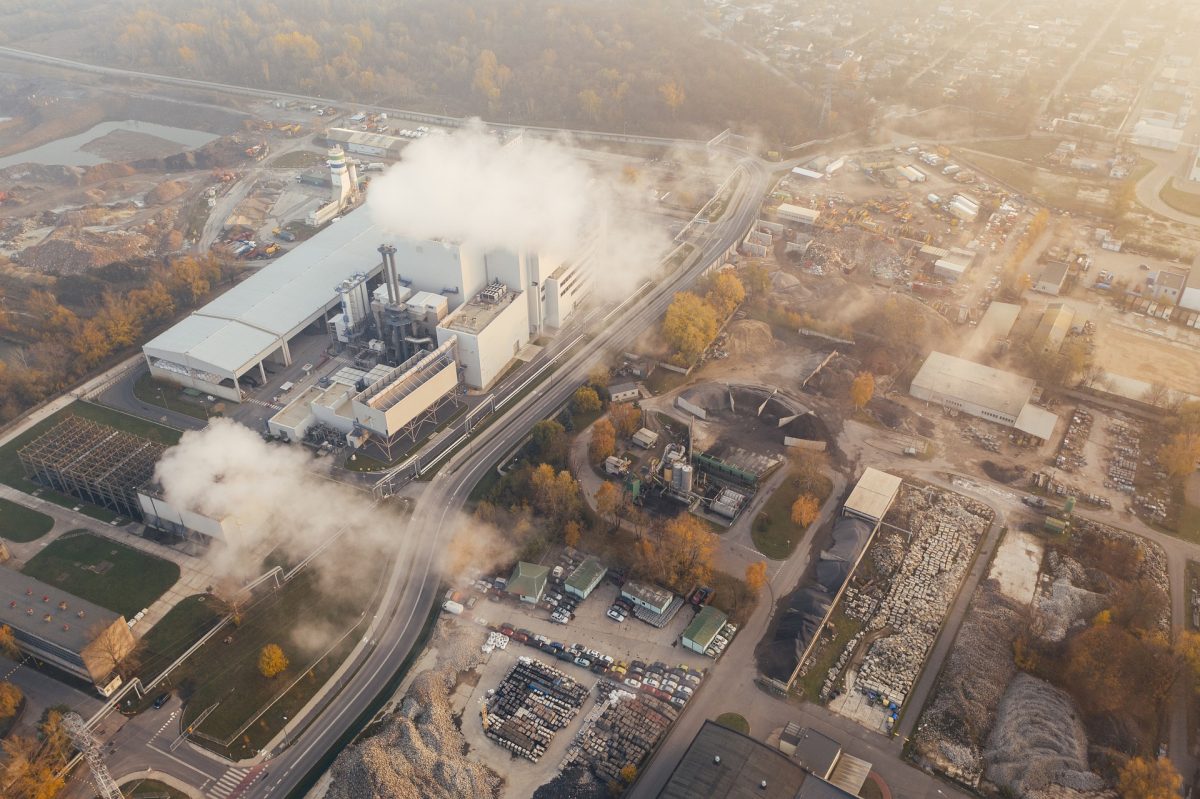

Lecturer in Geotechnical Engineering at UWE Bristol, Eyo Eyo, has offered some of his thoughts about AI for carbon offsetting below.
As we confront one of the most pressing challenges of our time, the far-reaching and profound effects of climate change demand our utmost attention and reflection. Hence, combatting carbon emissions has become an integral part of our collective responsibility.

The Carbon Disclosure Project reports that the world’s greenhouse gas emissions are presently at approximately 53 gigatons of carbon dioxide equivalent. Hence, carbon offsetting has gained widespread recognition as an effective way to lower emissions and combat climate change.
In a nutshell, carbon offsetting works by allowing individuals or companies to “offset” or ease their carbon footprint by investing in projects that minimise or negate the production of emissions elsewhere.

Typical instances of carbon offset initiatives involve activities such as tree planting (which absorbs carbon dioxide) and funding clean energy infrastructure like wind turbines.
Despite its modest size, the market for carbon offsets has experienced a swift expansion in recent times, with the issuance of offsets increasing from $34 million in 2016, to $73 million in 2018, and to $181 million in 2020.
Reports suggest that emissions must be cut by 50% by the end of this decade in order to limit the rise in global temperatures to 1.5°C.
Mind the gap: Exploring the disconnect between intentions and results.
Carbon offsetting seems appealing and easy to achieve in theory. However, the reality is not quite as simple. The implementation of carbon offsets is often fraught with controversy and operational intricacies.

Moreover, some critics argue that carbon offsets provide a superficial solution to the climate crisis by allowing polluters to simply pay to mitigate their emissions without fundamentally changing their behaviour.
Another problem with most carbon offsetting initiatives is that they are challenging to operationalise at scale. In the same vein, some traditional methods of manually tracking and monitoring carbon emission levels over a large scale often results in inaccurate data and unintended consequences.
Hence, in order to truly have an effect on climate change, there must be a focus on accuracy and transparency when tracking and measuring offsets so that the results can match with our environmental ambitions.
This is where artificial intelligence (AI) becomes very crucial.
How AI might help to align intentions with execution
One of the greatest advantages of AI is its ability to learn from experience by gathering massive amounts of data from its environment, identifying correlations that humans might miss, and suggesting appropriate actions based on its findings.

Organisations and sustainability-oriented businesses seeking to ease their carbon footprint should turn the AI spotlight on the following 3 important components:
- Monitoring emissions.
- Predicting emissions.
- Reducing emissions.
Within these, AI can provide insight into a range of tasks, from optimising emissions to accurately measuring the impact of carbon emission-generating activities.
With applications such as machine learning algorithms, natural language processing (NLP), and data boosting tools, AI can assist in gathering and analysing various types of data that are needed for making informed decisions about carbon offsetting practices.
Although still in its infancy, AI has been shown to enable the achievement of 5% – 10% offset (i.e., between 2.6 and 5.3 gigatons of CO2).
Recent studies have also indicated that the use of AI in corporate sustainability could generate additional revenues and cost savings worth $1.3 trillion to $2.6 trillion by 2030.
Final thoughts
Although the future of offsetting carbon emissions using AI is bright, it is also important to ensure that AI is used responsibly so that any known or unforeseen negative effects resulting from its usage do not disproportionately harm the environment.