

Tripartite Stakeholder Engagement for Advancing Design for Occupational Safety and Health in Malaysia

Posted on

By: Patrick Manu [Professor at UWE] and Che Khairil Izam Che Ibrahim [Professor at UiTM]

In many countries, construction is one of the most dangerous sectors [1]. In Malaysia, the sector accounts for about one-third of worker deaths and many occupational injuries [2]. Studies have established that design is one of the key underlying causal factors in construction accidents and worker fatalities [3]. This has led to the prominence of the practice of Design for occupational safety and health (DfOSH) which entails designers ‘designing out’ occupational safety and health (OSH) risks at the early design stages of construction projects to protect workers.

In the UK, the Construction (Design and Management) Regulations (CDM) have been introduced since 1995 to mandate DfOSH implementation. In Malaysia, the Occupational Safety and Health (Construction Work) (Design and Management) (CWDM) Regulations 2024, which have been adapted from the UK CDM, have just recently been passed, as a measure to improve OSH performance of the construction sector. Currently, Malaysia is still at the initial stage of implementing DfOSH, while the UK has garnered many years of experience in DfOSH. The experience and lessons learnt in the UK with regards to challenges in DfOSH implementation and their solutions would serve as a useful resource for construction stakeholders (academia, industry, and government) in Malaysia in building strong DfOSH implementation capacity.

Against this backdrop, the University of the West of England (UWE) in collaboration with academic institutions in Malaysia and UK (Universiti Teknologi MARA (UiTM), The University of Manchester (UoM), and University College London (UCL)) are delivering an international project to advance DfOSH implementation in Malaysia via tripartite engagement of Academia-Industry-Government stakeholders to strengthen stakeholder capacity and co-create solutions to address DfOSH implementation challenges. The project entails a series of activities including stakeholder engagement and capacity strengthening workshops, knowledge exchange, and on-going dissemination. This blog offers excerpts of activities undertaken (in 2025), and preliminary outcomes.

Activities

Industry–government engagement and capacity strengthening

Two hybrid workshops were organised in Malaysia to bring together a wide range of stakeholders from the construction sector and government agencies. The first was held in Selangor in June 2025, followed by a second in Johor in July 2025. Together, these sessions engaged over 60 participants from industry (including contractors, consultants, architects, engineers, and safety and health professionals) and government agencies (including Department of Occupational Safety and Health (DOSH), Public Works Department, and Construction Industry Development Board). The workshops created valuable dialogue on challenges and practical solutions (from the perspective of industry and government) for improving the integration of occupational safety and health in construction design practices.
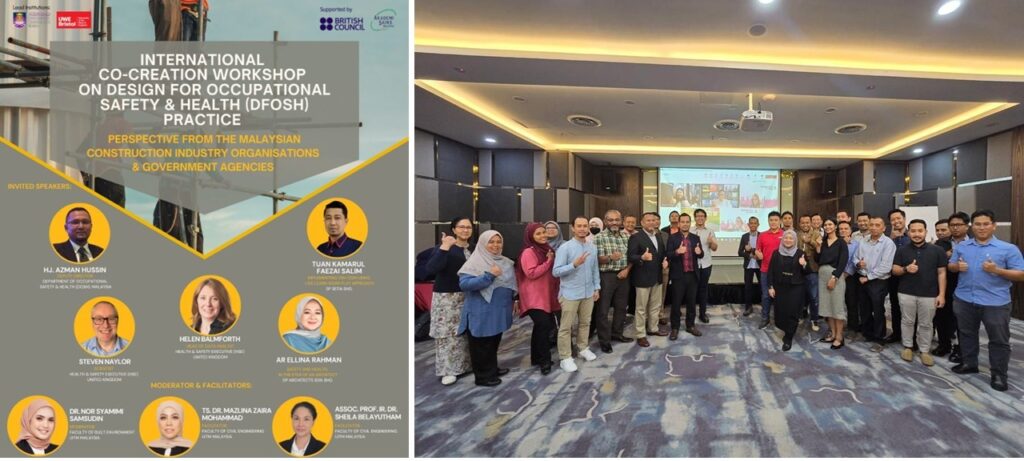
Figure 1: July 2025 Workshop

Knowledge exchange – UK visit

A Malaysian delegation (comprising members of the academic team and a representative of DOSH) visited the United Kingdom from August to September 2025 to strengthen international collaboration and exchange knowledge on DfOSH best practices. The delegation participated in the Association of Researchers in Construction Management (ARCOM) 2025 conference held in Dundee, where they shared the project’s initial findings with an international academic audience. The team visited Jacobs’ (a multinational engineering professional services (including design) firm) office in Manchester. During the visit, they learnt about Jacobs’ approach to DfOSH, which is encapsulated by their award-winning “de5ign” (pronounced ‘five in design’). To obtain DfOSH implementation insights from a regulator’s perspective, the team visited the Health and Safety Executive office in Buxton, where they received useful insights regarding UK’s DfOSH journey, challenges, and improvements over the years, as well as suggestions for Malaysia’s context. The delegation also visited academic partners at the UoM and the UWE. Overall, these activities provided significant opportunities for learning and for building lasting academic–industry–government linkages between Malaysia and the UK.
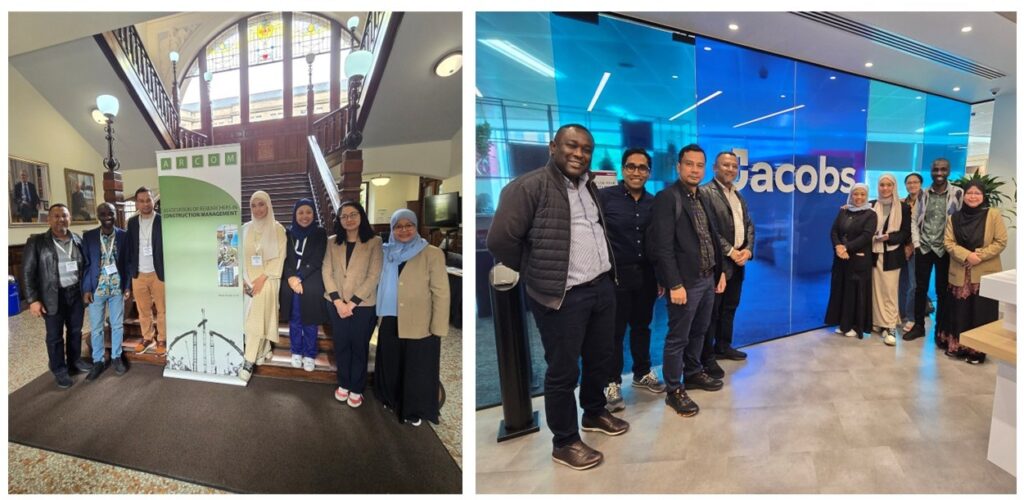
Figure 2: Members of the project team at ARCOM 2025 Conference (left) and during a visit to Jacobs (right)

Knowledge exchange – Guest lectures

Guest lecture sessions on the Master of Construction Engineering course at UiTM (Construction Site & Safety Management) were delivered in May 2025. The sessions were delivered by project team members from UWE, UCL, UoM and a USA-based renowned academic in DfOSH. The lectures were attended by over 80 students who are also working professionals.
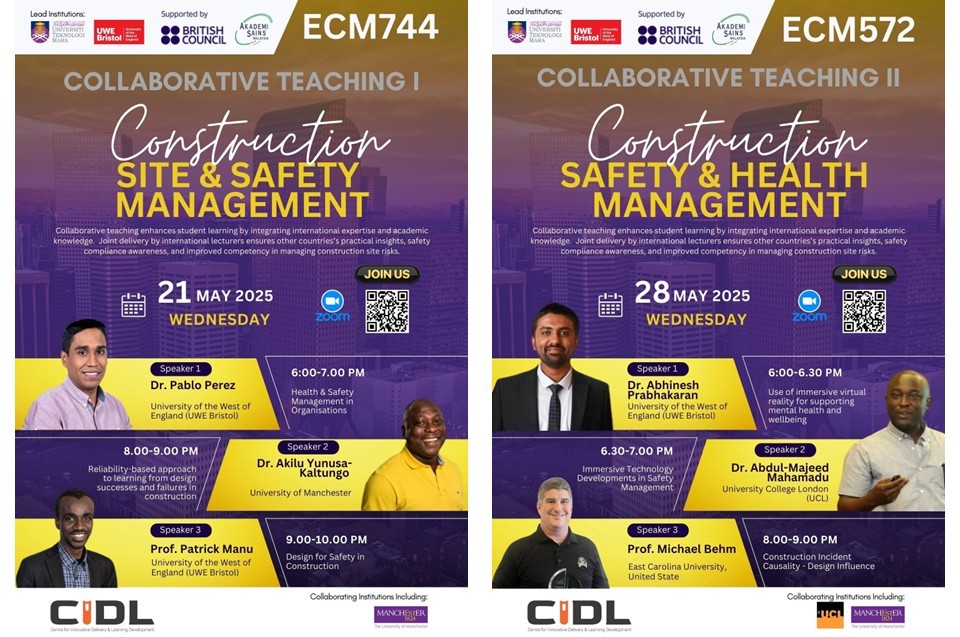
Figure 3: Line up of 2025 guest lecture series

Project Dissemination

To raise awareness of the project’s activities among stakeholders locally and beyond, several media posts have been made including use of social media and an article in a local news outlet.  Furthermore, academic outputs (comprising a conference article [4]) and a journal article [5]) disseminating preliminary insights from the project have been produced. Overall, the dissemination has ensured wide reach of among academic, industry and government stakeholders.

Preliminary Outcomes

The project has yielded a tripartite co-creation framework that aligns the roles of academia, industry, and government to institutionalise DfOSH as a key mechanism for improving occupational safety and health in Malaysia. The framework is guiding stakeholder dialogue to identify and prioritise DfOSH implementation challenges and solutions. Additional outcomes include: 1) insights from the workshops are being used by DOSH to inform revision of a code of practice and training modules for trained persons under Malaysia’s CWDM 2024 regulations; 2) improved stakeholder awareness of CWDM 2024 regulations and early-stage design risk management; 3) enhanced practitioner and postgraduate competencies and shared understanding of DfOSH practices; and 4) a UK-Malaysia-Indonesia collaboration (funded by UK’s International Science Partnership Fund) which seeks to drive OSH improvement in construction beyond the implementation of DfOSH.

Acknowledgement

  • Members of UK team: Patrick Manu, Abhinesh Prabhakaran, and Pablo Perez (of UWE), Abdul-Majeed Mahamadu (of UCL), Clara Cheung and Akilu Yunusa-Kaltungo (of UoM), and representatives of partner organisation.
  • Members of Malaysia team: Che Khairil Izam Che Ibrahim, Sheila Belayutham, Mazlina Zaira Mohammad, Shafienaz Ismail, and Nor Syamimi Samsudin (of UiTM), Azman Hussain (of DOSH), and representatives of partner organisations.

References

1. Eurostat (2025) Accidents at work statistics. Available online at https://ec.europa.eu/eurostat/statistics-xplained/index.php?title=Accidents_at_work_statistics

2. Department for Occupational Safety and Health (2021) Occupational Accidents Statistics by Sector January to December 2021 (investigated). Available online at https://intranet.dosh.gov.my/statistic-v/occupational-accident-statistics/occupational-accident-statistic-2021

3. Manu, P., Poghosyan, A., Mahamadu, A.-M., Mahdjoubi, L., Gibb, A., Behm, M. and and Akinade, O. (2019) Design for Occupational Safety and Health: Key Attributes for Organisational Capability. Engineering, Construction and Architectural Management, 26 (11), pp. 2614–2636.

4. Che Ibrahim, C. K. I., Manu, P., Belayutham, S., Cheung, C.M., Mohamad, M.Z., Yunusa-Kaltungo, A., Ismail, S., Samsudin, N. S., Prabhakaran, A., Perez, P., Mahamadu, A.-M. and Hussain, A. (2025a) Building a Safer Tomorrow: Tripartite Engagement and Co-Creation for Enhanced Design for Occupational Safety and Health in Malaysia. In: Thomson, C (Ed.) and Neilson, C J (Ed.), Proceedings 41st Annual ARCOM Conference, 1-3 September 2025, Abertay University, Dundee, UK. Association of Researchers in Construction Management, pp. 409-418.

5. Che Ibrahim, C. K. I., Manu, P., Belayutham, S., Cheung, C.M., Mohamad, M.Z., Yunusa-Kaltungo, A., Ismail, S., Samsudin, N. S., Prabhakaran, A., Perez, P., Mahamadu, A.-M. and Hussain, A. (2025b) Tripartite collaboration for design for safety in construction: A co-creation framework integrating academia, industry, and government. Safety Science, Article 107040.

Event on the sustainability of natural materials for construction to mark COP30

Posted on

By Freya Wise, Alice Moncaster, Hector Archila and Tavs Jorgensen

On the 3rd of December Caber ran an action-packed hybrid event to mark COP30. After a short introduction reflecting on the COP30 outcomes we then had excellent presentations on three natural building materials which UWE researchers are involved with: bamboo, cob and timber. This blog reports the highlights of the session for a wider audience.

Reflection on COP30 by Dr Freya Wise

The reflection on COP30 by Freya highlighted that the overall outcomes were felt to be disappointing and lacked ambition but were not as bad as they could have been and that a range of useful things were achieved. It will be interesting to see if taking forward the fossil fuel and deforestation roadmaps outside the official COP process will actually allow them to be more ambitious and progress more quickly with willing countries.

Concerns were highlighted around a lack of acknowledgement of the latest climate science from the IPCC in the final document and the dropping of language on the need to fight misinformation. From a positive perspective however this was the first COP for several years in a countries where mass protests are possible and had strong civil society and cultural engagement around the city of Belem, including from high numbers of indigenous people.  

Specifically on the built environment, Freya identified a number of initiatives, guides and standards were launched at COP which have positive relevance. These included the Belém health action plan, United Nations Environment Programme (UNEP), ‘Beat the Heat’ initiative, and the Bélem ‘call for action for sustainable and affordable housing’ as well as initiatives on circularity and low carbon materials. If these are enacted, they will have positive implications for decarbonising the built environment and links to all can be seen at the end of the article.

Following on from some of the initiatives at COP around low carbon and biobased materials, we then had three engaging short talks on three different natural materials.

The benefits of Bamboo by Dr Hector Archila

Hector took inspiration for his talk from the ‘BambooBoost Initiative’ from the UN Framework Convention on Climate Change (UNFCC) and the International Network for Bamboo and Rattan (INBAR).

Hector explained that bamboo is a very sustainable material with rapid biomass production which translates to a high yield and excellent CO2 sequestration in both the biomass and the soil. Bamboo, which is actually a grass, is one of the fastest-growing ‘woody’ plants and thrives on degraded land. Over fifty years a tropical bamboo species produces between 5 and 8 times more biomass than Scots Pine and Oak, resulting in 5 to 8 times as much carbon sequestration as those trees over the same period.

Figure 1: Carbon yield for bamboo and selected wood

Hector highlighted that, according to UNFCC, if bamboo were cultivated on around 70-174 million hectares of degraded forestland it could sequester roughly 2 Gt of CO2 annually (for reference Spain and Portugal combined are cover about 68 million hectares). This would equate to 2% of current global greenhouse gas emissions and would also deliver significant net economic benefits. In terms of climate action, it therefore makes a lot of sense to plant bamboo forests which will produce carbon and fibre rich biomass in 4–6-year periods which can then be used in long-lived products to act as carbon stores.

In terms of biodiversity enhancements, Hector suggested that if more bamboo was planted less wood forest would need to be used thus reducing deforestation and providing ecosystem services. Bamboo forests themselves also have good biodiversity with a plethora of animal species. Bamboo can provide ecosystem and community resilience for the many people who rely on solid biomass for cooking such as charcoal or briquettes, with fast growing highly renewable biomass. Bamboo can also be converted to gas or pellets to provide a source of electricity and heating, thus reducing deforestation and use of fossil fuels

Finally, research at UWE by Hector on the project SmartBioC has shown how Biobased Building Systems for UK housing using engineered bamboo as the main structural component can provide better Natural, Human and Social benefits than traditional building systems used in the UK.

Figure 2: One of the biobased systems Hector has developed

Innovative earth building research at UWE by Dr Tavs Jorgensen

Tavs provided an introduction to cob or earth as a local, low carbon building material with a long history of use and increased research interest in recent decades. However, challenges were also highlighted with traditional cob construction around the thicknesses required to meet insulation levels in modern building regulations and the length of time that building traditional cob walls requires.

Tavs then discussed the research that he has been leading at UWE to investigate how to use 3D printing processes to make dies to extrude cob bricks in different shapes, which has the potential to substantially speed up the production process while allowing creativity in the creation of different brick shapes and forms.

Figure 3: Extrusion equipment and extruded cob bricks

Work has taken place to engage students in this research through competitions and a ‘Cob Club’ as well as a number of wider hands-on workshops exploring the qualities of different earth and the potential of the material. A ‘Cob Comp’ (cob competition) in 2024 enabled UWE students to explore extruded cob block technology and the winners’ ideas were used to successfully build a shelter on the University grounds.

Figure 4: The bricks and the shelter created by Cob-Comp in 2025

Tavs also took the opportunity to launch this year’s iteration of the competition, Cob Comp 2: Earthly Enquiries. This is an ideas competition to design a structure built from pressed earth brick units of students’ own ingenious designs and from materials found only within the boundaries of UWE’s Frenchay Campus. The competition aims to explore the structural capacities and concepts of making and building with compressed earth. There are plans to build the winning design in summer 2026.

Tavs therefore highlighted both the benefits of innovative methods for cob and the importance of engaging students in hands-on research and creativity.

Sustainable timber and biogenic carbon standards by Professor Alice Moncaster

Alice highlighted the new principles for Sustainable Timber Construction and which were officially launched at COP30 (see link below). Alice then went on to give a quick introduction to lifecycle assessment (LCA) which measures the carbon emissions associated with the whole life of a material including its extraction, manufacture, transport, installation, maintenance and end of life disposal.

Figure 5: Lifecycle stages

She then discussed how the biogenic carbon stored in natural materials (and then released back into the atmosphere at the end of the of the material’s lifespan), is treated in a range of national and international standards on whole life carbon reporting. Biogenic carbon storage is one of the key benefits of natural materials and is particularly valuable in buildings as they theoretically last a long time, thus storing carbon for many decades (but not permanently). For a full LCA, the biogenic storage in phases A1-A3 is then reemitted in phase C, while most standards currently require that if only upfront carbon is assessed, biogenic carbon is reported separately.

Alice discussed multiple standards and reported on discussions at a recent meeting of International Energy Agency (IEA) Energy in Buildings and Communities (EBC) Annex 89, ‘Ways to implement net-zero whole life carbon buildings’. Climate science says that biogenic carbon is not equivalent to fossil carbon and cannot be added together. The discussions therefore focussed on whether biogenic carbon should be reported separately throughout all LCAs. This does not mean that the biogenic storage of natural materials is not useful and positive but does highlight that it is not a simple silver bullet and cautions against some of the evangelical calls for over-building with timber as a form of carbon removal from the atmosphere.

Alice therefore opened the discussion and posed some questions on how we should be reporting sustainable timber use for everyone to consider. 

Summary

The session was well received the main concern seemed to be that we would all have enjoyed more time for discussion! During the questions Hector made a very good point that no natural material is ‘The Solution’ on its own and what is actually needed is a balanced diet or menu of the most appropriate materials for different scenarios and locations. We look forward to continuing the discussion.

Links to further information from all the presentations

COP30 reflections and initiatives

Bamboo

 Earth Buildings

Sustainable Timber and biogenic carbon

CABER members can view the recording of the event on Teams

CABER partners with international academics to address societal challenges

Posted on

By Patrick Manu, Professor of Innovative Construction and Project Management

The UK International Science Partnerships Fund (ISPF) is designed to enable UK researchers and innovators to collaborate with international partners (in academia and industry) to tackle some of the pressing societal challenges. Since its inception, members of the Centre for Advanced Built Environment Research (CABER) at UWE Bristol have jointly secured this funding with collaborators in UK and several countries including Japan, Canada, South Korea, Vietnam, Indonesia, and Malaysia to undertake exciting and innovative projects. These projects cover topics such as occupational safety and health, energy, immersive technology, robotics, artificial intelligence, and Industry 4.0. The projects include:

  • Developing a BIM-based Immersive Learning Environment for enhanced Construction Management Education and Training using VR technology (DOMINEERING)

    [Participating CABER members and visiting scholar: Abhinesh Prabhakaran, Patrick Manu, and Abdul Majeed-Mahamadu| Collaborating with partners in Vietnam].  

    This project develops a BIM-based immersive learning platform for construction training and education in Vietnam, with a focus on safety and quality management. The platform gives training and education providers a disruptive learning solution, which can also be adopted by businesses for upskilling their human resource.
  • Improving Design for Occupational Safety and Health in Malaysia via Tripartite Academic-Industry-Government Engagement, Capacity Strengthening and Knowledge Exchange

    [Participating CABER members & visiting scholar: Pablo Perez, Abhinesh Prabhakaran, Patrick Manu, Abdul Majeed-Mahamadu, and Che Khairil Izam Che Ibrahim | Collaborating with partners in UK, and Malaysia]. 

    The project brings together (through a series of engagement and capacity building workshops) key stakeholders from academia, industry and government agencies to explore and co-create solutions to address the challenges affecting effective implementation of design for occupational safety and health (DfOSH) in Malaysia.
  • UK-Japan-Switzerland-Germany-Netherlands Transnational Network for Safer and Healthier Human-Robot Collaboration (HRC) in Construction

    [Participating CABER member: Patrick Manu | Collaborating with partners in UK, Japan, Switzerland, Germany, and Netherlands]. 

    This project establishes an international interdisciplinary network of experts, including industry professionals, researchers, policymakers, and technology providers from the UK, Japan, Switzerland, Germany, and the Netherlands to assess the current state of HRC in construction, develop roadmaps, and create a long-term interdisciplinary partnership to ensure continuous improvement in safe HRC.
  • UK-Indonesia-Malaysia Alliance for Occupational Safety and Health Advancement in Construction (OSH-Advance)

    [Participating CABER member & visiting scholar: Patrick Manu, and Che Khairil Izam Che Ibrahim | Collaborating with partners in UK, Malaysia and Indonesia]. 

    This project establishes a transnational network of stakeholders from academia, industry and government in UK, Malaysia, and Indonesia to identify the opportunities, challenges, and potential solutions for improving OSH management in Malaysia and Indonesia.
  • Pathways to Sustainability: Transforming Battery Wastes into High-Performance Carbon materials for Cleaner Energy Generation

    [Participating CABER member: Patrick Manu | Collaborating with partners in UK and Vietnam]. 

    This project aligns with circular economy principles by developing, implementing, and testing a framework for converting battery waste into low-cost energy storage systems in Vietnam.
  • Improving Construction Safety through AI-enabled Visual Attention Monitoring: An Immersive Approach

    [Participating CABER members & visiting scholar: Abhinesh Prabhakaran, Colin Booth, Patrick Manu, and Abdul Majeed-Mahamadu | Collaborating with partners in Japan]. 

    This project aims to develop a novel virtual reality (VR) based application that integrates artificial intelligence (AI) for assessing visual behaviour of construction workers, thereby providing pathways for enhanced worker safety training.
  • Digital Occupational Safety and Health (D-OSH) Network: Connecting Research, Policy and Practice in Construction Across Continents

    [Participating CABER member: Patrick Manu | Collaborating with partners in UK, Canada and South Korea

    This project establishes a network with the objective of identifying the opportunities, challenges, and potential solutions to the implementation of digital technologies for occupational safety and health (OSH) management in construction. Through knowledge sharing and industry engagement, the network aspires to make contributions towards lowering the prevalence of construction-related injuries and illnesses.


If you would like to partner with our members in tackling some of society’s biggest challenges in the built environment via the ISPF or other funding schemes, do reach out to us.

Visit our CABER website for more information about our research themes, members, and their areas of expertise.

Collaborate with us to transform our built environment!

Back to top

Follow this blog

Get every new post delivered right to your inbox.