


by Rebecca Windemer
Arriving in Sweden, I was excited to learn more about their impressive renewable energy production and heat networks. Sweden has been a leader in this area, aiming to generate 100% of its electricity from renewable sources by 2040. What I was not expecting during my visits to Gothenburg and Stockholm, was to be so inspired by their approaches to community engagement in city planning. In this blog post, I will discuss how their engagement approaches could inspire new approaches to community engagement in renewable energy planning.
Not everyone will be as excited as me about going to a town planning exhibition! However if you put a huge 3D model of the city in the centre of the room then more people may get on board with the idea. In both Gothenburg and Stockholm, 3D models showing existing and future development formed the centrepiece of the city plan exhibitions. In Gothenburg you could walk around the huge 3D model, meanwhile in Stockholm it was below visitors feet. People seemed excited to see the city in this way – pointing out areas they recognised and being able to see the location and scale of future developments.

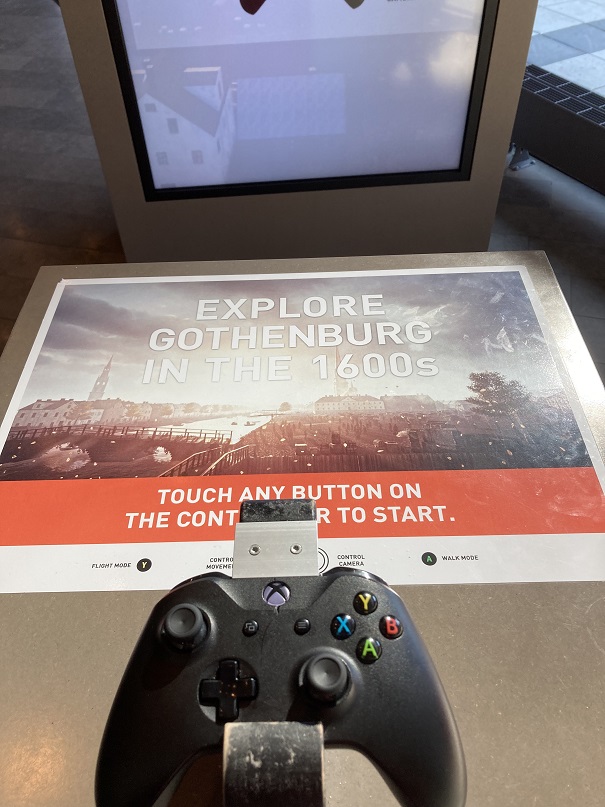
Digitalisation was another way that made the planning exhibitions more accessible and fun. Interactive digital screens allowed visitors to select the information and areas that interested them, while digital images showed how areas had developed over time and could potentially develop in the future. If that wasn’t enough, visitors could even play a game in Gothenburg, using an Xbox controller to explore the city in the 1600’s. This was a great way to get people thinking about how the city had changed over time.

It wasn’t just the exhibitions that inspired me, it was also the engagement approaches used for projects. Engagement activities for new developments included walking interviews, where people could talk to planners about the area and how they’d like it to change, while walking through the area itself. Another successful approach involved linking community engagement to a community event. For example, one development held a consultation day that included theatre performances for the community, a great way of getting a diverse group along to share their views.
Overall, the two city planning exhibitions took large and complicated development projects and made them accessible. Both exhibitions were on a large scale and were clearly well funded – sitting in central locations with staff on hand to answer questions. Such large long-term engagement projects won’t necessarily be possible for renewables. So, what can we learn from Sweden’s innovative approaches to engagement in city planning, and how can we apply them to renewable energy planning? Here are three key lessons:
- Make planning fun: You wouldn’t normally call a planning exhibition a family day out, but it could be. Things such as the huge city maps and games make a planning consultations something that you can bring the family to. There is huge potential for innovative ideas here, for example, could games be created that enable communities to explore different options and scenarios for local renewable energy generation?
- Allow people to see how a landscape has transformed and could develop in the future: People often forget that their local landscape has transformed over time and that renewable energy development is often just another way of using the landscape for production. Visualising change over time can help new developments seem more acceptable. Likewise, methods that enable people to see the scale of new development (such as the 3D models) help people to imagine what a new development will be like.
- Make consultations on renewable energy accessible: Not everyone has time to (or wants to) read large bodies of text or to attend a consultation. Walking interviews or linking a project to an event can make it more accessible for the public. Making it easy for people to find the information they are looking for without reading large bodies of text is also key.
Overall, Sweden’s approaches to engagement offer valuable lessons for engaging communities in renewable energy planning. By making planning more accessible and fun, visualising change over time, and making consultations accessible, we can engage more people and get more people excited about renewable developments.