


From the dark unknowns of space to the hidden depths of our oceans, our alumni are exploring.
Meet Deep Sea Engineer Ben Fowler and Astrobiologist Nicol Caplin. Their incredible work in exploration science is at the extreme limits of human capability and understanding.
The solutions to mankind’s biggest problems, our global challenges, could lie in these lesser-known biospheres.
As we look to the future and seek to learn more about these unchartered territories, the importance of protecting all our fragile ecosystems has never been more important.
Ben Fowler
Associate Technical Lead, DEEP. Studied MEng Mechanical Engineering (2011) at UWE Bristol.

Ben works at DEEP, an ocean technology and exploration company. DEEP has embarked on a multi-generational mission to make humans aquatic.
He leads a team of expert engineers in developing Sentinel, a fully integrated modular system for subsea habitation and DEEP’s first major milestone in it’s ambitious mission.

What most excites you about your job?
At the start of my career I proposed new ways green technologies could be used in shipping to protect ecosystems and operate more sustainably. I then had a nagging desire to devote more of my time and effort to improving knowledge and appreciation of the worlds oceans.
Helping to protect the oceans is an underlying principle of DEEP’s vision, so now I get to focus on delivering this each day.
I am surrounded by experts who all have a great passion for the ocean, and everyday there is opportunity to learn and broaden my understanding. And this collective of experts are developing products, techniques and equipment which aim to change access and understanding of the ocean for the masses.
What’s your favourite mind blowing fact about the ocean?
A few facts but when combined they build an interesting picture of what we know:
In terms of percentages, the ocean is still largely unmapped, especially at depth. Only 5% has been charted so far; yet, the ocean covers around 71% of the Earth’s surface, and also hold around 96% of all Earth’s water.
What’s the most unusual thing about your job?
I love the variety I get with DEEP, and it’s certainly unusual compared to other engineering roles and organisations I have been involved with. In any one day I can perform many roles, from designing a breathing gas system for a subsea product, to supporting the maintenance of our 3K3 submarines or bending and installing tube systems to support our testing assets.
Looking back to your time studying at UWE Bristol, what was most memorable or valuable to you?
I was lucky enough to be engaged early with the Bloodhound supersonic car project and took on a project relating to understanding the effects of acceleration on the fuel system. Taking on a real-world challenge as part of a project aiming to break records, with a great mix of skilled engineers from a variety of backgrounds was very rewarding. Through the delivery of the project I taught myself lots of practical skills, such as welding and commissioning a test rig of my design, which has been very helpful in my career.
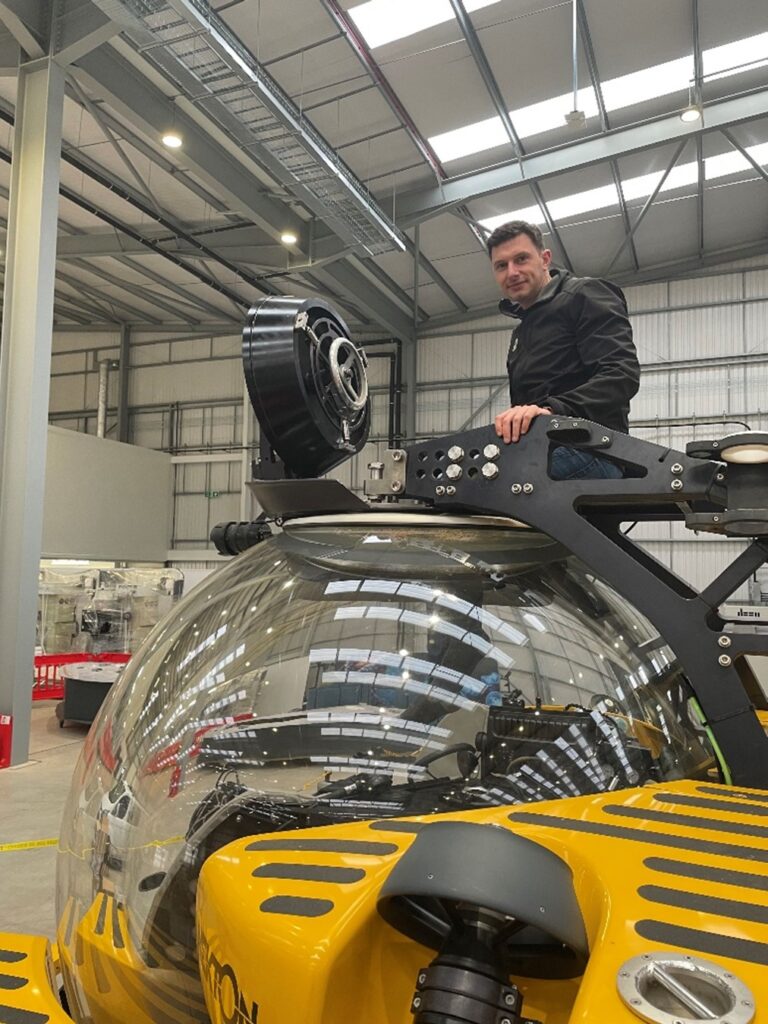
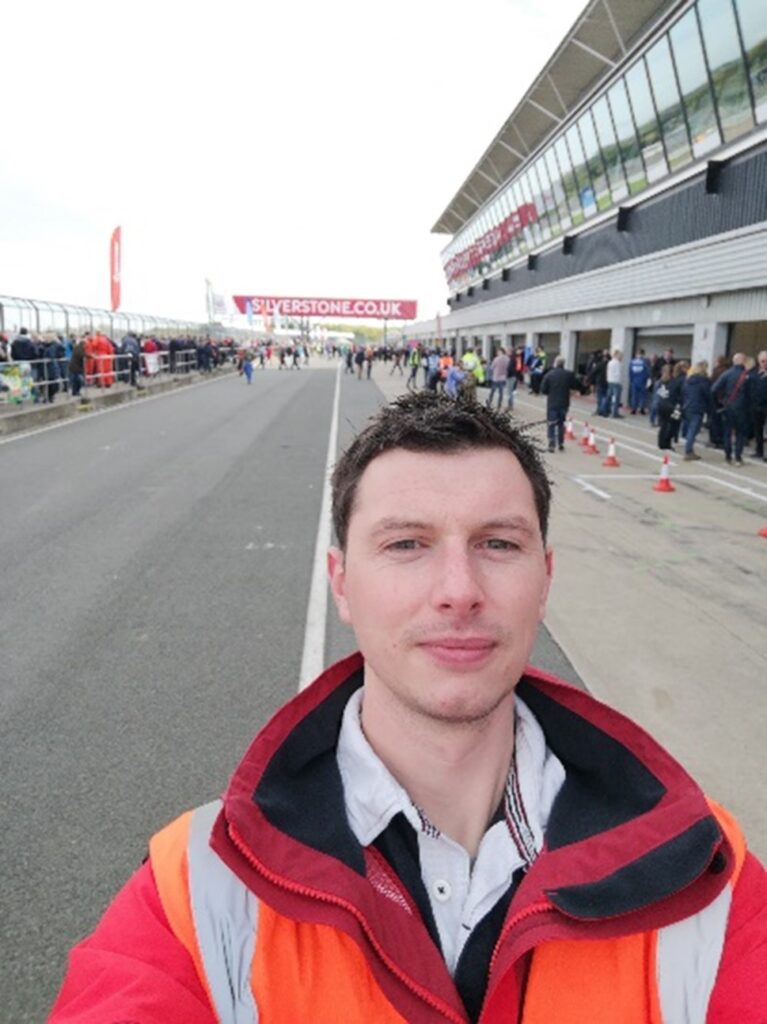
Ben at DEEP after supporting with maintenance of subs and readying for deployment and volunteering for a STEM project Green Power, at Silverstone, whilst studying at UWE Bristol.
Nicol Caplin
Deep Space Exploration Scientist, European Space Agency (ESA). Studied BSc(Hons) Environmental Science (2014) and a PhD in Plant Radioecology (2019) at UWE Bristol.

Nicol works as an astrobiologist for ESA, Europe’s gateway to space. ESA’s mission is to shape the development of Europe’s space capability and ensure that investment in space continues to deliver benefits to the citizens of Europe and the world.
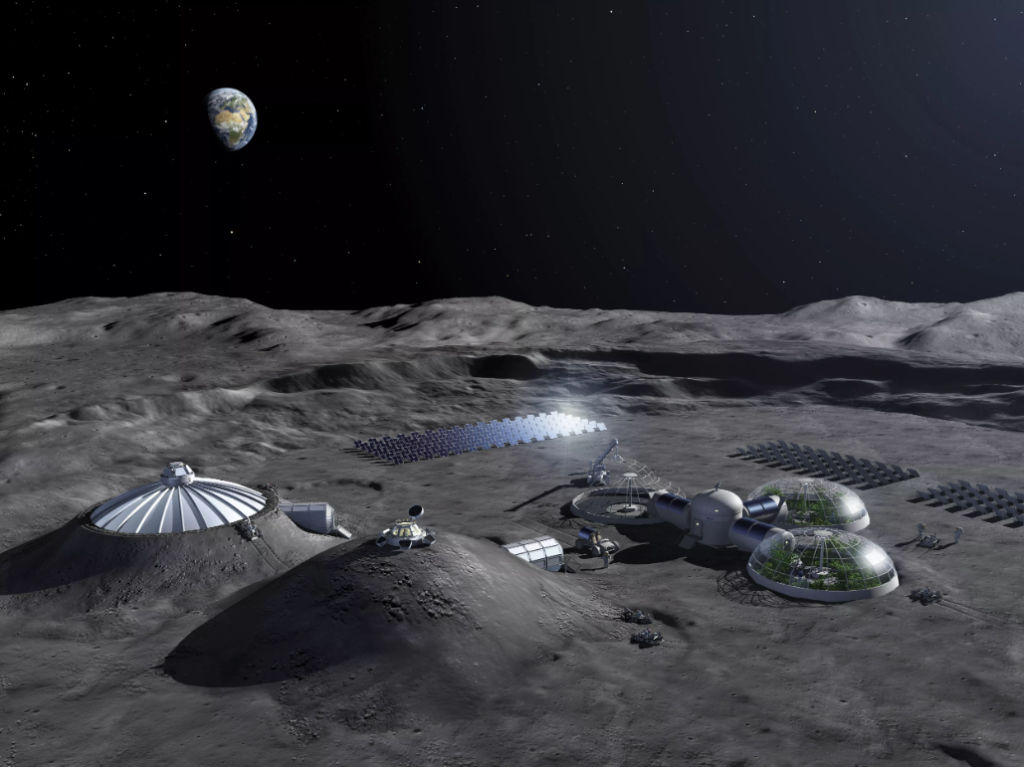
At UWE Bristol she carried out research into plant biology and radiation. Today, Nicol works on biology experiments destined for the International Space Station, lunar orbit and lunar surface in partnership with international space agencies; NASA, CSA and JAXA.
What most excites you about your job?
My job puts me in a position where I can set my passions into practice. Knowing that everything we are putting into space has benefits to improving life on Earth gives me that warm, glowing feeling each day. It isn’t without its challenges, but for the most part it feels extremely rewarding.
What led you to work in this field?
Interestingly, I never set out on a career in space. Rather by following the things that I enjoyed the most, I eventually became a specialist in my field in biology. That combined with a natural curiosity about space opened up opportunities I hadn’t had thought about before.
What’s your favourite mind blowing fact about space?
That some microscopic biological organisms can survive exposure to the vacuum of space and don’t need spacesuits for it, so, in some ways you can say they’re better than us.
Find out more in Nicol’s video about extreme life.

What’s the most unusual thing about your job?
That I can casually discuss blasting some experiments off into space during my lunch break with my colleagues, I don’t think that is standard for most workplaces.

Looking back to your time studying at UWE Bristol, what was most memorable or valuable to you?
The combination of lab work and field work gave me the hands-on experience that is really needed to do the coordination work that I do. If I didn’t have that then I wouldn’t truly understand the scope of what any of the science projects I coordinate are doing on the ground when they are, for example, testing hardware prior to a launch, or troubleshooting during protocol validation phases of experiments.
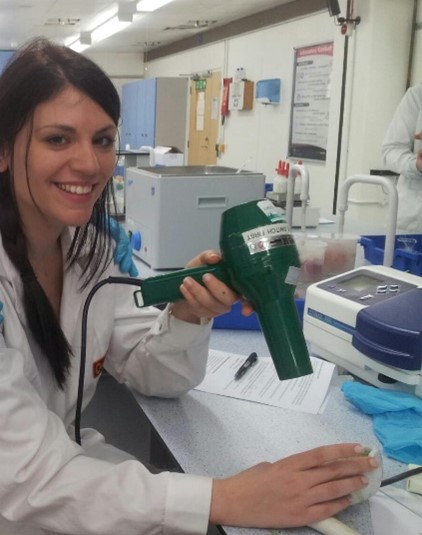
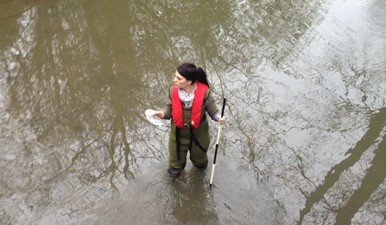
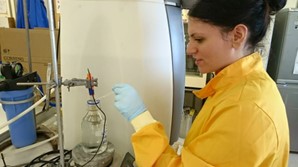

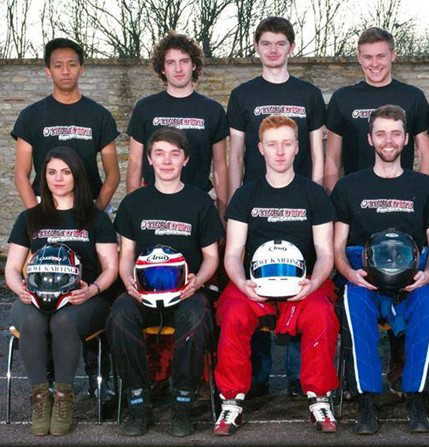
Images: Nicol’s time as a student working in laboratories and out in the field, with her PhD supervisor Neil Willey at Chernobyl Nuclear Power Plant in Ukraine (2015) and in the Motorsports Club (Nicol became the first woman president.
UWE Bristol alumni – quick links
Sign up for offers and fundraising and update your details
Join Alumni Connect online mentoring network