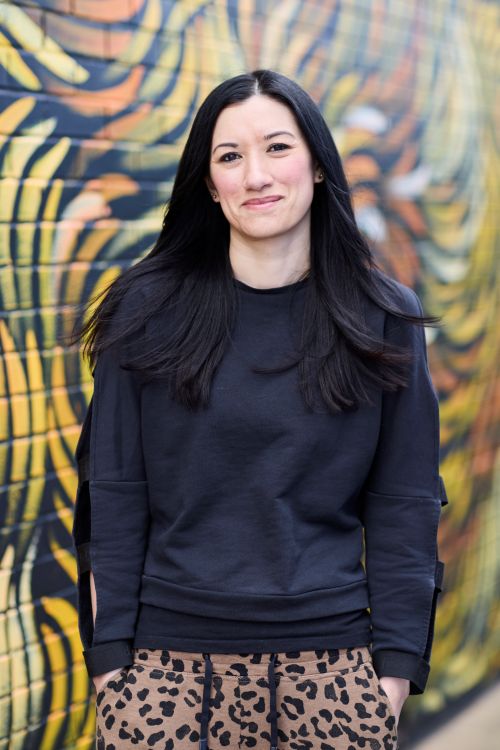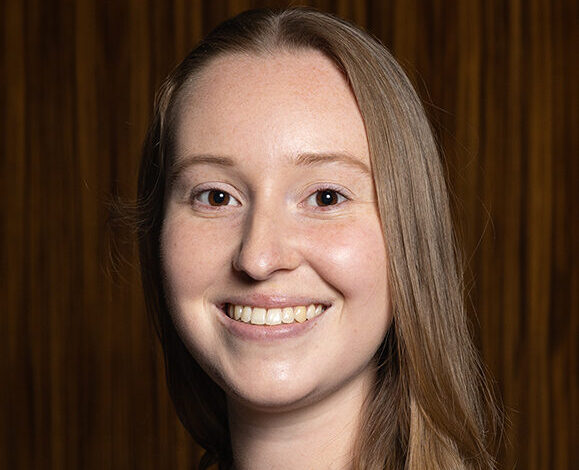
A circus Ringmaster Gromit has been created by Illustration alum Tozer, complete with top hat and tails. Sign painter Tozer was commissioned to create the Gromit inspired by The Greatest Showman story.
Ringmaster Gromit will be at Bristol Children’s Hospital main entrance from Monday 30 June as part of Gromit Unleashed 3, a sculpture-spotting trail happening this summer to raise funds for sick children.
Tozer is based in Bristol, but her art of beautiful hand-crafted signs has taken her across the world over the last 10 years. Find out about her creative beginnings, the challenge of this commission and why she loves her job.
Tozer in her studio
How did you feel when you were asked to design a Gromit for Gromit Unleashed 3?
It sounds cliché, but I was just incredibly excited! The design was a collaborative effort – the general brief and visual idea were curated by the Grand Appeal team and I drew him up in my own style.
“I loved the circus aesthetic – that world is deeply entwined with traditional lettering and signwriting skills and it was a pleasure to bring that combination to life.”
Were there any challenges to overcome in making the Gromit?
Definitely – the main one was the physical challenge of painting it, I had to book in a massage once I was finished! There were so many little areas that were tricky to get to, and mine had a few extra tough spots with him having a top hat as an accessory.
“I lost count of how many times I stood up and knocked my head on his ears or chin!”
I can’t remember exactly, but I know it was from a very young age.
“I have fond memories of asking my dad to go up into the loft and bring down these huge sheets of coloured paper for me to scribble on in the middle of the living room floor.”
I get my creative flair from him – he’s done a few murals in his time and still regularly doodles.
What stands out in your memories of UWE Bristol?
I remember being one of the students that would very regularly stay late. Before I found signwriting, I experimented a huge amount with different materials and techniques.
“I tried to make as much use as possible of all of the tools and special equipment UWE had on offer.”
I was a regular at the screen printing area for a while, then the print rooms, the woodworking area, even the laser cutting room for a time.
What do you love about your job?
I love the variety the most.
“One day I can be in somebody’s home gilding their fanlight, then at a restaurant in the countryside painting an A-Board, the next I may be painting a mural in Bath.”
Then there are weeks where I get to work from my lovely studio, listen to podcasts and eat spicy noodles.
Tozer painting in studio
Finally, what would be your dream commission?
“I’d love to sink my teeth into a really extensive full tattoo shop job with the full works – design work, shop sign, window gilds, A-Boards, interior signage, fanlight, swing sign.”
If somebody has £10,000 to spare and wants the snazziest tattoo shop in Bristol or beyond, get in touch!
About Gromit Unleashed 3
Gromit Unleashed 3 is organised by the Grand Appeal team, who partner with Aardman Animation to raise money for Bristol Children’s Hospital and St Michael’s Neonatal Intensive Care Unit.
Ringmaster Gromit is located outside Bristol Children’s Hospital in Bristol from 30 June until 31 August 2025.
Born and raised in Bristol, Sam Jukes founded Cacto Drinks in 2020 while still studying his BA(Hons) in Sports Business and Entrepreneurship. With the support of the UWE Bristol Entrepreneurial Futures Award (EFA), Sam’s company is going from strength to strength, and they’ve recently closed a successful investment round.
Sam’s prickly pear fascination
Sam was researching sustainable crops and water deprivation when his brother mentioned the cactus fruit to him. The prickly pear’s impressive nutritional profile – packed with electrolytes, antioxidants, and natural hydration – intrigued him. Sam’s first taste was a revelation, sparking years of experimentation and countless homemade recipes.
“Winning a taste of the West gold award this year is testament to the deliciousness of prickly pear and years of me being a mad cactus scientist in the kitchen.”
Sam with prickly pear plants
The science behind Cacto’s health and sustainability claims
Prickly pear cactus water is naturally hydrating and rich in antioxidants and electrolytes, making it great for skin, recovery, and digestion. Its light, subtly sweet flavour is a bonus.
According to Sam, the prickly pear is a real powerhouse when it comes to sustainability too.
“It requires no irrigation and thrives in harsh climates.
It’s the third most effective plant at carbon capture and requires less water per kg of fruit yield than any other plant, making it one of the most planet-friendly crops.”
“The people behind the programme believed in the idea from day one, and that meant a lot.”
The funding was a launchpad for Cacto, allowing Sam to finalise product development, refine recipes, and perfect the brand.
Mutually supportive links with UWE Bristol
Sam’s relationship with UWE continues to grow. The company have collaborated with a sustainability student intern to track and improve environmental impact.
Sam says UWE Bristol’s support has gone waybeyond the funding – from legal and accountancy advice to help through multiple rounds of grants.
“Special thanks go Leanne Newton from Enterprise and to Kristian Fernandez-Mitchell who championed Cacto and helped stock it at One Zone and Morrisons on Frenchay campus.”
Cacto drinks for sale on campus
“I now advise current students through the Enterprise Team, a full-circle moment that I find deeply fulfilling.”
What’s next for Cacto Drinks?
Cacto drink promotional photo
With a successful funding round behind them, Cacto Drinks is focused on scaling up production to meet demand and expanding their retail footprint.
“I’m excited to see Cacto landing in more fridges across the UK. The team is growing, new marketing and sampling campaigns are launching, and the brand continues to stand out for its flavour, values, and greater purpose.”
Finally, Sam’s top prickly pear fact
Prickly pears are fascinating fruits. But Sam’s favourite fact is that the prickly pear cactus is central to the legend about the founding of the Aztec capital, Tenochtitlán, where modern-day Mexico City lies and it features on the Mexican flag.
“Aztecs considered the prickly pear cactus sacred and it’s still a symbol of Aztec cultural identitytoday.
And did I mention, prickly pear juice can reduce hangover symptoms. Not that I’d know anything about that.”
Mexico’s coat of arms depicting prickly pear cactus, golden eagle and snake.
Graphic Design alum and Creative Director Clive Watson was looking to brighten up a new office development in Broadmead, Bristol. He connected with student creative agency New Wave to explore the idea of procuring artwork.
[New Wave is our student creative agency, with an upcoming show at the Arnolfini. More on that later.]
A win-win project
New Wave worked with Clive, to develop a brief commissioning student artwork to furnish all of the corridors and the public spaces in the building.
64 students worked on the project, from Illustration, Fine Art, Animation, Photography and Media Production courses. The work provided students with experience in a wide spectrum of skills within the commissioning process, including meeting clients, managing feedback, framing and installation. 40 framed prints, 70 prints for launch party gift bags, and over 100 digital images and animations were delivered.
Commissioned artwork by student Dulcie Wagstaff – GeraniumCommissioned artwork by student Tim Clarke – Clifton Suspension BridgeCommissioned artwork by student Lucy-Bentley -Waterfall
“It was a great project – everyone was happy. It’s hard for students to find a stepping stone into the real world. It completed the circle – starting with my studies at Bower Ashton and my own career journey. I was pleased to be able to work alongside students and offer them opportunities in the commercial environment.”
Student Abbi Bayliss visiting the site in Broadmead
What is New Wave exactly?
New Wave is a student creative agency at UWE Bristol’s School of Arts. Co-designed with students and in collaboration with industry professionals and internal partners, New Wave is redefining professional experience in higher education.
It was established in 2023, in response to internal and industry research that highlights the complex and often hidden barriers to careers in the creative industries.
New Wave is nurturing a more inclusive future for the creative industries.
Find out more at the Arnolfini show
UWE | New Wave Agency – Arnolfini presents student projects with industry clients, all facilitated by New Wave during its first year of operation.
Featuring diverse mediums and practices, from festival banners to ceramic slugs, the show runs 8 February – 16 March 2025, 11:00 – 18:00 at Arnolfini, Bristol.
Val Rumbol (née Bishop) and Pat Field (née Millar), 1976
From 1974 to 2024 – a trip back in time
When Pat reached out to organise a 50th reunion for a group of UWE Bristol alumni, I knew we were about to witness something special. This group of friends has stayed connected since their student days, studying HND Business Studies (International Marketing and Languages) from 1974-1976 at Bristol Polytechnic.
Pat’s original HND Business Studies (International Marketing and Languages) leaflets from 1970s
Their gathering was a celebration of enduring friendship, personal growth, and shared memories.
Walking through the bustling Frenchay Campus on an autumnal Friday morning, they marvelled not only at the expanded facilities but at the vibrant energy that seemed to mirror their own student days. This was the first time they had stepped foot on site since graduating in 1976. Finding what may have been their old lecture theatre was a true highlight—bringing back flashes of memories of long-ago classes and youthful ambition.
Frenchay campus, 1976
“We knew there would be lots of changes and developments to the buildings and the educational opportunities, but we were really blown away by what we saw, especially the Business and Law School. It was so impressive! The quality of materials used, and the thoughtful design have resulted in a fantastic place to study. Lucky students of today!”
Patricia Field, UWE Bristol alumni and reunion organiser.
Lifelong friendships
We reminisced about their student years, looking through some old photos at bars and various meet ups spanning the past 50 years.
Park Street 1975
They recalled their first year at Unity Street – now a block of flats in the centre of Bristol – and how much has changed. Pat and her husband, Ian, recalled those days fondly. As a lifelong friend of the group, Ian proudly claims an unofficial ‘honorary alum’ status.
Unity Street Polytechnic building, where they studied in their first year
Despite their busy schedule, the group even fitted in a group zoom call with a course member in America, Martyn Holland.
Successful careers
The course led them all to careers in global companies using both the international marketing and the modern language elements of the course. They all went on to work with major brands in marketing, advertising, marketing research, computing, retailing, the travel industry and publishing.
It was great to hear how their time at UWE Bristol prepared them for their working lives, with real-life experience incorporated into their learning– reflecting the university’s long-standing commitment to applied learning and career readiness.
As we said our goodbyes, it was clear that while the buildings and times may change, the bond these friends share remains as strong as ever. It’s a reminder of how formative those university years can be and how friendships forged in lecture halls and student bars often last a lifetime.
Alumni Gail Davies, Valerie Rumbol (neé Bishop), Patricia Field (neé Millar), Rose Adderley (Alumni Engagement Manager), Jane Wood, Jennie Emmerson (neé Lane) on Business and Law School forecourt.
“Thank you so much for making our 50th reunion visit to UWE Bristol such a wonderful occasion. We all thoroughly enjoyed our opportunity to reminisce about our lives at the Poly so many years ago.” – Patricia
Reunion attendees:
Patricia Field (neé Millar)
Gail Davies
Jennie Emmerson (neé Lane)
Valerie Rumbol (neé Bishop)
Jane Wood
The group would welcome contact from other members of their 1974 cohort. Please get in touch via alumni@uwe.ac.uk
Blog written by Rose Adderley – Alumni Engagement Manager
Planting trees at Coldharbour Lane (Dr Bolland in the hat) 1973
Dr Robert Bolland was the first director of Bristol Polytechnic (1969-1974). Fifty years after his death, the values he built our institution on still endure. We look back at the life of Chemist and Educationalist Dr Bolland and find out more about how he influenced the early days of what was to become UWE Bristol.
Dr Bolland
Widening participation
“Throughout the years since Polytechnics came into being Dr Bolland made many contributions to the development of their educational philosophy…These contributions were characterised by a deep concern for social justice”
Bristol Polytechnic News, June 1974
Students who had to overcome obstacles to study were of particular concern for Dr Bolland. Under his leadership, opportunities were created at the new Polytechnic for people from all social backgrounds to access education.
The building of Bristol Polytechnic at Frenchay, 1972
These deeply felt convictions were born out of his own experiences. His career spanned diverse educational settings, and he cultivated an inclusive perspective. From his involvement in the Scout movement to his role as Lecturer at Makerere University College in Kampala Uganda, his horizons were broad. He also worked as a chemist whilst he studied for his first degree, giving him an appreciation of a hands-on approach.
Dr Bolland was passionate about opening-up alternative routes to qualifications and committed to offering part-time courses, and sandwich courses that integrated academic study with work. These principles of widening participation and practice led courses set the tone for the ethos of Bristol Polytechnic.
His ongoing gift
Dr Bolland’s inclusive approach continues to underpin our strategy. Today our equality, diversity and inclusivity vision drives UWE Bristol’s work to remove barriers to education.
We offer placements, internships, live case studies and consultancy projects to provide practical learning experiences for our students. Our ambitious apprenticeship programme combines on-the-job training with academic study, echoing our vocational roots as a Polytechnic.
But the legacy of Dr Bolland can be felt throughout the University, not just in our approach, but physically too. Dr Bolland donated money in his will to support the progression of Bristol Polytechnic.
His gift supported the development of the Bolland Library on Frenchay campus, and is remembered through a bust, sculpted by Ernest Pascoe, Head of Fine Art at Bristol Polytechnic, Bower Ashton School of Art.
Dr Bolland bust, by Ernest Pascoe, sited in Frenchay’s Bolland LibraryBolland Library, 1970s
The generosity of donors like Dr Bolland continues to impact students now. Donors give funds for capital projects, support student and alumni business ventures and provide funds for valuable grants supporting student led projects or individual hardship grants. Find out more about supporting us through the UWE Bristol Fund.
Dr Bolland and his wife at his farewell in 1969 from the University of Bath
More on Dr Robert Bolland’s life and career…
Robert William Bolland was a chemist and dedicated educationalist whose career qualified him admirably for the post of the first Director of Bristol Polytechnic, a role he held from 1969 to his death in 1974.
Born in Newcastle-upon-Tyne, he was educated at the Rutherford Grammar School and College of Technology. On leaving school he studied part-time while gaining practical experience on the analytical staff of a firm of manufacturing and analytical chemists.
At 28 he had achieved the position of Chief Chemist and had graduated as an external student of London University with a BSc (Special) Honours Degree in Chemistry. His PhD (London) was to follow in 1946. He was elected an Associate of the Royal Institute of Chemistry (RIC) in 1938 and was awarded the Fellowship in 1947. From 1943 – 45 he was employed by the Ministry of Supply undertaking research on ‘Gassing of Aluminised Explosives’ and ‘Sealing Compounds’.
In 1945 he was appointed Lecturer in Inorganic and Physical Chemistry at Leeds College of Technology and two years later to a similar post in Uganda at Makere University College, Kampala. A period of secondment to the Institute of Education, London University and further teaching at Makere was followed by a return to the Rutherford College as a Senior Lecturer.
He moved to the Bristol College of Technology in 1955 where, as Head of a Department of Chemistry and Biology, he showed his ability in administration. Over the following years he played a significant part in the policy and academic decisions which elevated the Bristol College first to a College of Advanced Technology, and later to the University of Bath where he became the first Professor of Chemistry and Head of the School of Chemistry. His return to Bristol in 1969 as Director of the Polytechnic seemed to follow almost naturally.
He entered fully into the professional life of chemists serving on the North East RIC Committee and later at Bristol where he occupied the Chair of the Bristol and West Section. He was elected Member of Council in 1960 and served a two-year period as a Vice-president chairing the Examinations Board and the Publications Committee. He was a founder Governor of the Further Education Staff College at Blagdon and an External Examiner to the new University of Botswana, Lesotho and Swaziland.
The fallen statue of slave trader Edward Colston is among the items on display at M Shed’s newly extended exhibition about the history of protest in Bristol.
Black Lives Matter marches in June 2020 saw protestors pull down the statue and throw it into the floating harbour. It was then temporarily housed at M Shed whilst a survey asked the city what should happen next to the statue.
Alumni and staff from UWE Bristol were at the centre of these debates and decision-making processes; being represented on both the We Are Bristol History Commission – responsible for the public consultation, and the working group at M Shed – which fed into the development of the protest exhibition, including the display of the statue.
Professor Shawn Sobers, Associate Professor Estella Tincknell, Dr Roger Griffith MBE, Dr Edson Burton MBE (PhD, 2005), and Olumide Osinoiki (BA(Hons) Photography, 2020) all played an important role in co-curating this important exhibition.
They shared their views on this work and the crucial conversations it explores about racial injustice in Bristol and more widely.
Why was the We Are Bristol History Commission survey important?
“Given the controversial status of the statue… it was vital that the History Commission listened to Bristol voices from across the whole city concerning its future.” – AssociateProfessor Estella Tincknell
“Local experts were consulted, not just decision-makers with power over the narrative. That level of equity is truly valuable. Not just for us, but for the next generation who will view the past in a more informed manner.” – Olumide Osinoiki
“The survey and the temporary display of the statue were starting points for further conversation, for figuring out how to heal the fractured divides in the city and how to deal with the city’s past involvement in the transatlantic trafficking of African people.” – Professor Shawn Sobers
“The survey made it possible to say we had a mandate from all walks of life, which broadly supported the statue coming down or at least being consigned to ‘archival’ history. We could proceed safe in the knowledge that the statue would not become a fault line in the city’s cohesion.” – Dr Edson Burton
How do you feel about having played a pivotal part in the co-curation of the Edward Colston statue in M Shed?
“I feel ambivalent about having played a central role in the whole thing. My ambivalence stems from my feelings about having to have these conversations in the first place.
The summer of 2020 was such an emotional and exhausting time. We were in the middle of the coronavirus lockdown and faced with the brutal murder of George Floyd, which sparked the Black Lives Matter protests, that resulted in the statue being toppled.
I am glad I was asked and proud of what we collectively achieved, but it is a difficult thing to celebrate and be happy about. I live with the complexities of the conversation every single day.” – Professor Shawn Sobers
“I am particularly proud of being part of a process where the city’s institutions rose to the challenge of working together for the health of the city for now and for the future.” – Dr Edson Burton MBE
“It really was an honour and a privilege to be involved. Rising Arts Agency is all about empowering young leaders and I’m glad they presented me with the opportunity to have my say.” – Olumide Osinoiki
What have you learnt through the process?
“I was pleased to witness the care and attention of both the History Commission and the M Shed team. Everyone took on the task seriously, thoughtfully, carefully, professionally.” – Professor Shawn Sobers
“Our reaction to educating others through an accurate representation of history is still often based in our own egotistical instincts and bias.” – Olumide Osinoiki
“I felt heartened by my fellow Commissioners’ care for the city. I was also highly impressed by the work of our heritage teams who managed the data collection and helped us to analyse the data which informed our conversations.” – Dr Edson Burton MBE
What do you hope the exhibition achieves?
“I hope it is the start of a conversation, not the end, about the transatlantic slave trade, about Empire and about what it means to be British. We need to move away from smooth juvenile narratives of a united past.” – Dr Edson Burton MBE
“Humility. My hope is that instead of ego, this exhibition would be met with the necessary humility to learn.” – Olumide Osinoiki
“I hope the exhibition acts as a monument, not to Colston, but to the contested history the statue represents, including the complex histories of Bristol and its citizens, and the events that brought it down.” – Associate Professor Estella Tincknell
“I hope it provides an educational entry point for all and adds to the untold story about where and how Colston got his money and what can happen next.” – DrRoger Griffith MBE
“The anti-racism struggle and the fight for equality and justice were never about statues, it was about housing, education, criminal justice and structural inequalities.
My hope for the exhibition is that it keeps that wider context and conversation alive. It is an important part of our collective history we all need to learn from.” – Professor Shawn Sobers
What are your dreams for Bristol’s future?
“I hope that we deepen the conversation beyond toppling and renaming. The structural inequalities of race and to an extent class that we see today are legacies of the transatlantic slave trade.” – Dr Edson Burton MBE
“More young leaders. More sustainable ways to better understand and look after each other. Just like this commission has provided!” – Olumide Osinoiki
“A more equal, less segregated city in which inequalities of wealth, health, social capital and cultural capital are significantly diminished.” – AssociateProfessor Estella Tincknell
“That our shared history is properly taught in schools, colleges and universities.” – Dr Roger Griffith MBE
“I came to first work and live in Bristol in 1995, and we were having the same conversations back then, and I know it of course pre-dated my arrival. I hope in 30 years’ time, the conversations we will be having will be very different.” – Professor Shawn Sobers
Here are some suggested starting points if you’re interested in finding out more about efforts in Bristol to engage with the history and legacy of the city’s involvement in the transatlantic traffic of enslaved Africans:
Bristol Legacy Foundation, working to create sites of commemoration and a story-house to explore the history and legacies of the transatlantic traffic in enslaved Africans.
Black South West Network, a leading Black-led racial justice organisation working to drive racial equity through a meaningful community led approach.
Colston’s Last Journey, a work of sound art by a Bristol poet, writer and located audio designer Ralph Hoyte.
To mark International Women’s Day 2024, we asked two alumni who are driven female business founders, about their unique journeys. They shared the toughest challenges they’ve encountered and what makes them most proud.
Aisha Thomas founded Representation Matters, an international training consultancy championing diversity in education.
Beck Prior founded Priormade, a sustainable homeware brand, and Prior, a shop stocking artist and designer made products, based in Cabot Circus.
Aisha Thomas
Studied LLB(Hons), 2006
Founded Representation Matters in 2020
Mission is to challenge the lack of representation and the inequality in our current education system
Author of no 1 best seller on Amazon about becoming an anti-racist educator
Awarded MBE in 2022
What does it mean to you to be an influential and successful woman in your field?
Success is really subjective, however to me, it means being the representation that is needed for people that look like me. I spent most of my career, forcing myself to be what I can’t see.
I hope that the pathway I have created has opened doors and provided future opportunities for those following behind me.
How did you get started?
My journey started with the motivation I received from my mum. She was a primary school teacher and often talked about the power of education and how it opened doors and created springboards to new opportunities.
I started out in law, convinced I would be a lawyer, however, after a chance meeting with a young man in prison, I re-thought my pathway and transitioned into education. I had a fantastic time as an assistant principal, however, I wanted to have more of an impact, so after a Ted X talk, a book, and a BBC documentary, I started my business Representation Matters Ltd.
What’s been your biggest challenge?
Being an entrepreneur is not easy.
Making the transition from the classroom, to being on the road, drastically changed my lifestyle. But it has been worth it.
What are you most proud of?
The reach of our work! Just last month, I was in London and I met a woman from Venezuela who explained that she had read my book, and this had contributed to the work she has been doing in Venezuela about the lack of diversity in books in her home country. I guess you never know who is watching!
For me, an entrepreneur is a trailblazing, risk-taker. Someone who is driven by an idea they believe in and won’t give up until it’s accomplished.
I feel quite honoured to be called one.
How did you get started?
Like all creative people who seem to marvelously pinball from one thing to another, it’s hard to find the starting point. Funnily enough, having a retail shop combines EVERYTHING.
I’ve always had a very strong work ethic and left UWE Bristol with many ideas for starting my own business. I worked at Arnolfini, Young Bristol, Creative Youth Network, and as an Art Technician/Post 16 tutor, alongside creating props, puppets, signage, and project-managed public art installations for clients. In 2010 this became product design. I also trained as a hairdresser and make-up artist before starting UWE Bristol and worked in many, many pubs whilst I studied.
On reflection, I can see now how all of these social, public-facing, creative, and teaching roles have combined to help me design and create a retail shop, manage a team of people, and thoroughly enjoy customer interactions.
What’s been your biggest challenge?
Trying to hold on to this huge shop. Main shopping centres and high streets have been designed for large global for-profit companies. We are competing and paying the same as giant retailers such as Apple and Ted Baker! So, we have to work above and beyond to hold on to it.
My other challenge is making peace with the fact that I can’t make my own creations as much as I used to as managing a shop is so time-consuming – I’m still working on coming to terms with this.
What are you most proud of?
Ooofftt… I’m proud every day. Seriously! But the biggest, incredible achievement has to be the amount of money that we’ve made for Independent artists, designers, and makers. Since we opened in Cabot Circus, we have paid out £375,000. 70% of our artists/designers are based in Bristol so it’s huge for the local economy too. The pride I have when thinking about this makes me have goosebumps.
What does it mean to be a woman in business?
I feel powerful being a woman in business. Not just that I am one, but that I don’t feel like an imposter, and I know what I’m doing. I often think women in business feel slightly unconfident and like they shouldn’t be here.
I hope that I’m inspiring other women to not just start their own businesses but to grow them into the global retail sector.
Thankfully the independent retail and craft sector is mostly female-founded and led, so I don’t feel that lonely. However, as both a business owner and a woodworker – I do find myself calling out the comments I receive at huge business networking events, timber yards, and with some customers in the shop: ‘But has it been wired properly have you had it checked by an electrician?; Aren’t you a clever girl; Have you checked that figure with your accountant?’ just to name a few.
Thank you to Aisha and Beck for sharing their inspirational journeys with us. If you are an alum and would like to share your story with us, we would love to hear it.
We interviewed Tom Tucker, co-founder of Minirigs, back in 2019. In case you missed it, here’s an introduction to the outstanding work of Tom and Minirigs, along with the film of his interview.
Tom Tucker – co founder of Minirigs
Minirigs evolved through a series of obsessive hobbyist fabrications.
At a time when portable speakers weren’t available, Tom and his friends started making DIY sound systems. Their creations became more and more refined, they went into production and Minirigs was born.
Intrinsically linked to the Bristol music scene, Minirigs are a proudly Bristol-based and forward-thinking company. Dedicated to producing top-quality portable audio products, they’re also passionate about sustainable manufacturing processes. They design and assemble all their products in the Bristol, use recyclable packaging and biodegradable plastics.
Tom studied Product Design Technology at UWE Bristol. In this short film he explains how they got started and why he loves his job.