As well as causing appalling suffering and misery, the COVID-19 pandemic is opening up new possibilities for the future. An uplifting feature of the way that communities have responded to the COVID-19 calamity has been the spectacular expansion of self-organising community groups working at neighbourhood, or village, level to help the vulnerable and the needy.
While researching my new book, Cities and communities beyond COVID-19. How local leadership can change our future for the better, I encountered many heart-warming stories of how local communities have responded with great imagination to the disruption of local food supply chains, taken steps to protect the most vulnerable in society, and engaged in all manner of creative, problem-solving activities at the local or hyper-local level.
My research suggests that cities and localities across the world now face four major challenges at once: 1) The COVID-19 health emergency, 2) A sharp, pandemic-induced economic downturn, 3) The climate change emergency, and 4) The disastrous growth of social, economic and racial inequality in many countries.
The good news is that many cities and localities are already developing and delivering progressive strategies that address these four challenges at one-and-the-same time.
An example of good civic leadership – Freiburg, Germany
The photographs in this piece are from one of the cities now leading the way in responding to current societal challenges. Freiburg is, of course, very well known for pioneering high quality city planning and urban design.
For example, the Academy of Urbanism joined with the City of Freiburg in publishing The Freiburg Charter for Sustainable Urbanism in 2011.The Academy wanted not just to recognise the achievements of civic leaders and city planners in Freiburg, but also to spread the word about their approach to an international audience.
What is not so well known is that Martin Horn, the young and energetic politician, who was elected as Mayor of Freiburg in 2018, is stepping up the progressive ambition of Freiburg’s policy making. For example, he is insisting that, as well as meeting very high environmental standards, over 50% of new housing in the city must be affordable. Yes, that’s 50%.
Detailed plans for Dietenbach, a new eco-friendly neighbourhood for 15,000 people, deliver on this objective. Submitted to Freiburg City Council last month, these plans also provide open space, schools, sports facilities, day-care centres and local shopping opportunities.
Meanwhile, the imaginative Freiburg holds together (Freiburg halt zusammen) digital network bundles together numerous citizen-oriented information services and activities for residents struggling with COVID-19 pressures.
Freiburg is just one of the progressive cities featured in my book. Other cities discussed include Bristol, Copenhagen, Dunedin, Mexico City and Portland.
Children enjoying outdoor space in Vauban, Freiburg, Germany. (Source: the author).
Lessons for UK policy, practice and research
Three lessons for UK policy, practice and research emerge.
First, the government’s 2020 White Paper, Planning for the Future, needs to be discarded as quickly as possible. It contains proposals that will not just destroy effective approaches to local planning but also weaken councillor and citizen involvement in local decision-making.[i]
The evidence from Freiburg, and other enlightened cities, demonstrates that high quality urban development designed to address the climate emergency, provide housing opportunities for the less well off in society, and build liveable communities requires more planning, not less.[ii]
Second, councillors in Freiburg, like all those in Germany, have the constitutional protection to do what they think is right for the people living in their locality. German local authorities have, then, the freedom to do things differently. This is not the case in the UK and it is essential to rebalance power within our country via a constitutional convention. Comparative research can help to make the case for giving local power a major boost.
Third, researchers studying how to create sustainable cities and localities need to give much more attention to power relations. Advancing our understanding of what needs to be done to co-create liveable cities and towns is vital. However, just as important, research needs to explore how to bring about progressive change in society.
What is the power system that is leading to unsustainable urban development? How can this power system be changed? What lessons can we learn from cities that are already delivering sustainable development? These are the kinds of questions that deserve more active consideration by researchers studying modern urban, rural and regional development.
Robin Hambleton is Emeritus Professor of City Leadership at the University of the West of England, Bristol.
Film of book launch
Robin Hambleton’s new book, Cities and communities beyond COVID-19, was published in October 2020. The book launch, organised by the Bristol Festival of Ideas, includes contributions from Marvin Rees, Mayor of Bristol, who has written a Foreword to the book, and Professor Sheila Foster, University of Georgetown, Washington DC. This discussion, which was chaired by Andrew Kelly, Director of the Bristol Festival of Ideas, is available here: https://www.ideasfestival.co.uk/events/cities-and-communities-beyond-covid-19/
References
[i] Hambleton R. (2020) ‘Strong place-based leadership is instrumental in the battle against COVID-19’ The Planner, 19 October.
[ii] The key suggestion here is that public policy needs to advance caring in modern society – meaning caring for others and caring for the natural environment on which we all depend. See Hambleton R. (2020) ‘COVID-19 opens a new political window’, Town and Country Planning, November/December, 89, 11/12, 366-370.
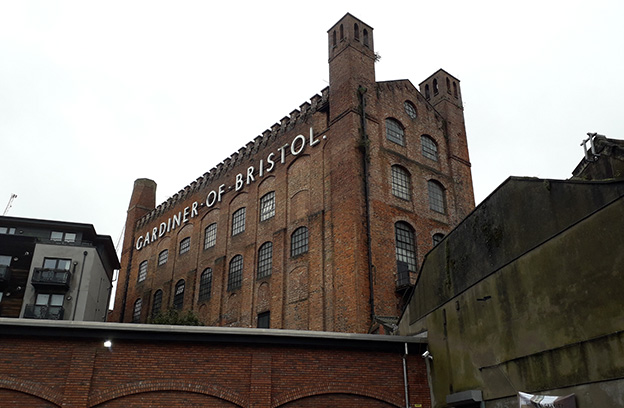
I was privileged to be invited by Rising Arts Agency[1] as a ‘keynote listener’ in their performance of a conversation on the question of ‘who is allowed space to create in Bristol?’ on 4th October 2020. This was part of the Centre of Gravity exhibition in Soapworks/the old Gardiner Haskins[2] building in Bristol. Sitting in a circle for part of a conversation which carried on all afternoon and featured inputs from various young artists, I was one of a selection of ‘listeners’ who were allowed to contribute only one sentence to this conversation.
I will here try to outline to some of the things I heard, and reflect on where this conversation may lead. I will not do justice to the depth or breadth of the conversation in this small space, nor do I claim that the voice written here is anything other than mine, but I am doing this because I want to express what I heard when I was listening because I feel being in a position which gives me an audience for my words, I have a responsibility to take this conversation forward.
I am going to focus on three themes which I heard weave throughout the conversation: change, ownership, and the nature of space. This does not represent the totality of what was said, or the totality of what I heard (and I don’t assume these to be the same thing), but these ideas resonated with me, thinking as a planner about more equitable and inspiring urban spaces for the future.
The conversation opened with a discussion about the (in)affordability of space, for living and for arts, and the need for the democratisation of space at all scales- the room, the building and the city. This rapidly linked to ideas of gentrification- including a reflection on whether this conversation itself was a form of gentrification- and the nature of change. Participants saw change as inevitable: but the emotional impact (as well as financial benefits) being unevenly distributed. Questions were raised about who has to let go of the things to which they are emotionally attached for change to come about in ‘the ecology of capitalism’. Change in the city is about the movement of people, and the acceptability of this is tied to money- who brings money in by making changes, who brings a cost by arriving somewhere? Who is let in, what is protected?
Participating in the the conversation as a ‘keynote listener’
These questions on belonging, and voice in change linked to the discussions of ideas of ownership. Ownership as paradoxical term- it implies ‘home’, safe space, and comfort but also unfairness, because not all have it- not everyone has somewhere they (feel they) own. Ownership was described as individual, financial, emotional- and questions raised of how can cities accommodate all of these sorts of ownership. More negatively, ownership was also seen as limiting, tying down, holding back, stuck in one place. This relates to the impact a space has on the product or performance of all artists and the implications of the difficult balance between stability and trappedness. Moreover, this is of particular concern to young artists, asking how old do we have to be to be taken seriously- when are we no longer emerging, and therefore have the legitimacy to claim space and to remake the city in their ways, rather than being invited into space: having space for guests and visitors, rather than being visitors and guests in spaces which are owned by someone else.
Debating change and ownership in this way questions static understandings of space and place. These are questions of scale (the city itself as a space) and of purpose (the role of arts as bring about social change). Physical space is important for reflection and connections and for new ways of experiencing ourselves- beyond the space of the phone. A particular point here was the potential of abandoned buildings: emptiness may be seen as a problem in planning/property development but offers so much scope for artists, particularly young artists, who need for ‘test space’ for experimentation without gatekeepers. Emptiness or abandonment here are not just physical or economic states, but ones of meaning-the creation of a vessel waiting to be (re)filled with a different essence. In some ways, this comes back to the first point- about being priced out of the market and the fear of gentrification. Where can be left empty for temporary inhabitation, experimentation and expression when everything has a price tag?
At a time of such uncertainty brought about by Covid, and compounded by proposed reforms to the planning system, we have scope to rethinking priorities in society- and in the cities and neighbourhoods in which this society lives. Can we think more deeply about sustaining places- places which sustain us, and in which we manage change in more inclusive and just ways- so that who is allowed space to create, and allowed to create space, is a question of conversation not just of cost.
A lot has been written about Build, Build, Build[i] over the last couple of weeks and I share the same level of unease about some of the proposals. But we’ve been here before. Indeed, while you won’t have had the date marked in your calendar, last week marked the 5-year anniversary of when Fixing the Foundations[ii] was published. Back then, this plan for ‘creating a more prosperous’ nation, was penned by George Osbourne (as Chancellor of the Exchequer) and Sajid Javid (as Secretary of State for Business, Innovation and Skills). Chapter 9 ‘dealt’ with planning and some of the chapter’s sub-headings, including its promises for releasing land and increasing the urgency of planning, echo what has been said recently by Boris Johnson. Fortunately, the same level of derision was aired back in 2015, with the Guardian’s Oliver Wainwright[iii], for example, highlighting how the planned reform would give us the ‘slums of the future’. Oliver called for better public outcomes and it’s good that campaigning on this agenda has gained momentum since (with the TCPA’s pitch for a Healthy Homes Act being particularly noteworthy).
Chapter 15 of Fixing the Foundations also promised us a re-balancing of the UK’s economy. While some of the proposals in Build, Build, Build could be argued to support such a goal, the call for spreading prosperity was far stronger within the New Deal for Britain[iv] that Boris Johnson also launched a couple of weeks ago. Specifically, via a section on ‘investing in, and accelerating, infrastructure’, the New Deal provided an update on the Government’s Town Fund[v], a £3.6bn scheme that is intended to accelerate investment in town centres and high streets across England. The first tranche of money equates to an individual pot of about £500k-£1m per town but funding of up to £25m per town is ultimately expected from future waves of funding. At this time of gloominess this money cannot come quick enough. But what next? How will this money be spent and will projects be properly planned?
Before we focus on that, let’s remind ourselves on how the Towns Fund originated. Officially the fund emerged from a combination of two other initiatives that had been launched earlier in 2019, namely the Stronger Towns Fund and the Future High Streets Fund. The former had been introduced by Boris Johnson’s predecessor, Theresa May, with her launch speech targeting those towns with ‘glorious heritage, huge potential, and with bright futures ahead of them’. This same sentiment was pitched by Johnson himself when he launched the Towns Fund shortly after his election in July 2019. Whilst acknowledging that not everyone wanted to live in ‘our country’s great cities’, he promised to ‘start answering the pleas of some of our left behind towns’.
A formal prospectus for the Towns Fund was published in November 2019[vi]. The number of identified towns equate to a hundred, with Swindon, Bournemouth, Glastonbury, Bridgwater, Torquay, Truro, Camborne, St. Ives and Penzance representing the south west. Each of these towns has been funded to establish ‘Town Deal Boards’, authority-led partnerships that are intended to bring relevant stakeholders together. Once in place, each board is required to prepare their own ‘Town Investment Plan’ (TIP) which needs to present a vision for the town, and include action plans for delivering change over the short, medium and long term (although no specific timescales are defined).
A week before Build, Build, Build, the Government released further guidance on the Towns Fund and invited eligible towns to decide whether or not to submit their TIP by the end of July 2020 or in a later cohort, by either October 2020 or early 2021[vii]. Making such a submission will enable the towns to unlock funding. The funds continue to be justified on the basis of promoting local economic growth, but the latest document also acknowledges the impact of COVID-19 and the additional vulnerabilities and weaknesses that the pandemic has exposed across our towns. As for what the money can be spent upon, the guidance outlines six intervention themes. These include improvements to local transport, skills and enterprise infrastructure, as well as funding for the arts, culture and heritage. It will be interesting to see what comes forward given the breadth of possibilities. It is acknowledged that the fund can only go so far and the competitiveness of the programme feels somewhat wrong in these fragile times. It also remains unclear why certain towns were selected, while others were not, and I can’t help wondering what binds these places together. The guidance does talk about encouraging collaboration between the towns so I hope this joint learning is actioned. Although the further guidance mentions planning in a range of contexts, I hope planners are able to take a lead since in my view, the TIPS are essentially mini-local plans. But will they and how will the TIPs sync with plan-making and other local planning activities? By allowing planners to take a leading role, the Towns Fund can hopefully help to dispel recent narratives that have painted the planner as the ‘pantomime villain’ rather than as the un-locker of growth. I do hope the fund can fire-up some much-needed enthusiasm and creativity for pursuing a town-led ‘urban renaissance’ and I will certainly be interested in what is being planned to help bring our
The world has changed, significantly, since publishing our paper[1] a decade ago on student isolation in distance learning. At that time university distance learning programmes via the internet were still seen as something novel, innovative, unusual, maybe even a little odd – a venture viewed as largely residing in the domain of the Open University rather than more conventional physical campus-based establishments. Despite rhetoric around a desire to increase provision of this ‘flexible’ format it felt like a Cinderella approach amongst largely traditional face-to-face taught delivery.
With University education currently in a very different place, online study being the default approach, it seems opportune to reflect on what we’ve learnt about the ‘pumpkin to stagecoach’ transformation of distance learning.
Summary of the paper’s findings
Isolation and connectivity – although there’s no physical (geographical) connection
this shouldn’t mean that the learning experience is a “solo mission”.
Tutor contact –
students not knowing the extent to which tutors on different modules will
engage and interact with them creates an uncertain learning environment and a
mixed experience. Building a positive student/tutor relationship is key to
overcome this.
Interaction with peers and colleagues – the ability to “bounce ideas off each other”
helps to build a cohort, so facilitating the opportunity to do this is
important. Linking study with practice (through workplace activities) can
strengthen the purpose behind the learning experience.
Motivation and self-discipline – motivation to study can be difficult for those learning
remotely from their peers. Setting targets, both embedded within the course and
by the students themselves, is an important motivational factor, particularly
where other external factors are present, such as work-home life balance.
Material and delivery
– keeping material up to date and relevant is essential (for a vocational
subject such as Planning this means providing a clear link to practice).
One of the findings boards from the 2010 research ‘sandpit’ event
Previously, back in the 1980s and 90s, distance learning
involved paper copies of all reading material being posted to students,
jokingly referred to as arriving on pallets – but it is true that entire store
cupboards were devoted to reams of photocopied booklets. Then, with the arrival
of the internet, paper was replaced by pages of online text requiring seemingly
endless scrolling. But effective distance
learning, that meaningfully engages with its learners, requires more than this.
And it goes beyond simply placing lecture capture online and providing resources
for students to read asynchronously. Practical activities that engage the
cohort and reinforce the learning need to be embedded within delivery.
This helps because students like to be reassured that their
understanding of both the subject content as well as university processes are
correct. Reassurance can take many forms, but the ability to speak to, and see,
your tutor each week can play an important part – practical module-related
tasks can contribute to this. The current use of Blackboard Collaborate
software for meeting students in groups has helped significantly[2].
Redundant paper filing cabinets – a new world of desktop learning and teaching awaits.
Mutual reassurance between students also plays a crucial
role. It can be difficult not having a friend/colleague sitting at the next
desk, or across the table in the canteen, to bounce ideas off. What did the lecturer say about…? How did
that theory the lecturer was talking about relate to your workplace? What
format do we present the coursework in? I heard on the news that X happened, do
you think this links with that lecture last week?
Since the paper’s publication we’ve tried numerous ways to
create a defined ‘space’ in which discussion between students can occur to aid
self-constructed learning. The most successful of these so far, judging by
students’ comments, has been an interactive platform called Piazza[3].
This is aided by a keen, able and proactive Student Representative providing: a
student-to-student link; a bridge connecting students and tutors; and a means
of facilitating communication between the professional accrediting body[4] and
the student cohort.
Additionally, we found that ensuring students feel the staff
team are out there is essential – whether in a shared space or some other means
of contact, knowing they can reach out and (within a reasonable timescale) will
get something back. By adopting a memorandum of understanding that all module
tutors are willing to follow it provides a baseline delivery standard to help
create consistency and manage student (and tutor!) expectations. That said, commonality
between modules is not necessarily the issue, it is more about students
understanding how modules will work and having an equivalency in the quality of
the experience. Taking the programme delivery team with you on the journey
reduces the potential for a bumpy ride.
We’ve learnt a lot since the early days. Starting in
September 2020 UWE launches a new online MSc in Planning and Urban Leadership[5].
Whilst the challenges identified back in 2010 still remain, and are potentially
amplified by the current lockdown measures, taking students and tutors
on the journey will be crucial to its success. Our delivery strategy
incorporates understanding gained from interviewing alumni as well as feedback
received in relation to current distance learning programme delivery.
Despite the passage of time our initial findings still hold
resonance and, having recently passed the 100 citations milestone[6], combined
with a necessary increase in remote learning, it seems Cinders shall go to the
ball…
[1] Croft N., Dalton A. and Grant M. (2010)
Overcoming Isolation in Distance Learning: Building a Learning Community
through Time and Space, Journal for
Education in the Built Environment, 5:1, 27-64
[2] It can also help to contribute towards
the audit trail for student engagement in Degree Apprenticeship programmes.
Other similar software is used for tutor meetings and more informal interaction
such as Zoom, Microsoft Teams, WhatsApp, Skype, Facebook Messenger.
[3] Concerns about data protection precluded
the use of Piazza for our 2019 cohort.
[4] For the programmes referred to here the
Royal Town Planning Institute’s Partnership Board is responsible for
accrediting the programme and ensuring an effective and functional Planning
School.
Organised by our own Hannah
Hickman and Sarah O’Driscoll
(Bristol City Council), the inaugural joint Bristol City Council – UWE Centre
for Sustainable Planning and Environments (SPE) Symposium on Green and Blue
Infrastructure took place at Bristol City Council’s Cash Hall on Monday 11th
February. This provided an excellent opportunity for planners and researchers
to come together to share policy and practice experience relating to the delivery
of high-quality green infrastructure (GI).
First up was Bristol City Council’s Richard Goldthorpe, from the City Design Team. Richard focused on “Policy towards delivery” and highlighted some of the gaps and new developments in place-shaping policy. Richard introduced the need for a West of England Green Infrastructure Plan to bridge between the West of England Joint Spatial Plan (JSP) and the Bristol Local Plan. The JSP will set out a prospectus for sustainable growth to help the combined authority meet its housing and transport needs for the next 20 years, to 2036. He also emphasised the need for the Local Plan to link to the provision and design of specific parks and green spaces. Richard closed by emphasising the need for good research data to inform GI policy and delivery.
Richard Goldthorpe (BCC) presenting on “Policy towards delivery”
Next on the floor were Liz
Kinsey (South Gloucestershire Council) and Kathy Derrick (Bristol City Council) who introduced “The Frome
Reconnected” a collaborative project focusing on future-proofing the river
Frome, involving Wessex Water, the Environment Agency, South Gloucestershire Council
and Bristol City Council. They described the specific challenges facing the
Frome and its catchment: urbanisation and an increase in impermeable surfaces
increasing flood risk; diffuse pollution; heavily modified sections involving
culverts and restrictive fish barriers and fragmented habitats. Possible
positive strategies to address these challenges included river restoration to
facilitate fish passage, with an increasing focus on health, recreation and the
possibility of introducing green prescribing activities on the Frome.
Introducing “The Frome Reconnected”
Our own Associate Professor Danni Sinnett was the next to present the framework that underpins
the RTPI award-winning “Building with Nature: a national benchmark for green
infrastructure”. https://www.buildingwithnature.org.uk/.
This was developed through a Knowledge Transfer Partnership with
Gloucestershire Wildlife Trust funded by Innovate UK and the Natural
Environment Research Council. Danni explained how developers’ and policymakers’
lack of understanding of the characteristics of high-quality GI had driven the
development of the benchmark. She went forward to explain how the framework can
be used to deliver high quality GI, setting out the core principles, (distinguishing
a GI approach from a more conventional green space approach), and those focused
on achieving benefits for health and well-being, water management and nature
conservation. Danni highlighted specific case study projects including Elderberry Walk, awarded a Building with
Nature Design Award for the entire Masterplan for 161 new homes on a brownfield
site in Bristol, and Gloucester Services on the M5 motorway. The services (both
N and S-bound) incorporate an outdoor picnic area, play facilities and habitat
provision.
Danni Sinnett presents the framework underpinning “Building with Nature” the national benchmark for green infrastructure
The final presentation by Dr Helen Hoyle (SPE) focused on co-producing urban meadows in green
spaces with local authority land-managers in Bedfordshire. This was part of a
larger Natural Environment Research Council-funded research project, Urban BESS
http://bess-urban.group.shef.ac.uk/
(Biodiversity and Ecosystem Service Sustainability). Researchers from the University
of Sheffield and Cranfield University introduced native perennial meadows of
different floral content and heights to areas of amenity mown grassland in
contrasting urban contexts in Luton and Bedford. This was done to gauge public
reaction and invertebrate response to increasing biodiversity on the sites.
Helen worked in the bridging role between researchers and practitioners on the
ground and reported on research focusing on the land-manager perceptions of the
challenges and opportunities of making such changes. https://www.sciencedirect.com/science/article/pii/S1618866716305489
Findings highlighted the key factors as: Economic resources; Aesthetics,
or the appearance of the meadows, and specific Locational context. Land-managers
were aware that introducing floral meadows could make some areas of green space
much more attractive for the public. Nevertheless, disposing of meadow cuttings
at the end of the growing season was expensive, currently ruling out the
possibility of introducing meadows as a cheaper management approach than mown
grass. They were also aware that although many people now accept messier urban
planting, there were still those who prioritised tidiness directly outside the
front of their homes.
Helen Hoyle highlights land manager perspectives on introducing urban meadows
Watch this space for news on the next joint Bristol City
Council – UWE Centre for Sustainable Planning and Environments Symposium.
First meeting of the partnership at UWE, Bristol 29 January 2019 with from left: Laurence Carmichael (Head, WHOCC), Carl Petrokofsky (PHE), Elena Marco (Head, Department of Architecture and Built Environment), Michael Chang (TCPA/PHE), Helen Hoyle (Senior Lecturer in Healthy Built Environments), Rachael Marsh (Public Health Registrar), Liz Green (PHW), Paul Olomolaiye (Pro-Vice Chancellor and Executive Dean, Faculty of Environment and Technology), Louis Rice (Senior Lecturer in Architecture), Aude Bicquelet-Lock (RTPI) and Mark Drane (PhD student and architect).
At the end of January the WHO Collaborating Centre for Healthy Urban Environments (WHOCC) at UWE Bristol welcomed four new four visiting fellows and professors:
Dr Aude Bicquelet-Lock (Deputy Head of Policy and Research, Royal
Town Planning Institute);
Liz Green FFPH, ACIEH (Principal Health Impact Assessment
Development Officer, Research and International Development Directorate, Public
Health Wales and also HIA Lead in the new WHOCC on investment for health and
well-being);
Carl Petrokofsky FFPH (Public Health Specialist, Healthy Places
team, Public Health England);
Michael Chang HMFPH, CMRTPI, MCMI (Lead on healthy Places at Town
and Country Planning Association, recently appointed project manager to the
Healthy Places team, Public Health England).
In addition, the WHOCC has
recently welcomed Public Health Specialty Registrar Dr Rachael Marsh MFPH as a
Public Health Practitioner in residence, who will contribute to WHOCC projects
in collaboration with South Gloucestershire Council in 2019.
At the core of the next phase of
work is cross fertilisation with these key organisations in the field.
Synergy between the new partners
and creation of a shared knowledge base is an important aspect of future WHOCC
activities to support the delivery of the Sustainable Development Goals, in
particular SDG11 and support phase VII (2019-2024) of the WHO Healthy Cities
programme. A meeting took place recently at UWE, Bristol to consider
opportunities in joint research and capacity building. Projects are now under
way for instance Health Impact Assessment guidance for planners, contribution
to modules and joint publications but other plans considered too on how to best support capacity building in the WHO healthy
Cities.
The WHO Collaborating Centre for Healthy Urban Environments
(WHOCC) at UWE Bristol is part of a network of 800 institutions spread in 80
countries and collaborating with various WHO programmes. In the UK, it is the
only WHOCC out of 58 and embedded in a Department of Architecture and Built
Environment with strong links with public health academics and practitioners.
As a leading centre of expertise on healthy urban
environments, the WHOCC champions health as a fundamental human right and
offers an interdisciplinary hub of practice and research. Activities are
practically oriented, from interdisciplinary research projects to capacity
building of the future generation of practitioners with a focus on environment
where people live, work, learn or play, be it at building, street,
neighbourhood or city scale. Topics covered by academics associated with the
WHOCC range from shaping sustainable neighbourhoods, improving air quality in
urban centres, promoting active travel and sustainable local food systems,
policy formulation to mainstream health within urban and transport planning. The
synergy between environmental and human health and of social and cultural
conditions needed for populations to thrive has also emerged as a core thinking
in recent years.
Members of our team have given
oral evidence to parliamentary enquiries and supported the NHS England Healthy
New Towns programme since its inception. UWE WHOCC academics have also
developed practice-friendly tools assisting the development process, for
instance a spatial planning tool identifying healthy planning features
commissioned by Public Health England (www.gov.uk/government/publications/spatial-planning-for-health-evidence-review
) and a green infrastructure benchmark ( www.buildingwithnature.org.uk
) in collaboration with Gloucestershire
Wildlife Trust. WHOCC Academics are also regularly asked to take part in
project and conference steering and scientific committees and have develop
strong regional and local networks, for instance working group on the
development of a HIA guidance for planners, community engagement exercises and
capacity building supporting local
authorities.
In the future, the WHOCC will
carry on supporting WHO Healthy Cities programme in
1. promoting the scientific
underpinning of the built environment as a determinant of health, wellbeing and
equity in the WHO Healthy Cities and
2. developing capacity building
activities supporting mainstreaming of health in local urban planning and
design policies.
The WHOCC has also entered a partnership agreement with the Cities and Health Journal to disseminate research findings and good practice in healthy built environment from around the WHO Europe region. Last but not least, WHOCC will play a major steering role in the 2020 AESOP Congress (www.aesop-planning.eu/en_GB/aesop-annual-congress) hosted by the University of the West of England, Bristol, a key event to place health and wellbeing at the core of planners’ agenda and share innovative practice from around the world.
For enquiries on the work of the
WHOCC. Please contact Laurence Carmichael, laurence.carmichael@uwe.ac.uk
@laurencecarmich @UWE_WHOCC
My blog this week is on a subject that I’m yet to research professionally, but have thought a lot about in recent years. In my job I spend much of my time reading other people’s research, looking at various book ideas and new publications, perusing conference marketing and so on. One thing I’ve noticed is the growing trend from academics, NGOs and others to label cities worldwide as ‘something-friendly’. That ‘something’ could be ‘child’ (i.e. child-friendly cities), ‘age’, ‘cycle’, ‘disability’, ‘tourist’, ‘dementia’, ‘bike’, ‘autism’, ‘family’, ‘LGBT’, ‘eco’, ‘climate’ or ‘women’. This list is growing, and new city movements, identities and research agendas are being invented all the time. Recent additions I’ve come across are ‘bee-friendly’, ‘vegan-friendly’ and ‘food-truck-friendly’ (yes, really!). And, as an aside, in the USA there seems to be a demand by some for ‘RV-friendly cities’ – with one motoring journalist helpfully warning us to ‘Forget trying to drive a 40-foot diesel pusher through Manhattan’[i]. I digress.
Source: Cambletown City Council, Australia
Some of these ‘something-friendly’ labels are devised by the tourism industry, seeking to differentiate places and highlight the benefits to certain groups of travellers. But many are relatively established, serious movements, backed by academic research and with policy clout to improve existing places for certain groups, or to achieve environmental or economic benefits. The majority of these movements have a solid social or environmental rationale, with many seeking to eradicate urban problems such as inaccessibility, poor public health, or exclusion.
On the whole, I am positive about these initiatives (well, maybe not the RV-friendly cities) and can see how and why they have grown. Cities are such complex and multi-faceted entities that it makes sense for people and organisations to focus on one thing. Researchers are funded, and rewarded, for specialising. And single-issue politics is also at play here.
‘Cycle-friendly cities’ is a good example of a movement that has pretty clear objectives and is making a real difference. There are cities where sustained pro-cycling strategies have delivered major infrastructure projects that prioritise bikes and support active travel. In other cases, labels such as ‘climate-friendly city’ seem to be given to mark an aspiration for a place – and to help guide the trajectory of future decisions. Again, this seems to be a positive idea, as long as action follows.
But deep down I feel uneasy about the narrow focus that these titles imply. As a planner and urban designer I know that all of these ‘friendlies’ need to come together in any given space, in any given city. Who wants a place that is great for cyclists but not for older people? Or a city that works for women but not for bees? As a tourist, does it matter how friendly the visitor facilities are if the residents are living in poverty and have no access to clean water?
Source: www.inhabitat
Our task is to make cities ‘friendly’ for all groups and the environment. We have to understand how to ensure that the same city can be accessible for people with disabilities and support ecosystems and be safe and attractive for families and be beneficial in terms of climate change, and so on. We need help and evidence from different sectors on what works best for them. We need to work with, for example, ecologists, climate scientists, accessibility specialists, transport engineers, sociologists, and health experts. But we must be able to synthesise the evidence, and sometimes make compromises or trade-offs. Then we need to plan and design places that work for us all. So instead of aspiring to ‘Something-friendly’ cities, we should try to make our cities ‘Everything-friendly’ or, as I like to call it, ‘well-planned’.
This reminds me: there is also a movement for ‘Friendly cities’, and apparently we all need to head to San Miguel de Allande[ii] in Mexico, to experience the most sociable city on earth! Sounds like a plan for 2019.
Globally, more people now live in towns and cities than live in the countryside. With urbanisation projected to increase into the future, and pressure on land for housing, we need to find a way of creating healthy places where both people and nature can thrive. This can be achieved by incorporating high quality green infrastructure into new and existing places.
Providing trees in each front garden in Edinburgh provides benefits as soon as people move in
Green infrastructure is a relatively new term that has gained traction in planning over the last 15 years or so, and differs from previous approaches in that the emphasis is on the creation of a coherent network of green and blue features that provide multiple functions, instead of focusing on individual spaces. These components are varied and include, for example greenspaces, parks and playing fields, street trees and landscaping, allotments, private gardens, wetlands, streams and other water bodies, as well as green roofs and walls. A critical function of this network is to provide connectivity within the urban environment and between the urban and rural.
Barking Riverside includes a network of high quality green infrastructure providing benefits for people and nature
There is now a wealth of evidence of the benefits, or so called ecosystem services, that green infrastructure can provide. For example, it can improve health and wellbeing by providing spaces for play, exercise, rest and relaxation, enhance the quality of development, and reduce air and noise pollution. It can also increase our resilience to the consequences of climate change by reducing flood risk and the effects of the urban heat island. Many of these can also save money, including through protecting communities from flooding, reducing ill health and improving quality of life. Ultimately, green infrastructure brings nature into the city, overcoming the ‘extinction of experience’ where increased urbanisation coupled with a reduction in time spent outdoors has decreased our contact with nature.
New development in Bristol combining a high quality walking environment with sustainable drainage
Despite all the evidence for green infrastructure and its apparent importance in our quality of life there are significant challenges in its delivery and management. Our research has been examining some of the reasons for this and has found that those working in the planning, design and creation of green infrastructure are struggling. For example, many are still unsure of what green infrastructure is, or should be, due to a combination of a shortfall in resources, knowledge or skills (Sinnett et al., 2017; Calvert et al., in press). In addition, developments often regarded as sustainable do not provide high quality green infrastructure. When we reviewed some of the systems that are used by developers to assess the sustainability of new places and buildings, we found that although many do include some measures of the quality of green features like parks and green roofs they rarely consider these features as a coherent multifunctional network (Calvert et al., in press). This can lead to missed opportunities to protect or enhance the existing green infrastructure or create features as part of new development.
High quality green spaces in the regeneration of a social housing estate in Lyon provide opportunities for rest and relaxation
A significant challenge is the current uncertainty over funding for long-term maintenance and management, with many local authorities unable to commit to this once construction has finished and people have moved in. This means there can be a tension between new developments being expected to provide green infrastructure, it being a desirable feature for potential residents, but the funding to manage the assets being precarious or uncertain, particularly over the timescale that vegetation takes to mature.
We have used these findings to develop a framework for high quality green infrastructure through a collaborative project with Gloucestershire Wildlife Trust. The framework consists of a set of principles informed by the literature, a review of existing standards for assessing the quality of green infrastructure, and consultation with stakeholders. The framework aims to overcome some of the challenges outlined above, addressing characteristics such as the creation of a network, local relevance and providing for the long-term management, as well as those aimed to deliver benefits for health and well-being, water management and nature conservation. This framework underpins Building with Nature, a new benchmark for green infrastructure (www.buildingwithnature.org.uk). This benchmark has been tested on a suite of planning applications and policies, and initial results are extremely positive. The framework is effective at ensuring a green infrastructure-led approach to new development, clarifying the expectations for green infrastructure early on the development process, and providing a starting point for conversations between stakeholders.
We hope to see this approach used to improve the quality of green infrastructure across our towns and cities so that people and nature can flourish.
Sinnett, D., Jerome, G., Burgess, S., Smith, N., Mortlock, R. (2017) Building with Nature – a new benchmark for green infrastructure. Town and Country Planning 86(10): 427-431. Available from: http://eprints.uwe.ac.uk/33406
Calvert, T., Sinnett, D., Smith, N., Jerome, G., Burgess, S., King, L. (in press) Setting the Standard for Green Infrastructure: the need for, and features of, a benchmark in England. Planning Practice & Research. Available from: http://eprints.uwe.ac.uk/38013/
RTPI Bursary competition winners and MSc Urban Planning students Mojca Sonjak, Rob Palmer, Isabel Daone and George Lewis share their thoughts on why World Town Planning Day, Thursday 8th November 2018, is important…
By Mojca Sonjak, competition winner
“[…] a city, however perfect its initial shape, is never complete, never at rest.”
(Kostof, 2014, p.13)
Humans have always understood that living together in a group is safer and beneficial to all. First settlements appeared thousands of years ago when people mostly moved by foot, when indoor plumbing was a distant thought and the only source for heat and light was the sun or a fire. We have since developed, “upgraded” our living space and found a way to move around faster, but we still tend to live in close proximity, whether for social, economic, safety or other reasons.
Because of the progress in medicine, agriculture and healthy nutrition, urban population has grown to unimaginable heights in the last century (Kötter, 2004) and by 2050 that figure is estimated to rise to 68%. Population growth as well as migration has spurred expansions of the cities which are struggling to provide adequate infrastructure to ever growing urban areas. Cities with more than 10 million inhabitants have even acquired a new term – ‘megacities’ (United Nations, 2018).
In this context, it has become more important than ever to make the spaces we live, work in, and share with others, functional, comfortable and safe, for us and for our descendants. This issue called for town planning to become a discipline in its own right over a century ago (Cullingworth and Nadin, 2002). Planning is not only about physical form of an urban area, it also has to consider social and economical aspects of living as well as determine what the quality of that living will be (Taylor, 2006).
Piran, Slovenia
Town planning is about providing housing and building enough streets; it is also about helping people live as a community, providing them with institutions for education and health care; it is about sustainability and clean air, clean water, green space and much much more. With city populations increasing all over the world it is more important than ever for “plans and planning decisions to rest upon value judgements about what kind of environment it is desirable to create” (Taylor, 2006, p.76). Ideally, the planning of a town should be cost-effective and resource efficient, but should also involve local communities, enhance local areas, and support conservation efforts (Rydin, 2011).
Cities are everywhere, in every country, and no matter their history, they all struggle with the same problem: How to provide good quality of life for an increasing number of inhabitants without putting additional strain on the environment. Urban planning takes into consideration a variety of aspects including social cohesion, sustainability and environmental impact. Today this is even more challenging as all those elements need not only to combine in a satisfactory manner but also in a way that foresee future expansion. Therefore, World Town Planning Day is important, and it is a reminder of all that we have achieved so far and what still awaits us in the future.
By Rob Palmer, competition winner
A calm yet authoritative female voice broke through Ada’s thoughts announcing that the pool car she had booked would be arriving in two minutes. “Better get a move on then” Ada said to no one in particular. She was alone in the house, one of the new affordable ‘Homes for Life’ that the local community had campaigned for so vigorously – social capitalism at its best, Ada had often thought.
The sunlight made her blink as she stepped outside, just as the car silently approached between two waiting trams. The only sounds she could hear were the crunch of fallen leaves under her feet and the giggling of school children making the short walk to school.
It still felt surreal, but Ada was thankful that the car was driverless. She needed to run through her notes for the morning’s presentation – she didn’t have the time for small talk. The car sped through the city, working in silent unison with the other traffic. Ada turned her head from watching the cyclists in the adjacent lane and the numerous yoga classes taking place in the various parks they passed to consult her tablet.
A 3D projection appeared before her and she selected the folder named ‘2018’ and then ‘Why Planning Matters’. It still amazed her that these documents were available, as if they had only been saved yesterday. With a swipe of her hand, she enlarged the passages she had highlighted and intended to use in her talk. She wanted her audience to appreciate that even back then “planning was to be found at the very centre of the complex mess of technology, politics, culture and economics that creates our urban society and its physical presence”, (Rydin, 2011, p.2) but that it wasn’t “a panacea for all urban ills” (Rydin, 2011, p.7)
She knew from the stories that her mother had told her, the pressure the author was under to play their part in the “developmental movement form the past to the future” (Cullingworth et al., 2014, p.5) and the “delivery of sustainable development to meet the needs of the present without compromising the ability of future generations to do the same” (National Planning Policy Framework, 2018), a concept which was taken for granted nowadays.
Not many people appreciated the vital role that planning had in the early 21st century in delivering the society of today or knew of the often much maligned people who helped deliver it. Ada knew, and today she hoped to make them proud.
Ada’s mouth was dry as she approached the podium. She could feel everyone’s eyes, some physically within the room, some through monitors, stare at her and the ‘People Who Have Changed The World’ text which was being projected behind her.
“Good morning everyone. Today I will be talking to you about someone who may not be one of the great historical figures, but she did change the world, or to be more precise, she, with her colleagues and the help of her community, changed your world. She was my grandmother, and she was a planner.……..”
By Isabel Daone, competition winner
Although World Town Planning Day may be one of the lesser known days of celebration, with the world of social media more focused on events such as ‘National Leave Work at 4pm Day’ and ‘International Cat Day’ (8th of August 2019, in case you’re interested), it is arguably the most important date on any planning practitioner’s calendar and should be given considerably more attention by the wider public.
Planning is an integral part of global history. Versions of town planning as we recognise it today can be traced back to the Roman period (Smith 2007), some 2,000 years ago. The long, developing history of this practice is a testament to its importance and highlights the need for it to be recognised and celebrated.
For planners, World Town Planning Day is a time to reflect upon not only the effectiveness of planning strategies locally, but on a global scale. The planning sector has a key role to play in addressing current and critical global challenges, such as housing concerns and climate change.
Anyone who reads the news in the UK will know that there is a national housing crisis, albeit to different extents, across the country. However, housing crises also face other countries. For example, Accra, the capital city of Ghana, is also experiencing a housing emergency and has a dire need for affordable housing (Gillespie 2017). Two countries, thousands of miles apart, are united by a common problem. Another issue affecting the global planning sector is climate change. The world’s resources are being stretched and all nations need to play their part in addressing the issue; be that through creating healthier cities or designating space for renewable energy systems, which are themselves interrelated.
A wind farm in North Ayrshire, Scotland (Treehugger 2017), demonstrates how effective town planning has enabled a population and a renewable energy system to share the same space, without the farm encroaching on the village
World Town Planning Day provides the opportunity to collaborate and share knowledge and potential solutions. Talks, podcasts and other media relating to World Town Planning Day are shared online by planning organisations globally, allowing different approaches to these issues to be easily accessible. A united, global approach to sustainability is essential if they are to be addressed. This highlights why this day should be celebrated; to provide a platform for sharing knowledge which might otherwise not be available to planners and the wider public.
Perhaps most importantly however, World Town Planning Day celebrates the achievements of planners; big or small. The planning sector is often taken for granted, under-funded and perhaps under-appreciated by the public. It is a day for people to be reminded that the community centre their children play in, the bus or cycle route they take to work, and the park they walk in on the weekend are the results of years of hard work by those in the planning profession.
The planning sector shapes the world that we live in and seeks to facilitate the delivery of better places for people.
World Town Planning Day should therefore be celebrated to enable the sharing of knowledge, engage the communities it shapes and to honour the contributions of planners across the globe.
By George Lewis, runner-up
National Doughnut Day takes place on the first Friday in June every year when the fried toroidal treat is celebrated in Krispy Kreme establishments worldwide. The profession of town planning has its own day too – November 8th. Which event do you think gets more publicity? (hint: it’s the doughnut day.) While we can all appreciate the enjoyment of a doughnut, the idea of celebrating a profession might seem bizarre – but that shouldn’t be the case. Over half of the world’s population now lives in an urban environment (The World Bank, 2017) and that figure is increasing. The role of the urban planner is becoming more relevant to the health and livelihoods of more people every year – as such, I believe that if we can celebrate the doughnut for a day, we owe it to ourselves to celebrate World Town Planning Day too.
World Town Planning Day was the brainchild of Carlos María della Paolera, a professor of Urban Planning at the University of Buenos Aires, in 1949 (Royal Town Planning Institute, 2018). Today it is celebrated in 30 countries worldwide and aims to “recognize and promote the role of planning in creating livable communities” (American Planning Association, 2018).
The work of planners affects how we live and navigate our lives in towns and cities every day. Consider who planned the road you drive along to work, helped to regenerate your high street, and approved the housing development you live in. One could argue that these developments would have happened anyway without the ‘red tape’ created by the planning system. I argue that without planners, cities would be chaotic. Roads would be a maze of anarchic dirt paths, high streets would consist entirely of multinational corporations, and residential developments would be intermingled amongst sewage outlets and coal power plants. Without planners, we would live in a chaotic dystopia.
Through the efforts of planners, we can aim to build cities that provide the conditions for humanity to thrive. Air pollution causes approximately 400,000 premature deaths in the EU every year (European Court of Auditors, 2018) and will take a combined effort between politicians and planners to overcome. Long commute times have been proven to have devastating effects on happiness – “a person with a one-hour commute has to earn 40 per cent more money to be as satisfied with life as someone who walks to the office” (Montgomery, 2013, no page, citing a study by Stutzer and Frey, 2008) – a problem that can be solved through better planning by building housing closer to employment places or transport links. We need urban planners for the future welfare of humanity.
Why should we celebrate World Town Planning Day? We need to inspire future generations to build sustainable, healthy cities that can withstand the challenges presented by the billions of people that will soon move into cities. We must share information between nations to solve the coming problems that rapid urbanism will cause. Finally, we owe it to the profession to publicise the benefits that planners have on our lives and wellbeing. Perhaps we should also start giving out doughnuts too.
Congratulations to all! The week after next we shall have more contributions on ‘Why should we celebrate World Town Planning day?’
By Hannah Hickman, Katie McClymont, Adam Sheppard and Stephen Hall
This is how the Swedish city of Gothenburg was recently described (Leadbeater, 2018), yet here we were in July 2018, four members of UWE’s planning research team. We were attending the Annual Congress of the Association of European Schools of Planning (AESOP), the biggest planning research conference in Europe, designed to promote excellence in planning education and research.
The UWE team (all first-time visitors to Gothenburg), were impressed by its charms. Being planners, we made much of the excellent tram system, the impressive architectural diversity of recent waterfront development, the preservation of the historic city against the dramatic backdrop of the working shipyards. We marvelled at the ease of access from the city to the thousands of islands constituting the Gothenburg archipelago. This creates an enviable relationship between the city and the sea.
But with such a city as the backdrop, it was essential that the conference, themed this year on the subject of ‘Making Space for Hope’, provided enough stimulation to maintain the attention of delegates.
It more than succeeded in doing this, and the breadth of content was aptly represented by the papers delivered by UWE members themselves, covering such subjects as the politics of growth governance in Oxford and Cambridge (Hannah Hickman), the credibility of development in the absence of legitimacy (Katie McClymont and Adam Sheppard), spaces of secular faith (Katie McClymont), contractual control instruments of the public sector as new forms of accountability in urban development, a comparison of public-private-partnership schemes in Brazil, the Netherlands and the UK (Rob Atkinson, David Williams and Andrew Tallon), and, a Q Methodology Study of climate change activists (Stephen Hall).
Perhaps unsurprisingly, the real value of the conference was the opportunity to gain the input of a wide range of international perspectives to challenge one’s own research agendas and findings, as well as the opportunity to foster new collaborations.
Highlights and surprises?
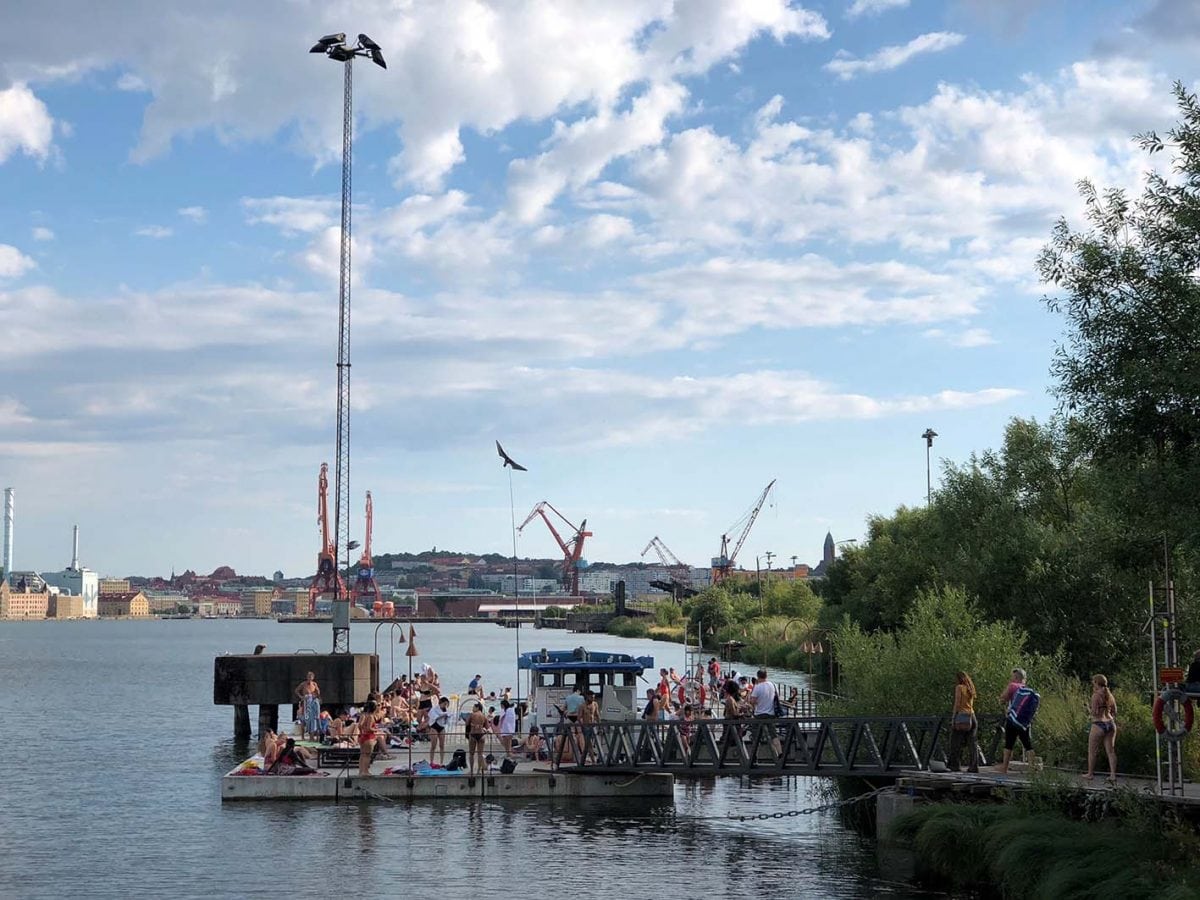
“A definite highlight for me was a roundtable discussion on how to bring an ethos of hope into planning education, and how this might align with students’ early experiences of practice, oh … and the quick dip in the free public swimming pool in the harbour looking on to the city and its working cranes” (Hannah Hickman).
“I was staggered by the revelation that the City of Gothenburg’s planning department has over 300 planning staff, something most Council’s in the UK could only dream of …” (Dr Katie McClymont).
“The diversity of contributions at AESOP never ceases to surprise me; it is such a rich learning environment with the added potential of making new contacts and creating opportunities for future work. As a space for reflection, review, creativity, and inspiration it is hard to beat. As an aside, the Maritime Museum is brilliant!“ (Adam Sheppard)
Looking ahead …
In 2019, the City of Venice will hold the AESOP Congress, hosted by the Department of Design and Planning in Complex Environments at the University Institute of Architecture in Venezia.
More importantly however, in 2020, it is Bristol’s turn, with the Congress being hosted by the University of the West of England. This is a huge opportunity and plans are already underway to ensure the best possible experience for delegates to support the growing international reputation of both the University and the City.