Putting the mobility into transport

Posted on

CTS welcomes Justin Spinney as Professor of Transport and Mobility Studies. Contributing expertise in the fields of cycling, mobility justice, political-economy, and virtual mobilities, Justin aims to complement and extend the scope of research and teaching in CTS and the College of Arts, Technology and Environment.

by Justin Spinney

The first time I met the one and only John Parkin (newly emeritus Professor of Transport Engineering in CTS) I had just started a PhD on Urban Cycling at Royal Holloway University of London. I had seen an announcement for a conference called Velo-City in Paris and thought it might be a good place to get up to speed on all things cycling. With precious little preparation I booked a Eurostar and arrived in Paris late at night with nowhere to stay, and, it turns out, no money: I had just enough cash for one night at #world’sworsthostel. I survived, and the next day made it to the conference knowing absolutely no one. As luck would have it, the first person I started a conversation with happened to be John; I didn’t know then just how good he was or what high regard he was held in. Despite the fact that I clearly had a lot to learn, and certainly knew very little about cycle engineering, he took the time to chat to me, direct me towards some good sessions, and generally made sure I was OK. That was 2003.

Little did I know that 20 years later I would ‘replace’ John (upon his well-earned retirement – no sign of it yet) as Professor of Transport and Mobility Studies in the Centre for Transport and Society at UWE. I use the word ‘replace’ in inverted commas for two reasons: firstly because you can’t replace someone like John – his contribution to the world of cycle engineering, planning, and behaviour change is unlikely to be matched anytime soon. Secondly, because I have (very wisely) not been brought in to replace John; but rather to complement the substantial expertise of CTS in ways that speak to my strengths and research interests in transport and mobility.

A key area of interest for me lies in examining the links between mobility and economic growth, particularly as it relates to post/beyond growth agendas.

There is a growing body of evidence demonstrating that our current approaches to decarbonisation (of all sectors, but most intractably transport) will not meet Net Zero targets in anywhere close to the time we have: Vogel and Hickel 2023 note that whilst the UK is currently the top performer in decoupling emissions from economic growth, at the current rate of progress it will take 220 years to reach Net Zero. In no small part, our obsessions with (poorly distributed) economic growth and technological optimism are inhibiting deep and rapid emissions cuts. As I outlined in the book Understanding Urban Cycling, we need to understand how we can create mobility systems that enable us to recognise, value and count othered forms of social value and personal utility that move away from cost and time as the central metrics of success.

Book Cover for Understanding Urban Cycling by Justin Spinney (source: https://www.routledge.com/Understanding-Urban-Cycling-Exploring-the-Relationship-Between-Mobility-Sustainability-and-Capital/Spinney/p/book/9780367567736)

A further area of interest lies in using post-colonial approaches to examine the ways in which mobility transitions are shaped by policy mobilities; domestic contexts; colonial legacies; and geo-political forces. How for example do existing industrial and labour networks affect sustainable transport policy? How are mobility agendas transmitted, adopted and re-authored and what effects do they have on what are considered viable sustainable mobility choices? I have already begun researching some of these issues in relation to anti-motorcycling policy in Taipei and Taoyuan (Taiwan) and am looking forward to developing them further with (amongst others) Wen-I Lin at NTPU, Paolo Bozzuto at Politecnico Milano, and Jonathan Flower & Graeme Parkhurst at UWE.

I have a long-standing interest in mobility justice, and particularly the ways in which different groups are included/ excluded in transport decision-making and impacted by sustainability policy, design and initiatives.

Extract from Taiwanese newspaper featuring Prof Justin Spinney at the Taoyuan Blueprint conference (source: https://today.line.me/tw/v2/article/60R8KWv)

My previous work on this theme has included Cycling Level of Service and gender; PBSS and surveillance capitalism; Children, cycling and smart cities; Urban cycling safety. There are a whole range of projects related to this theme that I am looking forward to developing with my colleagues in CTS and beyond, most notably work on professional identity and health in van and cargo bike transitions with Daniela Paddeu; research on kids and cycle design guidance with Billy Clayton and Asa Thomas; and energy usage and mode substitution in everyday micro-mobility with Kiron Chaterjee and Muhammad Adeel.

Young child riding on a slope in a BMX park (Source: Photo by 童 彤 on Unsplash)

I’m also looking forward to making a significant contribution to teaching at CTS and the College of Arts, Technology and Environment more broadly, in particular on the excellent MSc Transport Engineering and Planning as module leader for Sustainable Transport Operations and Management; and on the BA Geography as module co-leader for Transport and Mobility. Research-led teaching is an essential part of strong university tuition and I will bring my 20 years of experience in the field of Geography and Mobility Studies to enhance pedagogy and student experience at UWE.

To be here at CTS surrounded by such a talented (and friendly!) group of people who are passionate about helping to create mobility systems fit for the 21st Century and beyond is a real privilege. Even just a few weeks in, I already know I have landed in the right place, and am looking forward to the positive contribution we can make together. Watch this space.

This blog post was written by Professor Justin Spinney  who is Professor of Transport and Mobility Studies at CTS.

Justin Spinney is a human geographer and economic sociologist broadly interested in the intersections between mobility, embodiment, environmental sustainability and technology. He completed his PhD at Royal Holloway University of London in 2007. Straight after PhD he had the good fortune to work with both Professor Tim Jackson (University of Surrey) and Professor Rachel Aldred (at University of East London) as a research fellow. Prior to joining CTS in March 2024, he worked for ten years in the School of Geography and Planning at Cardiff University. He has published widely and been awarded funding from EPSRC, ESRC, Royal Geographical Society and EU ERASMUS+. In 2017 he and his collaborators won the RTPI award for research excellence for the Cycle Boom project.

Why we shouldn’t ignore the transport needs of young people

Posted on

New study warns that young people cannot access work, education and social opportunities due to transport barriers. It finds 16-24-year-olds make 21% fewer trips compared to other working age adults.

Credit: John Linton/Sustrans

“There was this really good job that was paying me way more than where I’m working now… The fact is, the bus system don’t even run early in the morning… it was really emotional… I couldn’t get to that job.”

This quote is typical of how many young people are frustrated about how transport limits the opportunities available to them.

UWE and Sustrans have just published a report which reveals how young people in England and Wales use and experience the transport system and the barriers that exist for meeting their travel needs. It is the culmination of a three-year project called Transport to Thrive which aimed to make the policy case for transport that better enables young people aged 16-24 to make journeys and reach opportunities that help them to thrive. The project was funded by the Health Foundation as part of its Young people’s future health inquiry.

Our report presents new analyses of national travel data, combined with insights from in-depth interviews with young people leaving school and college.

We found young people aged 16-24 make 14% fewer trips compared to the population average and 21% fewer trips compared to working age adults of 25-64 years. The gaps in trip making have widened in the last 20 years with 16-24 year olds making 7% fewer trips per year than the population average in 2002 and the difference widening to 14% by 2019.

Trend in average annual number of trips (source: NTS data for England for 2002-19).

The situation in 2021 (where the effect of the Covid-19 pandemic was still present) is even more stark with 16-24 year olds making 29% fewer trips per year than the population average. Young people’s mobility was acutely affected by the pandemic and it remains to be seen how far it has recovered since then.

Availability and cost of transport are the two main barriers to travel for young people. Interviews revealed multiple instances where young people were unable to pursue opportunities, such as work experience or a better job, due to a lack of transport options and the cost of travel. National travel data showed 16–24-year-olds without car access are 2.1 times more likely to have a low level of trip making compared to 16–24-year-olds who are the main driver of car. It also showed young people from households with the lowest income quintile are 1.4 times more likely to have a low level of mobility (compared to highest income quintile households).

With only 40% of young people aged 16-24 having a full driving licence in comparison to 74% of adults aged 16 or over, young people are more likely to travel using a range of transport options including public transport, walking, cycling and new shared mobility option such as e-scooters. The interviews highlighted how walking and public transport provide access to valuable opportunities that shaped young people’s aspirations and built their knowledge and skills.

“The public bus is really important to me because if it didn’t exist I don’t think I’d have gone to the high school and sixth form that I went to… it pretty much set me up to getting into uni as well.”

However, young people expressed frustration in their interviews with the lack of control they had over their mobility. This is where cycling offers potential advantages over other transport options but has low take-up. Young people highlight lack of access to cycles and lack of safe cycle routes as barriers to cycling.

Credit: Kois Miah/Sustrans

What is clear is that young people contribute less to transport carbon emissions than other age groups, as well as being likely to see the most adverse effects of future climate change.  Many young people state they wish to use cars less in the future because of concerns about climate change. A survey in November 2022 for the Department for Transport found 49% of 16-24 year olds agreed ‘In future, I am willing to use cars less to reduce my contribution to climate change’ compared to 42% across all age groups.

The evidence in the report is the basis for a set of policy recommendations to meet the transport needs of young people. These aim to give young people genuine transport choices to ensure transport no longer holds them back. The starting point is a call on local and national governments to better recognise the needs of young people by giving them a voice in the decisions that affect how they travel.

Other recommendations include:

  1. Providing long term dedicated investment for walking, cycling and public transport.
  2. Devolving powers to local transport authorities to take greater control of buses.
  3. Providing financial support for young people to buy a cycle.

To conclude it is essential that we better meet the transport needs of young people and other disadvantaged groups. At the heart of this is improving active travel and public transport in parallel to support multi-modal, low car lifestyles. Improving transport for 16–24-year-olds will support social and economic outcomes for the next generation of leaders and for society as a whole.

The blog was written by Prof Kiron Chatterjee (Professor of Travel Behaviour at CTS) who worked on the Transport to Thrive project with Dr Sarah Collings (Senior Research Fellow in Transport and Young People at CTS) and Dr Andy Cope (Director of Evidence and Insight at Sustrans).

Kiron Chatterjee is Professor of Travel Behaviour in CTS at UWE Bristol. His research looks at how travel behaviour changes over time, whether at an individual or societal level, and the influence on this of transport systems and social, economic and technological change. In recent years, his attention has also been on how people’s access to transport affects their life opportunities and wellbeing. He led the influential evidence review for the Department for Transport, published in 2018, on reasons for the decline in car driving of young people.

Welcoming new Centre for Transport and Society members

Posted on

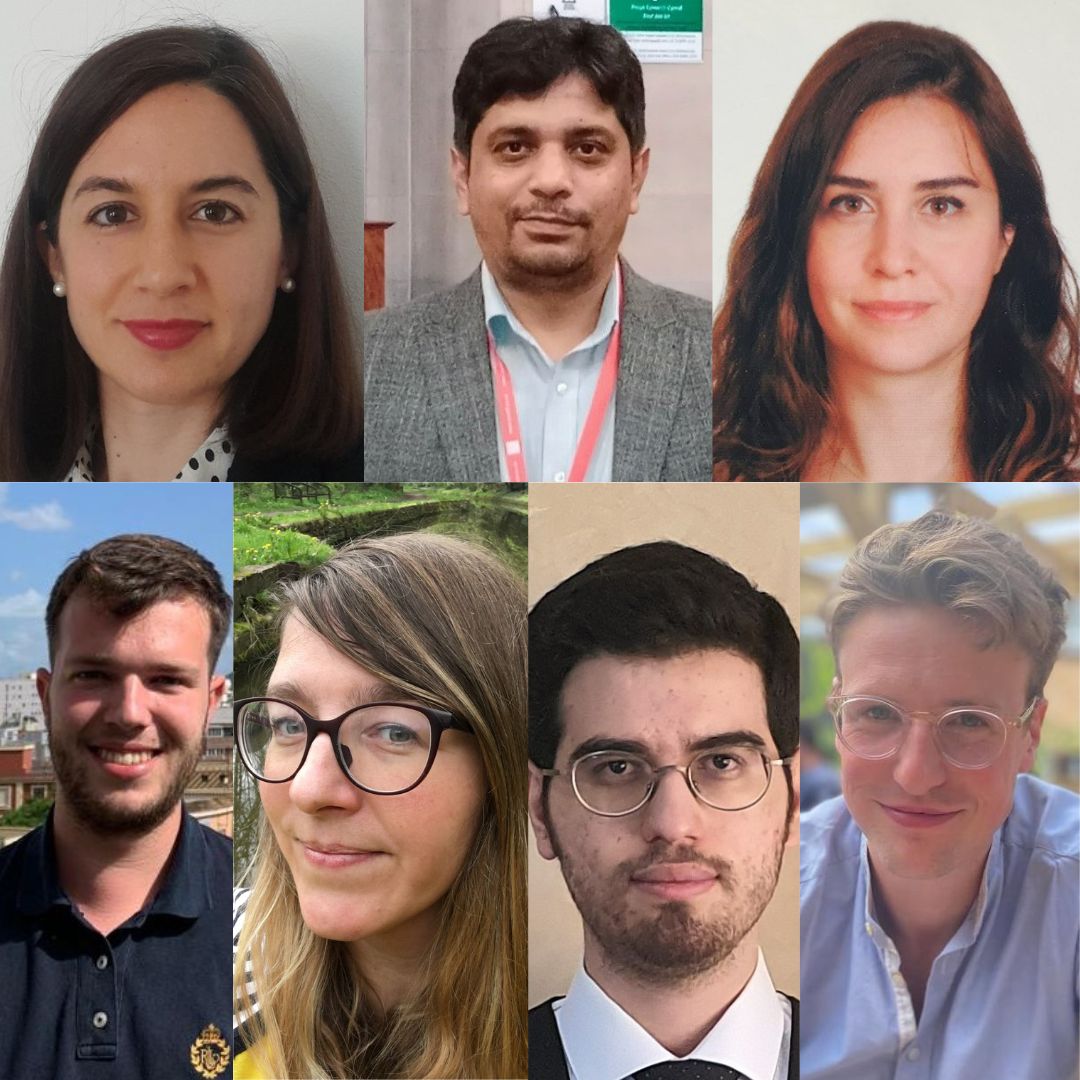
We’re happy to have welcomed many wonderful and talented new faces to the Centre for Transport and Society (CTS) team over the past year. Here’s a brief introduction to our newer members of teaching and research staff as well as our postgraduate research students.

Muhammad Adeel, Research Fellow

I joined UWE in August 2022 as a Research Fellow in Transport Analysis. At the CTS, I am working on a diverse set of interesting and cutting-edge research topics, such as, user experiences in automated vehicles, bus service reliability, and improving transport for young people in the UK.

Before joining UWE, I worked as a Postdoctoral Research Fellow at the Institute of Transport Studies, University of Leeds (2019-2020) and as a researcher at LSE Cities, London School of Economics (2015-2019). Besides that, I have worked as a professional urban planner for many years in Pakistan. I am a Member of Transport Planning Society (TPS) and Fellow of the Royal Geographical Society, UK.

Evangelia Pantelaki, Acting Senior Lecturer in Transport Studies

I joined UWE in September 2022 and I am currently an acting Senior Lecturer. I am a Transport Economist and hold a PhD in Methods and Models for Economic Decisions from University of Insubria (Italy). Also, I am an Associate Fellow of the Higher Education Academy (AFHEA) and I am teaching in the BA Geography, MSc Engineering, and MSc Transport Engineering and Planning at UWE.

My research interests are business aviation, air transport connectivity, sustainable aviation and air transport economics. I have participated in several applied research projects in Italy and the UK and have worked with local authorities and the UK Department for Transport on topics such as cycling tourism, sustainable transport policies, older peoples’ mobility, e-cycles and demand responsive transport.

Mel Cairns, Postgraduate Researcher

Having thoroughly enjoyed my time studying for my MSc Sustainable Development in Practice at UWE, I was delighted to return to begin studying for my PhD in October 2022.

My PhD research is concerned with nature and cycling in the West of England. In particular, I’m exploring the role of nature, and nature connectedness, in cycling practices and experiences in the area as well as the characteristics of ‘nature cyclists’ and ‘nature cycling’ journeys.

I’m interested in urban and rural active mobilities, nature connectedness and planetary wellbeing and mobility justice perspectives. I have previously worked as a researcher on place-based wellbeing projects, particularly relating to rural wellbeing and social capital.

Xabier Gangoiti, Research Associate

I joined the Centre for Transport and Society at UWE in November 2022 as a research trainee. In April 2023, I was offered a new role as research associate in electric automated mobility.

Even though I have a Bachelor’s degree in Economics from the University of the Basque Country, my main research focus so far has been on cities. In fact, I also have a Master’s degree in Sociology (Urban Studies) from Goldsmiths’ College.

At the Centre for Transport and Society, I am currently working on two projects: one about the problems faced by European countries regarding the mass implementation of electric vehicles, and another one involving the first electric automated bus in the UK.

Eda Beyazit Ince, Research Fellow in Active Travel and Micromobility

I joined UWE in the summer of 2023 as a Research Fellow in Active Travel and Micromobility at the Centre for Transport and Society (CTS). Before joining UWE, I worked as an associate professor of urban planning at Istanbul Technical University, where I also founded IstanbulON Urban Mobility Lab. I also spent most of 2022 at the University of Manchester working on the mobility practices of domestic workers as a USF international fellow.

I have a PhD in transport geography from the School of Geography and the Environment at Oxford University. I have worked as a consultant for the Istanbul Sustainable Urban Mobility Plan, Istanbul Pedestrian Master Plan, and various projects and plans focusing on sustainable mobility.

Amin Reza Omranian, Postgraduate Researcher

I have joined UWE in June 2023 as a PhD student at the Centre for Transport and Society (CTS) and Air Quality Management Resource Centre (AQMRC).

My research, a collaboration between the Welsh Government and UWE, focuses on scenarios for achieving Wales’s transport decarbonisation targets and modal shift. My master’s research assessed electric vehicles’ impact on greenhouse gas (GHG) emissions. I also have experience in developing a GHG emission inventory in Iran.

My primary research interests include sustainable transport, transportation emissions, and GHG emissions.

Asa Thomas, Research Fellow in Active Travel and Micromobility

I have just started at the CTS as a Research Fellow in Active Travel and Micromobility while completing the final stages of my PhD in Transport at the University of Westminster. My research to date has focused on active travel to school, School Street closures, and Low Traffic Neighbourhoods – examining the policy processes and mobility impacts of the rapid introduction of these schemes during Covid-19. I’m looking forward to continuing with some of these strands at CTS, particularly while working on the EPSRC-funded OptiWaSP project which focuses on the potential for implementing walking school busses. Prior to my PhD I studied for a masters in Urban Studies at UCL, and took my undergraduate in Social Anthropology at LSE.

Driving: the nail in the coffin

Posted on

On 2nd October 2023, the Government published a ‘Plan for Drivers’. The plan has five themes, and some proposed actions will be bad for drivers as well as other road users.

Whose voice has the government listened to?

The title of the second theme ‘Stopping unfair enforcement’, with five actions, contrasts with the title of the fourth theme of ‘Cracking down on inconsiderate driving’. These themes pull in different directions. The latter has four actions about uninsured drivers, middle lane drivers, noise enforcement, and roadside littering. The unfair enforcement theme deals with 20 mph speed limits, 15-minute cities, low traffic neighbourhoods, and levying of fines.

Mark Harper, the Secretary of State for Transport, writes in the foreword that ‘it is not right that some drivers feel under attack’. Government’s should base actions on evidence about impacts of measures and not the feelings of a few drivers.

Why would drivers want chaos?

Managing the highway network is a political issue as well as a technical issue. The road network has been expanded and managed for the benefit of motor traffic and drivers since the 1960s. The United Kingdom and its professional transport engineers and planners have planned, designed and managed that system. The motor car now dominates the urban environment. Other road users make do with space left over.

Individuals driving on the highway are regulated. This is to maintain capacity and enhance safety for everyone. The alternative to regulation on the roads is chaos.

Trade-off between speed and death

The plan claims safety benefits from investments in previous years. Road collision and injury data, published on 28th September 2023, shows that cars are the vehicle type most often involved in fatal collisions when other road users are killed. Of the 1,711 people killed in collisions in 2022, 685 (40%) were killed in a collision with a car, but were outside the car (See Chart 4).

Lower speed limits save lives, but Action 12 under ‘Stopping unfair enforcement’ suggests updating 20mph zone guidance to prevent ‘blanket’ use. The guidance is more nuanced than the word blanket implies, and local authorities are asked to ‘consider the introduction of more 20 mph limits and zones, over time, in urban areas, to ensure greater safety for pedestrians and cyclists’.

The Welsh approach is that 20 mph is the urban area wide ‘default’ speed limit. Emerging evidence on 20 mph as a default urban speed should be used to strengthen English guidance and save lives, including drivers’ lives.

The mis-reading of ‘planning’ as ‘policing’

Action 13 suggests it will ‘stop local authorities using so-called ‘15-minute cities’ to police people’s lives’. The concept of enhancing access to goods and services for people within a journey time of 15 minutes from home is a planning rather than policing policy. The mis-apprehension implicit is comical. Everyone, including drivers, would benefit from a planning approach that reduces the need to travel.

Impacts in local authority decision making and powers

Action 14 suggests that low traffic neighbourhood implementation may depend on them not attracting public opposition. This reduces the ability for local policy makers to make appropriate decisions in the best interests of the local population.

Actions 15 and 16 are about fines and local authorities’ powers of enforcement. A consultation is proposed on removing local authorities’ access to Driver and Vehicle Licensing Agency (DVLA) data for civil enforcement of offences. This would remove the ability for local authorities to enforce some civil offences.

On the same day as publishing the Plan for Drivers, the network management duty guidance to support active travel was withdrawn.

Local authorities have duties and powers in relation to planning and highways. These proposed actions, and the withdrawal of the guidance, will inappropriately limit local authorities’ abilities and ambitions to plan and manage the highway network.

Overall, the plan for drivers will make travel worse for everyone, including drivers.

CTS conducts research on experience of the travel environment and society and the motor vehicle. This blog was written by John Parkin, Emeritus Professor of Transport Engineering at UWE.

2030 to 2035: what a difference five years make?

Posted on

Rishi Sunak’s announcement of a delay from 2030 to 2035 on the ban on sales of internal combustion engine (ICE) cars is understandable in political terms given the emotive role cars play in many peoples’ lives – mainly, because of the inability of public transport to cope with (sub)urbanisation and rural areas – and a general election being at most 14 months away. Another ‘freedom to drive’ matter, the London Low Emission Zone is credited with the Conservatives retaining the Uxbridge seat at a recent byelection. But does it have any credibility in technical terms in respect of achieving the 2050 Net Zero target?

Sunak made four key claims in support of his delay: that he was merely bringing the UK into line with the 2035 limit selected by comparator countries, that the vast majority of cars bought in 2030 would be EVs whether or not the ban was 2030 or 2035; that he wanted to avoid the costs of the EV transition falling on ‘hardworking families’; and that there was no point pushing an early transition if it could only be achieved by importing cars manufactured in China using carbon-intensive production processes. With the exception of this last point, his rhetoric seems to be on sandy foundations.

It is true in factual terms that having initially determined a date for ending ICE car sales of 2035, Boris Johnson brought it forward to 2030, and this placed the UK in the vanguard internationally. But these national targets cannot be considered in isolation from their wider policy contexts. The European Union has legislated for interim targets which mean car producers must radically reduce the emissions of the cars they sell before 2035 or face a large fine for each vehicle sold. The UK Government has consulted on similar interim targets, known as the ‘Zero Emissions Vehicle mandate’, but they are not yet law. Now that the ban is delayed to 2035 there is clear pressure on the UK to introduce a ZEV mandate which makes it clear that the UK’s transition polices are worth at least as much as those other countries with a 2035 zero emissions deadline.

And this is also important because, despite Brexit, the UK remains very much part of the European car market. If there is any scarcity in the supply of low or zero-emissions vehicles in the run up to 2035, which market will producers choose to serve? One with tough penalties for not achieving interim zero emission vehicle targets, or one without them?

The need to protect ‘hard-working families’ from increased car purchase costs was repeated several times in the speech. But most new cars sold in the UK are bought by corporate customers. Those families on tight budgets would tend to buy used cars. Despite some comments made by Sunak to suggest otherwise, there was never an agreed policy to prevent the sale of used ICEs after 2030.

The support to private purchasers for plug-in vehicles was ended in 2022. Comparator countries like Germany have retained their subsidy programmes.

What the moving of the goalposts does suggest is that the pressure on producers and retailers to deliver affordable EVs in the UK by 2030 will be reduced, and so the problem might simply be delayed by five years. An alternative to moving the deadline might have been to review the availability of grants for zero-emission vehicles. It is notable that Sunak’s speech announced an increase in subsidy for heat pumps from £5,000 to £7,500, but the support to private purchasers for plug-in vehicles was ended in 2022. Comparator countries like Germany have retained their subsidy programmes.

Where the policy review does have a point is the risk of Europe becoming reliant on EVs manufactured in China using carbon-intensive production processes, for the batteries in particular. This is important because compared to an ICE a larger share of the lifecycle carbon for an EV comes from the production stage. However, simply moving the target does not make the UK immune to these high-carbon vehicles being imported. That is a matter for production standards and trade policy.

If Sunak really wants to address the four concerns he raised and retain the UK’s status as a net zero pioneer, he now needs to combine his delayed target with ambitious supporting policies. Interim targets for EV market share with sanctions should be set, ensuring the transition does not lose pace while ‘hard to charge’ consumers retain an additional five years to adjust. For those experiencing financial barriers to EV ownership, he should consider a policy such as that being developed by the French to provide social lease and purchase subsidy solutions targeted to families with limited financial means and valid only for EVs achieving low carbon production standards.

This blog was written by Prof Graham Parkhurst, Professor of Sustainable Mobility and Director of CTS, and Xabier Gangoiti, Research Associate at CTS, University of the West of England, Bristol.

Why a car is not just a car

Posted on

Social aspects of mobility have been widely disregarded in social sciences, while at the same time there is a widespread fetishism around cars as machines with magical powers.

Throughout modern history, revolutions in transport have not just altered mobility or the geography of places; they have been absolutely necessary for the economic, political and historical development of whole countries. Railways, for example, due to its ability to connect remote areas rapidly, succeeded in speeding up not only the commercial and migration flows of Western countries on the 19th Century; they also speeded up the collapse of pre-capitalist social formations, fostering modern national cohesion and helping in dismantling ancient administrative boundaries. Furthermore, railways revolutionised time itself: prior to the development of railways, time varied from town to town, as this entirely depended upon each town’s solar time. In 1840, the Great Western Railway standardised the time in all the stations.

However, what standardised time were not just some series of connected carriages known as “trains”. It was rather the skyrocketing of commuting journeys and migrations within the development of new capitalist and economic relations in England what was a radically new phenomenon – and which, at the same time, was only possible thanks to railways.

Wars were also important driving forces behind railway construction. During the American Civil War, “the North” saw necessary to build a modern railway network to assure a more efficient way to supply its army. They also enabled a sort of modern mobility in wars, making logistic chains faster and dependent upon railways. Such a modern technology contributed to a widespread fear among European governments, that were worried about the rapid military mobilisation capacities of other countries.

If trains were the paradigmatic means of transport in the 19th Century, the 20th Century would be the witness of another important revolution in transport: the private car. John Urry described the car as the quintessential commodity of the 20th Century.

Shortly, the secret of the success of the private car in the post-war era lied in the fact that these were massively produced by workers who received a relatively high wage and that had more stable working conditions than nowadays.

Massively produced cars were sold because workers had a high enough purchasing power. This was coherently accompanied by a massive investment in the construction of suburbs – which are connected to cities by means of the car – and highways. In conclusion, this system known as Fordism fulfilled certain requirements for a stable functioning of capitalism: it assured that produced commodities could be afterwards sold in the market – thus avoiding overproduction crises – and pushed forward the development of important industries such as oil refining, roadbuilding, retail parks… achieving high rates of employment and economic growth.

Though so-called Fordism collapsed as a consequence of 1973 oil crisis, automobility has remained dominant, and cars – and carmakers – still play a fundamental role in mobility, economy and society. The economic growth in the post-war era was not just an era of economic growth. It entailed massive changes in the built landscape, in geographies, in mobility and in economic relations that have remained deeply rooted in the everyday life of modern countries.

That is why phasing-out cars is such a difficult task, especially in countries with a high suburban population like the US.

The difference between railways and private cars’ historical role lies in its relation to the economic and social agenda of their time; whereas railways contributed to the dismantling of the Ancient Regime and to the emergence of new capitalist relations, private cars arise in a time of a global crisis of capitalism itself – heralded by two World Wars and by the Crash of 29 – to provide a solution to the problems that accumulation had encountered in the previous decades.

The power of private cars in reshaping economy, geography and society seems magical. There is indeed a wide fetishism around the car manifested at different levels: by those users who think freedom consists in having the chance to drive a car and by those policymakers and scholars who do not envisage a world without cars. Even a critical sociologist like Urry defined automobility as autopoietic. This means that automobility would be capable of producing itself – and only itself – its own surrounding world. Far from being autopoietic, what automobility actually entails is a circular, tautological coherence, insofar as it allowed the emergence of a deeply fixed geography (expressed through a massive suburban sprawl, an endless system of highways and roads…) and economic relations in which, in a very simplified way, people just work to save money, save money to purchase a car, and purchase a car to go to work.

Last October, CTS colleagues Graham Parkhurst and William Clayton edited “Electrifying Mobility: Realising a Sustainable Future for the Car”, a book that addresses some of the multiple problems that an electric transition in a complex industry like this entails. Graham Parkhurst and Xabier Gangoiti are currently working on a paper aimed at discussing the barriers that a business-as-usual transition to electric cars faces in Europe. These problems range from the dependence to electric batteries manufactured in China to the possible unemployment issues caused by such electric transition – and the subsequent difficulties in making the electric vehicle an affordable, massively consumed commodity.

This blog was written by Xabier Gangoiti, Research Trainee at the Centre for Transport and Society, University of the West of England, Bristol.

A turn for the better: implications of the Welsh Government’s world-leading roads policy

Posted on

Welsh transport policy moved on dramatically on the 14th February 2023 with the announcement of its new roads policy. This development emanated from the scrutiny of roads in the current programme in the Welsh Roads Review Panel report, published on the same day. The report contained recommendations for the types of transport infrastructure scheme to support in the future.

What strategies have led to the new policy?

The Welsh Government’s Wales Transport Strategy of March 2021 has three priorities:

  1. to bring services to people in order to reduce the need to travel;
  2. to allow people and goods to move easily from to door by accessible, sustainable and efficient transport services and infrastructure; and
  3. to encourage people to make the change to more sustainable transport.

The ambitions of the transport strategy are to create conditions which are good for people and communities, the environment, the economy and places, and culture and the Welsh language. These ambitions align with the legal framework of the Well-being of Future Generations (Wales) Act which is concerned with improving the social, economic, environmental and cultural well-being of Wales.

The transport strategy is fully aligned with the Net Zero Wales Carbon Budget 2, which has the ambition of reducing emissions from passenger transport by 22% in 2025 and 98% in 2050, reducing the number of car miles travelled per person by 10% by 2030, and increasing the proportion of trips by public transport and active travel to 35% by 2025 and 39% by 2030.

Further policy support is provided by the Future Wales – the National Plan 2040 which sets an aim for people to live in places where travel has low environmental impact and low emissions, with reduced reliance on private vehicles.

The transport strategy adopts a Sustainable Transport Hierarchy to guide decisions on investment in infrastructure, which prioritises walking and cycling (active travel), then public transport, then ultra-low emission vehicles, and finally other private motor vehicles.

(Source: Wales Transport Strategy)

The Welsh Government is demonstrating that strong transport strategy needs to align with planning, environmental and well-being strategies.

What is the new roads policy?

The Welsh Government established a Roads Review Panel to report on road investment so that it is aligned to the delivery of the Wales Transport Strategy ambitions and priorities. The Welsh Government’s roads policy is now that ‘all new roads need to contribute towards achieving modal shift – both to tackle climate change and to reduce congestion on the road network for freight’. The Welsh Government will continue to consider investment in roads in the following circumstances:

  1. To support modal shift and reduce carbon emissions.
  2. To improve safety through small-scale changes.
  3. To adapt to the impacts of climate change.
  4. To provide access and connectivity to jobs and centres of economic activity in a way that supports modal shift.

In more detail, the Roads Review Panel report defines four conditions that investment schemes should meet as follows:

  1. Minimise carbon emissions in construction;
  2. Not increase road capacity for cars;
  3. Not lead to higher vehicle speeds that increase emissions; and
  4. Not adversely affect ecologically valuable sites.

What are the implications?

The Panel report presents many wide-ranging recommendations relating to the delivery and design of schemes. These have included recommendations concerned with design speed, speed limit reviews, road safety and highway maintenance.

With walking and cycling being at the top of the Sustainable Transport Hierarchy, all road schemes should support active travel network development as a primary objective. The Panel report states that all new roads ‘must have appropriate provision for active travel’. This requires comprehensive networks of comfortable and attractive routes to cater for people of all abilities. To create comprehensive active travel networks, the Panel report recommends that rural investment schemes have their boundaries extended so that active travel routes reach the nearest adjacent settlements to the scheme.

Further, the Panel report emphasises guidance provided to designers that states that they ‘should be realistic about cyclists wanting to make adequate progress’ (para 11.16.6 of the Active Travel Act Guidance). This is a direct call to designers, pointing out the need for them to take the guidance seriously. The Panel also states that ‘cycle traffic should preferably be separated from pedestrian traffic to avoid conflict and allow cyclists to travel at a comfortable speed’ (para 9.13.1).

As the Panel’s report suggests, transport planners, highway engineers and traffic engineers need to improve conditions for active travel users in the same way that in the past these improvements have been directed to private car users. The Panel has also pointed to the need for further design development in relation to active travel, particularly highlighting the absence in the design guidance of roundabout designs for rural situations.

Should the Active Travel Act be updated?

The Active Travel (Wales) Act 2013 requires local authorities to ‘have regard to the integrated network map for its area’ (Section 6), and then they ‘must in every year secure that there are (a) new active travel routes and related facilities, and (b) improvements of existing active travel routes and related facilities’ (Section 7). Hence the act only creates a legal requirement to ‘plan’, and following that, there is no minimum specified for the quantum of new routes and facilities that need to be secured.

Beyond giving grants, it may be time for the Welsh Government to secure collaborative agreements with local authorities for the delivery of schemes that will then more significantly change the quantum of active travel infrastructure, and hence active travelling by larger proportions of the population.

As well as further development of delivery mechanisms for active travel schemes, the professions need to apply their skills and knowledge to deliver a sustainable transport system for Wales.

The climate emergency has completely changed the task at hand for transport professionals.

This blog was written by John Parkin, Professor of Transport Engineering, Deputy Director, Centre for Transport and Society, University of the West of England, Bristol.

CTS researchers launch innovative international project to study the links between walking environments and people’s experiences, through mobile digital technology

Posted on

Comparing how people experience busy and greener walking routes in Bristol, Auckland, and Buenos Aires, using an innovative walking app.

Walking is something most of us do, no matter our age, income, background, or ethnicity. You would be forgiven for thinking that transport planners know all about it and have used that knowledge to sort our streets, so that they are accessible and pleasant for all those diverse users.

Surprisingly though, it is still not well understood how specific features of the built environment influence people’s perceptions and behaviours (such as for instance choosing or not to walk to a nearby destination).

This is a problem, because we want to move in a carbon-neutral way, yet our street environments might make walking feel unpleasant, dangerous, or even non-feasible for some. And without understanding what the issue is, there is a risk of “making nice places nicer” while failing to address what really matters.

Investigators from the Centre for Transport & Society (Project Lead Dr Tamara Bozovic and Dr Miriam Ricci) are part of an international team launching the project “Mobile digital technology as a tool to study walkability to advance theory, policy, and practice of walking for transport”.

The project is to investigate the associations between objective features and perceptions in three very different locations: Bristol, Auckland, and Buenos Aires, using an innovative walking app (Go Jauntly).

In each city, participants will be recruited through local organisations and invited to walk two pre-defined routes: a direct route and a tranquil and green route, both linking the same origin and destination. The app will provide participants information about their walk and prompt questions about the experience.

This pilot study is designed as a steppingstone towards a broader application which would enable comparisons across demographic groups (e.g., ages, or disability statuses) but also broaden the investigated urban contexts (including for instance Asian or North American cities).

The pilot is funded by the Volvo Research and Education Foundation and will run for one year. The team includes researchers from Auckland University of Technology (Professor Erica Hinckson), University of Auckland (Professor Melody Smith), and the National University of San Martin, Buenos Aires (Carla Galeota and Dr Lorena Vescalir), as well as two UK-based businesses: App creators Go Jauntly Ltd, developing the app, and Tranquil City, specialising in the provision and analysis of environmental data serving the app.

This blog post was written by Tamara Bozovic (Project Lead) and Miriam Ricci.

Tamara Bozovic is a transport engineer interested in ways transport systems can help cities become carbon-neutral, liveable, and inclusive, while protecting environmental and human health. After a 15-year practice on three continents, her PhD examined barriers to walking – perceived, measured, understood by professionals and described in technical documents – focusing on a car-centric city and interviewing disabled and non-disabled participants. Now as a research fellow at UWE, Tamara is in charge of gathering data and developing insights on ways urban interventions might support or promote sustainable travel.

Miriam Ricci is a Senior Research Fellow at the Centre for Transport & Society at the University of the West of England, Bristol (UK). Her key research interest is sustainable and equitable urban mobility, with a focus on making walking and public transport more inclusive, attractive and accessible to all. She has extensive expertise in qualitative and participatory social research, applied to a diverse range of topics, such evaluation of sustainable mobility interventions, public engagement with transport innovations and the study of transport disadvantage and social exclusion.

How Sustainable is the Electric Car?

Posted on

A new book edited by Graham Parkhurst and Billy Clayton tackles the critical question as to whether the rise of the electric car represents an important contribution to sustainable mobility.

The extent to which the transition from internal combustion engine cars to electric cars represents an important contribution to sustainable mobility is the central question addressed by a new book edited by CTS colleagues Graham Parkhurst and Billy Clayton . Given the socioeconomic importance of the car, and its impacts on the environment, ‘Electrifying Mobility: Realising a Sustainable Future for the Car’ takes a multidisciplinary approach, with its authors and perspectives drawn from sociology, social and environmental psychology, business studies, political studies, sociotechnical transition studies and environmental science, as well as transport planning and geography.

Across twelve chapters organised in four parts, the narrative considers how ‘electrification’ alters the inter-relationships between society, the economy and the built environment that have coevolved over the last century, including the practices of organisation and production of the automotive industry itself. Examination of the extent to which electric cars could offer a sufficiently environmentally benign ‘technical fix’ to avoid the need for behaviour change is balanced by exploration of the extent to which the electric car is changing both government policies and citizens’ attitudes, behaviours, and traveller ‘experiences’. Major technical and delivery challenges are acknowledged, notably that battery technology is improving, but remains constrained and expensive, and the need to plan and fund the delivery of a publicly-available charging network as a critical ‘dependency’ for mass uptake. However, technological opportunities are also noted, through integration with trends for higher automation and digital connectivity of vehicles, and the shared mobility that those changes may encourage.

In the final chapter, Parkhurst and Clayton conclude that the once tentative and contested transition to electric cars as now being unstoppable, but with the interrelated factors of vehicle range and total cost of ownership remaining as key moderators of its speed and nature.

Electrification is also seen as being far from the harmonious and smooth representations of its public image; instead recreating long-standing local conflicts over road space for moving and parked vehicles and new forms of global contest for access to material resources.

Also acknowledged is the long timeline of transition, and the problem presented by an established global fleet of some billion internal combustion engine vehicles. Potential enhancements to the environmental sustainability of the transition are mooted, such as a greater role for retrofit battery-electric conversions and new ways of paying for the full costs of road use, but in the final analysis, the answer to the fundamental question must lie in the wider context of mobility practices and policies, in other words, a sustainable future for the car implies not just a new way of powering it, but a different role for the car in both the economy and society.

This blog post was written by Graham Parkhurst who is Professor of Sustainable Mobility and directs the research centre

Electrifying Mobility: Realising a Sustainable Future for the Car was published in hardback and electronically by Emerald in October 2022.


Online shopping and home deliveries: how can we reduce carbon emissions?

Posted on

Do you know how much carbon you produce when you buy something? The UK is the third market worldwide for online shopping. Read the post to find out how we can decarbonise last-mile deliveries.

by Daniela Paddeu

Have you ever wondered how much carbon you generate when you buy a product? An increasing number of people look for organic or sustainable products, buy from sustainable companies, try to reduce plastics/packaging. We might feel we are sustainable consumers, but we still want our products to be delivered on the next day, sometimes the same day or even the same hour. Because it is convenient and appealing. However, it is also definitely not sustainable.

The UK is the first market in Europe for e-commerce, and the third in the world, just after China and the U.S.

Buying is easy: you can buy whatever you want, have it delivered whenever you want, and you can also return it if you don’t like it. It’s easy! Consumers buy much more than they need, and 25% of products are returned. This generates an increased volume of van movements (+106% increase in the last 25 years), and numbers are expected to significantly grow in the future.

Therefore, it is urgent to design and undertake actions to reduce the negative impact of last-mile deliveries. This was the main driver of the CoDe ZERO project. The project explored stakeholders’ perspective towards sustainable solutions to decarbonise urban freight, focussing on the North of England. Together with key freight stakeholders based in the North, we co-designed a roadmap with a series of solutions that can be implemented in the next 20 years to reduce carbon emissions from freight movements in urban areas.

The challenge of changing behaviour…

Findings show that stakeholders understand the importance of decarbonising urban freight to achieve the net zero target by 2050 (or even sooner). They also foresee challenges, mainly related to the development of efficient cleaner technological solutions and to behaviour/organisational change. They believe that there will not be a single perfect solution. Instead, urban freight decarbonisation will require the integration of a series of technical solutions and organisational/behavioural change.

Electrification and new fuels seem to be the most promising solution to decarbonise urban freight.

Among the technical solutions, electrification and new fuels (e.g., hydrogen) are seen as the most promising ways to achieve urban freight decarbonisation. However, their full implementation might require time, especially due to technological development, and other solutions would be needed to start reducing carbon emissions in the short term. These include, for example, the use of cleaner fuels (e.g., biogases), urban freight consolidation schemes, and the use of e-cargo bikes together with micro-consolidation. However, there might be some big challenges to implement these solutions, and a lot of uncertainty towards their effectiveness. For example, big logistics operators already consolidate at a very optimal level. So, are we sure this is going to be a commercially/operationally viable option? Also, electric might not be the only net zero solution for an urban environment. Can Compressed Natural Gas or Liquefied Natural Gas have a role given the goal is net zero not absolute zero?

Consolidation schemes, and collaborative schemes in general, were identified as being equally “powerful” compared to more technological solutions. However, bigger companies might be in a stronger position in terms of managing and sharing information and operations. So, what if some players gain a greater advantage than others, and smaller operators are not strong enough to survive?

How do we get there?

In general, the findings of the project indicate that there might be a range of solutions to decarbonise urban freight, but it is not clear how these solutions should be practically adopted, and where responsibilities lie. Considering future policy and research, a strong final question about urban freight decarbonisation remains: how do we get there?

If you want to find more, you can read the final report.

This blog post was written by Dr Daniela Paddeu who is a senior researcher (freight specialist) at CTS.

Back to top

Follow this blog

Get every new post delivered right to your inbox.