CTS Symposium 2026: Key insights 

Posted on

On the 2nd of July we once again welcomed a broad group of researchers and practitioners to UWE’s Frenchay campus for our annual CTS Symposium.

Many thanks to the delegates that visited us in person for a day of updates and discussion on another year of CTS research. For the first time the symposium was also a hybrid event, allowing participants from the community of researchers and practitioners in Ukraine to join us online. Our Visiting Fellow, Dmytro Roslavtsev (National University of Urban Economy in Kharkiv), was instrumental in making this happen and we are incredibly grateful to the Ukrainian delegates who took the time to join us and for contributed their perspectives on working in what is, suffice to say, a very different and more challenging context to ours.  

This blog will give a flavour of the day’s happenings and links to some of the presentations for future reference.  

Morning Sessions 

The day started with a welcome and scene-setting from CTS Director Professor Graham Parkhurst and our School’s Director of Research and Enterprise Professor Enda Hayes. The morning’s plenary came from Steve Gooding, Director of the RAC Foundation and Visiting Professor at CTS. His talk focused on the UK’s history of integrated transport strategy in light of the Department for Transport’s recent publication of Better Connected. Comparing the last major attempt at creating an integrated transport strategy under New Labour, Steve’s talk highlighted the more pragmatic approach put forward by Better Connected. A key lesson from these previous attempts is that a strategy, no matter how sensible, is only as good as the political will to implement it and the circumstances into which they emerge.  

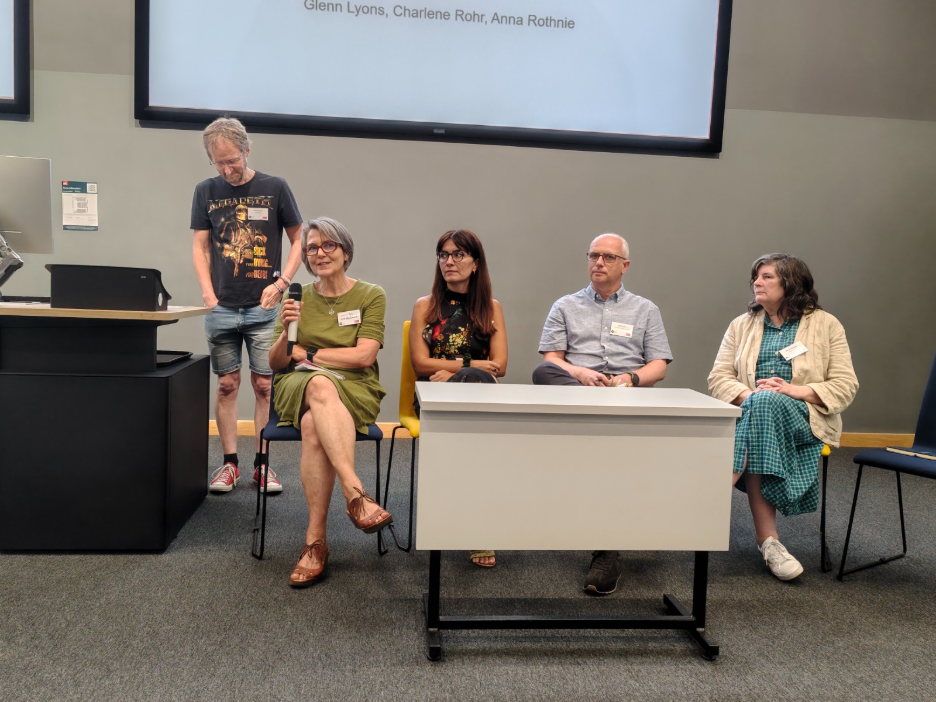
Our panel members give their views on vision-led planning

Steve’s presentation was based on a forthcoming paper co-written with Professor Glenn Lyons, who also facilitated the morning’s panel discussion. Jon Parker (Jon Parker Consultancy and Visiting Professor at CTS), Helen Bowkett (Arcadis and Visiting Professor at CTS), Charlene Rohr (Mott MacDonald), Professor Daniela Paddeu (UWE/CTS) were invited to consider whether vision-led planning approaches (including Triple Access Planning) are diffusing into wider transport planning practice or remain marginal while predict-and-provide prevails. Among the panel there was broad agreement that vision-led planning was both necessary and increasingly relevant in a time of greater uncertainty. However, questions were raised around whether predict-and-provide was ever as paradigmatic as the framing suggested, and relatedly, whether there was a risk that the concept of vision-led planning could be diluted as greater adoption is accepted. Slides from Glenn’s introduction to the panel discussion, written with Charlene Rohr and Anna Rothnie are available here

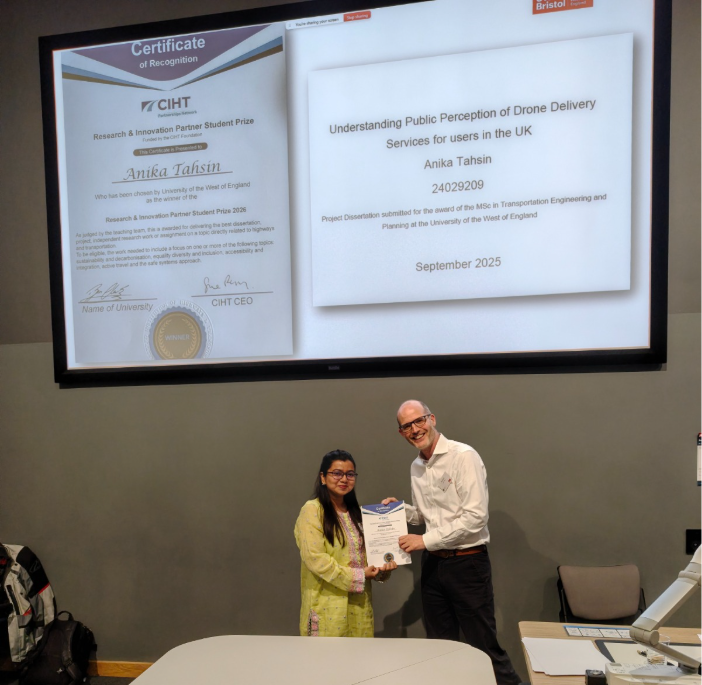
Closing out the first session was the announcement of the winner of our CIHT-sponsored MSc dissertation prize. This year the prize was awarded to Anika Tahsin for the project titled ‘Understanding Public Perception of Drone Delivery Services for users in the UK’, which received high-praised from Dr. Ben Clark who presented her with the official certificate. 

Anika Tahsin accepts her dissertation award from Dr Ben Clark

Anika also presented her work in one of two parallel sessions focused on recent UWE research which closed out the morning. Her work formed part of the session on Governing the Just Transition which also featured presentations from Professor Graham Parkhurst and Professor Daniela Paddeu. Anika’s research highlighted people’s concerns around drone noise and made the case that public perceptions of drone deliveries should form a core component of the governance of this new technology. Daniela’s work focused on the workforce challenges associated with the decarbonisation of heavy freight and bus transport. Driver shortages and skills gaps must also be addressed alongside technological innovation to ensure an equitable transition. Finally, Graham’s presentation considered the transition to electric cars. Key challenges here include the risk that unequal access to affordable charging infrastructure and future road user taxation may dampen public support for these technologies. See Graham’s slides here, and Daniela’s slides here

The other parallel session focused on another core pillar of CTS’s research activities, Promoting sustainable transport planning. Presentations from Dr Jonathan FlowerDr Ben Clark, and Dr Asa Thomas all drew on insights from evaluations and analyses of a range of local initiatives and interventions to consider the challenges of achieving significant behavioural changes. Jonathan’s presentation was a close look at active travel infrastructure, including pedestrian crossings and footways, exploring how network gaps or inappropriate provision can limit widespread access. Ben and Asa both presented on findings from recent evaluation studies conducted by CTS for local authority partners, namely Bristol City Council’s active travel offers scheme and Bath and Northeast Somerset’s active travel social prescribing pilot. Common insights from these projects centred around the tensions between supporting existing sustainable mobility or encouraging physical activity and the wider and more challenging aim of achieving lasting behaviour change for everyday mobility. See Ben’s slides here

Afternoon Sessions 

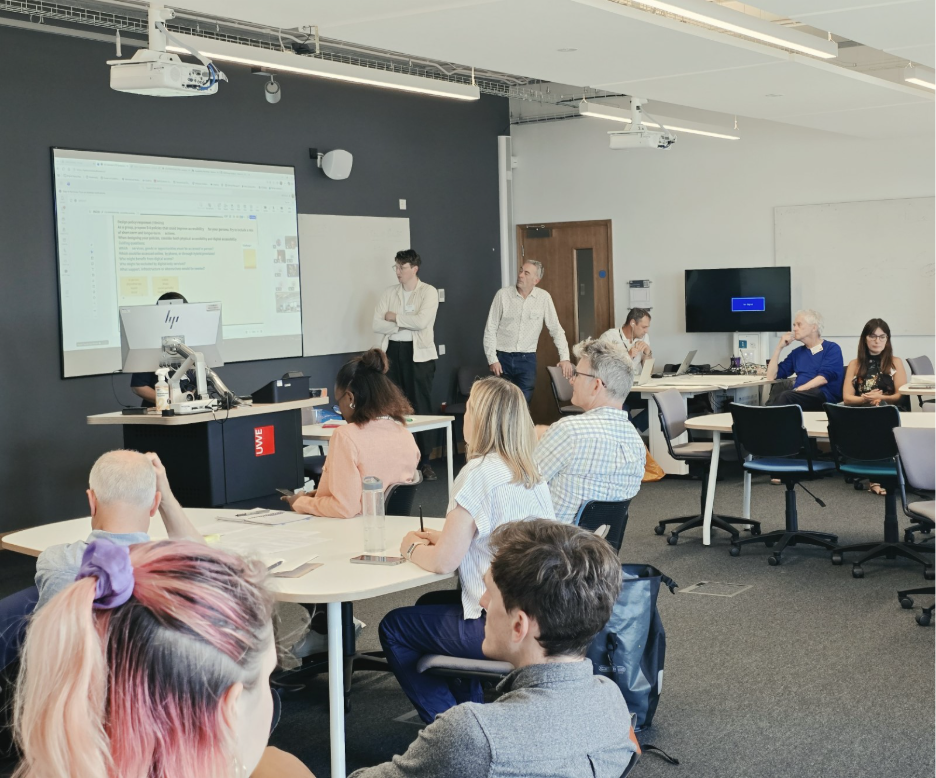
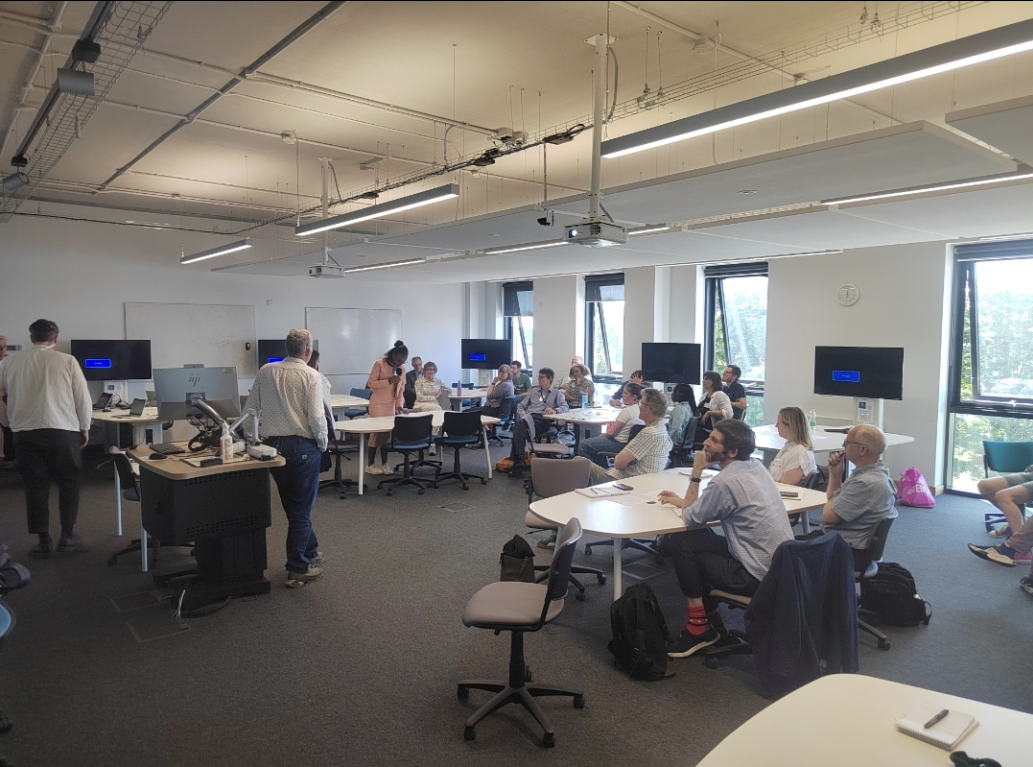
After lunch, and the optional Net Walks around campus, we all split off into two groups for the afternoon’s workshops. One of our past Visiting Scholars Mara Ladu (University of Cagliari, Italy) led a workshop (supported by Prof Daniela Paddeu, Prof Justin Spinney, and Dmytro Roslavtsev and others) unpicking the differing conceptions of accessibility currently in use and what this means for sustainable development planning. The breakout groups, including an online group from Ukraine, brainstormed different ways to think about accessibility beyond spatial access to goods and services. The Ukrainian delegates emphasised the challenges of providing mobility to a post-conflict population, especially where physical disability from combat will present barriers to access for many.  

Ukrainian delegates share their views on accessibility in our hybrid workshop

The other major workshop looked at recent work on the transport issues facing workers in Bristol’s Night-Time Economy. This area has been traditionally underserved by the transport system relative to its contribution to local economies. These mobility deficits have been the subject of a project undertaken by Graham Parkhurst, Eda Beyazit and Rob Rivera Fernandez for Bristol City Council. The workshop, also supported by Mel Cairns, began with a presentation summarising the project’s findings. Delegates then joined one of three guided discussion groups which each interrogated one of the proposed ‘priority actions’ to enhance mobility for the NTE: better coordination of demand and supply; better data for inclusive planning of night-time travel; and the role of new transport service offers. 

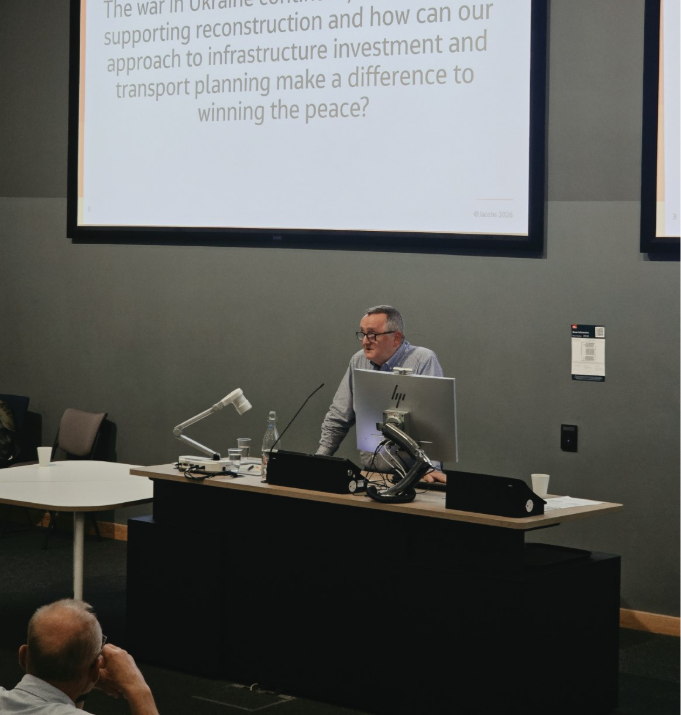
Paul Hammond delivering his keynote lecture on TOD in Ukraine

Towards the end of the afternoon, we all reconvened in main lecture theatre to hear from Paul Hammond (Jacobs and Visiting Professor at CTS) for his keynote lecture reflecting on his work supporting transport-oriented development in Ukraine. Alongside his personal reflections on working in this context, Paul made the case that adopting TOD principles in post-war reconstruction will help catalyse wider economic development and international investment. After a round of questions, Graham provided some final words to wrap up the day’s activities, and we finished off will a well-earned drinks reception in the atrium of the Bristol Business School.  

Thanks again to all who contributed or attended for the day (whether online or in person). We look forward to welcoming you back to CTS next summer. If you weren’t able to make it, please do consider attending next year! 

In the meantime, keep an eye on the CTS LinkedIn Group for updates.

Balancing inclusion and best practice with limited budgets: Cycling infrastructure in Oxfordshire

Posted on

Reflections on a Cycling @ Teatime seminar and tour of Oxford’s cycling infrastructure

Bikes in Oxford. Photo by Haydon on Unsplash

by Mel Cairns, Postgraduate Researcher at Centre for Transport and Society

I’d like to share some reflections after an interesting ‘Cycling at Teatime’ cycle tour and seminar showcasing cycling infrastructure in Oxford on 8th December 2025. The tour was led by Patrick Lingwood, formerly Active Travel team leader at Oxfordshire City Council, and he made the case for his ‘Oxford Approach’ of quickways and quietways by demonstrating how it feels to use each type of infrastructure to ride through the city.

Quickways and quietways

The quickways and quietways approach, inspired by London’s network of cycle superhighways and quietways, aimed to provide cyclists with two different types of routes to connect the city centre with various suburban areas. Quickways are wide, good quality, on-road cycle lanes connecting the city centre with several outer suburbs. They minimise stopping and provide space for overtaking, affording more streamlined journeys for faster and more confident cyclists. Quietways use quiet and traffic-calmed residential streets to offer a more peaceful journey away from heavy traffic, albeit with more turns and stopping. In both cases, the highway infrastructure is amended to shape driver behaviour as well, for example using narrower lanes for motor traffic to encourage slower speeds.

My riding experience

I was impressed by the extent and connectivity of the network as well as the contrast between the quickways and quietways in terms of the sensory experience and effort efficiency. The quickways enabled faster riding with greater efficiency because the surfaces were smooth and stopping was minimised. Although they were on the carriageway, most of the cycle lanes were wide enough, and the traffic slow enough, to minimise that ‘close pass’ feeling of some on-road lanes. That said, some of the unfamiliar junction layouts felt a little vulnerable to navigate, even with Patrick’s instructions.

The quietways, in contrast, were more relaxing because of the lower level of traffic noise and the visual interest of the historic buildings and gardens. However, there was more ‘friction’ in the journey, due to more frequent slowing and stopping, and wayfinding required more attention.

Pros and cons of integrating infrastructure for cycling and nature

My research is about cycling and nature, and a small rain garden and a brook were the main natural features taken in by the tour. The rain garden, enthusiastically pointed out by a local councillor, had been implemented as part of an active travel infrastructure scheme and brought a small area of pleasant planting to a fairly urban street. The brook, alongside which a pretty narrow pedestrian path had been opened up to cyclists, was mentioned because of the unfortunate occurrence of multiple cyclists falling into it. Not the positive experience of waterside cycling I had expected! But the offering of streamlined, efficient main road routes and quieter, slower more experiential ones chimes with the different preferences of my research participants; quieter urban routes were valued for the opportunity to dial down the attention required to navigate heavy traffic and to tune in more to aspects of the surroundings like birdsong and garden flowers.

Woman cycling in Oxford. Photo by Sharad Sreenivas on Unsplash

Alternative approaches

After the tour, we were promised fisticuffs as Patrick’s approach was subject to response, critique and discussion by Mariam Draaijer, CEO of Joyriders, an inclusive cycling organisation based in London, and Robin Tucker from Oxfordshire Cycle Network. Mariam argued that women, children and other minoritised groups are already disadvantaged by the transport system and that it’s vital that new infrastructure is built to meet their needs. Whereas Patrick’s quickways and quietways approach had been focused primarily on enabling existing cyclists to cycle more journeys, by creating an extensive network of routes that most people could use, Mariam advocated for higher quality routes that everyone would use. Meeting the needs of the most vulnerable road users means that new infrastructure can be used by everyone, which is a fairer way to spend transport funding and avoids exacerbating existing transport and access inequalities.

Robin perhaps represented a middle view, as he shared ambitions and plans for cycling links between most of Oxfordshire’s market towns. He presented the problem of active travel funding and the compromises invited by the astronomical cost of installing one section of segregated cycleway to meet the inclusive needs Mariam raised. Such a cycleway might be of very limited benefit without a wider network – which could be installed to a less inclusive standard across the whole area for a similar cost.

So, what do I think about this? It’s a head-scratcher!

Of course, in an ideal world, there would be funding to do it all, but unfortunately this isn’t the world we currently face. While I feel strongly that inclusion should be the default priority, spending most of the funding on gold-standard segregated infrastructure that will benefit only a tiny proportion of people in ways that are very limited without a wider network seems neither prudent nor just.

One size doesn’t fit all

That said, Robin made this specific case for Oxfordshire, and I don’t think that these kinds of decisions should be made with a one-size-fits-all approach – the local context is a crucial factor. If one piece of segregated infrastructure would take up a large chunk of the budget but fill a strategic gap in an existing network that benefits the most vulnerable, for example creating safe routes to a school, then that’s quite a different proposition. As are situations where an area is very likely to benefit from additional new infrastructure funded through developers in the near future.

Changing culture

In presenting the quickways and quietways approach, Patrick emphasised the use of insights about the culture and profile of local cyclists to inform design and maximise usage of new cycle routes and infrastructure. CTS Research Fellow in Active Travel and Micromobility, Dr. Eda Beyazit agrees on the importance of culture here:

“I understand your uncertainty about segregated infrastructure when budgets are limited (as they usually are). Last year, I interviewed two staff members from the World Bicycle Relief. Having heard about their experience, especially in rural areas of the Global South, I also tend to agree with you (and Robin) that segregated infrastructure would not be the sole solution to inclusivity (especially when the network is not connected). Segregated lanes can be so beneficial for both inexperienced and experienced riders in terms of safety and confidence but they may not be enough to encourage relatively more vulnerable groups to cycle. As you say, cycling culture is also something that should be considered when planning cycle routes – it’s not a situation that ‘if we build it, they will use’.”

So, what’s the answer?

In summary, in the absence of sufficient funding to offer fully segregated networks, I’m won over by Patrick’s approach of using local insights to maximise cycling trips with cheaper infrastructure that is not segregated but reduces the speed and volume of motor traffic to improve actual and perceived safety. However, I asked CTS Emeritus Professor of Transport Engineering John Parkin for his perspective on this debate. He emphasised the difficult decisions facing planners with insufficient funding for cycling:

“Unfortunately, if you are not going to be able to spend the required amount to create a comprehensive network of the right quality, you will end up with a compromise. Whatever you install will limit in some way the proportion of the population who would otherwise be able or willing to cycle, likely affecting some sections of the population more than others. This is the worst aspect of it.”

Eda suggests a possible solution could be:

“To couple the implementation of ‘quietways’ with promotional campaigns to make them more of a space for less-experienced riders, women and children to appreciate cycling while staying safe. I believe one thing we need to realise is that change doesn’t happen overnight. This could eventually help build a case for cyclist priority roads and segregated lanes as we need to make such business cases for active travel!”

This blog was written by Mel Cairns, with kind input from Emeritus Professor John Parkin and Dr. Eda Beyazit.

Mel Cairns is a Postgraduate Researcher at Centre for Transport and Society. Her current research explores the role of nature in cycling experiences and decision-making. She has previously worked on research and measurement relating to place-based wellbeing and sustainability.
This is a personal reflection on the event; I hope I have accurately represented the speakers’ perspectives but any errors in the above are my own.

Reflections on taking Transit Oriented Development to Ukraine

Posted on

The war in Ukraine continues. How is the UK supporting reconstruction and how can our approach to infrastructure investment and transport planning make a difference to winning the peace?

Traffic Oriented Development (TOD) – world connections. Photo by Mohammed Alim: https://www.pexels.com/photo/bullet-train-at-jakarta-station-with-conductor-29928055/

by Paul Hammond

January 2026 will mark the first anniversary of the UK: Ukraine 100 Year Partnership.

So, 99 years to go!

The Partnership is a masterclass in international diplomacy and is rightly celebrated in both London and Kyiv’s administrative circles of power. Its depth, breadth and longevity signal real commitment to values that have sustained, in the main, in post-1945 Europe as the bedrock for civil society and collaboration between nations. The Partnership references defence cooperation, economic and trade integration, transport, infrastructure, energy, innovation, scientific research, and culture, people-to-people links, education, and institutional reform. 

As a professional economist with a mainly UK project CV it’s heartening to witness the Government of Ukraine embracing the UK Treasury’s approach to the appraisal of investment business cases (usually called the five-case model or the Green Book). By embedding the UK’s Five Case Model in its public investment framework, Ukraine benefits from a rigorous, transparent, and internationally-aligned system, positioning it for more effective reconstruction, improved public governance, and stronger climate and economic outcomes. The adoption of an internationally recognised standard notably provides the bedrock for Ukraine to attract investment to its construction projects.

Implementing the Five Case business case approach in Ukraine entails far more than guidelines. It will require a coherent overhaul of institutional capacity, data infrastructure, governance structures, strategic alignment processes, and inclusive engagement. Addressing these identified challenges is essential to realising the model’s potential for transparent, responsive, and high-quality public investment.

In recent months it has been a pleasure to consider investment in transport reconstruction in Ukraine – with a focus on real geography and real issues for project planning and delivery in what remains a war zone.  What is clear, however, is that major infrastructure investments as economic capital are in competition with each other and with social capital for the attraction of scarce resources.  I recently had the pleasure of hosting a delegation from the Government of Ukraine’s Ministry for Development of Communities and Territories where a programme of expenditure was presented covering the Fourth Rapid Damage and Needs Assessment which estimates a US $ cost of recovery in excess of $500 billion. This includes:

  • Energy and extractives
  • Housing 
  • Transport 
  • Social protection & services 
  • Education & science 
  • Healthcare 
  • Water supply & sanitation 
  • Explosive ordnance management
  • Emergency response and civil protection

Where does transport feature in this reconstruction planning?  There is certainly a “hierarchy of need” but this differs depending on whose views are given priority.  Peace and future security, energy, food and housing all feature heavily in conversations about the emphasis and timing / priority for investment and infrastructure spending.  Transport less so – other than the systems thinkers, transport planners and development economists who recognise transport as a facilitator of all other demands (a derived demand in fact) and a driver of economic efficiencies, social mobility, access to opportunity and logistics (getting stuff delivered – literally). 

Bringing transport investment in country to market requires significant local knowledge, technical know-how, masterplanning, transport planning, travel demand expertise, construction and cost knowledge, and robust economic/business case skills. Transit Oriented Development (TOD) is sitting at the heart of many of Ukraine’s current and planned transport investments balancing this derived demand and access around development economics, and the requirement for investors to deliver risk management and return on investment to their investors.  

TOD is the multiplier that maximises the value of every pound / euro / dollar invested in transport infrastructure, turning the transport hub locations into engines of mixed-use development, land value uplift, and long-term economic, social and environmental returns.  But…local contacts and cultural understanding are equally important to the delivery of the Government of Ukraine’s plans as the investors’ money – it’s in these social aspects that real sustainability can be found.

This blog was written by Paul Hammond, visiting professor at the Centre for Transport & Society (UWE Bristol).

Paul Hammond is a professional economist committed to building team culture and collaboration in infrastructure development to support economic, social and environmental well-being.  He inspires, energises, motivates individuals and teams based on 30 + years’ experience in professional services consultancy.

Paul has held senior leadership roles with global infrastructure firms and delivered infrastructure plans, economics, and business development to deliver commercial success and sustainable, inclusive growth. His focus is on transport and future mobility, climate resilience and net zero, city regeneration and social inclusion, investment business case to deliver sustainable solutions.  He is an innovator and award winner e.g., New Civil Engineer 100 award for innovation in infrastructure investments 2018. Paul is a visiting professor at University of West of England, Centre for Transport and Society and capabilities lead for economics at Jacobs.

Reflections on ‘Capturing the Social Value of DRT’ webinar

Posted on

This blog reflects on an end-of-project webinar which highlighted why capturing the social value of Demand Responsive Transport is urgent and how evidence can guide fairer transport decisions

Demand Responsive Transport – Connecting People to Opportunities is a UKRI-funded project, led by researchers from UWE Bristol and the University of Leeds

by Eda Beyazit, Kiron Chatterjee and Daniel Johnson

Our recent webinar brought together more than a hundred practitioners, policymakers and researchers. Chaired by our project partners, Richard Dilks (CoMoUK) and Sharon Payne (Transport East), participants got the opportunity to hear our study findings, ask questions, share experiences and listen to a panel discussion involving our three partner local authorities. It was clear that understanding DRT’s wider social impact is both timely and urgently needed. In this post, we share our reflections under four themes (diagnosis, drivers, dialogue, and direction), highlighting what we learned and where this conversation is heading.

Diagnosis – increasing realisation of the importance of capturing social value

Our starting point was the need to look beyond standard performance metrics such as revenues and costs when considering the case for investing in public transport systems such as DRT. The KPMG report ‘The economic impact of local bus services’ highlights the significance of wider social and economic benefits. While DfT’s Transport Appraisal Guidance (TAG) acknowledges these broader impacts, evidence remains limited. Kiron Chatterjee (project lead, UWE Bristol) explained our research set out to address this gap by developing a way to understand and quantify the social value of DRT for both users and communities.

The county councils of Essex, Gloucestershire, and Nottinghamshire are the three local authorities who participated in the study. We looked at three case study DRT schemes in rural areas featuring pockets of deprivation.  These were DigiGo in Central Essex and Braintree, the Robin in South Forest of Dean and NottsBus On Demand in South and North Ollerton.

DigiGo is the Demand Responsive Transport service operated by Essex County Council using electric vehicles minibuses. Photo credit: Research team.

Using survey data, we explored not only why people used (or did not) use DRT but the purpose of trips made and the extent to which DRT trips enabled employment, education, healthcare, and social participation. This led to a question during the webinar on whether the same methodology could be applied to conventional bus services. Dan Johnson (project co-lead, Leeds), who led on social value methodology, confirmed this would be possible if similar survey data were collected.

We explained how other work the UWE researchers have been doing for DfT has looked at the overall performance metrics of DRT services funded by the Rural Mobility Fund with an interim report published in 2023 and a final report just published. ECT Charity has developed a methodology for estimating the social value of community transport services which served as an inspiration for our work, but we required a methodology fit for purpose for DRT.  Johnson explained our approach focused on the added value of journeys which could not be made without DRT and the value of the activities enabled, whereas user benefits conventionally focus on time and money saved for journeys that would mostly still happen anyway. Much of the value estimated stemmed from enabling employment, facilitating recreational activities and saving resource cost to NHS from avoiding missed appointments.

Audience questions allowed us to further unpack the methodology. Concerns about wage levels, optimism bias, and the valuation of employment led to clarifications around the shadow wage approach, the incorporation of reduced benefit payments and wellbeing gains, and the alignment with existing government valuation frameworks. Similarly, when asked whether a single accepted value per passenger existed, we emphasised that the range of values we presented (£12.60–£17.80 per supported return trip across the three case studies) were specific to our research and the average value will depend on the mix of journey purposes and proportion of trips enabled by a service that would not otherwise have been possible.

Drivers – understanding what is motivating DRT use

Eda Beyazit (co-lead, UWE Bristol) and Asa Thomas (researcher, UWE Bristol) presented results on what motivated people to use DRT and how it made a difference to their lives. This triggered discussion around drivers of DRT use which highlighted the mix of social, practical, and economic factors shaping people’s mobility choices. Convenience and affordability emerged strongly, along with the directness of routes, particularly for trips that would otherwise require multiple interchanges. Some participants noted the importance of safety, especially for women, raising questions about whether DRT is perceived as a safer and more comfortable option. Thanks to our research exploring these issues, through a mixed-methods approach, we not only identified the significance of these factors across different user groups but also demonstrated how DRT provides a more personal touch from drivers of the minibuses that is not matched by other options.  

Research team travelling on the Robin: a DRT service run by Gloucestershire County Council. Photo credit: Research team.

Audience members with their own experience of DRT noted that a small group of frequent users may account for a significant share of trips. Others observed unexpectedly high numbers of hospital journeys, raising questions whether DRT was substituting for NHS patient transport services.

There was interest among the audience whether app-based bookings meant some groups were advantaged and others were missing out. The research team noted DRT journeys could also be booked via call centres but acknowledged that app bookings made it easier to make block bookings and that could affect the way in which DRT is used.  

Participants also reflected on how patterns of regular use might indicate where fixed-route services could be viable. Examples mentioned included Manchester where DRT services are used for early-morning airport commutes, and East Suffolk where school runs are integrated into DRT schedules. 

Dialogue – knowledge exchange between researchers and practitioners

The webinar brought together 121 participants from more than 90 organisations, with nearly half representing local authorities and many others from national authorities (9%), including DfT and Defra, regional authorities (7%), consultancies and private companies (13%), and research institutions (15%). The richness of the discussion in the chat space and during Q&A sessions and during the panel session demonstrated both the timeliness of the topic and the thirst for evidence-based guidance in this area. Our webinar also facilitated interaction between participating local authorities to share their experiences with each other.

Nottsbus On Demand, a DRT service run by Nottinghamshire County Council, provides disability access on its vehicles. Photo credit: Vinita Nawathe.

One theme was how to manage the interaction between DRT and fixed network bus services. Durham raised concerns that DRT was being treated as a ‘cheap taxi’, drawing passengers away from existing bus routes. Leicestershire and TfGM shared measures they were taking to avoid duplication, such as restricting DRT bookings when scheduled services are available or highlighting fixed-route alternatives in the app. Norfolk and others were eager to explore integration through interchange hubs, joint ticketing, and coordinated marketing.  

Participants shared how their systems operate in practice. Leicestershire had added a fixed-route service to complement their FoxConnect (DRT service) and take the pressure off it. NHS-related transport emerged as another area of interest with suggestions to look at historical examples such as the Border Courier service started under the RUTEX (RUral Transport Experiments) in the 1970s and reflections on the significant sums the NHS spends on taxis for both patients and medical samples.

Direction – the way forward

A key takeaway from the panel discussion was that the study findings can guide future evaluations and policies. One question was whether the Treasury would accept the social values derived. Johnson pointed out that, while our approach aligns with TAG guidance, particularly in recognising the wider social impacts of transport, it also offers a pragmatic way to understand the value of specific impacts without needing a full appraisal. Importantly, social value should be treated as complementary and not necessarily additional to economic benefits such as time savings.

Our social value calculations are seen as a “real game changer in the assessment of the value of these services”. They could influence the future of these services, particularly in serving relatively more deprived areas where DRT is viewed as providing “social insurance”. It was highlighted that the study findings can enable LAs to engage more confidently in dialogue with organisations such as the NHS based on hard evidence. Some patients already regularly use DRT services and operators also attract bookings from hospital staff. 

A screenshot of the webinar during the panel discussion. Photo credit: Research team.

The panel discussion also revealed that social value assessment could help leverage new transport provision in rural developments, helping justify DRT as an initial service model that can later transition to fixed-route bus services  as demand grows. Another benefit of DRT services is the travel demand data generated which helped Nottinghamshire identify a high-demand route and implement a fixed-route service that operates alongside DRT.

Essex noted that DRT enables them to serve a broader demographic than possible with fixed-route services and therefore offer a more equitable service. It is not a case of choosing one over the other – both fixed-route and DRT services play a role in supporting communities. Gloucestershire also noted that DRT can complement existing community transport. They wanted to avoid “accidentally hurting the community transport sector” and have found DRT has freed up capacity for community transport to serve its principal purpose of meeting the needs of those that cannot use conventional public transport.

The panel emphasised the importance of presenting a full picture of the benefits that DRT brings to local areas. By consistently framing investment in this broader way, authorities can build a stronger case for the benefits these services deliver to residents. They will be working to embed social value assessment into routine decision-making, ensuring they provide the “right solution for the right people at the right time in the right area”.

What became clear from the high level of engagement during the webinar is that this work is both timely and essential. Local authorities, operators, and policy makers are all trying to understand how to maximise the wider benefits of DRT and identify what this means for service design, investment, and long-term planning.

The insights from this study, along with the contributions made by webinar participants, will influence the next phase of our research as we continue to develop more robust, transparent, and meaningful ways of assessing social value in flexible transport systems.  At the end of the webinar, Chatterjee briefly introduced the next project, where we will extend our work to look at the effects on local businesses and community  organisations.

If you would like to know more about the project, you can visit these webpages: https://www.uwe.ac.uk/research/centres-and-groups/cts/research-themes/transport-planning-and-placemaking/demand-responsive-transport; project website: https://www.drtconnecting.co.uk/ 

This blog was written by Eda Beyazit, Kiron Chatterjee, Daniel Johnson.

Eda Beyazit is a Research Fellow at the Centre for Transport & Society, UWE Bristol. She previously worked as an Associate Professor in Urban Planning at Istanbul Technical University and founded the IstanbulON Urban Mobility Lab. Eda was an Urban Studies Foundation international fellow at the University of Manchester between 2022 and 2023. Her research interests include socio-spatial inequalities, gender, precarity, and the urban periphery.

Kiron Chatterjee is Professor of Travel Behaviour in CTS at UWE Bristol. His research looks at how travel behaviour changes over time and how people’s access to transport affects their life opportunities and wellbeing. Kiron is currently responsible for a number of evaluation projects for the Department for Transport, as well as UKRI projects on walking school buses and Demand Responsive Transport.

Daniel Johnson is a Senior Research Fellow at the Institute for Transport Studies, University of Leeds, specialising in transport economics and the wider economic impacts of public transport. He leads research on transport appraisal, demand modelling, and policy evaluation, and has extensive experience in national and EU projects related to demand forecasting for both passenger transport and freight.

Building the evidence base for a step change in shared vehicle use: introducing the DUT SASMAP-15mC project  

Posted on

This blogpost introduces the DUT SASMAP-15mC project building the evidence base on car sharing and kerbside strategy in case study cities of Bristol (UK); Graz (Austria) and Helsingborg (Sweden)

Co Wheels shopping (Source: CoMoUK) 

by Justin Spinney, Professor of Transport and Mobility Studies

There are well worn arguments against continued use of private cars on the scales we currently see in many towns and cities around the world. Beyond significant contributions to global emissions, negative impacts include a range of emissions harmful to human health; significant contributions to killed and serious injury statistics; a large spatial footprint with significant impacts on everyday liveability; lowering of economic productivity through increased congestion; and a significant resource and energy input in manufacturing. 

The car has been around for a while however, and for better or worse has become integral to many people’s accomplishment of what they consider to be a good life; and the benchmark against which other forms of transport are judged. In particular, the contribution of the car to the accomplishment of particular standards of care through qualities of carrying, accompaniment, comfort and convenience mean that any attempts to shift away from it risks reducing citizen’s immediate sense of wellbeing.  

Enterprise car club – electric car (Source CoMoUK) 

Considering the evident ‘humanity’ of the car (both positive and negative), the car – and particularly the electric car – has a role to play in sustainable transport transitions, but in what form? One way in which the car can play a more central and sustainable role is through a shift to shared electric vehicles: electrification of the fleet reduces global and local emissions; whilst sharing reduces the spatial footprint of cars and the resources and energy required in manufacturing. Yet with limited availability of options, car sharing – commercial or peer to peer – makes up a fraction of journeys and in some places is in retreat: Zipcar recently announced it will cease operations in the UK. Electric car sharing in particular has proven unpopular with many users, a situation which needs to be better understood if operators are to improve their offer.  

There is an urgent need to understand the circumstances which can encourage a more rapid and wider use of shared cars to realise the potential benefits for more sustainable lives. We are pleased to announce that UWE Bristol’s Centre for Transport and Society and School of Computing and Creative Technologies alongside Austrian Institute of Technology and Lund University, has secured EU Driving Urban Transitions funding to examine car sharing in the project A Systemic Approach to Shared Mobility, Accessibility and Proximity for the 15 Minute City – SASMAP-15mC. To deliver the project we will be partnering with ARUPCoMoUKPrime Mobility; and Trivector Traffic in three case study cites: Bristol (UK)Graz (Austria); and Helsingborg (Sweden)

The two and a half year project kicked off on December 1st 2025. Through three case study living labs (two streets in each city), SASMAP-15mC will build an evidence-base identifying potential and pathways for a step-change in the provision of car (and related forms of) sharing in the 15mC. The project takes a user-centric approach to accessibility at the household and street level, collecting granular data on travel behaviour that can be scaled and modelled to neighbourhood and city scales. Placing differences between user groups at its centre, SASMAP-15mC will produce systems analysis to inform policy recommendations on shared mobility governance; multi-scalar models and maps of current and projected peak modal demand, and potential reductions in private car demand/ increases in car sharing; co-designed models and visualisations of street layouts resulting from private car reductions; and implement trials and evaluation of measures to increase/ integrate car sharing. 

The project team will be delivering regular updates through the project website (under construction) and social media; holding knowledge exchange events and delivering talks at the DUT Knowledge Hub. Please keep an eye on the CTS Linkedin pages for further updates.  

Professor Justin Spinney is a human geographer and economic sociologist working in the field of mobilities and transport. He has particular specialisms in cycling, household travel decision making; shared mobility; the political economy of transport, the role of ICTs in shaping mobility; and social inclusion. 

UWE profile: https://people.uwe.ac.uk/Person/JustinSpinney 

Email: justin.spinney@uwe.ac.uk 

Communicating mobility inequalities to diverse groups: notes from the Milano Conference

Posted on

Mobility inequalities are complex and influenced by numerous factors. To address these, we must improve our communication methods and broaden our perspective to encompass policies from around the globe.

Opening session of the Inequalities Conference, Milano Triennale, 30 October 2025 – Credit: Photo by the author. 

by Eda Beyazit, Research Fellow in Active Travel and Micromobility

When I was invited to speak at the closing conference of the Milano Triennale 2025, themed Inequalities, as one of the panellists, I found myself facing a familiar question: how do we talk about mobility inequalities in a way that resonates beyond academic circles? As someone who has worked in the field of transport and mobility for nearly two decades, preparing for this event meant reflecting on how to make complex issues accessible to a wider audience, even if these are experienced by the majority on a daily basis.

The one-day conference, organised by Politecnico di Milano, in celebration of World Cities Day, was inspiring, with panels exploring themes ranging from access to clean water to the equity challenges of the digital transition. The final session brought together international voices from local authorities and supranational organisations discussing the role of cities and metropolitan areas in addressing inequalities.

Our panel on Mobility, Migration and Inequalities, organised and chaired by Paola Pucci and Giovanni Lanza, included three panellists and focused on three guiding questions:

  1. How can mobility inequalities affect contemporary society?
  2. What specific issues have you addressed through your research?
  3. Which new perspectives, policies, and projects can help reduce them?

In this post, I would like to share some of my reflections, not through the lens of academic writing, but as a conversation about how mobility, care, and social and spatial inequalities intersect. For transport enthusiasts, though, I’ve included a selection of links to academic sources that might be of interest.

Mobility is power-driven: Stories from the peripheries

To mobility scholars, mobility is never just about getting from one place to another. It’s deeply connected to power dynamics. Our ability to move freely often depends on who we are: our income, gender, age, social class, or race. Can a wheelchair user get to work independently without needing help? Can children walk safely to school on their own? How long is the daily commute of a migrant woman living on the edges of Milan or a woman who crosses borders daily to earn a living in sub-Saharan Africa?

A woman walking across a field and the railway lines to reach a bus stop (Istanbul) – Credit: Photo by the author.

Yet, these aren’t only questions about social norms or justice. They’re also about who decides how we design our cities, towns, and transport systems. Policy and planning still tend to imagine an able-bodied, middle-aged man, likely a driver, as the “typical” transport user. This approach leaves out so many people who face overlapping challenges, caring for others, juggling time, or struggling to afford transport, and adds further burdens on them.

In one of my research projects, I studied women domestic workers living in Istanbul’s peripheries, most of them with migrant backgrounds. During the pandemic, when public transport services were reduced, they created their own system of shared mobility. They organised with drivers of school and factory shuttles, through their social networks, to run informal minibus routes between their neighbourhoods and the gated communities where they worked.

These collective arrangements enabled them to remain employed. In many ways, this was an example of commoning mobilities – practices of cooperation, trust, and solidarity, in this case, when formal systems failed.

Yet I also describe these as precarious mobilities: risky, fragile, and dependent on informal arrangements. The shuttles could be overcrowded or unsafe, the vehicles are unlicensed, and the women may be anxious about police inspections. And, of course, many domestic workers lacked the networks or resources to join such systems at all.

A minibus dropping off female domestic workers heading to one of the gated communities on the outskirts of Istanbul – Credit: Snapshot from the documentary ‘Servis: commoning commutes’ by Erhan Kugu and the author.

Mobility inequalities, in this sense, affect far more than transport choices: the processes that lead to those choices, and even the very ability to be mobile, are shaped by power dynamics within societies. Moreover, such inequalities tend to deepen with intersecting challenges – as seen in this example, being a migrant woman, a domestic worker, and living in the peripheries of a metropolitan city.

Beyond infrastructure

There are growing efforts to make mobility more inclusive, but many focus primarily on infrastructure, including new subways, air-conditioned buses, bus rapid transit systems, and paved rural roads. These are vital, but not everyone benefits equally from them. Some people even bear the negative consequences of these projects, such as displacement, gentrification, unsafe walking conditions, pollution, or reduced access to their livelihoods.

Credit: Photo by De an Sun on Unsplash

We also need to understand mobility as something social and emotional: a means to reduce isolation and loneliness, build confidence, and become part of community life. Transport systems should allow people of all ages, genders, and backgrounds to move with dignity.

Planners have been discussing participation for over fifty years. To me, it still is the most vital step. What really matters is developing participatory methods that give local residents and communities a genuine voice in shaping mobility policies and projects, not in a tokenistic way, but as equal partners. This approach involves methods of listening, caring, and co-creating the city together.

So we need to consider not only the distribution of transport resources, but also the processes that lead to this distribution: whose needs count, and who gets to decide? The call to think through different forms of justice, such as recognition and procedural, shouldn’t be limited to achieving just transitions to low-carbon transport, even though that has rightly become a significant priority in transport research. If we aim to build inclusive transport systems from the start, the transition to greener mobility will follow more naturally. In other words, a fair transition shouldn’t be a by-product of decarbonisation efforts but rather the foundation of them and that justice-led planning can make environmental goals more achievable.

Looking ahead

Drawing on my and others’ work on gender and mobility, I believe we should start treating mobility as part of a city’s care infrastructure, something that supports not only economic life but also social connection and community care. Seeing transport as a caring system changes how we prioritise investments: from big roads to safe pavements, from faster metro lines to more reliable local buses. Istanbul’s free travel card for mothers with children under four, or Bogotá’s “care blocks,” presented by its former Mayor Claudia López at the conference, linking transport with daycare and community facilities, are inspiring examples. Care infrastructure should not only support recognised carers, but also help communities look after one another, an infrastructure of solidarity as much as of movement.

There’s also the question of how we communicate our messages. As researchers, we often rely on reports and journal articles, but these rarely reach the people who make decisions or those who live the inequalities we study. We need more creative and accessible ways to share knowledge and to build stronger collaborations between planners, civil society, and communities. In my own work, I’ve found that storytelling, especially through documentary film (coming soon!) can make invisible inequalities visible. It builds empathy and opens space for dialogue. Similarly, running small-scale street experiments or co-creating public space projects with local communities can generate real, tangible change. Advocacy, when combined with lived experience, can lead to action.

Tram passing next to a protected cycle lane, Amsterdam – Credit: Photo by author

When I worked with domestic workers in Istanbul, I saw how migration plays a crucial role in shaping everyday mobility inequalities. This reminds me that we must reach beyond our disciplinary comfort zones to engage with labour geography, migration studies, and fields like data science, AI, and technology design. Mobility scholars already have rich evidence on how inequalities emerge. If we can engage with these disciplinary areas on the basis of justice thinking, we can translate that knowledge into policies and plans that reduce anticipated mobility inequalities.  

This blog was written by Dr Eda Beyazit, Research Fellow in Active Travel and Micromobility at the Centre for Transport and Society, University of the West of England, Bristol.

Dr Eda Beyazit previously worked as an Associate Professor in Urban Planning at the Faculty of Architecture, Istanbul Technical University, and founded the IstanbulON Urban Mobility Lab. Eda was an Urban Studies Foundation international fellow at the University of Manchester between 2022 and 2023. Eda completed her DPhil in transport geography at the Transport Studies Unit, University of Oxford, focusing on transport-related socio-spatial inequalities. Lately, her interests include gender, precarity, and the urban periphery.

Who governs the skies? Shaping the future of drone logistics

Posted on

Drones promise faster, greener deliveries – but without clear governance, they risk creating new problems. Our policy brief calls for collaborative frameworks to balance innovation with safety, equity, and public trust.

Credit: Photo by Diana Măceşanu on Unsplash

by Daniela Paddeu, Associate Professor of Sustainable Freight Futures

Drones have long promised a logistics revolution. From delivering medical supplies to remote areas, to easing congestion in cities, they capture the imagination as a futuristic solution to last-mile delivery. But as our new policy brief Governing the Skies shows, the future of drone deliveries in the UK will be shaped less by technology alone and more by how we choose to govern their integration into everyday life.

Without careful coordination, drones risk creating as many problems as they solve. That is why we call for a clear, collaborative, and forward-looking governance framework that balances innovation with public benefit.

The promise and the problem

Over the past decade, drones have moved rapidly from niche prototypes to viable delivery tools. They offer the potential to:

  • reach hard-to-access rural or island communities;
  • reduce delivery times in congested cities; and
  • provide low-carbon alternatives to vans for certain goods.

The UK Government has already signalled its ambitions. The Future of Flight Action Plan (2024) sets out a roadmap for regular drone deliveries by 2027, and the Civil Aviation Authority (CAA) is trialling Beyond Visual Line of Sight (BVLOS) operations, a key step towards commercial scale-up.

But behind the headlines lie fundamental uncertainties.

How will drones share already crowded airspace?

Who is liable in case of accidents?

How can we protect wildlife, reduce noise pollution, and ensure equity of access?

Without answers, we risk rushing ahead with a technology that outpaces the safeguards needed to deliver genuine public benefit.

What our research found

Through stakeholder engagement and foresight methods, we examined the governance challenges of drone deliveries in the UK. Five areas stand out:

  1. Transport system risks – including cybersecurity, integrity, digital infrastructure, and impacts on general aviation.
  2. Local authority readiness – planning gaps, lack of resources, and the need to align drones with broader environmental goals.
  3. Societal factors – public trust, perceptions of safety, and questions of fairness and accessibility.
  4. Regulation – liability, insurance, privacy, and the lack of integration between national aviation rules and local planning.
  5. Industry readiness – uncertain market demand, fragile business models, and the need for stronger government coordination.

In short: governance has not kept pace with innovation.

Credit: Photo by Phil Hearing on Unsplash

What does this mean for policy?

Our policy brief sets out five key areas for action:

  1. Planning
    • Develop national guidance for drone take-off and landing zones.
    • Integrate drone infrastructure into local development plans.
    • Include environmental assessments, especially near sensitive habitats.
  2. Working with industry
    • Support collaborative pilots and demonstration projects.
    • Build public-private partnerships to help SMEs innovate.
    • Encourage data-sharing to inform future regulation.
  3. Public engagement
    • Invest in awareness campaigns to build trust.
    • Communicate transparently about safety, privacy, and environmental impacts.
    • Co-design local strategies with communities to address concerns like noise or intrusion.
  4. Regulation
    • Clarify liability, insurance, and airspace rules for BVLOS operations.
    • Align with international best practices while keeping flexibility for trials.
    • Embed environmental safeguards in all drone operations.
  5. Central vs. Local Government
    • Define roles and responsibilities between the CAA, national regulators, and local authorities.
    • Provide funding and capacity-building for local government.
    • Foster coordination through cross-government taskforces.

Why this matters now

Drone deliveries are no longer a distant prospect; they are already being trialled across the UK. Decisions made in the next few years will shape whether drones become a trusted, sustainable, and socially beneficial part of our mobility ecosystem or another fragmented technology rollout that deepens inequalities.

Good governance means moving beyond narrow debates about risk or commercial opportunity. It means ensuring drones support broader goals: decarbonisation, equity of access, safety, and public trust.

The skies are opening to new possibilities. But without the right rules, partnerships, and public dialogue, drones risk being grounded before they truly take off. It is time to build a governance framework that ensures drones deliver: not just parcels, but also public value.

Read the policy brief

Our full policy brief, Governing the Skies: Priorities and Policy Pathways for the Future of Drone Deliveries, sets out the detailed findings and recommendations from this research. It was written by Dr Daniela Paddeu and Dr Eda Beyazit at the Centre for Transport and Society (CTS), University of the West of England (UWE Bristol), as part of the Governance and Trust in Emerging Systems (GATES) project, a collaboration between the University of Bath, the University of Birmingham, and UWE Bristol.

Read the full policy brief here: Governing the skies: Priorities and policy pathways for the future of drone deliveries

Further materials: you can also watch the recording of Daniela’s seminar here: Centre for Transport and Society Seminars | Daniela Paddeu “Governing the sky”

If you’d like to learn more about the project and what the policy brief could mean for your work – whether in local government, industry, or community planning – please contact Dr Daniela Paddeu at daniela.paddeu@uwe.ac.uk.

This blog was written by Dr Daniela Paddeu, Associate Professor of Sustainable Freight Futures at the Centre for Transport and Society, University of the West of England, Bristol.

Dr Daniela Paddeu is a leading researcher in sustainable urban freight and transport decarbonisation. Her work focuses on integrating freight into urban mobility planning, stakeholder engagement, and governance challenges in last-mile logistics. She has conducted extensive research on local authorities’ role in freight policy, highlighting governance gaps and the need for co-designed, place-based solutions. Through her projects, including studies on freight decarbonisation in the UK, she advocates for stronger policy alignment between national ambitions and local implementation strategies. You can contact her at: daniela.paddeu@uwe.ac.uk ¦ Linkedin: Daniela Paddeu.

What is the future of car ownership in urban areas? 

Posted on

A panel session at the European Urban Research Association 2025 Conference sought to understand why sustainable mobility initiatives have not resulted in significant reductions in the dominance of cars in urban areas. 

By Graham Parkhurst, Sarah Toy, Ben Clark and Pete Dyson

In the spring of 2025, the four of us came together around an initiative to run a panel session at the European Urban Research Association’s 2025 conference. We share a concern for how the private car fits into a sustainable mobility future, and in particular, its role in urban areas, where the consequences of car use are most obvious and alternatives to the car tend to be more available. 

We identify the ‘turn’ in the transport planning discourse towards sustainable mobility as being, so far, a missed opportunity in practice. New transport options, such as car sharing clubs, escooters, and electric bikes, and enhanced buses and ticketing systems have at most times and places remained marginal, while the private car dominates. The transition to the electric car created a moment in which it was sensible to question what we need and want from cars, particularly in urban areas given the implications of creating an electric vehicle recharging ecosystem in place of current refuelling infrastructures and practices. Instead, the reduced environmental impacts of the electric car have been taken by many as a signal that it is fine just to substitute the current fossil-fuel powered car fleet with new technologies. This is despite the fact that private car ownership uses space very inefficiently: individual cars are parked perhaps 95% of the time, and roads and parking mainly used by cars has been shown to occupy as much as 41% of space in some localities. 

Challenging this version of the transition, our panel session questioned whether ‘things have to be like this’. It reflected on what we know about decisions to increase or reduce car ownership and how to influence behaviour. We examined the conditions under which politicians will lead ambitiously on mobility policy, and whether technology-substitution will actually be accepted in practice by the public. 

Ben Clark reflected on car ownership across the life course. Car ownership is influenced by the built environment, the transport system, economic factors, attitudes and preferences and individual circumstances such as being old enough to acquire a driving licence or being healthy enough to drive. But Ben emphasised that it is best to consider car ownership levels as something that are explained as decisions made by households, rather than individuals. For example, if people leave or join a household, that is likely to trigger changes in car ownership. A couple living apart may need a car each but can agree to share a single car once living together. This example also emphasises that life events, births, deaths, becoming an adult, and changes in relationship status are key factors often associated with changing household composition. As a result, some individuals’ car ownership status will change several times across the lifecourse, dependent on a flux of influences. 

As car ownership does show variability over time and space, targeted initiatives to influence ownership decisions might be particularly effective. Pete Dyson considered the role of social influence on individual choices. Alongside other household members, peers and opinion leaders are important in shifting ‘norms’. Simply the observation of others adopting different behaviours or accepting new technologies can be influential for reassurance, normalisation and social status. The policy of ‘green number plates’ are an example of a social influence measure supporting the transition to electric vehicles, by creating a distinctive colour coding aspect to the number plate on display. He shared results from a large-scale survey of over 2000 UK drivers he conducted in 2024, finding that the distinctive plates provide a way to observe the spread of the electric vehicle within the fleet and provide a reward mechanism to owners who wish to be identified for their innovative and less environmentally damaging choices. A further international study among countries with, and without, the policy is being conducted in 2025. One implication beyond EVs is that social marketing techniques can also be more ambitious in promoting public transport ridership as enabling a lower level of household car ownership. And rather than relying solely on psychological rewards, the approach could be combined with traditional economic benefits, for example in the form of mobility credits for behaviours in the direction desired by policy. 

Zero Emission Vehicle Registration Plate with Green Flash used in the United Kingdom
Credit: Department for Transport/Office for Low Emissions Vehicles Open Government Licence v3.0

Urban local authorities would need to be central to promoting lower car ownership levels. Sarah Toy, though, concluded from analysing carbon mitigation data from 791 cities around the world and interviewing 19 city transport officers in ten countries that few cities are actively promoting lower car ownership. In fact, even the best performers (Oslo and London) had ‘no car growth’ strategies, which is a lesser objective than reducing car ownership. Without changing the level of provision for the car, reductions in car ownership are unlikely to occur, but even cities with high levels of active travel and public transport (such as Zurich) faced public opposition to those kinds of proposal. Within the UK, Nottingham is noted for success in introducing a local tax on employee parking for facilities like offices, but this was the outcome of extensive and intensive negotiations combined with clear benefits including development of the tram system. Political leadership would be a key factor in more cities adopting car ownership reduction strategies, and in turn this requires stable government and a clear vision. Until now, those taking leadership have tended to be left-of-centre administrations. 

Trams in Nottingham City Centre
Trams in Nottingham City Centre, Credit: https://pixabay.com/users/reagan_yip-19131272/

For politicians who do decide to rely on technology substitution rather than behaviour change, the transition may prove more challenging and controversial then hoped. Graham Parkhurst observed that the transition is at an early stage. Those who have acquired electric cars to date have tended to be relatively wealthy or have benefitted from tax breaks via their employment and have access to private charging facilities. Particularly at the lower-cost end of the market, real-world range is not just an anxiety, but a practical limitation requiring behavioural compromises. Those without access to attractive charging tariffs are paying much higher rates. It is unclear whether this inequality will be politically sustainable as EVs become mainstream. ‘Cross pavement solutions’ enable some people to run cables from their domestic supply to cars parked immediately outside on the public street. To the extent these solutions are successful they may sharpen the divide. Battery swap systems offer an alternative technical solution in use in China, but this will take multi-level coordination and time. An existing behavioural solution which could ease the political and practical pressures would be an expansion of attractive car hire facilities. 

Charging Cable Gulley from Guidance on Cross Pavement Solutions.
Credit: Department for Transport/Office for Zero Emissions Vehicles Open Government Licence v3.0

In short, higher quality-of-life and streetscapes in urban areas require that there are fewer cars per person. This should be possible in urban areas, given the growing range of alternatives. As cars are especially useful for some journeys, more opportunities to hire them short-term should be available. If there are fewer cars, it will be easier and cheaper to arrange sufficient electric recharging infrastructure for them. Without reducing the number, the electric vehicle transition may be undeliverable in urban areas. Academic knowledge about the times in people’s lives when it is easiest for them to reduce car ownership, and the psychological factors which can promote change, can support a transition which is behavioural as well as technological.

This blog was written by Graham Parkhurst, Sarah Toy, Ben Clark, and Pete Dyson 

Graham Parkhurst is Professor of Sustainable Mobility and Director at the Centre for Transport and Society, University of the West of England, Bristol. Graham’s research examines the interactions between new technologies and sustainable transport policy. A key focus currently is the electric vehicle transition. 

Sarah Toy is a practitioner-researcher based in the Department of Psychology at the University of Bath, funded by the EPSRC AAPS Research Group. Her research and consultancy work, spanning psychology, political science and engineering, aim to advance understanding of policies to reduce urban car dependency. 

Ben Clark is Associate Professor of Transport Planning at the Centre for Transport and Society, University of the West of England, Bristol. Ben’s research brings together spatial planning, engineering / urban design and the behavioural sciences to understand how to plan healthy built environments that support safe and efficient mobility.   

Pete Dyson is a PhD researcher at the University of Bath, based in the Department of Psychology and funded by the EPSRC AAPS Research Group. Pete investigates the role of social norms in influencing sustainable travel behaviour, focusing on what can be learned and transferred from EV adoption

The Way Ahead: key insights from the 2025 CTS Symposium

Posted on

On the 3rd of July 2025 CTS hosted its annual Symposium to showcase the Centre’s research interests and achievements.

Event Feedback Request: due to a technical issue at the end of the day that stopped the link to the feedback survey being shown, we would be grateful if anyone who didn’t get a chance to feedback on the day could do so via the link here. 

We were very pleased to welcome almost 100 participants from across local and central government, consultancies, advocacy and research for our annual symposium. In this blog post we share with you a summary of the key take-aways from the event, as well as links to available recordings and slides of the different sessions.  

CTS Director Professor Graham Parkhurst and Professor Enda Hayes, Director of Research and Enterprise for the School of Architecture and Environment welcomed delegates on behalf of the University, and set out our vision for how transport can contribute to a more inclusive and sustainable future. 

Keynote speaker: Councillor Sarah Warren (BANES) 

Our first of two keynote speakers was Councillor Sarah Warren, Deputy Leader of Bath and NorthEast Somerset Council (BANES) and Liberal Democrat Councillor for Bathavon North ward and representative on the BANES Climate Panel and West of England Combined Authority (WECA) Planning and Transport Board.  

Sarah presented two case studies relating to the difficult realities of implementing sustainable transport schemes. Sarah’s talk highlighted some key lessons learned in relation to citizen engagement and participation; the challenges of spending allocated funds when agreement on schemes is limited; navigating social media; the successes of the Bath Clean Air Zone and importance of evidence and evaluation to support future projects.  

Click here to access slides from Sarah’s Keynote presentation

CTS’s research showcase – Parallel sessions 

Our first Keynote was followed by two parallel sessions in which CTS staff shared insights from our latest research projects.  

Session 1 – Transport Futures

It was kicked off by CTS Director Graham Parkhurst examining the challenges in delivering low impact aviation and the potential role of hybrid aircraft. Following this, Dr Evita Papazikou examined the use of technology to detect events in road safety surveillance. Dr Caroline Bartle discussed findings from research examining the lasting effects on public transport ridership due to changes in attitudes to germs. Prof Kiron Chatterjee closed the session by giving an overview of ongoing work on the role of Demand Responsive Transport in connecting rural communities.  

Click the relevant link below to access presentation slides:

Graham Parkhurst – Greener Skies Ahead 

Evita Papazikou – Detecting events on road safety surveillance 

Caroline Bartle – Everything is really germy 

Kiron Chatterjee – Transforming rural lives 

You can also find a video recording of the Session 1 here.

Session 2 – Shaping Everyday Transport Choices

It was kicked off by Prof Glenn Lyons introducing the Chartered institution of Highways & Transportation (CIHT) CLIMATES report. Dr Arundhathi brought us down to earth discussing her recent work on the complex ways in which gender and women only carriages shape train travel experiences in Mumbai. Doctoral student Mel Cairns gave an overview of her current doctoral work on the role of nature in cycling decision making. Finally, former UWE MSc student Mabel Still presented work on a recent study examining supply and demand side attitudes to cargo bike deliveries in the Bristol area.  

Click the relevant link below to access presentation slides:  

Glenn Lyons – CIHT Climates 

Arundhathi – Commuting Solidarities 

Mel Cairns – Nature and cycling 

Mabel Still – E-Cargo cycles 

You can also find a video recording of the Session 2 here.

Keynote speaker: Dr Daniela Paddeu

After a short coffee break, leading us into the lunch break we had the second of our keynotes by Dr Daniela Paddeu.

Associate professor of Sustainable Freight Futures, Dr Daniela Paddeu used her talk to highlight the dichotomous centrality and impacts of urban freight system to modern life alongside their relative invisibility in planning, policy and the public imagination. In particular she highlighted disjointed governance; and a lack of readiness for new technologies like drones.  

Click here to access slides from Daniela’s presentation and a video recording here.

Inclusive transport panel discussion

Following a quick scene change, Professor Justin Spinney  chaired a Panel of inclusive transport with a focus on ageing and impairment. The panel included Prof Charles Musselwhite (Aberystwyth University); Florence Grieve (Bristol Climate and Nature partnership/ Sustrans); Rebecca Posner (Research Institute for Disabled Consumers); Dr Luc Pellecuer (Specialist in inclusive infrastructure design, UWE). The panel began by discussing key developments and drivers of inclusive transport in the last 10-15 years, highlighting the lack of change on the ground despite advances in policy and funding. Panellists then discussed some key successes in specific projects and finished with a round-up of their ‘wishlists’ for the near future including much greater representation of different groups in transport projects; greater recognition of different physical and neurological impairments; and faster attitudinal change in government and industry. 

You can find a video recording of the panel here (from min 16:38).

NET walk 

Even lunch at the CTS Symposium is no time to rest, with Dr Jonathan Flower, Dr Ben Clark, Dr Asa Thomas and Mel Cairns leading not one but two ‘NetWalks’ where participants walked and networked around routes that also showcased either the good and bad of neighbourhood planning and design or tour the Frenchay Campus, including a visit to and informal Q&A session about the new mobility hub near the bus interchange. During the walk, participants got a chance to meet other attendees in an informal setting, expanding their networks beyond the familiar faces one might gravitate towards on the conference floor. At designated stops there was a chance to switch walking partners and make another connection.   

If the Netwalk was too pedestrian for your tastes, representatives of Dott were on campus showcasing their shared E-scooters and Electric bikes for participants to try. 

Afternoon Workshops  

This year’s symposium had three workshops running in parallel, with around 20-30 participants in each. 

Workshop 1 – Planning New Neighbourhoods for Active Travel – was facilitated by Dr Jonathan Flower, Dr Ben Clark, and Alex Painting (Phil Jones Associates). Building upon ongoing work with Active Travel England, the workshop delved into the challenges of developing new planning guidance on cycle parking, planning new schools, and using the street adoption process to deliver better places for active travel.   

You can find the presentation of Workshop 1 here.

Workshop 2 on The Future of Rural Transport was facilitated by Prof Kiron Chatterjee, Dr Eda Beyazit, Dr Asa Thomas, Dr Muhammad Adeel and Tom Main (Gloucestershire County Council). After the research team’s presentation on rural transport and inequalities, Tom Main from Gloucestershire County Council discussed the challenges they encounter in rural areas and the strategies GCC has implemented. The workshop drew upon experiences from the recently completed Demand Responsive Transport (DRT) project and asked participants to think about the key principles and options to address the transport challenges currently faced by rural communities.  

You can find the presentation of Workshop 2 here and here.

The final workshop 3 – Why Are E-scooters Getting Sidelined? – was facilitated by Leire Elejalde, Prof Graham Parkhurst, Dr Daniela Paddeu. The workshop began with a presentation exploring international e-scooter regulations, legal grey areas, the everyday realities of sharing public space, and examples of regulatory changes — including complete bans in some locations. Participants then took part in an engaging role-play, critically examining three policy challenges related to e-scooter deployment across different urban contexts. Each participant assumed a specific stakeholder perspective, and groups worked together to select from a range of regulatory options—or propose their own—to resolve these real-life challenges. Mark Atkins, a representative from Dott, offered valuable insights from the operator’s perspective, further informing the discussions. 

You can find the presentation of Workshop 3 here.

Closing 

Dr Ben Clark (MSc Transport Engineering and Planning Programme Leader) alongside Chartered Institute of Highways and Transportation presented a prize for the best dissertation submitted by Alex Painting, an outstanding student on the programme in the previous academic year (2023-24).  

Following this, Prof Graham Parkhurst brought the symposium to a close, thanking participants, speakers and organisers for their contributions, and inviting those who could stay on for a well-earned drink before departure! 

We very much hope that many of you can join us again next year at our 2026 CTS Symposium!

Keep an eye on the CTS LinkedIn Group for updates.

Back to top

Follow this blog

Get every new post delivered right to your inbox.