
Research Bite: Desired Experiences of Solitude for Young Hybrid Workers

Posted on

By Emily Glynn

Background

The WHO recognises social disconnection as a serious public health issue and has identified reduced face-to-face interactions, prompted by the COVID-19 pandemic, as a driver (WHO Commission on Social Connection, 2025). The workplace is one setting where the impact of this driver may be lingering, as >40% of UK workers in associate professional/professional/managerial occupations still work remotely as part of ‘hybrid’ arrangements (ONS, 2024). It is however unclear to what extent this continuation of remote work is affecting individual experiences of social connection or disconnection, and what this means for individual wellbeing.

Understanding this is particularly important for younger workers (under 30), as social connection in the workplace has previously been thought to support their wellbeing during an unstable and challenging phase of life (WHO Commission on Social Connection, 2025; Putnam, 1995). My doctoral research therefore aims to explore how young hybrid workers (aged 21-29) have experienced social connection, and what this may mean for their wellbeing. Here, I explore one of the ‘themes’ emerging from this ongoing research, which has unexpectedly highlighted the importance of spending time in relative solitude as key to some participants’ experiences of social connection and wellbeing.

The importance of ‘easy’ connection

Many of us will know the tiredness that comes after a full days’ work, and this was highlighted as one way in which young people’s hybrid-working lives were felt to negatively impact their social connections. Whilst having to commute for an in-office day didn’t help, the tiredness which left participants feeling ‘drained’ could still come about as easily on a day working from home.

Indeed, many participants expressed the feeling of having no energy to do anything after work, which resulted in them staying home of an evening and completing only essential tasks (making dinner, preparing for the following day, going to bed), rather than pursuing leisure activities that might have resulted in moments of social connection: ‘If it’s just been like, a bit of more of a stressful day…then I’m like, I just kind of can’t really, can’t really be arsed to do anything.’ – Daisy, 27

As a result, many participants highly valued having ‘easy’ company available for social connection, when they didn’t have energy for much else. Experiences of this ranged from having dinner with a partner, to watching TV with housemates or friends: ‘He’ll probably cook and sometimes we’ll sit around the table and just eat, and just chat whilst we’re eating, if we have the energy to.’ – Annie, 29

People were regarded as ‘easy company’ when participants did not perceive any social expectations from them. Participants could therefore fully relax in the presence of these people, and experience feeling both connected and mentally switched-off: ‘I enjoy [my housemates’] company, but also I can be in quiet company with them and it’s low-pressure.’ – Margot, 24

Weinstein, Hansen and Nguyen (2023) have referred to this phenomenon of being in ‘quiet company’ as ‘companionate solitude’ and highlight the key role of trust between individuals who are happy to share their private ‘mentally solitary’ time together in this way.

Social personalities

Not all young hybrid workers felt strongly about seeking out more social connection, even when they were objectively more ‘socially isolated’ as a result of their working practices (Photo by Aleksandr Popov on Unsplash)

With a growing social awareness around loneliness, readers may be concerned to hear the young hybrid workers within this project describe spending so much time alone. But if our more ‘socially isolated’ participants are also telling us that this aligns with their personality, are we right to worry? Indeed, young hybrid workers with fewer regular social interactions often described themselves as being ‘more introverted’ when explaining how they felt about their experiences of social connection: ‘I think it depends on how kind of social you are…Like, I am generally fairly introverted. It does take me a while before I start to feel lonely. I know some people who’d be driven mad by [working from home], and that’s just your own personality.’ – Annie, 29

Though not requested, this kind of self-categorisation helps us to understand participants’ preferences for the ‘amount’ of social connection they would like to have and, importantly, affects how we might consider the wellbeing impacts of their time spent alone.

A societal pressure to socialise

Associations between social media use and feelings of social connection are not straightforward. On the one hand, it can be a great tool for keeping in-touch with loved ones. On the other hand, it can cause individuals to feel more disconnected than ever. Interestingly, this was true even for participants who strongly felt that they preferred to spend time alone, as they described feeling ‘wrong’ for not wanting the kind of connections that other people were posting online: ‘You look at them and you go, ‘Should I be doing that? Should I be going on a girls’ holiday?’. – Cath, 27

Thoughts about the amount of connection that people ‘should’ have was also expressed by participants who were more socially connected – with the idea that there is something about ‘human nature’ that demands some level of social connection, noted by several participants: ‘I feel like I need to have, everyone I’m sure needs to have like a certain number
social interactions a day to make themselves feel sane.’ – Isabelle, 22

Despite preferences for social connection differing between individuals then, there seems to be an overall sense amongst young people that there is a ‘right’ amount to be sought. It may be worth considering whether public health messaging around ‘the dangers of loneliness’ could have contributed to this?

Seeing other people’s social activities on social media sometimes triggered negative feelings in young people, who otherwise felt secure in their own company (Photo by Solen Feyissa on Unsplash)

What’s next?

The ideas explored briefly here form the basis of just one of the emerging themes within my broader doctoral research. We plan to continue enriching these themes through further interviews with young hybrid workers.

References

  • Office for National Statistics (2024) Who are the hybrid workers?, Office for National Statistics. Available at: https://www.ons.gov.uk/employmentandlabourmarket/peopleinwork/employmentandemployeetypes/articles/whoarethehybridworkers/2024-11-11 (Accessed: 31 July 2025).
  • Putnam, R.D. (1995) ‘BOWLING ALONE: AMERICA’S DECLINING SOCIAL CAPITAL’, Journal of Democracy, 6(1), pp. 65–78.
  • Weinstein, N., Hansen, H. and Nguyen, T. (2023) ‘Definitions of Solitude in Everyday Life’, Personality & Social Psychology Bulletin, 49(12), pp. 1663–1678. Available at: https://doi.org/10.1177/01461672221115941.
  • WHO Commission on Social Connection (2025) From loneliness to social connection: Charting a path to healthier societies. Available at: https://cdn.who.int/media/docs/default-source/who-commission-on-social-connection/whocsc-plainlanguage-en_comp.pdf?sfvrsn=c5396dff_5&download=true (Accessed: 2 July 2025).

Potty training through the eyes of parents: what can we learn from their experiences?

Posted on

By Alina Lynden

Background

Children are being toilet trained later than previous generations, yet surprisingly little research has explored what the experience is like from a parent’s perspective. Alina Lynden’s doctoral research seeks to address that gap by listening to the stories of parents navigating one of the most significant milestones of early childhood. This PhD is funded by a UWE Bristol studentship in partnership with ERIC, The Children’s Bowel & Bladder Charity

For many families, potty training is an expected part of early childhood. It is an important developmental milestone for both children and parents, often accompanied by advice from family members, social media, health professionals and parenting books. While some children make the transition from nappies to pants relatively smoothly, for others the process can be much longer, more complex and more emotionally demanding than expected.

For many families, potty training is an expected part of early childhood. It is an important developmental milestone for both children and parents, often accompanied by advice from family members, social media, health professionals and parenting books. While some children make the transition from nappies to pants relatively smoothly, for others the process can be much longer, more complex and more emotionally demanding than expected.

Trend towards later toilet training

Over the last few decades, toilet training has become an increasingly visible public health issue. Across high-income countries, including the UK, children are completing toilet training later than previous generations. Concerns about school readiness have brought toilet training onto the Early Years education and public health agenda.

Figure 2: 1 in 4 children in England are starting school not toilet trained. Source: Kindred² (2025) School Readiness Survey 2024

This trend is concerning for several reasons. Research suggests that earlier toilet training is associated with improved bladder and bowel health, while later training has been linked to issues such as constipation, difficulties achieving bladder control and a greater likelihood of wetting accidents during the school years. There are also wider implications for families, early years settings and schools, alongside environmental concerns associated with prolonged nappy use.

Concerns about school readiness and increasing numbers of children reaching school age not yet fully trained have brought this issue onto the public health agenda. In response, the NHS recently updated its guidance to encourage parents to begin and complete toilet training between the age of 18 months and two and a half years of age (NHS, 2026).

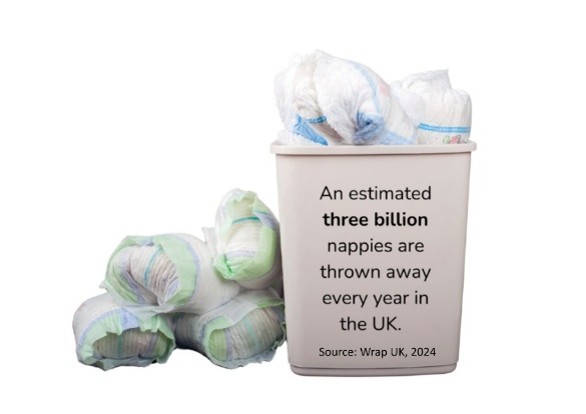
Figure 3: An estimated three billion nappies are thrown away every year in the UK – one reason later toilet training has environmental as well as developmental and health implications. Source: WRAP UK, 2024

The question nobody seemed to be asking

Before starting my PhD, I spent 12 years working for ERIC, The Children’s Bowel & Bladder Charity, supporting families experiencing continence difficulties and developing national awareness campaigns. Through that work, I became increasingly aware of concerns about delayed toilet training and its potential impact on children’s health and school readiness.

Initially, I assumed the key question was why parents appeared to be waiting longer to start toilet training than previous generations. However, as I immersed myself in the literature, it became apparent that most research has focused on readiness, timing and toilet training approaches, with comparatively little attention given to parents’ experiences. Internationally, qualitative studies were limited, and there was no UK research focused specifically on parents’ experiences of toilet training. This prompted me to step back and ask a different question: What is toilet training like for parents, particularly when things don’t go to plan?

Listening to parents

Taking a phenomenological approach, I interviewed 16 mothers and fathers of children aged between two and five years from across the South West of England. I explored how parents experienced supporting their child through toilet training, particularly when challenges arose. Discussions focused on parents’ expectations, challenges and support needs.

A parent advisory group helped shape the study, challenging my assumptions and ensuring the research remained grounded in issues that matter to families.

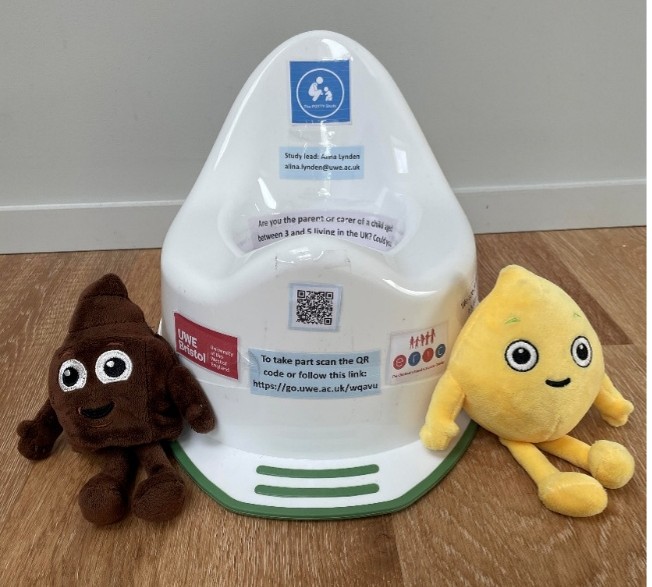
Figure 4: Recruitment materials reviewed by a parent advisory group and shared through Early Years settings across Southwest England

What parents have shared so far

Although analysis is still ongoing, a clear picture is beginning to emerge. Many parents described approaching toilet training with apprehension and a feeling that “the clock was ticking”, particularly as children moved closer to nursery or school. Rather than a straightforward developmental milestone, toilet training was often experienced as an emotionally demanding period that affected family routines, relationships and confidence.

Figure 5: Early themes emerging from interviews with parents on supporting their child through toilet training (Alina Lynden’s PhD research)

Parents wanted to make the “right” decisions but frequently encountered conflicting advice. Many turned to friends, family members and social media for reassurance and practical guidance. When progress stalled, feelings of guilt, frustration and self-doubt were common, alongside the challenge of balancing toilet training with work, childcare and everyday family life. Overall, parents’ decisions appeared to be shaped less by official guidance and more by the realities of their individual family circumstances.

Why this matters and looking ahead

These early findings suggest there may be a gap between evidence-based recommendations and parents’ realities. If guidance does not align with how families experience toilet training, it may be less likely to feel relevant, useful or achievable. This does not mean parents are resistant to guidance. Rather, it suggests that support is most likely to be effective when it reflects the realities of family life.

While these findings are still emerging, they are already shaping plans for future research. I hope to work with parents and early years practitioners to develop and evaluate toilet training support that better reflects families’ experiences.

Toilet training is often treated as a simple childhood milestone. What parents have shown me is that it is also a deeply human experience shaped by relationships, expectations, uncertainty and care. By understanding that experience more fully, we may be better placed to develop the compassionate and realistic support that families need.

Using sociotechnical theory to understand routine data use in a local authority setting

Posted on

By Abdinasir Kowdan

Background

Local authorities routinely collect vast amounts of data: council tax records, education and social care files, housing datasets and service logs. This data is generated simply by councils doing their daily work; it was not designed to be used for research or evaluation. My research starts from the premise that unlocking its wider value is not just a technical question. It is a question about how people, systems, and the regulation around them either enable or constrain the effective use of routine data beyond its original operational purpose.

That premise has empirical backing. A rapid systematic review of 28 UK studies by Moorthie and colleagues (2022) found that the most frequently cited barriers to accessing, linking and using local authority data were technical capability and data quality, followed closely by legal and ethical frameworks, funding and capacity, cultural factors, data fragmentation, and public trust. What is striking about that list is how few of the barriers are purely technical. Most sit at the intersection of technology, organisation, and culture, which is exactly what sociotechnical theory was built for.

Why sociotechnical theory

Sociotechnical theory traces back to 1949, when the British National Coal Board engaged the Tavistock Institute to investigate why some UK coal mines achieved high productivity and morale while others using similar machinery did not. Eric Trist examined the relationships between the social and technical components of mining work (Trist, 1981). The answer to the productivity puzzle was not the technology itself but how well it fitted the workforce: teams that were upskilled, given choice, and treated as complementary to their tools consistently outperformed those where technology was imposed.

At the heart of the theory is the idea that social factors such as leadership and culture, and technical factors such as systems and infrastructure should be jointly optimised, with a core principle that the two are equally important (Cherns, 1976; Whetton, 2005). Improving one subsystem while neglecting the other achieves little. A council can install the best software available, but if staff lack the capacity, training, or confidence to use it, the investment is wasted. Similarly, skilled and motivated staff working within siloed arrangements and risk-averse cultures will struggle to fully leverage the potential of routine data. Therefore, I will employ this theory to examine routine data use in Somerset Council for operations, evaluation and research.

Where the theory does its work

Clegg et al.’s hexagon model separates the social side into people, culture, and goals, and the technical side into technology, infrastructure, and processes, all sitting within a wider frame of stakeholders, regulation, and financial circumstance (Clegg et al., 1979).

Figure 1: Hexagon model for Sociotechnical System (Clegg et al., 1979)

Clegg and colleagues used the hexagon model to trace how the Mid-Staffordshire NHS failures emerged from interacting elements: a culture tolerating poor standards fed into an absence of quality goals, inadequate nursing capacity, no processes or technology for monitoring care quality (Clegg et al., 2017). Challenger and Clegg (2011) performed a similar analysis of the Hillsborough disaster, finding failures in every one of the six elements, from an official mindset fixated on hooliganism to radio failures and poorly laid out grounds. Neither case can be explained by a single broken component; both were failures of joint optimisation.

Applying this concept to local authorities’ routine data use reveals insights that a purely technical inquiry would miss. Legal ambiguity around data sharing is often treated as a compliance issue. But Moorthie and colleagues (2022) found that lack of familiarity with the legal frameworks governing inter-agency sharing contributes to a risk-averse approach; institutional caution, shaped by culture and incentive structures as much as by law, is what actually determines whether staff feel able to share data at all. Fragmented IT systems look like a technical problem on the surface: legacy systems, bespoke formats, and coding practices unique to individual teams mean data cannot easily move even between teams within a single council (Moorthie et al., 2022). The reasons the fragmentation persists are frequently organisational. The same review found no example in the literature of a designated senior officer for data within any local authority.

Councils are estimated to spend around 3% to 6% of budgets on IT, yet much social care data is unstructured and by one estimate up to 90 per cent of unstructured data is never analysed (Moorthie et al., 2022). Spending on technology is evidently not the main constraint.

Councils that succeed in unlocking routine data, for research and evaluation as well as operations, tend to be the ones where technical investment, governance clarity, and cultural buy-in move in step with one another. The cross-cutting factors Moorthie et al.  identify are trust between stakeholders, leadership, and capacity, none of which can be bought as software.

Testing the theory in practice: Somerset Council

My PhD applies this framework as a single-case study. Using a mixed-methods design grounded in critical realism, I am combining semi-structured interviews across the council and the Integrated Care Board, document analysis of existing data strategies and governance frameworks, and a quantitative assessment of routine data for quality profiling. The findings will feed directly into practical recommendations for how Somerset Council and by extension other local authorities with similar context can better integrate, govern, and use the data they already hold.

A broader lesson

The potential of routine data for local authorities does not lie in better software nor in skilling up staff without securing the space to exercise the knowledge they acquired. It lies in recognising data use as a sociotechnical system where people, technology, and environment must evolve together. As local authorities attempt to do more with less, understanding how to achieve that joint optimisation may be one of the most valuable contributions this research could offer.

References

  1. Challenger, R. and Clegg, C.W., 2011. Crowd disasters: A socio-technical systems perspective. Contemporary social science, 6(3), pp.343-360.
  2. Cherns, A., 1976. The principles of sociotechnical design. Human relations, 29(8), pp.783-792.
  3. Clegg, C.W., 1979. The process of job redesign: signposts from a theoretical orphanage?. Human Relations, 32(12), pp.999-1022.
  4. Clegg, C.W., Robinson, M.A., Davis, M.C., Bolton, L.E., Pieniazek, R.L. and McKay, A., 2017. Applying organizational psychology as a design science: A method for predicting malfunctions in socio-technical systems (PreMiSTS). Design Science, 3, p.e6.
  5. Moorthie, S., Hayat, S., Zhang, Y., Parkin, K., Philips, V., Bale, A., Duschinsky, R., Ford, T. and Moore, A., 2022. Rapid systematic review to identify key barriers to access, linkage, and use of local authority administrative data for population health research, practice, and policy in the United Kingdom. BMC Public Health, 22(1), p.1263.
  6. Trist, E.L., 1981. The evolution of socio-technical systems (Vol. 2, p. 1981). Toronto: Ontario Quality of Working Life Centre.
  7. Whetton, S. 2005. Health Informatics: A social-technical perspective. South Melbourne: Oxford University Press.