

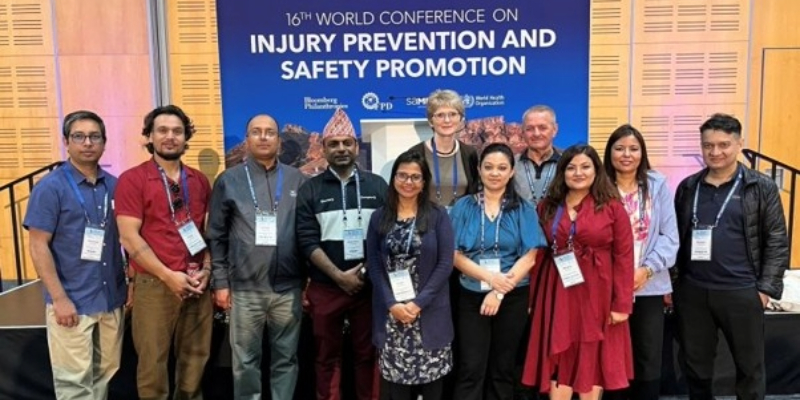
Four Years, 18 Abstracts: SafeTrip Nepal at the World Safety Conference

Posted on

By Dio Kordopati and Professor Julie Mytton

Background

UWE researchers, led by Professor Julie Mytton, have been running a road safety research programme, SafeTrip Nepal, with colleagues at Kathmandu Medical College. In September, the programme team travelled to Cape Town for Safety 2026, the World Conference on Injury Prevention and Safety Promotion. Over three days the team presented 18 abstracts, 14 oral presentations and four posters, sharing findings from four years of research with an international audience.

For a programme now in its fourth year, this was a milestone. Earlier conference outings shared study designs and protocols. This time the team arrived with results: cohort data, policy analyses, qualitative findings and recommendations that are already shaping conversations with government and communities in Nepal.

Road safety policy

Nepal has no national road safety strategy, and the policy work package set out to understand what helps and hinders the effective delivery of road safety policy. The team presented a systematic review of facilitators and barriers to implementing road safety policies in low- and middle-income countries. Two posters presented findings from a study of the implementation of motorcycle helmet use policy, and a qualitative study of how stakeholders perceive the challenges of implementing road safety policy in federal Nepal.

Safer long-distance bus travel

We were given the opportunity to deliver four oral presentations on long-distance bus safety. The team presented a systematic review of factors associated with crashes on long-distance public buses in low- and middle-income countries, followed by a secondary data analysis of four-years of Nepal police data on long-distance bus crashes. A qualitative study captured the perspectives of passengers, drivers, crash survivors and stakeholders. The final presentation set out the recommendations for safer long-distance bus operations that have grown out of that evidence.
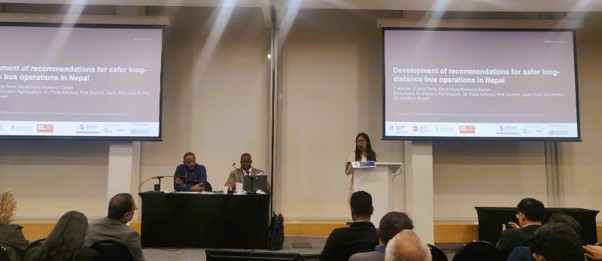
Pranita Rana, Senior Research Associate, presenting at the conference

Post-crash care

What happens to people after a crash was the focus of six presentations from our work package on post-crash care. Three presentations drew on a cohort of over 500 crash victims followed from their crash event for 12 months.  Through this study we were able to describe who is being hurt on Nepal’s roads, what the injury costs families in lost income and out-of-pocket care, and what care patients actually receive before they arrive at hospital. The handover of injured patients from ambulance staff to the emergency department team was the focus of the other three presentations, with a systematic review of qualitative studies from low- and middle-income countries setting out what is already known. Further research then built on it: one presentation discussed observations of handovers taking place on the emergency department floor, and the other explored the barriers and facilitators to effective handover between the staff involved.
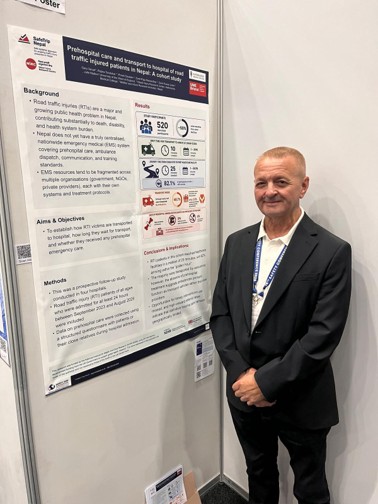
Gary Smart at the conference

Communities taking action

The community engagement work package shared lessons from promoting community advocacy for safer roads with local governments. Two oral presentations covered how community advocacy has been used to shape local road safety practice, and the outcomes of that advocacy across eight municipalities in Nepal. A poster explored the challenges and opportunities of working with local governments on road safety.

Raising the Centre’s profile

With Nepal Injury Research Centre colleagues presenting in sessions across the programme, the conference significantly raised the Centre’s international profile.

It was a fantastic showcase of the UWE–Kathmandu Medical College collaboration funded by NIHR Global Health Research, and a busy few days for everyone involved. The team is now focusing on disseminating the research findings and working with partners in Nepal to turn evidence into action.

Group photo at the conference

How politics shapes migrant health and integration in the UK: Beyond the ‘hostile environment’

Posted on

By Dr Erdem Dikici

Introduction: migration as a public health issue

Migration is often discussed through the lenses of borders, economics, welfare state, or policy. But it is also a public health issue. Migrants, including refugees and asylum seekers, face multiple and overlapping health challenges – from trauma, PTSD and other mental health issues to structural and institutional barriers in accessing healthcare and secure housing. While these are well recognized, they do not fully capture the key determinants of the health and wellbeing of migrant populations.

In my research on “Migrant Health and Integration in the UK”, I argue that we need to look beyond traditional social determinants (e.g. poverty, housing, employment) and consider something broader: the emergence of a “hostile ecosystem”. This is not simply confined to the UK’s well-known “hostile environment” policy – a policy approach designed to deliberately make life harder for illegal migrants which has had substantially negative implications on the wider minoritized communities (e.g. the Windrush scandal). The hostile ecosystem that is coined in this study refers to a multi-layered system shaped by anti-migrant political rhetoric, policy decisions, and public attitudes, operating at transnational, national, and local levels – and profoundly shaping the health, wellbeing, and integration processes of migrants.

Introduction: migration as a public health issue

Migrants’ health is usually framed in relation to pre-migration conditions in the origin country, journey-related risk factors, and conditions in the settled country. The latter, again, is often framed in terms of vulnerability: limited access to services, re-traumatization, and poor living and/or working conditions. There is no doubt that all these factors can be key determinants of health and wellbeing. Many migrants experience significant stress during their journey, unsafe or overcrowded accommodation, and prolonged waiting times in the immigration processes. Mental health conditions such as stress, anxiety, depression, and PTSD are common, often compounded by uncertainty and separation from family. There is, however, another key determinant of migrant health and integration, namely far-right anti-migrant politics that manifest itself through hostile language, policies, and attitudes. This is arguably one of the most consequential determinants of migrant health and integration in the contemporary UK, Europe and beyond.

To capture this political determinant, I propose the framework of “transnational hostile ecosystem”.

The rise of anti-migrant politics and policy

In recent decades, we have seen the global rise of anti-migrant and far-right politics, from the US to Europe and beyond. Across countries, migrants are increasingly framed through an “us vs them” narrative – often as “threats” to security, culture, identity or “burdens” on the economy, welfare state, or the society. Crucially, these once marginal narratives are no longer confined to fringe groups or political parties. Instead, these anti-migrant, xenophobic narratives have become mainstream across liberal democracies such as the UK not just shaping public opinion and attitudes but also influencing policy landscape. We now have ever more restrictive and hostile immigration regimes underpinned by hostile legislations (e.g. 2014 Immigration Act) and policies (e.g. the hostile environment policy).

The UK’s hostile environment policy, introduced in 2012 by Theresa May, extended immigration control into daily lives of not just immigrants but also the wider society. This policy involves immigration status checking in order to access housing, employment, banking, and even healthcare. That is, employers, landlords/landladies, banks, etc. are legally required to check people’s immigration status, monitoring whether they have “right to rent”, “right to work”, and so forth. Policies such as “No Recourse for Public Funds”, prolonged asylum decision-making, and restrictive accommodation arrangements have created structural insecurity, leaving many migrants in situations of substantial financial precarity, legal uncertainties, and dependency. Importantly, such policies are not simply experienced as bureaucratic changes, but lived as chronic stressors – as frequently stressed by the participants of this research.

Public attitudes toward migrants are not uniform, alongside exclusionary rhetoric, grassroots movements continue to advocate for inclusion and solidarity

Everyday experiences and their impact on health

These hostile discourses and policies have also shaped everyday life of migrants, including their interactions with the wider society in public spaces – on buses, in neighbourhood parks, in GP reception areas and so on. Migrants report experiences of racism, microaggressions, hate crimes, or being treated with suspicion. Many have reported that they have been told to “go back to your country” by a member of public on a bus or in other public spaces. Thus, some have said that they avoid public spaces due to fear. This results in less engagement with the wider society, which hinders the process of integration.

While some may see these experiences as trivial, they are most certainly consequential for health, wellbeing, and integration of migrants. They accumulate, generating chronic stress, anxiety, and social withdrawal.

Hostile language and everyday racism permeate public spaces, contributing to chronic stress and social withdrawal among migrants

Towards a more welcoming ecosystem

If a hostile ecosystem can harm health, the reverse can also be true: a welcoming ecosystem can improve it.

We need to recognize that political choices shape health outcomes, which means that addressing migrant health inequalities requires more than service-level interventions. It requires challenging the narratives, policies, and attitudes that produce hostility in the first place.

Our language, policies, and attitudes towards migrants should be welcoming, inclusive, and anti-racist, not stereotyping, marginalizing, scapegoating, not to mention dehumanizing. Reframing migrant health through the lens of a hostile ecosystem allows us to see the wider political determinants of health and wellbeing – and importantly, to imagine alternatives. We can create more welcoming and inclusive systems, structures, institutions, and communities.

A different ecosystem is possible.

What people missed most during the UK Covid pandemic: A survey in the West of England

Posted on

By Dr Kate Brennan (GP specialist trainee), Dr Isabelle Bray, Prof. Danielle Sinnett, and Dr Yarden Woolf

Background

The Covid‑19 outbreak disrupted daily life across the world. In the UK, lockdowns in 2020 and 2021 led to the closure of shops, venues and workplaces, cancellation of cultural and sporting events, and sharp changes to how people worked, travelled and socialised. These restrictions had a substantial impact on mental health.

Beyond the immediate effects of the virus, physical health was also affected through reduced physical activity, delays in diagnosis and treatment of other conditions, and long Covid. Inequalities widened, and loneliness became a major concern. In March 2022, a third of UK adults reported that their mental health had deteriorated because of the pandemic, particularly young people, disabled people and those living in deprived areas. As the Covid inquiry continues, many of these longer‑term social and mental health effects remain.

The UK Covid‑19 Inquiry recently released a report looking at the impact of the pandemic on healthcare systems. Later modules will report on the impact on the care sector and society more broadly, including population mental health. Using data from adults living in the West of England, we take a closer look at one simple but revealing question: what did people miss most during lockdown?

A quiet urban street, reflecting disruption to everyday routines

What we did

We carried out a cross‑sectional survey between May and July 2020. Alongside questions on green space use, physical activity, mental health and wellbeing, participants were asked: “Please tell us the ONE thing you most miss under lockdown.” A total of 607 people responded.

What we found

The sample was largely white (92%), well‑educated (73% had a degree or higher), and older (68% were aged over 45). Around 30% were retired and 85% owned their home, which should be kept in mind when interpreting the findings.

What respondents reported missing most during the UK Covid‑19 lockdowns (n = 607)

The graph above shows what respondents reported missing most. Over half (53%) said they missed socialising above all else. Mentions of family (28%) and friends (24%) were similar overall, although patterns differed by age. The second most commonly missed thing was holidays or travel (13%), followed by pubs, restaurants and cafés (11%). Thirty‑six respondents (6%) specifically mentioned missing the pub, which was more common among men than women (10% compared with 4%). Those aged 45–54 and non‑retired couples were particularly likely to report missing the pub.

Clear age differences emerged. Young adults aged 18–24 were the most likely to miss socialising (63%), especially with friends. In contrast, those aged 65–74 mentioned family more than friends (37% versus 19%), often referring to grandchildren. People aged 75–84 were the least likely to mention socialising.

Exercise was most commonly reported as the single most‑missed activity among those aged 65–74 (9%). No respondents aged 18–24 or 75–84 identified exercise as the one thing they missed most. Freedom, described as the ability to do things spontaneously, was reported by 14% of those aged 75–84, compared with none of those aged 18–24 or 55–64. Older respondents were also more likely to report missing holidays and travel (20% among those aged 75–84, compared with 6% of 18–24‑year‑olds).

Among those employed before lockdown, 10% said they missed work most. Excluding those of retirement age, young adults aged 18–24 were more likely to miss work or study, while those aged 25–34 were less likely to do so, possibly reflecting competing demands such as childcare or increased work pressures.

Implications

These findings highlight the importance of social contact, shared spaces outside the home, and having things to look forward to. While some people enjoyed aspects of lockdown, young adults (18-24) particularly missed socialising and seeing friends and family. Older adults, especially those aged 75–84, placed greater importance on freedom and the ability to travel.

These insights can help guide responses to any future lockdown. Where older adults missed cafés, adapted or outdoor alternatives could be considered when safe to do so. Among young adults, missing study may reflect the loss of structure, purpose or social interaction, underlining the need to consider how education and training can support wellbeing as well as learning during periods of restriction.

Finally, the lockdown experience highlighted that many homes are not well suited to long‑term working from home, which also has implications for physical activity, social connection and mental health. At the same time, the pandemic showed how technology can support not only work and study, but also social connection within neighbourhoods. These factors should form part of future pandemic preparedness.

Health effects of low‑level air pollution: implications for public health

Posted on

Image credit: Photo “Friends of the Earth 24” by Friends of the Earth Scotland, Flickr, is licensed under CC by 2.0.

By Brodie Walker

Introduction

In 2022, the Scottish Government commissioned a review to examine whether current levels of ambient air pollution, relatively low by international standards, continue to pose measurable risks to population health. The work was undertaken to inform the Cleaner Air for Scotland 2 (CAFS2) Strategy and support alignment with the World Health Organization’s 2021 Air Quality Guidelines. The review was conducted by an interdisciplinary team from UWE Bristol affiliated with the Air Quality Management Resource Centre and the Centre for Public Health and Wellbeing, and the final report was published in October 2023.

An aim of the review was to assess health impacts in countries with ambient air pollution levels comparable to Scotland. This focus arose from earlier CAFS2 work, which identified an apparent absence of association between air pollution exposure and cardiovascular disease in Scottish studies compared with the wider international evidence. To explore this, we undertook a robust, rapid review examining health effects at low concentrations and potential methodological and contextual explanations for these differences.

Health impacts observed at low levels

The review identified strong and consistent associations between low‑level exposures and a wide range of health outcomes:

  • Cardiovascular disease: Evidence from countries with ambient pollution levels comparable to Scotland indicates increased risks of cardiovascular outcomes, including stroke and ischaemic heart disease, at PM₂.₅ concentrations well below current guideline values. The absence of these findings in the Scottish studies is likely an artefact of study design and data.
  • Respiratory outcomes: Low‑level exposures are associated with worsening asthma, impaired lung development in children, and increased exacerbations of chronic respiratory conditions, even where average concentrations are relatively low.
  • All‑cause mortality: Multiple cohort studies report elevated all‑cause mortality risks across the exposure range, including at the lowest observed concentrations of PM₂.₅.
  • Birth outcomes: Associations with adverse birth outcomes, including preterm birth and low birth weight, have been detected at low NO₂ and PM₂.₅ concentrations, suggesting sensitivity during early life.
  • Neurological and mental health outcomes: Emerging evidence points to associations between long‑term exposure to low‑level air pollution and outcomes such as cognitive decline, dementia, and poorer mental health and well‑being, although causal mechanisms remain an active area of research.
  • Other outcomes: Evidence for outcomes such as diabetes and cancer at low pollution levels is more limited and variable, though observed associations may still be important at a population level.

No evidence of a “safe” threshold

A central finding is the lack of any reliably identifiable threshold at which the harmful effects of air pollution cease. For PM₂.₅, large cohort studies demonstrate linear or near‑linear concentration‑response relationships extending to very low exposure levels. The slope of these associations often remains steep at the lower end of the distribution, indicating that marginal reductions in exposure can still produce public health benefits.

Bus in Edinburgh city centre
“Activists gather to demand clean air as Edinburgh Air Pollution Zone to be expanded.” by Friends of the Earth Scotland is licensed under CC BY 2.0

Low levels of pollution does not mean low inequality

Although national average levels of air pollution in Scotland are relatively low, the review highlights the importance of spatial variability in exposure and the methodological challenges this presents in low‑pollution settings. Limited exposure contrasts and greater potential for exposure misclassification, particularly for traffic‑related pollutants such as PM₂.₅ and NO₂, may reduce the ability of studies to detect associations when analysing population‑level averages. While the review does not explicitly focus on social inequalities, these considerations are consistent with a wider evidence base suggesting that uneven exposure patterns and population vulnerability may contribute to under‑estimation of health effects.

Implications for public health policy

One of the review’s most important implications is that air quality policy remains highly relevant in low‑pollution contexts. Achieving compliance with existing standards should be viewed as a baseline rather than an endpoint.

In Scotland, annual CAFS2 progress reports published in June 2024 and June 2025 confirm continued nationwide compliance with statutory air quality objectives, while recognising that meeting these limits does not imply the absence of health risk (Scottish Government, 2024; Scottish Government, 2025a). Full enforcement of Low Emission Zones (LEZs) has now been extended across all four major Scottish cities, with early evaluations demonstrating substantial improvements in air quality. Monitoring data indicate a 34% reduction in nitrogen dioxide concentrations within Glasgow city centre following full LEZ enforcement between 2023 and 2024 (Glasgow City Council, 2025).

At a strategic level, the Scottish Government has initiated preparatory work towards a new Air Quality Delivery Framework for Scotland, planned to replace CAFS2 after 2026. In the UK, the Environment Act (2021) continues to drive legally binding commitments, including new, more ambitious PM₂.₅ targets for England.

Conclusion

The review, together with the wider international evidence base, demonstrates that low‑level air pollution continues to produce detectable adverse health effects and that further reductions in concentrations are likely to deliver measurable population health benefits. For policymakers and stakeholders, this reinforces the need to view air quality not simply as a matter of regulatory compliance, but as a continuing public health challenge, even in low‑pollution contexts.

References

Scottish Government (2023a) Health impacts of low‑level air pollution: review and assessment of the evidence. Edinburgh: Scottish Government. Available from:
https://www.gov.scot/publications/review-assessment-evidence-health-impacts-low-level-pollution-countries-levels-ambient-air-pollution-comparable-scotland/
[Last accessed 9 April 2026].

Scottish Government (2023b) Summary report: review and assessment of the evidence on health impacts of low‑level air pollution in countries with ambient concentrations comparable to Scotland. Edinburgh: Scottish Government. Available from: https://www.gov.scot/publications/summary-report-review-assessment-evidence-health-impacts-lowlevel-pollution-countries-levels-ambient-air-pollution-comparable-scotland/documents/
[Last accessed 9 April 2026].

Scottish Government (2024) Cleaner Air for Scotland 2 strategy: progress report. Edinburgh: Scottish Government. Available from:
https://www.gov.scot/publications/cleaner-air-scotland-2-strategy-progress-report/
[Last accessed 9 April 2026].

Scottish Government (2025a) Cleaner Air for Scotland 2 strategy: progress report. Edinburgh: Scottish Government. Available from:
https://www.gov.scot/publications/cleaner-air-scotland-2-strategy-progress-report-2/
[Last accessed 9 April 2026].

Scottish Government (2025b) Air quality policy update: Scottish Air Quality Annual Seminar 2025. Edinburgh: Scottish Government. Available from:
https://www.scottishairquality.scot/sites/default/files/publications/2025-04/Air_Quality_Policy_Update_Andrew_Taylor.pdf
[Last accessed 9 April 2026].

Glasgow City Council (2025) City centre air pollution drops by a third following LEZ enforcement. Available from:
https://www.glasgow.gov.uk/13535
[Last accessed 9 April 2026].

HM Government (2021) Environment Act 2021. London: The Stationery Office. Available from:
https://www.legislation.gov.uk/ukpga/2021/30/contents/enacted
[Last accessed 9 April 2026].

Department for Environment, Food & Rural Affairs (Defra) (2025a) Air pollution in the UK 2024: compliance assessment summary. London: Defra. Available from:
https://www.gov.uk/government/publications/air-pollution-in-the-uk-2024/air-pollution-in-the-uk-2024-compliance-assessment-summary
[Last accessed 9 April 2026].

Department for Environment, Food & Rural Affairs (Defra) (2025b) Air pollution in the UK 2024. London: Defra. Available from:
https://assets.publishing.service.gov.uk/media/68da4202c487360cc70c9e4f/air_pollution_uk_2024_issue_1.pdf
[Last accessed 9 April 2026].

World Health Organization (2021) WHO global air quality guidelines: particulate matter (PM₂.₅ and PM₁₀), ozone, nitrogen dioxide, sulphur dioxide and carbon monoxide. Geneva: World Health Organization. Available from:
https://www.who.int/publications/i/item/9789240034228
[Last accessed 9 April 2026].

Recovery through community: overcoming barriers to engagement in addiction services

Posted on

By Dr Amy Beardmore and Leila Powell

Introduction

Over the past 3 months, Dr Amy Beardmore, a Senior Lecturer in Public Health, and Leila Powell, a Research Associate, have had the opportunity to work on an Accelerated Knowledge Transfer project. This is a rapid, 3-way collaboration between a university, a business partner, and a research associate, to bridge research and current practice. This was made possible through a partnership between the Centre for Public Health and Wellbeing at UWE Bristol and Via, a national drug and alcohol support charity, supported by Innovate UK and NIHR.

We found this project to be an exciting opportunity to combine academic and business perspectives, learn from each other, and co-create a meaningful toolkit with the people who use and deliver services at Via. This blog will outline the project, its objectives, outcomes and next steps.

Project objectives

We set out to explore what helps and hinders Via’s service users from accessing community assets that can support their recovery and wellbeing. The core goal was to apply asset-based community engagement (ABCE) theory into a practical, easy-to-use tool that Community Connectors, Via Staff and service users themselves can use to understand what assets would better support their recovery process. Through co-design, we wanted this tool to feel grounded in current needs and be genuinely helpful for building connection to the community. Alongside this, we worked to develop a set of outputs that would influence future design of Via’s Digital Community Asset Platform, and to support asset access.

Project phases

The project unfolded in three key phases. We began with a rapid evidence review, which helped to anchor the project in current evidence and literature. The second phase, and arguably the core of the project, involved two planning meetings and two participatory workshops at Via’s services in Redbridge. This involved service users, peer workers and Via staff. These sessions were full of rich conversations, co-designed workshop activities, and insights drawn directly from the lived experiences of people accessing Via’s services. In the final phase, we moved on to refining the toolkit and report, bringing together everything we’d learned. Each phase naturally built on the last, and the structure of the project was truly shaped by the experiences of the participants.

Key actions

While the rapid review provided a strong starting point and anchored the research, the workshops really grounded the project in the realities of those recovering from dependency. In the first workshop, participants mapped the assets they currently access as well as the ones they aspire to use, while discussing real-world challenges that inhibit participation. This laid the groundwork for the conceptual supportive tool. Working together in the second workshop, we began to scope what elements would work in an ABCE toolkit to support access. Towards the end, we began thinking through the practicalities and what future recommendations may facilitate the use of the digital platform. One of the biggest takeaways for us was the value of co-production, and how bringing together academic knowledge, professional expertise and lived experience leads to richer, more grounded solutions.

Deliverables

Together, we produced an adaptation of the Stages of Change to form the Stages of Access; this helps to map the process from not being interested in accessing local assets in the community to maintaining regular access, through building confidence, regular support, and assertive linkage processes with a Community Connector.

Additionally, we adapted Stage 3 of the ABCE theory and Maslow’s Hierarchy of Needs into a provisional questionnaire for Via, whereby anyone may use this to better understand what skills and passions a person possesses, what matters to them most, and what their urgent needs are. By combining these tools together, Via can develop a rooted understanding of an individual’s priorities and needs concurrently with their current stance on accessing assets, leading to tailored advice and the introduction of the digital platform at the correct time for the service user.

Maslow’s Hierarchy of needs

Reflections & insights

Across the workshops, several themes stood out strongly. Participants spoke about the importance of confidence and connection when engaging with community resources. They also highlighted how seemingly small barriers, like transport challenges, can have major impacts on people’s willingness to take part. Hearing these insights first-hand reinforced a shared belief that lived experience must sit at the centre of the tool development. We also found that grounding the project in evidence-based practise helped keep the work focused and aligned with public health values. Working together across various backgrounds has been deeply enriching. It strengthened our partnership, helped us see issues from different angles, and reminded us of the power of collaborative design.

What’s next?

We’re both excited to see how the ABCE toolkit performs during piloting, and how it evolves with real-world use. From our perspectives, this project has shaped the way we think about collaboration, co-production and the integration of research into practise. We hope to continue building on this momentum, securing further funding and exploring how the tool can support recovery across different services and contexts. Most importantly, we are optimistic to continue a partnership with Via and UWE, while keeping lived experience at the centre of everything that comes next.

Meet the CPWHB leadership team – introducing the Centre Director and Theme Leads

Posted on

By Dr. Issy Bray and Yarden Woolf

The Centre for Public Health and Wellbeing aims to impact directly on population health and wellbeing, to reduce health inequalities and enable ethical and reflexive contributions to public health policy and practice. Our approach is multidisciplinary and spans physical, health and social sciences.

Dr. Issy Bray is the Director of the Centre for Public Health and Wellbeing and Associate Professor in Public Health (Epidemiology). She has been with UWE Bristol for over 12 years and currently teaches on the Quantitative Health Research module and the Epidemiology of Non-Communicable Disease modules (MSc Public Health) as well as supervising PhD and MSc students.

The Global Public Health theme brings together innovative social science, health, and implementation research to address pressing population health challenges around the world. Current work includes research funded through the NIHR Global Health Research Programme in collaboration with the Nepal Injury Research Centre at Kathmandu Medical College, with projects exploring interdisciplinary approaches to road danger reduction and the cultural and sociological factors that influence injury risk and prevention in Nepal. The theme also includes research on migration and migrant integration, generating evidence that informs policy and supports progress toward global health equity.

Ageing Well is a brand-new theme for the Centre for Public Health and Wellbeing at UWE Bristol. The vision for this theme is to carry out and support inclusive, interdisciplinary and world-leading public health research that promotes healthy ageing including dementia across the life course underpinned by a socioecological approach to health and wellbeing. Emily has recently completed a qualitative study working closely with voluntary agencies in West Somerset and Cornwall to better understand the particular experiences and challenges of people living with dementia and their families living in rural and coastal communities.

Our research explores how the design of places can shape everyday behaviours, reduce risks, and improve health and wellbeing for communities. This includes looking at strategies for safer streets, stronger community safety, and better integration of health into planning decisions, while also seeking to reduce environmental impacts and improve population health and wellbeing. Emma is currently leading on a project tasked with creating guidance to help local planning authorities in England create healthier places for everyone through better integration of health into local planning policies.

This theme is essentially about creating communities where people can thrive. It brings together community groups, organisations, and networks with public, private, and non-governmental partners to drive social action and meaningful change. Building healthy communities demands a multidisciplinary lens spanning diverse topics such as urban planning, healthy ageing, and digital inclusion, while applying robust methodologies and evaluation design to generate high-quality evidence. Amy is currently working on a project which tackles the complex challenge of drug and alcohol dependency by exploring how individuals engage with community-based resources and what supports or hinders that connection.

Our work within this theme explores different approaches to and methodologies for public involvement and co-production, and what impact these can have. We have a particular focus on how the voice of those experiencing health inequalities can be meaningfully included in research prioritization, design and implementation, and what power-sharing can mean in practice. Jo recently led a project which co-produced resources for Black people living with stroke, following the ‘Experience-Based Co-design’ (EBCD) methodology. The project included the public as co-applicants and core team members, community researchers and co-design facilitators

The Public Health Economics and Evaluation theme focuses on generating robust, policy-relevant economic evidence to inform decision-making across public health, prevention, and integrated care. The theme leads the centre’s work on economic evaluation, return-on-investment modelling, realist economic evaluation, and capacity-building with local authorities and ICS partners, ensuring that our research translates into practical, scalable improvements in population health. A key project Hamad is involved in is the NIHR-funded realist evaluation and economic appraisal of how mosque-based health screening, education and prevention activities influence health and wellbeing in Muslim communities.

Back to top