Four Years, 18 Abstracts: SafeTrip Nepal at the World Safety Conference

Posted on

By Dio Kordopati and Professor Julie Mytton

Background

UWE researchers, led by Professor Julie Mytton, have been running a road safety research programme, SafeTrip Nepal, with colleagues at Kathmandu Medical College. In September, the programme team travelled to Cape Town for Safety 2026, the World Conference on Injury Prevention and Safety Promotion. Over three days the team presented 18 abstracts, 14 oral presentations and four posters, sharing findings from four years of research with an international audience.

For a programme now in its fourth year, this was a milestone. Earlier conference outings shared study designs and protocols. This time the team arrived with results: cohort data, policy analyses, qualitative findings and recommendations that are already shaping conversations with government and communities in Nepal.

Road safety policy

Nepal has no national road safety strategy, and the policy work package set out to understand what helps and hinders the effective delivery of road safety policy. The team presented a systematic review of facilitators and barriers to implementing road safety policies in low- and middle-income countries. Two posters presented findings from a study of the implementation of motorcycle helmet use policy, and a qualitative study of how stakeholders perceive the challenges of implementing road safety policy in federal Nepal.

Safer long-distance bus travel

We were given the opportunity to deliver four oral presentations on long-distance bus safety. The team presented a systematic review of factors associated with crashes on long-distance public buses in low- and middle-income countries, followed by a secondary data analysis of four-years of Nepal police data on long-distance bus crashes. A qualitative study captured the perspectives of passengers, drivers, crash survivors and stakeholders. The final presentation set out the recommendations for safer long-distance bus operations that have grown out of that evidence.
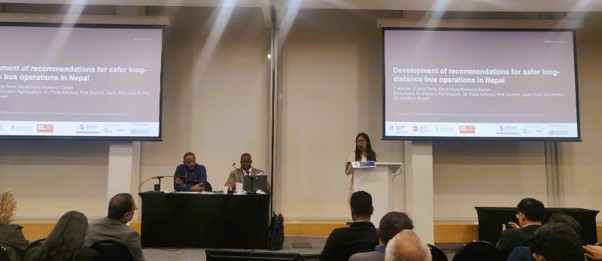
Pranita Rana, Senior Research Associate, presenting at the conference

Post-crash care

What happens to people after a crash was the focus of six presentations from our work package on post-crash care. Three presentations drew on a cohort of over 500 crash victims followed from their crash event for 12 months.  Through this study we were able to describe who is being hurt on Nepal’s roads, what the injury costs families in lost income and out-of-pocket care, and what care patients actually receive before they arrive at hospital. The handover of injured patients from ambulance staff to the emergency department team was the focus of the other three presentations, with a systematic review of qualitative studies from low- and middle-income countries setting out what is already known. Further research then built on it: one presentation discussed observations of handovers taking place on the emergency department floor, and the other explored the barriers and facilitators to effective handover between the staff involved.
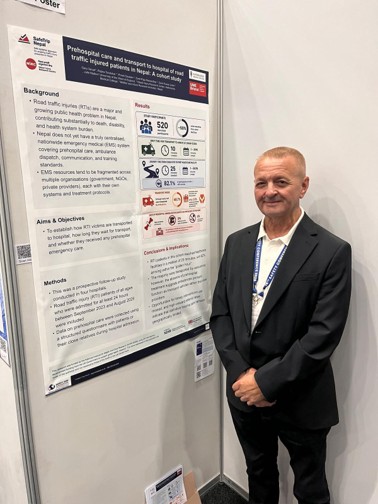
Gary Smart at the conference

Communities taking action

The community engagement work package shared lessons from promoting community advocacy for safer roads with local governments. Two oral presentations covered how community advocacy has been used to shape local road safety practice, and the outcomes of that advocacy across eight municipalities in Nepal. A poster explored the challenges and opportunities of working with local governments on road safety.

Raising the Centre’s profile

With Nepal Injury Research Centre colleagues presenting in sessions across the programme, the conference significantly raised the Centre’s international profile.

It was a fantastic showcase of the UWE–Kathmandu Medical College collaboration funded by NIHR Global Health Research, and a busy few days for everyone involved. The team is now focusing on disseminating the research findings and working with partners in Nepal to turn evidence into action.


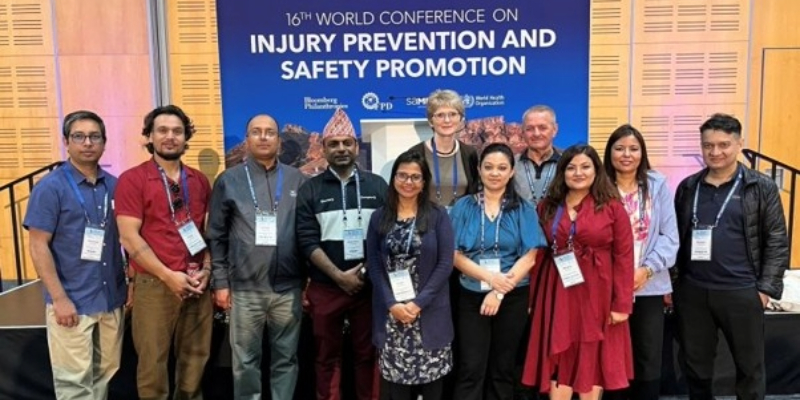
Group photo at the conference

UWE Bristol at the 2026 Bristol Recovery Festival

Posted on

By Dr Amy Beardmore and Leila Powell

Background

This year UWE Bristol became the first academic sponsor of the Bristol Recovery Festival which took place at The Trinity Centre on 18th June and was attended by colleagues from the Centre for Public Health and Wellbeing and UWE’s Drug and Alcohol team.

UWE’s sponsorship of the festival marks an important milestone in its ongoing commitment to supporting community-led approaches to health and wellbeing. The festival brings together people with lived experience of problematic substance use, practitioners and a huge range of local organisations to celebrate recovery, connection and hope.

This new partnership was borne out of a recent collaboration between drug and alcohol treatment agency Via and the staff from the Centre for Public Health and Wellbeing, led by Dr Amy Beardmore. The project resulted in the creation of a toolkit which can be used to improve access to community assets for those in recovery (as featured in UWE news on 15th June).

Inspired to continue this work and keen to get UWE Bristol involved in the international Inclusive Recovery City movement, Dr Beardmore reached out to the festival who were delighted to have UWE on board. It is hoped that this partnership will strengthen further over the coming months and that UWE will continue to support this work in 2027 and beyond.

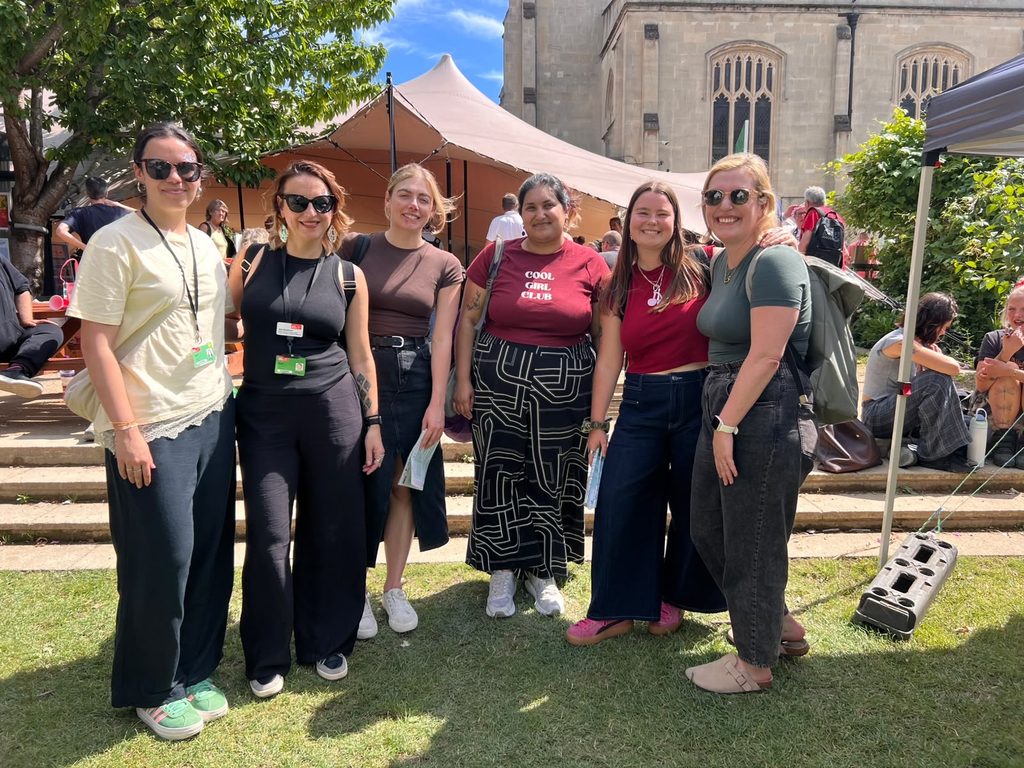
From left to right: UWE Bristol’s Leila Powell (Research Associate), Dr Amy Beardmore (Programme Lead and Senior Lecturer in Public Health), Jasmine Whiting (Student Communications Officer), Ayesha Chauhan (Students’ Union Community Projects Coordinator), Rosa Mumford-Turner (Students’ Union Community Manager), and Becky Risley (Specialist Drug & Alcohol Practitioner) pictured at the festival

A festival with a difference

The Recovery Festival has all the key elements of any festival, whilst being a sober, supportive and celebratory space.

As soon as you arrive through the gates there are a multitude of local organisations on hand to talk to, ranging from peer support groups to creative and active community initiatives. And – as is customary at any festival these days – there are ample opportunities to get your face painted with glitter.

The music tent showcasing local artists and choirs features live music throughout the day, and of particular note this year was a performance by Benza, whose moving lyrics documented his own journey through recovery. Across the venue, the festival offers hands-on workshops and taster sessions, giving people the opportunity to try new activities in a supportive and welcoming environment.

UWE staff who had the pleasure of attending the event this year took inspiration from all that was on offer, and there are plans to expand the partnership with the festival further still in 2027.

Dr Beardmore is also exploring ways that some of the learning from the wider Inclusive Recovery City movement can be implemented within UWE to support students and staff in recovery. If you are interested in being part of this work or would like to support UWE’s work with the festival next year, please contact amy2.beardmore@uwe.ac.uk for more information.

Using sociotechnical theory to understand routine data use in a local authority setting

Posted on

By Abdinasir Kowdan

Background

Local authorities routinely collect vast amounts of data: council tax records, education and social care files, housing datasets and service logs. This data is generated simply by councils doing their daily work; it was not designed to be used for research or evaluation. My research starts from the premise that unlocking its wider value is not just a technical question. It is a question about how people, systems, and the regulation around them either enable or constrain the effective use of routine data beyond its original operational purpose.

That premise has empirical backing. A rapid systematic review of 28 UK studies by Moorthie and colleagues (2022) found that the most frequently cited barriers to accessing, linking and using local authority data were technical capability and data quality, followed closely by legal and ethical frameworks, funding and capacity, cultural factors, data fragmentation, and public trust. What is striking about that list is how few of the barriers are purely technical. Most sit at the intersection of technology, organisation, and culture, which is exactly what sociotechnical theory was built for.

Why sociotechnical theory

Sociotechnical theory traces back to 1949, when the British National Coal Board engaged the Tavistock Institute to investigate why some UK coal mines achieved high productivity and morale while others using similar machinery did not. Eric Trist examined the relationships between the social and technical components of mining work (Trist, 1981). The answer to the productivity puzzle was not the technology itself but how well it fitted the workforce: teams that were upskilled, given choice, and treated as complementary to their tools consistently outperformed those where technology was imposed.

At the heart of the theory is the idea that social factors such as leadership and culture, and technical factors such as systems and infrastructure should be jointly optimised, with a core principle that the two are equally important (Cherns, 1976; Whetton, 2005). Improving one subsystem while neglecting the other achieves little. A council can install the best software available, but if staff lack the capacity, training, or confidence to use it, the investment is wasted. Similarly, skilled and motivated staff working within siloed arrangements and risk-averse cultures will struggle to fully leverage the potential of routine data. Therefore, I will employ this theory to examine routine data use in Somerset Council for operations, evaluation and research.

Where the theory does its work

Clegg et al.’s hexagon model separates the social side into people, culture, and goals, and the technical side into technology, infrastructure, and processes, all sitting within a wider frame of stakeholders, regulation, and financial circumstance (Clegg et al., 1979).

Figure 1: Hexagon model for Sociotechnical System (Clegg et al., 1979)

Clegg and colleagues used the hexagon model to trace how the Mid-Staffordshire NHS failures emerged from interacting elements: a culture tolerating poor standards fed into an absence of quality goals, inadequate nursing capacity, no processes or technology for monitoring care quality (Clegg et al., 2017). Challenger and Clegg (2011) performed a similar analysis of the Hillsborough disaster, finding failures in every one of the six elements, from an official mindset fixated on hooliganism to radio failures and poorly laid out grounds. Neither case can be explained by a single broken component; both were failures of joint optimisation.

Applying this concept to local authorities’ routine data use reveals insights that a purely technical inquiry would miss. Legal ambiguity around data sharing is often treated as a compliance issue. But Moorthie and colleagues (2022) found that lack of familiarity with the legal frameworks governing inter-agency sharing contributes to a risk-averse approach; institutional caution, shaped by culture and incentive structures as much as by law, is what actually determines whether staff feel able to share data at all. Fragmented IT systems look like a technical problem on the surface: legacy systems, bespoke formats, and coding practices unique to individual teams mean data cannot easily move even between teams within a single council (Moorthie et al., 2022). The reasons the fragmentation persists are frequently organisational. The same review found no example in the literature of a designated senior officer for data within any local authority.

Councils are estimated to spend around 3% to 6% of budgets on IT, yet much social care data is unstructured and by one estimate up to 90 per cent of unstructured data is never analysed (Moorthie et al., 2022). Spending on technology is evidently not the main constraint.

Councils that succeed in unlocking routine data, for research and evaluation as well as operations, tend to be the ones where technical investment, governance clarity, and cultural buy-in move in step with one another. The cross-cutting factors Moorthie et al.  identify are trust between stakeholders, leadership, and capacity, none of which can be bought as software.

Testing the theory in practice: Somerset Council

My PhD applies this framework as a single-case study. Using a mixed-methods design grounded in critical realism, I am combining semi-structured interviews across the council and the Integrated Care Board, document analysis of existing data strategies and governance frameworks, and a quantitative assessment of routine data for quality profiling. The findings will feed directly into practical recommendations for how Somerset Council and by extension other local authorities with similar context can better integrate, govern, and use the data they already hold.

A broader lesson

The potential of routine data for local authorities does not lie in better software nor in skilling up staff without securing the space to exercise the knowledge they acquired. It lies in recognising data use as a sociotechnical system where people, technology, and environment must evolve together. As local authorities attempt to do more with less, understanding how to achieve that joint optimisation may be one of the most valuable contributions this research could offer.

References

  1. Challenger, R. and Clegg, C.W., 2011. Crowd disasters: A socio-technical systems perspective. Contemporary social science, 6(3), pp.343-360.
  2. Cherns, A., 1976. The principles of sociotechnical design. Human relations, 29(8), pp.783-792.
  3. Clegg, C.W., 1979. The process of job redesign: signposts from a theoretical orphanage?. Human Relations, 32(12), pp.999-1022.
  4. Clegg, C.W., Robinson, M.A., Davis, M.C., Bolton, L.E., Pieniazek, R.L. and McKay, A., 2017. Applying organizational psychology as a design science: A method for predicting malfunctions in socio-technical systems (PreMiSTS). Design Science, 3, p.e6.
  5. Moorthie, S., Hayat, S., Zhang, Y., Parkin, K., Philips, V., Bale, A., Duschinsky, R., Ford, T. and Moore, A., 2022. Rapid systematic review to identify key barriers to access, linkage, and use of local authority administrative data for population health research, practice, and policy in the United Kingdom. BMC Public Health, 22(1), p.1263.
  6. Trist, E.L., 1981. The evolution of socio-technical systems (Vol. 2, p. 1981). Toronto: Ontario Quality of Working Life Centre.
  7. Whetton, S. 2005. Health Informatics: A social-technical perspective. South Melbourne: Oxford University Press.

New Briefing Notes: how to maximise the benefits of nature for cyclists

Posted on

By Mel Cairns

Background

Two Briefing Notes have recently been published on the UWE repository, outlining recommendations for integrating nature contact and connection into the planning, design and delivery of cycling environments, activities and promotion. The aim is to maximise the health and wellbeing benefits people can get from cycling, increase nature connection and improve cycling experiences.

The Briefing Notes were drafted based on my doctoral research about the role of nature for cyclists and a recent workshop with interested professionals, facilitated by myself, my supervisor, Professor Issy Bray from UWE’s Centre for Public Health and Wellbeing, my Director of Studies, Professor Justin Spinney, and Dr. Asa Thomas from Centre for Transport and Society. The notes are aimed at people who are working or volunteering in relevant roles, especially in the West of England and similar areas, and are available here:

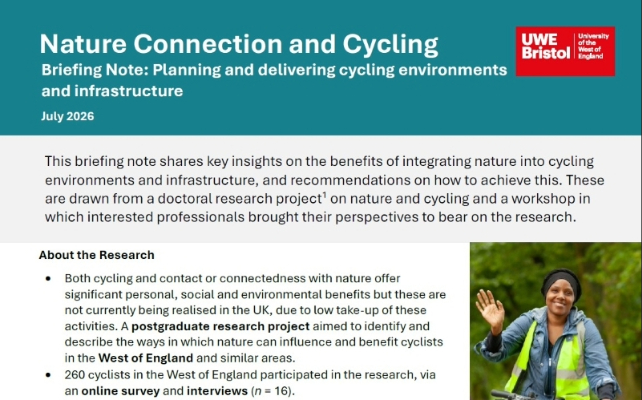
Nature Connection and Cycling Briefing Note: Planning and Delivering Cycling Environments and Infrastructure

Nature Connection and Cycling Briefing Note: Planning and Delivering Cycling Activities and Promotion

Please share them with any colleagues and contacts who might be interested in using them in their work, such as urban and transport planners, designers and delivery teams, cycling campaigns, group ride leaders and anyone working in cycle promotion. A Nature Connection and Cycling LinkedIn group has been set up to facilitate the sharing of resources and case studies. Please contact me if you would like to join.

About the research

My doctoral research formed the basis of the workshop content. The research used mixed methods to investigate and describe the role of nature in cycling experiences, outcomes and decision-making, through analysis of data generated with cyclists here in the West of England. The research findings show that nature is a common and valued, yet underacknowledged, contributor to the wellbeing outcomes of cycling.

The aesthetics, change and unpredictability of nature add interest to familiar routes and can draw attention in positive ways. When cyclists are able to notice and appreciate nature-rich environments that feel safe, they report positive experiences, ‘feeling better’ as a result. Even short sections of a route that enable these experiences can make a difference to cyclists. These positive experiences and outcomes can motivate some cycling, particularly for leisure, as well as being a factor in route choice across cycling activities. Conference presentations of the research findings can be found here: https://people.uwe.ac.uk/Person/melcairns

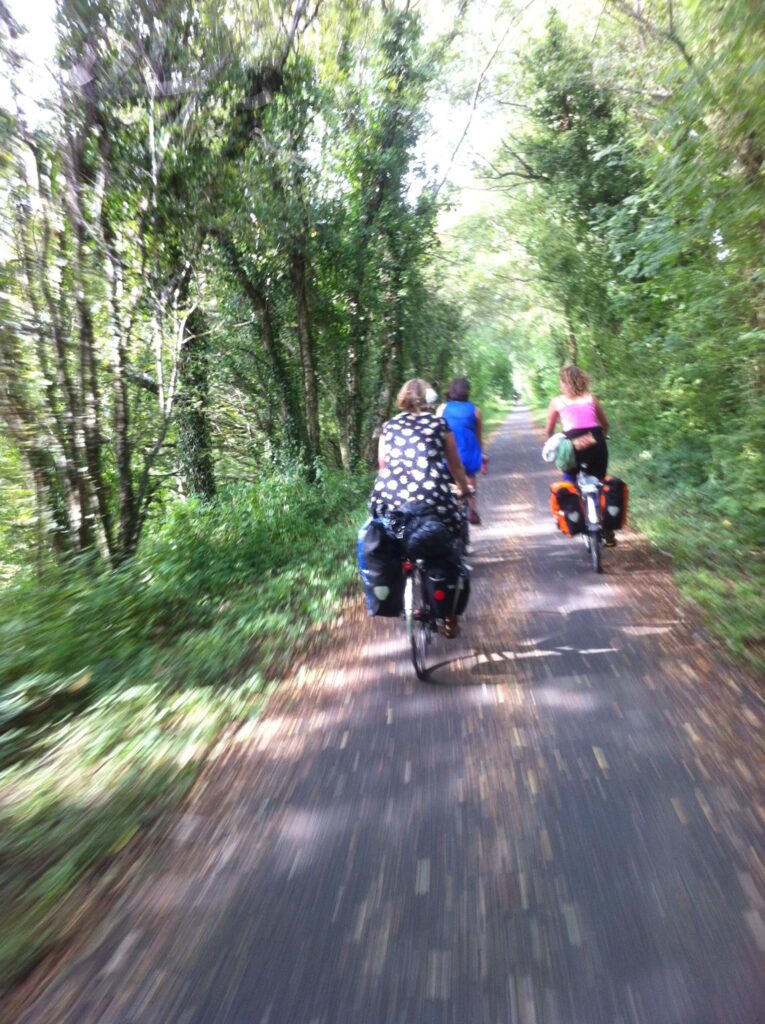
Three women cycling along a traffic-free path lined with trees (image credit: © Lisa Muller, with thanks)

Workshop insights

My supervisor, Justin Spinney, secured funding from UWE’s Public Engagement and Knowledge Exchange Fund to collaborate with the West of England Combined Authority (WECA) on the workshop. Participants included employees of WECA, local councils, the Welsh government, the National Trust, NHS and independent consultants and ride leaders, for example. They gave feedback and discussed how best to share findings and apply the insights. These discussions informed the development of the briefing notes.

A key concern raised during the workshop was the importance of balancing differing needs and priorities, particularly in terms of considering groups that may be more vulnerable or marginalised when it comes to cycling and/or nature access. Nature may be more of a barrier for these groups, so integrating nature and cycling (e.g., through rewilding along routes) risks further marginalising them, raising concerns about the equitable use of funds and resources. Human needs and preferences can also clash with optimal nature protection. There’s no simple, one-size-fits-all solution to these issues so these cautions have been included in the briefing notes as a case-by-case consideration.

Positive stories about cycling, including in relation to nature, and easier ways to find nature-rich routes that meet cyclists’ needs were also identified as enablers to encouraging cycling cultures and practices and improving cycling experiences. Participant comments, as noted and paraphrased by facilitators, included:

“Examples of good practice in highlighting nature are important to make the case.”

“Wayfinding on off-road routes needs to show what facilities are nearby. This needs to be well signed to ensure inclusion and encourage people to use such routes, showing that services might be closer to the routes than they might think.”

“Champions and storytellers within organisations can help normalise cycling and increase how it is valued by the organisational culture.”

Another issue raised by participants was about how guidance, regulations, appraisal processes, funding mechanisms and professional practices often prioritise transport, engineering or biodiversity outcomes in isolation, making it difficult to recognise and deliver the benefits of nature connection in active travel infrastructure schemes. Participants also noted limited awareness of nature connection principles and benefits among decisionmakers and delivery teams. It is hoped that these briefing notes will help to address this concern and make the case for greater integration.

Overall, the workshop was a really positive and enjoyable session. One of the facilitators commented: “The interest and enthusiasm of workshop participants was energising and several expressed appreciation for the opportunity to come together and share learning about this under-explored topic.”

We are extremely grateful to West of England Combined Authority (WECA) for their support and collaboration in planning and delivering the workshop, as well as to all the participants and the funder.

How politics shapes migrant health and integration in the UK: Beyond the ‘hostile environment’

Posted on

By Dr Erdem Dikici

Introduction: migration as a public health issue

Migration is often discussed through the lenses of borders, economics, welfare state, or policy. But it is also a public health issue. Migrants, including refugees and asylum seekers, face multiple and overlapping health challenges – from trauma, PTSD and other mental health issues to structural and institutional barriers in accessing healthcare and secure housing. While these are well recognized, they do not fully capture the key determinants of the health and wellbeing of migrant populations.

In my research on “Migrant Health and Integration in the UK”, I argue that we need to look beyond traditional social determinants (e.g. poverty, housing, employment) and consider something broader: the emergence of a “hostile ecosystem”. This is not simply confined to the UK’s well-known “hostile environment” policy – a policy approach designed to deliberately make life harder for illegal migrants which has had substantially negative implications on the wider minoritized communities (e.g. the Windrush scandal). The hostile ecosystem that is coined in this study refers to a multi-layered system shaped by anti-migrant political rhetoric, policy decisions, and public attitudes, operating at transnational, national, and local levels – and profoundly shaping the health, wellbeing, and integration processes of migrants.

Introduction: migration as a public health issue

Migrants’ health is usually framed in relation to pre-migration conditions in the origin country, journey-related risk factors, and conditions in the settled country. The latter, again, is often framed in terms of vulnerability: limited access to services, re-traumatization, and poor living and/or working conditions. There is no doubt that all these factors can be key determinants of health and wellbeing. Many migrants experience significant stress during their journey, unsafe or overcrowded accommodation, and prolonged waiting times in the immigration processes. Mental health conditions such as stress, anxiety, depression, and PTSD are common, often compounded by uncertainty and separation from family. There is, however, another key determinant of migrant health and integration, namely far-right anti-migrant politics that manifest itself through hostile language, policies, and attitudes. This is arguably one of the most consequential determinants of migrant health and integration in the contemporary UK, Europe and beyond.

To capture this political determinant, I propose the framework of “transnational hostile ecosystem”.

The rise of anti-migrant politics and policy

In recent decades, we have seen the global rise of anti-migrant and far-right politics, from the US to Europe and beyond. Across countries, migrants are increasingly framed through an “us vs them” narrative – often as “threats” to security, culture, identity or “burdens” on the economy, welfare state, or the society. Crucially, these once marginal narratives are no longer confined to fringe groups or political parties. Instead, these anti-migrant, xenophobic narratives have become mainstream across liberal democracies such as the UK not just shaping public opinion and attitudes but also influencing policy landscape. We now have ever more restrictive and hostile immigration regimes underpinned by hostile legislations (e.g. 2014 Immigration Act) and policies (e.g. the hostile environment policy).

The UK’s hostile environment policy, introduced in 2012 by Theresa May, extended immigration control into daily lives of not just immigrants but also the wider society. This policy involves immigration status checking in order to access housing, employment, banking, and even healthcare. That is, employers, landlords/landladies, banks, etc. are legally required to check people’s immigration status, monitoring whether they have “right to rent”, “right to work”, and so forth. Policies such as “No Recourse for Public Funds”, prolonged asylum decision-making, and restrictive accommodation arrangements have created structural insecurity, leaving many migrants in situations of substantial financial precarity, legal uncertainties, and dependency. Importantly, such policies are not simply experienced as bureaucratic changes, but lived as chronic stressors – as frequently stressed by the participants of this research.

Public attitudes toward migrants are not uniform, alongside exclusionary rhetoric, grassroots movements continue to advocate for inclusion and solidarity

Everyday experiences and their impact on health

These hostile discourses and policies have also shaped everyday life of migrants, including their interactions with the wider society in public spaces – on buses, in neighbourhood parks, in GP reception areas and so on. Migrants report experiences of racism, microaggressions, hate crimes, or being treated with suspicion. Many have reported that they have been told to “go back to your country” by a member of public on a bus or in other public spaces. Thus, some have said that they avoid public spaces due to fear. This results in less engagement with the wider society, which hinders the process of integration.

While some may see these experiences as trivial, they are most certainly consequential for health, wellbeing, and integration of migrants. They accumulate, generating chronic stress, anxiety, and social withdrawal.

Hostile language and everyday racism permeate public spaces, contributing to chronic stress and social withdrawal among migrants

Towards a more welcoming ecosystem

If a hostile ecosystem can harm health, the reverse can also be true: a welcoming ecosystem can improve it.

We need to recognize that political choices shape health outcomes, which means that addressing migrant health inequalities requires more than service-level interventions. It requires challenging the narratives, policies, and attitudes that produce hostility in the first place.

Our language, policies, and attitudes towards migrants should be welcoming, inclusive, and anti-racist, not stereotyping, marginalizing, scapegoating, not to mention dehumanizing. Reframing migrant health through the lens of a hostile ecosystem allows us to see the wider political determinants of health and wellbeing – and importantly, to imagine alternatives. We can create more welcoming and inclusive systems, structures, institutions, and communities.

A different ecosystem is possible.

What people missed most during the UK Covid pandemic: A survey in the West of England

Posted on

By Dr Kate Brennan (GP specialist trainee), Dr Isabelle Bray, Prof. Danielle Sinnett, and Dr Yarden Woolf

Background

The Covid‑19 outbreak disrupted daily life across the world. In the UK, lockdowns in 2020 and 2021 led to the closure of shops, venues and workplaces, cancellation of cultural and sporting events, and sharp changes to how people worked, travelled and socialised. These restrictions had a substantial impact on mental health.

Beyond the immediate effects of the virus, physical health was also affected through reduced physical activity, delays in diagnosis and treatment of other conditions, and long Covid. Inequalities widened, and loneliness became a major concern. In March 2022, a third of UK adults reported that their mental health had deteriorated because of the pandemic, particularly young people, disabled people and those living in deprived areas. As the Covid inquiry continues, many of these longer‑term social and mental health effects remain.

The UK Covid‑19 Inquiry recently released a report looking at the impact of the pandemic on healthcare systems. Later modules will report on the impact on the care sector and society more broadly, including population mental health. Using data from adults living in the West of England, we take a closer look at one simple but revealing question: what did people miss most during lockdown?

A quiet urban street, reflecting disruption to everyday routines

What we did

We carried out a cross‑sectional survey between May and July 2020. Alongside questions on green space use, physical activity, mental health and wellbeing, participants were asked: “Please tell us the ONE thing you most miss under lockdown.” A total of 607 people responded.

What we found

The sample was largely white (92%), well‑educated (73% had a degree or higher), and older (68% were aged over 45). Around 30% were retired and 85% owned their home, which should be kept in mind when interpreting the findings.

What respondents reported missing most during the UK Covid‑19 lockdowns (n = 607)

The graph above shows what respondents reported missing most. Over half (53%) said they missed socialising above all else. Mentions of family (28%) and friends (24%) were similar overall, although patterns differed by age. The second most commonly missed thing was holidays or travel (13%), followed by pubs, restaurants and cafés (11%). Thirty‑six respondents (6%) specifically mentioned missing the pub, which was more common among men than women (10% compared with 4%). Those aged 45–54 and non‑retired couples were particularly likely to report missing the pub.

Clear age differences emerged. Young adults aged 18–24 were the most likely to miss socialising (63%), especially with friends. In contrast, those aged 65–74 mentioned family more than friends (37% versus 19%), often referring to grandchildren. People aged 75–84 were the least likely to mention socialising.

Exercise was most commonly reported as the single most‑missed activity among those aged 65–74 (9%). No respondents aged 18–24 or 75–84 identified exercise as the one thing they missed most. Freedom, described as the ability to do things spontaneously, was reported by 14% of those aged 75–84, compared with none of those aged 18–24 or 55–64. Older respondents were also more likely to report missing holidays and travel (20% among those aged 75–84, compared with 6% of 18–24‑year‑olds).

Among those employed before lockdown, 10% said they missed work most. Excluding those of retirement age, young adults aged 18–24 were more likely to miss work or study, while those aged 25–34 were less likely to do so, possibly reflecting competing demands such as childcare or increased work pressures.

Implications

These findings highlight the importance of social contact, shared spaces outside the home, and having things to look forward to. While some people enjoyed aspects of lockdown, young adults (18-24) particularly missed socialising and seeing friends and family. Older adults, especially those aged 75–84, placed greater importance on freedom and the ability to travel.

These insights can help guide responses to any future lockdown. Where older adults missed cafés, adapted or outdoor alternatives could be considered when safe to do so. Among young adults, missing study may reflect the loss of structure, purpose or social interaction, underlining the need to consider how education and training can support wellbeing as well as learning during periods of restriction.

Finally, the lockdown experience highlighted that many homes are not well suited to long‑term working from home, which also has implications for physical activity, social connection and mental health. At the same time, the pandemic showed how technology can support not only work and study, but also social connection within neighbourhoods. These factors should form part of future pandemic preparedness.

Health effects of low‑level air pollution: implications for public health

Posted on

Image credit: Photo “Friends of the Earth 24” by Friends of the Earth Scotland, Flickr, is licensed under CC by 2.0.

By Brodie Walker

Introduction

In 2022, the Scottish Government commissioned a review to examine whether current levels of ambient air pollution, relatively low by international standards, continue to pose measurable risks to population health. The work was undertaken to inform the Cleaner Air for Scotland 2 (CAFS2) Strategy and support alignment with the World Health Organization’s 2021 Air Quality Guidelines. The review was conducted by an interdisciplinary team from UWE Bristol affiliated with the Air Quality Management Resource Centre and the Centre for Public Health and Wellbeing, and the final report was published in October 2023.

An aim of the review was to assess health impacts in countries with ambient air pollution levels comparable to Scotland. This focus arose from earlier CAFS2 work, which identified an apparent absence of association between air pollution exposure and cardiovascular disease in Scottish studies compared with the wider international evidence. To explore this, we undertook a robust, rapid review examining health effects at low concentrations and potential methodological and contextual explanations for these differences.

Health impacts observed at low levels

The review identified strong and consistent associations between low‑level exposures and a wide range of health outcomes:

  • Cardiovascular disease: Evidence from countries with ambient pollution levels comparable to Scotland indicates increased risks of cardiovascular outcomes, including stroke and ischaemic heart disease, at PM₂.₅ concentrations well below current guideline values. The absence of these findings in the Scottish studies is likely an artefact of study design and data.
  • Respiratory outcomes: Low‑level exposures are associated with worsening asthma, impaired lung development in children, and increased exacerbations of chronic respiratory conditions, even where average concentrations are relatively low.
  • All‑cause mortality: Multiple cohort studies report elevated all‑cause mortality risks across the exposure range, including at the lowest observed concentrations of PM₂.₅.
  • Birth outcomes: Associations with adverse birth outcomes, including preterm birth and low birth weight, have been detected at low NO₂ and PM₂.₅ concentrations, suggesting sensitivity during early life.
  • Neurological and mental health outcomes: Emerging evidence points to associations between long‑term exposure to low‑level air pollution and outcomes such as cognitive decline, dementia, and poorer mental health and well‑being, although causal mechanisms remain an active area of research.
  • Other outcomes: Evidence for outcomes such as diabetes and cancer at low pollution levels is more limited and variable, though observed associations may still be important at a population level.

No evidence of a “safe” threshold

A central finding is the lack of any reliably identifiable threshold at which the harmful effects of air pollution cease. For PM₂.₅, large cohort studies demonstrate linear or near‑linear concentration‑response relationships extending to very low exposure levels. The slope of these associations often remains steep at the lower end of the distribution, indicating that marginal reductions in exposure can still produce public health benefits.

Bus in Edinburgh city centre
“Activists gather to demand clean air as Edinburgh Air Pollution Zone to be expanded.” by Friends of the Earth Scotland is licensed under CC BY 2.0

Low levels of pollution does not mean low inequality

Although national average levels of air pollution in Scotland are relatively low, the review highlights the importance of spatial variability in exposure and the methodological challenges this presents in low‑pollution settings. Limited exposure contrasts and greater potential for exposure misclassification, particularly for traffic‑related pollutants such as PM₂.₅ and NO₂, may reduce the ability of studies to detect associations when analysing population‑level averages. While the review does not explicitly focus on social inequalities, these considerations are consistent with a wider evidence base suggesting that uneven exposure patterns and population vulnerability may contribute to under‑estimation of health effects.

Implications for public health policy

One of the review’s most important implications is that air quality policy remains highly relevant in low‑pollution contexts. Achieving compliance with existing standards should be viewed as a baseline rather than an endpoint.

In Scotland, annual CAFS2 progress reports published in June 2024 and June 2025 confirm continued nationwide compliance with statutory air quality objectives, while recognising that meeting these limits does not imply the absence of health risk (Scottish Government, 2024; Scottish Government, 2025a). Full enforcement of Low Emission Zones (LEZs) has now been extended across all four major Scottish cities, with early evaluations demonstrating substantial improvements in air quality. Monitoring data indicate a 34% reduction in nitrogen dioxide concentrations within Glasgow city centre following full LEZ enforcement between 2023 and 2024 (Glasgow City Council, 2025).

At a strategic level, the Scottish Government has initiated preparatory work towards a new Air Quality Delivery Framework for Scotland, planned to replace CAFS2 after 2026. In the UK, the Environment Act (2021) continues to drive legally binding commitments, including new, more ambitious PM₂.₅ targets for England.

Conclusion

The review, together with the wider international evidence base, demonstrates that low‑level air pollution continues to produce detectable adverse health effects and that further reductions in concentrations are likely to deliver measurable population health benefits. For policymakers and stakeholders, this reinforces the need to view air quality not simply as a matter of regulatory compliance, but as a continuing public health challenge, even in low‑pollution contexts.

References

Scottish Government (2023a) Health impacts of low‑level air pollution: review and assessment of the evidence. Edinburgh: Scottish Government. Available from:
https://www.gov.scot/publications/review-assessment-evidence-health-impacts-low-level-pollution-countries-levels-ambient-air-pollution-comparable-scotland/
[Last accessed 9 April 2026].

Scottish Government (2023b) Summary report: review and assessment of the evidence on health impacts of low‑level air pollution in countries with ambient concentrations comparable to Scotland. Edinburgh: Scottish Government. Available from: https://www.gov.scot/publications/summary-report-review-assessment-evidence-health-impacts-lowlevel-pollution-countries-levels-ambient-air-pollution-comparable-scotland/documents/
[Last accessed 9 April 2026].

Scottish Government (2024) Cleaner Air for Scotland 2 strategy: progress report. Edinburgh: Scottish Government. Available from:
https://www.gov.scot/publications/cleaner-air-scotland-2-strategy-progress-report/
[Last accessed 9 April 2026].

Scottish Government (2025a) Cleaner Air for Scotland 2 strategy: progress report. Edinburgh: Scottish Government. Available from:
https://www.gov.scot/publications/cleaner-air-scotland-2-strategy-progress-report-2/
[Last accessed 9 April 2026].

Scottish Government (2025b) Air quality policy update: Scottish Air Quality Annual Seminar 2025. Edinburgh: Scottish Government. Available from:
https://www.scottishairquality.scot/sites/default/files/publications/2025-04/Air_Quality_Policy_Update_Andrew_Taylor.pdf
[Last accessed 9 April 2026].

Glasgow City Council (2025) City centre air pollution drops by a third following LEZ enforcement. Available from:
https://www.glasgow.gov.uk/13535
[Last accessed 9 April 2026].

HM Government (2021) Environment Act 2021. London: The Stationery Office. Available from:
https://www.legislation.gov.uk/ukpga/2021/30/contents/enacted
[Last accessed 9 April 2026].

Department for Environment, Food & Rural Affairs (Defra) (2025a) Air pollution in the UK 2024: compliance assessment summary. London: Defra. Available from:
https://www.gov.uk/government/publications/air-pollution-in-the-uk-2024/air-pollution-in-the-uk-2024-compliance-assessment-summary
[Last accessed 9 April 2026].

Department for Environment, Food & Rural Affairs (Defra) (2025b) Air pollution in the UK 2024. London: Defra. Available from:
https://assets.publishing.service.gov.uk/media/68da4202c487360cc70c9e4f/air_pollution_uk_2024_issue_1.pdf
[Last accessed 9 April 2026].

World Health Organization (2021) WHO global air quality guidelines: particulate matter (PM₂.₅ and PM₁₀), ozone, nitrogen dioxide, sulphur dioxide and carbon monoxide. Geneva: World Health Organization. Available from:
https://www.who.int/publications/i/item/9789240034228
[Last accessed 9 April 2026].

Using faith to generate theory, population data to test it, and both to design inclusive dementia prevention

Posted on

By Dr Sanda Ismail

Dementia is often framed as a biomedical problem, but my research starts from a different place. It begins with a simple observation: people do not live, age, or make sense of health in isolation. They do so within communities, cultures, belief systems, and social structures that shape behaviour, meaning, and wellbeing across the life course.

Over the past few years, my work has focused on faith and community environments, not simply as settings for intervention, but as sources of insight. These contexts help generate theory about how social participation, meaning, and identity shape brain health. I then use large population datasets to test these mechanisms at scale. Finally, I bring both strands together to design more inclusive approaches to dementia prevention and support.

Brain health is shaped not only by biology, but by the social and psychological environments in which people live

Faith communities as engines of theory, not just delivery sites

Faith communities are often treated instrumentally in public health: useful channels for disseminating messages or recruiting participants. My research takes a different view. Faith settings are rich social systems where people gather regularly, form identities, share values, build trust, and engage in meaningful routines. These features offer clues about how social environments might protect brain health.

In many faith contexts, including mosques and Muslim community organisations, older adults are embedded in dense social networks. They take on roles, maintain routines, and participate in practices that provide structure, purpose, and belonging. These are not just spiritual activities; they are social and psychological exposures with potential implications for dementia risk.

Rather than asking whether religion itself is “protective”, my work asks a more precise question: what features of faith-based participation might shape exposure to modifiable dementia risk factors and could those features be relevant beyond faith settings?

Community participation, shared identity, and belonging are powerful social exposures that may influence dementia risk

Testing mechanisms using population data

To move beyond description, I turn to large-scale epidemiological data. Using the English Longitudinal Study of Ageing (ELSA), my analyses examine how modifiable dementia risk factors, such as depression, loneliness, physical inactivity, and cardiovascular conditions, are distributed across faith and non-faith groups.

What emerges is not a simple story of advantage or disadvantage, but a patterned one. Faith communities are heterogeneous, yet many exhibit social cohesion, routine participation, and collective identity that are associated with lower exposure to certain psychosocial risks. These patterns suggest that dementia prevention is shaped not only by individual choices but by the social environments in which those choices are made.

This is where large cohorts matter. They allow us to test whether ideas generated in community contexts about belonging, meaning, and participation hold when examined longitudinally, across populations, and over time.

Meaning in life as a pathway to cognitive health

A closely related strand of my work focuses on meaning in life as a psychosocial pathway to healthy cognitive ageing. Using longitudinal ELSA data, I found that higher meaning in life is associated with a lower risk of developing cognitive frailty, an early and potentially reversible state combining physical frailty and mild cognitive impairment.

Importantly, this relationship appears to operate through mechanisms such as reduced depression and loneliness, and possibly through enhanced cognitive reserve. While meaning in life is deeply personal, it is often cultivated through social roles, moral frameworks, spirituality, and contribution to others, elements that are especially salient in faith and community settings.

These findings reinforce a central insight: dementia prevention may depend as much on purpose and belonging as on physical health behaviours.

Understanding “what works, for whom, and why”

To integrate these strands, I am undertaking a realist synthesis examining how faith-based settings influence dementia risk awareness and management. Rather than asking simply “what works”, realist methods ask: what works, for whom, in what contexts, and through which mechanisms? This evidence base will help explain why faith contexts can be powerful and where their limits lie.

Designing inclusive prevention: the Muslim Dementia Recovery College

The most applied expression of my work is the Muslim Dementia Recovery College (M-DROC). Co-designed with people living with dementia, carers, imams, clinicians, and community organisations, the project translates theory and evidence into practice.

The aim is not to “add culture” to existing models, but to build learning and support grounded in Islamic values such as compassion, dignity, family responsibility, and collective care. By doing so, the project seeks to reduce stigma, improve dementia literacy, and create culturally safe spaces for support and prevention.

A broader lesson for dementia prevention

Faith communities have helped generate theory, population data have tested mechanisms, and co-design has translated evidence into inclusive prevention. As societies become more diverse, dementia research and public health must move beyond one-size-fits-all models and recognise cultural identity as a resource rather than a barrier. Dementia prevention begins long before old age, and it starts where people already live: in communities that provide meaning, structure, and connection.

Back to top