


By Alina Lynden
Background
Children are being toilet trained later than previous generations, yet surprisingly little research has explored what the experience is like from a parent’s perspective. Alina Lynden’s doctoral research seeks to address that gap by listening to the stories of parents navigating one of the most significant milestones of early childhood. This PhD is funded by a UWE Bristol studentship in partnership with ERIC, The Children’s Bowel & Bladder Charity.
For many families, potty training is an expected part of early childhood. It is an important developmental milestone for both children and parents, often accompanied by advice from family members, social media, health professionals and parenting books. While some children make the transition from nappies to pants relatively smoothly, for others the process can be much longer, more complex and more emotionally demanding than expected.
Toilet training is also attracting increasing attention from researchers, clinicians and policy makers. Across many high-income countries, including the UK, children are completing toilet training at older ages than previous generations. In the 1950s, most babies in the UK were helped to use a potty shortly after birth, with 47% completing the process by 12 months and 83% clean and dry by 18 months (Douglas & Blomfield, 1958). Today, it’s not uncommon for parents to wait until their child’s third or even fourth year before starting toilet training (Joinson et al., 2023), and earlier toilet training is no longer considered to be a priority for many families (Duong et al., 2013).
Trend towards later toilet training
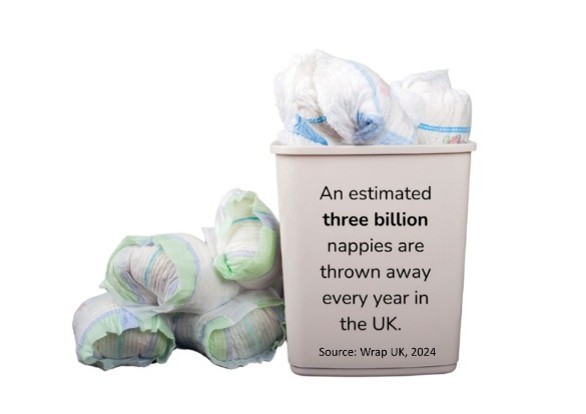
This trend is concerning for several reasons. Research suggests that earlier toilet training is associated with improved bladder and bowel health, while later training has been linked to issues such as constipation, difficulties achieving bladder control and a greater likelihood of wetting accidents during the school years. There are also wider implications for families, early years settings and schools, alongside environmental concerns associated with prolonged nappy use.
Concerns about school readiness and increasing numbers of children reaching school age not yet fully toilet trained have brought this issue onto the public health agenda. In response, the NHS recently updated its guidance to encourage parents to begin and complete toilet training between the age of 18 months and two and a half years of age (NHS, 2026).

This trend is concerning for several reasons. Research suggests that earlier toilet training is associated with improved bladder and bowel health, while later training has been linked to issues such as constipation, difficulties achieving bladder control and a greater likelihood of wetting accidents during the school years. There are also wider implications for families, early years settings and schools, alongside environmental concerns associated with prolonged nappy use.
Concerns about school readiness and increasing numbers of children reaching school age not yet fully toilet trained have brought this issue onto the public health agenda. In response, the NHS recently updated its guidance to encourage parents to begin and complete toilet training between the age of 18 months and two and a half years of age (NHS, 2026).
The question nobody seemed to be asking
Before starting my PhD, I spent 12 years working for ERIC, The Children’s Bowel & Bladder Charity, supporting families experiencing continence difficulties and developing national awareness campaigns. Through that work, I became increasingly aware of concerns about delayed toilet training and its potential impact on children’s health and school readiness.
Initially, I assumed the key question was why parents appeared to be waiting longer to start toilet training than previous generations. However, as I immersed myself in the literature, it became apparent that most research has focused on readiness, timing and toilet training approaches, with comparatively little attention given to parents’ experiences. Internationally, qualitative studies were limited, and there was no UK research focused specifically on parents’ experiences of toilet training. This prompted me to step back and ask a different question: What is toilet training like for parents, particularly when things don’t go to plan?
Listening to parents
Taking a phenomenological approach, I interviewed 16 mothers and fathers of children aged between two and five years from across the South West of England. I explored how parents experienced supporting their child through toilet training, particularly when challenges arose. Discussions focused on parents’ expectations, challenges and support needs. A parent advisory group helped shape the study, challenging my assumptions and ensuring the research remained grounded in issues that matter to families.
What parents have shared so far
Although analysis is still ongoing, a clear picture is beginning to emerge. Many parents described approaching toilet training with apprehension and a feeling that “the clock was ticking”, particularly as children moved closer to nursery or school. Rather than a straightforward developmental milestone, toilet training was often experienced as an emotionally demanding period that affected family routines, relationships and confidence.

Parents wanted to make the “right” decisions but frequently encountered conflicting advice. Many turned to friends, family members and social media for reassurance and practical guidance. When progress stalled, feelings of guilt, frustration and self-doubt were common, alongside the challenge of balancing toilet training with work, childcare and everyday family life. Overall, parents’ decisions appeared to be shaped less by official guidance and more by the realities of their individual family circumstances.
Why this matters and looking ahead
These early findings suggest there may be a gap between evidence-based recommendations and parents’ realities. If guidance does not align with how families experience toilet training, it may be less likely to feel relevant, useful or achievable. This does not mean parents are resistant to guidance. Rather, it suggests that support is most likely to be effective when it reflects the realities of family life.
While these findings are still emerging, they are already shaping plans for future research. I hope to work with parents and early years practitioners to develop and evaluate toilet training support that better reflects families’ experiences. Toilet training is often treated as a simple childhood milestone. What parents have shown me is that it is also a deeply human experience shaped by relationships, expectations, uncertainty and care. By understanding that experience more fully, we may be better placed to develop the compassionate and realistic support that families need.