


What happens to the research ideas that are too speculative, too interdisciplinary or too early-stage to fit neatly into a funding call?
At April’s CESR seminar, Senior Research Fellow Dr Neil Phillips introduced what he calls “Guerrilla research”: informal, low-cost, collaborative research that makes creative use of existing university expertise and facilities.
Rather than replacing funded research, this approach can help staff explore high-risk ideas, generate preliminary findings, build new collaborations and seed future publications or funding bids.
Traditional research is top down – it requires a strategy to secure crucial resources from funders. Funders don’t like risk, so projects are often a continuation of research projects that show promise and in areas where a body of evidence is already strongly indicating promise. But that means the riskier, more “out there”, ideas of researchers often don’t get the attention and time needed to develop.
Neil’s Guerilla research is more agile, growing out of shared ideas and inspiration and fitting around the edges of current projects.
“I’ve tended to do several research projects, which have been organic. They’ve occurred where there’s been ideas and opportunities, sometimes those don’t progress, but in some cases there’s an opportunity for a group of people to get together and progressively research higher risk projects.”

RISE – Neil’s agile interdisciplinary research applies world-class thinking that solves real world problems.
No ££££ – how?

RISE – Fuelling progress, this type of research requires an entrepreneurial mindset.
The key thing for Guerilla research here is interdisciplinary collaboration. People from different parts of the university, with access to a myriad of equipment and with different perspectives and ideas, pull together to make these projects happen. Using this spread of existing resources, an idea from one laboratory can go into another part of the university and use their equipment and expertise to perform totally novel experiments.
“People have often done this in gaps between other projects, so it hasn’t really had a big financial impact.”
The Guerilla projects tend to take longer than a funded project, as it’s fitted in here and there, passing between one student or intern to the next. But when it comes to publication, Neil often finds these projects generate a lot of interest.
Innovative Publications
“In a bizarre twist of fate, they’re actually sometimes easier to publish. The innovation stands out. They don’t just build on the last publication.
“So far, every crazy project I’ve suggested that’s got to a suitable level has actually been published. And the feedback from the editors has been quite positive. Other, properly funded projects, have been more difficult to publish in some cases because they’re extensions of already what’s been done there.”
Publishing these projects is then crucial to seed future bids. Neil recently published one of his Guerilla research projects based on a type of algae ball that retails for a few pounds at pet shops.
The Marimo green balls of filamentous algae are sold to decorate fish tanks but are also useful at absorbing unwanted particles in the aquatic environment. Neil wondered whether Marimo could be used as cheap biosensors – and so the Marimo-based environmental monitoring project was born.

RISE – rewriting the rules with these innovative collaborations seeking out new solutions to environmental questions.

RISE – The interdisciplinary connections build UWE researcher skills.
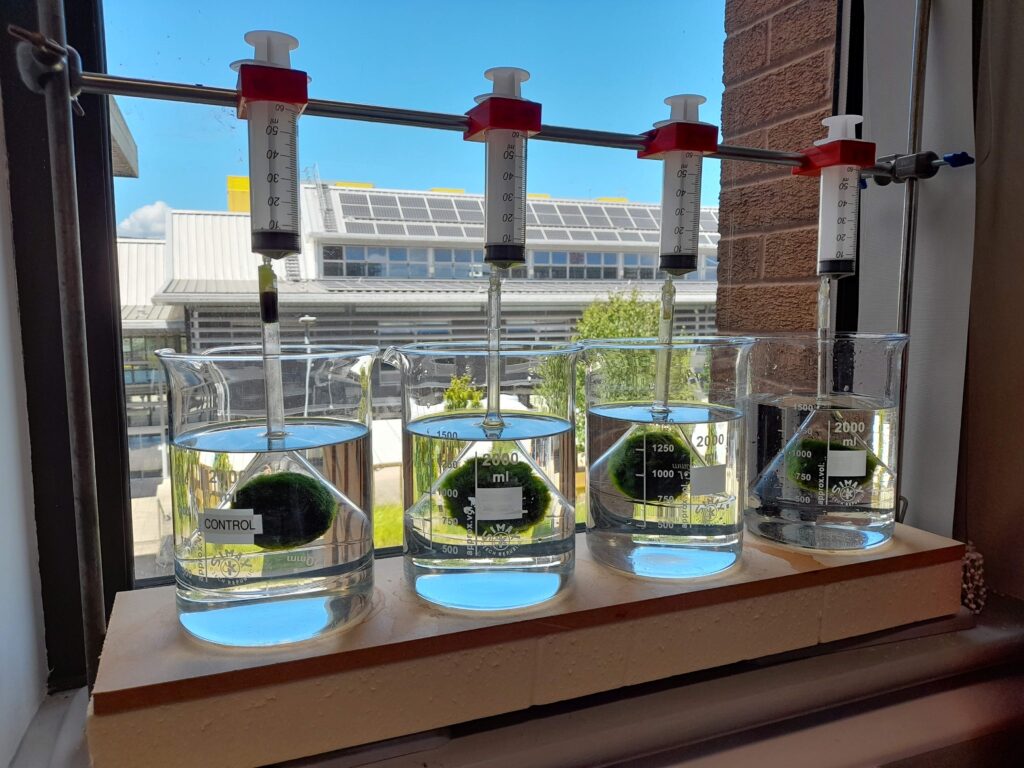
“We used things we already had in a different way. It didn’t cost much – bit of time and electricity and produced interesting results and a tangible output.”
Work on using Marimo for low-cost environmental monitoring has now developed into two external funding proposals: an EU proposal worth £3 million and a Leverhulme proposal worth £300,000.
Published earlier this year in the Journal of Environmental Science and Pollution Research – the author list stretches across UWE’s academic expertise, with engineers, medical researchers and biosensing experts all contributing to the myriad of experiments which included, X-rays, Raman spectroscopy and optical microscopy.
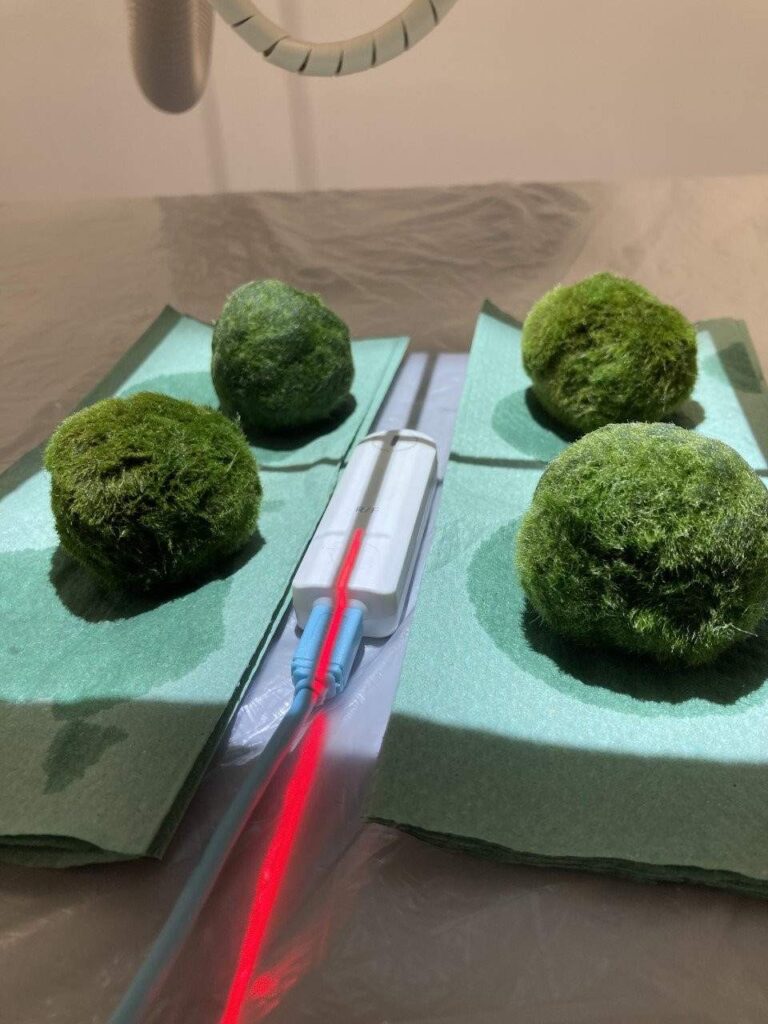
And Neil’s now looking at applying the algae in a space-related project…
Debate
Guerilla research caused a stir amongst CESR members present at the seminar, exciting all, however the topic of funding was acknowledged to be tricky.
How to justify time spent on these projects? How to keep the projects going when workloads are full? If reliant on student interns what happens when internships finish?
It was the subject of great discussion and debate – ultimately leading to a desire for more collaboration across the university and a new sandboxing channel being set up so innovative ideas could be shared across the Centre for Environment, Society and Resilience.