Postdoc thesis success: Ethics in environmental consultancy

Posted on

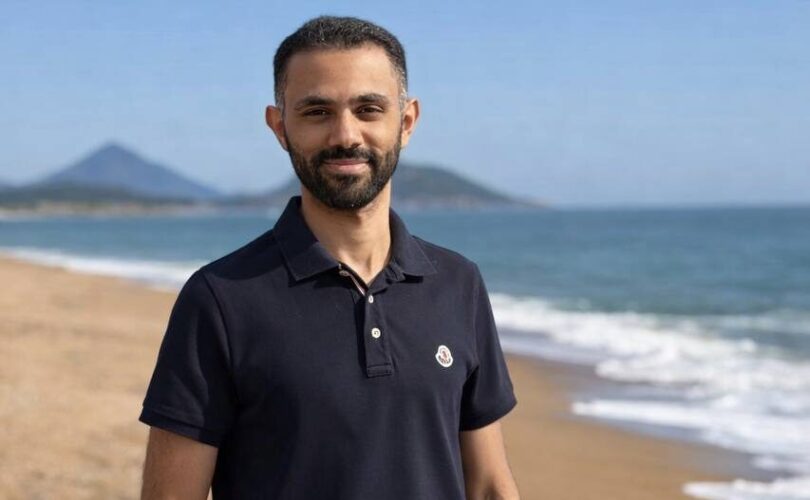
The Centre for Environment, Society and Resilience is celebrating it’s latest postdoctoral research success! Omar Abdelwahab has received confirmation from the Doctoral Academy that his thesis corrections have been accepted for “From Code to Conduct: An exploratory study of ethics in environmental consultancy.”

The PhD research examines ethics in the environmental consultancy sector and whether existing codes of conduct are effective in practice. The study explored how ethical rules are created, how consultants make decisions, the influence of profit, and the role of professional bodies.

CESR’s co-director Jo Barnes supervised Omar during his PhD and is delighted by his thesis acceptance:

“As the [thesis] name suggests, its a fascinating exploration of the nature of ethics in environmental consultancy policy and practice.”

The research relied on literature reviews, document analysis, surveys, and interviews. Out of 190 academic sources reviewed, only four directly focused on ethics in environmental consultancy, showing there is very little research in this area.

Codes of practice from seven professional bodies and codes of conduct from 34 consultancies were analysed. Most were found to be vague, difficult to apply in practice, and lacking enforcement. Interviews with consultants and industry representatives showed that ethical decisions are often guided more by personal judgement, workplace culture, and professional reputation than by formal ethical codes.

The research concludes that ethics in environmental consultancy is shaped more by individual behaviour and organisational culture than by written rules. It calls for clearer, more practical, and better coordinated ethical guidance across the sector.
Congratulations Omar and best luck in the future!

Policymakers explore how to do participation well

Posted on

Adapted from the 27/05/26 news piece by the Bristol Climate & Nature Partnership

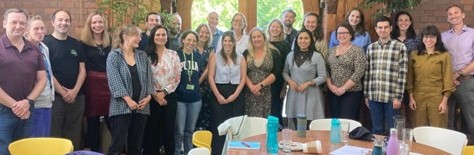
Earlier this year, policymakers from across the West of England came together for the first regional roundtable of the Community Climate & Nature Action Project (CCNA), delivered by the Centre for Environment, Society and Resilience (CESR) evaluation team at UWE Bristol. The session marked an important step in expanding the CCNA model beyond Bristol and into six new communities across the region.

This new phase of the National Lottery funded project builds on years of work supporting residents to shape local priorities for climate and nature. As the model widens into new geographies and organisational contexts, understanding how local authorities engage with communities – and how policy structures can better enable that engagement – has become essential to continued success. The roundtable was designed by CESR researchers Laura Fogg-Rogers and Laura de Vito to bring policymakers into that process from the outset.

Climate and nature action cannot be effective, or fair, without people being meaningfully involved. To support a shared starting point, Greg Harris, postgraduate researcher at UWE Bristol, introduced ten evidence informed themes that describe what good participation and governance tend to require in practice, and where the risks and tensions often sit.

Across the room, policymakers reflected on familiar pressures: stretched capacity, shifting responsibilities, increasingly complex community needs, and uneven engagement landscapes. Alongside those challenges, they also recognised existing strengths across the region – longstanding relationships with community organisations, committed teams working under pressure, and pockets of innovative engagement that could be built upon.

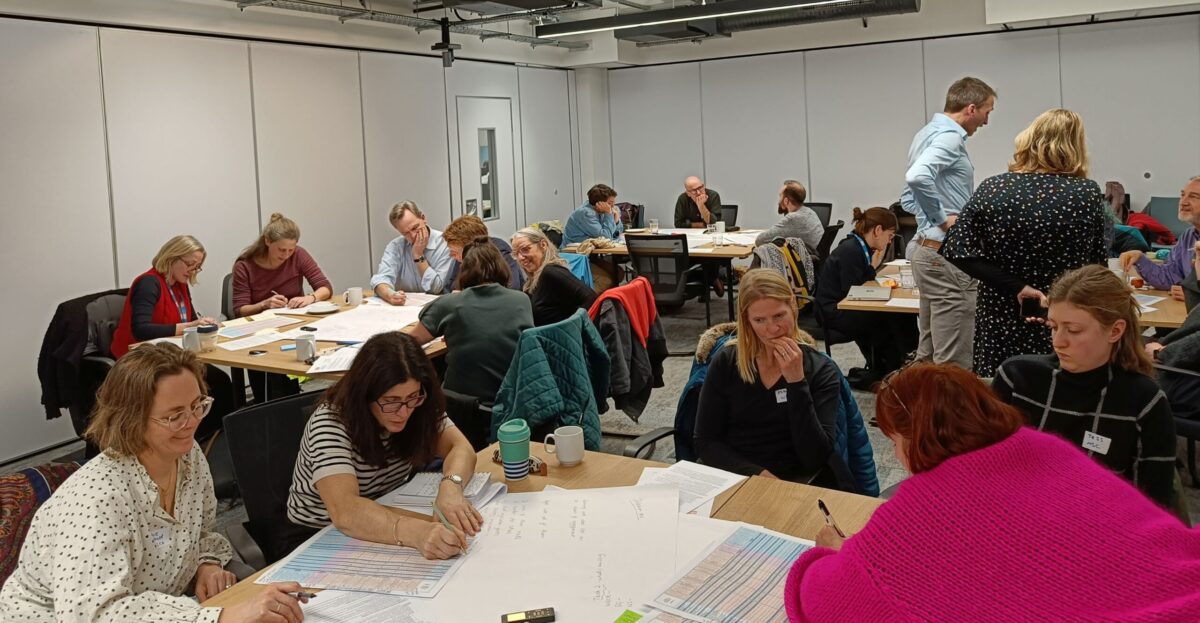
Through mapping exercises and group discussion, the room worked together to build a baseline picture of how councils currently engage communities, which views are heard, and which are missing. Seeing the region as a whole helped spark new conversations about alignment, shared challenges, and opportunities for collaboration as the project develops.

The session closed with a discussion about how insights from communities can more meaningfully shape strategy and decision-making. Policymakers explored what structures support ongoing participation, what long-term relationships require in practice, and where governance processes could shift to make community perspectives more central rather than peripheral. These questions – about power, capacity, and responsibility – sit at the heart of the Community Climate & Nature Action Project.

As the project continues, the UWE evaluation team will be working closely with communities and policymakers to build a shared evidence base and shape recommendations to support fairer and more inclusive climate and nature action.

Read the ten principles from the literature below and for more detailed insights from the roundtable, download the report.

The next policy roundtable will be held in November 2026, if you are working on regional or national climate and nature policy or strategy and are interested in participating, do get in touch.

Ten principles for effective, fair and sustainable participation

  1. Good collaboration needs time, trust, and ongoing learning – Where are councils currently putting their time and energy, and how do they maintain strong relationships with communities?
  2. Participation only works when people have real influence – Where do councils genuinely share decision making power, and where are the sticking points?
  3. Sharing responsibility makes the whole system stronger – How can responsibility and resources be shared between councils, charities, local institutions, and community groups?
  4. Rules matter, but so does guidance and support – When do councils rely on formal rules, and when do they use softer tools like advice, missions, or frameworks?
  5. Some organisations act as vital intermediary “bridge builders” – Who currently helps connect councils, communities, and local organisations?
  6. Shared missions help everyone pull in the same direction – What would a shared regional goal look like across councils and the Combined Authority?
  7. Learning from other places is useful, but local realities should be accounted for – Which networks do councils take part in, and how do they adapt good ideas to local needs?
  8. Inclusive and deliberative conversations build trust in decisions – What kinds of public conversations, panels, or creative engagement methods do councils use to involve people?
  9. Success should be defined together, and revisited over time – Do current measures capture learning, trust and capacity building, and how often are these reviewed?
  10. Feedback and accountability are essential for trust and learning – How do councils demonstrate that community input has shaped decisions, and where are feedback loops missing or unclear for residents.

Find out more about the Community Climate & Nature Action Project

Guerrilla research: Seeding big ideas without big budgets

Posted on

What happens to the research ideas that are too speculative, too interdisciplinary or too early-stage to fit neatly into a funding call?

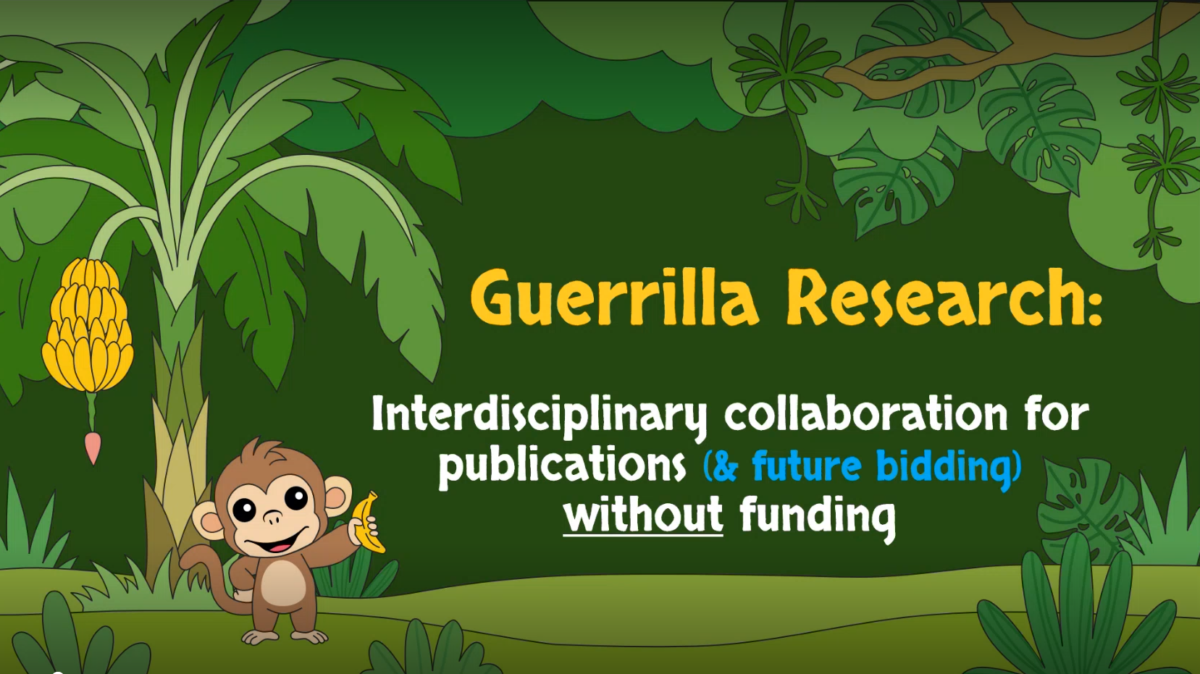
At April’s CESR seminar, Senior Research Fellow Dr Neil Phillips introduced what he calls “Guerrilla research”: informal, low-cost, collaborative research that makes creative use of existing university expertise and facilities.

Rather than replacing funded research, this approach can help staff explore high-risk ideas, generate preliminary findings, build new collaborations and seed future publications or funding bids.

Traditional research is top down – it requires a strategy to secure crucial resources from funders. Funders don’t like risk, so projects are often a continuation of research projects that show promise and in areas where a body of evidence is already strongly indicating promise. But that means the riskier, more “out there”, ideas of researchers often don’t get the attention and time needed to develop.

Neil’s Guerilla research is more agile, growing out of shared ideas and inspiration and fitting around the edges of current projects.

I’ve tended to do several research projects, which have been organic. They’ve occurred where there’s been ideas and opportunities, sometimes those don’t progress, but in some cases there’s an opportunity for a group of people to get together and progressively research higher risk projects.”

No ££££ – how?

The key thing for Guerilla research here is interdisciplinary collaboration. People from different parts of the university, with access to a myriad of equipment and with different perspectives and ideas, pull together to make these projects happen. Using this spread of existing resources, an idea from one laboratory can go into another part of the university and use their equipment and expertise to perform totally novel experiments.

“People have often done this in gaps between other projects, so it hasn’t really had a big financial impact.”

The Guerilla projects tend to take longer than a funded project, as it’s fitted in here and there, passing between one student or intern to the next. But when it comes to publication, Neil often finds these projects generate a lot of interest.

Innovative Publications

“In a bizarre twist of fate, they’re actually sometimes easier to publish. The innovation stands out. They don’t just build on the last publication.

“So far, every crazy project I’ve suggested that’s got to a suitable level has actually been published. And the feedback from the editors has been quite positive. Other, properly funded projects, have been more difficult to publish in some cases because they’re extensions of already what’s been done there.”

Publishing these projects is then crucial to seed future bids. Neil recently published one of his Guerilla research projects based on a type of algae ball that retails for a few pounds at pet shops.

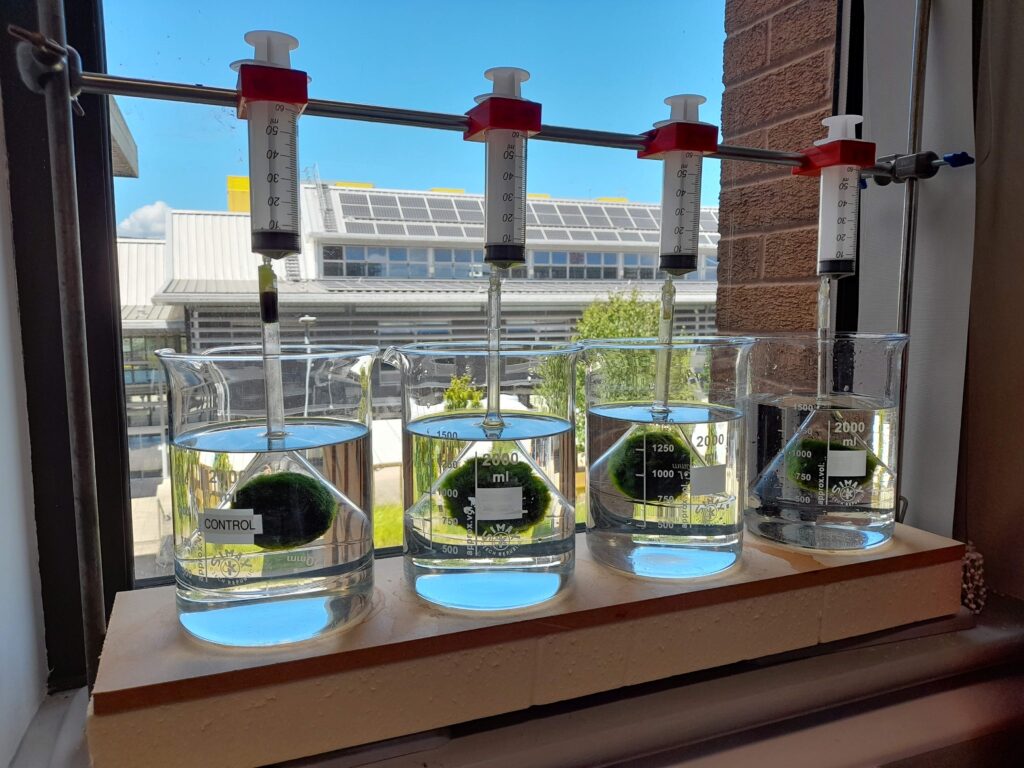
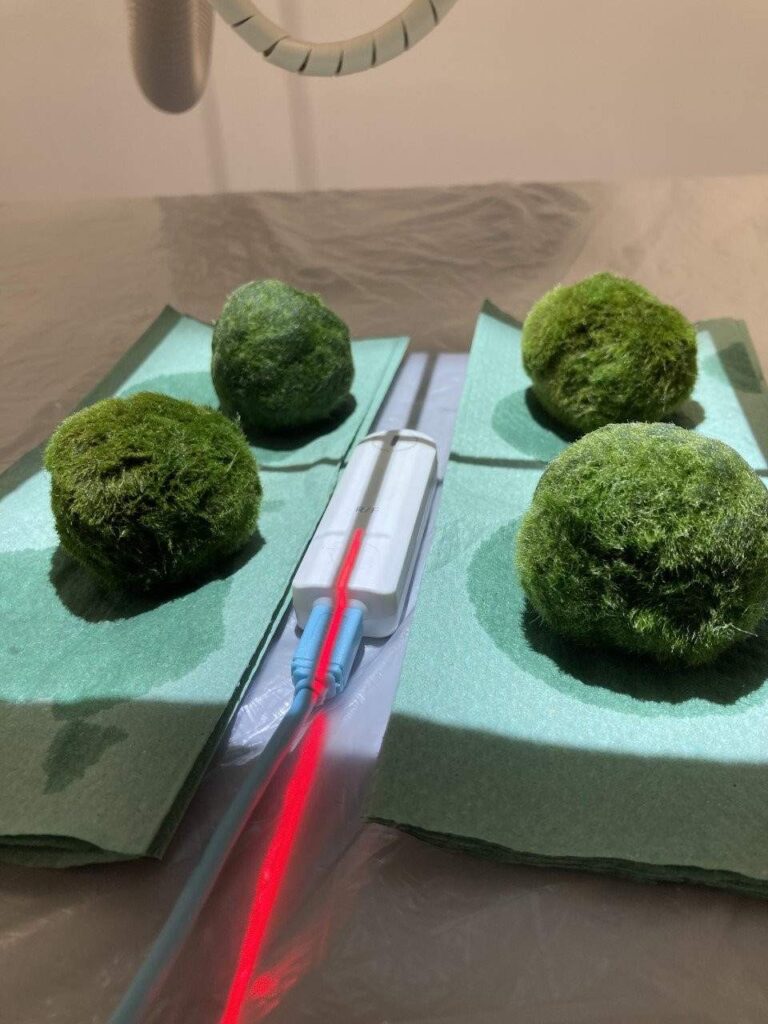
The Marimo green balls of filamentous algae are sold to decorate fish tanks but are also useful at absorbing unwanted particles in the aquatic environment. Neil wondered whether Marimo could be used as cheap biosensors – and so the Marimo-based environmental monitoring project was born.

“We used things we already had in a different way. It didn’t cost much – bit of time and electricity and produced interesting results and a tangible output.”

Work on using Marimo for low-cost environmental monitoring has now developed into two external funding proposals: an EU proposal worth £3 million and a Leverhulme proposal worth £300,000.

Published earlier this year in the Journal of Environmental Science and Pollution Research – the author list stretches across UWE’s academic expertise, with engineers, medical researchers and biosensing experts all contributing to the myriad of experiments which included, X-rays, Raman spectroscopy and optical microscopy.

And Neil’s now looking at applying the algae in a space-related project…

Debate

Guerilla research caused a stir amongst CESR members present at the seminar, exciting all, however the topic of funding was acknowledged to be tricky.

How to justify time spent on these projects? How to keep the projects going when workloads are full? If reliant on student interns what happens when internships finish?

It was the subject of great discussion and debate – ultimately leading to a desire for more collaboration across the university and a new sandboxing channel being set up so innovative ideas could be shared across the Centre for Environment, Society and Resilience.

If you want to find out more, see Neil’s presentation below.

CESR PGRs smash Three Minute Thesis competition!

Posted on

Short talks from three post-graduate researchers from the Centre for Environment, Society and Resilience were recognised in a regional competition on 30th April.

Sayda Mehrabin Shejuti, Sadie Barnes and Amin Reza Omranian all took part in the 3MT (three minute thesis) competition, where candidates are challenged to engagingly sum up their PhD into a three-minute talk accompanied by a single slide. The CESR candidates had great success!

Amin won the people’s choice award and Sadie snagged runner up, only beaten by University of the West of England winner Shejuti!

Here’s a quick run through of their research topics and wonderful slides.

Winner – Shejuti

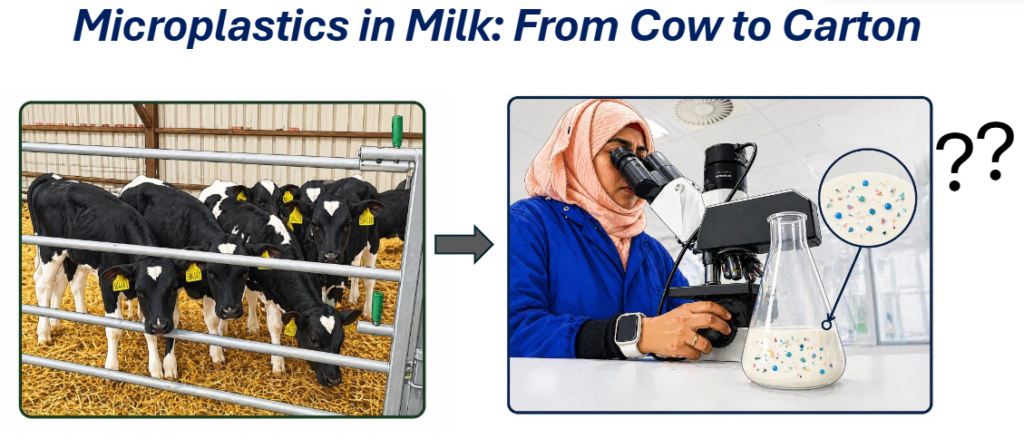
Shejuti is a PhD researcher with particular interest in the journey of microplastics and plastics in the environment. And this isn’t the first successful talk Shejuti delivered in April – she also captured the attention of Welsh policy makers when presenting at the Environment Platform Wales seminars.

See the slide below she used to capture the audience’s attention at the 3MT competition.

Winning at UWE is just the beginning for Shejuti, she now heads to the National 3MT semi-finals – good luck Shejuti!

Runner-up – Sadie

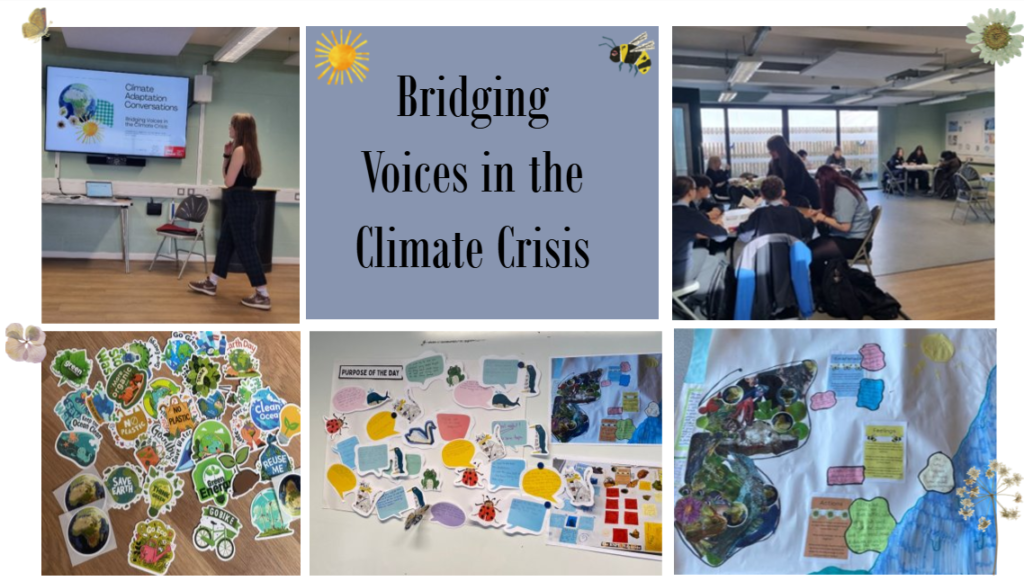
Sadie is getting towards the end of her PhD research at UWE, having collected her last lot of data on youth participation in the climate crisis at the end of March. Her focus has been on exploring how intergenerational dialogue on climate policy in South Wales can be designed to meaningfully include a diverse range of young people. Check out her 3MT slide below.

Good luck with your data analysis and thesis write up Sadie!

People’s Choice Award – Amin

Amin’s PhD investigates factors influencing travel behaviour and strategies to encourage the use of Metro systems. Ultimately he aims to propose evidence-based interventions that foster greater Metro use, reduce car dependency, and enhance sustainable urban mobility. His slide poses a question with the beautiful Welsh countryside (a nod to his Welsh government funding) as a backdrop – see below.

Congratulations again to all three amazing researchers!

Welcome to the CESR blog

Posted on

Hello and welcome to the Centre for Environment, Society and Resilience’s official blog – the platform for all news from the centre.

CESR – pronounced “Caesar” – was set up at the University of the West of England – UWE Bristol – in summer 2025 by codirectors Jo Barnes and Lisa Mol.

CESR is a challenge-driven research and knowledge exchange Centre operating at the interface of science, policy, people and place. The transdisciplinary research environment created by CESR facilitates multi-directional integrated outcomes impacts.

Aim: to undertake research which advances our understanding of the interactions between the environment and society.

Objective: inform and influence policy and people resulting in a healthier environment and more resilient communities within our society.

Mission: is to deliver world-class interdisciplinary research across all environmental issues (air pollution, water, earth science and nature).

We want the research we undertake to have Impact – this blog will reflect impact by highlighting how our people and research are contributing towards UWE’s RISE beacons: Research Innovation, Skills and Enterprise.

Find out more: You can find out more about CESR and the people at the centre of the centre – on our website. And stay tuned into to our latest news by following CESR on LinkedIn and this blog.

Back to top