Shejuti inspires next generation of microplastic scientists

Posted on

Technology is used to examine very small particles that cannot be seen with the naked eye, but communicating how this is done with non-technical audiences can be a challenge. I had the opportunity to present how ‘µ-Raman Spectroscopy’ method is used to detect microplastics from different environmental (soil, air, water) and food samples (water, milk, sugar, salt, honey, etc) to the children of the Stoke Bishop Church of England Primary School in Bristol on the 30th June 2026 as part of their ‘Tech Day’ observation.

Being born and raised in Bangladesh, where plastic pollution is a major issue, my passion to work on tackling the problem grew over time. My current research on tracing the journey of microplastics in the dairy supply chain is another important step in my devotion to combating plastic pollution. Working in Bangladesh and the UK on different plastic and microplastic action-based research projects both by conducting laboratory analysis of microplastics on the air and in food samples, I have become an expert in ‘µ-Raman Spectroscopy’ technology and its practical application in characterising plastic polymers.
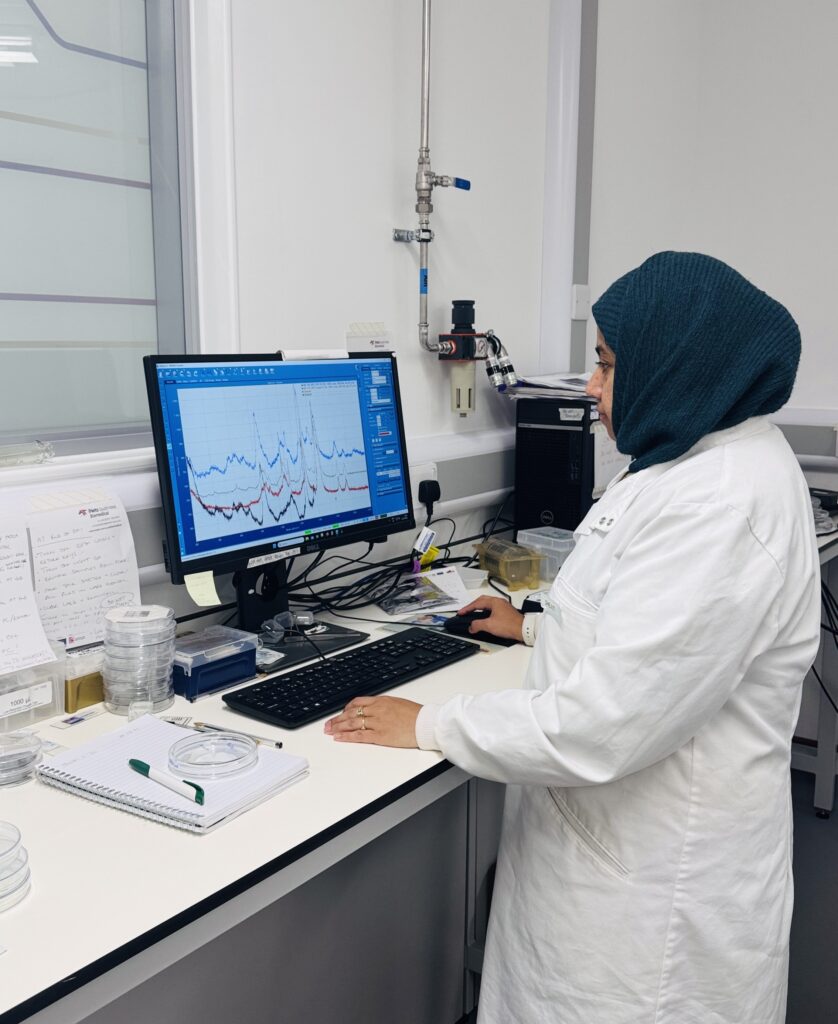
Analysing raman spectra using LabSpec software to characterise microplastics.

What are microplastics? 

At the Tech Day observation, I first started by talking about the plastic products that we use every day in our lives. Children also contributed with their knowledge of plastic products around us. Then I introduced the term ‘microplastics’, tiny plastic particles usually less than 5 mm in size. It was briefly explained that microplastics are almost everywhere in our environment ending up in the food chain, reflecting how we are surrounded by and exposed to microplastics every day.

How technology helps find microplastics? 

Identifying a particle as a microplastic is one of the biggest challenges that scientists have to face. To explain this, I introduced the ‘µ-Raman Spectroscopy’ technique as a ‘microplastic detective’. Rather than speaking too technically, I briefly explained how this technique uses laser light to detect microplastic polymers. I compared the laser light with torch lights as how they are used to find lost items. I mentioned that when the light shines onto a sample, tiny plastic particles in the sample return the light as unique colours and patterns that help scientists detect what microplastics are in the sample.

Working principle of µ-Raman spectroscopy in identifying microplastics; image developed by Copilot AI.

Insightful questions from children 

It was amazing to see how Year 2 (age 6-7 years) children got engaged with the topic in the Q/A round after the session. A range of questions were asked by the children after the presentation, including microplastics existence in water, plants and even in animals, the harmfulness of the particles in human bodies, the efficiency of the Raman spectrometer, etc. Some of the questions were: 

  • Is it easy to find microplastics from samples? 
  • Is there any chance the machine cannot detect microplastics? 
  • Do microplastics cause any health problems? 
  • Are they in water? 
  • Have microplastics been found in animals? 
  • Are they present in plants and flowers? 
  • What do I enjoy the most in my research? 

The students were very curious and their questions clearly indicated their concern for the environment and living organisms regarding plastic pollution.

Communicating research to various audiences 

Researchers often present their work to different audience groups, for example, scientists, academics, authors, so on but communicating research with school children gives an opportunity to inspire future generations about scientific research and their importance in the real world. By sharing the importance of technology in identifying microplastics with key stage 1 children, I realised that opportunities like this can help children link their today’s learning to tomorrow’s career.

One of the student’s questions really made me feel my contribution was meaningful that day:

‘‘Can I work on microplastics when I grow up?’’
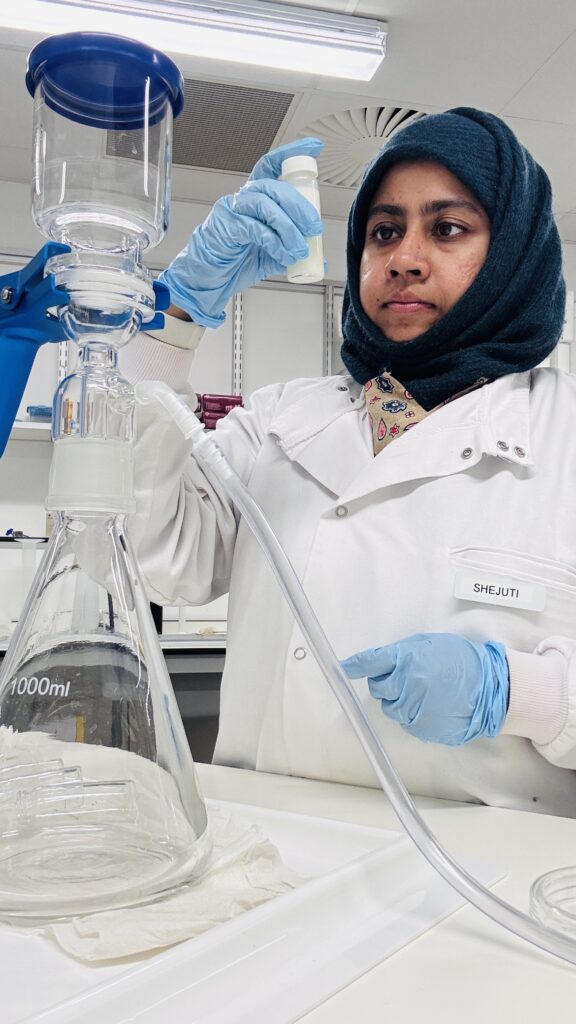
Student in lab coat examining a sample with lab apparatus in the foreground

This blog was written by Sayda Shejuti.
Moths, monitoring and molecular ecology: A new biodiversity project takes flight at UWE Bristol

Posted on

How well do traditional ecological surveys compare with cutting-edge genetic techniques? A new UWE Bristol project is seeking to answer this question by combining moth trapping with airborne environmental DNA (eDNA) sampling across the Frenchay Campus. Airborne eDNA involves collecting traces of genetic material that animals leave behind in the environment, offering a potentially powerful new way to monitor biodiversity.

Led by Todd Lewis (Senior Lecturer in Ecology) and Aimee Brake (MSc Environmental Consultancy), the project explores whether DNA collected from the air can provide a reliable and efficient way of monitoring moth biodiversity alongside established survey methods. The research brings together staff and students from across UWE Bristol and will support both MSc and BSc dissertation projects.

Moth watching in action – Aimee Brake and Martin Richardson

The first fieldwork session has now been successfully completed. Using portable ultraviolet LED moth traps (LepiLED) to trap moths temporarily, researchers and student volunteers recorded a wide variety of moth species across campus habitats. Alongside conventional survey methods, airborne eDNA samplers were deployed to capture traces of genetic material present in the environment. These samples will now undergo laboratory analysis and metabarcoding to determine which moth species can be detected from the air alone.

LepiLED moth light-trap at UWE

Moths play a vital role in local ecosystems, acting as pollinators and providing food for birds, bats and other wildlife. Yet many species are declining or shifting their distribution ranges across the UK. This project will help us better understand the diversity of moths living on the Frenchay Campus while exploring new ways of monitoring wildlife. By combining traditional field surveys with innovative DNA-based approaches, we hope to improve how biodiversity is recorded and protected in the future. The project also offers opportunities for staff, students and the wider community to engage with nature, sustainability and ecological research at UWE Bristol.

Get Involved!

We are planning additional moth-trapping sessions throughout the summer and would welcome participation from staff, students and researchers with an interest in ecology, biodiversity, molecular methods, or simply a curiosity about the incredible diversity of moths found on campus.

Whether you would like hands-on field experience, learn more about species identification, or contribute to an exciting research project, we’d love to hear from you.

For more information or to express an interest in joining future moth-trapping sessions, please contact Todd Lewis.

Aimee (left) and Todd (right).

CESR hosts two international environmental conferences

Posted on

On 8-11 June 2026, UWE Bristol hosted two parallel environmental conferences: the 31st International Conference on Modelling, Monitoring and Management of Air Pollution and the 6th International Conference on Environmental and Economic Impact on Sustainable Development. Both conferences were organised by the Wessex Institute and co-chaired by Dr Stavros Syngellakis of the Wessex Institute and Prof. Jo Barnes and Dr Ben Williams of the Centre for Environment, Society and Resilience, UWE Bristol (as featured in image above).

Air Pollution 2026 boasted some great talks across a range of related topics and an excellent Special Session on “Possible implications of net zero technologies on air quality”, organised by Dr Philippa Douglas of the Environment Agency, United Kingdom. Similarly, Environmental Pollution 2026 also enjoyed a range of talks covering the triple threat of climate change, pollution and biodiversity collapse, as well as progress in ensuring sustainability through more constructive and progressive approaches.

As well as seasoned academics, it was brilliant to see so many top-class student speakers presenting, including colleagues from Bristol University and our own Postgraduate Researcher, Sayda Shejuti.

Sayda Shejuti presenting her PhD research on microplastics pollution at the Environmental Impact 2026 conference

It was a welcome return to be back ‘in the flesh’ for these two conferences following a transition to online conference delivery post-Covid19. Moreover, it was the first time these events had been hosted at UWE Bristol. Attendees, who had travelled from around the world, loved the venue and facilities, especially the guided walk around Bristol Harbourside and conference dinner at River Station.

Attendees from both conferences attending the harbourside walk and conference dinner

You can find details of the papers selected for presentation that have been included in the Conference Proceedings and permanently stored in the WIT eLibrary (see https://www.witpress.com/elibrary) from where they can now be freely downloaded, and from where you can purchase copies of the conference proceedings: Air Pollution XXXI and Environmental Impact VI.

Many thanks to all of the speakers, the Wessex Institute, especially Dr Stavros Syngellakis, Marta Graczyk and David Franco van Buuren, the International Advisory Committee, my colleagues, co-chairs and and keynotes, including Emeritus Professor Jim Longhurst, and to UWE Events and Hospitality for facilitating.

Written by Professor Jo Barnes


UWE Bristol secures £233,000 in Ofwat’s first Water Efficiency Lab competition 

Posted on

We are delighted to announce that UWE Bristol has been awarded £233,000 through Ofwat’s first Water Efficiency Lab competition, becoming the lead researchers and supporting the development of the Water Warriors project. The successful bid was led by Dr Sara-Jayne Williams at UWE Bristol underpinned by her previous research with children, working in partnership with project leads Water Research Centre (WRC), Yorkshire Water, Southwest Water and Anglian Water. 

“Children already have powerful ideas about environmental change and can  be hugely influential within their families and communities. This project puts  them at the centre, helping turn their ideas into practical actions that can  support more sustainable water use. We’re working with an incredible team across research, practice and the  creative sector, and I’m excited to get started.” 

– Dr Sara-Jayne Williams

Water Warriors highlights the importance of engaging future generations not simply as recipients of information, but as active participants in shaping more sustainable ways of living. The project will explore how children can play a meaningful role in shaping sustainable water futures, bringing together academic research, sector and educational expertise to better understand how water behaviours are formed and influenced. 

With a child-centred approach, the research recognises that future generations have significant care and capacity for influence – qualities that remain underutilised and underexplored in current approaches to water efficiency and broader environmental action. 

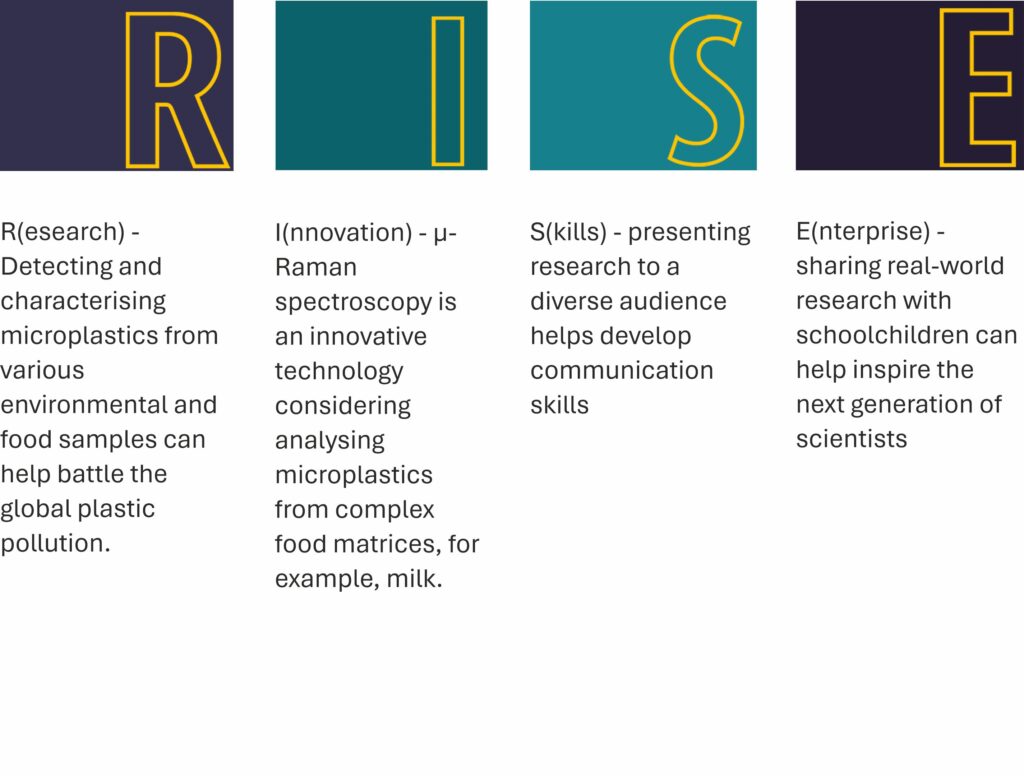
RISE – Driving interdisciplinary research that turns leading ideas into tangible change.

While children should not be expected to carry responsibility for solving global challenges, their voices, ideas, and everyday practices are an important part of wider collective efforts. Water Warriors seeks to understand how young people engage with water, sustainability, and care for the planet, how these perspectives can be supported and amplified, and how they can inform more effective, long-term change. 

RISE – Placing children and future generations at the heart of innovation, Water Warriors are building solutions that last.

The research takes a values-led approach, focusing on how early experiences and education can help nurture long-term behaviours towards water stewardship. By exploring how awareness, responsibility, and practical action develop over time, the research led by UWE Bristol within the Centre for Environment, Society and Resilience (CESR) will contribute to more inclusive and impactful strategies for improving water efficiency. Professor Jo Barnes, Co-Director of CESR, said: 

“This is an excellent win for Sara and for CESR. Building strong partnerships with industry and communities is central to both this project and our wider strategy, and will help ensure the work achieves meaningful intergenerational impact by empowering schoolchildren to influence water use within their families, now and in the future.” 

What is the Water Efficiency Lab?

RISE – Building the skills and confidence needed to tackle today’s environmental challenges and tomorrow’s uncertainties.

Run by  Ofwat and Challenge Works and supported by  Arup and  Isle Utilities, the Water Efficiency Lab aims to fund the most promising solutions for cutting demand among both households and businesses.

A total of £25 million will be available through annual WEL competitions between 2025-30. Each competition will explore a different theme, which is designed to target funding towards the key challenges and most critical barriers to water efficiency. 

RISE – Fostering entrepreneurial approaches that enable communities to design and deliver their own environmental solutions.

The first competition focused on innovations that give people and businesses the insights they need to better understand their water usage and the tools to take action to reduce it – helping cut their bills, preserve water resources and protect the environment.

What’s next? 

Working collaboratively across the partnership, the project will engage children, families, carers and teachers in co-creating child-centred resources. These will reflect children’s voices and lived experiences, while supporting educators to bring curriculum subjects to life in more meaningful and engaging ways.

Find out more

The full list of all 7 winners is available on the Fund’s website. For more information on the first Water Efficiency Lab competition and all of the Water Innovation Fund Challenges, head to https://waterinnovation.challenges.org/.

Postdoc thesis success: Ethics in environmental consultancy

Posted on

The Centre for Environment, Society and Resilience is celebrating it’s latest postdoctoral research success! Omar Abdelwahab has received confirmation from the Doctoral Academy that his thesis corrections have been accepted for “From Code to Conduct: An exploratory study of ethics in environmental consultancy.”

The PhD research examines ethics in the environmental consultancy sector and whether existing codes of conduct are effective in practice. The study explored how ethical rules are created, how consultants make decisions, the influence of profit, and the role of professional bodies.

CESR’s co-director Jo Barnes supervised Omar during his PhD and is delighted by his thesis acceptance:

“As the [thesis] name suggests, its a fascinating exploration of the nature of ethics in environmental consultancy policy and practice.”

The research relied on literature reviews, document analysis, surveys, and interviews. Out of 190 academic sources reviewed, only four directly focused on ethics in environmental consultancy, showing there is very little research in this area.

Codes of practice from seven professional bodies and codes of conduct from 34 consultancies were analysed. Most were found to be vague, difficult to apply in practice, and lacking enforcement. Interviews with consultants and industry representatives showed that ethical decisions are often guided more by personal judgement, workplace culture, and professional reputation than by formal ethical codes.

The research concludes that ethics in environmental consultancy is shaped more by individual behaviour and organisational culture than by written rules. It calls for clearer, more practical, and better coordinated ethical guidance across the sector.

Congratulations Omar and best luck in the future!

South West Schools Sustainability Gathering to take place at UWE Bristol this July

Posted on

Schools and Trusts across the region will come together on Thursday 2 July for the first in‑person South West Schools Sustainability Gathering, hosted at UWE Bristol’s Frenchay Campus. The event is part of a growing regional effort to accelerate climate and nature action in education settings and strengthen collaboration between schools and sustainability support providers.

The Gathering is convened by the South West Sustainability Network, led by Corinium Education Trust, and brings together partners including Let’s Go Zero, Climate Ambassadors, and a wide range of organisations working to support schools on their sustainability journeys. As the South West Climate Ambassador Hub Lead, UWE Bristol is partnering with the network to enable deeper exchange, shared learning, and practical action.

Schools across the South West are increasingly developing Climate Action Plans, yet many face similar challenges: limited capacity, fragmented support offers, and the need for clear, practical guidance. This event aims to address those challenges by creating a space where school sustainability leads can learn from one another and connect with the organisations best placed to support them.

Objectives

  1. Support schools to develop and implement their Climate Action Plan.
  2. Bring together the ecosystem of providers to enable a joined‑up approach to sustainability support.
  3. Share best practice for climate and nature action in education settings.
  4. Enable accelerated climate and nature action in communities through connected education programmes.

Event details

Thursday 2 July UWE Bristol Frenchay Campus Z Block, School of Engineering

12:30–13:30

Lunch and Networking Atrium, Z Block

13:30–15:00

Welcome to the Gathering Presentations from sustainability providers including:

  • South West Sustainability Network
  • Climate Ambassadors
  • Let’s Go Zero
  • National Education Nature Park
  • Green Schools Project
  • Ministry of Eco Education
  • West of England Primary STEM Network – Inspire Green Futures
  • Careers Hubs

15:00

Break

15:15–16:00

Accelerated Climate and Nature Action A discussion session led by the Bristol Climate and Nature Partnership

16:00–17:00

Hybrid Session – School‑Level Audit and Action Planning Guidance and dedicated time for school leaders to complete a baseline audit and action plan for their setting, led by the South West Schools Sustainability Network.

17:00

Networking

Registration

Attendance is free. Schools and Trusts across the region are warmly invited to join.

Register here

UWE Bristol to host People’s Emergency Briefing screenings this May

Posted on

This May, UWE Bristol will host two screenings of the National Emergency Briefing film, inviting business leaders, staff, students and local residents to engage with the latest evidence on the climate and nature crisis. These events aim to support informed, constructive conversations about the scale of the challenge and the urgent actions needed to secure a better future for our region.

The National Emergency Briefing brings together leading scientific voices to present a clear and measured overview of how the climate and nature crisis is already affecting everyday life in the United Kingdom. First delivered to politicians and influential figures in Westminster in November 2025, the evidence is now publicly available. It reveals a crisis that is more serious and immediate than many people realise.

The film combines authoritative scientific content with personal reactions from members of the public and familiar voices. It sets out the risks facing every constituency, including impacts on health, food systems, infrastructure, security and economic stability. It also highlights the significant benefits of bold and urgent government action, offering a pathway to a safer and fairer future.

The initiative is supported by organisations such as the National Trust, the Church of England, Exeter University, the Royal Meteorological Society, WWF and the National Education Union. It is explicitly non-partisan and aims to foster informed democratic discussion so that Parliament and the public share a common understanding of the scale and urgency of this challenge.

Event 1: Business Leaders Screening

Friday 15 May, UWE Bristol Frenchay Campus, Bristol Business School

This session is designed for business leaders across the West of England who want to understand how the climate and nature crisis will shape the operating environment for organisations in our region.

Schedule

  • 8.30 am: Business breakfast and refreshments (Room 3X110)
  • 9.00 am: Film screening (45 minutes, Room 2X242)
  • 9.45 am: Panel discussion (45 minutes)
  • 10.30 am: Networking
  • 11.00 am: Close

The panel will explore what the evidence means for businesses locally, including risks, responsibilities and opportunities for leadership. Speakers include:

  • Luke McCullough, Senior Public Policy Manager at Aviva
  • Professor Emma Howard Boyd, Chair of the National Heat Risk Commission and former Chair of the London Climate Resilience Review commissioned by the Mayor of London

Register for the Business Leaders event

Event 2: Community Screening

Monday 18 May, Bristol Business School, Room 2X112, UWE Bristol Frenchay Campus

This community screening is open to staff, students and local residents who want to understand the latest evidence and explore what it means for our shared future.

Schedule

  • 12.00 pm: Film screening (50 minutes)
  • 12.50 pm: Panel discussion (40 minutes)
  • 1.30 pm: Close

The panel will bring together UWE Bristol experts whose work spans climate action, circular economy and community wellbeing:

  • Kirsti Norris, Head of Carbon and Energy, UWE Bristol
  • Roger Griffiths, Associate Lecturer UWE Bristol, Author and CEO of Creative Connex
  • Dr Miles Thompson, Associate Professor in Psychology, UWE Bristol
  • Dr Ben Williams, Senior Research Fellow: Air Quality Management Resource Centre
  • Kat Corbett, Head of Circular Economy, UWE Bristol

About the community discussion

Each screening is followed by a structured and locally focused conversation. These discussions are designed to be constructive and solution oriented, helping people process the information emotionally and engage meaningfully. By bringing communities and decision-makers together around the same evidence, the programme aims to spark informed dialogue at both local and national levels.

Register for the Community event

Back to top