

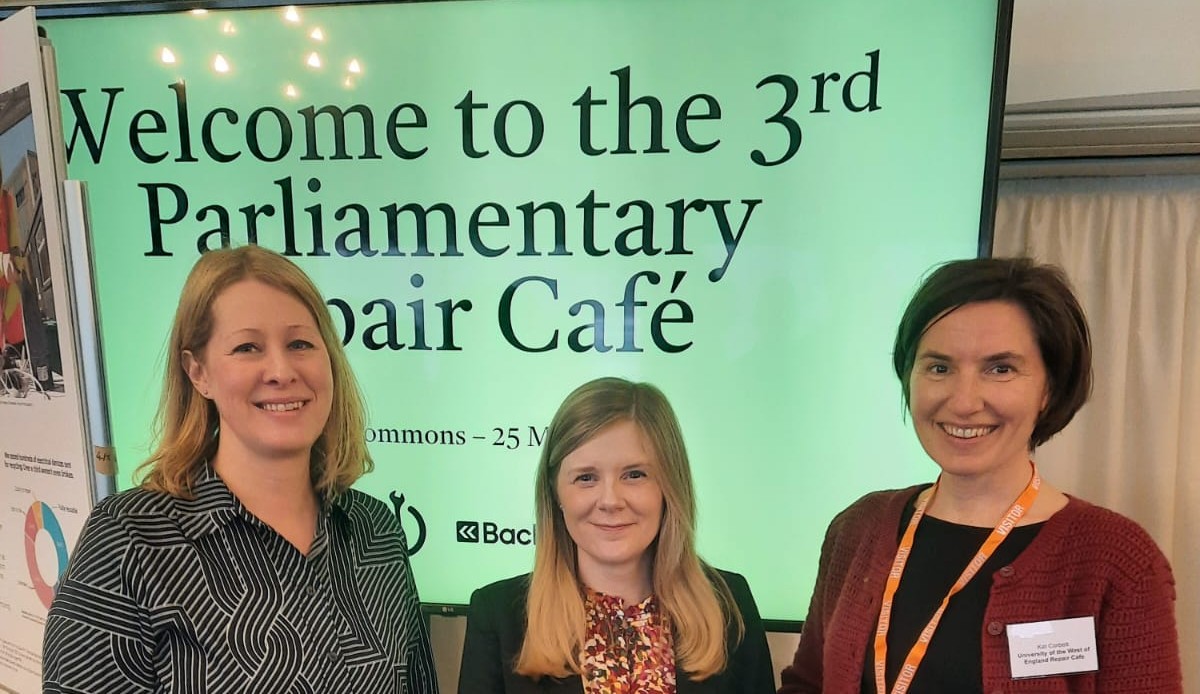
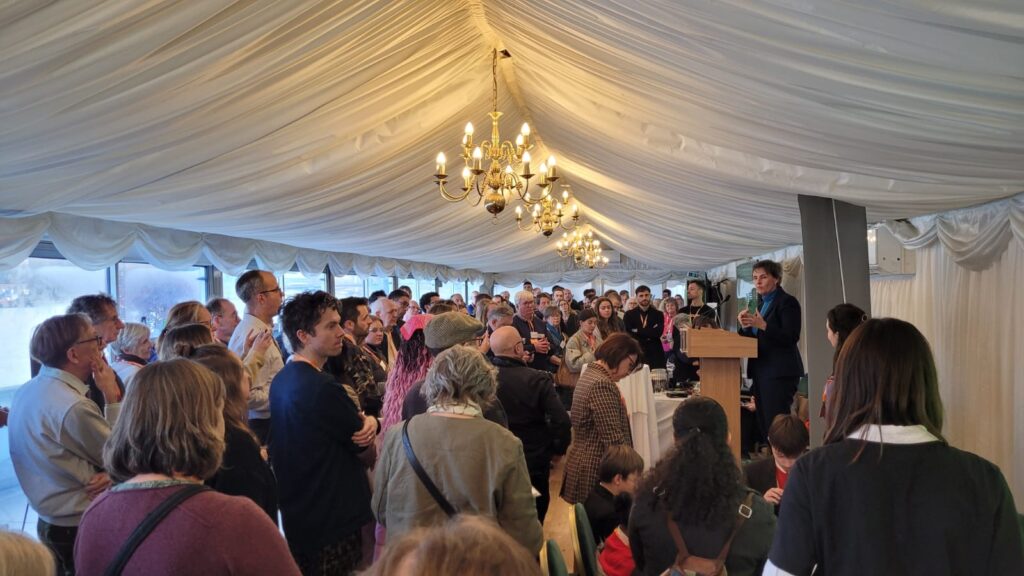
On 25 March, CESR members Laura Fogg-Rogers, Associate Professor for Engineering in Society, and Kat Corbett, Interim Head of Circular Economy and Responsible Consumption and MAKERS Project coordinator, joined repair groups from across the UK at a Repair Cafe held in Parliament. The event brought together 100 community repair groups and 91 MPs, making it the largest parliamentary repair gathering to date.
Organised by The Restart Project and Back Market, with support from SUEZ and Green Alliance, the event was a powerful call for policies that make it easier to repair everyday items and build a thriving circular economy. The Repair and Reuse Declaration, which now boasts 143 MP signatories, was a central focus, highlighting growing political commitment to repair and reuse.
Laura and Kat attended to champion the UWE Bristol Repair Cafe at the School of Engineering, alongside their links to Winterbourne and Frampton Cotterell through Frome Valley Environmental Network CIC, as well as Eastville Repair Cafe. Through co-leading the Bristol Repair Coalition with Mark Jacobs, (Member of the Bristol City Environment Board and Associate Lecturer UWE Bristol) and Teresa Dillon (Professor, Art, Media & Spatial Practice at the Winchester School of Arts, University of Southampton), they aim to accelerate the circular economy regionally and support local green jobs in repair and reuse. The Bristol Repair Coalition was established in March 2024 by Repair Acts, an artist-led materials research group that explores repair and maintenance cultures across the UK and internationally.
Laura Fogg-Rogers said, “we were delighted to be joined by MP Claire Hazelgrove to show support for the value of local Repair and Reuse green jobs.”
Kat Corbett added, “The Restart Project have done an incredible job in creating an environment for repair activists to build the momentum we need to drive change. And in doing so, they have also managed to create a real community, too.”
The day featured hands-on repair demonstrations, including Team Repair engaging a school group in fixing gadgets, and volunteers repairing items such as hairdryers, irons, and kettles alongside MPs. A particularly memorable moment was when a volunteer from the London based Fixing Factory, returned a repaired toaster to BBC presenter Sean Fletcher, who spoke about the item’s emotional value.
The event took place at a pivotal moment as the UK government prepares to publish its Circular Economy Growth Plan. Mary Creagh, Parliamentary Under-Secretary of State at the Department for Environment, Food and Rural Affairs, spoke about the importance of prioritising repair and reuse in this strategy. The repair community’s hopes for the plan include:
- Reducing the cost of repair to support local residents and repair businesses, as demonstrated by the ReLondon Electrical Repair Voucher Scheme trial.
- Aligning UK Right to Repair laws with, or exceeding, EU standards that mandate spare parts availability and durability requirements for devices.
- Addressing the vast number of working products currently shredded for recycling, with repair and reuse targets to prevent unnecessary waste.
- Boosting repair skills through government support for training, accreditation, and apprenticeships, helping to grow a new generation of skilled fixers.
As the repair movement grows – from grassroots Repair Cafes to global platforms for reselling refurbished technology – the community stresses the need for policy frameworks that remove barriers and provide support at scale.
With overwhelming public support (four in five people in the UK want the government to back repair initiatives) there is a clear mandate for change.