Technology is used to examine very small particles that cannot be seen with the naked eye, but communicating how this is done with non-technical audiences can be a challenge. I had the opportunity to present how ‘µ-Raman Spectroscopy’ method is used to detect microplastics from different environmental (soil, air, water) and food samples (water, milk, sugar, salt, honey, etc) to the children of the Stoke Bishop Church of England Primary School in Bristol on the 30th June 2026 as part of their ‘Tech Day’ observation.
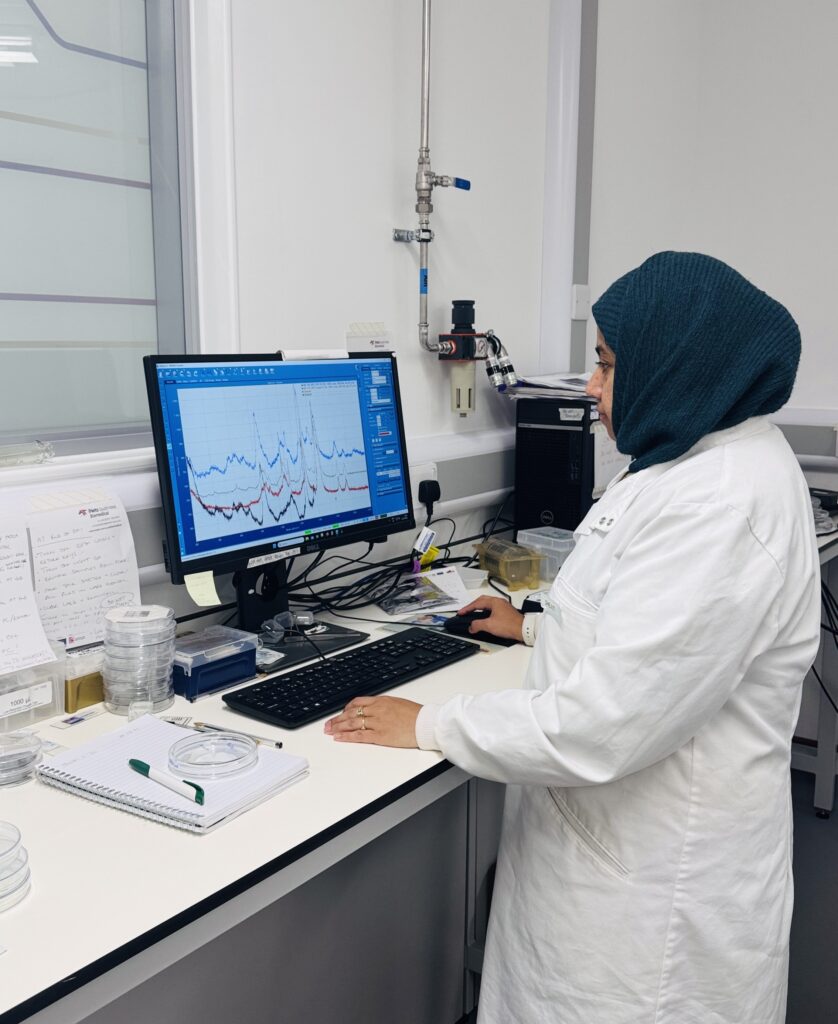
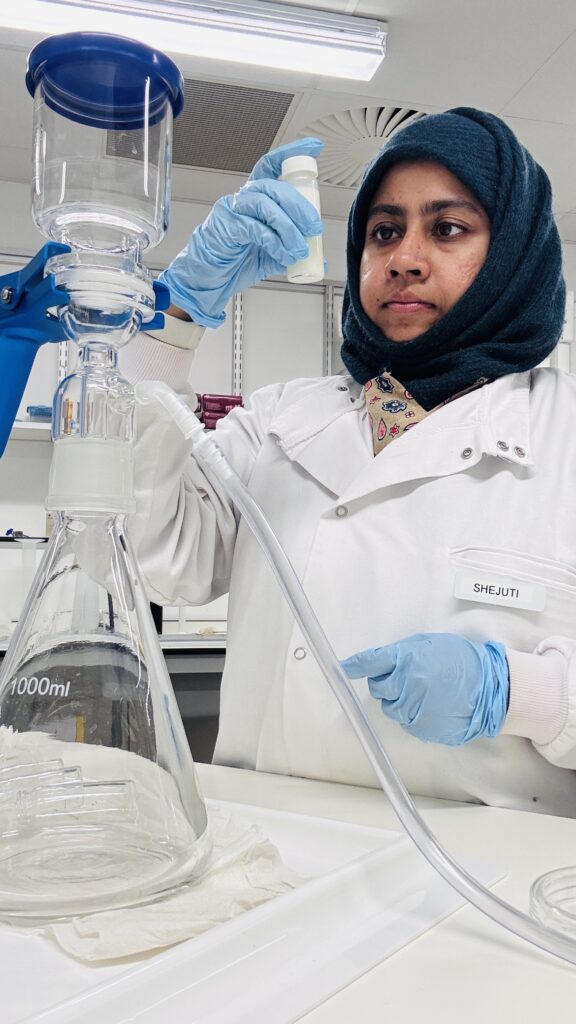
Being born and raised in Bangladesh, where plastic pollution is a major issue, my passion to work on tackling the problem grew over time. My current research on tracing the journey of microplastics in the dairy supply chain is another important step in my devotion to combating plastic pollution. Working in Bangladesh and the UK on different plastic and microplastic action-based research projects both by conducting laboratory analysis of microplastics on the air and in food samples, I have become an expert in ‘µ-Raman Spectroscopy’ technology and its practical application in characterising plastic polymers.
What are microplastics?
At the Tech Day observation, I first started by talking about the plastic products that we use every day in our lives. Children also contributed with their knowledge of plastic products around us. Then I introduced the term ‘microplastics’, tiny plastic particles usually less than 5 mm in size. It was briefly explained that microplastics are almost everywhere in our environment ending up in the food chain, reflecting how we are surrounded by and exposed to microplastics every day.
How technology helps find microplastics?
Identifying a particle as a microplastic is one of the biggest challenges that scientists have to face. To explain this, I introduced the ‘µ-Raman Spectroscopy’ technique as a ‘microplastic detective’. Rather than speaking too technically, I briefly explained how this technique uses laser light to detect microplastic polymers. I compared the laser light with torch lights as how they are used to find lost items. I mentioned that when the light shines onto a sample, tiny plastic particles in the sample return the light as unique colours and patterns that help scientists detect what microplastics are in the sample.

Insightful questions from children
It was amazing to see how Year 2 (age 6-7 years) children got engaged with the topic in the Q/A round after the session. A range of questions were asked by the children after the presentation, including microplastics existence in water, plants and even in animals, the harmfulness of the particles in human bodies, the efficiency of the Raman spectrometer, etc. Some of the questions were:
- Is it easy to find microplastics from samples?
- Is there any chance the machine cannot detect microplastics?
- Do microplastics cause any health problems?
- Are they in water?
- Have microplastics been found in animals?
- Are they present in plants and flowers?
- What do I enjoy the most in my research?
The students were very curious and their questions clearly indicated their concern for the environment and living organisms regarding plastic pollution.
Communicating research to various audiences
Researchers often present their work to different audience groups, for example, scientists, academics, authors, so on but communicating research with school children gives an opportunity to inspire future generations about scientific research and their importance in the real world. By sharing the importance of technology in identifying microplastics with key stage 1 children, I realised that opportunities like this can help children link their today’s learning to tomorrow’s career.
One of the student’s questions really made me feel my contribution was meaningful that day:
‘‘Can I work on microplastics when I grow up?’’
This blog was written by Sayda Shejuti.