DRAGoN runs a very popular webinar series that brings academics together with practitioners and members of the public facilitating conversation to flow from theory to practice. The next run of these webinars are due to start at the end of February 2023.
In the first of three blogs looking back on the Data Ethics and Governance webinar series so far Francesco Tava reflects on past seminars and the impact they have had on his work . In this post Francesco focuses on the webinar closest to one of his main research areas – data ethics.
Francesco starts by explaining “The idea of this series is to overcome the typical academic boundaries by involving professionals working in various sectors of data governance in a discussion around ethical concepts and problems arising from the use, access and sharing of data.” From the webinars we have held so far, one that aligns to my current research interests was the discussion on solidarity-based data governance.” with Barbara Prainsack (University of Vienna)
Francesco goes on to say that often the first and only consideration underpinning data governance is how to defend privacy. However, there are other principles which are equally important when it comes to data access and sharing that tend to fall by the wayside. One of which being solidarity. How can we rebalance this approach to include principles such as solidarity when assessing the practicalities and risks involved in data management?
‘’Data, not just something completely impersonal, objective material… Somehow describes who we are”
The talk that Barbara Prainsack held and the discussion that followed was very valuable. Not only did this discussion investigate a series of issues stemming from data management, but it also envisaged how a solidarity-based approach can provide possible solutions to these problems.
You can listen to the whole conversation for a deeper dive into Francesco’s reflection of this webinar here
At the time of the COVID-19 crisis, the oil market has suffered an unprecedented crisis, with the WTI crude oil price dropping into negative territory (-$37.63 per barrel) in April 2020. At the same time, the oil/stock market nexus is not clear cut and limited studies have considered the impact of crises in the oil market. A new working paper by researchers at UWE, Keele and Portsmouth investigates this unique situation.
Using a high frequency dataset (collected at intervals of 5 minutes), for a selected sample of oil importing and exporting countries across G7, BRICS and Scandinavian economies, we demonstrate the existence of an energy contagion, in terms of a consistently higher interdependence between stock markets and the crude-oil market during the COVID-19 driven oil crisis. Such results applies to all countries in our sample, although oil exporters are shown to have been hit more heavily, with Russia exhibiting the highest contagion.
Overall, our results confirm the importance of crude oil on stock markets, which have been shown to behave as a market of one during the recent crisis.
Reference and link: Reinhold Heinlein (Bristol Business School) is currently researching on the link between crude oil prices and stock markets during the COVID-19 pandemic, in a new paper, “Energy Contagion in the COVID-19 Crisis” written with Gabriella Legrenzi (Keele University) and Scott Mahadeo (Portsmouth University) and published in the CESifo Working Paper series No. 8345.
Tim Hink’s article “Fear on Robots and Life Satisfaction” is forthcoming in the International Journal of Social Robotics.
The use of robots and in particular next-generation robots in the production of goods and services is increasing. What impact robots are having on people’s quality of life, including workers, is as yet under-explored. This paper provides initial findings examining whether fear of robots is correlated with one aspect of quality of life: life satisfaction. After controlling for individual effects and country effects and using both standard ordinary least squares and a linear multilevel regression model, we find fear of robots correlates with lower reported life satisfaction. There are differences in the fear of robots and life satisfaction by age group, by how long countries have been members of the European Union and by whether we control for attitudes towards other things. Presently the governance of emerging science and innovation that includes next-generation robots, roboticists and technologists is a “major challenge to contemporary democracies” (Stilgoe et al, 2013, p.1568). Along with others we call for a more responsible innovation framework that includes all stakeholders in the innovation process to understand where I4.0 can best be used in national and international interests.
Timothy Hinks paper has just been accepted for publication
The focus on bribery and corruption and its impact on life satisfaction is relatively new in the economics and development studies literature. This paper contributes to this emerging field by asking whether reasons for making informal payments are correlated with life satisfaction. We find that paying bribes negatively correlates with life satisfaction and that those who were extorted by public officials or made an informal payment since they thought it was expected of them reported lower life satisfaction levels. We also find that those who made an informal payment to speed things up or who thought of the payment as a gift reported higher life satisfaction. Reasons for bribery differ in their associated significance with life satisfaction by public service that is used and by income group. For example people who instigated informal payments to public officials in the civil courts report higher life satisfaction bringing into question the integrity of judicial systems in transitional countries.
The paper is paper is published in World Development Perspectives and available online at here.
UWE Bristol has recently been commissioned by the Office for National Statistics (ONS) to develop a course in ‘output checking’ for research data centres. This is where researchers working on confidential data have their statistical outputs checked before publication, to ensure that they don’t break the law by inadvertently releasing information about individuals; for example, without proper checks a table of earnings in a small village could reveal the income of the highest earner. This checking process is called ‘statistical disclosure control’, or SDC.
Output checking is a well-established field, and there are experienced trainers and automatic tools to help those producing statistics. Why then does ONS need a new course? The reason is that new forms of data, new ways of working, and new types of users have all created a need for a different kind of output checking.
SDC training is largely focused on the tables produced by national statistical institutes (NSIs) such as ONS. NSI outputs have particular demands: similar tables are produced year after year, multiple tables are produced from the same data so consistency across tables is important, and NSIs publish a lot of information about their tables, including sampling methods.
Research outputs are quite different. Researchers aim to find new and interesting ways to extract meaning from data. Researchers choose data based on the hypotheses they want to explore and sub-samples of the population they are interested in, including or excluding data according to their own criteria. Finally, and most importantly, researchers don’t tend to produce detailed tables of the type NSIs generate; they are interested in multivariate analysis, non-linear models, heat maps, survival functions… For researchers, tables are often just used to describe the data before they get on to the interesting stuff. As a result, the forty-odd years of SDC designed for NSIs is of limited practical use in this environment.
For fifteen years, we have been developing an approach designed specifically for the research environment; we call it ‘output SDC’ (OSDC) to emphasise that this is a general approach to outputs, not just tables and not just for NSIs. There are two strands to this approach, one statistical and one operational.
The statistical strand comes from the ‘evidence-based, default-open, risk-managed, user-centred’ approach that we apply across our work in confidential data management. The way that researchers use data, and the confidentiality risks that they generate, require the output checker to be familiar with a wide range of statistics, which we address through classifying outputs into types, with a higher or lower inherent risk; this allows the checker to spend more time on the more ‘risky’ outputs. For these ‘risky’ outputs, context is everything. The traditional approach has been to apply simple yes/no rules (are there enough observations? Are there any outliers?) but this can be a very blunt instrument. Our approach emphasises the use of evidence in decision-making, which places more of a burden on the output-checker but increases the range of allowable outputs.
The operational strand reflects the fact that researchers are initially, on the whole, resistant to what they see as restrictions on output. A key part of the training will be helping output checkers build relationships with researchers; for example, emphasising that this is not about restricting output, but about keeping the researcher out of jail…
This is, we believe, the first formal course targeted specifically at (a) research outputs, and (b) those checking the outputs of the researchers, rather than the producers of statistics themselves. ONS is sponsoring the development of this training for all interested UK organisations. Many overseas organisations also run facilities that vet researcher outputs. We hope therefore that this will be of interest to a wide range of organisations, and may prompt a sea of change in the adoption of more general OSDC principles.
BCEF member Dr Danielle Guizzo Archela is an associate researcher of Autonomy, an independent, progressive think tank which aims to address the uncertainty of work in the modern era.
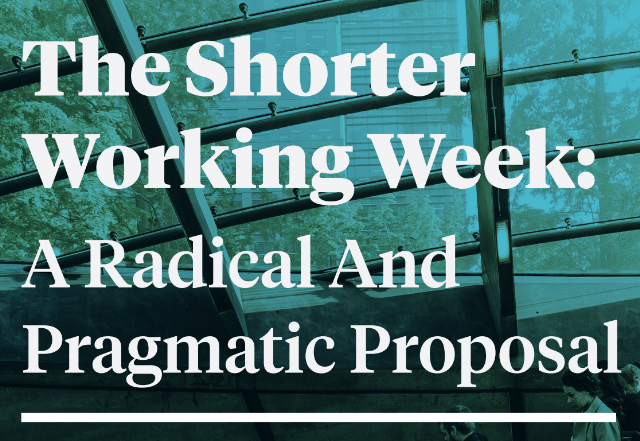
Autonomy is comprised from a multidisciplinary array of researchers and experts in political economy and critical theory. On Friday 1st February 2019 Autonomy launched a new policy report on a shorter working week. “The shorter working week: a radical and pragmatic proposal” outlines the case for a shorter working week and shows that there is no positive correlation between productivity and the amount of hours worked per day. The report has received praise from a number of politicians and academics.
“This is a vital contribution to the growing debate around free time and reducing the working week. With millions saying they would like to work shorter hours, and millions of others without a job or wanting more hours, it’s essential that we consider how we address the problems in the labour market as well as preparing for the future challenges of automation.” John McDonnell, Labour Shadow Chancellor
Our conventional working week and the idea of a compromising work-life balance in the UK has been debated in the media for some time. Last year in New Zealand a landmark trial of a four-day working week concluded it an unmitigated success and the discussion on how a four-day work week could be implemented long-term was opened up.
The Autonomy report has already been making headlines, and the idea of working “part-time” being standard, rather than just an option for those who can afford it, has been very popular. Below are just a few of the recent articles on the report.
On June 23, 2016, the United Kingdom (UK) held a historic referendum in which citizens voted, 52% to 48%, to leave the European Union (EU). The outcome of this vote has sent shockwaves around the world and is likely to change the course of British and European politics for years to come. It is widely recognized that immigration played a major role in the decision of the UK to leave the EU: immigration was a dominant theme in the pre-referendum debate and remains a key issue as the UK prepares its exit from the bloc. Specifically, the proponents of Brexit argued that the levels of immigration to the UK from other EU countries have become too high; exiting the EU would enable the country to control immigration from the EU. Slogans such as ‘immigrants take our jobs’ and ‘take back control of our borders’ have resonated well with the UK general public, for whom immigration has indeed become one of the biggest worries.
However, for some time scholars have been pointing that immigration has few, if any, adverse effects on the labour markets of migrant-receiving countries (Constant, 2014; Peri, 2014). Such findings, coupled with mounting worries over immigration levels, raise a question: in what ways does immigration affect the well-being of people in migrant-receiving countries – beyond the realm of the labour markets? In a study “Local-level immigration and life satisfaction: The EU enlargement experience in England and Wales”, published in 2018 in Environment and Planning A (Ivlevs and Veliziotis, 2018), we explored the effects of immigration on the subjective well-being, and in particular life satisfaction, of local residents – a relationship that has so far received little attention in both the literature and public debate.
To answer our research question – whether immigration affects the life satisfaction of residents in a host country – we focused on a recent immigration wave to the UK. Following the 2004 enlargement of the European Union, the UK opened its labour market to citizens of the new EU member states (Czech Republic, Estonia, Hungary, Latvia, Lithuania, Poland, Slovakia and Slovenia – also known as the accession or A8 countries). As a result, 1.5 million East Europeans started working in the UK between 2004 and 2011. In 2015, Poles – the largest group among the A8 migrants – became the largest foreign-born group in the UK, overtaking Indians, the Irish, Pakistani and Bangladeshi.
Besides being fast and unexpectedly large, the A8 migration to the UK was also geographically unevenly distributed (see the map below). The demand for jobs in the geographically-concentrated, ‘migrant-intensive’ industries, such as agriculture, food processing and manufacturing, meant that that some UK communities were affected by the East European migration much more than others. We related the local-level intensity of A8 migration to the changes in people’s life satisfaction over time. To capture the local-level migration intensity, we used data from the Worker Registration Scheme (WRS), which documented, between 2004 and 2011, the number of A8 workers starting a job in the UK at the local authority level. To capture changes in individual life satisfaction, we used the British Household Panel Survey (BHPS), which followed the same people over time.
Geographical distribution of A8 migration in England and Wales, 2004-2008, % of local population
Source: Worker Registration Scheme and authors’ calculations.
Our results showed that immigration from the A8 countries in the UK on average was not related to the life satisfaction of UK nationals. However, important sub-group differences emerged and are presented in the graphs below. More intense local-level immigration was associated with lower life satisfaction among older people, as well as the unemployed and the economically inactive, while the life satisfaction of younger people and those in employment went up with local-level immigration. We have also obtained somewhat weaker evidence that the life satisfaction of better educated UK nationals and those with higher incomes increased with immigration, while the life satisfaction of people with low incomes decreased with it. All these associations were pronounced in the ‘migration shock’ period – the first two years after the UK opened its labour market to the new Europeans – and became statistically insignificant in the longer term.
Predicted life satisfaction as a function of the local immigration rate for respondents of different age, employment status, income and education
How can one explain these results? A positive association between immigration and life satisfaction for the young could be because young people are in favor of diversity brought about by immigration. In contrast, older people might be particularly opposed to diversity and change, as well as be concerned with the (perceived) pressure immigrants put on local health services; this could explain why the elderly become less life-satisfied when larger immigrant inflows take place. The negative association between the local immigration rate and life satisfaction among the unemployed could mean that people in this group feel that their chances of getting back to work and their labour market bargaining power get weaker with higher levels of immigration – a form of labour market competition. At the same time, those in employment do not seem to be threatened by labour market competition, as their life satisfaction increases with the levels of local immigration.
The finding that life satisfaction increases with local-level immigration among those with high incomes and relatively high levels of education could indicate that these groups do not perceive Eastern European migrants as labour market competitors (which is consistent with the fact that the A8 migrants are concentrated in low-skilled sectors/occupations). Instead, the wealthier and better educated could be gaining in life satisfaction through, for example, enhanced social life (many A8 migrants are employed in the hospitality industry, keeping its product prices low) or satisfaction with house or family life (A8 migrants increased the supply of cheap household services).
Overall, our results suggest that immigration does not affect the well-being of different groups of people in the same way and that labour market considerations are unlikely to be a dominant factor in explaining the links between immigration and natives’ well-being. In addition, the fact that the life satisfaction of particular groups, such as the elderly, decreases with immigration has implications for the formation of immigration policy in most developed immigration-receiving countries, where populations are aging and older people are generally more likely to vote. From this perspective, the recent decision of the UK to leave the EU could well be explained by the negative association between A8 immigration and the life satisfaction of older people in the UK. This contention, however, hinges on the assumptions that 1) the Brexit referendum vote was indeed largely about restricting immigration, and 2) life satisfaction affects people’s immigration policy preferences.
Reference to the full paper:
Ivlevs, A. and Veliziotis, M. (2018). “Local-level immigration and life satisfaction: The EU enlargement experience in England and Wales”, Environment and Planning A 50(1): 175-193.
Apprentices are amongst the lowest paid workers in the UK. Their statutory minimum wage is lower than for any other worker aged 16 or over. Despite this, our research, along with Michail Veliziotis at Southampton University, showed that up to a quarter of all apprentices still seem to be paid below their legal minimum hourly rate. In comparison, the rate of non-compliance amongst the whole work force is less than 5%.
We argued that this was partly due to the minimum wage for apprentices being more complicated than for other workers. However, in this segment of the economy there are weak mechanisms for checking that the correct wage is being paid. Apprentices are often unaware or incurious about pay rates, while employers showed a confidence that they could work out pay rates which wasn’t strongly supported by statistics. Apprentices had a high degree of trust in employers to pay the right wage, which meant that mistakes were unlikely to be uncovered. Finally, all this was set in a low-pay culture, where it was accepted that “rubbish pay” (to quote one apprentice) at the early stage of your career was one of the rites of passage.
We advised that more targeted information could help to resolve this problem; in particular, we proposed an ‘app app’ (a wage calculator designed for young people fresh out of school or college), and working with trainers at FE colleges who were best placed to help apprentices check their pay.
Our recommendations have now been taken forward in the South West. Earlier this month we presented our findings at the “Great Apprenticeships – Treated Well – Treated Right” event organised by the South West TUC at the City of Bristol College. Union representatives, training providers, local government and apprentices attended the event.
One of the aims was to showcase the South West TUC’s new wage calculator, developed specifically for apprentices. The meeting also presented an opportunity for interested parties to examine a regional approach.
The event indicated that there was a clear common interest in taking action to improve pay awareness amongst apprentices and to better promote the TUC’s wage calculator. We are excited to remain involved with the work taking this forward in 2019 and plan to support the City of Bristol College in targeting their apprentices as part of the South West TUC’s campaign. We hope as a result of this we can demonstrate how a simple intervention, allied to a targeted information programme, can make a material difference to some of the lowest paid employees.
Dr Peter Bradley, leader of our Sustainability Research cluster, has recently published a new paper in the Journal of Cleaner Production. The full paper can be downloaded here.
Integrating sustainable development into economics curriculum: A case study analysis and sector wide survey of barriers.
Economics is a critical subject in bringing about sustainable development; by its definition it addresses questions of resource allocation. Fundamentally, economics addresses choices about what is produced and consumed in societies. It is these choices and incentives that are central to the root causes of global environmental and social impacts. This paper starts by identifying literature on educating for sustainable development in business and economics and highlights that the integration of sustainable development into mainstream economics curriculum is scant and largely missing based on current evidence.
Highlights
• First department wide intervention study of integrating sustainability in economics. • First sector wide survey of barriers to integrating sustainability into economics. • Surveys identify key barriers to integration of sustainability into economics. • The Research Excellence Framework is a major barrier to integrating sustainability. • The approach and survey can be applied elsewhere for comparative analysis.
Abstract
Economics is a critical subject for the integration of sustainable development into curriculum given the discipline’s influence in shaping social metabolism of societies, inequality, environmental impacts and wellbeing. There are very few empirical studies of the integration of sustainable development into economics curriculum. The purpose of the paper is to conduct analysis of a department wide intervention to integrate sustainable development into economics at a case study University, the first of its kind. The study makes use of surveys, interviews and key word searches to provide both qualitative and quantitative data and findings. Results indicate integration of sustainable development into curriculum on some modules but not the majority of the sample, evidence of resistance was also found. A range of barriers to integrating sustainable development into curriculum were identified in interviews. A sector wide survey on barriers to integrating sustainable development into economics curriculum was then conducted to provide empirical evidence on the subject. This is the first sector wide study of barriers to integrating sustainable development into economics curriculum. Results from the survey show that the Research Excellence Framework is a substantial barrier to integrating sustainable development into economics curriculum. The survey can be developed and applied elsewhere in the world to enable comparative analysis across countries, to get wider evidence on barriers.
Pro-environmental employee and consumer behaviour conference
Join us at UWE Bristol for a one day conference on 29 April 2019 to discuss pro-environmental employee and consumer behaviour. More information and registration online here. Get in touch at bcef@uwe.ac.uk for more information or to submit an abstract for presentation.
In August I spent a week in Australia working with the new Office of the National Data Commissioner (ONDC). The ONDC, set up at the beginning of July, is barely two months old but has been charged with the objective of getting a whole-of-government approach to data sharing ready for legislation early in 2019.
This is a mammoth undertaking, not least because the approach set out in the ONDC’s Issues Paper proposes a new way of regulating data management. Rather than the traditional approach of trying to specify in legislation exactly what may or may not be allowed, the ONDC is proposing a principles-based approach: this focuses on setting out the objectives of any data sharing and the appropriate mechanisms by which access is governed and regulated.
In this model, the function of legislation is to provide the ground rules for data sharing and management within which operational decisions can be made efficiently. This places the onus on data managers and those wanting to share data to ensure that their solutions are demonstrably ethical, fair, appropriate and sensible. On the other hand, it also frees up planners to respond to changing circumstances: new technologies, new demands, shifts in attitudes, the unexpected…
The broad idea of this is not completely novel. In recent years, the principles-based approach to data management in government has increasingly come to be seen as operational best practice, allowing as it does for flexibility and efficiency in response to local conditions. It has even been brought into some legislation, including the UK’s Digital Economy Act 2017 and the European General Data Protection Regulation. Finally, the monumental Australian Productivity Commission report of 2017 laid out much of the groundwork, by providing an authoritative evidence base and a detailed analysis of core concepts and options.
In pulling these strands together, the ONDC proposals move well beyond current legislation but into territory which is well supported by evidence. Because of the unfamiliarity with some of the concepts, the ONDC has been carrying out an extensive consultation, some of which I was able to observe and participate in.
A key proposal is to develop five ‘Data Sharing Principles’, based on the Five Safes framework (why, who, how, with what detail, with what outcomes) as the overarching structure. The Five Safes is the most widely used model for government data access but has only been used twice before to frame legislation, in the South Australia Public Sector (Data Sharing) Act 2016 and the UK Digital Economy Act 2017.
The most difficult issues facing the ONDC arise from the ‘why’ domain: what is the public benefit in sharing data and the concomitant risk to an individual’s privacy? How will ‘need-to-know’ for data detail be assessed? What are the mechanisms to prevent unauthorised on-sharing of data? How will shared data be managed over its lifecycle, including disposal? To what uses can shared data be put? Can data be shared for compliance purposes? How can proposals be challenged?
These are all good questions, but they are not new: any ethics or approvals board worth its salt asks similar questions, and would expect good answers before it allows data collection, sharing or analysis to proceed. A good ethics board also knows that this is not a checklist: ethical approval should be a constructive conversation to ensure a rock-solid understanding of what you’re trying to achieve and the risks you’re accepting to do so.
This is the also the crux of the principles-based approach being taken by the ONDC: it is not for the law to specify how things should be done, nor to specify what data sources can be shared. But the law does provide the mechanisms to ensure that any proposals put forward can be assessed against a clear purpose test around when data may and may not be shared and that appropriate safeguards are in place…
Finally, the law will require transparency; this has to be done in sunlight. A public body, using public money and resources for the public benefit, should be able to answer the hard questions in the public arena; otherwise, where is the accountability? The ONDC will require data sharing agreements to be publicly available, so people can see for what purpose (and with what associated protections) their data are being used.
To some, this need to justify activities on a case-by-case basis, rather than having a black-and-white yes/no rule, might seem like an extra burden. The aim of the consultation is to ensure that this isn’t the case. In fact, a transparent, multi-dimensional assessment is any project’s best friend: it provides critical input at the design stage and helps to spot gaps in planning or potential problems, as well as giving opponents a clear opportunity to raise objections.
Of course, even if the legislation is put in place, there is still no guarantee that it will turn out as planned. As I have written many times (for example in 2016), attitudes are what matter. The best legislation or regulation in the world can be derailed by individuals unwilling to accept the process. This is why the consultation process is so important. This is also why the ONDC has been charged with the broader role of changing the Australian public sector culture around data sharing, which tends to be risk-averse. The ONDC also has a role to build and maintain trust with the public through better engagement to hear their concerns.
From my perspective, this is a fascinating time. The ONDC’s proposals are bold but built on a solid foundation of evidence. In theory, they propose a ground-breaking way to offer a holy trinity of flexibility, accountability, and responsibility. If the legislation ultimately reflects the initial proposals, then I suspect many other governments will be beating a path to Australia’s door.