

CBR neuroscientist collaborates with Bristol Fungarium to identify new treatments for dementia

Posted on

Dr. Tim Craig, Associate Professor of Neuroscience in the Centre for Biomedical Research is studying the potentially beneficial effects of mushrooms in combatting neurodegeneration

Neurodegenerative diseases such as Alzheimer’s and Parkinson’s disease are rapidly increasing in prevalence. This is partly due an ageing population in the UK, but also potentially due to several different lifestyle and environmental factors. Despite decades of research into these diseases, we have only two licenced treatments available worldwide. Both of these treatments are based on monoclonal antibodies, are extremely expensive and of only limited benefit.

Recently, there has been increased interest in the role of traditional medicines as an alternative/complementary treatment for long-term conditions, especially ones associated with ageing. Interest in this does not come any rejection of modern medicine – the reasoning is that if something has been used for centuries, there may well be some therapeutic benefit to be gained from it. After all, many traditional medicines have given rise to mainstream drug classes, e.g. aspirin, derived from willow bark, was the precursor for an entire family of non-steroidal anti-inflammatory medicines.

Of particular interest to us in the field of neurodegeneration are traditional medicines used to treat cognitive decline in the elderly. One of these is a wild edible mushroom called Lion’s Mane (Hericium erinaceus), and which has been used for centuries in Chinese medicine. Several recent, peer reviewed research studies in Life Sciences, International Journal of Molecular Sciences and the Journal of Biomedical Science have demonstrated that compounds from these mushrooms can protect neurones from damage. Coupled to this, compounds found in many edible mushrooms have been demonstrated to have anti-inflammatory properties.

To further explore the beneficial potential of mushrooms on neuronal health, a research partnership has been established between CRIB and the Bristol Fungarium. Based in Barrow Gurney to the South West of Bristol, the Fungarium specialises in the growth of certified organic, native UK mushrooms in highly controlled environments. As well as providing edible mushrooms for the restaurant trade, it also manufactures extracts of several mushroom varieties. Dr. Craig began a collaboration with the Fungarium over two years ago, where he began investigating the effects of these extracts on our neuronal cellular model systems. This has led to the establishment of a Partnership PhD programme between Dr. Craig and the Fungarium. The research project, which commenced in April 2024, will be undertaken by Katie Turk, who will optimise the extraction process to increase the yield of therapeutic compounds in the resulting tinctures and use these to investigate the effects of several different mushroom extracts on the viability and signalling pathways in neuronal cells.

Dr. Craig said ‘The identification of novel therapeutic compounds is a potential game-changer in the fight against neurodegeneration, and will hopefully pave the way for new treatments for these devastating diseases”.

CBR research explores a new approach to reducing orthopaedic implant infection

Posted on

Picture: Dr. Jason Mansell holding an orthopaedic implant.

Research led by Dr. Jason Mansell, Associate Professor of Hard Tissue Biology at the Centre for Biomedical Research will investigate novel antibacterial titanium surface coatings to help combat the continuing problem of staphylococcal infection in joint replacements

Total Joint Replacement (TJR) is the replacement of joints such as knees and hips with an artificial implant. Titanium is used extensively in implant devices as it has many advantageous properties. While joint replacement is typically very effective, 1 in 250 of these will become infected, and so will need to be replaced. The repeated surgery is challenging for patients, as well as adding £1.5 bn to the NHS budget. The main sources of infection are from species of Staphylococcal bacteria.

A potential solution to this problem is to develop implant coatings that possess antibacterial properties. Ideally, the selected agent will have a natural and robust affinity for the surface which will withstand the rigours of surgery and continue to function after implantation.

Phosphomycin is a small, broad-spectrum antimicrobial that was discovered in 1969. While it is a somewhat forgotten molecule, it exhibits excellent activity against staphylococci, including MRSA. As a coating for titanium it is particularly attractive, as being a phosphonic acid species, it is predicted to have a strong binding affinity for this surface, while also being relatively simple to coat.

The twelve month research project is being funded by Bristol and Weston Hospitals Charity through their Orthopaedics Legacy programme, and is a collaboration with Mr. Niall Sullivan, an NHS Consultant in Trauma and Hip Surgery based at University Hospitals Bristol and Weston NHS Foundation Trust. It will explore the binding of phosphomycin to titanium, assess its antibacterial activity and also identify any potential impact on bone health.

Dr Carrie Brady receives BBSRC New Investigator award

Posted on

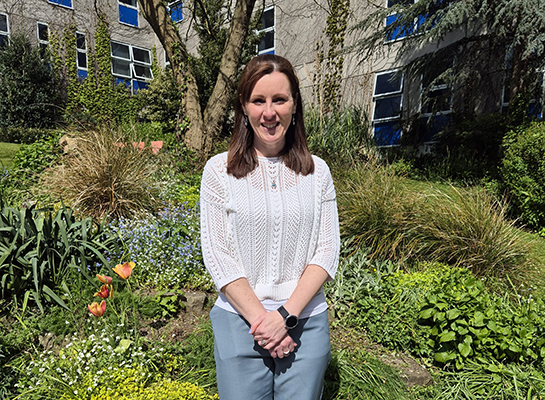
Picture: Dr Carrie Brady, Senior Lecturer in Genomics, UWE Bristol

Dr Brady’s four-year research programme will focus on the role of bacterial quorum sensing in acute oak decline

Congratulations to Dr Carrie Brady, Senior Lecturer in Genomics and member of the Centre for Research in Biosciences, who has been awarded a BBSRC New Investigator grant for a project titled “Bac-chat: Bacterial density-dependent quorum sensing mechanisms in Acute Oak Decline symptom development”. This four-year long project will build on Carrie’s previous research into the bacteria associated with acute oak decline (AOD), a disease with devastating effects on the mature native oak population in Great Britain. Three bacterial species (Brenneria goodwinii, Gibbsiella quercinecans, Rahnella victoriana) are known to play a role in development of the necrotic lesions that are symptomatic of oak suffering from AOD, and recent results have indicated that these bacteria have an endophytic lifestyle in several different parts of the oak host, as well as in other broadleaf hosts. This suggests that the AOD bacteria play the role of latent pathogens that are able to cause disease under suitable conditions.

Some bacterial phytopathogens are known to employ quorum sensing, a cell-to-cell communication mechanism used to coordinate collective behaviour and gene expression based on population density, which relies on chemical signalling molecules. The genes regulated by quorum sensing control processes and behaviours such as the production of virulence factors, biofilm formation and nutrient acquisition.

There is currently limited understanding of the interactions between the AOD bacteria and how they cooperate in symptom progression. An increased understanding lesion development by the bacteria will benefit woodland managers and foresters in the management of AOD. Stakeholders have called increasingly for strategies to deal with AOD, and projects are underway to determine how to reduce the AOD bacteria in symptomatic oak. However, if the primary AOD bacteria are endophytes, it will be of greater importance to determine how to prevent the shift of these endophytes to pathogens.

The Bac-chat project will aim to determine what causes the shift of the endophytic bacteria to pathogenesis, how bacterial density increases and consequently how symptoms develop. The chemical signalling molecules responsible for communication and interaction between the three primary AOD bacteria will be identified and examined to determine how they influence lesion development, and if they play a role in the potential shift from an endophytic to pathogenic lifestyle in the oak host.

Back to top